



Erhalten Sie Zugang zu diesem und mehr als 300000 Büchern ab EUR 5,99 monatlich.
- Herausgeber: CLXBX
- Kategorie: Gesellschafts- und Liebesromane
- Sprache: Englisch
Eugene Onegin by Alexander Pushkin is a dazzling masterpiece of Russian literature—a novel in verse that blends romance, wit, irony, and profound psychological insight. Often regarded as the cornerstone of modern Russian fiction, this elegant and emotionally resonant work captures the spirit of an era while exploring timeless themes of love, regret, pride, and fate. The story follows Eugene Onegin, a sophisticated yet disillusioned young aristocrat who inherits a country estate and retreats from the glittering social life of the city. Intelligent but emotionally detached, Onegin moves through life with cool indifference, guided more by boredom than passion. His quiet provincial surroundings introduce him to a circle of contrasting personalities, including the dreamy and sincere Tatyana Larina, whose heartfelt confession of love becomes one of the most famous moments in literary history. Through Pushkin's lyrical and playful verse, readers witness the consequences of missed opportunities and careless choices. Onegin's rejection of genuine affection, his strained friendship with the idealistic poet Vladimir Lensky, and the tragic duel that follows set into motion a chain of events that reshape his life. Years later, when circumstances change and emotions mature, the past returns with bittersweet intensity. Pushkin's narrative voice is as captivating as his characters—charming, reflective, and often ironic. He skillfully blends social commentary with intimate emotion, painting a vivid portrait of early 19th-century Russian society while revealing the universal struggles of youth and self-discovery. Beneath its graceful poetry lies a deep meditation on human nature, the passage of time, and the weight of regret. Both romantic and tragic, playful and philosophical, Eugene Onegin remains one of literature's most enduring works. Its unforgettable characters and musical language have inspired generations of writers, composers, and readers. At once a love story and a study of character, this novel in verse stands as Pushkin's crowning achievement and a timeless exploration of the choices that define a life.
Sie lesen das E-Book in den Legimi-Apps auf:
Seitenzahl: 182
Veröffentlichungsjahr: 2026
Das E-Book (TTS) können Sie hören im Abo „Legimi Premium” in Legimi-Apps auf:
Ähnliche










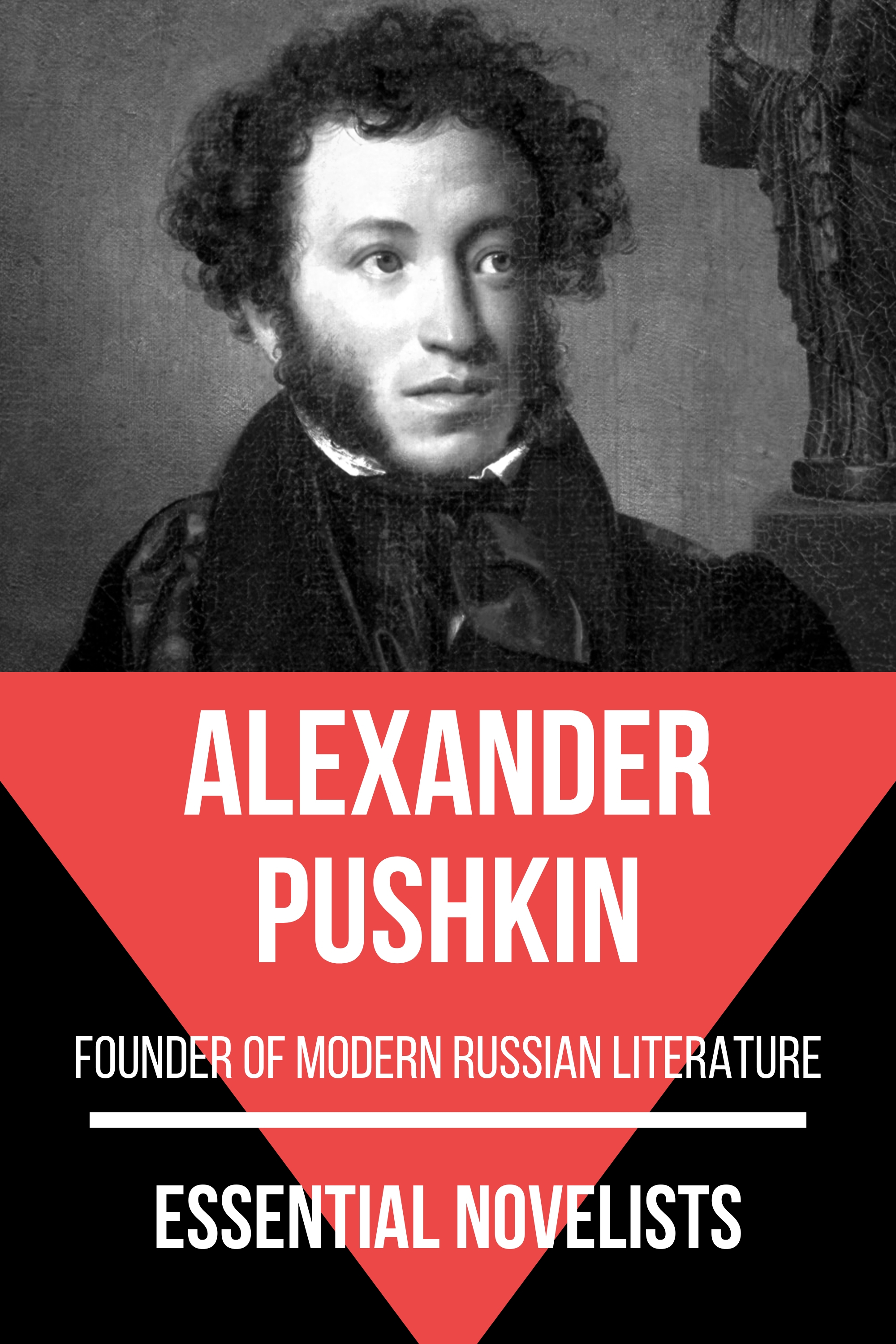

Eugene Onegin
Alexander Pushkin
Copyright © 2026 by Alexander Pushkin
All rights reserved.
No part of this book may be reproduced in any form or by any electronic or mechanical means, including information storage and retrieval systems, without written permission from the author, except for the use of brief quotations in a book review.
Contents
Preface
1. CANTO THE FIRST
2. CANTO THE SECOND
3. CANTO THE THIRD
4. CANTO THE FOURTH
5. CANTO THE FIFTH
6. CANTO THE SIXTH
7. CANTO THE SEVENTH
8. CANTO THE EIGHTH
Preface
Eugene Onéguine, the chief poetical work of Russia’s greatest poet, having been translated into all the principal languages of Europe except our own, I hope that this version may prove an acceptable contribution to literature. Tastes are various in matters of poetry, but the present work possesses a more solid claim to attention in the series of faithful pictures it offers of Russian life and manners. If these be compared with Mr. Wallace’s book on Russia, it will be seen that social life in that empire still preserves many of the characteristics which distinguished it half a century ago—the period of the first publication of the latter cantos of this poem.
Many references will be found in it to our own country and its literature. Russian poets have carefully plagiarized the English— notably Joukóvski. Pushkin, however, was no plagiarist, though undoubtedly his mind was greatly influenced by the genius of Byron— more especially in the earliest part of his career. Indeed, as will be remarked in the following pages, he scarcely makes an effort to disguise this fact.
The biographical sketch is of course a mere outline. I did not think a longer one advisable, as memoirs do not usually excite much interest till the subjects of them are pretty well known. In the “notes” I have endeavored to elucidate a somewhat obscure subject. Some of the poet’s allusions remain enigmatical to the present day. The point of each sarcasm naturally passed out of mind together with the society against which it was levelled. If some of the versification is rough and wanting in “go,” I must plead in excuse the difficult form of the stanza, and in many instances the inelastic nature of the subject matter to be versified. Stanza XXXV Canto II forms a good example of the latter difficulty, and is omitted in the German and French versions to which I have had access. The translation of foreign verse is comparatively easy so long as it is confined to conventional poetic subjects, but when it embraces abrupt scraps of conversation and the description of local customs it becomes a much more arduous affair. I think I may say that I have adhered closely to the text of the original.
The following foreign translations of this poem have appeared:
1. French prose. Oeuvres choisis de Pouchekine. H. Dupont. Paris, 1847.
2. German verse. A. Puschkin’s poetische Werke. F. Bodenstedt. Berlin, 1854.
3. Polish verse. Eugeniusz Oniegin. Roman Aleksandra Puszkina. A. Sikorski. Vilnius, 1847.
4. Italian prose. Racconti poetici di A. Puschkin, tradotti da A. Delatre. Firenze, 1856.
London, May 1881.
CANTO THE FIRST
‘The Spleen’
‘He rushes at life and exhausts the passions.’
Prince Viazemski
Canto the First
I
“My uncle’s goodness is extreme,
If seriously he hath disease;
He hath acquired the world’s esteem
And nothing more important sees;
A paragon of virtue he!
But what a nuisance it will be,
Chained to his bedside night and day
Without a chance to slip away.
Ye need dissimulation base
A dying man with art to soothe,
Beneath his head the pillow smooth,
And physic bring with mournful face,
To sigh and meditate alone:
When will the devil take his own!”
II
Thus mused a madcap young, who drove
Through clouds of dust at postal pace,
By the decree of Mighty Jove,
Inheritor of all his race.
Friends of Liudmila and Ruslan,(1)
Let me present ye to the man,
Who without more prevarication
The hero is of my narration!
Onéguine, O my gentle readers,
Was born beside the Neva, where
It may be ye were born, or there
Have shone as one of fashion’s leaders.
I also wandered there of old,
But cannot stand the northern cold.(2)
[Note 1: Ruslan and Liudmila, the title of Pushkin’s first
important work, written 1817-20. It is a tale relating the adventures
of the knight-errant Ruslan in search of his fair lady Liudmila, who
has been carried off by a kaldoon, or magician.]
[Note 2: Written in Bessarabia.]
III
Having performed his service truly,
Deep into debt his father ran;
Three balls a year he gave ye duly,
At last became a ruined man.
But Eugene was by fate preserved,
For first “madame” his wants observed,
And then “monsieur” supplied her place;(3)
The boy was wild but full of grace.
“Monsieur l’Abbé” a starving Gaul,
Fearing his pupil to annoy,
Instructed jestingly the boy,
Morality taught scarce at all;
Gently for pranks he would reprove
And in the Summer Garden rove.
[Note 3: In Russia foreign tutors and governesses are commonly
styled “monsieur” or “madame.”]
IV
When youth’s rebellious hour drew near
And my Eugene the path must trace—
The path of hope and tender fear—
Monsieur clean out of doors they chase.
Lo! my Onéguine free as air,
Cropped in the latest style his hair,
Dressed like a London dandy he
The giddy world at last shall see.
He wrote and spoke, so all allowed,
In the French language perfectly,
Danced the mazurka gracefully,
Without the least constraint he bowed.
What more’s required? The world replies,
He is a charming youth and wise.
V
We all of us of education
A something somehow have obtained,
Thus, praised be God! a reputation
With us is easily attained.
Onéguine was—so many deemed
[Unerring critics self-esteemed],
Pedantic although scholar like,
In truth he had the happy trick
Without constraint in conversation
Of touching lightly every theme.
Silent, oracular ye’d see him
Amid a serious disputation,
Then suddenly discharge a joke
The ladies’ laughter to provoke.
VI
Latin is just now not in vogue,
But if the truth I must relate,
Onéguine knew enough, the rogue
A mild quotation to translate,
A little Juvenal to spout,
With “vale” finish off a note;
Two verses he could recollect
Of the Æneid, but incorrect.
In history he took no pleasure,
The dusty chronicles of earth
For him were but of little worth,
Yet still of anecdotes a treasure
Within his memory there lay,
From Romulus unto our day.
VII
For empty sound the rascal swore he
Existence would not make a curse,
Knew not an iamb from a choree,
Although we read him heaps of verse.
Homer, Theocritus, he jeered,
But Adam Smith to read appeared,
And at economy was great;
That is, he could elucidate
How empires store of wealth unfold,
How flourish, why and wherefore less
If the raw product they possess
The medium is required of gold.
The father scarcely understands
His son and mortgages his lands.
VIII
But upon all that Eugene knew
I have no leisure here to dwell,
But say he was a genius who
In one thing really did excel.
It occupied him from a boy,
A labour, torment, yet a joy,
It whiled his idle hours away
And wholly occupied his day—
The amatory science warm,
Which Ovid once immortalized,
For which the poet agonized
Laid down his life of sun and storm
On the steppes of Moldavia lone,
Far from his Italy—his own.(4)
[Note 4: Referring to Tomi, the reputed place of exile of Ovid.
Pushkin, then residing in Bessarabia, was in the same predicament
as his predecessor in song, though he certainly did not plead
guilty to the fact, since he remarks in his ode to Ovid:
To exile self-consigned,
With self, society, existence, discontent,
I visit in these days, with melancholy mind,
The country whereunto a mournful age thee sent.
Ovid thus enumerates the causes which brought about his banishment:
“Perdiderint quum me duo crimina, carmen et error,
Alterius facti culpa silenda mihi est.”
Ovidii Nasonis Tristium, lib. ii. 207.]
IX
How soon he learnt deception’s art,
Hope to conceal and jealousy,
False confidence or doubt to impart,
Sombre or glad in turn to be,
Haughty appear, subservient,
Obsequious or indifferent!
What languor would his silence show,
How full of fire his speech would glow!
How artless was the note which spoke
Of love again, and yet again;
How deftly could he transport feign!
How bright and tender was his look,
Modest yet daring! And a tear
Would at the proper time appear.
X
How well he played the greenhorn’s part
To cheat the inexperienced fair,
Sometimes by pleasing flattery’s art,
Sometimes by ready-made despair;
The feeble moment would espy
Of tender years the modesty
Conquer by passion and address,
Await the long-delayed caress.
Avowal then ’twas time to pray,
Attentive to the heart’s first beating,
Follow up love—a secret meeting
Arrange without the least delay—
Then, then—well, in some solitude
Lessons to give he understood!
XI
How soon he learnt to titillate
The heart of the inveterate flirt!
Desirous to annihilate
His own antagonists expert,
How bitterly he would malign,
With many a snare their pathway line!
But ye, O happy husbands, ye
With him were friends eternally:
The crafty spouse caressed him, who
By Faublas in his youth was schooled,(5)
And the suspicious veteran old,
The pompous, swaggering cuckold too,
Who floats contentedly through life,
Proud of his dinners and his wife!
[Note 5: Les Aventures du Chevalier de Faublas, a romance of a
loose character by Jean Baptiste Louvet de Couvray, b. 1760,
d. 1797, famous for his bold oration denouncing Robespierre,
Marat and Danton.]
XII
One morn whilst yet in bed he lay,
His valet brings him letters three.
What, invitations? The same day
As many entertainments be!
A ball here, there a children’s treat,
Whither shall my rapscallion flit?
Whither shall he go first? He’ll see,
Perchance he will to all the three.
Meantime in matutinal dress
And hat surnamed a “Bolivar”(6)
He hies unto the “Boulevard,”
To loiter there in idleness
Until the sleepless Bréguet chime(7)
Announcing to him dinner-time.
[Note 6: A la “Bolivar,” from the founder of Bolivian independence.]
[Note 7: M. Bréguet, a celebrated Parisian watchmaker—hence a
slang term for a watch.]
XIII
’Tis dark. He seats him in a sleigh,
“Drive on!” the cheerful cry goes forth,
His furs are powdered on the way
By the fine silver of the north.
He bends his course to Talon’s, where(8)
He knows Kaverine will repair.(9)
He enters. High the cork arose
And Comet champagne foaming flows.
Before him red roast beef is seen
And truffles, dear to youthful eyes,
Flanked by immortal Strasbourg pies,
The choicest flowers of French cuisine,
And Limburg cheese alive and old
Is seen next pine-apples of gold.
[Note 8: Talon, a famous St. Petersburg restaurateur.]
[Note 9: Paul Petròvitch Kaverine, a friend for whom Pushkin in
his youth appears to have entertained great respect and
admiration. He was an officer in the Hussars of the Guard, and
a noted “dandy” and man about town. The poet on one occasion
addressed the following impromptu to his friend’s portrait:
“Within him daily see the the fires of punch and war,
Upon the fields of Mars a gallant warrior,
A faithful friend to friends, of ladies torturer,
But ever the Hussar.”]
XIV
Still thirst fresh draughts of wine compels
To cool the cutlets’ seething grease,
When the sonorous Bréguet tells
Of the commencement of the piece.
A critic of the stage malicious,
A slave of actresses capricious,
Onéguine was a citizen
Of the domains of the side-scene.
To the theatre he repairs
Where each young critic ready stands,
Capers applauds with clap of hands,
With hisses Cleopatra scares,
Moina recalls for this alone
That all may hear his voice’s tone.
XV
Thou fairy-land! Where formerly
Shone pungent Satire’s dauntless king,
Von Wisine, friend of liberty,
And Kniajnine, apt at copying.
The young Simeonova too there
With Ozeroff was wont to share
Applause, the people’s donative.
There our Katènine did revive
Corneille’s majestic genius,
Sarcastic Shakhovskoi brought out
His comedies, a noisy rout,
There Didelot became glorious,
There, there, beneath the side-scene’s shade
The drama of my youth was played.(10)
[Note 10: Denis Von Wisine (1741-92), a favourite Russian
dramatist. His first comedy “The Brigadier,” procured him the
favour of the second Catherine. His best, however, is the
“Minor” (Niedorosl). Prince Potemkin, after witnessing it,
summoned the author, and greeted him with the exclamation,
“Die now, Denis!” In fact, his subsequent performances were
not of equal merit.
Jacob Borissovitch Kniajnine (1742-91), a clever adapter of
French tragedy.
Simeonova, a celebrated tragic actress, who retired from
the stage in early life and married a Prince Gagarine.
Ozeroff, one of the best-known Russian dramatists of the
period; he possessed more originality than Kniajnine. “Œdipus
in Athens,” “Fingal,” “Demetrius Donskoi,” and “Polyxena,” are
the best known of his tragedies.
Katènine translated Corneille’s tragedies into Russian.
Didelot, sometime Director of the ballet at the Opera at
St. Petersburg.]
XVI
My goddesses, where are your shades?
Do ye not hear my mournful sighs?
Are ye replaced by other maids
Who cannot conjure former joys?
Shall I your chorus hear anew,
Russia’s Terpsichore review
Again in her ethereal dance?
Or will my melancholy glance
On the dull stage find all things changed,
The disenchanted glass direct
Where I can no more recollect?—
A careless looker-on estranged
In silence shall I sit and yawn
And dream of life’s delightful dawn?
XVII
The house is crammed. A thousand lamps
On pit, stalls, boxes, brightly blaze,
Impatiently the gallery stamps,
The curtain now they slowly raise.
Obedient to the magic strings,
Brilliant, ethereal, there springs
Forth from the crowd of nymphs surrounding
Istomina(*) the nimbly-bounding;
With one foot resting on its tip
Slow circling round its fellow swings
And now she skips and now she springs
Like down from Aeolus’s lip,
Now her lithe form she arches o’er
And beats with rapid foot the floor.
[Note: Istomina—A celebrated Circassian dancer of the day, with
whom the poet in his extreme youth imagined himself in love.]
XVIII
Shouts of applause! Onéguine passes
Between the stalls, along the toes;
Seated, a curious look with glasses
On unknown female forms he throws.
Free scope he yields unto his glance,
Reviews both dress and countenance,
With all dissatisfaction shows.
To male acquaintances he bows,
And finally he deigns let fall
Upon the stage his weary glance.
He yawns, averts his countenance,
Exclaiming, “We must change ’em all!
I long by ballets have been bored,
Now Didelot scarce can be endured!”
XIX
Snakes, satyrs, loves with many a shout
Across the stage still madly sweep,
Whilst the tired serving-men without
Wrapped in their sheepskins soundly sleep.
Still the loud stamping doth not cease,
Still they blow noses, cough, and sneeze,
Still everywhere, without, within,
The lamps illuminating shine;
The steed benumbed still pawing stands
And of the irksome harness tires,
And still the coachmen round the fires(11)
Abuse their masters, rub their hands:
But Eugene long hath left the press
To array himself in evening dress.
[Note 11: In Russia large fires are lighted in winter time in front
of the theatres for the benefit of the menials, who, considering
the state of the thermometer, cannot be said to have a jovial
time of it. But in this, as in other cases, “habit” alleviates
their lot, and they bear the cold with a wonderful equanimity.]
XX
Faithfully shall I now depict,
Portray the solitary den
Wherein the child of fashion strict
Dressed him, undressed, and dressed again?
All that industrial London brings
For tallow, wood and other things
Across the Baltic’s salt sea waves,
All which caprice and affluence craves,
All which in Paris eager taste,
Choosing a profitable trade,
For our amusement ever made
And ease and fashionable waste,—
Adorned the apartment of Eugene,
Philosopher just turned eighteen.
XXI
China and bronze the tables weight,
Amber on pipes from Stamboul glows,
And, joy of souls effeminate,
Phials of crystal scents enclose.
Combs of all sizes, files of steel,
Scissors both straight and curved as well,
Of thirty different sorts, lo! brushes
Both for the nails and for the tushes.
Rousseau, I would remark in passing,(12)
Could not conceive how serious Grimm
Dared calmly cleanse his nails ’fore him,
Eloquent raver all-surpassing,—
The friend of liberty and laws
In this case quite mistaken was.
[Note 12: “Tout le monde sut qu’il (Grimm) mettait du blanc; et
moi, qui n’en croyait rien, je commençai de le croire, non
seulement par l’embellissement de son teint, et pour avoir trouvé
des tasses de blanc sur la toilette, mais sur ce qu’entrant un
matin dans sa chambre, je le trouvais brossant ses ongles avec
une petite vergette faite exprès, ouvrage qu’il continua fièrement
devant moi. Je jugeai qu’un homme qui passe deux heures tous les
matins à brosser ses ongles peut bien passer quelques instants à
remplir de blanc les creux de sa peau.”
Confessions de J. J. Rousseau]
XXII
The most industrious man alive
May yet be studious of his nails;
What boots it with the age to strive?
Custom the despot soon prevails.
A new Kaverine Eugene mine,
Dreading the world’s remarks malign,
Was that which we are wont to call
A fop, in dress pedantical.
Three mortal hours per diem he
Would loiter by the looking-glass,
And from his dressing-room would pass
Like Venus when, capriciously,
The goddess would a masquerade
Attend in male attire arrayed.
XXIII
On this artistical retreat
Having once fixed your interest,
I might to connoisseurs repeat
The style in which my hero dressed;
Though I confess I hardly dare
Describe in detail the affair,
Since words like pantaloons, vest, coat,
To Russ indigenous are not;
And also that my feeble verse—
Pardon I ask for such a sin—
With words of foreign origin
Too much I’m given to intersperse,
Though to the Academy I come
And oft its Dictionary thumb.(13)
[Note 13: Refers to Dictionary of the Academy, compiled during the
reign of Catherine II under the supervision of Lomonossoff.]
XXIV
But such is not my project now,
So let us to the ball-room haste,
Whither at headlong speed doth go
Eugene in hackney carriage placed.
Past darkened windows and long streets
Of slumbering citizens he fleets,
Till carriage lamps, a double row,
Cast a gay lustre on the snow,
Which shines with iridescent hues.
He nears a spacious mansion’s gate,
By many a lamp illuminate,
And through the lofty windows views
Profiles of lovely dames he knows
And also fashionable beaux.
XXV
Our hero stops and doth alight,
Flies past the porter to the stair,
But, ere he mounts the marble flight,
With hurried hand smooths down his hair.
He enters: in the hall a crowd,
No more the music thunders loud,
Some a mazurka occupies,
Crushing and a confusing noise;
Spurs of the Cavalier Guard clash,
The feet of graceful ladies fly,
And following them ye might espy
Full many a glance like lightning flash,
And by the fiddle’s rushing sound
The voice of jealousy is drowned.
XXVI
In my young days of wild delight
On balls I madly used to dote,
Fond declarations they invite
Or the delivery of a note.
So hearken, every worthy spouse,
I would your vigilance arouse,
Attentive be unto my rhymes
And due precautions take betimes.
Ye mothers also, caution use,
Upon your daughters keep an eye,
Employ your glasses constantly,
For otherwise—God only knows!
I lift a warning voice because
I long have ceased to offend the laws.
XXVII
Alas! life’s hours which swiftly fly
I’ve wasted in amusements vain,
But were it not immoral I
Should dearly like a dance again.
I love its furious delight,
The crowd and merriment and light,
The ladies, their fantastic dress,
Also their feet—yet ne’ertheless
Scarcely in Russia can ye find
Three pairs of handsome female feet;
Ah! I still struggle to forget
A pair; though desolate my mind,
Their memory lingers still and seems
To agitate me in my dreams.
XXVIII
When, where, and in what desert land,
Madman, wilt thou from memory raze
Those feet? Alas! on what far strand
Do ye of spring the blossoms graze?
Lapped in your Eastern luxury,
No trace ye left in passing by
Upon the dreary northern snows,
But better loved the soft repose
Of splendid carpets richly wrought.
I once forgot for your sweet cause
The thirst for fame and man’s applause,
My country and an exile’s lot;
My joy in youth was fleeting e’en
As your light footprints on the green.
XXIX
Diana’s bosom, Flora’s cheeks,
Are admirable, my dear friend,
But yet Terpsichore bespeaks
Charms more enduring in the end.
For promises her feet reveal
Of untold gain she must conceal,
Their privileged allurements fire
A hidden train of wild desire.
I love them, O my dear Elvine,(14)
Beneath the table-cloth of white,
In winter on the fender bright,
In springtime on the meadows green,
Upon the ball-room’s glassy floor
Or by the ocean’s rocky shore.
[Note 14: Elvine, or Elvina, was not improbably the owner of the
seductive feet apostrophized by the poet, since, in 1816, he wrote
an ode, “To Her,” which commences thus:
“Elvina, my dear, come, give me thine hand,” and so forth.]
XXX
Beside the stormy sea one day
I envied sore the billows tall,
Which rushed in eager dense array
Enamoured at her feet to fall.
How like the billow I desired
To kiss the feet which I admired!
No, never in the early blaze
Of fiery youth’s untutored days
So ardently did I desire
A young Armida’s lips to press,
Her cheek of rosy loveliness
Or bosom full of languid fire,—
A gust of passion never tore
My spirit with such pangs before.
XXXI
Another time, so willed it Fate,
Immersed in secret thought I stand
And grasp a stirrup fortunate—
Her foot was in my other hand.
Again imagination blazed,
The contact of the foot I raised
Rekindled in my withered heart
The fires of passion and its smart—
Away! and cease to ring their praise
For ever with thy tattling lyre,
The proud ones are not worth the fire
Of passion they so often raise.
The words and looks of charmers sweet
Are oft deceptive—like their feet.
XXXII
Where is Onéguine? Half asleep,




