



1,99 €
Niedrigster Preis in 30 Tagen: 0,00 €
Niedrigster Preis in 30 Tagen: 0,00 €
Mehr erfahren.
- Herausgeber: Musaicum Books
- Kategorie: Geisteswissenschaft
- Sprache: Englisch
Alexander Pushkin's 'Eugene Onegin' is a renowned Russian literature classic that delves into themes of love, society, and personal identity. Written in verse novel format, the book combines romanticism with realism, showcasing the complexities of human emotion and social conventions in early 19th century Russia. Pushkin's literary style is marked by poetic elegance and profound insights into the human condition, making 'Eugene Onegin' a timeless masterpiece of world literature. The story follows the life of the titular character, Onegin, as he navigates love, friendship, and existential crises in a society filled with expectations and constraints. Through rich character development and vivid imagery, Pushkin invites readers to contemplate the essence of love and the pursuit of meaning in a changing world. As a prominent figure in Russian literature, Pushkin's own experiences and observations of society likely influenced the writing of 'Eugene Onegin', adding depth and authenticity to the narrative. Readers who appreciate rich language, complex characters, and philosophical themes will find 'Eugene Onegin' to be a rewarding and thought-provoking read that continues to resonate with audiences worldwide. In this enriched edition, we have carefully created added value for your reading experience: - A succinct Introduction situates the work's timeless appeal and themes. - The Synopsis outlines the central plot, highlighting key developments without spoiling critical twists. - A detailed Historical Context immerses you in the era's events and influences that shaped the writing. - An Author Biography reveals milestones in the author's life, illuminating the personal insights behind the text. - A thorough Analysis dissects symbols, motifs, and character arcs to unearth underlying meanings. - Reflection questions prompt you to engage personally with the work's messages, connecting them to modern life. - Hand‐picked Memorable Quotes shine a spotlight on moments of literary brilliance. - Interactive footnotes clarify unusual references, historical allusions, and archaic phrases for an effortless, more informed read.
Das E-Book können Sie in Legimi-Apps oder einer beliebigen App lesen, die das folgende Format unterstützen:
Veröffentlichungsjahr: 2019
Ähnliche








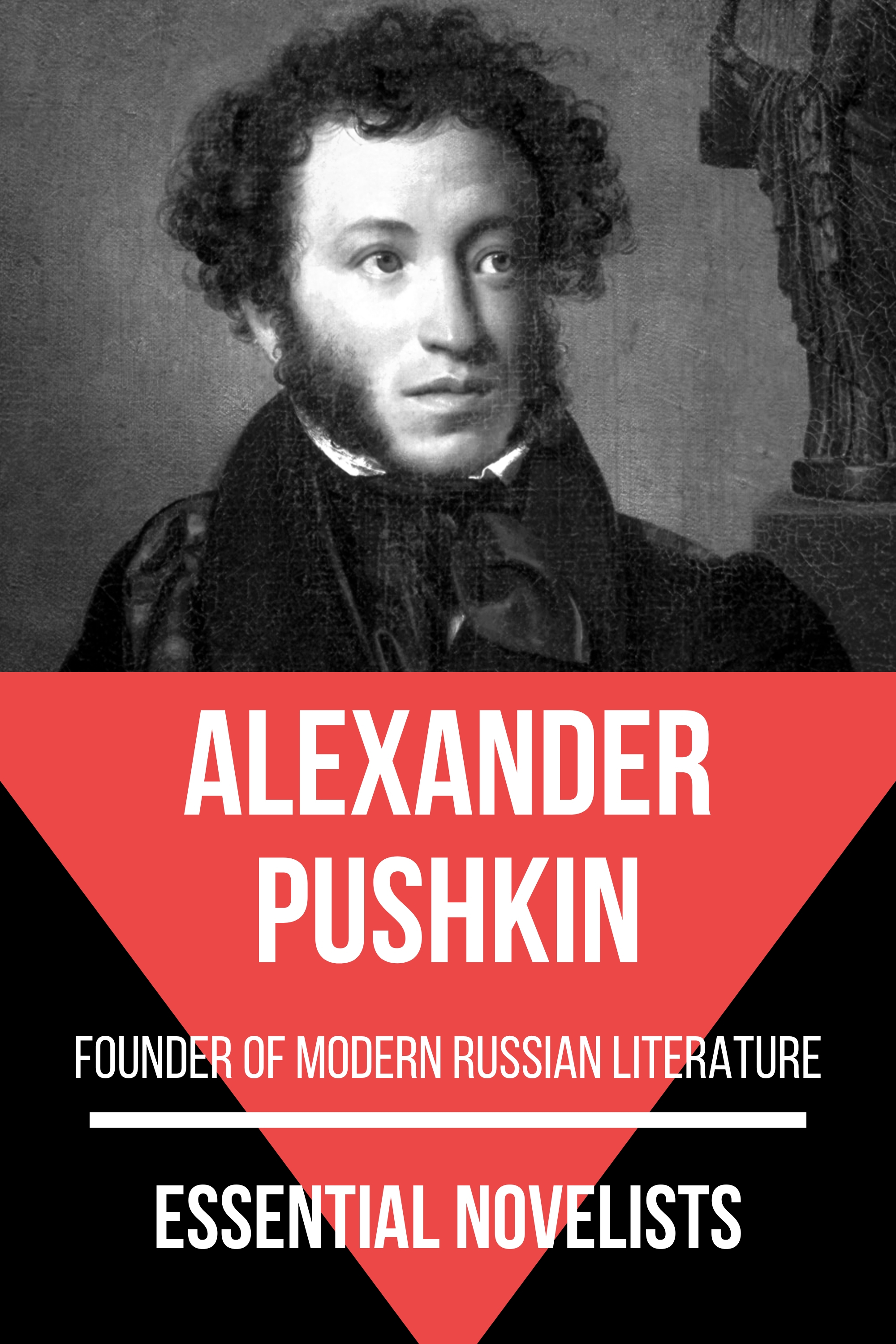

Eugene Onegin
(Russian Literature Classic)
Published by
Books
Table of Contents
Introduction
A restless heart collides with a society fluent in manners but deaf to genuine feeling. In Eugene Onegin, Alexander Pushkin unfolds a novel in verse that transforms such a collision into a portrait of early nineteenth‑century Russian life. Set across ballrooms and birch‑lined estates, the work pairs razor‑sharp observation with lyrical poise, tracing the movements of characters whose desires, poses, and silences reflect a culture at once captivated by modernity and bound to ritual. Without rushing to melodrama, the poem dramatizes the gulf between shallow brilliance and sincere emotion, inviting readers to listen for what is said—and what is withheld—beneath the polished surface of conversation.
Pushkin, often regarded as the founding figure of modern Russian literature, composed Eugene Onegin over the 1820s and early 1830s, publishing it in installments before issuing a complete text. Its daring choice of form—a novel written entirely in verse—was matched by a distinctive stanza pattern that critics now call the Onegin stanza. The result is at once playful and exacting: a flexible instrument capable of satire, intimacy, and sudden emotional clarity. Written at a moment when European Romanticism met a distinctly Russian sensibility, the poem balances elegance with earthiness, turning everyday detail into art. It remains Pushkin’s signature achievement and a cornerstone of the national canon.
The world of Eugene Onegin is Imperial Russia at a turning point, with St. Petersburg’s glittering salons conversing constantly with Paris while provincial estates cultivate older rhythms of life. Fashionable society prizes wit, French phrases, and the latest reviews, yet beneath the cosmopolitan surface lie obligations to family, land, and rank. Pushkin registers this environment with a journalist’s curiosity and a poet’s economy, sketching theaters, country roads, and winter gatherings in strokes that feel both precise and light. The setting is not merely backdrop: it exerts a steady pressure on behavior, shaping what can be said, what must be implied, and what must be left unsaid.
At the center stands Eugene Onegin, an urbane young aristocrat whose sophistication conceals a weary indifference. An inheritance draws him from the capital to a country estate, where he befriends Vladimir Lensky, a generous, idealistic poet recently returned from German schooling. Through Lensky, Onegin meets the Larin family and becomes acquainted with two sisters, the reflective Tatyana and the lively Olga. From that simple beginning Pushkin assembles a social constellation—neighbors, relatives, visitors—through which he examines friendship, courtship, and the rituals that govern both. This introduction is deliberately measured: the poem invites us to observe attitudes and expectations before choices begin to matter.
Part of the book’s originality lies in its narrator, a cultivated, companionable voice that comments on plot and pauses to wander through digressions on reading, fashion, weather, theater, and travel. The narrator is not a neutral window; he is a presence, sometimes teasing, sometimes confiding, always shaping the frame through which we see the action. This self‑aware guidance gives the work a modern elasticity, allowing satire and tenderness to share the same stanza. By foregrounding the act of telling, Pushkin builds a narrative that is about its story and about storytelling itself, a dual focus that expands the book’s intellectual and emotional range.
Among its abiding themes are disillusionment and authenticity: how a polished persona can protect and impoverish, how sincerity struggles to find the right moment and form. Class expectations and the codes of honor regulate gestures large and small, from how people dance and write letters to how they acknowledge or avert feeling. Time is another quiet protagonist—the slow cycles of seasons, the speed of fashionable novelty, the patience or impatience with which people change. The poem treats these forces not as abstractions but as pressures felt in small decisions, reminding readers that missed chances and realized possibilities begin in the texture of daily life.
Eugene Onegin’s technical design deepens its themes. The poem moves in iambic tetrameter, arranged in a recurring fourteen‑line stanza with a characteristic rhyme pattern and shifting stresses that encourage quick, conversational movement. This structure enables sudden pivots—from urbane wit to quiet lyricism—and binds the narrative with subtle musicality. Form and content echo one another: social dances mirror stanzaic turns; digressions unwind like playful variations. Because the language is so finely patterned, translation presents unusual challenges, and dozens of translators have approached the task differently. Yet across versions the poem’s clarity of scene, nimble argument, and humane humor remain remarkably resilient.
The book is a classic not only for its invention but for the tradition it set in motion. By uniting a keen portrait of society with a probing inner gaze, Pushkin helped prepare the ground for later Russian prose fiction, where psychological nuance and social context are inseparable. Novelists such as Ivan Turgenev, Fyodor Dostoevsky, and Leo Tolstoy wrote within a landscape reshaped by his example, borrowing the confidence to let character, custom, and conscience develop together. In its poise and daring, Eugene Onegin demonstrates how a national literature could converse with Europe while sounding unmistakably its own voice.
Its influence radiated beyond the page. The story, characters, and atmosphere inspired stage and screen adaptations, the most renowned being Pyotr Tchaikovsky’s opera, which has kept the tale in repertory for generations. Scholars, poets, and translators have continually returned to the poem, debating its nuances and exploring its technical feats. In the Anglophone world, multiple translations, including annotated editions, have opened the work to new readers and sparked lively discussion about fidelity and style. This ongoing dialogue is part of the book’s stature: classics endure not through reverence alone but through the continuing energy they release into culture.
Readers encountering Eugene Onegin today will find a narrative at once intimate and expansive. The poem assumes familiarity with certain conventions—salon chatter, literary fashions, even casual switches into French—yet Pushkin deftly supplies context, and modern editions typically provide notes where needed. What feels most contemporary is the balance of irony and feeling: the narrator can appraise a scene with cool intelligence and, a page later, register a tremor of hope or unease. One can savor the book as social history, poetic performance, and human drama at the same time, each perspective clarifying and complicating the others without exhausting them.
Central to the work’s afterlife is its portrait of character. Onegin has often been associated with the archetype later called the superfluous man, outwardly gifted and inwardly adrift; Lensky embodies youthful idealism; Tatyana stands out as a thoughtful, observant figure whose inner life presses against the limits of her world. Pushkin’s art refuses caricature. He grants each person motives and contradictions that invite sympathy without dissolving judgment. The social sphere is neither purely corrupt nor purely noble, but a web of habits and hopes within which people must choose. Such measured insight keeps the poem vivid rather than fixed into a moral fable.
As an exploration of choice, self‑presentation, and the costs of indifference, Eugene Onegin speaks clearly to the present. Its characters negotiate pressures that feel familiar: the charm and chill of urban sophistication, the tug of community, the temptation to watch life rather than engage it. The poem’s craft shows how art can be exact without being rigid, playful without being slight. That combination explains its enduring appeal. Whether read for its music, its social acuity, or its humane intelligence, Pushkin’s masterpiece continues to offer companionship and provocation—a classic that renews its meaning whenever a reader listens closely.
Synopsis
Eugene Onegin, Alexander Pushkin’s novel in verse, unfolds in early nineteenth‑century Russia, blending narrative, social portrait, and authorial reflection. Its narrator, urbane and teasing, presents Onegin, a wealthy young aristocrat fatigued by fashionable life in St. Petersburg. When circumstances draw Onegin to the countryside, the poem contrasts glittering urban routines with provincial rhythms. The work’s intricate stanza form underpins a flexible voice that shifts between irony and sincere lyricism. Within this frame, Pushkin sketches a culture of salons, duels, reading habits, and seasonal rituals, preparing a stage on which personal temperaments, literary ideals, and social expectations intersect with fateful consequence.
In the provinces Onegin meets Vladimir Lensky, a neighboring landowner and budding poet educated in Germany. Their friendship, born of proximity and novelty, juxtaposes Onegin’s skeptical sophistication with Lensky’s ardent idealism. Through them the narrator explores generational attitudes shaped by European fashions and local custom. Lensky introduces Onegin to the Larin household, where domestic life, folk traditions, and gentle sociability temper the sharp angles of city manners. The sisters Tatiana and Olga emerge as contrasting figures: introspective and bookish versus blithe and conventional. The poem dwells on small rituals—visits, songs, winter games—while quietly arranging the human geometry that will drive the plot.
Tatiana’s inner life becomes central. Shaped by sentimental novels yet rooted in the Russian landscape, she reads omens in dreams and seasons, seeking coherence in feeling. Onegin’s reserve fascinates her as an emblem of worldly knowledge. The narrator stages a poised confrontation between sincerity and disenchantment: a young woman’s spontaneous trust meets a man’s caution and pride. A letter, written with unguarded candor, sets their trajectories in motion, placing private emotion against the etiquette of reputation. Onegin’s response, measured and didactic, articulates a code meant to protect both parties, yet it exposes a deeper conflict between authenticity and social poise.
A festive name‑day gathering thickens the social atmosphere. Amid music, gossip, and toasts, Onegin bristles at provincial curiosity and plays a calculated social game meant to unsettle expectations. The narrator observes the mechanics of public embarrassment and the thin line between amusement and insult. Tensions escalate under the rigid logic of honor, where gestures bear meanings beyond intention. A challenge becomes unavoidable, and the poem pauses on the cold clarity of ritual preparation. Pushkin uses the scene to anatomize the era’s codes: how youthful bravado, etiquette, and wounded pride can compress into a decision whose consequences exceed anyone’s first impulse.
After the crisis, the countryside falls into a hush marked by absence. Changing weather and empty routines mirror the characters’ inward recalibration. The narrator turns to memory and vocation, touching on his own creative path, while Tatiana seeks to understand the figure who unsettled her. Wandering through Onegin’s deserted rooms, she reads his books and marginal notes, trying to deduce a person from patterns of taste. The scene broadens the novel’s inquiry, suggesting that literary models both clarify and distort reality. Tatiana’s gaze moves from romantic projections to a cooler appraisal of type and temperament, deepening the poem’s psychological texture.
The story’s center of gravity shifts to the capital, with its glittering facades, measured protocol, and exacting hierarchies. Introduced to high society, Tatiana acquires composure without losing gravity, and the narrator records the choreography of receptions, corridors, and glances. Onegin, reentering this world, encounters a transformation that unsettles his accustomed detachment. The city’s luminosity and noise frame a new phase of recognition in which past impressions return altered by distance. Social rank, reputation, and rumor now mediate every approach, and the poem measures the gap between surface ceremony and private memory, asking how time and setting recast the self.
Renewed meetings spark a reversal of emotional vectors. Where candor once met caution, hesitation now faces resolve. Letters and visits resume the book’s dialogue about freedom, duty, and the claims of feeling. Onegin’s reflections bend toward what was missed; Tatiana’s toward what must be weighed. The narrator maintains ironic poise, noting how imagination idealizes what eluded possession, and how experience tests the glamour of desire. The rhythm of stanzas slows to accommodate introspection and a heightened sense of irrevocability. Yet Pushkin avoids melodrama, preferring measured speech that shows the cost of late insight without spelling outcomes in blunt terms.
Interwoven throughout are digressions that expand the poem’s scope: sketches of poets and critics, winters and masquerades, travel plans never taken, and affectionate portraits of Russian speech. Pushkin’s playful erudition situates Onegin as a recognizable social type while resisting caricature, and Lensky’s youthful ardor supplies a counterpoint drawn from philosophical reading and lyric convention. The famous verse form, nimble and musical, enables swift shifts from satire to elegy, from catalog to confession. By filtering events through a companionable narrator, the work builds a self‑portrait of its literary moment, contemplating the uses of art in a world of fragile ideals.
Without disclosing final turns, it is enough to say the poem considers how timing, character, and convention shape human possibility. Eugene Onegin endures as a study of cultivated indifference meeting earnest feeling, of friendship tested by formality, and of identity revised by reading and remembrance. Its blend of social comedy and quiet tragedy established a model for Russian prose and poetry to come, influencing how later writers treat the ordinary as consequential. The book’s lasting message is not a single verdict but an invitation to weigh desire against responsibility, and to notice how self‑knowledge arrives, often, just a step too late.
Historical Context
Eugene Onegin unfolds in the Russian Empire of the 1810s–1820s, principally between Saint Petersburg and a provincial estate typical of the northwestern or central regions. The dominant institutions shaping this world were autocracy, serfdom, and the nobility’s Table of Ranks, with the Orthodox Church anchoring social life. Saint Petersburg, the imperial capital, served as an administrative and cultural hub for the elite, while the countryside remained organized around landed estates and peasant labor. The novel’s manners, speech, and routines reflect a society stratified by rank and birth, tightly bound by custom, and oriented toward imperial service and social display, yet divided between metropolitan polish and rural inertia.
Alexander Pushkin composed Eugene Onegin over roughly 1823–1831, issuing chapters serially through the mid-1820s and early 1830s. The poem’s gestation coincided with Pushkin’s own political troubles and movements: service in Saint Petersburg after the Lyceum (from 1817), southern exile beginning in 1820, internal exile at his family estate of Mikhailovskoe from 1824, and cautious readmission to society after 1826. These circumstances, and the censorship that governed print in the empire, shaped the poem’s topical texture—its allusions to current debates and discreet silences. The work thus mirrors a transitional decade, carrying traces of events that unfolded even as the author wrote and published.
The elite milieu of Onegin was deeply Europeanized, a legacy of reforms since Peter the Great. By the late eighteenth and early nineteenth centuries, French was the preferred language of conversation and correspondence in aristocratic circles; tutors, governesses, and imported fashions were common. Salons, balls, and theatre seasons imitated Parisian models. Pushkin depicts this Francophone world with precision, registering its elegance and its strain: a cultivated surface masking uncertainty about national identity. The narrative repeatedly underscores how noble Russians read, dress, and socialize like Europeans while living on Russian estates and relying on Russian peasants, a duality central to the period’s cultural self-understanding.
The Napoleonic Wars, and especially the 1812 French invasion of Russia, form a powerful backdrop. The devastation and patriotic mobilization of 1812 stirred new currents of national feeling, visible in literature, public ceremonies, and the rising prestige of the Russian language. Many officers who fought in the campaigns returned with sharpened political expectations and broader European experience. While Onegin does not recount battle scenes, its characters inhabit the war’s afterglow—a world in which patriotic memory, veteran networks, and renewed interest in national culture shaped elite conversation. The work captures a generation negotiating victory’s pride alongside the empire’s persistent autocratic and social constraints.
Out of this postwar milieu arose the secret societies that culminated in the Decembrist uprising of 1825, when officers attempted to force constitutional change during the succession crisis after Alexander I’s death. The revolt was swiftly crushed; leaders were executed or exiled to Siberia, and the state intensified surveillance. Pushkin did not participate—he was already under restriction—but he knew several conspirators from his youth. The atmosphere of thwarted idealism and political caution colors Onegin’s tone. Without overtly naming events, the poem reflects a generation’s disillusion: the sense that European hopes, once kindled in wartime, foundered against entrenched autocracy and social order.
The novel’s portrait of a disengaged young aristocrat is inseparable from eighteenth-century changes in noble service. Catherine II’s Charter to the Nobility (1785) secured corporate privileges and effectively ended the obligation of lifetime state service for nobles. By Onegin’s time, many gentry families balanced seasonal bureaucratic posts with periods of leisure or retired entirely to pursuits of culture and estate life. Pushkin’s hero belongs to this class: educated, mobile, and well connected, yet not compelled to sustain a career. Balls, theatres, restaurants, and summer country retreats fill the calendar, revealing a society where rank ensures comfort but not purpose.
Serfdom structured the economy and everyday life beyond the capital. Peasants owed labor dues (barshchina) or money payments (obrok) to landowners; estate management was delegated to stewards and bailiffs, often producing tensions and abuses. Pushkin evokes the paternalism and distance typical of the system, as well as reform talk among enlightened nobles interested in agricultural improvement or commutation of duties. In the 1810s–1820s many landlords experimented with new arrangements, but the legal framework of bondage remained intact. By staging provincial routines and the landlord’s boredom, Onegin reflects a social order in which wealth rested on coerced labor and change advanced unevenly.
Saint Petersburg—and to a lesser extent Moscow—offered the empire’s most elaborate urban sociability. Court presentations, the opera and ballet, subscription balls, literary evenings, and elite clubs structured the winter season. The bureaucratic ministries, staffed by ranks codified since Peter the Great, provided careers and status markers. Luxury consumption, imported dress, and an international cuisine conveyed fashionability. Pushkin’s urban chapters sketch this world in swift, exact strokes: the etiquette of visits and cards, the calculus of invitations, and the pressure to display wit, taste, and connections. The relentless pace of appearances cultivates elegance and restlessness, a combination that defines Onegin’s ennui.
Outside the capitals, provincial noble life revolved around estates, local assemblies, church feasts, name-day celebrations, and a calendar of visits among neighbors. Domestic routines mixed European habits with Russian customs and folklore. Pushkin records village fairs, seasonal rituals, and popular beliefs that persisted alongside salon culture; he pays close attention to the textures of food, dress, and speech that distinguished country households. The contrast between metropolitan fashions and provincial mores frames much of the novel’s social observation. It also anchors the work in the lived reality of rural Russia, where isolation, hospitality, and watchful gossip shaped reputations and courtships.
Education patterns helped produce the novel’s types. Pushkin’s own Lyceum (founded 1811 at Tsarskoye Selo) embodied a modern, humanistic curriculum for elite boys destined for service. Across the gentry, private tutors and boarding schools supplied French, history, and literature; German universities, notably Göttingen, attracted young men seeking philosophy and science. The novel mirrors these paths: a cosmopolitan, skeptical man of the world, and a student inflamed by German Romanticism. Women’s education emphasized languages, music, and manners; family libraries circulated French and Russian books. This environment seeded the reading habits, emotional codes, and rhetorical models that inform the characters’ letters, conversations, and ideals.
Literary culture in these decades was shifting from late Classicism and Sentimentalism toward Romanticism, filtered through British and German models. Karamzin’s prose popularized delicate feeling and moral reflection, while Byron’s poems—widely read in Russian translation and imitation—introduced the figure of the disenchanted cosmopolitan hero. Pushkin synthesized these currents, setting a Byronic protagonist amid sentimental expectations and a comic-epic narrative voice. Onegin’s ironic stance toward European clichés and provincial fantasies registers the period’s debates about authenticity, imitation, and national style. The poem thus operates within, and comments on, a literary marketplace negotiating foreign influence and native expression.
Publishing itself was constrained and dynamic. Periodicals, almanacs, and subscription volumes proliferated in Saint Petersburg and Moscow, serviced by expanding printing houses and booksellers. Journals carried criticism, travelogues, and translations, feeding salon conversation and shaping reputations. At the same time, all printed matter faced pre-publication censorship by civil and ecclesiastical committees. Authors learned to negotiate permissible allusion, satire, and topicality. Eugene Onegin’s serial publication leveraged the periodical economy while staying within censorial limits; its digressive notes, playful masks, and genre-bending stance gave Pushkin room to hint at current affairs without overt polemic.
Everyday life depended on transportation and communication technologies suitable to a vast empire. Post roads, way stations, and the troika made winter travel efficient, while spring thaws could halt movement for weeks. Couriers and mail coaches enabled letters to circulate between capital and countryside; correspondents observed formulas of politeness imported from French models. Such conditions structure Onegin’s movements and the timing of visits, as well as the centrality of letters to courtship and reputation. Travel also carried news, fashions, and books into the provinces, connecting estates to urban culture while underscoring the endurance of distance in social experience.
The culture of honor, including dueling, formed part of noble sociability. Despite repeated imperial bans since the eighteenth century, duels persisted—typically with pistols and strict formalities regarding seconds, distances, and apologies. Newspapers occasionally reported them discreetly; gossip completed the record. Pushkin portrays a duel not to celebrate violence but to expose the brittle codes governing reputation, insult, and male friendship. The episode aligns with contemporary debates about honor’s demands and the state’s authority, revealing how imported European rituals took root in Russia yet sometimes produced tragic, unnecessary outcomes within the tightly surveilled order of imperial life.
Gender expectations and the marriage market, especially in gentry circles, also shape the narrative. Young women were chaperoned at balls and visits; matches weighed dowry, lineage, and prospects. Domestic instruction emphasized virtue, reserve, and accomplishments like music and needlework; reading broadened horizons but was often policed. Correspondence and visits followed strict etiquette, and reputation could hinge on perceived impropriety. Pushkin captures both the constraints and the agency women negotiated within them. Provincial and metropolitan courts operated differently: country households valued stability and kin networks, while capital circles accentuated display and advantageous alliances, intensifying pressure on suitors and brides alike.
Censorship and surveillance tightened after 1825. Nicholas I’s reign began with the creation of the Third Section (a political police) in 1826, and new censorship statutes—especially the highly restrictive 1826 law, moderated somewhat in 1828—regulated print. The emperor took a personal interest in Pushkin’s career, requiring him to submit works for review through official channels. This environment shaped the poem’s indirectness: political topics surface obliquely, social critique hides in wit, and historical hints appear in footnotes or parody. The necessity of indirection sharpened Pushkin’s artistry, encouraging a form that could register public realities while remaining within acceptable bounds.
By weaving metropolitan fashion, provincial custom, serfdom’s routines, and postwar politics into a single narrative, Eugene Onegin acts as both mirror and critique of its era. It captures the boredom of privileged life without vocation, the fissure between European polish and Russian foundations, and the disillusion of a generation chastened by failed hopes of reform. At the same time, it memorializes a living social fabric—its dances, journeys, readings, and seasons—before later transformations, including the eventual abolition of serfdom in 1861. The poem’s enduring power lies in its precise, ironic portrayal of a society on the brink of self-recognition yet resistant to change.
Author Biography
Alexander Pushkin (1799–1837) stands at the inception of Russia's literary modernity. A poet, dramatist, and prose innovator, he wrote during the high Romantic era yet helped set the stage for realism by fusing colloquial speech with classical form. His works range from lyric poetry and verse narrative to drama, short fiction, and historical prose. Across this breadth he pursued questions of freedom, power, history, and personal conscience while reshaping Russian as a supple literary medium. Living under imperial censorship and frequent surveillance, he nonetheless achieved a body of work whose stylistic variety and linguistic precision made him the central figure of the Russian literary "Golden Age."
Raised in Moscow and educated at the Imperial Lyceum at Tsarskoye Selo, Pushkin received rigorous instruction in languages, history, and rhetoric. The Lyceum's environment, imbued with Enlightenment ideals and lively literary debate, nurtured his talent and early fame. After graduating in 1817, he entered St. Petersburg's literary circles connected with reformers of the Russian language. He read French classics and the philosophes alongside contemporary European Romantics, absorbing models from Voltaire to Byron, and learned from Russian predecessors such as Karamzin, Batyushkov, and Zhukovsky. Folklore, colloquial idiom, and urban speech also shaped his ear, encouraging an art that joined high style to everyday Russian expression.
In the late 1810s and early 1820s Pushkin gained prominence as a brilliant satirist and lyricist while attracting official scrutiny for politically charged verses, including an ode that praised civic liberty. His long poem Ruslan and Ludmila (1820) blended mock-epic wit with fairy-tale sources, announcing a new, playful Russian idiom. Soon he was sent away from the capital to southern regions of the empire. That period yielded major verse narratives—the Prisoner of the Caucasus, The Fountain of Bakhchisaray, and Gypsies—which explored passion, freedom, and cultural encounter within Romantic frameworks. The southern exile broadened his geography and tempered youthful bravura with reflective psychological observation.
From 1824 Pushkin lived under supervision in rural Mikhaylovskoye, where his art deepened and diversified. He advanced a conversational, metrically flexible line in the serially published novel in verse Eugene Onegin, whose social panorama and tonal range became a touchstone for later prose and poetry. He also completed the historical tragedy Boris Godunov, engaging national history through dramaturgy informed by chronicle and Shakespearean example. After 1826 he returned to the capital under continuing oversight, navigating censorship while refining a poetics that could nimbly move between irony and gravity. These years consolidated his authority as a master of form and register.
A remarkable burst of productivity during an enforced countryside stay in 1830 produced the Tales of Belkin, a pioneering cycle of short stories notable for narrative framing and stylistic economy; the so-called Little Tragedies, compact verse dramas probing moral choice; and numerous lyrics. Shortly thereafter he wrote The Queen of Spades, a model of concise, psychologically edged prose, and the Petersburg poem The Bronze Horseman, which entwined urban myth, ambition, and state power. He increasingly experimented with narrators, genre boundaries, and the interplay of oral and written culture, extending his command beyond lyric and narrative verse into modern short fiction and theater.
In the 1830s Pushkin pursued history as both scholar and artist. He researched and published a study of the Pugachev uprising and transformed that material into the novel The Captain's Daughter, balancing narrative drive with documentary precision. Committed to shaping public discourse, he founded the journal The Contemporary, while continuing poems and tales amid tightening censorship and financial strain. His stance combined aesthetic independence with an interest in civic freedom, evident since early works like the ode on liberty. A personal quarrel led to a duel in St. Petersburg in early 1837; he died soon after, leaving an incomplete but profoundly influential corpus.
Pushkin's legacy rests on the extraordinary elasticity and clarity he gave to Russian literary language, uniting vernacular vitality with classical measure. Later poets and novelists—from Lermontov and Gogol to Turgenev, Tolstoy, and Dostoevsky—acknowledged his primacy, even when diverging from his methods. His works became central to education, translation, and performance; composers repeatedly adapted his narratives and lyrics. Subsequent generations have read him as a creator of archetypes, a theorist of artistic freedom, and a historian of conscience under authority. Continually reinterpreted, he remains a touchstone for debates about language, tradition, and modernity, sustaining relevance far beyond his own century.
Eugene Onegin (Russian Literature Classic)
Preface
Eugene Oneguine, the chief poetical work of Russia’s greatest poet[1q], having been translated into all the principal languages of Europe except our own, I hope that this version may prove an acceptable contribution to literature. Tastes are various in matters of poetry, but the present work possesses a more solid claim to attention in the series of faithful pictures it offers of Russian life and manners. If these be compared with Mr. Wallace’s book on Russia, it will be seen that social life in that empire still preserves many of the characteristics which distinguished it half a century ago — the period of the first publication of the latter cantos of this poem.
Many references will be found in it to our own country and its literature. Russian poets have carefully plagiarized the English — notably Joukovski[1]. Pushkin, however, was no plagiarist, though undoubtedly his mind was greatly influenced by the genius of Byron — more especially in the earliest part of his career. Indeed, as will be remarked in the following pages, he scarcely makes an effort to disguise this fact.
The biographical sketch is of course a mere outline. I did not think a longer one advisable, as memoirs do not usually excite much interest till the subjects of them are pretty well known. In the “notes” I have endeavored to elucidate a somewhat obscure subject. Some of the poet’s allusions remain enigmatical to the present day. The point of each sarcasm naturally passed out of mind together with the society against which it was levelled. If some of the versification is rough and wanting in “go,” I must plead in excuse the difficult form of the stanza, and in many instances the inelastic nature of the subject matter to be versified. Stanza XXXV Canto II forms a good example of the latter difficulty, and is omitted in the German and French versions to which I have had access. The translation of foreign verse is comparatively easy so long as it is confined to conventional poetic subjects, but when it embraces abrupt scraps of conversation and the description of local customs it becomes a much more arduous affair. I think I may say that I have adhered closely to the text of the original.
The following foreign translations of this poem have appeared:
French prose. Oeuvres choisis de Pouchekine. H. Dupont. Paris, 1847.German verse. A. Puschkin’s poetische Werke. F. Bodenstedt. Berlin, 1854.Polish verse. Eugeniusz Oniegin. Roman Aleksandra Puszkina. A. Sikorski. Vilnius, 1847.Italian prose. Racconti poetici di A. Puschkin, tradotti da A. Delatre. Firenze, 1856.London, May 1881.
Note: Russian proper names to be pronounced as in French (the nasal sound of m and n excepted) in the following translation. The accent, which is very arbitrary in the Russian language, is indicated unmistakably in a rhythmical composition.
Mon Portrait
Written by the poet at the age of 15.
Vous me demandez mon portrait,
Mais peint d’apres nature:
Mon cher, il sera bientot fait,
Quoique en miniature.
Je suis un jeune polisson
Encore dans les classes;
Point sot, je le dis sans facon,
Et sans fades grimaces.
Oui! il ne fut babillard
Ni docteur de Sorbonne,
Plus ennuyeux et plus braillard
Que moi-meme en personne.
Ma taille, a celle des plus longs,
Elle n’est point egalee;
J’ai le teint frais, les cheveux blonds,
Et la tete bouclee.
J’aime et le monde et son fracas,
Je hais la solitude;
J’abhorre et noises et debats,
Et tant soit peu l’etude.
Spectacles, bals, me plaisent fort,
Et d’apres ma pensee,
Je dirais ce que j’aime encore,
Si je n’etais au Lycee.
Apres cela, mon cher ami,
L’on peut me reconnaitre,
Oui! tel que le bon Dieu me fit,
Je veux toujours paraitre.
Vrai demon, par l’espieglerie,
Vrai singe par sa mine,
Beaucoup et trop d’etourderie,
Ma foi! voila Pouchekine.
A Short Biographical Notice of Alexander Pushkin.
Alexander Sergevitch Pushkin was born in 1799 at Pskoff, and was a scion of an ancient Russian family. In one of his letters it is recorded that no less than six Pushkins signed the Charta declaratory of the election of the Romanoff family to the throne of Russia, and that two more affixed their marks from inability to write.
In 1811 he entered the Lyceum[2], an aristocratic educational establishment at Tsarskoe Selo, near St. Petersburg, where he was the friend and schoolmate of Prince Gortchakoff the Russian Chancellor. As a scholar he displayed no remarkable amount of capacity, but was fond of general reading and much given to versification. Whilst yet a schoolboy he wrote many lyrical compositions and commenced Ruslan and Liudmila, his first poem of any magnitude, and, it is asserted, the first readable one ever produced in the Russian language. During his boyhood he came much into contact with the poets Dmitrieff and Joukovski, who were intimate with his father, and his uncle, Vassili Pushkin, himself an author of no mean repute. The friendship of the historian Karamzine must have exercised a still more beneficial influence upon him.
In 1817 he quitted the Lyceum and obtained an appointment in the Foreign Office at St. Petersburg. Three years of reckless dissipation in the capital, where his lyrical talent made him universally popular, resulted in 1818 in a putrid fever which was near carrying him off. At this period of his life he scarcely slept at all; worked all day and dissipated at night. Society was open to him from the palace of the prince to the officers’ quarters of the Imperial Guard. The reflection of this mode of life may be noted in the first canto of Eugene Oneguine and the early dissipations of the “Philosopher just turned eighteen,”— the exact age of Pushkin when he commenced his career in the Russian capital.
In 1820 he was transferred to the bureau of Lieutenant–General Inzoff, at Kishineff in Bessarabia. This event was probably due to his composing and privately circulating an “Ode to Liberty,” though the attendant circumstances have never yet been thoroughly brought to light. An indiscreet admiration for Byron most likely involved the young poet in this scrape. The tenor of this production, especially its audacious allusion to the murder of the emperor Paul, father of the then reigning Tsar, assuredly deserved, according to aristocratic ideas, the deportation to Siberia which was said to have been prepared for the author. The intercession of Karamzine and Joukovski procured a commutation of his sentence. Strangely enough, Pushkin appeared anxious to deceive the public as to the real cause of his sudden disappearance from the capital; for in an Ode to Ovid composed about this time he styles himself a “voluntary exile.” (See Note 4 to this volume.)
During the four succeeding years he made numerous excursions amid the beautiful countries which from the basin of the Euxine — and amongst these the Crimea and the Caucasus. A nomad life passed amid the beauties of nature acted powerfully in developing his poetical genius. To this period he refers in the final canto of Eugene Oneguine (st. v.), when enumerating the various influences which had contributed to the formation of his Muse:
Then, the far capital forgot,
Its splendour and its blandishments,
In poor Moldavia cast her lot,
She visited the humble tents
Of migratory gipsy hordes.
During these pleasant years of youth he penned some of his most delightful poetical works: amongst these, The Prisoner of the Caucasus, The Fountain of Baktchiserai, and the Gipsies. Of the two former it may be said that they are in the true style of the Giaour and the Corsair. In fact, just at that point of time Byron’s fame — like the setting sun — shone out with dazzling lustre and irresistibly charmed the mind of Pushkin amongst many others. The Gipsies is more original; indeed the poet himself has been identified with Aleko, the hero of the tale, which may well be founded on his own personal adventures without involving the guilt of a double murder. His undisguised admiration for Byron doubtless exposed him to imputations similar to those commonly levelled against that poet. But Pushkin’s talent was too genuine for him to remain long subservient to that of another, and in a later period of his career he broke loose from all trammels and selected a line peculiarly his own. Before leaving this stage in our narrative we may point out the fact that during the whole of this period of comparative seclusion the poet was indefatigably occupied in study. Not only were the standard works of European literature perused, but two more languages — namely Italian and Spanish — were added to his original stock: French, English, Latin and German having been acquired at the Lyceum. To this happy union of literary research with the study of nature we must attribute the sudden bound by which he soon afterwards attained the pinnacle of poetic fame amongst his own countrymen.
In 1824 he once more fell under the imperial displeasure. A letter seized in the post, and expressive of atheistical sentiments (possibly but a transient vagary of his youth) was the ostensible cause of his banishment from Odessa to his paternal estate of Mikhailovskoe in the province of Pskoff. Some, however, aver that personal pique on the part of Count Vorontsoff, the Governor of Odessa, played a part in the transaction. Be this as it may, the consequences were serious for the poet, who was not only placed under the surveillance of the police, but expelled from the Foreign Office by express order of the Tsar “for bad conduct.” A letter on this subject, addressed by Count Vorontsoff to Count Nesselrode, is an amusing instance of the arrogance with which stolid mediocrity frequently passes judgment on rising genius. I transcribe a portion thereof:
Odessa, 28th March (7th April) 1824
Count — Your Excellency is aware of the reasons for which, some time ago, young Pushkin was sent with a letter from Count Capo d’Istria to General Inzoff. I found him already here when I arrived, the General having placed him at my disposal, though he himself was at Kishineff. I have no reason to complain about him. On the contrary, he is much steadier than formerly. But a desire for the welfare of the young man himself, who is not wanting in ability, and whose faults proceed more from the head than from the heart, impels me to urge upon you his removal from Odessa. Pushkin’s chief failing is ambition. He spent the bathing season here, and has gathered round him a crowd of adulators who praise his genius. This maintains in him a baneful delusion which seems to turn his head — namely, that he is a “distinguished writer;” whereas, in reality he is but a feeble imitator of an author in whose favour very little can be said (Byron). This it is which keeps him from a serious study of the great classical poets, which might exercise a beneficial effect upon his talents — which cannot be denied him — and which might make of him in course of time a “distinguished writer.”
The best thing that can be done for him is to remove him hence. ...
The Emperor Nicholas on his accession pardoned Pushkin and received him once more into favour. During an interview which took place it is said that the Tsar promised the poet that he alone would in future be the censor of his productions. Pushkin was restored to his position in the Foreign Office and received the appointment of Court Historian. In 1828 he published one of his finest poems, Poltava, which is founded on incidents familiar to English readers in Byron’s Mazeppa. In 1829 the hardy poet accompanied the Russian army which under Paskevitch captured Erzeroum. In 1831 he married a beautiful lady of the Gontchareff family and settled in the neighbourhood of St. Petersburg, where he remained for the remainder of his life, only occasionally visiting Moscow and Mikhailovskoe. During this period his chief occupation consisted in collecting and investigating materials for a projected history of Peter the Great, which was undertaken at the express desire of the Emperor. He likewise completed a history of the revolt of Pougatchoff[3], which occurred in the reign of Catherine II. (This individual having personated Peter III, the deceased husband of the Empress, raised the Orenburg Cossacks in revolt. This revolt was not suppressed without extensive destruction of life and property.) In 1833 the poet visited Orenburg, the scene of the dreadful excesses he recorded; the fruit of his journey being one of the most charming tales ever written, The Captain’s Daughter.
The remaining years of Pushkin’s life, spent in the midst of domestic bliss and grateful literary occupation, were what lookers-on style “years of unclouded happiness.” They were, however, drawing rapidly to a close. Unrivalled distinction rarely fails to arouse bitter animosity amongst the envious, and Pushkin’s existence had latterly been embittered by groundless insinuations against his wife’s reputation in the shape of anonymous letters addressed to himself and couched in very insulting language. He fancied he had traced them to one Georges d’Anthes, a Frenchman in the Cavalier Guard, who had been adopted by the Dutch envoy Heeckeren. D’Anthes, though he had espoused Madame Pushkin’s sister, had conducted himself with impropriety towards the former lady. The poet displayed in this affair a fierce hostility quite characteristic of his African origin but which drove him to his destruction. D’Anthes, it was subsequently admitted, was not the author of the anonymous letters; but as usual when a duel is proposed, an appeal to reason was thought to smack of cowardice. The encounter took place in February 1837 on one of the islands of the Neva. The weapons used were pistols, and the combat was of a determined, nay ferocious character. Pushkin was shot before he had time to fire, and, in his fall, the barrel of his pistol became clogged with snow which lay deep upon the ground at the time. Raising himself on his elbow, the wounded man called for another pistol, crying, “I’ve strength left to fire my shot[2q]!” He fired, and slightly wounded his opponent, shouting “Bravo!” when he heard him exclaim that he was hit. D’Anthes was, however, but slightly contused whilst Pushkin was shot through the abdomen. He was transported to his residence and expired after several days passed in extreme agony. Thus perished in the thirty-eighth year of his age this distinguished poet, in a manner and amid surroundings which make the duel scene in the sixth canto of this poem seem almost prophetic. His reflections on the premature death of Lenski appear indeed strangely applicable to his own fate, as generally to the premature extinction of genius.
Pushkin was endowed with a powerful physical organisation. He was fond of long walks, unlike the generality of his countrymen, and at one time of his career used daily to foot it into St. Petersburg and back, from his residence in the suburbs, to conduct his investigations in the Government archives when employed on the History of Peter the Great. He was a good swordsman, rode well, and at one time aspired to enter the cavalry; but his father not being able to furnish the necessary funds he declined serving in the less romantic infantry. Latterly he was regular in his habits; rose early, retired late, and managed to get along with but very little sleep. On rising he betook himself forthwith to his literary occupations, which were continued till afternoon, when they gave place to physical exercise. Strange as it will appear to many, he preferred the autumn months, especially when rainy, chill and misty, for the production of his literary compositions, and was proportionally depressed by the approach of spring. (Cf. Canto VII st. ii.)
Mournful is thine approach to me,
O Spring, thou chosen time of love
He usually left St. Petersburg about the middle of September and remained in the country till December. In this space of time it was his custom to develop and perfect the inspirations of the remaining portion of the year. He was of an impetuous yet affectionate nature and much beloved by a numerous circle of friends. An attractive feature in his character was his unalterable attachment to his aged nurse, a sentiment which we find reflected in the pages of Eugene Oneguine and elsewhere.
The preponderating influence which Byron exercised in the formation of his genius has already been noticed. It is indeed probable that we owe Oneguine to the combined impressions of Childe Harold and Don Juan upon his mind. Yet the Russian poem excels these masterpieces of Byron in a single particular — namely, in completeness of narrative, the plots of the latter being mere vehicles for the development of the poet’s general reflections. There is ground for believing that Pushkin likewise made this poem the record of his own experience. This has doubtless been the practice of many distinguished authors of fiction whose names will readily occur to the reader. Indeed, as we are never cognizant of the real motives which actuate others, it follows that nowhere can the secret springs of human action be studied to such advantage as within our own breasts. Thus romance is sometimes but the reflection of the writer’s own individuality, and he adopts the counsel of the American poet:
Look then into thine heart and write!
But a further consideration of this subject would here be out of place. Perhaps I cannot more suitably conclude this sketch than by quoting from his Ode to the Sea the poet’s tribute of admiration to the genius of Napoleon and Byron, who of all contemporaries seem the most to have swayed his imagination.
Farewell, thou pathway of the free,
For the last time thy waves I view
Before me roll disdainfully,
Brilliantly beautiful and blue.
Why vain regret? Wherever now
My heedless course I may pursue
One object on thy desert brow
I everlastingly shall view—
A rock, the sepulchre of Fame[3q]!
The poor remains of greatness gone
A cold remembrance there became,
There perished great Napoleon.
In torment dire to sleep he lay;
Then, as a tempest echoing rolls,
Another genius whirled away,
Another sovereign of our souls.
He perished. Freedom wept her child,
He left the world his garland bright.
Wail, Ocean, surge in tumult wild,
To sing of thee was his delight.
Impressed upon him was thy mark,
His genius moulded was by thee;
Like thee, he was unfathomed, dark
And untamed in his majesty.
Note: It may interest some to know that Georges d’Anthes was tried by court-martial for his participation in the duel in which Pushkin fell, found guilty, and reduced to the ranks; but, not being a Russian subject, he was conducted by a gendarme across the frontier and then set at liberty.
Eugene Oneguine
Petri de vanite, il avait encore plus de cette espece d’orgueil, qui fait avouer avec la meme indifference les bonnes comme les mauvaises actions, suite d’un sentiment de superiorite, peut-etre imaginaire. — Tire d’une lettre particuliere.
(Written in 1823 at Kishineff and Odessa.)
Canto the First ‘The Spleen’
‘He rushes at life and exhausts the passions.’
— Prince Viazemski
I
“My uncle’s goodness is extreme,
If seriously he hath disease;
He hath acquired the world’s esteem
And nothing more important sees;
A paragon of virtue he!
But what a nuisance it will be,
Chained to his bedside night and day
Without a chance to slip away.
Ye need dissimulation base
A dying man with art to soothe,
Beneath his head the pillow smooth,
And physic bring with mournful face,
To sigh and meditate alone:
When will the devil take his own!”
II
Thus mused a madcap young, who drove
Through clouds of dust at postal pace,
By the decree of Mighty Jove,
Inheritor of all his race.
Friends of Liudmila and Ruslan,1
Let me present ye to the man,
Who without more prevarication
The hero is of my narration!
Oneguine, O my gentle readers,
Was born beside the Neva, where
It may be ye were born, or there
Have shone as one of fashion’s leaders.
I also wandered there of old,
But cannot stand the northern cold.2
1Ruslan and Liudmila, the title of Pushkin’s first important work, written 1817–20. It is a tale relating the adventures of the knight-errant Ruslan in search of his fair lady Liudmila, who has been carried off by a kaldoon, or magician.
2 Written in Bessarabia.
III
Having performed his service truly,
Deep into debt his father ran;
Three balls a year he gave ye duly,
At last became a ruined man.
But Eugene was by fate preserved,
For first “madame” his wants observed,
And then “monsieur” supplied her place;3
The boy was wild but full of grace.
“Monsieur l’Abbe,” a starving Gaul,
Fearing his pupil to annoy,
Instructed jestingly the boy,
Morality taught scarce at all;
Gently for pranks he would reprove
And in the Summer Garden rove.
3 In Russia foreign tutors and governesses are commonly styled “monsieur” or “madame.”
IV
When youth’s rebellious hour drew near
And my Eugene the path must trace —
The path of hope and tender fear —
Monsieur clean out of doors they chase.
Lo! my Oneguine free as air,
Cropped in the latest style his hair,
Dressed like a London dandy he
The giddy world at last shall see.
He wrote and spoke, so all allowed,
In the French language perfectly,
Danced the mazurka gracefully,
Without the least constraint he bowed.
What more’s required? The world replies,
He is a charming youth and wise.
V
We all of us of education
A something somehow have obtained,
Thus, praised be God! a reputation
With us is easily attained.
Oneguine was — so many deemed
(Unerring critics self-esteemed),
Pedantic although scholar like,
In truth he had the happy trick
Without constraint in conversation
Of touching lightly every theme.
Silent, oracular ye’d see him
Amid a serious disputation,
Then suddenly discharge a joke
The ladies’ laughter to provoke.
VI
Latin is just now not in vogue,
But if the truth I must relate,
Oneguine knew enough, the rogue
A mild quotation to translate,
A little Juvenal to spout,
With “vale” finish off a note;
Two verses he could recollect
Of the Aeneid, but incorrect.
In history he took no pleasure,
The dusty chronicles of earth
For him were but of little worth,
Yet still of anecdotes a treasure
Within his memory there lay,
From Romulus unto our day.
VII
For empty sound the rascal swore he
Existence would not make a curse,
Knew not an iamb from a choree,
Although we read him heaps of verse.
Homer, Theocritus, he jeered,
But Adam Smith to read appeared,
And at economy was great;
That is, he could elucidate
How empires store of wealth unfold,
How flourish, why and wherefore less
If the raw product they possess
The medium is required of gold.
The father scarcely understands
His son and mortgages his lands.
VIII
But upon all that Eugene knew
I have no leisure here to dwell,
But say he was a genius who
In one thing really did excel.
It occupied him from a boy,
A labour, torment, yet a joy,
It whiled his idle hours away
And wholly occupied his day—
The amatory science warm,
Which Ovid once immortalized,
For which the poet agonized
Laid down his life of sun and storm
On the steppes of Moldavia lone,
Far from his Italy — his own.4
4 Referring to Tomi[4], the reputed place of exile of Ovid. Pushkin, then residing in Bessarabia, was in the same predicament as his predecessor in song, though he certainly did not plead guilty to the fact, since he remarks in his ode to Ovid:
To exile self-consigned,
With self, society, existence, discontent,
I visit in these days, with melancholy mind,
The country whereunto a mournful age thee sent.
Ovid thus enumerates the causes which brought about his banishment:
“Perdiderint quum me duo crimina, carmen et error,
Alterius facti culpa silenda mihi est.”
Ovidii Nasonis Tristium, lib. ii. 207.
IX
How soon he learnt deception’s art,
Hope to conceal and jealousy,
False confidence or doubt to impart,
Sombre or glad in turn to be,
Haughty appear, subservient,
Obsequious or indifferent!
What languor would his silence show,
How full of fire his speech would glow!
How artless was the note which spoke
Of love again, and yet again;
How deftly could he transport feign!
How bright and tender was his look,
Modest yet daring! And a tear
Would at the proper time appear.
X
How well he played the greenhorn’s part
To cheat the inexperienced fair,
Sometimes by pleasing flattery’s art,
Sometimes by ready-made despair;
The feeble moment would espy
Of tender years the modesty
Conquer by passion and address,
Await the long-delayed caress.
Avowal then ’twas time to pray,
Attentive to the heart’s first beating,
Follow up love — a secret meeting
Arrange without the least delay —
Then, then — well, in some solitude
Lessons to give he understood!
XI
How soon he learnt to titillate
The heart of the inveterate flirt!
Desirous to annihilate
His own antagonists expert,
How bitterly he would malign,
With many a snare their pathway line!
But ye, O happy husbands, ye
With him were friends eternally:
The crafty spouse caressed him, who
By Faublas in his youth was schooled,5
And the suspicious veteran old,
The pompous, swaggering cuckold too,
Who floats contentedly through life,
Proud of his dinners and his wife!
5Les Aventures du Chevalier de Faublas, a romance of a loose character by Jean Baptiste Louvet de Couvray, b. 1760, d. 1797, famous for his bold oration denouncing Robespierre, Marat and Danton.
XII
One morn whilst yet in bed he lay,
His valet brings him letters three.
What, invitations? The same day
As many entertainments be!
A ball here, there a children’s treat,
Whither shall my rapscallion flit?
Whither shall he go first? He’ll see,
Perchance he will to all the three.
Meantime in matutinal dress
And hat surnamed a “Bolivar”6
He hies unto the “Boulevard,”
To loiter there in idleness
Until the sleepless Breguet chime7
Announcing to him dinner-time.
6 A la “Bolivar,” from the founder of Bolivian independence.
7 M. Breguet, a celebrated Parisian watchmaker — hence a slang term for a watch.
XIII
’Tis dark. He seats him in a sleigh,
“Drive on!” the cheerful cry goes forth,
His furs are powdered on the way
By the fine silver of the north.
He bends his course to Talon’s, where8
He knows Kaverine will repair.9
He enters. High the cork arose
And Comet champagne foaming flows.
Before him red roast beef is seen
And truffles, dear to youthful eyes,
Flanked by immortal Strasbourg pies,
The choicest flowers of French cuisine,
And Limburg cheese alive and old
Is seen next pine-apples of gold.
8 Talon, a famous St. Petersburg restaurateur.
9 Paul Petrovitch Kaverine, a friend for whom Pushkin in his youth appears to have entertained great respect and admiration. He was an officer in the Hussars of the Guard, and a noted “dandy” and man about town. The poet on one occasion addressed the following impromptu to his friend’s portrait:
“Within him daily see the the fires of punch and war,
Upon the fields of Mars a gallant warrior,
A faithful friend to friends, of ladies torturer,
But ever the Hussar.”
XIV
Still thirst fresh draughts of wine compels
To cool the cutlets’ seething grease,
When the sonorous Breguet tells
Of the commencement of the piece.
A critic of the stage malicious,
A slave of actresses capricious,
Oneguine was a citizen
Of the domains of the side-scene.
To the theatre he repairs
Where each young critic ready stands,
Capers applauds with clap of hands,
With hisses Cleopatra scares,
Moina recalls for this alone
That all may hear his voice’s tone.
XV
Thou fairy-land! Where formerly[4q]
Shone pungent Satire’s dauntless king,
Von Wisine, friend of liberty,
And Kniajnine, apt at copying.
The young Simeonova too there
With Ozeroff was wont to share
Applause, the people’s donative.
There our Katenine did revive
Corneille’s majestic genius,
Sarcastic Shakhovskoi brought out
His comedies, a noisy rout,
There Didelot became glorious,
There, there, beneath the side-scene’s shade
The drama of my youth was played.10
10Denis Von Wisine[5] (1741–92), a favourite Russian dramatist. His first comedy “The Brigadier,” procured him the favour of the second Catherine. His best, however, is the “Minor” (Niedorosl). Prince Potemkin, after witnessing it, summoned the author, and greeted him with the exclamation, “Die now, Denis!” In fact, his subsequent performances were not of equal merit.
Jacob Borissovitch Kniajnine (1742–91), a clever adapter of French tragedy.
Simeonova, a celebrated tragic actress, who retired from the stage in early life and married a Prince Gagarine.
Ozeroff, one of the best-known Russian dramatists of the period; he possessed more originality than Kniajnine. “Oedipus in Athens,” “Fingal,” “Demetrius Donskoi,” and “Polyxena,” are the best known of his tragedies.
Katenine translated Corneille’s tragedies into Russian.
Didelot, sometime Director of the ballet at the Opera at St. Petersburg.




