


Erhalten Sie Zugang zu diesem und mehr als 300000 Büchern ab EUR 5,99 monatlich.
- Herausgeber: Titan Books
- Kategorie: Gesellschafts- und Liebesromane
- Sprache: Englisch
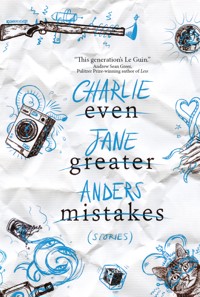
The Locus Award-winning short story collection from the multiple-award winning brain of Charlie Jane Anders. Enter the wild and fantastic worlds of one of the brightest minds in science fiction today. A short story collection packed with infinite worlds and endless possibilities, from the electric mind of Charlie Jane Anders. Cracking open science fiction and fantasy ideas with joyous exuberance, Anders delivers a riotous cavalcade of ideas. These stories of transformation and finding a place to call your own reinvent that unique hit of discovery that lives at the heart of genre fiction. Witness vampire zombies and fairy werewolves in a barroom brawl, fully-immersive AR cat-brain MMORPGs, love in the form of tentacles and The Time Travel Club's first successful experiment. Watch as two friends embark on an Epic Quest To Capture The Weapon That Threatens The Galaxy, or else they'll never achieve their dream of opening a restaurant. Whatever you do, don't stop trying new things, and don't be afraid of Even Greater Mistakes.
Sie lesen das E-Book in den Legimi-Apps auf:
Seitenzahl: 715
Veröffentlichungsjahr: 2021
Das E-Book (TTS) können Sie hören im Abo „Legimi Premium” in Legimi-Apps auf:
Ähnliche















CONTENTS
Cover
Also by Charlie Jane Anders and Available from Titan Books
Title Page
Leave us a review
Copyright
Dedication
Introduction
As Good as New
Rat Catcher’s Yellows
If You Take My Meaning
The Time Travel Club
Six Months, Three Days
Love Might Be Too Strong a Word
Fairy Werewolf vs. Vampire Zombie
Ghost Champagne
My Breath Is a Rudder
Power Couple
Rock Manning Goes for Broke
Because Change Was the Ocean and We Lived by Her Mercy
Captain Roger in Heaven
Clover
This Is Why We Can’t Have Nasty Things
A Temporary Embarrassment in Spacetime
Don’t Press Charges and I Won’t Sue
The Bookstore at the End of America
The Visitmothers
Acknowledgments
Also Available from Titan Books
ALSO BY CHARLIE JANE ANDERSAND AVAILABLE FROM TITAN BOOKS
All the Birds in the SkyThe City in the Middle of the NightVictories Greater Than Death
LEAVE US A REVIEW
We hope you enjoy this book – if you did we would really appreciate it if you can write a short review. Your ratings really make a difference for the authors, helping the books you love reach more people.
You can rate this book, or leave a short review here:
Amazon.co.uk,
Goodreads,
Waterstones,
or your preferred retailer.
Even Greater Mistakes
Print edition ISBN: 9781789097221
E-book edition ISBN: 9781789097238
Published by Titan Books
A division of Titan Publishing Group Ltd.
144 Southwark Street, London SE1 0UP
www.titanbooks.com
First edition: November 2021
10 9 8 7 6 5 4 3 2 1
This is a work of fiction. All of the characters, organizations, and events portrayed in this novel are either products of the author’s imagination or are used fictitiously. Any resemblance to actual persons, living or dead (except for satirical purposes), is entirely coincidental.
© Charlie Jane Anders, 2021.
“As Good As New” appeared at Tor.com, September 10, 2014.
“Rat Catcher’s Yellows” appeared in Press Start to Play, edited by John Joseph Adams and Daniel H. Wilson, 2015.
“If You Take My Meaning” appeared at Tor.com, February 11, 2020.
“The Time Travel Club” appeared in Asimov’s Science Fiction, October–November 2013.
“Six Months, Three Days” appeared at Tor.com, June 8, 2011.
“Love Might Be Too Strong a Word” appeared in Lady Churchill’s Rosebud Wristlet no. 22, June 2008.
“Fairy Werewolf vs. Vampire Zombie” appeared in Flurb no. 11, Spring–Summer 2011.
“Ghost Champagne” appeared in Uncanny Magazine, July–August 2015.
“My Breath Is a Rudder” appeared in shorter form in Instant City no. 6, 2008.
“Power Couple” appeared in substantially different form in Paraspheres: New Wave Fabulist Fiction, edited by Ken E. Keegan and Rusty Morrison, 2006.
“Rock Manning Goes for Broke” was serialized in the Apocalypse Triptych of three anthologies edited byJohn Joseph Adams and Hugh Howey (The End Is Nigh, 2014; The End Is Now, 2014; and The End Has Come, 2015),and was subsequently published as a standalone book by Subterranean Press in 2018.
“Because Change Was the Ocean and We Lived by Her Mercy” appeared in Drowned Worlds, edited by Jonathan Strahan, 2015.
“Captain Roger in Heaven” appeared in Catamaran Literary Reader no. 14, 2016.
“Clover” appeared at Tor.com, October 25, 2016.
“This Is Why We Can’t Have Nasty Things” appeared in ZYZZYVA no. 117, the “Bay Area Issue,” Winter 2019.
“A Temporary Embarrassment in Spacetime” appeared in Cosmic Powers, edited by John Joseph Adams, 2017.
“Don’t Press Charges and I Won’t Sue” appeared in Boston Review, Forum IV: Global Dystopias, Fall 2017.
“The Bookstore at the End of America” appeared in A People’s Future of the United States,edited by John Joseph Adams and Victor LaValle, 2019.
“The Visitmothers” appeared in Trans-Galactic Bike Ride: Feminist Bicycle Science Fiction Storiesof Transgender and Nonbinary Adventurers, edited by Lydia Rogue, 2020.
Charlie Jane Anders asserts the moral right to be identified as the author of this work.
No part of this publication may be reproduced, stored in a retrieval system, or transmitted, in any form or by any means without the prior written permission of the publisher, nor be otherwise circulated in any form of binding or cover other than that in which it is published and without a similar condition being imposed on the subsequent purchaser.
A CIP catalogue record for this title is available from the British Library.
For D. G. K. Goldberg—the Queen of the Country Where They Sleep Till Noon
INTRODUCTION
I swore I would never write a novel.
My first allegiance, my deepest loyalty, was to short fiction—the only species of confabulation that grants you total freedom to mess around. I was a natural short story writer who loved to explore a concept to the fullest in a few thousand words and then flit to the next tiny epic. Novels felt like such a serious commitment that I would never dare to try such headlong flights of fancy in them, and I had way more fun soaring (and occasionally crashing) through world after world, one story at a time.
After all, writing short fiction was the reason I’d bailed out of my first journalism career.
Years ago, I was working a soul-crushing job at a local newspaper, where I spent most of my time in a cubicle, freaking out into a telephone. My boss was an easygoing sadist who encouraged me to tell potential sources that I would lose my job if I didn’t get a decent scoop soon. (He assured me I wouldn’t be lying if I said that.)
I got home from work feeling both drained and freaked out, with no mental energy left for my own writing projects.
Every day at lunchtime, I haunted a newsstand with shelves full of science fiction digests, literary magazines, and other fiction mags. I read every kind of yarn there was and reveled in all the changes a skilled writer could take me through in just a few pages, and I daydreamed about seeing my name on one of those covers.
Then I discovered something that changed my life: a thudding great hardcover that listed every market that published science fiction and fantasy short stories, along with advice on how to break in. I sat in my cubicle, when I was supposed to be calling people and telling them about my precarious employment situation, and pored furtively over the introduction, which promised, “You can get rich writing science fiction and fantasy these days.” I immediately quit the newspaper, took a much lower-stress day job, and started cranking out strange yarns with stars in my eyes.
In my first decade of writing short fiction, I racked up over six hundred rejections and published ninety-three stories, mostly in small markets that no longer exist. Not to mention, a few dozen of my stories never found a home. Every day, when I finished work in my lower-stress day job, I walked to the nearest Caribou Coffee, where I guzzled turtle mocha (the drink of champions!) and wrote the sickest fever-dreams I could imagine, full of space theologians, lesbian dung beetles, and disposable genitalia.
I toiled alone on those first ninety-three short stories, but I was always surrounded by friends and fellow travelers. I talked pretty much every day to my best friend and mentor, the late horror writer D. G. K. Goldberg: comparing notes, trading critiques, and commiserating over the latest form letter. I also joined a ton of writers’ groups, read at open mics, haunted convention bars, and lurked on forums like SFF .net. The whole process of writing and selling short fiction became a shared experience, and whenever I made it into print, I got to bond with everyone else whose name appeared in the same TOC, or table of contents—we were “TOC-mates.”
My rejections were a badge of honor. I kept a document with a careful record of where every story had already gone and which markets I hadn’t tried lately, and I also noted which editors had written a personal response. At the bottom of that document, I wrote, “Rejections should be welcomed. There is nothing more joyful and optimistic than the act of putting a story in the mail, especially if that story has already come back once or twice.” (Or, more often, a dozen times.)
Online, a bunch of us parsed rejection letters like the entrails of a freshly slaughtered goose. One magazine allegedly used various shades of paper stock, depending on how good your story was. Another editor was rumored to use different Word macros, and you could tell how much he’d liked your story by whether his response employed the word “sadly.”
I made all kinds of bargains in my head with the universe: I would give up turtle mochas, I would stop jaywalking, if I could just get one story into a pro market—let alone one of the “year’s best” anthologies. And my ultimate dream? Was that I would have a honking big book like the one you’re looking at right now, made up of nothing but my own stories.
Writing short stories gave me tons of practice with beginnings and endings, not to mention world-building and character creation—but they also let me work with scores of editors, who collectively mentored and shaped me. I owe a huge debt to the crew at Strange Horizons, who published two of those ninety-three stories but also gave me feedback on countless others. Sometimes an editor would take the time to talk through why a story wasn’t working, or offered me advice on how to remove some of my inevitable clutter and deadweight.
Not all of these interactions were fantastic, for sure. One litmag editor spent an hour on the phone giving me genuinely helpful thoughts about my story—mixed with transphobic observations about my main character.
Another lit-mag editor responded to a submission by saying that he only liked one sentence of my story. Would I take that one sentence, which was about a minor supporting character, and build a whole new story around it? I elected to think of this as a fun challenge, so eventually I produced a whole new story that contained that one sentence. The editor wrote back and said that he now liked two sentences: the one he’d originally liked, plus a new one. He asked me to write a third story from scratch, using those two sentences. After some hesitation, I went ahead and did so, and luckily, the third time was the charm.
At some point, I started reading slush for a few different magazines, and that was also invaluable training in how to think like the editors I was sending my work to. I found out the hard way that when you have hundreds of submissions to get through, you make a lot of snap judgments after the first couple pages, and it’s on the writer to give the editor (and reader) a reason to keep reading. In one case, I volunteered for a magazine that had several crates full of unread subs, and I dug out a story that I had sent them a few years earlier. I reread my own piece, saw that it was completely wrong for the magazine, and had the dubious pleasure of sending myself a rejection letter.
Short stories are dangerous: tiny sparks of pure narrative fire that burn hotter because they snuff out sooner. Small, self-contained adventures gave me the freedom to fail—to push my limits, to experiment with styles and ideas that I wasn’t sure I could pull off. And fail I did, over and over. I wrote scores of short pieces before I managed to turn out one that fired on all cylinders. The wonderful thing is, if you blow it with something short, you’ve only wasted a week or three of writing time. And if someone reads your story in a magazine and hates it, there’ll be another story, by another author, on the next page.
That’s the other thing I love: the flexibility. My stories have been published in a variety of genres, ranging from extremely highfalutin to the very lowest of the falutins. Plus, shorts can worm their way in anywhere. I’ve published fiction in:
• indie culture magazines that mostly published essays and articles;
• zines that were piled up in coffee shops and record stores;
• an Arizona adult newspaper (the kind that’s mostly sex worker ads), which published non-smutty science fiction on its inside back page;
• humor magazines and books that mostly ran essays, cartoons and spoofs;
• small-press anthologies of horror, erotica, queer lit, and political rants;
• an anthology edited by my friend Daphne Gottlieb, entitled Fucking Daphne—full of metafictions about people having sex with a fictional character named Daphne Gottlieb;
• glossy food magazines that were mostly recipes and articles about cuisine trends; and
• journalistic outlets like Slate, Technology Review, and Wired.
Many of my stories were written, in part, so I’d have something to read aloud at spoken-word events, music festivals, beauty salons, and Pride stages. Also, some people were printing fiction on bags of fancy mail-order coffee beans, but I’m afraid they never accepted one of my microfictions.
It’s one thing to pick up a fiction digest and read a bunch of short stories, but I always loved the idea that someone could be reading potty humor or kitchen advice or a serious article about politics and then turn the page and stumble on a little dollop of unreal writing. Fiction shines even brighter in mixed company.
Journalism taught me to be punchy and concise, and to turn a jumble of facts and self-serving statements into a true story. Erotica showed me how to establish characters quickly and find the emotional “hook” of a particular moment as soon as possible, because the sex wouldn’t be fun if we didn’t care about the characters. Literary fiction made me pay more attention to my use of language and to the small moments that make the big moments work. A hummingbird fickleness when it came to genre kept me growing as a short story writer.
These days, most of my stories start with “What if?” and end up with a different question: “Who am I to you?” My usual way into a story is to think of a zany scenario that I’ve never seen before, like “What if the world ended, and the last surviving person found a genie in a bottle?” I keep poking until this becomes a story about people, and then I strive to figure out who those people are, but also what they mean to each other. And how that meaning can shift from the first page to the last.
As you might have figured, I broke my vow and wrote some novels. But my early loyalty to shorter forms paid off, because the practice of producing a couple hundred tales increased my control and helped me get better at sticking the landing. Conversely, when I did write a bunch of novels, they strengthened my world-building muscles and forced me to spend more time developing the inner life of my characters.
The stories in this book reflect that whole journey: the rejections, the slush reading, the genre hopping—though only a handful of them were among my first ninety-three published works. In terms of style and genre, they’re all over the place, ranging from gonzo comedy to quiet introspection. They all share that commitment I mentioned, to try to entertain from the very first sentence and give you a reason to keep reading past the first page. A whole book of short stories can be overwhelming, like imaginative speed dating. You have to keep starting over and meeting a new set of characters each time, and what if they just want to talk about stewed eggplant for the whole five minutes? So my fervent hope is that my long apprenticeship gave me the ability to serve up some reasonably fun dates.
After all, I never want to go back to cold-calling strangers and begging them to save me from unemployment.
EVEN GREATER MISTAKES
I sat in a darkened theater and listened to LeVar Burton—LeVar Burton!—reading “As Good as New” to a rapt audience, and I nearly melted into a fondue of imposter syndrome. Every one of my words seemed too feeble, too unworthy, to be spoken in Burton’s honeyed voice, but the more I listened, the more I got swept up in his recitation and felt my story taking on a whole new life. I consider it a legit miracle I didn’t split into two people.
“As Good as New” started with a neat idea about a genie who survives the apocalypse, but the whole shebang only clicked when I added another layer: Marisol’s dilemma about medicine versus theatre, and her creative growth as a playwright. I love stories where people untangle a personal dilemma in the middle of struggling with bigger questions, because the contrasts of scale make the huge stuff feel even huger. This story’s theme of clichés helping to destroy the world feels even more relevant now than it did several years ago.
AS GOOD AS NEW
Marisol got into an intense relationship with the people on The Facts of Life, to the point where Tootie and Mrs. Garrett became her imaginary best friends and she shared every last thought with them. She told Tootie about the rash she got from wearing the same bra every day for two years, and she had a long talk with Mrs. Garrett about her regrets that she hadn’t said a proper good-bye to her best friend, Julie, and her on-again, off-again boyfriend, Rod, before they died along with everybody else.
The panic room had pretty much every TV show ever made on its massive hard drive, with multiple backup systems and a failproof generator, so there was nothing stopping Marisol from marathoning The Facts of Life for sixteen hours a day, starting over again with season one when she got to the end of the bedraggled final season. She also watched Mad Men and The West Wing. The media server also had tons of video of live theatre, but Marisol didn’t watch that because it made her feel guilty. Not survivor guilt, failed playwright guilt.
Her last proper conversation with a living human had been an argument with Julie about Marisol’s decision to go to medical school instead of trying to write more plays. (“Fuck doctors, man,” Julie had spat. “People are going to die no matter what you do. Theatre is important.”) Marisol had hung up on Julie and gone back to the pre-med books, staring at the exposed musculature and blood vessels as if they were costume designs for a skeleton theatre troupe.
The quakes always happened at the worst moment, just when Jo or Blair was about to reveal something heartfelt and serious. The whole panic room would shake, throwing Marisol against the padded walls or ceiling over and over again. A reminder that the rest of the world was probably dead. At first, these quakes were constant, then they happened a few times a day. Then once a day, then a few times a week. Then a few times a month. Marisol knew that once a month or two passed without the world going sideways, she would have to go out and investigate. She would have to leave her friends at the Eastland School and venture into a bleak world.
Sometimes Marisol thought she had a duty to stay in the panic room, since she was personally keeping the human race alive. But then she thought: What if there was someone else living, and they needed help? Marisol was pre-med, she might be able to do something. What if there was a reproductively viable person, and Marisol could help them repopulate the species?
The panic room had nice blue leather walls and a carpeted floor that felt nice to walk on, and enough gourmet frozen dinners to last Marisol a few lifetimes. She only had the pair of shoes she’d brought in there with her, and it would seem weird to wear shoes after two barefoot years. The real world was in here, in the panic room—out there was nothing but an afterimage of a bad trip.
* * *
Marisol was an award-winning playwright, but that hadn’t saved her from the end of the world. She was taking pre-med classes and trying to get a scholarship to med school so she could give cancer screenings to poor women in her native Taos, but that didn’t save her either. Nor did the fact that she believed in God every other day.
What actually saved Marisol from the end of the world was the fact that she took a job cleaning Burton Henstridge’s mansion to help her through school, and she’d happened to be scrubbing his fancy Japanese toilet when the quakes had started—within easy reach of Burton’s state-of-the-art panic room. (She had found the hidden opening mechanism some weeks earlier, while cleaning the porcelain cat figurines.) Burton himself was in Bulgaria, scouting a new location for a nanofabrication facility, and had died instantly.
When Marisol let herself think about all the people she could never talk to again, she got so choked up she wanted to punch someone in the eye until they saw stars forever. She experienced grief in the form of freak-outs that left her unable to breathe or think, and then she popped in another Facts of Life. As she watched, she chewed her nails until she was in danger of gnawing off her fingertips.
* * *
The door to the panic room wouldn’t actually open, when Marisol finally decided it had been a couple months since the last quake and it was time to go the hell out there. She had to kick the door a few dozen times, until she dislodged enough of the debris blocking it to stagger out into the wasteland. The cold slapped her in the face and extremities, extra bitter after two years at room temperature. Burton’s house was gone. The panic room was just a cube half-buried in the ruins, covered in some yellowy insulation that looked like it would burn your fingers.
Everything out there was white, like snow or paper, except powdery and brittle, ashen. She had a Geiger counter from the panic room, which read zero. She couldn’t figure out what the hell had happened to the world, for a long time, until it hit her—this was fungus. Some kind of newly made, highly corrosive fungus that had rushed over everything like a tidal wave and consumed every last bit of organic material, then died. It had come in wave after wave, with incredible violence, until it had exhausted the last of its food supply and crushed everything to dust. She gleaned this from the consistency of the crud that had coated every bit of rubble, but also from the putrid sweet-and-sour smell that she could not stop smelling once she noticed it. She kept imagining that she saw the white powder starting to move, out of the corner of her eye, advancing toward her, but when she turned around there was nothing.
“The fungus would have all died out when there was nothing left for it to feed on,” Marisol said aloud. “There’s no way it could still be active.” She tried to pretend some other person, an expert or something, had said that, and thus it was authoritative. The fungus was dead. It couldn’t hurt her now.
Because if the fungus wasn’t dead, then she was screwed—even if it didn’t kill her, it would destroy the panic room and its contents. She hadn’t been able to seal the room properly behind her without locking herself out.
“Hello?” Marisol kept yelling, out of practice at even trying to project her voice. “Anybody there? Anybody?”
She couldn’t even make sense of the landscape. It was just blinding white, as far as she could see, with bits of blanched stonework jutting out. No way to discern streets or houses or cars or anything, because it had all been corroded or devoured.
She was about to go back to the panic room and hope it was still untouched, so she could eat another frozen lamb vindaloo and watch season three of Mad Men. Then she spotted something, a dot of color, a long way off in the pale ruins.
The bottle was a deep oaky green, like smoked glass, with a cork in it. About twenty yards away, perched in one of the endless piles of white debris. Somehow, it had avoided being consumed or rusted or broken in the endless waves of fungal devastation. This green bottle looked as though someone had just put it down a second ago—in fact, Marisol’s first response was to yell “Hello?” even louder than before.
When there was no answer, she picked up the bottle. In her hands, it felt bumpy, like an embossed label had been worn away, and there didn’t seem to be any liquid inside. She couldn’t see its contents, if any. She removed the cork.
A whoosh broke the dead silence. A sparkly mist streamed out of the bottle’s narrow mouth—glittering like the cheap glitter at the arts and crafts table at summer camp when Marisol was a little girl, misty like a smoke machine at a divey nightclub—and slowly resolved into a shape in front of Marisol. A man, a little taller than her and much bigger.
Marisol was so startled and grateful at no longer being alone, she almost didn’t pause to wonder how this man had appeared out of nowhere after she opened a bottle. A bottle that had survived when everything else was crushed. Then she did start to wonder, but the only explanations seemed too ludicrous to believe.
“Hello and congratulations,” the man said in a pleasant tone. He wore a cheap suit in a style that reminded Marisol somewhat of the Mad Men episodes she’d just been watching. His dark hair fell onto his high forehead in lank strands, and he had a heavy beard shadow. “Thank you for opening my bottle. I am pleased to offer you three wishes.” Then he looked around, and his already dour expression worsened. “Oh, fuck,” he said. “Not again.”
“Wait,” Marisol said. “You’re a—you’re a genie?”
“I hate that term,” the man said. “I prefer ‘wish facilitator.’ And for your information, I used to be just a regular person. I was the theatre critic at The New York Times for six months in 1958, which I still think defines me much more than my current engagement does. I tried to bamboozle the wrong individual, so I got stuck in a bottle and forced to grant wishes to anyone who opens it.”
“You were a theatre critic?” Marisol said. “I’m a playwright. I won a contest and had a play produced off-Broadway. Well, actually, I’m a pre-med student and I clean houses for money. But in my off-off-hours I’m a playwright, I guess.”
“Oh,” the man said. “Well, if you want me to tell you your plays are very good, then that will count as one of your three wishes. And honestly, I don’t think you’re going to benefit from good publicity very much in the current climate.” He gestured around at the bleak white landscape around them. “My name was Richard Wolf, by the way.”
“Marisol,” she said. “Marisol Guzmán.”
“Nice to meet you.” He extended his hand but didn’t actually try to shake hers. She wondered if she would go right through him. She was standing in a world of stinky chalk talking to a self-loathing genie. After two years alone in a box, that didn’t even seem weird, really.
So this was it. Right? She could fix everything. She could make a wish and everything would be back the way it was. She could talk to Julie again and apologize for hanging up on her. She could see Rod and maybe figure out what they were to each other. She just had to say the words: “I wish.” She started to speak, and then something Richard Wolf had said a moment earlier registered in her brain.
“Wait a minute,” she said. “What did you mean, ‘Not again’?”
“Oh, that.” Richard Wolf swatted around his head with big hands, like he was trying to swat nonexistent insects. “I couldn’t say. I mean, I can answer any question you want, but that counts as one of your wishes. There are rules.”
“Oh,” Marisol said. “Well, I don’t want to waste a wish on a question. Not when I can figure this out on my own. You said ‘Not again’ the moment you saw all this. So this isn’t the first time this has happened. Your bottle can probably survive anything. Right? Because it’s magic.”
The dark green bottle still had a heft to it, even after she’d released its contents. She threw it at a nearby rock a few times. Not a scratch.
“So,” she said. “The world ends, your bottle doesn’t get damaged. If even one person survives, they find your bottle. And the first thing they wish for? Is for the world not to have ended.”
Richard Wolf shrugged, but he also sort of nodded at the same time, like he was confirming her hunch. His feet were see-through, she noticed. He was wearing wingtip shoes that looked scuffed to the point of being scarred.
“The first time was in 1962,” he said. “The Cuban Missile Crisis, they called it afterward.”
“This is not counting as one of my wishes, because I didn’t ask a question,” Marisol said.
“Fine, fine,” Richard Wolf rolled his eyes. “I grew tired of listening to your harangue. When I was reviewing for the Times, I always tore into plays that had too many endless speeches. Your plays don’t have a lot of monologues, do they? Fucking Brecht made everybody think three-page speeches were clever. Fucking Brecht.”
“I didn’t go in for too many monologues,” Marisol said. “So. Someone finds your bottle, they wish for the apocalypse not to have happened, and then they probably make a second wish, to try and make sure it doesn’t happen again. Except here we are, so it obviously didn’t work the last time.”
“I could not possibly comment,” Richard Wolf said. “Although I should say that people get the wrong idea about people in my line of work—meaning wish facilitators, not theatre critics. People had the wrong idea when I was a theatre critic, too. They thought it was my job to promote the theatre, to put buns in seats, even for terrible plays. That was not my job at all.”
“The theatre has been an endangered species for a long time,” Marisol said, not without sympathy. She looked around the pasty white, yeast-scented deathscape. A world of Wonder Bread. “I mean, I get why people want criticism that is essentially cheerleading, even if that doesn’t push anybody to do their best work.”
“Well, if you think of theatre as some sort of delicate flower that needs to be kept protected in some sort of hothouse”—and at this point, Wolf was clearly reprising arguments he’d had over and over again when he was alive—“then you’re going to end up with something that only the faithful few will appreciate, and you’ll end up worsening the very marginalization that you’re seeking to prevent.”
Marisol was being very careful to avoid asking anything resembling a question, because she was probably going to need all three of her wishes. “I would guess that the job of a theatre critic is misunderstood in sort of the opposite way from the job of a genie,” she said. “Everybody is afraid a theatre critic will be too brutally honest. But a genie …”
“Everybody thinks I’m out to swindle them!” Richard Wolf threw his hands in the air, thinking of all the tsuris he had endured. “When in fact it’s always the client who can’t express a wish in clear and straightforward terms. They always leave out crucial information. I do my best. It’s like stage directions without any stage left or stage right. I interpret as best I can.”
“Of course you do,” Marisol said. This was all starting to creep her out, and her gratitude at having another person to talk to (who wasn’t Mrs. Garrett) was getting driven out by her discomfort at standing in the bleach-white ruins of the world, kibbutzing about theatre criticism. She picked up the bottle from where it lay undamaged after hitting the rock, and found the cork.
“Wait a minute,” Richard Wolf said. “You don’t want to—”
He was sucked back inside the bottle before she finished putting the cork back in.
* * *
She reopened the bottle once she was back inside the panic room, with the door sealed from the inside, so nothing or nobody could get in. She watched three episodes of The Facts of Life, trying to get her equilibrium back, before she microwaved some sukiyaki and let Richard Wolf out again. He started the spiel over again about how he had to give her three wishes, then stopped and looked around.
“Huh.” He sat and sort of floated an inch above the sofa. “Nice digs. Real calfskin on this sofa. Is this like a bunker?”
“I can’t answer any of your questions,” Marisol said, “or that counts as a wish you owe me.”
“Don’t be like that.” Richard Wolf ruffled his two-tone lapels. “I’m just trying not to create any loopholes, because once there are loopholes it brings everybody grief in the end. Trust me, you wouldn’t want the rules to be messy here.” He rifled through the media collection until he found a copy of Cat on a Hot Tin Roof, which he made a big show of studying, until Marisol finally loaded it for him.
“This is better than I’d remembered,” Richard Wolf said an hour later.
“Good to know,” Marisol said. “I never got around to watching that one.”
“I met Tennessee Williams, you know,” Richard said. “He wasn’t nearly as drunk as you might have thought.”
“So here’s what I figure. You do your level best to implement the wishes that people give you, to the letter,” Marisol said. “So if someone says they want to make sure that a nuclear war never happens again, you do your best to make a nuclear war impossible. Maybe that change leads to some other catastrophe, and then the next person tries to make some wishes that prevent that thing from happening again. And on, and on. Until this.”
“This is actually the longest conversation I’ve had since I became a wish facilitator.” Richard crossed his leg, ankle over thigh. “Usually, it’s just whomp-bomp-a-lula, three wishes, and I’m back in the bottle. So tell me about your prize-winning play. If you want. I mean, it’s up to you.”
Marisol told Richard about her play, which seemed like something an acquaintance of hers had written many lifetimes ago. “It was a one-act,” she said, “about a man who is trying to break up with his girlfriend, but every time he’s about to dump her she does something to remind him why he used to love her. So he hires a male escort to seduce her, instead, so she’ll cheat on him and he can have a reason to break up with her.”
Richard was giving her a blank expression, as though he couldn’t trust himself to show a reaction.
“It’s a comedy,” Marisol explained.
“Sorry,” Richard said. “It sounds awful. He hires a male prostitute to sleep with his girlfriend. It sounds … I just don’t know what to say.”
“Well, you were a theatre critic in the 1950s, right? I guess it was a different era.”
“I don’t think that’s the problem,” Richard said. “It just sounds sort of … misanthropic. Or actually woman-hating. With a slight veneer of irony. I don’t know. Maybe that’s the sort of thing everybody is into these days—or was into, before the world ended yet again. This is something like the fifth or sixth time the world has ended. I am losing count, to be quite honest.”
Marisol was put out that this fossil was casting aspersions on her play—her contest-winning play, in fact. But the longer she kept him talking, the more clues he dropped, without costing her any wishes. So she bit her lip.
“So. There were half a dozen apocalypses,” Marisol said. “And I guess each of them was caused by people trying to prevent the last one from happening again, by making wishes. So that white stuff out there. Some kind of bioengineered corrosive fungus, I thought—but maybe it was created to prevent some kind of climate-related disaster. It does seem awfully reflective of sunlight.”
“Oh, yes, it reflects sunlight just wonderfully,” Richard said. “The temperature of the planet is going to be dropping a lot in the next decade. No danger of global warming now.”
“Ha,” Marisol said. “And you claim you’re just doing the most straightforward job possible. You’re addicted to irony. You sat through too many Brecht plays, even though you claim to hate him. You probably loved Beckett as well.”
“All right-thinking people love Beckett,” said Richard. “So you had some small success as a playwright, and yet you’re studying to be a doctor. Or you were, before this unfortunate business. Why not stick with the theatre?”
“Is that a question?” Marisol said. Richard started to backpedal, but then she answered him anyway. “I wanted to help people, really help people. Live theatre reaches fewer and fewer people all the time, especially brand-new plays by brand-new playwrights. It’s getting to be like poetry, nobody reads poetry anymore. Meanwhile, poor people are dying of preventable cancers every day, back home in Taos. I couldn’t fool myself that writing a play that twenty people saw would do as much good as screening a hundred people for cervical cancer.”
Richard paused and looked her over. “You’re a good person,” he said. “I almost never get picked up by anyone who’s actually not a terrible human being.”
“It’s all relative. My protagonist who hires a male escort to seduce his girlfriend considers himself a good person, too.”
“Does it work? The male prostitute thing? Does she sleep with him?”
“Are you asking me a question?”
Wolf shrugged and rolled his eyes in that operatic way he did, which he’d probably practiced in the mirror. “I will owe you an extra wish. Sure. Why not. Does it work, with the gigolo?”
Marisol had to search her memory for a second, she had written that play in such a different frame of mind. “No. The boyfriend keeps feeding his accomplice lines to seduce his girlfriend via a Bluetooth earpiece—it’s meant to be a postmodern Cyrano de Bergerac—and she figures it out and starts using the escort to screw with her boyfriend. In the end, the boyfriend and the sex worker get together because the boyfriend and the sex worker have seduced each other while flirting with the girlfriend.”
Richard cringed on top of the sofa, with his face in his insubstantial hands. “That’s terrible,” he said. “I can’t believe I gave you an extra wish, just to find that out.”
“Wow, thanks. I can see why people hated you when you were a theatre critic.”
“Sorry! I mean, maybe it was better on the stage, I bet you have a flair for dialogue. It just sounds so … hackneyed. I mean, postmodern Cyrano de Bergerac? I heard all about postmodernism from this one graduate student who opened my bottle in the early 1990s, and it sounded dreadful. If I wasn’t already sort of dead, I would be slitting my wrists. You really did make a wise choice, becoming a doctor.”
“Screw you.” Marisol decided to raid the relatively tiny liquor cabinet in the panic room and pour herself a generous vodka. “You’re the one who’s been living in a bottle. So. All of this is your fault.” She waved her hand, indicating the devastation outside the panic room. “You caused it all, with some excessively ironic wish granting.”
“That’s a very skewed construction of events. If the white sludge was caused by a wish that somebody made—and I’m not saying it was—then it’s not my fault. It’s the fault of the wisher.”
“Okay,” Marisol said. Richard drew to attention, thinking she was finally ready to make her first wish. Instead, she said, “I need to think,” and put the cork back in the bottle.
* * *
Marisol watched a season and a half of I Dream of Jeannie, which did not help at all. She ate some delicious beef stroganoff and drank more vodka. She slept and watched TV and slept and drank coffee and ate an omelet. She had no circadian rhythm to speak of, anymore.
She had four wishes, and the overwhelming likelihood was that she would foul them up, and maybe next time there wouldn’t be one person left alive to find the bottle and fix her mistake.
This was pretty much exactly like trying to cure a patient, Marisol realized. You give someone a medicine, which fixes their disease but causes deadly side effects. Or reduces the patient’s resistance to other infections. You didn’t just want to get rid of one pathogen, you wanted to help the patient reach homeostasis again. Except that the world was an infinitely more complex system than a single human being. Then again, making a big wish was like writing a play, with the entire human race as players. Bleh.
She could wish that the bioengineered fungus had never dissolved the world, but then she would be faced with whatever climate disaster the fungus had prevented. She could make a blanket wish that the world would be safe from global disasters for the next thousand years—and maybe unleash a millennium of stagnation. Or worse, depending on the slippery definition of “safe.”
She guessed that wishing for a thousand wishes wouldn’t work—in fact, that kind of shenanigans might be how Richard Wolf wound up where he was now.
The media server in the panic room had a bazillion movies and TV episodes about the monkey paw, the wishing ring, the magic fountain, the Faustian bargain, the djinn, the vengeance demon, and so on. So she had plenty of time to soak up the accumulated wisdom of the human race on the topic of making wishes, which amounted to a pile of clichés. Maybe she would have done more good as a playwright than as a doctor, after all—clichés were like plaque in the arteries of the imagination, they clogged our sense of what was possible. Maybe if enough people had worked to demolish clichés, the world wouldn’t have ended.
* * *
Marisol and Richard sat and watched The Facts of Life together. Richard kept complaining and saying things like “This is worse than being trapped inside a bottle.” But he also seemed to enjoy complaining about it.
“This show kept me marginally sane when I was the only person on earth,” Marisol said. “I still can’t wrap my mind around what happened to everyone else. So, you are conscious of the passage of time when you’re inside the bottle.” She was very careful to avoid phrasing anything as a question. “It’s very strange,” Richard said. “When I’m in the bottle, it’s like I’m in a sensory deprivation tank, except not particularly warm. I float, with no sense of who or where I am, but meanwhile another part of me is getting flashes of awareness of the world. I can’t control them. I might be hyperaware of one ant carrying a single crumb up a stem of grass, for an eternity, or I might just have a vague sense of clouds over the ocean, or some old woman’s aches and pains. It’s like lucid dreaming, sort of.”
“Shush,” said Marisol. “This is the good part—Jo is about to lay some Brooklyn wisdom on these spoiled rich girls.”
The episode ended, and another episode started right away. You take the good, you take the bad. Richard groaned loudly. “So what’s your plan, if I may ask? You’re just going to sit here and watch television for another few years.” He snorted.
“I have no reason to hurry,” Marisol said. “I can spend a decade coming up with the perfect wishes. I have tons of frozen dinners.”
At last, she took pity on Richard and found a stash of PBS American Playhouse episodes on the media server, plus other random theatre stuff. Richard really liked Caryl Churchill but didn’t care for Alan Ayckbourn. He hated Wendy Wasserstein. Eventually, Marisol put him back in his bottle again.
She started writing down possible draft wishes in one of the three blank journals that she’d found in a drawer. (Burton had probably expected to record his thoughts, if any, for posterity.) And then she started writing a brand-new play, instead. The first time she’d even tried, in a few years.
Her play was about a man—her protagonists were always men—who moves to the big city to become a librarian and winds up working for a strange old lady, tending her collection of dried-out leaves from every kind of tree in the world. Pedro is so shy, he can’t even speak to more than two people, but so beautiful that everybody wants him to be a fashion model. He pays an optometrist to put drops in his eyes so he won’t see the people photographing and lighting him when he models. Marisol had no clue how this play was going to end, but she felt a responsibility to finish it. That’s what Mrs. Garrett would expect.
She was still stung by the idea that her prize-winning play was dumb, or worse yet, kind of misogynistic. She wished she had an actual copy of that play, so she could show it to Richard and he would realize her true genius. But she didn’t wish that out loud, of course. Maybe this was the kick in the ass she needed to write a better play. A play that made sense of some of this mess.
“I’ve figured it out,” she told Richard the next time she opened his bottle. “I’ve figured out what happened those other times. Someone finds your bottle after the apocalypse, and they get three wishes. So the first wish is to bring the world back and reverse the destruction. The second wish is to make sure it doesn’t happen again. But then they still have one wish left. And that’s the one where they do something stupid and selfish, like wishing for irresistible sex appeal.” “Or perfect hair,” said Richard Wolf, doing his patented eye roll and air swat.
“Or unlimited wealth. Or fame.”
“Or everlasting youth and beauty. Or the perfect lasagna recipe.”
“They probably figured they deserved it.” Marisol stared at the pages of scribbles in her hands. One set of diagrams mapping out her new, as-yet-unnamed play. A second set of diagrams trying to plan out the wish-making process, act by act. Her own scent clung to every surface in the panic room, the recirculated and purified air smelled like the inside of her own mouth. “I mean, they saved the world, right? So they’ve earned fame or sex or parties. Except that I bet that’s where it all goes wrong.”
“That’s an interesting theory,” said Wolf, arms folded and head tilted to one side, like he was physically restraining himself from expressing an opinion. Marisol threw out almost every part of her play, except the part about her main character needing to be temporarily vision-impaired so he can model. That part seemed to speak to her, once she cleared away the clutter about the old woman and the leaves and stuff. Pedro stands, nearly nude, in a room full of people doing makeup and lighting and photography and catering and they’re all blurs to him. He falls in love with one woman, but he only knows her voice, not her face. And he’s afraid to ruin it by learning her name or seeing what she looks like.
By now, Marisol had confused the two processes in her mind. She kept thinking she would know what to wish for as soon as she finished writing her play. She labored over the first scene for a week before she had the nerve to show it to Richard, and he kept narrowing his eyes and breathing loudly through his nose as he read it. Then he said it was actually a promising start, actually not terrible at all.
The mystery woman phones Pedro up, and he recognizes her voice instantly. So now he has her phone number, and he agonizes about calling her. What’s he afraid of, anyway? He decides his biggest fear is that he’ll go out on a date with the woman and people will stare at the two of them. If the woman is as beautiful as Pedro, they’ll stare because it’s two beautiful people together. If she’s plain-looking, they’ll stare because they’ll wonder what he sees in her. When Pedro eats out alone, he has a way of shrinking in on himself so nobody notices him, but he can’t do that on a date.
At last Pedro calls her and they talk for hours. On stage, she is partially hidden from the audience, so they, too, can’t see what the woman looks like.
“It’s a theme in your work, hmmm?” Richard Wolf sniffed. “The hidden person, the flirting through a veil. The self-loathing narcissistic love affair.”
“I guess so,” Marisol said. “I’m interested in people who are seen, and people who see, and the female gaze, and whatever.”
She finished the play, and then it occurred to her that if she made a wish that none of this stuff had happened, her new play could be unwritten as a result. When the time came to make her wishes, she rolled up the notebook and tucked it into the waistband of her sweatpants, hoping against hope that anything on her immediate person would be preserved when the world was rewritten.
In the end, Pedro agrees to meet the woman, Susanna, for a drink, but he gets some of the eye-dilating drops from his optometrist friend. He can’t decide whether to put the drops in his eyes before the date—he’s in the men’s room at the bar where they’re meeting, with the bottle in his hand, dithering—and then someone disturbs him and he accidentally drops the bottle in the toilet.
Susanna turns out to be pretty, not like a model but more distinctive. She has a memorable face, full of life, and she laughs a lot. Pedro stops feeling shy around her, and he discovers that if he looks into Susanna’s eyes when he’s doing his semi-nude modeling, he no longer needs the eyedrops to shut out the rest of the world.
“It’s a corny ending,” Marisol admitted. “But I like it.” Richard Wolf shrugged. “Anything is better than unearned ambivalence.” Marisol decided that was a good review, coming from him.
Here’s what Marisol wished:
1. I wish this apocalypse and all previous apocalypses had never happened, and that all previous wishes relating to the apocalypse had never been wished.
2. I wish that there was a slight alteration in the laws of probability as relating to apocalyptic scenarios, so that if, for example, an event threatening the survival of the human race has a 10 percent chance of happening, that 10 percent chance just never comes up, and yet this does not change anything else in the material world.
3. I wish that I, and my designated heirs, would keep possession of this bottle, and would receive ample warning before any apocalyptic scenario comes up, so that we would have a chance to make the final wish.
She had all three wishes written neatly on a sheet of paper torn out of the notebook, and Richard Wolf scrutinized it a couple times, scratching his ear.
“That’s it?” he said at last. “You do realize that I can make anything real. Right? You could create a world of giant snails and tiny people. You could make The Facts of Life the most popular TV show in the world for the next thousand years—which would, incidentally, ensure the survival of the human race, since there would have to be somebody to keep watching The Facts of Life. You could do anything.”
Marisol shook her head. “The only way to make sure we don’t end up back here again is to keep it simple.” And then, before she lost her nerve, she picked up the sheet of paper where she’d written down her three wishes and she read them aloud.
Everything went cheaply glittery around Marisol, and the panic room reshaped into the Infinite Ristretto, a trendy café that just happened to be roughly the same size and shape as the panic room. The blue leather walls turned to brown brick, with brass fixtures and posters for the legendary all-nude productions of Mamet’s Oleanna and Marsha Norman’s ’night, Mother.
All around Marisol, friends whose names she’d forgotten were hunched over their laptops, publicly toiling over their confrontational one-woman shows and chamber pieces. Her best friend Julia was in the middle of yelling at her, freckles almost washed out by her reddening face.
“Fuck doctors,” Julia was shouting, loud enough to disrupt the whole room. “Theatre is a direct intervention. It’s like a cultural ambulance. Actors are like paramedics. Playwrights are surgeons, man.”
Marisol was still wearing Burton’s stained business shirt and sweatpants, but somehow she’d gotten a pair of flip-flops. The green bottle sat on the rickety white table nearby. Queen was playing on the stereo, the scent of overpriced coffee was like the armpit of God.
Julia’s harangue choked off in the middle, because Marisol was giving her the biggest stage hug in the universe, crying into Julia’s green-streaked hair and thanking all her stars that they were here together. By now, everyone was staring at them, but Marisol didn’t care. Something fluttery and heavy fell out of the waistband of her sweatpants. A notebook.
“I have something amazing to tell you, Jools,” Marisol breathed in Julia’s ear. She wanted to ask if Biden was still president and the Cold War was still over and stuff, but she would find out soon enough, and this was more important. “Jools, I wrote a new play. It’s all done, and it’s going to change everything.” Hyperbole was how Marisol and Julia and all their friends communicated. “Do you want to read it?”
“Are you seriously high?” Julia pulled away, and then saw the notebook on the floor between their feet. Curiosity took over, and she picked it up and started to read.
Marisol borrowed five bucks and got herself a pour-over while Julia sat, knees in her face, reading the play. Every few minutes, Julia glanced up and said, “Well, okay,” in a grudging tone, as if Marisol might not be past saving after all.
Daniel H. Wilson and John Joseph Adams asked me to contribute to an anthology of video game stories called Press Start to Play, and I spent several weeks working on a tale about the last surviving video game deszzigners, trying to create a game in a dystopian hellworld. I had to keep excusing myself from the bar at World Fantasy because I had an overdue story to finish. At last I turned in “The Deliverables”—and realized that I loathed it. “The Deliverables” was everything I didn’t want my writing to be anymore: superficially funny, smugly dull. Worst of all, that story wasn’t about anything, and you could tell I’d forced myself to finish it.
I begged Daniel and John to allow me a mulligan, even though the deadline was long past. This time, I wrote about dementia, something that’s afflicted too many of my loved ones, and the horror of watching someone lose themself right in front of you. “Rat Catcher’s Yellows” just spilled out of me—taking a fraction of the time I had spent struggling to make “The Deliverables” happen. I learned an important lesson: sometimes it’s best to admit something isn’t working and take a step back.
RAT CATCHER’S YELLOWS
1
The plastic cat head is wearing an elaborate puffy crown, covered with bling. The cat’s mouth opens to reveal a touch screen, but there’s also a jack to plug in an elaborate mask that gives you a visor, along with nose plugs and earbuds for added sensory input. Holding this self-contained game system in my palms, I hate it and want to throw it out the open window of our beautiful faux Colonial row house, to be buried under the autumn mulch. I also feel a surge of hope, that maybe this really will make a difference. The cat is winking up at me.
Shary crouches in her favorite chair, the straight-backed Regency made of red-stained wood and lumpy blue upholstery. She’s wearing jeans and a stained sweatshirt, one leg tucked under the other, and there’s a kinetic promise in her taut leg that I know to be a lie. She looks as if she’s about to spring out of that chair and ask me about the device in my hands, talk a mile a minute the way she used to. But she doesn’t notice my brand-new purchase, and it’s a crapshoot whether she even knows who I am today.
I poke the royal cat’s tongue, and it gives a yawp through tiny speakers, then the screen lights up and asks for our Wi-Fi password. I give the cat what it wants and it starts updating and loading various firmware things. A picture of a fairy-tale castle appears with the logo: THE DIVINE RIGHT OF CATS. Then begins the hard work of customizing absolutely everything, which I want to do myself before I hand the thing off to Shary.
The whole time I’m inputting Shary’s name and other info, I feel like a backstabbing bitch. Giving this childish game to my life partner, it’s like I’m declaring that she’s lost the right to be considered an adult. No matter that all the hip teens and twentysomethings are playing Divine Right of Cats right now. Or that everybody agrees this game is the absolute best thing for helping dementia patients hold on to some level of cognition, and it’s especially good for people suffering from leptospirosis X, in particular. I’m doing this for Shary’s good, because I believe she’s still in there somewhere.
I make Shary’s character as close to Shary as I can possibly make a cat wizard, who is the main adviser to the throne of the cat kingdom. (I decide that if Shary was a cat, she’d be an Abyssinian, because she’s got that sandy-brown-haired sleekness, pointy face, and wiry energy.) Shary’s monarch is a queen, not a king, and she’s a proud tortoiseshell cat named Arabella IV. I get some input into the realm’s makeup, including what the nobles on the Queen’s Council are like. Some stuff is decided at random—like, Arabella’s realm of Greater Felinia has a huge stretch of vineyards and some copper mines, neither of which I would have come up with.
Every detail I input into the game, I pack with relationship shout-outs and little details that only Shary would recognize, so the whole thing turns into a kind of bizarre love letter. For example, the tavern near the royal stables is the Puzzler’s Retreat, which was the gray-walled dyke bar where Shary and I used to go dancing when we were both in grad school. The royal guards are Grace’s Army of Stompification. And so on.
“Shary?” I say. She doesn’t respond.




