


82,99 €
Mehr erfahren.
- Herausgeber: John Wiley & Sons
- Kategorie: Wissenschaft und neue Technologien
- Sprache: Englisch
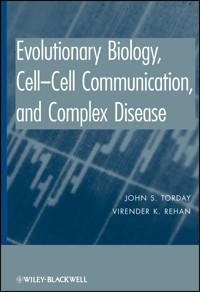
An integrative view of the evolution of genetics and the natural world Even in this advanced age of genomics, the evolutionary process of unicellular and multicellular organisms is continually in debate. Evolutionary Biology, Cell-Cell Communication, and Complex Disease challenges current wisdom by using physiology to present an integrative view of the nature, origins, and evolution of fundamental biological systems. Providing a deeper understanding of the way genes relate to the traits of living organisms, this book offers useful information applying evolutionary biology, functional genomics, and cell communication studies to complex disease. Examining the 4.5 billion-year evolution process from environment adaptations to cell-cell communication to communication of genetic information for reproduction, Evolutionary Biology hones in on the "why and how" of evolution by uniquely focusing on the cell as the smallest unit of biologic structure and function. Based on empirically derived data rather than association studies, Evolutionary Biology covers: * A model for forming testable hypotheses in complex disease studies * The integrating role played by the evolution of metabolism, especially lipid metabolism * The evolutionary continuum from development to homeostasis * Regeneration and aging mediated by signaling molecules Ambitious and game-changing Evolutionary Biology suggests that biology began as a mechanism for reducing energy within the cell, defying the Second Law of Thermodynamics. An ideal text for those interested in forward thinking scientific study, the insights presented in Evolutionary Biology help practitioners effectively comprehend the evolutionary process.
Sie lesen das E-Book in den Legimi-Apps auf:
Seitenzahl: 289
Veröffentlichungsjahr: 2012
Ähnliche















Table of Contents
COVER
TITLE PAGE
COPYRIGHT PAGE
DEDICATION
PREFACE
ABOUT THE AUTHORS
1 THE CELLULAR ORIGIN OF VERTEBRATES
THE ORIGINS OF UNICELLULAR LIFE ON EARTH
PROKARYOTES VERSUS EUKARYOTES
COEVOLUTION OF TRAITS
CHOLESTEROL FACILITATES LIPID RAFTS FOR CELL–CELL COMMUNICATION
THE ENDOMEMBRANE SYSTEM
THE CELLULAR MECHANISM OF EVOLUTION
WHY EVOLVE?
CELL–CELL COMMUNICATION AND AGING
2 REDUCING LUNG PHYSIOLOGY TO ITS MOLECULAR PHENOTYPES
HORMONAL ACCELERATION OF LUNG DEVELOPMENT
NEUTRAL LIPID TRAFFICKING AND LUNG EVOLUTION
OTHER EXAMPLES OF CELLULAR COOPERATIVITY
SUMMARY
3 A CELL–MOLECULAR STRATEGY TO SOLVING THE EVOLUTIONARY PUZZLE
RATIONALE FOR CELL–MOLECULAR EVOLUTION
MECHANISM OF MAMMALIAN LUNG DEVELOPMENT
AVIAN LUNG STRUCTURE–FUNCTION RELATIONSHIP: THE EXCEPTION THAT PROVES THE RULE
DOES ONTOGENY RECAPITULATE PHYLOGENY? THE ROLE OF PTHRP IN LUNG DEVELOPMENT
INTERRELATIONSHIP BETWEEN PTHRP, DEVELOPMENT, PHYSIOLOGY, AND REPAIR: IS REPAIR A RECAPITULATION OF ONTOGENY AND PHYLOGENY?
4 THE EVOLUTION OF CELL–CELL COMMUNICATION
CELL–CELL COMMUNICATION AS THE MECHANISTIC BASIS FOR EVOLUTIONARY BIOLOGY
THE DARWINIAN BIOLOGIC SPACETIME CONTINUUM AND EINSTEIN’S VISION OF THE UNIVERSE
REVERSE ENGINEERING OF PHYSIOLOGIC TRAITS AS A PORTAL FOR VIEWING EVOLUTION
CELL–CELL COMMUNICATION AS THE BASIS FOR THE EVOLUTION OF METAZOANS
UNDERSTANDING LUNG EVOLUTION FROM THE MIDDLE OUT
THE CELL–CELL COMMUNICATION MODEL OF LUNG EVOLUTION TRACES CONTEMPORARY PHENOTYPES BACK TO ANCESTRAL PHENOTYPES
PREDICTIVE VALUE OF THE LUNG CELL–CELL COMMUNICATION MODEL FOR UNDERSTANDING THE EVOLUTION OF PHYSIOLOGIC SYSTEMS
SEXUAL DIMORPHISM OF LUNG DEVELOPMENT: A CASE STUDY IN CELL–CELL COMMUNICATION AND EVOLUTIONARY PLASTICITY
ANDROGEN AFFECTS THE EXPRESSION OF GROWTH FACTORS INVOLVED IN LUNG DEVELOPMENT
EVIDENCE FOR AN ASSOCIATION BETWEEN STEROID-RESISTANT/RESPONSIVE PHENOTYPES AND HUMAN LYMPHOCYTE ANTIGEN (HLA) HAPLOTYPES
5 HOW TO INTEGRATE CELL–MOLECULAR DEVELOPMENT, HOMEOSTASIS, ECOLOGY, AND EVOLUTIONARY BIOLOGY: THE MISSING LINKS
NEUTRAL THEORY VERSUS INTELLIGENT DESIGN
INTERNAL SELECTION THEORY
THE COUNTERINTUITIVE NATURE OF PHYSIOLOGY AND SOLUTION TO THE DEAD SEA SCROLLS PUZZLE
THE CONTINUUM FROM MICROEVOLUTION TO MACROEVOLUTION
cis REGULATION AND ADAPTIVE EVOLUTION
EVOLUTION OF cis REGULATORY MECHANISMS
6 FROM CELL–CELL COMMUNICATION TO THE EVOLUTION OF INTEGRATED PHYSIOLOGY
CELL–CELL SIGNALING AND ALVEOLAR DEVELOPMENT: A REDUCTIONIST APPROACH TO THE EVOLUTION OF PHYSIOLOGIC TRAITS
AN INTEGRATED, EMPIRIC, MIDDLE–OUT APPROACH TO PHYSIOLOGY
A MOLECULAR EVOLUTIONARY LINK BETWEEN THE LUNG AND THE KIDNEY?
THE BERNER HYPOTHESIS AND EMERGENCE OF THE ADIPOCYTE: THE EVOLUTIONARY ORIGINS OF THE LIPOFIBROBLAST
LUNG BIOLOGY AS A CIPHER FOR EVOLUTION
DO STRETCH EFFECTS ON PTHRP EXPRESSION REFLECT ITS ROLE IN ADAPTING TO GRAVITY?
WOLFF’S LAW WORKS FOR BOTH BONE AND LUNG
FUNCTIONAL RELATIONSHIP BETWEEN THE EXTERNAL AND INTERNAL ENVIRONMENTS
AN EVOLUTIONARY VERTICAL INTEGRATION OF THE PHYLOGENY AND ONTOGENY OF THE THYROID
7 EXPLOITING CELL–CELL COMMUNICATION ACROSS SPACETIME TO DECONSTRUCT EVOLUTION
SOMEWHERE BETWEEN THE GENE AND THE PHENOTYPE LIES THE PROCESS OF EVOLUTION
A FUNCTIONAL GENOMIC APPROACH TO EVOLUTION AS AN EXAMPLE OF TERMINAL ADDITION
SEEKING DEEP HOMOLOGIES IN LUNG EVOLUTION
SYSTEMS BIOLOGY BASED ON CELL–CELL COMMUNICATION
VERTICAL INTEGRATION OF LEPTIN SIGNALING, HUMAN EVOLUTION, AND THE TROJAN HORSE EFFECT
LEPTIN AND HUMAN EVOLUTION: FOOD FOR THOUGHT
8 THE PERIODIC TABLE OF BIOLOGY
THE PROSPECT OF A PERIODIC TABLE OF BIOLOGY
CELLULAR COOPERATION IS KEY
ELEMENTAL BIOLOGY
PTHRP AS AN ARCHETYPE
EVOLUTION AS THE SOLUTION
RAMPING UP A MATHEMATICAL MODEL OF EVOLUTION
THE ANTHROPIC PRINCIPLE RESULTS FROM THE EVOLUTION OF CELL–CELL INTERACTIONS
9 VALUE ADDED BY THINKING IN TERMS OF THE CELL–CELL COMMUNICATION MODEL FOR EVOLUTION
THIS IS NOT A JUST-SO STORY
BEYOND GENOMICS
FROM FAT CELLS TO INTEGRATED PHYSIOLOGY
MOLECULAR HOMOLOGIES DISTINGUISH BETWEEN THE EVOLUTIONARY FOREST AND TREES
THE OXYGEN–CHOLESTEROL–SURFACTANT–MEMBRANE CONNECTION
CHOLESTEROL METABOLISM AS THE DATA OPERATING SYSTEM FOR VERTEBRATE BIOLOGY?
TRANSLATION OF GENOMICS INTO THE PERIODIC TABLE FOR BIOLOGY
DEEP HOMOLOGIES
SELECTION PRESSURE FOR CELL–CELL COMMUNICATION: THE KEY TO UNDERSTANDING EVOLUTION
10 CELL–CELL COMMUNICATION AS THE BASIS FOR PRACTICING CLINICAL MEDICINE
CELL–CELL COMMUNICATION MAINTENANCE AND BREAKDOWN REPRESENT HEALTH AND DISEASE, RESPECTIVELY
CELL–CELL COMMUNICATIONS AS A FRAMEWORK FOR HUMAN EVOLUTION
CANALIZATION, DECANALIZATION, AND THE HOLISTIC APPROACH TO THE PRACTICE OF MEDICINE
EXPLOITING LUNG EVOLUTION TO PREVENT AND TREAT CHRONIC LUNG DISEASE
LUNG EVOLUTION EXPLAINS THE MAGIC OF CONTINUOUS POSITIVE AIRWAY PRESSURE
THE PARADOX OF INFECTING THE LUNG IN ORDER TO TREAT LUNG DISEASE CAUSED BY INFECTION
EXPLOITING LUNG EVOLUTION TO PREVENT AND TREAT SMOKING-RELATED LUNG DAMAGE
THE TROJAN HORSE EFFECT OF CANALIZATION
IMPETUS FOR EVOLUTIONARY SCIENCE AS AN INTEGRAL PART OF THE CLINICAL CURRICULUM
APPLICATION OF EVOLUTIONARY SCIENCE TO BIOETHICS
EVOLUTIONARY SCIENCE, A BIOLOGIC PERIODIC TABLE, AND A UNIFIED THEORY OF BIOLOGY
SUMMARY
NAME INDEX
SUBJECT INDEX
Copyright © 2012 by Wiley Blackwell. All rights reserved.
Published by John Wiley & Sons, Inc., Hoboken, New Jersey
Published simultaneously in Canada
Wiley-Blackwell is an imprint of John Wiley & Sons, formed by the merger of Wiley’s global Scientific, Technical, and Medical business with Blackwell Publishing.
No part of this publication may be reproduced, stored in a retrieval system, or transmitted in any form or by any means, electronic, mechanical, photocopying, recording, scanning, or otherwise, except as permitted under Section 107 or 108 of the 1976 United States Copyright Act, without either the prior written permission of the Publisher, or authorization through payment of the appropriate per-copy fee to the Copyright Clearance Center, Inc., 222 Rosewood Drive, Danvers, MA 01923, 978-750-8400, fax 978-750-4470, or on the web at www.copyright.com. Requests to the Publisher for permission should be addressed to the Permissions Department, John Wiley & Sons, Inc., 111 River Street, Hoboken, NJ 07030, 201-748-6011, fax 201-748-6008, or online at http://www.wiley.com/go/permissions.
Limit of Liability/Disclaimer of Warranty: While the publisher and author have used their best efforts in preparing this book, they make no representations or warranties with respect to the accuracy or completeness of the contents of this book and specifically disclaim any implied warranties of merchantability or fitness for a particular purpose. No warranty may be created or extended by sales representatives or written sales materials. The advice and strategies contained herein may not be suitable for your situation. You should consult with a professional where appropriate. Neither the publisher nor author shall be liable for any loss of profit or any other commercial damages, including but not limited to special, incidental, consequential, or other damages.
For general information on our other products and services or for technical support, please contact our Customer Care Department within the United States at 877-762-2974, outside the United States at 317-572-3993 or fax 317-572-4002.
Wiley also publishes its books in a variety of electronic formats. Some content that appears in print may not be available in electronic formats. For more information about Wiley products, visit our web site at www.wiley.com.
Library of Congress Cataloging-in-Publication Data:
Torday, John S.
Evolutionary biology, cell-cell communication, and complex disease / John S. Torday, Virender K. Rehan.
p. ; cm.
Includes bibliographical references and index.
ISBN 978-0-470-64720-2 (cloth)
1. Molecular genetics. 2. Molecular evolution. 3. Cell interaction. 4. Pathology, Molecular. I. Rehan, Virender K. II. Title.
[DNLM: 1. Evolution, Molecular. 2. Cell Communication. 3. Pathologic Processes. QU 475]
QH442.T648 2012
572.8–dc23
2011017542
Dr. Torday dedicates this book to his wife Barbara and his children Nicole Anne and Daniel Philip Torday, his daughter-in-law Dr. Erin Torday, his granddaughter Abigail Torday, and his parents Steven and Maria Torday.
Dr. Rehan dedicates this book to his parents Sain Das and Nirmala Rehan, his wife Yu Hsiu and children Amit and Anika Rehan, and his brother (the late) Dr. Sudhir Rehan.
PREFACE
There have been many attempts to conceptualize and explain the process of evolution, from unicellular to multicellular organisms. Yet even in the age of genomics, we still do not even understand how novelty arises from organisms that are seemingly destined to maintain their biologic identity. Therein lays the enigma of evolution, which is only made more difficult to understand by reducing life to genes and phenotypes, using metaphoric language instead of molecular mechanisms to deconvolute the process of evolution. The challenge is to formulate a strategy for transitioning from anecdotes to a central theory of biology, and from duality to unity.
The purpose of this book is to understand the why and how of evolution by focusing on the cell as the smallest unit of biologic structure and function. The consensus is that unicellular organisms developed the complete genetic toolkit for the evolution of multicellular organisms. Multicellular organisms, in turn, devolved form and function in adaptation to their environments through metabolic cooperativity. By focusing on cell–cell communication as the organizing principle and mechanism of evolution, the deep molecular homologies that have formed the basis for vertebrate evolution can be seen simultaneously in their historic and contemporary contexts. By further focusing on lipid metabolism as an integrating mechanism linking molecular oxygen to cholesterol, overarching vertebrate evolution from the cell membrane to barrier function and neocortical evolution, we can literally connect the dots from our evolutionary past to the present and future. Using this approach, development, homeostasis, regeneration, and reproduction are seen as a structural–functional continuum, providing the means by which organisms have been able to keep apace with their ever-changing environment.
We would like to thank our mentors, who have challenged us to drill down to the essence of biology. We would also like to thank the agencies that have funded our research over the years: The National Institutes of Health, The March of Dimes, The American Heart Association, The Tobacco Research and Disease Related Program of California, The Thrasher Research Foundation, and The Los Angeles Biomedical Research Institute.
JOHN S. TORDAYVIRENDER K. REHAN
ABOUT THE AUTHORS
John S. Torday, MSc, PhD, was born in Budapest, Hungary. He is a graduate of Boston University, with a major in biology and a minor in English. He received his master of science and doctor of philosophy degrees from the Department of Experimental Medicine, McGill University, Montreal, Quebec, Canada. He subsequently did postdoctoral training in the NIH Reproductive Biology Program at the University of Wisconsin—Madison (1974–1976). He has been a member of the faculties of Harvard Medical School (1976–1991), The University of Maryland School of Medicine (1991–1998), and The David Geffen School of Medicine (1998–present).
Virender K. Rehan, MBBS, DCH, MD, MRCP, MRCPI, was born in Shahkot, India. He obtained his initial medical training from Delhi University, India, followed by specialized training in Liverpool (England), Winnipeg (Canada), and Rhode Island (USA). He has been a member of the faculties of The Brown University School of Medicine (1995–2000) and The David Geffen School of Medicine (2000–present).
1
THE CELLULAR ORIGIN OF VERTEBRATES
THE ORIGINS OF UNICELLULAR LIFE ON EARTH
Life has existed on Earth for billions of years, starting with primitive cells that evolved into unicellular organisms (Fig. 1.1) over the course of the first 4.5 billion years of Earth’s existence. The evolution of complex biologic organisms began with the symbiotic relationship between prokaryotes and eukaryotes. This relationship gave rise to mitochondria, and the resulting diversity of unicellular organisms led to their metabolic cooperativity, mediated by ligand–receptor interactions and cell–cell signaling. Natural selection generated increasing complexity. Failed homeostatic signaling recapitulates phylogeny and ontogeny, offering pathology and repair as the inverse of phylogeny and ontogeny. How life on Earth actually began can only be speculated, unless we can witness it unfolding on “other Earths,” and even then the process would probably differ from what has transpired on Earth since it is still contingent on the prevailing environmental conditions.
Lesen Sie weiter in der vollständigen Ausgabe!
Lesen Sie weiter in der vollständigen Ausgabe!
Lesen Sie weiter in der vollständigen Ausgabe!
Lesen Sie weiter in der vollständigen Ausgabe!
Lesen Sie weiter in der vollständigen Ausgabe!
Lesen Sie weiter in der vollständigen Ausgabe!
Lesen Sie weiter in der vollständigen Ausgabe!
Lesen Sie weiter in der vollständigen Ausgabe!
Lesen Sie weiter in der vollständigen Ausgabe!
Lesen Sie weiter in der vollständigen Ausgabe!
Lesen Sie weiter in der vollständigen Ausgabe!




