


33,99 €
Mehr erfahren.
- Herausgeber: John Wiley & Sons
- Kategorie: Religion und Spiritualität
- Sprache: Englisch
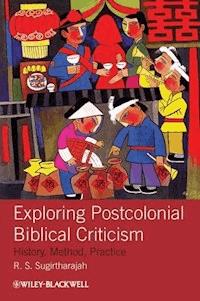
Exploring Postcolonial Biblical Criticism: History, Method, Practice offers a concise and multifaceted overview of the origins, development, and application of postcolonial criticism to biblical studies.?
- Offers a concise and accessible introduction to postcolonial biblical studies
- Provides a comprehensive overview of postcolonial studies by one of the field's most prominent figures
- Explains one of the most innovative and important developments in modern biblical studies
- Accessible enough to appeal to general readers interested in religion
Sie lesen das E-Book in den Legimi-Apps auf:
Seitenzahl: 340
Veröffentlichungsjahr: 2011
Ähnliche















Table of Contents
Cover
Table of Contents
Title page
Copyright page
Acknowledgments
Introduction
About the Contents of the Volume
1 Postcolonialism
Postcolonialism: A Compendious History
Concerns and Preoccupations
Changing Faces of A Discourse
Discursive Interjections
Misperceptions, Flaws, Accomplishments
2 The Late Arrival of the “Post”
Colonizing Tendencies
Biblical Studies and Colonial Connections
The Factors That Facilitated the Arrival of Postcolonial Biblical Criticism
Postcolonial Biblical Criticism and Its Concerns
Concluding Remarks
3 Postcolonial Biblical Studies in Action
Origins
Building the Picture
Postcolonialism and the Modern Empire: Or, American Biblical Studies Meets “The West Wing”
The Postcolonial Commentary on the New Testament Writings
Postcolonialism and Feminism
Postcolonial Biblical Criticism: Some Critical Voices
4 Enduring Orientalism
East–West Relations: Earlier Attempts
Biblical Studies as an Oriental Project
Current Biblical Scholarship and Recycling of Orientalist Practices
Orientals and Their Orientalizing Praxis
Conclusions, Critical Reflections
5 Postcolonial Moments
Living with Many Texts
The Parliament, Public Space, and People’s Power
Colonial Struggles: Old and New
6 The Empire Exegetes Back
Masters and Their Miraculous Births
Late Style: Texts and Twilight
Luke: Gloomy News for The Poor and Good News for The Rich
Concluding Remarks
7 Afterword Postcolonial Biblical Criticism
Continuing Colonial Intentions
Future Tense: Moving between the Vernacular and the Cosmopolitan
References
Index
This edition first published 2012
© 2012 R. S. Sugirtharajah, with the exception of Chapter 3 © 2012 Blackwell Publishing Ltd.
Blackwell Publishing was acquired by John Wiley & Sons in February 2007. Blackwell’s publishing program has been merged with Wiley’s global Scientific, Technical, and Medical business to form Wiley-Blackwell.
Registered Office
John Wiley & Sons Ltd, The Atrium, Southern Gate, Chichester, West Sussex, PO19 8SQ, United Kingdom
Editorial Offices
350 Main Street, Malden, MA 02148-5020, USA
9600 Garsington Road, Oxford, OX4 2DQ, UK
The Atrium, Southern Gate, Chichester, West Sussex, PO19 8SQ, UK
For details of our global editorial offices, for customer services, and for information about how to apply for permission to reuse the copyright material in this book please see our website at www.wiley.com/wiley-blackwell.
The right of R. S. Sugirtharajah to be identified as the author of this work has been asserted in accordance with the UK Copyright, Designs and Patents Act 1988.
All rights reserved. No part of this publication may be reproduced, stored in a retrieval system, or transmitted, in any form or by any means, electronic, mechanical, photocopying, recording or otherwise, except as permitted by the UK Copyright, Designs and Patents Act 1988, without the prior permission of the publisher.
Wiley also publishes its books in a variety of electronic formats. Some content that appears in print may not be available in electronic books.
Designations used by companies to distinguish their products are often claimed as trademarks. All brand names and product names used in this book are trade names, service marks, trademarks or registered trademarks of their respective owners. The publisher is not associated with any product or vendor mentioned in this book. This publication is designed to provide accurate and authoritative information in regard to the subject matter covered. It is sold on the understanding that the publisher is not engaged in rendering professional services. If professional advice or other expert assistance is required, the services of a competent professional should be sought.
Library of Congress Cataloging-in-Publication Data
Sugirtharajah, R. S. (Rasiah S.)
Exploring postcolonial biblical criticism : history, method, practice / R.S. Sugirtharajah.
p. cm.
Includes bibliographical references (p. ) and indexes.
ISBN 978-1-4051-5856-5 (hardcover : alk. paper) – ISBN 978-1-4051-5857-2 (pbk.: alk. paper)
1. Bible–Postcolonial criticism. I. Title.
BS521.86.S84 2012
220.601–dc22
2010044404
A catalogue record for this book is available from the British Library.
This book is published in the following electronic formats: ePDFs 9781444396638; Wiley Online Library 9781444396652; ePub 9781444396645
Acknowledgments
I am very grateful to Rebecca Harkin for commissioning this book and for her patience, her understanding and especially her enthusiasm for this project. Like my previous books, this too has benefited from Dan O’Connor’s wisdom and guidance, but more importantly from his forcing me to rethink and rewrite. I owe huge thanks to Ralph Broadbent for providing an important chapter in this volume. My heartfelt thanks also to Lorraine Smith for her support and encouragement. Finally, my thanks to my wife Sharada, without whom none of my writing projects would have been possible. All that I can say about her is to repeat the words of the unknown Oriental sage: “Many women have done excellently, but you surpass them all.”
Introduction
I tried to tell myself that the answers were irrelevant, that the questions had to be asked differently.1
When I was a student, biblical studies was a mild and a minor discipline. It meandered along with its own business which nobody outside the discipline took any notice of. Occasionally there were minor disputes, such as the Matthean priority which questioned the traditional conjecture that Mark was the first gospel, or the doubting of the authenticity of the resurrection narratives. In between these disputes, it was simply a case of academics recycling the nineteenth-century historical questions or of biblical scholars reverentially quoting each other’s work. But this cozy world was succeeded by a state of upheaval and confusion in the 1980s. This was caused by reading practices informed by Marxism, feminism, and African-American and Third World interpretation. These new methods energized biblical studies. The proliferation of methods and the pluralization of voices resulted in the emergence of a semi-autonomous subfield of studies within the larger rubric of biblical studies.
One of the new reading practices which made a difference was postcolonial criticism. For those of us who were from the former colonies and taught by missionary scholars, and who were tired of interacting with Western agendas, the arrival of postcolonial criticism came as an act of emancipation from the tyranny of Western biblical scholarship. These Western reading strategies grew out of nineteenth-century Europe’s rationalism and pietism and were not of the remotest interest to us in any of our hermeneutical quests. Before the advent of postcolonialism, some of us were like the character in M.J. Vasanji’s novel No New Land, going through “battle by battle” and reliving “all their battles” and “spiritual struggles.” Postcolonial criticism enabled us for the first time to frame our own questions rather than battling with somebody else’s. It provided us with a new set of conceptual tools to investigate the text and interpretation. This volume is the story of how a critical theory which emerged in the secular humanities departments entered the arena of biblical studies.
Postcolonial biblical criticism is basically about posing its question differently to the biblical narratives and to the manner in which they have been interpreted. It approaches texts with the same kind of questions as any other critical practice: “What is a text?”; “Who produced it?”; “How is its meaning determined?”; “How is it circulated?”; “Who interprets it?”; “Who are the beneficiaries of the interpretation?”; “What were the circumstances of the production?”; “Does a text have any message?”; “If so, what sort?” Like historical criticism, postcolonialism is committed to a close and critical reading of the text. But there are crucial differences. While both mainstream biblical criticism and postcolonialism pay attention to the context of the text, one concentrates more on the history, theology, and religious world of the text, the other on the politics, culture, and economics of the colonial milieu out of which the texts emerged. One is about revealing the kingdom of god and its implications for the world, and the other is about unveiling biblical and modern empires and their impact. One focuses on justification by faith for individuals, the other on the freedom of subjected nations; one uplifts the prophetic writings which are largely against other cultures, the other prefers the Book of Proverbs, an amalgam of international wisdom sayings. When mainstream biblical critics pose their questions to the text, they are driven by Reformation and Enlightenment agendas. When those who are not shaped exclusively by Western cultural norms employ postcolonialism, their approach is not necessarily motivated by a European ecclesiastical or intellectual agenda. Essentially, postcolonial biblical criticism is about exploring who is entitled to tell stories and who has the authority to interpret them.
My aim is not to resolve tensions, arguments, and disputes surrounding postcolonial theory, or to frame its ideas, issues, and concepts in a more sophisticated way. That task is well beyond the scope of this volume. My objective ultimately lies not only in critiquing both ancient and modern colonialism, but also in spelling out what kinds of hermeneutical approaches are possible, and how to be vigilant when politicians and commentators speak of a new imperium and scholars revert to Oriental practices in their writings. The hope of the volume is not simply to identify, describe, and analyze marks of colonialism in scholarly discourse, but to understand the past in order to assess the present and be alert.
About the Contents of the Volume
The first chapter, “Postcolonialism: Hermeneutical Journey through a Contentious Discourse,” is an attempt at providing a brief history of the emergence of postcolonialism. In addition to this, the chapter narrates the main concerns and preoccupations of postcolonialism and its innovative contribution to reading practices such as contrapuntal reading. This chapter not only traces and records more recent forms of colonialism but also considers how postcolonial theory itself has moved on since its inception. The chapter ends with highlighting the theory’s flaws and achievements.
The major focus of the second chapter, “The Late Arrival of the ‘Post’: Postcolonialism and Biblical Studies,” is the mapping of the historical factors which paved the way for the advent of postcolonialism in biblical studies. It sets out the major marks of postcolonial biblical criticism and its major thrusts. This chapter also addresses the awkward question of the colonizing tendencies enshrined in the Bible and the complicated story of the unsavory association between biblical studies and colonialism.
Chapter 3, “Postcolonial Biblical Studies in Action: Origins and Trajectories,” surveys some of the leading biblical scholars who work in the area of postcolonialism, their working practices, and the important texts that emerged during the period. It also examines the context and the contents of empire studies, especially in the US, and the interaction between postcolonialism and feminism. This chapter is written by Ralph Broadbent.
Chapter 4, “Enduring Orientalism: Biblical Studies and the Repackaging of Colonial Practice,” has two related aims. One is to argue that biblical studies should be placed within the parameters of Oriental studies. The contention of the chapter is that the geographical focus, the culture, and the texts that biblical studies deal with make the discipline an ideal candidate to be part of Oriental studies. Second, the chapter provides examples of how current biblical studies, especially popular books written for mass audiences by those who practice social-scientific criticism, regurgitate some of the discredited and questionable characteristics of Orientalism in their exegetical and commentarial practices.
Chapter 5, “Postcolonial Moments: Decentering of the Bible and Christianity,” recounts the two important postcolonial moments that happened during the halcyon days of colonialism: the publication of The Sacred Books of the East in 1879 and the Parliament of Religions held in Chicago in 1893. Both had deep implications for Christian theology and biblical interpretation. The chapter highlights how the publication of the religious texts of the East challenged the unique beliefs of the Bible. It also recalls how the delegates from the East used the occasion of the Parliament to blame and shame the West for its moral failures. The strategy they used involved the very Orientalism constructed by the West. The chapter also discusses the differences between the resistance that happened during the colonial period and the oppositional stance of the current postcolonialism.
Chapter 6, “The Empire Exegetes Back: Postcolonial Reading Practices,” provides examples of how to read the biblical texts from a postcolonial perspective. The first example utilizes the contrapuntal method, a method which has come to be associated with postcolonialism as its own distinguished contribution, to read the birth narratives of two masters – the Buddha and Jesus. The second example makes use of Edward Said’s “late style” to understand the writing of two of the most interesting and complicated New Testament authors – Paul and John. Late style, a method that Edward Said proposed near the end of his life, was about comprehending the dramatic changes one finds in the late works of writers, or in artists when they arrive at a position which is completely different from the one they held earlier in their career. The third example is about the rhetoric of representation, and as a case study it looks at the Parable of the Rich Man and Lazarus and investigates how the rich and the poor are represented in the parable and the ideological biases which undergird the subsequent interpretations of the parable.
The Afterword, “Postcolonial Biblical Criticism: The Unfinished Journey,” brings the volume to a close by asking whether postcolonialism will have any future or just fade away like other critical practices. The contention of this chapter is that postcolonial critical practices will have a role to play as long as a culture thinks of itself as superior to others; as long as markets are there to be exploited; as long as sacred texts sanction conquest; and as long as people assume that they are chosen to carry out god’s special task. The chapter also provides some markers for the next step in postcolonial biblical criticism.
The merit of the volume lies not only in its registering of the faults and failures of imperialists and missionaries, but also in recording the hermeneutical habits of nationalists who pressed into action some of the classical patterns of Orientalism and turned these into a convenient weapon to meet various hermeneutical and political needs. Sometimes they appropriated that very Orientalist message in order to recover their identity and repair their culture, battered by colonial and missionary onslaughts. At other times they were simply imitating the standard rhetoric of Orientalism as a suitable way to get approval and recognition from the West.
Readers who are used to inclusive language may find some of the quotations from the nineteenth- and twentieth-century writers offensive. I have left them as they are to indicate the type of thinking that prevailed at that time.
Let me end with a quotation from Crispin Salvador, a character in Miguel Syjuco’s novel Illustrado. It comes out of a Filipino context, so substitute Filipino with Indian or Chinese or Nigerian. Similarly, instead of Tagalog, insert Sankrit or Mandarin or Swahili. Salvador’s words could act as a warning against, a manifesto for, or a caricature of postcolonial criticism and those who engage with it:
What is Filipino writing? Living on the margins, a bygone era, a loss, exile, poor-me angst, postcolonial identity theft. Tagalog words intermittently scattered around for local color, exotically italicized. Run-on sentences and facsimiles of Magical Realism, hiding behind the disclaimer that we Pinoys were doing it before the South Americans.2
Notes
1 Shashi Tharoor, The Great Indian Novel (New Delhi: Penguin, 1989), p. 379.
2 Miguel Syjuco, Ilustrado (New York: Farrar, Straus and Giroux, 2010), p. 207.
1
Postcolonialism
Hermeneutical Journey through a Contentious Discourse
Too much theory and not enough literature. What do I know about “terror” and the “colonial encounter”?1
I came to theory because I was hurting … Most importantly, I wanted to make the hurt go away. I saw in theory then a location for healing.2
The British government’s Home Office has recently produced a booklet Life in the United Kingdom – a booklet which is essential reading for those who wish to apply for British citizenship. Let me quote a passage from the booklet to illustrate how the prospective candidates are informed about the British empire:
However for many indigenous peoples in Africa, the Indian sub-continent, and elsewhere, the British Empire often brought more regular, acceptable and impartial systems of law and order than many had experienced under their own rulers, or under alien rulers other than European. The spread of the English language helped unite disparate tribal areas that gradually came to see themselves as nations. Public health, peace and access to education, can mean more to ordinary people than precisely who are their rulers.3
What this supposedly peaceful and progressive colonial history fails to disclose to the soon-to-be British citizens is the other face of imperialism – the atrocities committed by the empire. Apart from calling the Atlantic slave trade an “evil,” the Home Office’s version of colonial history is silent about the unsavory aspects of the empire.
There are four tyrannical “isms” which have played a dominant role in recent history: fascism, communism, racism, and colonialism. In the vanquisher’s version of history, two of these “isms” – fascism and communism – are projected as heinous crimes. Since it was the West which had a major role in bringing down the cruel regimes and ending the atrocities of Hitler and Stalin, fascism and communism are seen as inhuman and unparalleled in human history. To this, the crimes of other despots – China’s Mao, Cambodia’s Pol Pot, North Korea’s Kim Il-sung, and Ethiopia’s Mengistu – are also added. But when it comes to colonialism, there is a willful amnesia and a moral blindness. For most of the last century, many countries in Africa, Asia, and the Caribbean were under the governance of Western nations which never fail to remind others of their proud liberal and democratic credentials. But the atrocities of colonialism are not given equal attention to those of Nazism and communism. There are works on Nazism which record the evil committed by those who pursued this ideology. Then there is the highly acclaimed , by a group of European academics which tries to catalogue the murders, tortures, extrajudicial killings, deportations, and artificial famines faced by those under communist rule. The report of the Truth and Reconciliation Commission deals with the question of apartheid in South Africa. There has, however, been no similar comprehensive documentation or condemnation of the colonial record except for sporadic disapproval of slavery. The question which the late Edward Said posed is still a valid one: “We allow justly that the Holocaust has permanently altered the consciousness of our time: why do we not accord the same epistemological mutation in what colonialism has done, and what Orientalism continues to do?”
Lesen Sie weiter in der vollständigen Ausgabe!
Lesen Sie weiter in der vollständigen Ausgabe!
Lesen Sie weiter in der vollständigen Ausgabe!
Lesen Sie weiter in der vollständigen Ausgabe!
Lesen Sie weiter in der vollständigen Ausgabe!
Lesen Sie weiter in der vollständigen Ausgabe!
Lesen Sie weiter in der vollständigen Ausgabe!
Lesen Sie weiter in der vollständigen Ausgabe!




