


5,49 €
Mehr erfahren.
- Herausgeber: No Exit Press
- Kategorie: Krimi
- Sprache: Englisch
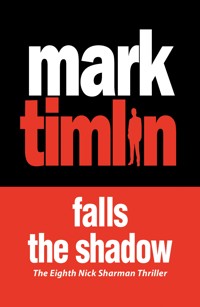
Working in a bar has proved too dangerous for Nick Sharman, so he's back in the private investigation game. His first job, looking for a lost Highland terrier called Prince, shouldn't be too demanding; a quick visit to the owner's ex-husband and a mention in the local newspaper ought to trace it. But Sharman has reckoned without a skinhead nutter by the name of Eddie Cochran. Then there's the call from Sunset Radio. Late-night phone-in DJ Peter Day has managed to upset an unpleasant splinter group, not to mention a paranoid caller, John from Stockwell; and now his post contains more than the usual fanmail; nothing explosive however... so far. Sunset wants Sharman to mind Day - though he's rather concentrate on Sophia, the secretary with the habit of wearing dresses that cling to every curve of her body. But even Sharman couldn't ignore the grisly contents of the next package delivered to the station - or let the threat of further bloody killings go unanswered...
Das E-Book können Sie in Legimi-Apps oder einer beliebigen App lesen, die das folgende Format unterstützen:
Veröffentlichungsjahr: 2015
Ähnliche






FALLS THE SHADOW
Working in a bar has proved too dangerous for Nick Sharman, so he’s back in the private investigation game.
His first job, looking for a lost Highland terrier called Prince, shouldn’t be too demanding; a quick visit to the owner’s ex-husband and a mention in the local newspaper ought to trace it. But Sharman has reckoned without a skinhead nutter by the name of Eddie Cochran.
Then there’s the call from Sunset Radio. Late-night phone-in DJ Peter Day has managed to upset an unpleasant splinter group, not to mention a paranoid caller, John from Stockwell, and now his post contains more than the usual fanmail; nothing explosive however… so far. Sunset wants Sharman to mind Day – though he’d rather concentrate on Sophia, the secretary with the habit of wearing dresses that cling to every curve of her body. But even Sharman couldn’t ignore the grisly contents of the next package delivered to the station – or let the threat of further bloody killings go unanswered…
MARK TIMLIN
Mark Timlin has written some thirty novels under many different names, including best-selling books as Lee Martin, innumerable short stories, an anthology and numerous articles for various newspapers and magazines. His serial hero, Nick Sharman, who appears in Take the A-Train, has featured in a Carlton TV series, starring Clive Owen, before he went on to become a Hollywood superstar. Mark lives in Newport, Wales.
‘The king of the British hard-boiled thriller’
– Times
‘Grips like a pair of regulation handcuffs’
– Guardian
‘Reverberates like a gunshot’
– Irish Times
‘Definitely one of the best’
– Time Out
‘The mean streets of South London need their heroes tough.
Private eye Nick Sharman fits the bill’
– Telegraph
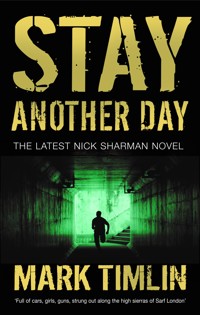
‘Full of cars, girls, guns, strung out along the high sierras of Brixton
and Battersea, the Elephant and the North Peckham Estate, all
those jewels in the crown they call Sarf London’
–Arena
Other books by Mark Timlin
A Good Year for the Roses 1988
Romeo’s Girl 1990
Gun Street Girl 1990
Take the A-Train 1991
The Turnaround 1991
Zip Gun Boogie 1992
Hearts of Stone 1992
Falls the Shadow 1993
Ashes by Now 1993
Pretend We’re Dead 1994
Paint It Black 1995
Find My Way Home 1996
Sharman and Other Filth (short stories) 1996
A Street That Rhymed with 3 AM 1997
Dead Flowers 1998
Quick Before They Catch Us 1999
All the Empty Places 2000
Stay Another Day 2010
OTHERS
I Spied a Pale Horse 1999
Answers from the Grave 2004
as TONY WILLIAMS
Valin’s Raiders 1994
Blue on Blue 1999
as JIM BALLANTYNE
The Torturer 1995
as MARTIN MILK
That Saturday 1996
as LEE MARTIN
Gangsters Wives 2007
The Lipstick Killers 2009
For all the friends I’ve lost beneath the power lines
ACKNOWLEDGEMENTS
Thanks to all the following:
The Staff of Greater London Radio for allowing me access to their studios.
Peter Lavery, aka The Savage Pencil, for editing Hearts of Stone.
Nanci Griffith, for Late Night Grande Hotel which got played constantly while I wrote this book.
Vanessa, for being a real good friend and putting up with listening to all my shit.
Robin Cook, for all his kindness and encouragement. And the occasional swift half.
Sweetheart of the Rodeo.
‘Legs’ Lexton.
Graham Greene and T S Eliot, for the title.
Nigelle de Bar, at Armes de la Chasse, London.
Anthea J – Baby, you’re the ginchiest.
Maxim and Dolores Jakubowski.
The Big Ripper.
Hazel. Four years on, and still standing, just about.
Plus anyone else who took time to give a damn. And there’s plenty.
If there is a hell, we’re in it
1
Sometime in the latter part of that year I decided to go back into the private investigation game. Working in a bar had turned out to be too dangerous.
I was lucky. I even got my old office back. When I’d let it go, a very optimistic firm of surveyors and valuers had opened a branch office there. I think the business lasted about nine months before the recession claimed another victim. Bullseye.
I saw it was for rent one Thursday morning and went straight round to the agents. Business was so bad that I got the place for the same rent as I’d paid previously. One year in advance. No deposit, no premium. I must say the surveyors had done the place up nicely. I told you they were optimistic. Hessian-covered walls, new false ceiling with concealed lighting, hot water and central heating from a gas-fired boiler, and new wiring throughout. How bad?
In fact the firm had gone down the pan so fast they’d even left behind a smart desk and swivel armchair upholstered in oatmeal-coloured material. I got to keep the furniture as a bonus. I collected my client’s chair, law books, electric kettle and mugs out of storage, had the phone re-connected, invested in an answerphone, shoved an ad in the SouthLondon, and I was back in business.
The Monday morning, a week after the ad appeared, I opened up at ten sharp and there was a letter waiting for me on the chocolate brown carpet the surveyors had donated. I picked up the letter and dropped it on the desk. Then I put on the kettle, made tea, and sat down and examined the envelope. It was high grade, grey stationery, typed on an electric with an italic typeface, and franked first class post. The franking machine had printed a message in red on the grey paper: ‘93.7 Sound of the City’.
I ripped open the envelope with my thumbnail. No respecter of high grade stationery, me.
The letterhead screamed ‘Sunset Radio’ in capital letters an inch high, with an address in Brixton. I knew the station. I listened to it all the time. It was one of the new, low-power local radio stations that the government had franchised a few years previously to combat the pirates. Commercial, locally orientated, broadcasting twenty-four hours a day a mixture of music and chat. Being based deep in south London it pumped out a high proportion of jazz, soul, blues, dance music and reggae. To stop the natives getting restless, I imagine. It was a bit patronising, but the mix suited me fine.
The letter was dated the previous Friday and read:
Dear Mr Sharman,
Regarding your advertisement in last Tuesday’s edition of the South London Press, a situation has arisen within our organisation that requires the attention of a discreet and professional private investigator. I wonder if you could ring me at the above number at your earliest convenience?
Anthony Hillerman
Director of Programming
Discreet and professional. I’d never been accused of being either of those before. As I reached for the phone to call Hillerman, it rang. I picked it up and answered: ‘Nick Sharman.’
‘Are you the detective?’ asked a female voice.
‘That’s me.’
‘I saw your ad in the paper. I need your help.’
‘Yes?’ I said, and pulled over a pad and picked up a pen.
‘It’s my dog. It’s gone missing.’
I was silent for a moment. I didn’t know if it was a joke or what. ‘Your dog?’ I said.
‘That’s right.’
‘Have you tried Battersea?’
‘Of course I have. I think my husband’s got him.’
‘Oh, yeah?’
‘Yes. He’s gone too.’
‘Have you been to the police?’
‘What good would they do? They never got my video back that was stolen last year.’
‘They might have more luck with your husband,’ I said.
‘I don’t care about him. Good riddance. It’s the dog I’m worried about.’
Fair enough, I thought. ‘Were they together?’
‘When?’
‘When they disappeared.’
‘No. My husband went months ago. Prince vanished two weeks ago.’
‘He liked the dog?’
‘No, he hated it. That’s why I’m so worried. Please help me, he’s all I’ve got.’ She sounded close to tears.
I’d been going to give her a blank, but she was so obviously genuinely distressed that I didn’t. ‘OK, Mrs… ?’ I said.
‘Cochran.’
‘OK, Mrs Cochran. I don’t usually do lost dogs, but I’ll make an exception. Where do you live?’
She gave me an address in Herne Hill.
‘Are you there now?’ I asked.
‘No, I’m at work, but I’ll be in this evening.’
‘About seven?’
‘Yes.’
‘I’ll call round, if that’s all right?’
‘Of course.’
‘Do you have a photo?’
‘Of the dog?’
‘I was thinking more of your husband.’
‘Yes. And of Prince.’
‘I’ll need to borrow them.’
‘Fine. I’d like the one of Prince back. You can do what you like with Eddie’s.’
‘Eddie?’
‘My husband.’
‘Eddie Cochran?’ I said. I still wasn’t sure if it was a joke or not.
She sighed. She must have heard it a million times. ‘His dad was a rock and roll fan. His surname was Cochran. He never got over losing Buddy Holly, Ritchie Valens and The Big Bopper in that plane crash. When Eddie Cochran got killed it was the last straw. My husband was born a year later, so naturally he was christened Edward. Edward Vincent Cochran, because Gene Vincent was injured in the same crash.’
Better than The Big Bopper, I thought. ‘Of course,’ I said. ‘See you at seven then.’
‘See you,’ she said. ‘Goodbye.’ And hung up.
I broke the connection, got the dialling tone, and tapped out the number for Sunset Radio. It was answered on the second ring. ‘Sunset Radio, the sound of the city, good morning,’ said a woman’s voice. I asked for Tony Hillerman. ‘I’ll put you through to his secretary,’ said the voice. Which wasn’t exactly what I’d asked for, but would have to do.
There was a click and two more rings and another woman’s voice said, ‘Tony Hillerman’s office.’ She had a lovely voice, deep and sexy, so I didn’t mind too much.
‘Is he there?’ I asked.
‘Who’s calling?’
‘Nick Sharman.’
‘Regarding?’
‘Regarding a letter I had from him this morning.’
‘Oh, Mr Sharman, of course. I’m so sorry. I’ll put you straight through.’
There was another click, one more ring, a pause, and a man’s voice said, ‘Tony Hillerman.’
‘Nick Sharman,’ I said. ‘You wrote to me.’
‘I did. Thank you for being so prompt in your reply.’
‘The letter arrived this morning,’ I said. I wanted to give the impression of someone on top of the job. Discreet and professional was what I was aiming at. ‘You said you had a problem.’
‘We do. But I don’t want to speak about it on the phone. Could you come in?’
‘Sure. When?’
‘Today. Lunchtime. I’ll get Sophia, my secretary, to go out for some food. We can talk whilst we eat.’
Sophia. I liked the sound of her more and more. ‘What time?’ I asked.
‘Twelve-thirty, quarter to one.’
‘I’ll be there.’
‘I look forward to it,’ he said as he rang off.
I looked at the letter again and then at the phone. Two jobs in one morning. Things were looking up.
2
I arrived at Sunset Radio at twelve-thirty precisely. The building that housed the station was located close to the market and the railway. It was a newish place, four storeys high, with a giant transmitting aerial on top. The outside was painted the same shade of grey as the envelope I’d received that morning, broken only by the smoked glass windows of the ground-floor reception. I parked my Jaguar round the back by a loading bay and left it in the safe hands of an elderly party with no teeth and a mop of dirty grey hair, wearing at least three overcoats and half a dozen scarves that seemed welded to his neck with filth. He appeared to have packed his whole life into a BR hand cart, and threatened to clean the motor’s windscreen with an unsavoury-looking dishcloth until I gave him a nicker not to.
The back walls of the place had suffered a little from graffiti, mostly advertising hopeful bands, but the rest of the building was spick and span. I pushed through the glass doors of the reception area, and walked across a carpeted floor towards a large grey desk containing two video screens and a bank of telephones. Hidden speakers were pumping out Michael Jackson’s latest single at a modest volume. Behind the desk was a slender young black woman in a navy blue suit and cream blouse. She smiled at my approach, exposing an impressive set of brilliant white teeth. I smiled back.
‘I’m here to see Tony Hillerman.’
‘You are?’
‘Nick Sharman.’ I refrained from adding, ‘Private eye to the stars.’
She referred to a sheet on a clip board in front of her. ‘You’re expected, Mr Sharman. I’ll get someone to show you up.’ She picked up a phone and whispered something.
Within ten seconds a black teenage boy with a high-top fade, baggy jeans and an nwa T-shirt stuck his head around a door behind the desk. ‘Yes, Josie?’ he said.
‘Show Mr Sharman up to Tony’s office, will you, Clyde?’
‘Sure.’ Then to me, ‘Follow me, please.’
I smiled again at Josie, which was no hardship at all, and followed the boy. He took me along a carpeted corridor where every wall and door seemed to be decorated with a ‘No Smoking’ sticker to a small lift which also featured the voice of Michael Jackson, hit the button marked ‘3’, and we were whisked upwards. He smiled too but said nothing. I was finding Sunset Radio a most agreeable place.
When the lift stopped, the boy led me down another corridor to an office door. He knocked and opened it, gestured for me to go in, smiled again and went back down the corridor. I pushed the door further open and crossed the threshold. Inside was a fair to middling-sized office containing a desk, three chairs, filing cabinets, copier, fax, shredder, and all the other accoutrements of modern commercial life. There was also a TV and video hookup and an expensive Sony mini system playing the same old song. In the wall on my left was another door. Behind the desk sat a woman. Sophia, I imagined. When I entered she stood up to greet me.
She was tall, with olive skin and a great mass of dark brown hair that fell below her shoulders. She was wearing a red woollen dress that clung to every curve like it couldn’t bear to let go, and I for one didn’t blame it. With the dress she was wearing black tights and black low-heeled shoes. ‘Mr Sharman,’ she said, ‘Josie called to say you were on your way up. Welcome.’ Off the phone her voice was just as deep and sexy as it had been on it.
‘Nick,’ I said. ‘You must be Sophia.’
She dimpled up nicely at that. ‘That’s right,’ she said. ‘Tony’s in his office. I’ll show you in.’
She came round the desk and opened the connecting door and ushered me in. The office inside was bigger, furnished with an executive-sized desk, two chairs, one each side, and an L-shaped sofa with the long arm of the ‘L’ against one wall. In front of the sofa was a low table covered with plates of cold food, bottles of mineral water and a fruit bowl. There were huge speakers on each side of the window which were also playing Sunset at a low volume. Jacko’s record had finished and had been replaced with a commercial for a local courier service. Behind the desk in there sat a dark-haired man in a grey suit, blue button-down shirt and an extravagantly patterned tie. When he stood to greet me I saw that he was under average height. Smaller than Sophia, in fact. Hence, I guessed, her choice of low heels. Big rule of office politics – the staff should never tower over the boss. Mind you, she could have towered over me anytime. ‘Mr Sharman,’ he said, advancing towards me, hand outstretched. ‘Welcome to Sunset Radio.’
These really were the most welcoming people I’d met for years. Much more and I’d begin to feel nauseous. ‘Mr Hillerman,’ I said, gripping his mitten in mine and getting a fierce pump of the hand for my troubles.
‘Tony,’ he insisted.
‘Nick,’ I parried.
‘Sit down.’ He indicated the sofa against the wall. ‘Sophia’s laid on some sandwiches and salad and fruit. There’s Evian water or else you can have a Coke or 7-UP from the machine. Or coffee,’ he added.
Evian water! I thought. I’d’ve preferred a beer, but obviously that was a zero option. ‘Coffee,’ I said. ‘If it’s no trouble.’
‘Sophia,’ said Hillerman.
‘No trouble at all,’ she said with a smile. I hoped she was staying for lunch. ‘It won’t be a moment.’ And she turned and left in a small cloud of a perfume which I couldn’t identify but which smelt like forty nicker an ounce.
‘Sit down,’ said Hillerman again. ‘Sophia will be lunching with us in case we need notes to be taken.’ I felt an improvement in the atmosphere even as he spoke.
‘That’ll be nice.’ I sat down.
‘There’s chicken or smoked salmon sandwiches, a bean sprout salad and kiwi fruit,’ he said proudly. ‘I believe in healthy living.’
‘Good,’ I said. I knew I wasn’t going to get on with Hillerman. Healthy living indeed.
As I was making myself comfortable, Sophia returned carrying a big silver tray with a giant coffee pot, cream jug, sugar bowl and three cups. ‘Here we are,’ she said, and bent gracefully at the knees to put it on the table in front of me. I caught the briefest glimpse of the tops of her breasts and the white lace of her bra. Too brief.
‘Pull up a chair,’ said Hillerman to his secretary.
‘Pull up a sofa,’ I said and patted the cushion next to me. Hillerman gave me a slitty-eyed look. I wondered how long it was going to be before I wore out his effusive welcome. Sophia smiled at me and joined me on the couch.
As she sat, her dress slid up her long thighs, and as she tugged it down, I noticed that on the third finger of her right hand she was wearing a distinctive ring, featuring a black stone set in a gold surround. I checked the same finger of her left hand. Nothing. That was promising, if not definite in these liberated times.
‘What about calls, Sophia?’ asked Hillerman, rather nastily, I thought.
‘I’ve told the switchboard to hold all calls until further notice.’
‘Good. Come on then, dig in. There’s plenty here for everyone.’
I picked up a dainty sandwich and bit off half of it. Sophia poured coffee and the aroma filled the office. I had a vision of her pouring my breakfast coffee. It was almost too much to bear. ‘Black or white?’ she asked.
‘White,’ I said. ‘One sugar.’
Hillerman frowned like I’d said a rude word, then his face cleared. It wasn’t his body after all. ‘So what do you know about Sunset, Nick?’
‘I listen to it,’ I replied. ‘I live in Tulse Hill.’
‘Good reception?’
‘Crystal clear.’
‘That’s what I like to hear. What shows do you like best?’
‘Music. The blues and soul programmes mostly.’
‘We’re very proud of our coverage of that demography of music.’
Demography. What a fucking plank!
‘What about the talk shows?’ he asked.
‘I listen to the breakfast show,’ I said, and smiled at Sophia as if she might get my drift. ‘And the late night phone-in, when I can.’
‘Good,’ beamed Hillerman. ‘Do you like Peter Day?’
Peter Day was the presenter of the midnight to three in the morning slot. Day At Night it was called, but wasn’t as bad as that sounds. Day started off with a few personal viewpoints on the news, both national and local, then opened up the phone lines. His gimmick was that he slagged off every caller. It didn’t matter what angle they came from. Day would always find some way to insult them. He was an irascible, miserable, sarcastic sod. I quite liked him. He played the occasional record too. His taste and mine were almost identical so I caught his show as often as I could.
‘Yes,’ I said. ‘But I don’t think I’d want to give him a call.’
Hillerman wasn’t amused. ‘That’s the problem,’ he said.
‘How?’
‘Day has been a bit of a thorn in our collective sides since he joined the station,’ explained Hillerman. ‘I’ll be perfectly honest with you, Nick.’ I hate it when people say that. It always means exactly the opposite. ‘Sunset Radio is just a stepping stone. Part of a master plan. The institutions and individuals who finance the business are looking at a wider horizon. A bigger picture.’
‘Yes?’ I said, trying to look more interested in what he was saying than in Sophia’s thighs. Her thighs won.
‘A nationwide commercial top forty stroke rock station, in competition with Radio One,’ said Hillerman triumphantly. He actually said ‘stroke’. Can you imagine the type of person who does that? ‘The frequencies are there, the demand is there, and so is the advertising money. Even in these straitened times.’ Mentally I put up my fees by fifty per cent. ‘But Day is a bit of a maverick,’ he went on. ‘And any real trouble could lose us the franchise we need so badly.’
‘Why don’t you just sack him?’ I asked. ‘Or is that a silly question?’
‘Not at all. We can’t sack him, and I don’t know that we want to. Day has a contract, of course, but then contracts are made to be broken. But he also brings in an audience. A little controversy keeps radios switched on. And radios switched on bring in advertisers. Ultimately that’s the name of the game. Oh, and he’s related to the MD.’
So that was why they, or rather Hillerman, couldn’t sack him. And it rankled. And it showed.
‘It’s never just what you know,’ I said.
He nodded. ‘But understand this, I have no argument with Peter. He’s a pro. Unfortunately he seems to have upset a rather unpleasant splinter group that operates in the area.’
‘Pick a number,’ I said.
‘I know what you mean, but this group is particularly odious.’
‘And they are?’
‘They call themselves Sector 88.’
If that was supposed to strike fear into my heart, it didn’t. I was none the wiser. ‘What’s their specific point of view?’
‘Neo-Nazism. White supremacy. They’re anti-black, Asian, Jewish, homosexual, feminist. You name it, they’re anti it.’
‘So they’ve got plenty of targets round here. It must be a full-time job.’
‘Precisely. Some time ago they sent some of their literature to the station. Peter got hold of it, gave it rather cavalier treatment.’
‘I remember,’ I said. ‘Of course. About a month ago. It was very funny.’
‘Sector 88 didn’t think so.’
‘And he had some of the loony tunes call him up. He gave them pretty short shrift too.’
‘That was the beginning of it.’
‘Of what?’ I asked.
‘They made some rather public threats, followed by hate mail and then a few parcels through the post.’
‘What kind of parcels?’
‘The usual.’ He looked over at Sophia. ‘Dog excrement. Human faeces. Offal.’
‘Nice,’ I said. ‘But nothing explosive?’
‘No. Not yet. But there’s always the possibility.’
‘Have you told the police?’
‘Of course.’
‘And?’
‘What do you expect? There’s been nothing dangerous. Just unpleasant. The police have taken details, but they’re very busy.’
‘And what do you want me to do?’
‘Find out who’s sending the stuff. If you can get names, the police will take further action.’
‘Why me?’
‘You’re a local man. You know the territory. Besides, we encourage local businesses. It’s part of our brief.’
‘Fair enough. Why don’t you just get Peter Day to tone down his act?’
‘Impossible. He’s a man of integrity.’
‘There’s very few of us left,’ I said. ‘What’s he like? In the flesh, that is.’
‘He’s OK,’ replied Hillerman. ‘Except when he’s had too much to drink. Do you drink?’
Warning signs flashed in front of my eyes. ‘Lips that touch liquor will never touch mine,’ I said, and winked at Sophia. She smiled in return. I was going to put my hand on my heart but thought maybe that was pushing it a little too far.
‘Good,’ said Hillerman. ‘Peter can be a very bad influence.’
I shook my head sadly.
‘So, are you interested in the job?’ he asked.
‘Yes.’
‘Good. How much are your fees?’
‘Three hundred a day,’ I said, without turning a hair. ‘Plus expenses.’
‘No problem. Let’s give it a week to see how things go. Does that suit you?’
I nodded. It suited me fine.
‘Sophia,’ he went on, ‘will you go to Accounts and get a cheque made out to Mr Sharman for twenty-one hundred pounds? I’ll clear it with Simon. And get two hundred and fifty in cash for expenses.’
‘And I’m not very good at expense sheets,’ I said. ‘I tend to lose receipts.’
‘Better make that five hundred,’ said Hillerman dryly. ‘I’ll sign the slip.’
Sophia got to her feet and left the room. ‘I’d like to meet Peter Day,’ I said.
‘Of course. I’ll speak to him later, arrange a time and place and let you know. Can I have your number?’
I took out one of my business cards and wrote my home number on the back. ‘Anytime,’ I said.
‘So is there anything else you want to know?’ asked Hillerman.
‘Just one thing,’ I said. ‘Who opens the parcels that arrive here?’
‘Whoever they’re addressed to. Clyde in the post room opens any that are addressed just to the station and finds a home for them. Anything addressed to a particular presenter or department gets shoved in their cubbyhole. You see, we get hundreds a week… records, CDs, tapes from hopeful bands and DJs, videos, books, scripts. It’s a deluge. Almost impossible to vet.’
‘I hope you’ve warned your staff.’
‘Of course. Anything vaguely suspicious gets sent to Security.’
‘Right,’ I said. ‘I’ll speak to Day and have a general nose round. Then I’ll speak to some acquaintances of mine into agit-prop politics, and a friend who works for the local press. See what I can dig up on Sector 88. I suppose there’s no proof that they’re actually sending the stuff?’
‘No, but it’s pretty obvious.’
‘Not good enough, I’m afraid. That’s why the police can’t do much. They can hassle the group, but they’re on a hiding to nothing without anything solid to go on. Give me a few days and I might come up with something.’
Just then Sophia came back into the room carrying two envelopes and a pad. One of the envelopes was white and thin, the other brown and thick. She gave them to Hillerman who signed on the pad twice then passed the envelopes to me. ‘You’re on the firm as of now,’ he said. ‘Welcome aboard.’
3
I went back to the office via my bank where I deposited the cheque. As I got in, Hillerman called me. He’d arranged for me to meet Peter Day later that evening in a wine bar in Brixton. He actually apologised for the choice of venue but explained that Day always went in there for a livener before his show. He didn’t actually say ‘livener’ but I knew what he meant. I told him not to worry.
I sat down and made a few calls, with little result. I tried the local paper, but my pet journalist was out on a story. Then I phoned a couple of people I thought might shed a light on Sector 88, but all I got were ringing tones or answering machines. I left messages where I could, then hung around until it was time to visit Mrs Cochran.
I got to the address she’d given me just before seven. It was in the middle of a row of terraced houses in a street opposite the park. The tiny front garden was neatly tended, and there was a light behind the frosted glass in the front door. I rang the bell. Through the glass I saw a vague shape coming towards me. A woman opened it. ‘Mrs Cochran?’ I asked.
‘Mr Sharman?’ she replied.
‘That’s right.’
‘Come in.’
She led me down a short hall that smelled of furniture polish and into a tiny living room. ‘Sit down,’ she said.
I chose the sofa.
She was a washed-out blonde, late twenty-something. Or maybe younger, and just looked older. ‘Would you like some tea?’ she asked.
‘Yes, please.’
‘Sugar?’
‘One.’
She left the room and went into the back where I heard her clinking crockery. Whilst she was gone, I took a look round. It was a cosy room with a two-piece suite, a coffee table, TV, video, old-fashioned stack stereo, a pile of vinyl albums and tapes, and a bookcase without books. The carpet was dark brown and matched the curtains drawn across the window. The light source was two table lamps, one on the bookcase, one on top of the TV set.
She was back quickly. She must have had the kettle on the boil. It was the second time that day I’d had refreshments served on a tray. I could get used to it.
She put the tray on the coffee table and sat on the armchair opposite me. ‘Either one,’ she said, and I helped myself to a cup.
‘Do you smoke?’ she asked.
‘Yes.’
She took a packet of Silk Cut from the pocket of the cardigan she was wearing over a shirt and dark trousers.
I put my cup down on the floor beside me and accepted one. She lit them both with a disposable lighter. As she did so I noticed that her fingernails were bitten down to the quick. She fetched two ashtrays from on top of the bookcase and gave me one. I put it down next to my cup and saucer.
When we were settled she said, ‘Do you think you can help?’
‘I’ll be honest, Mrs Cochran,’ I replied, ‘I don’t know. But I’ll try. Tell me what happened.’
‘Simple. My dog’s gone missing.’
‘Not lost?’
‘What, Prince? Not a chance. He’s a big softy. He wouldn’t stray. He knows where he’s well off.’
‘What about your husband?’
‘Does he know where he’s well off, you mean?’ she asked, and smiled. The smile transformed her face and she looked years younger.
‘I didn’t mean it quite like that.’




