


16,99 €
3,49 €
Niedrigster Preis in 30 Tagen: 16,99 €
3,49 €
Niedrigster Preis in 30 Tagen: 16,99 €
Mehr erfahren.
- Herausgeber: IVP Formatio
- Kategorie: Religion und Spiritualität
- Sprache: Englisch
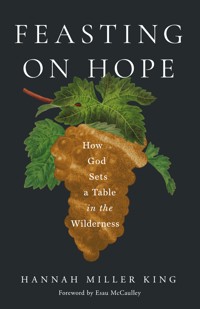
A Sacred Invitation to Hope How can we live as people of hope in the midst of unmet longings, unanswered prayers, and seemingly unresolvable pain? Through sharing her personal story of deep loss, Hannah Miller King reflects on how the ancient Christian practice of Communion can reframe our grief by embedding it in a larger picture of gospel hope. Each chapter presents a way in which the Lord's Supper makes the hope of the gospel tangible, reminding us of God's present faithfulness and promise of future renewal. With its inviting tone and thoughtful reflections, Feasting on Hope provides solace for those seeking hope amid a world that is not yet restored. In Feasting on Hope, you'll find - Rich biblical insights made approachable for all readers - A hopeful exploration of how we participate in Christ's triumph - An invitation to see yourself as a wanted guest of God's hospitality - Reflection questions for individuals and groups to foster thoughtful engagement Whether you are grappling with what seems like an endless search for peace, wrestling with unmet desires, or simply longing for a deeper connection with God and others, this book meets you with tender realism and abundant grace. Feasting on Hope invites you to the Communion table, where God's people are formed into a family that is strong enough to hold sorrow inside of hope. Are you ready to take your place at the table?
Das E-Book können Sie in Legimi-Apps oder einer beliebigen App lesen, die das folgende Format unterstützen:
Veröffentlichungsjahr: 2026
Ähnliche




















FOR MY SIBLINGS,in thanksgiving for the table we shared growing up.
AND FOR MY CHILDREN,in hope that you will always know home at our family table and at his.
Contents
ForewordEsau McCaulley
THERE IS A DANGER IN FOREWORDS. It can be like someone coming on stage before the comedian and explaining all the jokes that the audience is about to hear. It can be similar to a guide at an art exhibit pointing out all the details in a painting that is best simply taken in. The best response to poetry is often silent reflection, not exposition.
I will try to avoid all those things because Hannah Miller King’s excellent book deserves better. Feasting on Hope is part memoir, part reflection on the beauty of Communion (the Eucharist), part theodicy, and so much more besides. More than anything else, it is a profoundly moving God-honoring work that travels the difficult road through pain to beauty. Feasting on Hope is consistently mystical but always grounded, earthy, and yet transcendent.
As a pastor, this will be the book I give to people looking for an introduction to the sacramental life. I am confident that others will do the same. I would say more, but any description that I might give will pale in comparison to your experience of the thing itself.
PrologueA Tale ofTwo Tables
SOME OF MY EARLIEST MEMORIES take place at the dinner table.
Ours was in a sunroom with floor-to-ceiling windows that gave the effect of eating outside. When I got antsy in my seat, I would crane my neck to see the tops of trees and what they might drop onto our skylights. Sometimes pine needles would build up in the windowpanes until the wind blew them free.
Usually, though, there was plenty to observe around the table. As the second oldest of six children, I was rarely bored at mealtimes. To my eyes, our eight-foot-long table was about as big as a swimming pool. It was also usually crowded, noisy, and entertaining. Sometimes special guests or grandparents would be brave enough to join us for a meal, and we’d encounter new stories or menu items.
One particularly social evening—probably a holiday, when food and people filled every square inch of space, and all the special dishes were out—I thought I might take advantage of the crowd and slip under the table undetected. My plan was to sneak past the rows of adult feet to the end of the table where the butter dish lay, unattended and enticing. I reached up for it, took a large bite out of the middle of the soft yellow stuff I always wanted more of, then slid it back onto the table above my head. I thought it was the perfect heist; nobody could possibly suspect me. When I climbed back up into my seat, every adult in the room was grinning in my direction.
When I reflect on how I felt after getting caught in my first act of theft, I remember incredulity. How did they all know? I also remember disappointment. Apparently, butter tastes much better on bread. But I do not remember shame. There was a safety in that first community around the table, a permission to become myself through trial and error and the input of wise guides. I wasn’t perfect or the center of things, but I belonged. In my early years, I enjoyed the kind of stability that children can intuit even if they can’t articulate.
The stability was short-lived.
After a series of cross-country moves, we were living in a temporary home—with plans to build my parents’ dream house nearby—when my father was diagnosed with an aggressive form of cancer. For the next four years, our family life was in constant flux. We moved again, but not into the dream house. We changed schools three times.
My parents made every effort to save my father’s life, which required a fair amount of travel. While they pursued experimental medical treatments at top hospitals, my siblings and I were split up and sent to various other homes. We stayed with friends and relatives who could keep us for three or four weeks at a time.
My first extended stay away from my parents was over Thanksgiving. I was eleven. For the most part, I had a great time playing with my cousins and hearing my aunt tell stories from when my dad was a kid. On this trip I learned to shuffle a deck of cards and use the (dial-up) internet on the family computer in their kitchen. But it was also when the insomnia began. At night, I was haunted by an aching sadness I couldn’t explain or understand. I just knew I wasn’t home and that nothing was the same as it was before. At the borrowed tables of friends and relatives, I was always a partial outsider.
My father died slowly. This was a gift because it meant we got more time, more memories with him. But it was also a curse because as he declined, those memories grew more tragic. One winter, my younger brother and I were in our school’s production of A Christmas Carol. My dad insisted on coming to see it. We set up an armchair in the auditorium for him to attend comfortably, but during the performance he began seizing and had to be carried outside by four other men.
After he died, the bank foreclosed on our home and we moved again, into an old parsonage behind a Lutheran church that gave my mom a good deal on rent. Either because it was a smaller space than we’d ever lived in, or because my mother couldn’t bear to look at my father’s empty chair every day, she shoved our massive dining table against a window in the new dining room. It now only seated seven.
Childhood loss interrupted my sense of safety and belonging in the world. Ordinary transitions, like a move to a different house or visits with cousins, were colored by traumatic transitions—like death. The result was a cumulative feeling of homelessness, a displacement and disconnection in the presence of others. Subconsciously, I internalized this vulnerability as shame.
This was the subtext of my story when I began taking weekly Communion at my church.
I was halfway through seminary by then and had already experienced a fair amount of healing. Committed mentors, skilled therapists, and a praying mother had helped to preserve my Christian faith and nourish my burgeoning call to ministry. But when I began worshiping at a church that invited me to walk to the front each week with empty hands outstretched, to look another human being in the eye in hopes of being fed, all my childhood insecurity rose straight to the surface.
Every week, I struggled to come forward and receive Communion. But at the end of each service, we prayed a prayer that interpreted my tears. In unison, the congregation said:
Almighty God, eternal Father,
we have sat at your feet,
learned from your word,
and eaten from your table.
We give you thanks and praise
for accepting us into your family.
Send us out with your blessing,
to live and to witness for you in the power of your Spirit,
through Jesus Christ, the firstborn from the dead.1
In the practice of Communion, I was invited to rehearse bodily what I believed doctrinally: By grace, we are grafted into God’s family. I knew this intellectually, but was undone by the tangible, liturgical expression of Christ’s profound welcome. Week after week as I came to the Table—his Table—he confronted my fear of abandonment, my feelings of displacement, my shame. And in exchange he offered me himself. Slowly, I found a new sense of belonging at this Table.
The Bible describes Christian faith primarily in familial terms. Those who follow Jesus are called his bride, his body, his brothers and sisters. In teaching his disciples to pray, he instructed us to call God “Father.”2 And in teaching us to worship, he instituted a meal. In my tradition we call this meal a “sacrament,” which stems from the word mystery: When we share the Lord’s Supper, we mysteriously experience fellowship with him. We eat from his table. We are accepted into his family.
Belonging to God’s family doesn’t replace our family of origin. It doesn’t erase traumatic memories or the ache of personal losses. But it does write them into a larger story of hope. Communion with Christ reorients us to face our various griefs from a place of safety and strength. In him we find a home.
I’ve been receiving weekly Communion for about twelve years now. As a priest, I am often on the other side of the Table from where I first began receiving. When I hold the bread and wine before my congregation, I extend to them the same invitation that healed me: “Taste and see that the LORD is good!”3 I do so even though my own healing isn’t complete—and won’t be until he comes.
Despite what many of us have been taught, either overtly or through the power of suggestion, Christianity does not promise total renewal in this life.
In his letter to the Romans, the apostle Paul describes the Christian experience as a kind of groaning; we eagerly await our full redemption because we know it hasn’t arrived yet. Our salvation is secure, but we haven’t yet reaped all its benefits. He elaborates, “For in this hope we were saved. Now hope that is seen is not hope. For who hopes for what he already sees? But if we hope for what we do not see, we wait for it with patience.”4
I used to think that if I could just learn to trust God enough, the shadow of childhood loss would lift entirely. I assumed that any remaining unfulfilled longing inside me reflected my deficient faith. But at the Lord’s Table, my grief has been both healed and stoked. In celebrating a meal that anticipates Christ’s return, we aren’t meant to be fully satisfied now. Christian hope is future-oriented: it trains us to fix our eyes on the horizon, expectant for the day to dawn that will make all things new. Until then, Paul says, we see as in a mirror. But on that day, we will see face to face. We will know fully, just as we have been fully known.5
My family table remains incomplete in the face of permanent loss. Christian faith does not change that. Jesus never promised to protect us from living with unmet longings or unresolved pain. But he has promised to be with us until the end of this age. And he has provided everything we need to sustain us while we wait. He has prepared a table for us.6
In Psalm 78, God’s people are instructed to remember and trust his sustaining presence. The psalmist retells the story of their exodus from slavery and of God’s faithfulness in their long journey through the desert. Despite God’s miraculous provision, his people still doubted. After he’d parted the sea, made water gush from a rock, and led them by a pillar of fire, they questioned his character and his competence by asking, “Can God spread a table in the wilderness?”
I understand their question. In the presence of enduring grief and unfulfilled desires, it’s easy to feel anxious. As we anticipate the full, unbroken fellowship that awaits, we are tempted to ask, “Can God spread a table in the wilderness?” This book is my own psalm of response: yes, he can. He already has.
1HopeThe Feast and the Foretaste
What you believe about the future willchange how you live in the present.
I WAS ELEVEN when my father was diagnosed with terminal cancer.
He and my mom came home from the doctor one morning after what I assumed was a routine check-up—if he’d been having symptoms of some unseen illness, I didn’t know it—and they corralled us all into their bedroom to “talk.” This was unusual, but my dad often had a grandiose way about him, so we complied without too much confusion.
Their bedroom wasn’t large. I’m not sure why they chose to crowd six children into this space for our life-altering conversation. Maybe it was the place in our house with fewest distractions. No toys, no snacks in eyesight. Maybe their room represented their own safe place. Its central feature was two large windows on the far side of the bed that bathed the ancient wood floors in sunlight. That’s what I remember most from our conversation. Not the words exchanged, not my siblings’ reactions to the news; just the shimmering white light pouring over my dad’s enormous frame as he spoke.
He said, “Today we found out that Daddy has cancer. And we have decided that whether I live or die, we want my life to glorify God.”
In the years since this moment, I’ve wrestled with how to articulate its impact on me. I don’t believe that God glibly kills people—that he removes fathers, mothers, friends, spouses—to teach us a lesson or to “get glory.” I also know that my father didn’t just accept his cancer diagnosis like a death sentence. During the four years of his illness he fought, literally, for dear life.
But the words he spoke over us at the beginning of this journey were like a prophecy: They invited me into a truth I will never fully understand. They introduced me to the mystery that a life yielded to God is a glorious life, regardless of outcomes.
This mystery does not fit neatly into our paradigms.
Religious or not, we all have a script in mind for the story of our lives. We expect, or at least we hope, that circumstances will work out in our favor. Some struggle is permissible as long as there’s a happy ending. My young sons, who’ve been catechized by Disney and other kid-friendly films, reassure each other during tense moments on family movie night: “The good guys are going to win.” But what happens when they don’t? How do we find equilibrium when our personal narratives take an unexpected turn and deprive us of the resolution we crave?
These questions are especially troubling for Christians, who believe in a God that is both powerful and good. When God allows tragedies to occur, people of faith are rightly scandalized. Our oldest prayer book, the Psalms, is full of the question why? Sometimes, it is the only honest word of faith we can muster.
Early in my father’s battle with cancer, we anticipated healing. Confident in God’s abilities, we prayed for a miracle. But after four years of praying and hoping and submitting to every treatment available—including, to our shared dismay, gallons of fresh carrot juice and other dietary changes that we implemented as a family—the miracle never came. My father died at age forty-four. Twenty years later, I’m still asking why? It’s a question I’ve learned to carry with me, like a piece of jewelry I never take off. It’s simply there, so much a part of me that I rarely notice it anymore. But this unanswerable question has also become like an expansive room in which I live, and where I have met God more profoundly than if our prayers had been answered as we hoped.
In the bewilderment of grief, we come to the end of ourselves and our paradigms. We encounter a reality beyond our ability to control. In the wilderness of why, we come face to face with God. Perhaps, when my father was diagnosed, he recognized this: that even when God can’t be understood, he can be trusted.
Crisis disrupted my script. But paradoxically, it gave me a better one.
Christian hope is often articulated in seemingly oppositional ways. Either we have an imagination for healing and renewal in this life, or we teach patience in suffering while we wait for heaven. Sometimes we fluctuate between these two frameworks. My family’s own journey reflects this.
During my father’s illness, we worshiped for a season with Christians who confidently prayed for his cancer to be reversed. We were energized by their joyful expectation that God, who raised Jesus from the dead, is still at work in the world. But when my father wasn’t healed, I struggled to pick up the pieces of our faith. Things hadn’t gone according to the formula. In the wake of his death, my theological maxims came to a breaking point: Was this tragedy my fault or God’s? Had my faith not been strong enough, or had God not been true to his word?
We needed a bigger frame for our grief.
As a struggling teenager, I was comforted to learn about God’s mysterious reign over all circumstances, even the bad ones. I needed to hear that his good plan does not ultimately rest on the strength of my faith, and that no loss is outside of his power or his mercy. But at times I wondered how to reconcile this newfound understanding of God’s sovereignty with my former expectation that he acts powerfully on behalf of our prayers.
In the face of a cancer diagnosis—or chronic illness or job loss or divorce papers—we scramble to make meaning and find a way forward. And the Christian story offers a spectrum of possibilities: Do we continue to “ask, seek, and knock” for what we believe God can accomplish by his power?1 Or should we entrust our circumstances to the One who works all things according to the counsel of his will?2 The answer, of course, is both. Full-throated Christian hope cultivates an imagination for present renewal alongside a theology of suffering. But holding these things in tension takes practice. And it takes practices.
The earliest Christian ritual is an exercise in hope.
The Lord’s Supper began, appropriately, with the Lord himself. On the night before he died, Jesus reinterpreted the Jewish Passover meal in light of his own ministry. For centuries, God’s people had celebrated their deliverance from Egypt by sharing a meal that allowed them to remember—and, with the senses, to reenact—the historic night that God secured their freedom. In associating the elements of this meal with himself, Jesus claimed them as symbols of a “new covenant,” a new promise of deliverance for those who’d follow him in faith. He also promised that one day, he would share table fellowship with them again in person.3 Among his first followers, then, the Lord’s Supper was equal parts remembrance and longing: They celebrated Jesus’ victory over sin and death, and they looked eagerly for his return. This poignant meal was a centerpiece of their worship from the earliest days of the church.4
In the first century, Christians gathered for worship under threat of persecution. Both Jewish and Roman leaders deemed allegiance to Christ problematic and sought to snuff it out through violence. The apostle Paul, himself the recipient of extreme persecution, addressed the reality of suffering in almost all his letters to churches.
Peter, who would eventually die by crucifixion, encouraged other believers to see their hardship as both normative and lasting: stand “firm in your faith, knowing that the same kinds of suffering are being experienced by your brotherhood throughout the world.”5 For the first Christians, patience in suffering was nonnegotiable. Jesus’ own words were still fresh in their collective memory: “In the world you will have trouble.”6




