


0,99 €
Mehr erfahren.
- Herausgeber: Doris Ferguson
- Kategorie: Geisteswissenschaft
- Sprache: Englisch
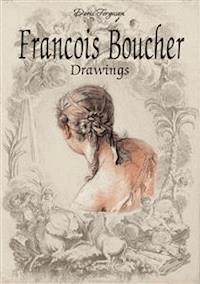
François Boucher was an incredibly productive, making thousands of drawings (sketches and finished works) in chalk, ink, pastels, preparing drawings for engraving, designing tapestries and painting in oils. His drawing mediums included pen and ink, chalk, pastel, sanguine and trois crayons technique. Drawing best reveals the true essence of each artist and allows even the modern viewer to see his hand in act. One of the most outstanding effects about Boucher's marvelous draftsmanship is lively, economical line. Elegance, beauty and power combine with a remarkable inner force. Boucher handles details easy, he describes the essential form in just a few marks, with just enough tone used to suggest the form and the features conveyed accurately but powerfully. At the same tame in Boucher's drawing the observer will notice that the energetic line-making describes a solidly understood form and precisely observed detail. The learner of drawing will have much to get from this book.
Das E-Book können Sie in Legimi-Apps oder einer beliebigen App lesen, die das folgende Format unterstützen:
Veröffentlichungsjahr: 2015
Ähnliche













Francois BoucherDrawings
ByDoris Ferguson
Foreword and AnnotationsbyDoris Ferguson
First Edition
Copyright © 2015 byDoris Ferguson
*****
Francois BoucherDrawings
*****
Foreword
François Boucher was French Rococo painter, engraver, and designer, who best representthe frivolity and elegant showiness of French court at the 18th century. He was for a short time a pupil of Fransois Lemoyne and in his early years was closely connected with Watteau, many of whose pictures he engraved. In 1727-31 he was in Italy, and on his return was soon busy as a versatile fashionable artist. His career was hugely successful and he received many honours, becoming Director of the Gobelins factory in 1755 and Director of the Academy and King's Painter in 1765. He was also the favourite artist of Louis XV most famous mistress, Mme de Pompadour, to whom he gave lessons and whose portrait he painted several times.
Boucher mastered every branch of decorative and illustrative painting, from colossal schemes of decoration for the royal chateaux of Versailles, Fontainebleau, Marly, and Bellevue, to designs for fans and slippers. In his typical paintings he turned the traditional mythological themes into wittily indecorous scenes galantes, and he painted female flesh with a delightfully healthy sensuality, notably in the celebrated Reclining Girl (Alte Pinakothek, Munich), which probably represents Louisa O'Murphy, mistress of Louis XV. Towards the end of his career, as French taste changed in the direction of Neoclassicism, Boucher was attacked, notably by Diderot, for his stereotyped colouring and artificiality; he relied on his own repertory of motifs instead of painting from the life and objected to nature on the grounds that it was 'too green and badly lit'. Certainly his work often shows the effects of superficiality and overproduction, but at its best it has irresistible charm and great brilliance of execution. Qualities he passed on to his most important pupil, Fragonard.
Boucher the painter was no less prolific or varied as a draftsman. Drawings played a massive amount of roles in the preparation of paintings and as designs for printmakers, as well as being created as finished works of art for the growing market of collectors. For his major canvases, Boucher followed standard studio practices of the time, working out the overall composition and then making chalk studies for individual figures, or groups of figures. Two Winged Putti, for example, is a study for a pair of Boucher's trademark dimpled Putti in the foreground of Apollo Revealing His Divinity to Issé (1750, Musée des Beaux-Arts, Tours). Oil and gouache sketches were also common components of Boucher's working process in the preparation of major commissions, although over the course of his career he increasingly made sketches as independent works. The Adoration of the Shepherds, a free and painterly sketch in gouache, was long considered a preparatory sketch for Madame de Pompadour's private altarpiece La lumière du monde (ca. 1750, Musée des Beaux-Arts, Lyon). Vertumnus and Pomona dates to the last decade of his career when he began to favor brown chalk, a fabricated medium, beginning with an etching he made in 1727 after a painting by Watteau of the same subject.
Boucher was an incredibly productive artist, making thousands of drawings both as sketches and finished works in chalk, ink, pastel, preparing drawings for engraving, designing tapestries and painting in oils. His drawing mediums included pen and ink, chalk, pastel, sanguine and trois crayons technique.
Drawing revealing the artist at work and allows even the modern viewer to see the artist's hand in action. One of the most notable things about Boucher's superb draughtsmanship is energetic, economical line. Grace, beauty and power combine with a striking inner force. Boucher handles details easy, he describes the essential form in just a few marks, with just enough tone used to suggest the form and the features conveyed accurately but efficiently. At the same tame in Boucher's drawing the observer will notice that the energetic mark-making describes a solidly understood form and precisely observed detail.
The learner of drawing will have much to get from this book.
Drawings
Landscape with the Aqueduct at Arcueil,
1745-55,Black and white chalks, heightened with white, on blue paper,30.7 x 44.3 cm) Albertina, Vienna
Two Winged Putti
1748–50,Black chalk, brush and gray wash, heightened with white chalk, on beige paper, 21.1 x 23.7 cm,The Metropolitan Museum of Art




