


4,49 €
4,49 €
oder
-100%
Sammeln Sie Punkte in unserem Gutscheinprogramm und kaufen Sie E-Books und Hörbücher mit bis zu 100% Rabatt.
Mehr erfahren.
Mehr erfahren.
- Herausgeber: Taji Media LLC
- Kategorie: Gesellschafts- und Liebesromane
- Sprache: Englisch
- Illustrated Edition with 20 Stunning Illustrations
- Includes a Complete Story Summary
- Features a Detailed Character List
- Contains an Inspiring Author Biography
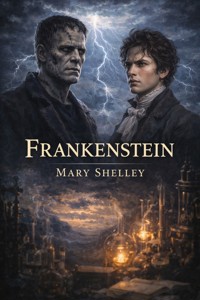
Frankenstein; or, The Modern Prometheus by Mary Shelley is one of the most powerful and enduring novels ever written—a masterpiece that blends Gothic horror, science fiction, and deep psychological drama. This beautifully illustrated edition brings Shelley’s timeless story vividly to life, making it perfect for both new readers and devoted classics lovers.
Victor Frankenstein, a brilliant but reckless scientist, unlocks the secret of life itself. Yet the moment his creation awakens, triumph turns to terror. Rejected by his creator and shunned by humanity, the Creature embarks on a haunting journey of loneliness, rage, and revenge. As their lives become tragically intertwined, the novel asks unforgettable questions about responsibility, morality, and the cost of unchecked ambition.
Enhanced with 20 evocative illustrations, this edition captures the eerie atmosphere of the novel—from shadowed laboratories to frozen Arctic wastelands. The added summary, character list, and author biography provide valuable context, making this book ideal for students, collectors, and casual readers alike.
Dark, emotional, and profoundly thought-provoking, Frankenstein is more than a horror story—it is a timeless exploration of what it truly means to be human.
A must-have classic for your Kindle library.
Das E-Book können Sie in Legimi-Apps oder einer beliebigen App lesen, die das folgende Format unterstützen:
Veröffentlichungsjahr: 2026
0,0
Bewertungen werden von Nutzern von Legimi sowie anderen Partner-Webseiten vergeben.
Legimi prüft nicht, ob Rezensionen von Nutzern stammen, die den betreffenden Titel tatsächlich gekauft oder gelesen/gehört haben. Wir entfernen aber gefälschte Rezensionen.
Ähnliche


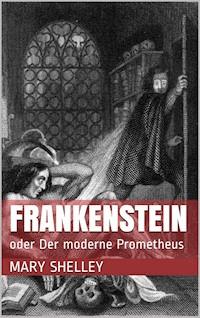
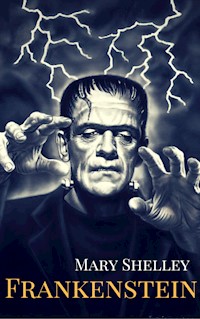

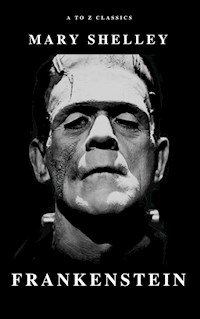


Frankenstein By Mary Shelley
ABOUT SHELLEY
Mary Shelley was a writer who seemed to grow out of ideas rather than circumstances alone. Born in London in 1797, she entered the world surrounded by radical thought: her mother, Mary Wollstonecraft, was a pioneering advocate for women’s rights, and her father, William Godwin, was a philosopher who believed society could be reshaped by reason. Although her mother died shortly after her birth, Shelley grew up in a household where books, debates, and unconventional thinkers were constant companions, shaping her imagination long before she put pen to paper.
Her life took a dramatic turn when, as a teenager, she formed a relationship with the poet Percy Bysshe Shelley. Together they lived a life marked by travel, intellectual exchange, and personal loss. During a rainy summer in 1816 at Lake Geneva, a challenge among friends—to write a ghost story—sparked the idea that would define her legacy. From this moment came Frankenstein, a novel that blended Gothic atmosphere with philosophical inquiry, asking unsettling questions about creation, responsibility, and the limits of human ambition.
Shelley’s career extended far beyond her most famous work. She wrote novels, short stories, travel narratives, and essays, often exploring themes of isolation, power, and social injustice. Her writing was shaped by repeated tragedies, including the deaths of her children and her husband, experiences that deepened her sensitivity to suffering and endurance. Despite these hardships, she remained committed to her craft and to preserving Percy Shelley’s literary reputation after his death.
Mary Shelley died in 1851, but her influence has only grown stronger with time. She is now recognized not only as a major figure of Romantic literature but also as a foundational voice in science fiction. Through her work, she demonstrated how storytelling could merge imagination with ethical reflection, leaving behind a body of writing that continues to challenge readers to consider the consequences of human creativity and desire.
SUMMARY
Frankenstein by Mary Shelley is a haunting tale of ambition, creation, and consequence that continues to grip readers centuries after its publication.
Driven by an obsessive desire to unlock the secrets of life, young scientist Victor Frankenstein succeeds in animating a being assembled from lifeless parts. But the moment his creation opens its eyes, Victor recoils in horror, abandoning the creature to a world that fears and rejects it. Alone and shunned, the intelligent yet tormented being learns to speak, feel, and hope—only to discover that humanity will never see beyond its appearance.
As creator and creation spiral toward revenge and despair, the novel explores powerful questions: What responsibility do we bear for what we create? Is evil born, or shaped by neglect and cruelty? Set against icy Arctic wastes and shadowed European landscapes, Frankenstein blends Gothic suspense with deep emotional and philosophical insight.
More than a horror story, Frankenstein is a timeless reflection on human ambition, loneliness, and the fragile line between genius and destruction—making it one of the most compelling and enduring novels ever written.
CHARACTERS LIST
Victor Frankenstein
The ambitious and obsessive scientist who creates the Creature. His relentless pursuit of knowledge leads to tragedy, as he struggles with guilt, fear, and responsibility for his actions.
The Creature (Frankenstein’s Monster)
Victor’s creation—intelligent, sensitive, and deeply emotional. Rejected because of his appearance, he becomes vengeful after repeated cruelty, raising questions about humanity, morality, and nature versus nurture.
Robert Walton
An Arctic explorer who frames the novel through his letters. Walton mirrors Victor’s ambition and serves as a cautionary reflection of unchecked desire for greatness.
Elizabeth Lavenza
Victor’s adopted sister and later wife. Gentle and compassionate, she represents innocence and the human cost of Victor’s obsession.
Henry Clerval
Victor’s loyal best friend. Kind, moral, and imaginative, Henry acts as a contrast to Victor’s destructive ambition.
Alphonse Frankenstein
Victor’s caring father, who values family, reason, and social responsibility.
Justine Moritz
A family servant wrongfully accused of murder. Her tragic fate highlights injustice and moral failure within society.
William Frankenstein
Victor’s youngest brother. His death becomes one of the earliest consequences of Victor’s creation.
The De Lacey Family
Mr. De Lacey – A blind, wise, and compassionate man.
Felix De Lacey – Courageous and idealistic.
Agatha De Lacey – Gentle and kind-hearted.
Safie – Felix’s beloved, representing hope and independence.
This group teaches the Creature language, emotion, and human values—unintentionally shaping his understanding of the world.
Professor Waldman
A university professor who inspires Victor’s interest in modern science and experimentation.
Table of Contents
Titlepage
Imprint
Introduction
Preface
Dedication
Epigraph
Frankenstein
Letter I
Letter II
Letter III
Letter IV
Chapter I
Chapter II
Chapter III
Chapter IV
Chapter V
Chapter VI
Chapter VII
Chapter VIII
Chapter IX
Chapter X
Chapter XI
Chapter XII
Chapter XIII
Chapter XIV
Chapter XV
Chapter XVI
Chapter XVII
Chapter XVIII
Chapter XIX
Chapter XX
Chapter XXI
Chapter XXII
Chapter XXIII
Chapter XXIV
Walton, in Continuation
Endnotes
Colophon
Uncopyright
Introduction
The Publishers of the Standard Novels, in selecting Frankenstein for one of their series, expressed a wish that I should furnish them with some account of the origin of the story. I am the more willing to comply, because I shall thus give a general answer to the question, so very frequently asked me—“How I, when a young girl, came to think of, and to dilate upon, so very hideous an idea?” It is true that I am very averse to bringing myself forward in print; but as my account will only appear as an appendage to a former production, and as it will be confined to such topics as have connection with my authorship alone, I can scarcely accuse myself of a personal intrusion.
It is not singular that, as the daughter of two persons of distinguished literary celebrity, I should very early in life have thought of writing. As a child I scribbled; and my favourite pastime, during the hours given me for recreation, was to “write stories.” Still I had a dearer pleasure than this, which was the formation of castles in the air—the indulging in waking dreams—the following up trains of thought, which had for their subject the formation of a succession of imaginary incidents. My dreams were at once more fantastic and agreeable than my writings. In the latter I was a close imitator—rather doing as others had done, than putting down the suggestions of my own mind. What I wrote was intended at least for one other eye—my childhood’s companion and friend; but my dreams were all my own; I accounted for them to nobody; they were my refuge when annoyed—my dearest pleasure when free.
I lived principally in the country as a girl, and passed a considerable time in Scotland. I made occasional visits to the more picturesque parts; but my habitual residence was on the blank and dreary northern shores of the Tay, near Dundee. Blank and dreary on retrospection I call them; they were not so to me then. They were the eyry of freedom, and the pleasant region where unheeded I could commune with the creatures of my fancy. I wrote then—but in a most commonplace style. It was beneath the trees of the grounds belonging to our house, or on the bleak sides of the woodless mountains near, that my true compositions, the airy flights of my imagination, were born and fostered. I did not make myself the heroine of my tales. Life appeared to me too commonplace an affair as regarded myself. I could not figure to myself that romantic woes or wonderful events would ever be my lot; but I was not confined to my own identity, and I could people the hours with creations far more interesting to me at that age, than my own sensations.
After this my life became busier, and reality stood in place of fiction. My husband, however, was from the first, very anxious that I should prove myself worthy of my parentage, and enrol myself on the page of fame. He was forever inciting me to obtain literary reputation, which even on my own part I cared for then, though since I have become infinitely indifferent to it. At this time he desired that I should write, not so much with the idea that I could produce anything worthy of notice, but that he might himself judge how far I possessed the promise of better things hereafter. Still I did nothing. Travelling, and the cares of a family, occupied my time; and study, in the way of reading, or improving my ideas in communication with his far more cultivated mind, was all of literary employment that engaged my attention.
In the summer of 1816, we visited Switzerland, and became the neighbours of Lord Byron. At first we spent our pleasant hours on the lake, or wandering on its shores; and Lord Byron, who was writing the third canto of Childe Harold, was the only one among us who put his thoughts upon paper. These, as he brought them successively to us, clothed in all the light and harmony of poetry, seemed to stamp as divine the glories of heaven and earth, whose influences we partook with him.
But it proved a wet, ungenial summer, and incessant rain often confined us for days to the house. Some volumes of ghost stories, translated from the German into French, fell into our hands. There was the History of the Inconstant Lover, who, when he thought to clasp the bride to whom he had pledged his vows, found himself in the arms of the pale ghost of her whom he had deserted. There was the tale of the sinful founder of his race, whose miserable doom it was to bestow the kiss of death on all the younger sons of his fated house, just when they reached the age of promise. His gigantic, shadowy form, clothed like the ghost in Hamlet, in complete armour, but with the beaver up, was seen at midnight, by the moon’s fitful beams, to advance slowly along the gloomy avenue. The shape was lost beneath the shadow of the castle walls; but soon a gate swung back, a step was heard, the door of the chamber opened, and he advanced to the couch of the blooming youths, cradled in healthy sleep. Eternal sorrow sat upon his face as he bent down and kissed the forehead of the boys, who from that hour withered like flowers snapt upon the stalk. I have not seen these stories since then; but their incidents are as fresh in my mind as if I had read them yesterday.
“We will each write a ghost story,” said Lord Byron; and his proposition was acceded to. There were four of us. The noble author began a tale, a fragment of which he printed at the end of his poem of Mazeppa. Shelley, more apt to embody ideas and sentiments in the radiance of brilliant imagery, and in the music of the most melodious verse that adorns our language, than to invent the machinery of a story, commenced one founded on the experiences of his early life. Poor Polidori had some terrible idea about a skull-headed lady, who was so punished for peeping through a keyhole—what to see I forget—something very shocking and wrong of course; but when she was reduced to a worse condition than the renowned Tom of Coventry, he did not know what to do with her, and was obliged to despatch her to the tomb of the Capulets, the only place for which she was fitted. The illustrious poets also, annoyed by the platitude of prose, speedily relinquished their uncongenial task.
I busied myself to think of a story—a story to rival those which had excited us to this task. One which would speak to the mysterious fears of our nature, and awaken thrilling horror—one to make the reader dread to look round, to curdle the blood, and quicken the beatings of the heart. If I did not accomplish these things, my ghost story would be unworthy of its name. I thought and pondered—vainly. I felt that blank incapability of invention which is the greatest misery of authorship, when dull Nothing replies to our anxious invocations. Have you thought of a story? I was asked each morning, and each morning I was forced to reply with a mortifying negative.
Everything must have a beginning, to speak in Sanchean phrase; and that beginning must be linked to something that went before. The Hindus give the world an elephant to support it, but they make the elephant stand upon a tortoise. Invention, it must be humbly admitted, does not consist in creating out of void, but out of chaos; the materials must, in the first place, be afforded: it can give form to dark, shapeless substances, but cannot bring into being the substance itself. In all matters of discovery and invention, even of those that appertain to the imagination, we are continually reminded of the story of Columbus and his egg. Invention consists in the capacity of seizing on the capabilities of a subject, and in the power of moulding and fashioning ideas suggested to it.
Many and long were the conversations between Lord Byron and Shelley, to which I was a devout but nearly silent listener. During one of these, various philosophical doctrines were discussed, and among others the nature of the principle of life, and whether there was any probability of its ever being discovered and communicated. They talked of the experiments of Dr. Darwin, (I speak not of what the Doctor really did, or said that he did, but, as more to my purpose, of what was then spoken of as having been done by him,) who preserved a piece of vermicelli in a glass case, till by some extraordinary means it began to move with voluntary motion. Not thus, after all, would life be given. Perhaps a corpse would be reanimated; galvanism had given token of such things: perhaps the component parts of a creature might be manufactured, brought together, and endued with vital warmth.
Night waned upon this talk, and even the witching hour had gone by, before we retired to rest. When I placed my head on my pillow, I did not sleep, nor could I be said to think. My imagination, unbidden, possessed and guided me, gifting the successive images that arose in my mind with a vividness far beyond the usual bounds of reverie. I saw—with shut eyes, but acute mental vision—I saw the pale student of unhallowed arts kneeling beside the thing he had put together. I saw the hideous phantasm of a man stretched out, and then, on the working of some powerful engine, show signs of life, and stir with an uneasy, half vital motion. Frightful must it be; for supremely frightful would be the effect of any human endeavour to mock the stupendous mechanism of the Creator of the world. His success would terrify the artist; he would rush away from his odious handywork, horror-stricken. He would hope that, left to itself, the slight spark of life which he had communicated would fade; that this thing, which had received such imperfect animation, would subside into dead matter; and he might sleep in the belief that the silence of the grave would quench forever the transient existence of the hideous corpse which he had looked upon as the cradle of life. He sleeps; but he is awakened; he opens his eyes; behold the horrid thing stands at his bedside, opening his curtains, and looking on him with yellow, watery, but speculative eyes.
I opened mine in terror. The idea so possessed my mind, that a thrill of fear ran through me, and I wished to exchange the ghastly image of my fancy for the realities around. I see them still; the very room, the dark parquet, the closed shutters, with the moonlight struggling through, and the sense I had that the glassy lake and white high Alps were beyond. I could not so easily get rid of my hideous phantom; still it haunted me. I must try to think of something else. I recurred to my ghost story—my tiresome unlucky ghost story! O! if I could only contrive one which would frighten my reader as I myself had been frightened that night!
Swift as light and as cheering was the idea that broke in upon me. “I have found it! What terrified me will terrify others; and I need only describe the spectre which had haunted my midnight pillow.” On the morrow I announced that I had thought of a story. I began that day with the words, It was on a dreary night of November, making only a transcript of the grim terrors of my waking dream.
At first I thought but of a few pages—of a short tale; but Shelley urged me to develop the idea at greater length. I certainly did not owe the suggestion of one incident, nor scarcely of one train of feeling, to my husband, and yet but for his incitement, it would never have taken the form in which it was presented to the world. From this declaration I must except the preface. As far as I can recollect, it was entirely written by him.
And now, once again, I bid my hideous progeny go forth and prosper. I have an affection for it, for it was the offspring of happy days, when death and grief were but words, which found no true echo in my heart. Its several pages speak of many a walk, many a drive, and many a conversation, when I was not alone; and my companion was one who, in this world, I shall never see more. But this is for myself; my readers have nothing to do with these associations.
I will add but one word as to the alterations I have made. They are principally those of style. I have changed no portion of the story, nor introduced any new ideas or circumstances. I have mended the language where it was so bald as to interfere with the interest of the narrative; and these changes occur almost exclusively in the beginning of the first volume. Throughout they are entirely confined to such parts as are mere adjuncts to the story, leaving the core and substance of it untouched.
M. W. S.
London, October 15, 1831.
Preface
The event on which this fiction is founded, has been supposed, by Dr. Darwin, and some of the physiological writers of Germany, as not of impossible occurrence. I shall not be supposed as according the remotest degree of serious faith to such an imagination; yet, in assuming it as the basis of a work of fancy, I have not considered myself as merely weaving a series of supernatural terrors. The event on which the interest of the story depends is exempt from the disadvantages of a mere tale of spectres or enchantment. It was recommended by the novelty of the situations which it develops; and, however impossible as a physical fact, affords a point of view to the imagination for the delineating of human passions more comprehensive and commanding than any which the ordinary relations of existing events can yield.
I have thus endeavoured to preserve the truth of the elementary principles of human nature, while I have not scrupled to innovate upon their combinations. The Iliad, the tragic poetry of Greece—Shakespeare, in The Tempest, and Midsummer Night’s Dream—and most especially Milton, in Paradise Lost, conform to this rule; and the most humble novelist, who seeks to confer or receive amusement from his labours, may, without presumption, apply to prose fiction a licence, or rather a rule, from the adoption of which so many exquisite combinations of human feeling have resulted in the highest specimens of poetry.
The circumstance on which my story rests was suggested in casual conversation. It was commenced partly as a source of amusement, and partly as an expedient for exercising any untried resources of mind. Other motives were mingled with these, as the work proceeded. I am by no means indifferent to the manner in which whatever moral tendencies exist in the sentiments or characters it contains shall affect the reader; yet my chief concern in this respect has been limited to the avoiding the enervating effects of the novels of the present day, and to the exhibition of the amiableness of domestic affection, and the excellence of universal virtue. The opinions which naturally spring from the character and situation of the hero are by no means to be conceived as existing always in my own conviction; nor is any inference justly to be drawn from the following pages as prejudicing any philosophical doctrine of whatever kind.
It is a subject also of additional interest to the author, that this story was begun in the majestic region where the scene is principally laid, and in society which cannot cease to be regretted. I passed the summer of 1816 in the environs of Geneva. The season was cold and rainy, and in the evenings we crowded around a blazing wood fire, and occasionally amused ourselves with some German stories of ghosts, which happened to fall into our hands. These tales excited in us a playful desire of imitation. Two other friends (a tale from the pen of one of whom would be far more acceptable to the public than anything I can ever hope to produce) and myself agreed to write each a story, founded on some supernatural occurrence.
The weather, however, suddenly became serene; and my two friends left me on a journey among the Alps, and lost, in the magnificent scenes which they present, all memory of their ghostly visions. The following tale is the only one which has been completed.
Marlow, September, 1817.
ToWilliam Godwin,Author of Political Justice, Caleb Williams, etc.,This volume is respectfully inscribed by the author.
“Did I request thee, Maker, from my clay
To mould me Man, did I solicit thee
From darkness to promote me?”
Paradise Lost, X, 743–45
Frankenstein
Or, The Modern Prometheus




