


0,99 €
Mehr erfahren.
- Herausgeber: J. J. Van Der Leeuw
- Kategorie: Religion und Spiritualität
- Sprache: Englisch
The following pages are based on an awakening of Ego-consciousness which came to me some little time ago. It brought with it knowledge which, though it came in but a single moment, has taken many days to realize and many pages to describe. I do not claim any credit for the teachings. I received them as we receive all things on the Path, and pass them on to others in the hope that they may help them as they have helped me.
Das E-Book können Sie in Legimi-Apps oder einer beliebigen App lesen, die das folgende Format unterstützen:
Veröffentlichungsjahr: 2016
Ähnliche













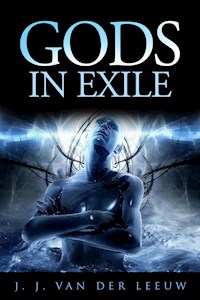
Gods in Exile
J.J. Van Der Leeuw
First digital edition 2016 by Anna Ruggieri
Chapter Contents Page
FOREWORD
- 1 THE DRAMA OF THE SOUL IN EXILE
- 2 THE WAY TO THE EGO
- 3 THE WORLD OF THE EGO
- 4 THE POWERS OF THE EGO
- 5 THE RETURN OF THE EXILE
AFTERWORD
FOREWORD
The following pages are based on an awakening of Ego-consciousness which came to me some little time ago. It brought with it knowledge which, though it came in but a single moment, has taken many days to realize and many pages to describe. I do not claim any credit for the teachings. I received them as we receive all things on the Path, and pass them on to others in the hope that they may help them as they have helped me.
J. J. VAN DER LEEUW
CHAPTER 1 - THE DRAMA OF THE SOUL IN EXILE
THE Path of Occultism is often called the path of Woe. There is no reason why we should call it a Path of Woe rather than a Path of Joy; the same achievement which means woe to our lower nature, spells joy to our higher Self, and it depends on the standpoint we take whether our experience will be joyful or sorrowful. The immediate goal on the Path of Occultism is to accomplish the union of these two, of what we commonly call our lower and our higher Self; and this union is achieved in the first of the great Initiations. Since the moment of individualization there is no greater event in the history of the human soul than Initiation. It is, as the word implies, a new beginning, the beginning of a new life, of conscious life in our own true Self or Ego.
THE AWAKENING OF THE SOUL
As long as man, in his pilgrimage through matter, identifies himself entirely with his bodies and follows entirely their dictates, in utter oblivion of his own true, divine nature, he does not suffer, but is contented in an animal way. It is only when the soul in her earthly prison begins to recall the divine Home from which she lives exiled, when through love, beauty or truth, consciousness of her own true nature awakens, that suffering begins. We are like Prometheus, chained to the rock of matter, but it is not until we become conscious of what we truly are, that we are at all aware of being prisoners, of being exiles. Thus might one live, who in the days of his youth had been banished from his native land and who, for many years had been among strangers, hardly remembering, in the privations and miseries of his exile, that once he knew different surroundings. But some day, perhaps, he hears a song which he knew in his youth, and in sudden agony remembers all he has lost, realizing in pain that he is an exile, far from all that was dear to him. In that memory the yearning for his native land is born again, and becomes stronger than it ever was. It is only then that suffering and struggle begin; suffering because of the knowledge of what he has lost, struggle in the attempt to regain that which once he possessed. In a similar way, the awakening of the soul, when it comes in the course of human evolution, brings not only joy, but also suffering in its wake. As long as man lived the animal life of his bodies, he knew contentment of a sort; but with the remembrance of his true nature, with the vision of the world to which he belongs, there is born that age-long struggle in which he tries to free himself from the entanglement with the worlds of matter which he has brought about by identifying himself with his bodies. Where up to this moment he was not conscious of his bodies as a limitation, they now become to him as the burning garment of Nessus, clinging to him the more he tries to free himself from their contact. From now onwards, he is to know himself as two persons in one; he is to be conscious of a higher divine Self within, ever calling him back to his divine Home; and a lower animal nature, which is his consciousness bound to and dominated by the bodies.
MORAL STRUGGLE IN MAN
There is no greater problem, no greater difficulty in human life than this consciousness of being two persons in one. Thus St. Paul groaned under the strife of the law of his members against the law of the spirit and exclaimed in distress: "For the good that I would I do not: but the evil which I would not, that I do. Now if I do that I would not, it is no more I that do it, but sin that dwelleth in me. I find then a law, that, when I would do good, evil is present with me. For I delight in the law of God after the inward man; but I see another law in my members, warring against the law of my mind, and bringing me into captivity to the law of sin which is in my members. O wretched man that I am! Who shall deliver me from the body of this death?" (Roman. 7, 19-24.) Nowhere perhaps is this struggle in man more profoundly described than in the Confessions of St. Augustine. He says: "I was ravished to thee by thine own Beauty; and I was torn from thee by my own weight, throwing myself with groanings upon these lower things, and this weight was the custom of my flesh." (7,17.) And again he says: "The joys of this my life which deserve to be lamented, are at strife with my sorrows which are to be rejoiced in, and which way the victory will incline, I yet know not." (10, 28.) It is the eternal experience of striving man, expressed by Goethe where he exclaims: "Two souls, alas, live in this breast of mine." It is the experience of every aspirant on the Path of Occultism, or even of any human being who tries to live nobly according to the dictates of his higher Self, and finds himself retarded and impeded by the desires of his lower self. There is not a human life free from this fundamental struggle; in countless forms, this many-headed Hydra confronts us, and the life of many a candidate for Occultism is a tragedy because of this inner strife, which not only causes acute suffering and self-contempt, but which exhausts the bodies and drains the vitality. Is there anything in human life harder to bear than to see the vision of the spirit and the next moment to deny that vision in the practice of our lives? We, then, feel the self-contempt of which P.B.Shelley speaks as “bitterer to drink than blood,” the despair of failing again and again to live as we would live. Great as is this human tragedy, the most tragical part of it is that it is largely unnecessary and a result of our ignorance; ignorance with regard to the working of our own consciousness.
IGNORANCE THE CAUSE
The last thing man discovers is himself. It is a strange yet universal truth that man's thirst for knowledge should begin with that which is furthest and end with that which is nearest. Primitive man already has studied the heavens, but only modem man is beginning to explore the mysteries of his own soul. Most men are a mystery to themselves; many are even unaware of the existence of the mystery. If we were to ask the average man what he, the living human being, really is; what happens when he feels, and thinks, and acts; what the cause is of the struggle between good and evil of which he is conscious in his own breast, he would not only be unable to answer, but the very questions would seem strange and novel to him. Yet, what could be stranger than that any human being [...]




