


5,99 €
Mehr erfahren.
- Herausgeber: Lightning Books
- Kategorie: Gesellschafts- und Liebesromane
- Sprache: Englisch
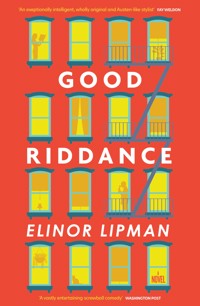
'A vastly entertaining screwball comedy' WASHINGTON POST Decluttering her tiny New York apartment, Daphne Maritch decides to throw out any belongings that do not spark joy. These include a high-school yearbook inherited from her school teacher mother, June, to whom the class of '68 dedicated the volume. June in turn attended every class reunion, scribbling notes and observations – not always charitably – after each one. When neighbour Geneva Wisenkorn finds the discarded book and wants to use it for her own ends, Daphne realises she wants to keep it after all. Fighting to reclaim it, she uncovers some alarming Maritch family secrets and sets in motion a series of events that prove to be both poignant and absurd. Good Riddance is a vastly entertaining screwball comedy from the Jane Austen of modern New York. 'A caper novel, light as a feather and effortlessly charming. It inspires a very specific kind of modern joy.' NEW YORK TIMES 'I've been a huge fan of her novels for so many years. Her writing is witty, astute and deliciously dry.' JILL MANSELL 'An exceptionally intelligent, wholly original and Austen-like stylist.' FAY WELDON
Das E-Book können Sie in Legimi-Apps oder einer beliebigen App lesen, die das folgende Format unterstützen:
Veröffentlichungsjahr: 2020
Ähnliche

















BOOKS BY ELINOR LIPMAN
Into Love and Out Again
Then She Found Me
The Way Men Act
Isabel’s Bed
The Inn at Lake Devine
The Ladies’ Man
The Dearly Departed
The Pursuit of Alice
Thrift
My Latest Grievance
The Family Man
Tweet Land of Liberty: Irreverent Rhymes from the Political Circus
The View from Penthouse B
I Can’t Complain: (All Too) Personal Essays
On Turpentine Lane
Published in 2020
by Lightning Books Ltd
Imprint of EyeStorm Media
312 Uxbridge Road
Rickmansworth
Hertfordshire
WD3 8YL
www.lightning-books.com
Copyright © Elinor Lipman 2019
First published by Houghton Mifflin Harcourt in 2019
Cover by Ifan Bates
The moral right of the author has been asserted. All rights reserved. No part of this publication may be reproduced, stored in a retrieval system, or transmitted, in any form or by any means without the prior written permission of the publisher, nor be otherwise circulated in any form of binding or cover other than that in which it is published and without a similar condition being imposed on the subsequent purchaser.
British Library Cataloguing in Publication Data
A catalogue record for this book is available from the British Library.
Printed by CPI Group (UK) Ltd, Croydon CR0 4YY
ISBN: 978-1-78563-169-6
For Anita Shreve, perfect friend
Contents
1 THE GRATEFUL CLASS OF ‘68
2 OKAY, LISTEN
3 THERE’S AN EX
4 YOU’LL BE THE FIRST TO KNOW
5 NICE TO MEET YOU
6 FOR REASONS I NEVER UNDERSTOOD
7 HOLIDAY WITH STRANGERS
8 TEACHER’S PET
9 HENCE THE NOTE
10 WHAT ARE YOU LOOKING FOR, EXACTLY?
11 WHATEVER WORKS
12 CORRECT ME IF I’M WRONG
13 THERE’S PROOF AND THERE’S PROOF
14 GOLD-DOME DIRT
15 IT STILL SOUNDS FISHY TO ME
16 WAS THIS MY LIFE NOW?
17 HOLDEN’S WILLING ACCOMPLICE
18 WELL, THAT’S A SURPRISE
19 SUDDENLY THERE ARE GIRLFRIENDS
20 WHEN DID I GET SO MEAN?
21 THE REEVALUATION OF DAPHNE
22 I TOOK IT UPON MYSELF
23 HIT PLAY AGAIN
24 IT’S NOTHING
25 MISS DAPHNE
26 NINE-ONE-ONE
27 WHO ARE YOU AGAIN?
28 HAPPY HOUR
29 I THOUGHT I KNEW EVERYTHING
30 FURTHER CONFUSION
31 JUDGE AND JURY
32 NO TURNING BACK
33 TWO BIRDS WITH ONE STONE
34 THE DAY JOB
35 TAKE YOUR SEAT, DAPHNE
36 WHAT’S SO SECRET?
37 BE NICE
38 JUST THAT SIMPLE
39 MIND IF I TAKE A FEW PICTURES?
40 PIE IN THE SKY?
41 JUST LIKE THAT
42 SISTERS
EPILOGUE
ACKNOWLEDGMENTS
1THE GRATEFUL CLASS OF ‘68
For a few weeks after my mother’s death, I was in possession of the annotated high school yearbook that had been dedicated to her by the painstakingly grateful class of 1968.
Yes, she’d been their English teacher and yearbook advisor, but that didn’t explain her obsessive collecting of signatures and tributes next to every senior’s photo. I could picture her — age twenty-three, her first job after college, roaming the corridors of Pickering High School, pen and book in hand, coaxing the shyest, least engaged boy or girl to sign — Write anything. I want to remember every one of you. Could you personalize it, just a few words?
But there would be more — her own embellishments, her judgments and opinions, written next to those photos in her small, legible hand, a different color ink (red, green, blue) for several milestone reunions, which she attended compulsively, starting with the fifth and continuing until her last, their forty-fifth.
Her margin notes were coded but easily deciphered: “M” for married. “S” for single. “D” for dead; “DIV” for divorced. “DWI,” said a few. “AIDS?” suggested one notation. “Same dress she wore at 15th” my mother recorded. “Very plump” was one of her milder put-downs. “Braces.” “Pregnant.” Occasionally, “Still pretty.” “Looks older than I do” was one of her favorite notes. “Still holds PHS record for 100-yd. dash,” said one. And “danced w. him” appeared often. Had I known about this project as it was happening? I hadn’t. Several reunions were held before I was born, and later ones, attended even after she retired, weren’t discussed with her two daughters. After all, we might know some of these graduates as the parents of our friends or our own teachers or custodians or police officers or panhandlers, townspeople still.
A handwritten codicil on the last page of my mother’s will said, “My daughter Daphne will take possession of the Pickering High School’s yearbook, The Monadnockian.” And nothing more.
I took it back with me to Manhattan, where it stayed on my shelf for a month until I read a magazine article about decluttering.
The test? Would I ever reread this novel, these college textbooks, these magazines? Did I really need a Portuguese-English dictionary? What about the panini press and my dead BlackBerry? The expert recommended this: Hold the item in question, be it book or sweater or socks or muffin tin, to your chest, over your heart, and ask yourself, Does this thing inspire joy?
I hugged the yearbook. Nothing. Well, not nothing; worse than that: an aversion. Apparently, I didn’t want, nor would I miss, this testimony to the unsympathetic, snarky side of my mother’s character.
The best-selling decluttering wizard said the property owner had to be tough, even ruthless. I certainly was that. Goodbye, ugly white-vinyl, ink-stained yearbook with your put-downs and your faint smell of mildew! Maybe it was my mother’s legacy and a time capsule, but it had failed to stir emotion in my bosom. Possessing too much stuff anyway, in a cramped apartment, bookshelves overflowing, I threw it out. Or rather, being a good citizen, I walked it down the hall to my building’s trash closet, straight into the recycling bin.
2OKAY, LISTEN
I’d never met Geneva Wisenkorn despite our residing at opposite ends of the same hallway. Our introduction came in the form of a note slipped under my door announcing, “I found something that belongs to you. Are you home?” followed by an email address and phone, office, and mobile numbers.
My wallet? My keys? I checked my pocketbook. All there. Had a misdelivered piece of mail or dropped glove been traced back to me? I went to my laptop and wrote to this seemingly thoughtful stranger, asking what possession of mine she’d found.
She wrote back immediately. “A high school yearbook. We need to talk!”
No, we didn’t. I hit reply and wrote, “Thanks anyway, but I recycled that,” then added a postscript — “It has no meaning or value, sentimental or otherwise” — in case she was looking for a reward.
“Contact info?” she answered.
My first mistake: I sent it. Immediately, my phone rang. After my wary “Hello,” I heard, “I think you’ll be very interested in what I have to say.”
I asked how she knew the yearbook, which I now decided I needed back, belonged to me.
“Because I found it with magazines that had your name on the subscription labels.”
I said, “I’d never forgive myself if a yearbook with all that personal stuff written in it got into the hands of a stranger.”
“Then why’d you throw it out?”
“I thought it would go to some landfill! Or get turned into whatever recycled paper gets turned into.”
“I know the rules. If it’s trash left at the curbside or at the dump, the possessor has relegated ownership.”
The possessor has relegated ownership? Was I talking to this ragpicker’s lawyer?
“Finders keepers, in other words?”
“Precisely.”
I tried again. “Maybe there is some law on the books about garbage rights, but the polite thing, the neighborly thing, would be to return the yearbook, which any jury would see had personal content.”
“A jury? Are you going to call a lawyer? Or 911? I’d like to hear that conversation.”
“Why contact me in the first place?” I asked. “You found the yearbook. Why not just keep it? I’d never know.”
“Because I wanted to go about this in the most professional manner possible. Believe me, intellectual property can be a real shitstorm. We should talk — face-to-face, I mean. I want to get this settled before I leave for my writers’ retreat.”
Get what settled? So far, it was just a question of the keeping or the giving back. In case she thought she had leverage — that she’d expose my mother’s poison pen — I said, “You realize that the owner of the book is dead and it’s too late to embarrass her?”
“Embarrass her? I’m stunned you would say that! Your mother wasn’t writing for her own amusement. There’s no question she had a future audience in mind.”
Did she? What audience? Who else could possibly care? “I don’t know what you want from me,” I said.
“Permission.”
Was I catching on? Not yet. She asked again if we could talk face-to-face. I said, “Is this really necessary?”
“Be there in a jiff,” she said.
She rang my doorbell forty minutes later, finding me newly annoyed with her interpretation of a “jiff.” Her breathing was labored from the short walk, no doubt attributable to her extreme bulk. I recognized her — having shared elevator rides or exchanged nods in the mailroom — due to her colorful, bigger-than-life appearance and persona. She was large, wide, round-faced, with black curls that tumbled around her face, eyeglasses upswept, employing rhinestones. Her outfit could be called a dress if one were kind. It had no shape, only volume, in blocks of red, yellow, and black. She might be forty; she might be fifty. I couldn’t tell.
“Sorry it took so long, but I didn’t want to come empty-handed.” She passed me an open shoebox lined messily with wax paper that contained several layers of cookies. “I figured who doesn’t like chocolate chip? They should be cooling on a rack.”
No yearbook in sight, however. “Cookies,” I said. “Really, you shouldn’t have.”
“They’re Pillsbury slice and bake. I always keep a package in my fridge.”
“Come in,” I said.
As soon as she stepped into my living room, I could see she was puzzled. Is there another room? Who lives like this? She looked around, asked if the hallway…went anywhere?
“To the bedroom and bath. And my kitchen, of course.”
“It’s very…cute. What do you do?”
Even though I’d progressed no further than registration, I said, “I’m studying to be a chocolatier.”
“Where?”
“Online.”
She couldn’t have looked less impressed. “Are there jobs doing that? And do they pay?”
With that, I officially categorized Geneva as a boundary-challenged chatterbox whom I didn’t want to be chummy with. “Haven’t we just met?” I asked.
“I know! Very bad habit, asking personal questions. It’s not so much nosiness but a failure to know what’s personal and what’s just conversation. I get it from my mother, who thinks it’s perfectly polite to ask a near stranger why they didn’t have children or how much they paid for their co-op or how much they tipped the doorman or, once…oh, never mind. I need more people who can tell me when I’ve crossed the line.”
We were still standing. I motioned toward the couch and said I was going to put some of these cookies on a plate.
“No! The cookies are for you,” she said. “I have that highly annoying type 2 diabetes. If I lose weight, they tell me I’ll shake it. No cookie, but do you have vodka?”
I did. I poured us each a glass and returned. She raised hers, and said, “To your mother, the most committed yearbook advisor who ever lived.”
After my half-hearted clink, I said, “I don’t understand why you’d want someone else’s yearbook from a class she didn’t graduate in.”
“I ate it up! It’s fascinating. It’s got a point of view and — what the fuck! — an attitude! I can’t wait to hear more about her.”
“Such as?”
“Husband, marriage, interests, hobbies, wardrobe. Crushes, boyfriends, lovers?”
“Okay. This just got creepy. I’m her daughter. She left it to me in her will, and now I’m asking for it back.”
“Why?”
Why? Did I not just say why?
“It tells a story,” Geneva continued. “Correction: It tells a hundred stories. I remember the exact moment I knew this had my name on it: next to one girl’s picture, a pretty brunette with a perfect flip, under ‘Future,’ she had ‘beautician.’ Your mother drew an arrow across the page to a good-looking guy, thin face, Italian last name, whom she married. What do you think his future was?”
“I have no idea.”
“Ballroom dance. Guess how that turned out, at least according to your mother’s note. You can bet the ‘D’ stands for divorced and the ‘H’ is for homosexual.”
I said, “No, it didn’t. ‘H’ meant ‘home’ or ‘here’ — that they still lived in Pickering.”
The expression greeting that remark clearly meant Poor you; born yesterday.
Next I tried, “Let’s just say my mother would be flattered that a total stranger finds the yearbook so interesting. Fine. You’ll read and enjoy it, and when you’re done, you’ll return it.”
“I don’t think you understand.” Then, as if it explained and justified everything: “I’m a filmmaker.”
I swallowed the rest of my vodka and poured a refill. “Are you saying you’d like to turn the yearbook into a movie, because I don’t see—”
“Not a feature film. A documentary that explores what happened to the class of nineteen sixty-eight — where are they now? Who’s married, divorced, happy, straight, gay, dead, cryogenically frozen? Dreams fulfilled — or dashed!”
“But who wants to watch a documentary about small-town nobodies?”
“People love reunions! We all have reunion hopes, don’t we? Go to your reunion, find your old boyfriend, and run off together!”
I told her that it wasn’t just my permission she needed but also my father’s. I threw in my sister’s, too, and my father’s cousin Julian’s, a lawyer, knowing not one of us would give this cockamamie plan a green light.
She said, “Let me remind you: I rescued this from the rubbish heap. But I’m all about collaboration. Sure, ask your relatives how they’d feel about an award-winning filmmaker putting Pinkerton High School on the map.”
“Pickering. If…just if this went forward, and you found some of the graduates, would they see what my mother wrote about them? Because she’d turn over in her grave.”
Her expression said it all: What a wonderful idea! Hadn’t thought of that but wow! Just the tension this project was missing!
A threat of last resort: “If I told the building super that you picked through everyone’s garbage, word would get around.”
“Why?”
“Why? Because it’s disgusting! People throw away personal stuff. They declutter!”
“And you know what I’d say to that? ‘I’m a documentary filmmaker, which makes me a researcher, even a scavenger. More power to me.’”
I asked what these award-winning documentaries were.
“Too many to name.”
“Any one I might have seen?”
“Most recently: on TV, last Passover.”
“Passover?” I repeated.
“On the Jewish Channel.”
I said I had basic cable, which didn’t include the Jewish Channel. What was the film about?
“The last matzo factory in Brooklyn.” She handed me her empty glass. “I thought you’d be thrilled. The documentary-watching world will get to know a woman who otherwise lived in near obscurity. I’m hoping to find archival footage of her — the teacher all the boys and probably half the girls were in love with! No wonder she kept going to reunions!”
What to digest first — that this woman was going to make a movie about a New Hampshire yearbook? Or that my mother was a sex object?
I said, “I never got the idea from her notes that anything like that was going on.”
“Don’t get huffy. Of course you wouldn’t see that. She’s your mother.”
I asked if she’d forgotten that New Hampshire was the center of the universe every four years, with reporters flocking there for the presidential primary. Granite Staters are always being filmed. It’s ho-hum. Good luck finding people who aren’t sick of having a microphone stuck in their faces.
When this seemed to have the desired dampening effect, I added, “Maybe you’ll need to find a yearbook from a state that gets less attention.”
From a pocket within the folds of her voluminous dress, she produced a phone. I could tell without a view of the screen that she was Googling something.
“I’ll admit,” she finally said, “that I wasn’t factoring in the primary, but it could be just the thing that could get me the money I need.”
Money? I told her I didn’t follow.
“New Hampshire is one of the original thirteen colonies,” she announced.
Was she thinking she’d find yearbooks from the other twelve colonies? “Do you mean a yearbook series?”
“No! I was just thinking grants: Frontline. The National Endowment for the Arts. Daughters of the American Revolution. Kickstarter. Dartmouth.”
“Dartmouth?”
“New Hampshire, right? I’d release it in an off year just as residents were missing all the attention.”
She rose, nodded grandly, turned at the door, and said, “We both know your mother would be all for it.”
What kind of bargaining chip did I have? Geneva had the yearbook in her possession. And I, who didn’t believe in visitations from the other side, found myself wondering whether this was exactly what my mother would have wanted.
3THERE’S AN EX
I used to have a husband, from a marriage that was a bad idea from the start. Now I can advise others: Never marry a man who proposes too early. I didn’t say yes on his first try, of course. I said, “Well, that’s very flattering, but I don’t know you, and you certainly don’t know me.”
He explained that he had a special gift, that he could size up a job applicant or a woman on the first date from a gesture or remark, a telling one.
“So what was my telling gesture?”
“Many.” His gaze was, I now recognize, faux fond. “Starting with your thanking the busboy for the bread…Don’t give me that skeptical look. To most women, busboys are invisible.”
“I waitressed all through college.” But instead of shedding light on the topic by revealing how many busboys I’d had summer flings with, I said, “We were all college students. We’d go out after work, the whole crew. It didn’t matter if they were waiters or busboys or delivery guys.”
“Because you’re not a snob. That’s what I saw in that gesture.You probably don’t know it, but there’s an innocence to you.”
Yes, there used to be, a big dangerous innocence honed by my six years as a Montessori teacher and exactly why I was targeted by Holden Phillips IV. Despite what I would later characterize as flattery and bullshit, I went on a second date with him. The marriage entreaties were often soft-pedaled in phrases such as “You realize, of course, we’ll be married one day. FYI, that’s not a proposal, because I know you think I haven’t earned you yet.”
“Insecurity,” the girlfriends said. “Not a good sign. Is he desperate?” They Googled him and saw his photos. Holden was not, as my maternal grandmother used to say, an oil painting.
But he did introduce the unaffordable into my budgeted, between-careers life. He’d order a bottle of wine rather than two glasses and the up-charged desserts on a prix fixe. Yes to that sprinkle of black or white truffle, the chocolate soufflé that required advance notice. And there were orchestra seats to shows that were famously sold out for the rest of any given year.
I was a bought woman — an overstatement, but I deserve it. He called himself an entrepreneur, having co-founded a start-up with a business school pal. Most people didn’t ask for more than that explanation. If pressed, I’d add, “It’s called Life’s Too Short. It helps you hire people to do stuff you don’t want to do yourself.”
It might sound as if a successful guy would have already found a wife by the time we met. He was on the cusp of forty. I was not yet thirty. When I asked if the big rush was about procreating, he scoffed. “Procreating! Who said anything about wanting children! You’ve had your fill, right? Not even looking for another teaching job?”
“You don’t ever want children?”
He sensed that he’d gone one selling point too far in the wrong direction. “I just meant I’m not one of those guys whose aim is a young, fertile woman. I mean it’s not my first, second, or third priority. I’m not the guy who puts an ad in a Russian newspaper: American male seeking attractive blonde. Wide pelvis a must.”
When I looked startled, he said, “I’m joking! At least give me credit for composing a clever fake ad on the spot.”
“Of course you were joking. I knew that.”
My emerald-cut diamond was huge by New Hampshire standards. And a woman approaching thirty can be stunned into a yes when a little velvet box is perched on a dessert plate decorated with raspberry jus spelling out “Will you marry me?” upon her return from the ladies’ room.
We wouldn’t have met in the natural course of either life except for our both going to a CVS for flu shots. We were sitting side by side. I was wearing a boat-neck, long-sleeved jersey, tight in the arms, so it would be easier to expose the required flesh downward from the shoulder rather than work the sleeve north. He was dark-haired, going gray, neither handsome nor unattractive, wearing a big lump of a class ring and a camel coat. I said, exposing a bra strap, “Don’t look.”
He took that as a sexual advance, which might have led to a conversation if I hadn’t fainted the moment the needle touched my skin. Within seconds, he’d lowered my head between my knees. I came to, repeating, “I didn’t faint, I didn’t faint, I’m okay.” The pharmacist, looking stunned, managed to say that a small percentage of people faint after any vaccination.
Apparently, I started walking toward the escalator without my coat or pocketbook, giving the impression that I wasn’t in possession of my faculties.
“Where do you think you’re going?” asked this concerned citizen, leading me back to my chair. He introduced himself as Holden and said he was putting me in a cab.
An apparently more senior pharmacist had been summoned. “You’re not going anywhere yet, little lady. We have a protocol.”
I shut my eyes so I didn’t have to watch Holden getting his shot. He helped me with my coat and arranged the strap of my pocketbook over my non-injected arm. Out on the sidewalk, he hailed a taxi and got in after me. I protested, but he said, “How else will it be my treat?”
That same afternoon, he sent me flowers care of the doorman on duty when he’d dropped me off. His business card was attached. [email protected].
I could hardly fail to acknowledge flowers, especially ones like these — rare, exotic, out of season, from a shop inside the Plaza Hotel.
I’m only revisiting this to illustrate how occurrences outside the everyday can take on the aura of romance. Fainting is one of those things. I am wiser now, having discovered this humiliating fact: Holden was only acting the part of do-gooder, then suitor, then fiancé, then husband. His marriage motivation was financial: He needed a wife in order to shake free the good-size fortune his grandparents had left him, a condition I deduced from a remark a bigmouth friend let slip in a very careless, frat-boy toast. Had his grandparents seen something in Holden that gave them pause? Or was it their experience that bachelors squander money on boats and fancy cars? Apparently, he’d seen in me an easy mark for a whirlwind courtship and marriage, the kind from two centuries ago, about property and inheritance.
The will and trust that marched me unwittingly down the aisle didn’t stipulate that Holden had to stay married. Nor did he have to be a faithful spouse. Everything ended the night he didn’t come home because…what was his lame story again? He’d had too much to drink at his staff dinner and didn’t want to be sick in a taxi.
“First of all, that’s ridiculous. Second, I’ve never seen you get drunk. And where was this staff orgy?”
He named a fashionable SoHo hotel, where ingenues drank martinis at the bar. And here he was at eight a.m., freshly showered, mouthwash-rinsed, hair wet, not meeting my eye. I asked, quite dramatically for me, “Who is she?”
“Who is who?”
“The woman you spent the night with.”
“I did no such thing. I couldn’t go home. The bartender wouldn’t let me leave, so he had someone walk me to the front desk, and the next thing I knew, I had a room upstairs.”
“Was that someone a woman?”
Now deeply fake-offended, he asked, “What are you implying? That I didn’t go upstairs alone?”
“Only an idiot would believe that a bartender sends a drunk guy over to the reception desk.”
“Daff,” he said. “I should’ve called —”
“But you couldn’t because your phone was dead and the hotel had no landline?”
“I was wasted. I didn’t want you to know that. You can be very judgmental about my drinking.”
“When have I ever said a word about your drinking?”
More scoffing, and now too casually leafing through the previous day’s mail, he said, “It was late, past your bedtime. I didn’t want to wake you.”
“And there you were, in the bar, no wedding ring, possibly just having ordered an expensive single-malt Scotch. You probably offered to buy her a drink, too. And maybe you told her that you owned the company that was here doing team building. Is that what happened?”
He walked past me into the kitchen and poured himself a cup of coffee. “You’re irrational,” he finally said.
About this confrontation I was waging: It was the opportunity I needed to end this marriage of his convenience. “Just tell me the truth. I won’t get mad,” I lied.
He put his arms around me in my homely bathrobe, and asked, “We’re good? That was just wifely worry? Now that you know I’m not lying in a ditch —”
“Just tell me: Was it someone you work with? Because sex with an employee can get you sued for a fortune. But I can live with whatever you tell me.”
What a good actress this was provoking me into being. He said he was going to be honest. He trusted me, trusted that I was being sincere. Good old Daphne. It won’t happen again. Thank you for worrying about rules of the workplace. She was not one of his employees. Hell no; he wasn’t that stupid. He had indeed met her at the bar. How did I know that? Not only was I insightful but so fucking understanding as well. He only knew her first name: Amanda. He wasn’t going to see her again. She wasn’t that bright. He hadn’t even asked for her contact information.
“You don’t have her contact information? No business cards changed hands?”
“No, I swear —”
I yelled, giving him a shove, “You liar! Of course you’re going to see her again. Go back to the hotel. Go live there. You can afford it. Take your grandmother’s money and buy yourself a penthouse apartment next to Donald Trump’s.”
“You tricked me!” he yelped. “You weren’t trying to be understanding. You gave me the distinct impression that it was going to be truth without consequences.”
“We’re newlyweds! I can’t be married to someone who cheats before we’ve gone on the postponed honeymoon.”
“That’s not fair! I want to take you to New Zealand, but it’s winter there. I’ve been saying that since day one.”
“New Zealand, my ass. This is the first time I’ve heard that mentioned. I will not stay married to a cheater. I have way too much self-respect. Oh, and by the way? I don’t even like you.”
“Welcome to the world, little girl. You know who’s monogamous? No one.”
I said, “You’re wrong. I am. And so is everyone I know.”
“Maybe in Picayune, New Hampshire. But not in the real world. Not even animals are! Just some birds, but not us mammals. The sooner you give that up, the better for all concerned.”
“Pickering, New Hampshire,” I spat back. “I never should have married you. You tricked me —”
“It’s not my fault. Maybe I need treatment.”
I was too stunned at “not my fault” to answer in properly flabbergasted fashion. All I could say was “Treatment? For what? Your drinking didn’t make you cheat.”
“Not that. For sexual addiction.”
More stunned nothingness.
“I hoped marriage would cure me. I’m so sorry.”
“Sex addict? Maybe that’s something you tell a fiancée before she walks down the aisle?” (A figure of speech. There was no aisle. We’d gone to city hall, then gathered at a restaurant with his boisterous friends, his mother, and my father. For brunch.) “Because if you’re a sex addict…” I raised my eyebrows, implying Not so apparent in the marital bed.
“You’re right. I should’ve told you. But it’s an atypical presentation —”
“Fine. Get treatment. Go to rehab. You’ll probably meet some nice sex-addicted women there and hook up the whole time. I hope you’ll be very happy.”
Did this seem precipitous? It wasn’t. Ever since I’d heard I was merely an inheritance tool, I’d been waiting for him to break a marriage vow so my escape would appear to have means, motive, and opportunity. He did obey my wishes and leave, but not until he’d spent a long time packing his suitcase with too much care, too much consideration of which tie went with which shirt and suit, as if he was preparing for a week of dates with female hedge-fund managers. I finally said, “Just go! I’ve served my purpose! I know about the will. I figured it out. And I know this for damn sure: You never loved me.”
He didn’t counter that. Instead, he reminded me that I’d signed a prenup. I’d better not be thinking that his trust fund was mine to share.
Later I looked it up. He’d been right: Except for prairie voles, monogamy was unheard of in mammals.
4YOU’LL BE THE FIRST TO KNOW
I waited to hear from Geneva Wisenkorn, who presumably took the yearbook along on her writing retreat, promising I’d get it back eventually. Upon her return, whenever I’d pass her in the hallway, she was in too big of a hurry to talk. The one time I got as far as “Any news?” she looked slightly bewildered as if wondering, About what?
After the second unresponsive exchange, I said, “Geneva? You realize I’m asking you about the documentary?”
“Of course I do. I’m still making notes. Rome wasn’t built in a month. You’ll be the first to know.”
I called after her, “But you’re still doing it, right?”
“Of course I am. Nothing means more to me than our project.”
Our project. I caught that. It had the ring of remuneration.
I didn’t have a case with respect to keeping the six-room marital apartment in the divorce since Holden’s unsympathetic mother owned it. I considered a move back to Pickering, but my dad said via phone, “No, don’t. There’s nothing for you here. There’s nothing for me here. Are you sitting down? I’m thinking of joining you in NYC.”
I asked him to define “joining.” Did he mean a visit? He’d always be welcome, just not as an overnight guest in my postage stamp of an apartment.
“Maybe I could help. You’re newly alone. Maybe if we pooled our resources —”
“Dad! Adult children don’t live with their dads unless there’s something seriously wrong with them. Or something’s off.”
“Isn’t getting a divorce ‘something off’? Or maybe something’s off with a parent who lost his wife of thirty-six years and is lonely. For the record? Baby boomers’ children certainly do live with their parents. It’s a movement.”
I didn’t want to be indelicate. Should I address the loneliness part or the baby-boomer-returns-home part? I said, “I hate to hear you’re lonely. Aren’t friends inviting you over and leaving casseroles?”
“That’s one of the reasons I need a change. Too much mother henning.”
Of course that would be true. My father would be a matchmaker’s dream once he took the measure of his own five-starness.
“Daff? You still there?”
“Is there no one in Pickering you could see yourself spending time with?”
“Honey, I’ve sat next to every eligible woman at every awkward get-together that was billed as a casual family dinner. And if I say, ‘Too soon,’ these hostesses come back with ‘Too soon for what? A few hands of bridge?’”
“But you said you’re lonely. No one you’d consider taking to a movie?”
“Maybe ‘lonely’ is the wrong word. Maybe just ‘alone.’ I want to start this new chapter in a new place. If I don’t move now, when would I? I still have my health. I can afford it. If ever I needed an adventure, it’s now.”
Even though I had no say in the matter, I said, “Let me sleep on this.”
I did, and I woke up thinking that I had no right to discourage the very move I myself had made. I called him, and said, “I’m in. You should move here. You could volunteer and maybe tutor. Go to concerts and readings. Find bridge partners, for sure. And you won’t have to drive to Manchester to see a movie.”
“I appreciate that. And, hon? When I said we’d pool our resources, I didn’t mean I was looking for a couch to sleep on. I want my own place, a home. I just meant we could get together when you had a free night. For dinner. Or lunch. Your dad could treat you to a play once in a while.”
I said, “Sounds great.” And I meant it.
“I’ve wanted to live in New York City my whole life. Your mother was afraid of the city. Well, maybe not afraid, but she hated it. Everyone waving their arms for the same taxi. Long lines for hamburgers that aren’t anything special and cost as much as a steak back home. And forget the subway!”
“How come I never heard this before — about your New York dream?”
“Because I thought it would never come true. Your mother wouldn’t leave Pickering. Even when I talked about downsizing, she’d say she’d never leave.”
Wouldn’t leave Pickering. She got her wish. I pictured their double gravestone, the blank half waiting for my father’s eventual burial. I couldn’t say what I was thinking: that he’d been liberated. Too cruel and untrue emotionally. He’d loved my mother and was still mourning her. Instead, I said, “Maybe the silver lining to losing Mom is that you can fulfill a lifelong dream.”
“So you’re giving me your blessing? I won’t be invading your territory?”
“Highly unlikely in a city this size.”
“Three hundred square miles if you count every borough!”
Such enthusiasm. It was almost heartbreaking. What if New York didn’t deliver? “So what’s the next step?” I asked.
“An apartment, of course.”
I said I’d invite him to stay with me for a scouting trip but again — I didn’t even have the floor space for a blow-up mattress.
“I’ll do that Airbnb thing.”
“I’m impressed.”
“I’ll take the bus in and reserve for a couple of nights. I think I’d like to be near Lincoln Center.”
I laughed.
He asked me what was funny about Lincoln Center.
“It’s not Lincoln Center. It’s you, the Manhattanite already. I never knew this guy.”
“What’s your neighborhood again?”
“Hell’s Kitchen. Aka Clinton. I think you should get closer to a subway, though, especially in this cold spell.”
“I’m from New Hampshire! I laugh at the cold.”
He came the following weekend and stayed for five days in a skinny duplex, one room up and one down, connected by a spiral staircase I didn’t think was safe to negotiate.
He loved the place. Further delighting him was what he called the cornucopia of conveniences: restaurants of every ethnicity, and bodegas and people selling fruit and vegetables on the streets. In winter! He had his hair cut on Columbus Avenue and declared Reuben his new barber. Never had anyone been so sold on a city within the first hour of setting foot in it. And on day five he’d met with a rental agent and signed a lease for a one-bedroom with a loft in the same building he’d Airbnb’d in, four blocks south of me, effective the first of November.
Now that it was actually happening, my worrying set in. I asked if he might be rushing things. Weren’t widows and widowers supposed to wait a year before they made any big decisions or lifestyle changes?
“It has been a year, Daff.”
Oh. So it had been. “Of course. October. I knew that.”
“If this isn’t hard to hear: After a year, a widower can supposedly keep company with a woman without causing tongues to wag—”
“And that can’t happen in Pickering?”
“Let me put it this way: I sat next to Ceci Walsh at church. Remember her? She was the art teacher before the program was cut—”
I heard the grandfather clock clang in the background. I checked my watch. It was on the half hour and had the eerie effect of my mother chiming in.
“I’ve thought about it,” he said. “I didn’t want to start up with anyone in Pickering who might be anti–New York and probably make a live-free-or-die fuss about paying state income tax. What I was really asking was if your old dad invited a woman to a show — just being hypothetical here — would that sit okay with you?”
“Yes, of course. You could do more than take her to a show. What daughter wouldn’t be okay with that?”
“Holly, maybe.”
“You know why that would be, don’t you? If you met someone, you might marry her, and she could have children and grandchildren, and what if they were smarter or cuter or lived closer than Holly’s two in Beverly Hills? Or, God forbid, a younger woman who’d give you a second family?”
“I don’t know if that’s fair, Daff.”
“Don’t worry. When or if the time comes, I can handle Holly.”




