


0,49 €
Niedrigster Preis in 30 Tagen: 1,99 €
Niedrigster Preis in 30 Tagen: 1,99 €
Mehr erfahren.
- Herausgeber: Booksell-Verlag
- Kategorie: Gesellschafts- und Liebesromane
- Sprache: Englisch
In Elinor Glyn's captivating novel, 'Halcyone', readers are immersed in a richly woven tapestry of romance, societal ambition, and self-discovery. Set against the backdrop of the early 20th century, Glyn's narrative provides a keen exploration of women's roles, aspirations, and the intricacies of love within a rapidly changing world. With her signature blend of vivid imagery and engaging prose, Glyn artfully evokes the emotional complexities faced by her characters, particularly the titular Halcyone, whose journey reflects broader themes of independence and desire. The literary style is marked by its exuberant dialogue and sharp social commentary, situating it within the context of the burgeoning modernist movement that sought to redefine personal and societal boundaries. Elinor Glyn was a trailblazing novelist and screenwriter, known for her provocative exploration of desire and femininity. Her early life, marked by a blend of privilege and rebellion, undoubtedly shaped her understanding of societal constraints, fueling her ambition to challenge the norms of her time. Glyn's background in the arts and personal experiences with love and heartbreak provided a rich foundation for her narratives, allowing her to craft multifaceted characters who resonate with authenticity. 'Halcyone' is essential reading for anyone fascinated by early feminist literature and the complexities of human relationships. Glyn'Äôs work is not only a reflection of her time but also a forward-thinking treatise on the search for autonomy and fulfillment in a world that often constrains it. This novel will captivate readers with its poignant insights and charming narrative, making it a remarkable addition to the literary canon. In this enriched edition, we have carefully created added value for your reading experience: - A succinct Introduction situates the work's timeless appeal and themes. - The Synopsis outlines the central plot, highlighting key developments without spoiling critical twists. - A detailed Historical Context immerses you in the era's events and influences that shaped the writing. - A thorough Analysis dissects symbols, motifs, and character arcs to unearth underlying meanings. - Reflection questions prompt you to engage personally with the work's messages, connecting them to modern life. - Hand‐picked Memorable Quotes shine a spotlight on moments of literary brilliance. - Interactive footnotes clarify unusual references, historical allusions, and archaic phrases for an effortless, more informed read.
Das E-Book können Sie in Legimi-Apps oder einer beliebigen App lesen, die das folgende Format unterstützen:
Veröffentlichungsjahr: 2019
Ähnliche





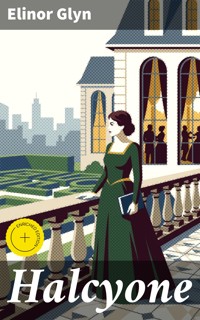
Halcyone
Table of Contents
Introduction
Desire promises freedom even as it exposes the strict boundaries that society and self-imposed duty draw around a life.
Halcyone is a novel by Elinor Glyn, a writer associated with popular early twentieth-century English fiction and with frank, romance-centered storytelling. Read today, it belongs to the tradition of the society novel and the romantic-psychological narrative, attentive to manners, reputation, and the private costs of public expectations. Glyn’s name is often linked to controversies about modern love and to narratives that test the limits of what could be said about attraction and marriage in her era. Approached on those terms, Halcyone offers an instructive example of how mainstream fiction negotiated intimacy, status, and selfhood.
The book follows its central figure through a web of social obligations, personal longings, and the pressures exerted by wealth, rank, and public opinion. Rather than depending on sensational revelation, its interest lies in how feelings gather force, how decisions are delayed or accelerated, and how environments shape what characters believe is possible. The premise is set in motion by the heroine’s position within a world of privilege that can both protect and confine, and by relationships whose meaning cannot be reduced to simple sentiment. The reader is invited to watch a life being argued over, inwardly and outwardly, in real time.
Glyn’s reading experience is shaped by a poised, insistent narrative voice that treats emotional intensity as a serious subject rather than a guilty secret. The style is character-driven and attentive to atmosphere, drawing energy from social encounters, private reflection, and the fine gradations of admiration, jealousy, pride, and vulnerability. Even when scenes turn on the small rituals of conversation and courtesy, the tone implies stakes that feel immediate and consequential. The novel’s momentum comes from psychological pressure and from the constant negotiation between what is expressed and what must remain unspoken.
Among the most prominent concerns are the collisions between passion and propriety, individuality and role, and impulse and the forms of self-control expected of respectable people. The novel examines how class and social standing operate not only as external hierarchies but also as internalized assumptions that govern desire and limit imagination. It also attends to the way romantic idealization can ennoble experience while simultaneously distorting judgment. Without requiring the reader to share its period’s codes, the book makes those codes legible as forces that shape character, choices, and the terms on which happiness can be pursued.
Halcyone still matters because it presents intimacy as both personal feeling and social fact, a tension that remains recognizable in contemporary life. Readers may find in it an early articulation of themes that modern fiction continues to explore: the performance of identity, the costs of reputation, and the uncertainty of self-knowledge when love becomes entangled with power. The novel’s emphasis on interior conflict also resonates in an age attuned to the psychology of attachment and the ways environments structure consent, agency, and aspiration. Its frank attention to longing invites reflection on how moral judgments are formed and enforced.
For contemporary readers, the book offers both historical perspective and narrative pleasure: the chance to enter a carefully observed social world while following a tightly focused emotional story. It can be read as romance, as a study of character under constraint, and as a document of how popular fiction registered shifting attitudes toward love and marriage. The experience is most rewarding when one attends to nuance rather than plot mechanics, allowing the gradual accumulation of feeling and consequence to do its work. In that sense, Halcyone endures as a serious entertainment, asking how much of a life can be chosen and how much is inherited.
Synopsis
Elinor Glyn’s Halcyone is a romantic society novel set among wealthy, titled circles in the early twentieth century, where marriage, reputation, and desire are treated as both personal and public concerns. The story centers on Halcyone, a young woman shaped by privilege yet restless within the expectations attached to her position. From the outset, Glyn frames her as observant and emotionally intense, drawn to ideals of love and personal fulfillment that do not easily fit the rules of her environment. The narrative follows her entry into adult life as she navigates attention, counsel, and scrutiny from those around her.
paragraphs
As Halcyone moves through fashionable settings and intimate conversations, she encounters a world in which alliances are negotiated through families, money, and social standing as much as through affection. Suitors and acquaintances appear not simply as romantic possibilities but as embodiments of competing values: stability, ambition, passion, and convention. Glyn emphasizes the pressure to choose “wisely” in ways that safeguard rank and respectability, even when such choices can flatten individuality. Halcyone’s inner life—her capacity for strong feeling and her desire to be understood—becomes a quiet counterpoint to the visible rituals of society.
paragraphs
The plot gains momentum as Halcyone’s personal attachments deepen and her decisions begin to carry lasting consequences. Social gatherings and private meetings steadily reveal mismatches between appearances and motives, and Halcyone’s ideals are tested by the behavior of people whose approval she has been taught to value. Glyn’s narration stays close to the emotional stakes of courtship and commitment: what can be spoken openly, what must be concealed, and what is sacrificed in order to preserve a favorable public story. Halcyone’s responses, alternately resolute and vulnerable, keep the novel’s tension focused on choice and self-knowledge.
paragraphs
Alongside romantic conflict, the novel attends to power dynamics within relationships, including the ways age, experience, and wealth can shape the terms of intimacy. Halcyone’s education in love is not presented as purely sentimental; it is also a reckoning with the practical constraints imposed by class and gender. Moments of attraction are offset by doubts about trust and by the realization that admiration can coexist with selfishness. The narrative uses the careful choreography of social life—visits, letters, introductions, and gossip—as a mechanism by which private emotion becomes a matter of public consequence, tightening the pressure around Halcyone’s choices.
Historical Context
Elinor Glyn’s Halcyone (published in 1912) belongs to late Edwardian Britain, a period marked by wealth, empire, and a confident social elite, alongside widening political conflict. The novel’s world is shaped by London’s high society, country houses, and the rituals of the aristocracy and plutocracy, where lineage and property continued to regulate marriage and reputation. In 1912 Britain was governed by the Liberal Party and embroiled in constitutional disputes over the powers of the House of Lords. That tension between inherited privilege and modern political pressures forms an important backdrop for the era’s fiction and social commentary.
The years immediately before the First World War saw intense debate about the “woman question,” including women’s access to education, employment, and legal autonomy within marriage. The women’s suffrage movement was highly visible: the National Union of Women’s Suffrage Societies pursued constitutional campaigning, while the Women’s Social and Political Union engaged in militant tactics that drew national attention. Parliamentary clashes over reform and public order, alongside press coverage of suffragette actions, made gender roles a central topic of public discourse. Glyn wrote within this atmosphere, where romantic narratives could also function as arguments about female desire, agency, and social constraint.
Class and wealth were also being renegotiated in public life. The 1909 “People’s Budget” and the Parliament Act 1911 reduced the House of Lords’ veto power, enabling further social reforms and taxation that challenged traditional landed interests. These political changes coincided with shifting fortunes among aristocratic families and the rising influence of new money from industry and finance. Social status still carried enormous force, but it increasingly required negotiation with modern economic realities and public scrutiny. Glyn’s contemporaries often portrayed the aristocracy as both glamorous and precarious, a setting well suited to examining power, dependency, and personal freedom.
The Edwardian press and popular publishing expanded the reach of society fiction. Advances in mass circulation newspapers, illustrated magazines, and a robust book market amplified public fascination with scandal, celebrity, and the private lives of the elite. Simultaneously, moral regulation remained strong: obscenity law and social conventions constrained explicit representation of sexuality, encouraging coded language and implication. Within these limits, romantic and “problem” novels explored desire, marriage, and hypocrisy in ways that could provoke controversy without explicit detail. Glyn became known for franker treatments of attraction than many mainstream writers, reflecting a broader shift toward more open discussion of intimacy in literature and public culture.
Halcyone also reflects a world connected by transnational travel and imperial networks. Before 1914, wealthy Britons moved relatively easily between European resorts, London, and country estates, supported by railways, steamship routes, and a thriving hospitality industry. Britain’s global empire informed assumptions about rank, duty, and national prestige, even when narratives remained focused on domestic society. International tensions were present in the background of the period—such as the naval arms race and diplomatic crises—though daily elite life could appear insulated from them. This contrast between apparent stability and underlying strain was characteristic of prewar representations of high society.
Religious and moral attitudes in early twentieth-century Britain combined Victorian legacies with emerging modern perspectives. The established church remained influential in social life, and marriage retained strong legal and moral significance, yet divorce and marital breakdown were becoming more publicly debated, especially among the wealthy whose cases reached the newspapers. The double standard surrounding sexual behavior—different expectations for men and women—was widely criticized by reformers and dramatists. Such public debates about respectability, reputation, and gendered judgment provided fertile ground for fiction that examined how social systems discipline individual feeling. Glyn’s work belongs to this milieu of contested morality and changing personal expectations.
Cultural modernity was taking shape through art, theatre, fashion, and new technologies, even as many elites defended tradition. London’s West End, private clubs, and seasonal social events structured public display, while photography and journalism made that display more widely visible. Consumer culture expanded through department stores, luxury goods, and leisure industries, reinforcing ideals of style and “taste” that signaled class. At the same time, anxieties about decadence, nervousness, and the costs of modern life appeared in medical and literary writing. Fiction of the period often set personal dilemmas against this glittering but pressured environment, emphasizing how performance and image could conflict with authentic emotion.
Within this historical context, Halcyone engages with Edwardian preoccupations: the authority of class, the economics of marriage, and the policing of women’s choices within elite institutions. Glyn’s perspective reflects the era’s fascination with high society and its codes, while also drawing attention to the emotional consequences of those codes in a world undergoing political and cultural change. The novel’s emphasis on attraction, reputation, and social leverage aligns with contemporary debates about gender and modernity under moral constraint. Read against 1912 Britain, it can be seen as both a product of its glamorous milieu and a critique of the structures that sustain it.




