


1,99 €
Niedrigster Preis in 30 Tagen: 1,99 €
Niedrigster Preis in 30 Tagen: 1,99 €
Mehr erfahren.
- Herausgeber: DigiCat
- Kategorie: Gesellschafts- und Liebesromane
- Sprache: Englisch
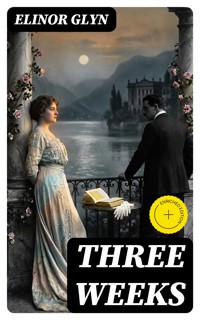
Elinor Glyn's provocative novella 'Three Weeks' delves into the intricate dance of love and desire against the backdrop of early 20th-century societal conventions. The narrative unfolds in a lush, romantic prose that captures the tension between passion and propriety, offering readers a glimpse into the secret lives of its characters. Glyn's treatment of sensual themes, combined with her insightful commentary on social class and gender, positions this work within the literary context of the Edwardian era, a time characterized by shifting moral attitudes and emerging modernity. Elinor Glyn, an influential figure in the world of early 20th-century literature, was known for her controversial exploration of eroticism and female autonomy. Having experienced a rich tapestry of life as a writer and screenwriter, Glyn was acutely aware of the constraints placed on women of her time. Her personal experiences and bold personality infused 'Three Weeks' with an authenticity that challenges and engages the reader, revealing the complexities of love and lust. 'Three Weeks' is a must-read for those intrigued by the interplay of romance and societal expectation. Glyn's innovative storytelling captivates audiences, making it not only a significant work in its own right but also a precursor to modern romantic literature. Readers will find themselves absorbed in the intoxicating world Glyn creates, inspired by her pioneering spirit and the timeless themes of longing and consequence. In this enriched edition, we have carefully created added value for your reading experience: - A succinct Introduction situates the work's timeless appeal and themes. - The Synopsis outlines the central plot, highlighting key developments without spoiling critical twists. - A detailed Historical Context immerses you in the era's events and influences that shaped the writing. - A thorough Analysis dissects symbols, motifs, and character arcs to unearth underlying meanings. - Reflection questions prompt you to engage personally with the work's messages, connecting them to modern life. - Hand‐picked Memorable Quotes shine a spotlight on moments of literary brilliance. - Interactive footnotes clarify unusual references, historical allusions, and archaic phrases for an effortless, more informed read.
Das E-Book können Sie in Legimi-Apps oder einer beliebigen App lesen, die das folgende Format unterstützen:
Veröffentlichungsjahr: 2022
Ähnliche





Three Weeks
Table of Contents
Introduction
Balancing on the knife-edge between desire and decorum, Three Weeks follows the magnetic pull that draws two strangers into an enclave of secrecy where class, age, and sovereignty of the self are tested against the relentless gaze of society, the intoxicating freedoms of travel, and the perilous hope that private rapture can escape public consequence, asking whether passion can be both sanctuary and transformation without becoming scandal, whether intimacy forged in ritual and luxury can outpace the identities that precede it, and whether, in an era of polished manners and quickened modernity, the heart can claim its truth without forfeiting its world.
First published in 1907, Elinor Glyn’s novel belongs to the tradition of romantic and society fiction that courts controversy through its candid attention to sensuality. Written by a British author at the height of the Edwardian period, it unfolds primarily in continental European settings that emphasize mobility, discretion, and cosmopolitan polish. Upon appearance it was widely discussed for its treatment of erotic feeling within rigid social codes, a blend that made it both a popular success and a lightning rod. The novel stands as a landmark of early twentieth-century popular literature that tested the boundary between propriety and daring.
The premise is disarmingly simple and carefully contained. A young Englishman, unmoored from the expectations that govern his life at home, meets an enigmatic, sophisticated woman whose age, bearing, and self-possession mark her as someone accustomed to deference and constraint. Over the course of three intensely circumscribed weeks, they construct a private world governed by secrecy, ritual, and deliberate attentiveness to desire. Her guarded life hints at obligations that reach beyond personal inclination, and the tryst intensifies under that pressure. The story’s power lies in the way the encounter reshapes both participants’ sense of what can be chosen and what must be concealed.
Glyn’s narrative voice is third-person and luxuriant, attuned to textures, color, and the choreography of glances and gestures. The style privileges suggestion over explicit declaration, employing repetition, symbol, and tableau to create a heightened atmosphere in which rooms, fabrics, and landscapes seem to answer the characters’ moods. The tone oscillates between rapture and sobriety, savoring moments of abandon while reminding readers of the social costs that hover nearby. Pacing comes in crescendos—quiet preparation, concentrated intensity, and aftermath—mirroring the rhythms of clandestine intimacy. By contemporary standards the novel is more allusive than graphic, yet its sensory charge remains unmistakable.
At its core the book interrogates the friction between private freedom and public reputation, tracing how surveillance—by servants, acquaintances, and invisible social codes—shapes what lovers dare to attempt. It examines age and power asymmetries without reducing them to simple moral arithmetic, and it treats travel as a liminal space where identities can be tried on and risked. The ritualization of pleasure becomes a means of agency as well as a mask, while secrecy itself acts as both protection and trap. Again and again, the novel asks how far self-invention can proceed before the claims of status, family, and duty reassert themselves.
The work’s notoriety in its day stemmed not merely from its sensuality, but from its frank acknowledgment that longing seeks an aesthetic as much as an outlet—surroundings, objects, and ceremony that confer meaning on feeling. That combination of audacity and elegance made the book widely read and hotly debated, a cultural flashpoint for discussions about respectability and modern womanhood. As a document of the Edwardian imagination, it captures a world poised between gilded tradition and a new, mobile cosmopolitanism, revealing how luxury could function both as camouflage for transgression and as a language for articulating desire.
For contemporary readers, Three Weeks matters as a study in how romance narratives encode power, consent, and performance while still delivering emotional immediacy. Its lush prose rewards close attention, offering a case study in how suggestion can be more provocative than explicitness. The novel illuminates the mechanics of scandal and the way stories about intimacy circulate through culture, shaping norms long after the initial outcry fades. Reading it now invites both historical curiosity and self-inquiry: what do we still hide, ritualize, or glamourize in love, and what, despite modern freedoms, remains caught between the wish to be seen and the need to remain safe?
Synopsis
Three Weeks (1907) by Elinor Glyn is a short, sensuous novel that scandalized and captivated early twentieth‑century readers. It opens with a young Englishman adrift on the Continent, seeking escape from stifling expectations. In a Swiss resort he encounters a striking, self‑possessed foreign woman whose rank is hinted at but not announced. Their first meetings are circumspect, governed by etiquette and distance, yet charged with curiosity. The narrative establishes the contrast between British restraint and the heroine’s cultivated worldliness, preparing a stage on which passion will challenge convention. With spare settings and heightened mood, Glyn positions desire as a force that demands attention and consequence.
As the man, Paul Verdayne, grows aware of the woman’s aura and the careful vigilance of her attendants, fascination turns to pursuit conducted within strict boundaries. His youth and social standing make him both privileged and inexperienced; her poise suggests hidden sorrows and formidable will. Their conversation, walks, and silent exchanges are orchestrated to avoid scandal in a place where eyes are everywhere. Glyn uses the resort’s orderly routines and public spaces to heighten the private risk of each choice. Rumor and ritual circle the pair, while the woman’s deliberate signals invite Paul into an intimacy that promises pleasure, meaning, and peril.
The affair unfolds over a defined span—three weeks—that the woman stipulates as both promise and limit. Within this interval, the novel traces a swift education of the heart and senses. The settings shift from salons and terraces to increasingly secluded rooms, and the narration reveals the intensity with which Paul interprets every glance and gesture. The liaison is portrayed as a discipline of beauty and surrender rather than mere impulse. Glyn calibrates pace and tone so that each day feels fateful. The deadline enforces clarity: their bond must remain secret, its outcome uncertain, its memory powerful enough to reconfigure a life.
When the interlude ends, separation is unavoidable, and the woman’s identity comes into sharper focus. She is a sovereign consort from a Balkan throne, constrained by a brutal marriage and a watchful court, her movements shrouded in state necessity. Political stakes loom over private desire, and the lovers’ choices now entwine with questions of honor, lineage, and national stability. Through discreet messages and carefully staged encounters, Paul glimpses the apparatus that surrounds her: loyal servants, implacable relatives, and the dangers of gossip. The revelation confirms the asymmetry between them—youthful freedom versus dynastic duty—while deepening his commitment to a relationship that must remain unseen.
Paul’s transformation is central. He returns to ordinary settings with sensibilities sharpened and ambitions redirected, measuring English routines against the emotional standard the affair has set. The novel intertwines erotic awakening with moral awakening, asking whether love can be both lawless and ennobling. Social satire tempers the romance: Glyn contrasts provincial prudery with cosmopolitan codes that still exact penalties. The woman’s authority—sexual, aesthetic, and intellectual—offers a model of agency rare in the era’s fiction, yet her power is circumscribed by patriarchal structures that her discretion cannot fully defy. Consequences gather quietly, and hints suggest their union may carry implications beyond memory.
As distance grows, the risks intensify. Court intrigue, domestic surveillance, and diplomatic calculation threaten exposure, while Paul confronts the limits of what devotion can accomplish from afar. The narrative sustains tension through delays, secondhand reports, and carefully rationed meetings. Moments of hope surface in clandestine plans meant to shield reputations and preserve what the lovers have created, but each safeguard demands sacrifice. Paul’s maturation involves accepting responsibility without possession, faith without certainty. By keeping decisive events partially offstage, Glyn aligns readers with Paul’s anxious perspective, emphasizing how love becomes a discipline of patience amid forces—dynastic, moral, and public—that can neither be ignored nor controlled.
Three Weeks endures less for plot surprises than for its frank portrayal of desire and its cool appraisal of the social machinery surrounding it. Upon publication, the novel’s candor and lush atmospherics made it a bestseller and a lightning rod in Britain and America, expanding what commercial fiction could suggest about female sexuality and romantic autonomy. Its European settings and cross‑cultural romance helped popularize a template later refined in modern genre fiction. Beyond its period scandal, the book poses questions about the price of passion, the limits of secrecy, and the shaping of identity through love—questions that remain resonant without depending on any single conclusion.
Historical Context
Published in 1907, Elinor Glyn’s Three Weeks emerged in Edwardian Britain amid the wider European Belle Époque, a period marked by prosperity, conspicuous leisure, and expanding mass culture. The novel’s milieu spans fashionable Continental resorts and London drawing rooms frequented by the upper classes, whose mobility was enabled by dense rail networks and well-established hospitality infrastructures. Social life centered on aristocratic patronage, gentlemen’s clubs, literary salons, and subscription libraries that mediated access to new fiction. Against this cultivated backdrop, Glyn’s story presents an elite, transnational set accustomed to privacy and codes of discretion, situating intimate desire within the institutions that regulated reputation and taste.
In the decades before the First World War, the Balkans preoccupied European imaginations as a zone of monarchies, shifting borders, and dynastic intrigue. The Congress of Berlin (1878) recognized or reshaped several states, and the violent overthrow of Serbia’s King Alexander and Queen Draga in 1903 underscored the fragility of royal authority in the region. Great Power competition—Austro-Hungarian, Russian, and Ottoman interests—kept the area politically charged. Western fiction frequently used “Balkan” royalty to evoke glamour and danger without naming a specific realm. Three Weeks draws on that cultural shorthand, aligning an enigmatic foreign sovereign with contemporary anxieties about power, legitimacy, and secrecy.
Three Weeks appeared amid intense debate about gender, sexuality, and marriage. British suffragists, notably the Women’s Social and Political Union founded in 1903, were escalating agitation, while earlier “New Woman” writers had challenged double standards in love and work. Legal reforms such as the Married Women’s Property Acts (1870, 1882) improved women’s economic autonomy, yet divorce law and social convention still enforced unequal expectations. Medical and social discourses—from Krafft-Ebing’s case studies to Havelock Ellis’s controversial research—made sex a public topic. Glyn’s focus on female desire confronted norms of feminine reticence, inviting readers to consider passion within, and against, prevailing codes of respectability.
Edwardian print culture combined aggressive marketing with persistent moral oversight. The British Obscene Publications Act of 1857 enabled seizures deemed indecent, and in the United States the 1873 Comstock laws policed sexual materials by post. Circulating libraries and local committees acted as informal censors by refusing controversial titles to subscribers. Three Weeks provoked denunciations from reviewers and moralists, yet it reached a broad readership and became a bestseller in Britain and America. Its notoriety owed as much to publicity and condemnation as to content, demonstrating how scandal functioned within commercial publishing and how gatekeepers’ objections often amplified a book’s cultural visibility.
European leisure travel at the turn of the century formed a concrete stage for Glyn’s plot. The expansion of express trains and the completion of the Simplon Tunnel in 1906 shortened routes between Paris, Switzerland, and northern Italy, encouraging seasonal migrations of wealthy tourists. Grand hotels, spas, and Alpine resorts catered to multilingual elites, while Baedeker guides and Thomas Cook itineraries standardized expectations of comfort and discretion. In such settings, travelers could reinvent themselves away from home surveillance. Three Weeks situates intimacy within these cosmopolitan, semi-anonymous spaces, reflecting how modern transport and hospitality reshaped the possibilities—and risks—of cross-border relationships.
Late Victorian and Edwardian Britain cultivated a public-school model of masculinity grounded in discipline, team games, and stoic self-control, feeding into imperial and professional leadership ideals. Younger sons and recent graduates often toured the Continent to complete their social polish, absorbing languages and manners in an environment less tightly supervised than home. Literature of the period both celebrated and questioned this formation. By placing a young Englishman amid European sophistication and temptation, Three Weeks probes the gap between prescribed gentlemanly restraint and personal desire, illuminating the pressures of class expectation while testing how identity might shift when detached from familiar institutions.
The novel’s fame was amplified by an early twentieth-century media ecosystem adept at turning controversy into sales. Lord Northcliffe’s popular press, energetic advertising, and syndicated reviews helped make literary scandals front-page talk. Music halls and magazines quickly parodied racy bestsellers, and Three Weeks became a ready target for satire, its suggestiveness referenced more often than its plot. Moral pressure groups, including Britain’s National Vigilance Association and America’s New York Society for the Suppression of Vice, criticized such fiction as corrupting. The resulting debate—titillation versus public virtue—located Glyn’s work at the center of arguments about modern entertainment, commerce, and morality.
Three Weeks ultimately registers the contradictions of its era: cosmopolitan mobility and aristocratic glamour set against nervous scrutiny of sex, status, and selfhood. Its discreetly erotic tone reflects a culture edging from Victorian reticence toward twentieth-century candor, while the figure of a foreign ruler concentrates contemporary fascination with dynastic spectacle and political uncertainty. By staging desire within resorts, railways, and drawing rooms, the book mirrors a world where institutions still policed conduct but could no longer fully contain it. The novel’s popularity and censure together signal an Edwardian moment testing the boundaries of decorum, agency, and transnational modern life.




