


0,49 €
Mehr erfahren.
- Herausgeber: DigiCat
- Kategorie: Gesellschafts- und Liebesromane
- Sprache: Englisch
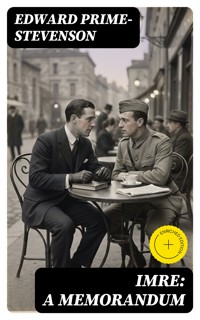
Edward Prime-Stevenson's "Imre: A Memorandum" stands as a seminal work in early 20th-century LGBTQ literature, encapsulating themes of identity, love, and societal constraints. Written in a lyrical yet candid style, the narrative follows the poignant relationship between two men, shifting between an intimate exploration of their emotional landscape and a broader commentary on the norms of society. The book is notable for its sensitive portrayal of homosexual love at a time when such subject matter was often relegated to the shadows, weaving a rich tapestry of desire, longing, and the quest for personal authenticity that echoes the Modernist literary movement. Born in 1858, Stevenson was an American writer and early advocate for LGBTQ rights, deeply influenced by his own experiences and the oscillating sexual mores of his era. His personal journey through societal rejection and self-acceptance forged a lens through which he articulated the struggles of individuals wrestling with their identities. Through his fiction, Stevenson sought not only to entertain but to enlighten, paving the way for future generations to explore themes of love and acceptance. "Imre: A Memorandum" is a vital read for those interested in the rich history of LGBTQ literature, offering insights into the profound emotional truths underlying sexual desire. It invites readers to reflect on the complexities of love and the fight for self-acceptance against a backdrop of societal prejudice, making it both a poignant personal narrative and a resonate cultural artifact. In this enriched edition, we have carefully created added value for your reading experience: - A succinct Introduction situates the work's timeless appeal and themes. - The Synopsis outlines the central plot, highlighting key developments without spoiling critical twists. - A detailed Historical Context immerses you in the era's events and influences that shaped the writing. - A thorough Analysis dissects symbols, motifs, and character arcs to unearth underlying meanings. - Reflection questions prompt you to engage personally with the work's messages, connecting them to modern life. - Hand‐picked Memorable Quotes shine a spotlight on moments of literary brilliance. - Interactive footnotes clarify unusual references, historical allusions, and archaic phrases for an effortless, more informed read.
Das E-Book können Sie in Legimi-Apps oder einer beliebigen App lesen, die das folgende Format unterstützen:
Veröffentlichungsjahr: 2023
Ähnliche
















Imre: A Memorandum
Table of Contents
Introduction
Poised between the human need for candor and the imposed discipline of silence, Imre: A Memorandum follows two men whose gradual, searching conversations teach them how to recognize, name, and ethically inhabit a love the world around them refuses to acknowledge, exploring the risks of confession, the solace of mutual understanding, and the hard-won courage required to transform friendship into an avowed bond without surrendering dignity to scandal, fear, or self-denial, and, set amid the manners and martial codes of turn-of-the-century Central Europe, the narrative measures how private truth can be articulated within public forms without collapse.
Edward Prime-Stevenson, an American author, published this short novel in 1906 under the pseudonym Xavier Mayne, privately printed at a time when candid treatments of same-sex love risked censure. Set in Hungary, the book blends psychological romance with a reflective, first-person memoir, placing intimate self-scrutiny within cafes, promenades, and officers' circles. Its era is recognizably early twentieth century, yet the narrative voice looks backward as well, attentive to inherited ideals of honor and restraint. The result is a compact work of fiction that reads as both confession and case study, while remaining committed to the dignity of literary art.
The premise is deliberately modest: a cultivated foreigner in Hungary befriends Imre, a young officer whose poise and reserve conceal unspoken complexities. Their acquaintance begins in ordinary sociability and deepens through conversation, observation, and shared aesthetic interests, each encounter bringing them nearer to questions neither has been able to pose aloud. The first-person narrator records these meetings with careful tact, staging a courtship of minds before any riskier avowals. Instead of melodrama, the book offers deliberation: pauses, reconsiderations, and the incremental testing of language, so that recognition appears as a moral and intellectual labor rather than an impulsive revelation.
Prime-Stevenson writes in a poised, cultivated voice, attentive to shades of feeling and to the ethical weight words can carry. The style is largely dialogic, with extended exchanges that move from art and character to the historical and scientific vocabularies then used to describe male attachment. Without pedantry, the narrative absorbs contemporary sexological debates and classical allusions, allowing the protagonists to test language that has often been hostile to them. The tone is restrained yet warm, avoiding sensationalism; its urbanity and psychological steadiness give the story an air of credibility that makes the emotional stakes feel earned rather than contrived.
At its center are themes of self-knowledge, mutual recognition, and the negotiation between private truth and public codes. The book treats friendship as both shelter and trial, a space in which candor must be learned before it can be offered. Questions of masculinity and honor are reframed through empathy rather than bravado, suggesting that courage may lie in confession, patience, and the refusal to pathologize desire. The narrative also explores how language—medical, moral, and aesthetic—can wound or heal, shaping what kinds of futures seem imaginable. In that sense, the novel becomes a study in finding humane vocabulary for forbidden feeling.
Historically, Imre has drawn attention as one of the earliest English-language novels to address male–male love with unusual frankness and with a non-pathologizing, respectful tone, a fact underscored by its private printing and the author's use of a pseudonym. Yet its importance is not only documentary. The book insists that same-sex desire can be spoken of with reason, tact, and dignity, countering the period's prevailing criminal and medical narratives. It preserves the atmosphere of risk while granting its characters interior fullness, offering a counter-archive to silence. For readers interested in literary history, it maps an ethical imagination that resists both sensationalism and erasure.
For contemporary readers, the novel offers a measured, humane perspective on intimacy, identity, and the social scripts that aim to confine both. Its slow, lucid pacing rewards patience, drawing one into the labor of listening, the precision of language, and the ethical stakes of naming oneself without capitulating to coercive categories. In a cultural climate still negotiating visibility, privacy, and the politics of disclosure, the book models careful speech, mutual respect, and the possibility of joy that is neither naive nor sensational. It endures as a quiet, artful argument that empathy and clarity can make space for honest lives.
Synopsis
Imre: A Memorandum is a short novel by Edward Prime-Stevenson, first published privately in 1906 under the pseudonym Xavier Mayne. Cast as a personal memorandum, it presents the recollections of a cultivated foreigner who records the growth of a singular friendship with Imre, a young Hungarian army officer. Set against the social textures of Hungary—its cafés, promenades, barracks, and musical salons—the narrative combines intimate self-scrutiny with keen attention to public codes of masculinity. Eschewing melodrama, it approaches same-sex attraction through classical allusions and the era’s sexological vocabulary, treating desire, restraint, and honor as intertwined forces that shape conduct and perception.
The memorandum opens with a chance encounter in a public place, where the narrator notices Imre’s bearing and mixture of pride and reserve. The officer’s refinement and loneliness strike him, prompting an introduction that grows into a regular companionship. Their early conversations move easily among music, literature, and national character, revealing differences of age, background, and temperament alongside a shared appetite for culture. The narrator, worldly yet cautious, discerns a kinship he dares not name. Imre, bound by military discipline and social expectation, cultivates a courteous distance. The developing bond promises unusual intimacy, yet it is carefully phrased within acceptable forms of masculine friendship.
As their acquaintance deepens, the two men share meals, walks, and evenings at concerts, in which artistic judgments double as careful tests of sympathy. The narrator observes how Imre’s ideals of duty, courage, and national pride coexist with a sensitive responsiveness to beauty. He scrutinizes his own impulses with equal rigor, determined to safeguard the friendship from misinterpretation or harm. The narrative lingers over gestures, pauses, and coded intimacies that seem ordinary from the outside yet carry increasing weight. Through these scenes, the memorandum charts the fine line between socially endorsed camaraderie and the possibility of more personal attachment.
Prime-Stevenson situates the narrator’s outlook within two intersecting discourses: the classical heritage of male friendship and the then-new sexological efforts to catalog human variation. The memorandum records readings, case studies, and historical anecdotes that the narrator deploys to think ethically about desire, dignity, and truthfulness. Rather than treating theory as abstraction, he uses it to gauge the risks of candor and the claims of conscience. His reflections pose central questions: what language can acknowledge feeling without betraying discretion, and how might personal integrity coexist with public honor? These frameworks become the backdrop for moments when friendship edges toward confession and must negotiate fear.
Gradually, Imre reveals facets of his past that hint at inner conflicts: unfulfilled ideals, disappointments, and a stringent code of self-command learned in barracks life. He speaks with fervor about comradeship and honor, yet recoils from scandal and the misunderstanding that shadows any breach of conventional boundaries. The narrator responds by offering carefully chosen confidences and by arranging occasions for frank talk away from public scrutiny. Episodes in quieter districts and landscapes allow their conversation to broaden, testing where admiration shades into attachment. At stake is not only personal happiness, but also the preservation of reputation in a milieu alert to deviation.
Tension gathers toward a decisive exchange in which veiled assurances yield to clearer statements of feeling. The memorandum dwells on atmosphere and timing—the choice of words, the risk of misreading, and the courage required to speak plainly. Without resorting to sensational revelation, the narrative reaches a point of mutual recognition that reframes earlier episodes and steadies both men’s sense of themselves. The tone, resolute and humane, emphasizes the possibility of honorable candor rather than tragedy. What follows is approached discreetly, with an insistence on privacy, but the prevailing emphasis on dignity and acceptance marks a distinct departure from the era’s darker scripts.
Beyond its story, Imre: A Memorandum matters for its early, unpathologizing portrayal of male-male love and its synthesis of literary sensibility with sexological debate. Prime-Stevenson’s careful framing—private printing, pseudonymous authorship, and a measured, cultured tone—enabled a narrative that sought respectability for feelings often cast as illicit. The book’s Hungarian milieu provides fresh coordinates for questions of nation, class, and military ethos, while the memorandum form models ethical self-accounting. Its enduring resonance lies in the way it imagines honesty, companionship, and self-knowledge as compatible with public virtue, offering a historical counterpoint to narratives of doom without disclosing every contour of the protagonists’ fates.
Historical Context
Published privately in 1906, Imre: A Memorandum is Edward Prime-Stevenson’s European-set novel about same-sex love, issued under the pseudonym Xavier Mayne. Prime-Stevenson (1858–1942), an American critic and novelist who had settled in Europe, located the story in Budapest, capital of the Kingdom of Hungary within the Austro-Hungarian Monarchy. The city, unified from Buda, Pest, and Óbuda in 1873, had rapidly modernized by the fin de siècle, with grand boulevards, parks, and a cultivated café and theater life. Its institutions included a prestigious officer corps, conservatories, and cosmopolitan salons—settings that frame the novel’s encounters and its emphasis on urban sociability, discipline, and public respectability.
Budapest in this period belonged to the Dual Monarchy created by the 1867 Austro-Hungarian Compromise, which granted Hungary internal autonomy while sharing a monarch, foreign policy, and military with Austria. Hungarian nationalism and modern state-building reshaped civic life, while the army retained high prestige and strict codes of honor. Officer messes, garrisons, and parade grounds organized male sociability, emphasizing discretion, hierarchy, and self-control. Urban elites, professionals, and soldiers mingled in cafés and music rooms under a veneer of propriety. Such institutions and norms, prevalent from the 1880s to the first decade of the twentieth century, form the novel’s backdrop of duty, decorum, and carefully managed reputation.
Across Europe at the time, many jurisdictions criminalized sexual acts between men, subjecting offenders to imprisonment and social ruin. Austria’s penal code punished male homosexual acts, and Hungary’s 1878 criminal code likewise outlawed “unnatural fornication,” though enforcement varied. In Germany, Paragraph 175 criminalized male same-sex acts; in Britain, the 1885 Labouchere Amendment broadened prosecution for “gross indecency,” culminating in the highly publicized trials of Oscar Wilde in 1895. Police surveillance, blackmail risks, and medical stigmas pressed men to extreme caution. Set against this climate, the novel’s emphasis on discretion, confession, and honor reflects the legal dangers and the social penalties of disclosure.
Imre engages a contemporaneous scientific and intellectual discourse on sexuality that had emerged since the 1860s. Karl Heinrich Ulrichs advanced the concept of the Urning, arguing for innate same-sex desire and legal reform. Richard von Krafft-Ebing’s Psychopathia Sexualis (first published 1886) cataloged sexual “inversions,” influencing courts and physicians. Havelock Ellis and John Addington Symonds’s Sexual Inversion reached English readers in 1897, while Magnus Hirschfeld’s Scientific-Humanitarian Committee (founded 1897) campaigned against criminalization in Germany. Prime-Stevenson demonstrated familiarity with this literature in his 1908 treatise The Intersexes; the novel’s measured vocabulary and appeals to nature, history, and character mirror sexology’s effort to legitimize homosexual identity.
Anglo-American publishing constraints shaped the book’s production and circulation. The United States’ 1873 Comstock Act barred “obscene” materials from the mails, and British obscenity law restricted sexual content, prompting authors of homosexual themes to adopt pseudonyms, code language, or private printing. Prime-Stevenson issued Imre privately in 1906 while living on the Continent and used the name Xavier Mayne for his homosexual writings. Private, small-run editions, often printed in Italy or Switzerland, moved through personal networks and specialist booksellers. These strategies limited public visibility and potential legal exposure for author, printer, and vendors, while still allowing a transatlantic readership to locate the text.
Fin-de-siècle literature offered few affirmative depictions of male same-sex love. English and French works often relied on classical allusion, coded language, or tragic outcomes: John Addington Symonds wrote privately about “Greek love”; Oscar Wilde’s The Picture of Dorian Gray (1890) provoked moral controversy; and André Gide’s L’Immoraliste (1902) examined desire’s conflicts without social vindication. Against this field, Imre has been cited by literary historians as one of the earliest American-authored novels to present homosexual love with an affirmative resolution. Its decorous style, classical references, and appeal to character and honor align it with refined late-Victorian taste while quietly revising its dominant narrative trajectories.
Budapest’s sociocultural scene shaped the novel’s urban texture. The city celebrated the 1896 Millennium of Hungarian statehood with monuments at Heroes’ Square and the continent’s first electric subway, the Millennium Underground Railway. The Hungarian Royal Opera House (opened 1884), the Franz Liszt Academy of Music (founded 1875), and cafés such as the New York Café (opened 1894) anchored a vibrant public sphere. The Parliament Building, designed by Imre Steindl and inaugurated in 1902, symbolized national confidence. Parks, embankments, and promenades hosted polite sociability across classes. These locales, familiar to travelers and residents, frame restrained interactions, formal courtesies, and the period’s codes of public demeanor.
Imre reflects and critiques its era by integrating the fin-de-siècle city, military decorum, and sexological arguments into a narrative of ethical self-definition. Without sensationalism, it insists on dignity, mutuality, and moral seriousness for a love proscribed by law and habit. Its measured defenses echo contemporary reform campaigns while exposing the contradictions of a society that prized honor and candor yet demanded silence. By situating an intimate story within the prestige institutions of a modern capital, the book counters pathologizing and criminalizing discourses, offering a calm rebuttal to scandal narratives and an early homophile claim to respectability within European modernity.




