


95,99 €
Mehr erfahren.
- Herausgeber: John Wiley & Sons
- Kategorie: Religion und Spiritualität
- Serie: Challenges in Contemporary Theology
- Sprache: Englisch
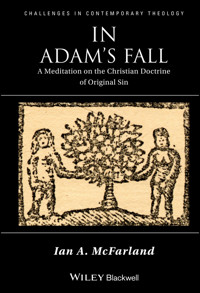
IN ADAM’S FALL
Few doctrines of Christian teaching are more controversial than original sin. For how is it possible to affirm the universality of sin without losing sight of the distinct ways in which individuals are both responsible for and suffer the consequences of sinful behavior?
In considering the Christian doctrine of original sin, McFarland challenges many prevailing views about it. He shows us that traditional Christian convictions regarding humanity’s congenital sinfulness neither undermine the moral accountability of sin’s perpetrators nor dampen concern for its victims. Responding to both historic and contemporary criticism of the doctrine, In Adam’s Fall reveals how the concept of original sin is not only theologically defensible, but stimulating and productive for a life of faith.
Drawing on both the classical formulations of Augustine and the Christology of Maximus the Confessor, McFarland proposes a radical reconstruction of the doctrine of original sin – one that not only challenges contemporary Western visions of human autonomy but emphasizes the integrity of each individual called by God to a unique and irreplaceable destiny. Engagingly written and infused with scholarly sophistication, In Adam’s Fall offers refreshingly original insights into the contemporary relevance of a doctrine of Christian teaching that has inspired fierce debate for over 1,500 years.
Sie lesen das E-Book in den Legimi-Apps auf:
Seitenzahl: 549
Veröffentlichungsjahr: 2011
Ähnliche















Contents
Preface
Acknowledgments
Author’s Note
Part I Setting the Stage: The Problem of Original Sin
1 Creation Gone Wrong: Thinking about Sin
A Doctrine Grown Strange
Biblical Configurations of Sin
Contemporary Attempts to Reclaim Sin-Talk
Original Sin and Actual Sin
2 Original Sin as Christian Doctrine: Origins, Permutations, Problems
Assessment
The Augustinian Turn
Augustinian Revisions
The Emergence of the Doctrine
Part II Reconfiguring the Debate: Sin, Nature, and the Will
3 Augustine of Hippo: Willing and the Ambiguity of Desire
Augustine’s Views in Outline
Concupiscence: Humanity Internally Divided
The Fall: Humanity Temporally Divided
Assessing Augustine’ s Doctrine of the Will
4 Maximus the Confessor: Willing Is Not Choosing∗
Maximus’ Christology in Context
Dyothelite Christology in Outline
Maximus’ Analysis of the Will
Maximus’ Interpretation of Christ’ s Willing
Anthropological Implications
Conclusion
5 The Status of Christ’s Will: Fallen or Unfallen?∗
The Question in the Tradition
Preliminary Assessment
The Problem of Christ’s Will
Theological Implications
Part III Reconstructing the Doctrine: Original Sin in Christian Practice
6 Original Sin and Human Nature: Solidarity in Sin
Original Sin and the Damaged Will
The Problem of the Origin of Original Sin
Reconceiving the Ontology of Original Sin
7 Original Sin and the Individual: Being a Sinner
The Scope of Sin
Sin and Agency
From Actual Sin to Original Sin
8 Original Sin and the Christian Life: Confronting Sin
From Original Sin to Actual Sin
Original Sin as Unbelief
Vocation and the Defeat of Sin
Conclusion
References
Index
Challenges in Contemporary Theology
Series Editors: Gareth Jones and Lewis Ayres
Canterbury Christ Church University College, UK and Emory University, US
Challenges in Contemporary Theology is a series aimed at producing clear orientations in, and research on, areas of “challenge” in contemporary theology. These carefully coordinated books engage traditional theological concerns with mainstreams in modern thought and culture that challenge those concerns. The “challenges” implied are to be understood in two senses: those presented by society to contemporary theology, and those posed by theology to society.
Published
These Three Are One: The Practice of Trinitarian Theology
David S. Cunningham
After Writing: On the Liturgical Consummation of Philosophy
Catherine Pickstock
Mystical Theology: The Integrity of Spirituality and Theology
Mark A. McIntosh
Engaging Scripture: A Model for Theological Interpretation
Stephen E. Fowl
Torture and Eucharist: Theology, Politics, and the Body of Christ
William T. Cavanaugh
Sexuality and the Christian Body: Their Way into the Triune God
Eugene F. Rogers, Jr
On Christian Theology
Rowan Williams
The Promised End: Eschatology in Theology and Literature
Paul S. Fiddes
Powers and Submissions: Spirituality, Philosophy, and Gender
Sarah Coakley
A Theology of Engagement
Ian S. Markham
Alien Sex: The Body and Desire in Cinema and Theology
Gerard Loughlin
Scripture and Metaphysics: Aquinas and the Renewal of Trinitarian Theology
Matthew Levering
Faith and Freedom: An Interfaith Perspective
David Burrell
Keeping God’s Silence
Rachel Muers
Christ and Culture
Graham Ward
Theology in the Public Square: Church, Academy and Nation
Gavin D’ Costa
Rewritten Theology: Aquinas After His Readers
Mark D. Jordan
God’s Companions: Reimagining Christian Ethics
Samuel Wells
The Trial of the Witnesses: The Rise and Decline of Postliberal Theology
Paul J. DeHart
Theology and Families
Adrian Thatcher
The Shape of Theology
David F. Ford
The Vietnam War and Theologies of Memory
Jonathan Tran
In Adam’s Fall: A Meditation on the Christian Doctrine of Original Sin
Ian A. McFarlan
This edition first published 2010
© 2010 Ian A. McFarland
Blackwell Publishing was acquired by John Wiley & Sons in February 2007. Blackwell’s publishing program has been merged with Wiley’s global Scientific, Technical, and Medical business to form Wiley-Blackwell.
Registered Office
John Wiley & Sons Ltd, The Atrium, Southern Gate, Chichester, West Sussex, PO19 8SQ, United Kingdom
Editorial Offices
350 Main Street, Malden, MA 02148–5020, USA
9600 Garsington Road, Oxford, OX4 2DQ, UK
The Atrium, Southern Gate, Chichester, West Sussex, PO19 8SQ, UK
For details of our global editorial offices, for customer services, and for information about how to apply for permission to reuse the copyright material in this book please see our website at www.wiley.com/wiley-blackwell.
The right of Ian A. McFarland to be identified as the author of this work has been asserted in accordance with the UK Copyright, Designs and Patents Act 1988.
All rights reserved. No part of this publication may be reproduced, stored in a retrieval system, or transmitted, in any form or by any means, electronic, mechanical, photocopying, recording or otherwise, except as permitted by the UK Copyright, Designs and Patents Act 1988, without the prior permission of the publisher.
Wiley also publishes its books in a variety of electronic formats. Some content that appears in print may not be available in electronic books.
Designations used by companies to distinguish their products are often claimed as trademarks. All brand names and product names used in this book are trade names, service marks, trademarks or registered trademarks of their respective owners. The publisher is not associated with any product or vendor mentioned in this book. This publication is designed to provide accurate and authoritative information in regard to the subject matter covered. It is sold on the understanding that the publisher is not engaged in rendering professional services. If professional advice or other expert assistance is required, the services of a competent professional should be sought.
Library of Congress Cataloging-in-Publication Data
McFarland, Ian A. (Ian Alexander), 1963–
In Adam’s fall: a meditation on the Christian doctrine of original sin/Ian A. McFarland.
p. cm. – (Challenges in contemporary theology)
Includes bibliographical references and index.
ISBN 978-1-4051-8365-9 (hardcover: alk. paper)
1. Sin, Original – History of doctrines. I. Title.
BT720.M38 2010
233′.14-dc22
2010010189
For my teachers
Preface
First published in Boston in around 1690, the New England Primer shaped the education of generations of children throughout North America, with total sales over the nearly two hundred years it remained in print estimated in the millions. Its most famous feature was its alphabet pages: a series of rhyming couplets, accompanied by woodcut illustrations, used to teach the letters. The first of these (and the only one never changed in any of the Primer’s many editions) gave a concise summary of the Western Christian doctrine of original sin: “In Adam’s Fall/We Sinned all.” Because once upon a time Adam sinned, all of us in the present are sinners.
In contemporary North America, this doctrine has none of the resonance with popular culture that once made it a natural reference point for teaching basic literacy. Its key terms are little used outside of churches and often little valued even within them. At the same time, few doctrines continue to excite as much passion among believers and non – believers alike. While traditional beliefs about the Trinity or justification are easily passed over as bits of theological esoterica, talk of original sin invariably elicits a strong – and overwhelmingly negative – response even among those who identify themselves as Christian. The idea that we are all guilty because of an ancestor’s misdeed is viewed as morally outrageous and historically incredible, summing up for many everything that is wrong with Christianity.
It is the aim of this book to challenge that perception. In my previous work on the doctrine of the human person (“theological anthropology” in the technical jargon of systematic theology), one of my central aims was to overcome what appears to me a Hobson’s choice latent in the tradition. On the one hand, Christians have tried to defend human equality before God by identifying some feature common to all human beings (e.g., reason, freedom, self-consciousness) as the ground of God’s regard for us – of our “personhood.” One consequence of this strategy is to render the differences between human beings theologically unimportant, notwithstanding the fact that in human relationships it is precisely that which is distinctive about others that catalyzes our love for them. On the other hand, where human difference is taken seriously, it is all too readily taken as evidence that all human beings are not equal. I have argued that the horns of this dilemma can be avoided by rooting anthropology in Christology: if the basis of our “personhood” is not any quality we possess (whether in equal or different measure), but simply the fact that God in Christ addresses us as persons – speaking to us in time the same Word spoken eternally within the Trinity – then acknowledgment of human difference and human equality no longer stand in tension with one another. As members of Christ’s body, we all are equal as recipients of Christ’s call, but utterly distinct in that to which we are called.1
But if life “in Christ” is a matter of God’s incorporating us into the divine life by making us equal but mutually unsubstitutable members of Christ’s body, what of life “in Adam” – our state apart from or prior to redemption? Here, too, the Christian tradition has wanted to affirm a kind of equality, but one based on a defect – sin – rather than any positive feature of human nature. In the Western churches this defect has traditionally been further qualified as original sin – a congenital resistance to and alienation from God that, while not intrinsic to human nature as such, is now characteristic of all human beings by virtue of the fact that the first human beings disobeyed God’s command: “In Adam’s fall/we sinned all.”
The chapters that follow are my attempt to examine this dimension of human equality before God, in the conviction that the doctrine of original sin, though one of the most unsettling aspects of Christian teaching, is also stimulating and productive for the life of faith. In reaction to a wide range of criticisms leveled against the idea of original sin, a number of Christian theologians in the modern period have attempted to develop a doctrine of sin in which the idea of original sin is heavily qualified or even rejected. Against these perspectives, I will argue that it is not only theologically defensible, but inseparable from the confession of Jesus Christ as Savior and Lord. Indeed, I will defend the doctrine in what is arguably its most extreme form, as developed by Augustine and later defended in the Reformed theological tradition under the designation of “total depravity” – the claim that no aspect of our humanity is untouched by sin. Yet what follows is not simply a restatement of earlier positions, because modern critics raise questions that cannot be ignored about how the doctrine has been defended and deployed in the past, even if (as I shall try to show) these questions can be answered in ways that confirm the place of original sin within the logic of Christian faith.
The course I will follow in making this argument falls into three parts. The first is primarily diagnostic: in Chapter 1 I will lay out some of the issues connected with sin-talk in general, after which I will proceed in Chapter 2 both to discuss the development of the doctrine of original sin and to review some of the ways it has been defended, criticized, and modified over the centuries. In the process, I isolate three particularly trenchant objections to the idea that human beings are congenital sinners: first, that it cannot be squared with the best current science regarding the origin and development either of the human species (phylogeny) or of the individual human being (ontogeny); second, that it undermines basic Christian convictions regarding human freedom and thus promotes either moral indifference or despair; and third, that it vitiates the pursuit of justice in society by excusing systemic sins as inevitable and accusing those who resist them of sinful presumption.
Though it is in many respects the heart of my argument, the book’s second part does not deal directly with the doctrine of original sin at all. Instead, it serves as something of a ground – clearing operation, in which I elaborate some basic principles of theological anthropology that provide the conceptual basis for my reconstruction of the doctrine of original sin in Part III. Specifically, I seek to counter the idea that the will is the source of human identity and freedom by developing an alternative anthropology, in which the will does not have this determinative role. Drawing on the thought of Augustine in Chapter 3 and Maximus the Confessor in Chapter 4, I argue that Christians have both good reasons and effective theological resources for making just this move. Though developing their respective positions in response to significantly different theological concerns, both figures challenge the equation of free will with the power of self – determination in favor of an anthropology in which the will’s freedom lies in its being so drawn to the proper end of human nature as to draw human nature as a whole to its proper end. Within this framework God rather than the will is the source of individual identity, since it is God whose call defines the good for a person; nevertheless, it remains the case that individual identity is only realized through the will, as I claim – or fail to claim – God’s will for my life as my own. This idea is developed in Chapter 5, where I undertake an analysis of seemingly esoteric debates in the tradition over whether the human nature assumed by Christ was fallen or unfallen in order to bring into relief the ontological oddity of the will as that aspect of human nature by virtue of which individual identity, though not a matter of libertarian self – determination, remains ineluctably our own.
Building on this understanding of the will, I proceed in the third part of the book to answer the principal objections to the doctrine of original sin outlined at the end of Part I. Chapter 6 addresses the question of the coherence of the doctrines of the fall and original sin with natural history, arguing that the doctrine does not depend either on the literal truth of Genesis 1–3 or on a biological theory of inherited sin. In Chapter 7 I turn to the question of the compatibility of Augustinian doctrine with fundamental Christian convictions regarding human freedom and responsibility. Using the anthropology developed in Part II, I argue that it is possible to affirm a complicity in sin shared by all human beings as personal agents who cannot disown their actions, without reducing this complicity to a matter of choice for which the agent is appropriately blamed. Finally, Chapter 8 counters the charge that the doctrine of original sin promotes social conservatism by arguing that appreciating the depths of human sinfulness actually serves as a prod to disrupt complacency in the face of the status quo. Because sin is recognized only as it is overcome, we can know our sin only as we attend to those whose suffering discloses to us both how we sin and how we must change if we are genuinely to repent of it. In short, the argument moves from the question of how it is that we are all sinners ontologically (Chapter 6), to an analysis of what it means for us all to be sinners existentially (Chapter 7), to reflection on how to acknowledge and address our sinfulness vocationally (Chapter 8).
The anthropology in terms of which this defense of original sin is constructed cuts against some of the most deeply held convictions of post industrial consumer culture, which all too often equates humanity with what philosophers call “freedom of indifference,” but which is more immediately comprehensible in market terms as “freedom of choice.” A refusal to define human being in these terms is fundamental to the argument that follows. This refusal is rooted in the conviction that to succumb to the market’s vision of humanity is to betray the good news of Jesus Christ, which is that we have been chosen and not that we have done the choosing. This is not to deny that we quite obviously do choose all manner of things, still less to suggest that our relationship to God in Christ is anything other than free; but it is to insist that while we love God and thereby are most truly and properly human – freely, that love, like all love, is, in its joy and freedom, beyond our capacity to choose.
Note
1 See Ian A. McFarland, Difference and Identity: A Theological Anthropology (Cleveland, OH: Pilgrim Press, 2001) and The Divine Image: Envisioning theInvisible God (Minneapolis, MN: Fortress Press, 2005).
Acknowledgments
As with any writing project, this one has depended on the help of many to see it through to print. First in the rank of those to whom thanks are due is Lewis Ayres, who not only extended to me the invitation to write this volume for the Challenges in Contemporary Theology series, but was always ready to discuss Augustine over coffee. I am also profoundly grateful to John Webster, Kathryn Tanner, and Iain Torrance, whose invitation to contribute the chapter on “The Fall and Sin” to the Oxford Handbookof Systematic Theology provided the occasion for me to begin to put my ideas in order. As I have worked, I have benefited from the insights of many, but from none more than Al McFadyen and Stephen Ray, whose own careful and compelling reflections on sin have proved a constant stimulus and reference point for me. I would also like to express my deepest appreciation to Caroline Richards and all the other people at Wiley-Blackwell who have shepherded this project through to print. Finally, I am thankful for seminar conversations with colleagues and students in Emory’s Graduate Division of Religion, especially Noel Erskine, Wendy Farley, Pam Hall, Mark Jordan, Joy McDougall, and Andrea White, whose comments were always wise and have helped me to repair some of the most egregious faults in the text. The many that doubtless remain lie on my own head.
Author’s Note
At points throughout the book, text from the New Revised Standard Version (NRSV) of the Bible has been used. New Revised Standard Version Bible, copyright 1989, Division of Christian Education of the National Council of the Churches of Christ in the United States of America. Used by permission. All rights reserved.
Part I
Setting the Stage: The Problem of Original Sin
1
Creation Gone Wrong: Thinking about Sin
At bottom, talk about sin (or, in the technical jargon of Christian dogmatics, hamartiology) is rooted in the twin convictions that things are not right in the world, and that human beings are deeply implicated in what has gone wrong. Stated in these terms, sin-talk may not seem especially controversial. It is hard to imagine many who live in the modern world, marked as it is by the realities of extreme and chronic poverty, environmental degradation, terrorism, torture, and war, who would not be willing to affirm as much. Christians, however (especially those whose roots lie in the Latin or Western tradition of the church), have tended to go considerably farther. They talk about original sin, claiming on the one hand that human beings’ implication in sin is both congenital and irresistible, and on the other that every human being nevertheless remains accountable for her sin. That set of claims tends to meet considerable resistance, and it is the aim of this book to explore and respond to it.
A Doctrine Grown Strange
For centuries few beliefs were more widely and deeply held in Western society than the doctrine of original sin. There was, of course, plenty of disagreement with respect to detail. Catholics and Protestants differed over the character and effects of original sin after baptism. And many groups tracing their lineage back to the radicals of the Reformation era attacked the idea that persons could be damned on the basis of original sin alone, leading them to reject the practice of baptizing infants. But very few would have seen no truth whatever in the opening couplet of the NewEngland Primer, “In Adam’s Fall/We Sinned all.”1 Even Immanuel Kant, champion of Enlightenment and relentless critic of traditional forms of Christian teaching, retained a place in his Religion within the Limits of Reason Alone for a doctrine of radical evil that bears a notable resemblance to original sin.
By contrast, one is hard pressed to find much interest in – let alone enthusiasm for – the doctrine of original sin in present – day Western culture. This changed situation is, of course, bound up with the weakening of the power and influence of the churches in Europe and the Americas over the last two centuries, but even among committed Christians original sin has lost much of its hold on the imagination.2 Although in one form or another it remains the official teaching of many denominations, it has ceased practically to be a central tenet of Christian belief even in those churches that are formally committed to it. And though (especially in the United States) Christians of all persuasions continue to be very active in seeking to influence public policy, their language is shaped by images of personal autonomy and individual freedom worlds removed from the idea of universal solidarity in sin.
Lesen Sie weiter in der vollständigen Ausgabe!
Lesen Sie weiter in der vollständigen Ausgabe!
Lesen Sie weiter in der vollständigen Ausgabe!
Lesen Sie weiter in der vollständigen Ausgabe!
Lesen Sie weiter in der vollständigen Ausgabe!
Lesen Sie weiter in der vollständigen Ausgabe!
Lesen Sie weiter in der vollständigen Ausgabe!
Lesen Sie weiter in der vollständigen Ausgabe!
Lesen Sie weiter in der vollständigen Ausgabe!
Lesen Sie weiter in der vollständigen Ausgabe!
Lesen Sie weiter in der vollständigen Ausgabe!




