


0,49 €
Niedrigster Preis in 30 Tagen: 2,49 €
Niedrigster Preis in 30 Tagen: 2,49 €
Mehr erfahren.
- Herausgeber: Booksell-Verlag
- Kategorie: Gesellschafts- und Liebesromane
- Sprache: Englisch
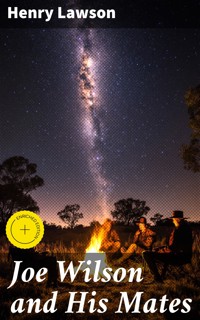
In "Joe Wilson and His Mates," Henry Lawson weaves a rich tapestry of Australian life through the lens of a working-class protagonist. The collection of stories explores themes of friendship, struggle, and the harsh realities of rural existence, infused with Lawson's characteristic colloquial language and sharp social commentary. Set against the backdrop of late 19th-century Australia, Lawson's narratives reflect the aspirations and disappointments of ordinary Australians, while his vivid imagery captures the stark contrasts of the landscape and society, showcasing a blend of realism and romanticism that defines Australian literature. Henry Lawson, one of Australia's most celebrated literary figures, emerged during a time when the nation was grappling with its identity and cultural expression. Raised in the Australian bush, Lawson's firsthand experiences and social observations greatly influenced his writing. His commitment to depicting the lives of the working class and his acute sense of justice underscore the themes present in "Joe Wilson and His Mates," making it a poignant reflection of the era's struggles and triumphs. This collection is highly recommended for readers seeking an authentic portrayal of Australian life and literature. Lawson's powerful storytelling and deep empathy for his characters offer timeless insights into courage and camaraderie amidst adversity, making this book a significant contribution to the understanding of both Australian society and literary heritage. In this enriched edition, we have carefully created added value for your reading experience: - A succinct Introduction situates the work's timeless appeal and themes. - The Synopsis outlines the central plot, highlighting key developments without spoiling critical twists. - A detailed Historical Context immerses you in the era's events and influences that shaped the writing. - A thorough Analysis dissects symbols, motifs, and character arcs to unearth underlying meanings. - Reflection questions prompt you to engage personally with the work's messages, connecting them to modern life. - Hand‐picked Memorable Quotes shine a spotlight on moments of literary brilliance. - Interactive footnotes clarify unusual references, historical allusions, and archaic phrases for an effortless, more informed read.
Das E-Book können Sie in Legimi-Apps oder einer beliebigen App lesen, die das folgende Format unterstützen:
Veröffentlichungsjahr: 2019
Ähnliche









Joe Wilson and His Mates
Table of Contents
Introduction
This collection charts how ordinary men and women in the Australian bush confront scarcity, separation, and the tyranny of distance, finding dignity not in dramatic triumphs but in quiet persistence, practical kindness, and the rough, unspoken ties of mateship that make endurance possible, even as those same ties are tested by pride, poverty, and the daily compromises of work and family, so that what begins as a record of hardship becomes a study of character, of how people carry each other through dry seasons—material and emotional—without sentimentality and without surrendering the plain speech and wary humor that keep hope alive.
Joe Wilson and His Mates is a collection of short stories by Henry Lawson, one of the central voices of Australian realism. Set largely in rural New South Wales and similar bush districts in the late nineteenth century, the book portrays selectors, shearers, drovers, and small communities scattered along creeks and tracks. First published in the early twentieth century, around the time of Australian Federation, it gathers pieces written across the 1890s and after into a cohesive portrait of life on the margins of the period’s towns. The result stands at the juncture of reportage and art, shaped by history yet intimate in scope.
At its core, the collection alternates between linked episodes featuring Joe Wilson—a working bushman and family man—and independent sketches of his mates and neighbours. Rather than building a single linear plot, the stories offer scenes, conversations, and turning points that reveal character under pressure. The voice is plainspoken and often wry, with understatement doing the emotional heavy lifting; the pacing is measured, attentive to landscape and labor. Readers encounter campfires, sheds, coaching inns, and weather-beaten homesteads as settings for moral tests and small mercies. The experience is immersive but unhurried, inviting reflection as much as narrative suspense.
Lawson’s craft is marked by economy and restraint: scenes arrive with few adjectives, dialogue carries weight through cadence rather than flourish, and implication often replaces explicit commentary. The landscape is never mere backdrop; dust, heat, night roads, and the creak of harness shape choices and moods. Humor appears in dry asides and sudden reversals, not to sweeten the hardships but to show how people keep their balance. The prose owes something to oral storytelling—anecdotal, episodic, attentive to voice—yet it remains exacting about detail, so that a shed, a creek, or a kitchen table becomes a locus of memory and motive.
Themes of mateship run throughout, but the book also probes the limits of loyalty when money is short, tempers flare, or pride is at stake. Domestic pressures meet public expectations, as work and marriage pull in competing directions. The stories consider what fairness looks like in a place where luck, weather, and distance tilt the scales, and where reputation can be a form of currency. Isolation is countered by improvised forms of community—shared meals, favors, and jokes—while the costs of stoicism are registered in silences that feel heavier than words. Compassion, here, is practical, unsentimental, and hard-earned.
Read today, the collection resonates with concerns that remain familiar: precarious labor and its toll on families, regional inequality, the slow violence of drought and distance, and the question of what bonds hold people together when institutions are thin. It invites reflection on masculinity that makes room for care as well as grit, and on how intimacy can survive economic strain. It also preserves voices and rhythms from a formative period in Australian life, offering insight without nostalgia. For readers beyond Australia, the book opens a window onto rural experience that speaks to broader human patterns of resilience and belonging.
Approached as a whole, the volume offers a measured, quietly affecting journey rather than a single dramatic arc, rewarding patient reading with depth of feeling and flashes of recognition. Its stories are shaped to be complete in themselves yet cumulative in atmosphere, building a world where small decisions carry lasting weight. The mood is often stoic, sometimes tender, and occasionally sharp-edged, but always grounded in an ethic of close observation. To enter these pages is to sit within earshot of lived lives—work-worn, ironic, and alert—and to find, across time and distance, companionship in their plain courage.
Synopsis (Selection)
Joe Wilson and His Mates is a collection of short stories by Henry Lawson that maps everyday life in the Australian bush at the turn of the twentieth century. The volume blends linked narratives about Joe Wilson with stand-alone tales of his contemporaries, creating a composite portrait of selectors, drovers, fossickers, and small-town families. Written in a plain, conversational style, the stories balance humor and hardship, depicting the physical demands of the land and the quiet pressures of money, drought, and distance. Without overt melodrama, Lawson presents a steady sequence of incidents that together suggest the rhythms, risks, and rituals of colonial rural society.
The collection opens with Joe Wilson’s perspective, anchoring readers in Lahey’s Creek, where he and his wife, Mary, try to make a go of a small selection. Joe’s voice is practical and self-aware, attentive to fences, water, and seasons, yet alert to the subtler strains of pride and hope. The early pieces establish tracks, townships, and neighbors, introducing storekeepers, teamsters, and casual hands who drift in and out of the Wilsons’ orbit. Lawson shows how everyday choices—taking a job, extending credit, minding cattle—reverberate through a household, sketching the fragile balance required to keep a modest enterprise afloat.
Joe recounts his courtship in scenes colored by shyness, long rides, and community gatherings where music and conversation carry much unsaid meaning. The social codes of the bush—deference, reserve, and a measure of bravado—guide the sequence, as Joe navigates family expectations and the awkward logistics of time and distance. This thread builds a foundation for later domestic episodes, establishing Mary as a steadying presence and Joe as a narrator who notices more than he outwardly admits. Without detailing outcomes, Lawson shows how affection, reticence, and circumstance shape a union that grounds the book’s first half.
Economic hopes and household compromises drive several pivotal episodes. In a signature story about acquiring a double buggy at Lahey’s Creek, a purchase becomes an emblem of aspiration, comfort, and social standing, as well as a test of means and priorities. Joe’s seasonal work—shearing, carting, odd contracts—intersects with Mary’s frugal management and the tacit expectations of neighbors. Decisions about tools, transport, and small improvements carry outsized consequences. Through mishaps, negotiations, and quiet reconciliations, Lawson traces how a family weighs dignity against debt, convenience against necessity, and how such calculations subtly alter relations within the home and the district.
The Wilson sequence broadens to include nearby households, sharpening Lawson’s focus on women’s endurance and the costs of isolation. Stories attentive to gardens, children, and makeshift comforts reveal how scarcity bends routines and tests patience. Without explicit revelations, Lawson implies the toll of illness, weather, and work that never ends, showing compassion for those who must keep going. Vignettes of neighbors—some cheerful, some threadbare—convey a community where help is offered but not always enough. The tone remains restrained, letting small gestures and silences carry meaning, and positioning domestic detail as a barometer of wider social and environmental pressure.
Midway, the collection widens beyond Joe to his mates: shearers, prospectors, bullock-drivers, and odd-job men whose tales unfold along roads, rivers, and hotel verandas. These yarns mix mischance and resourcefulness, presenting quick portraits of loyalty, rivalry, and improvisation. Lawson’s narrators observe local codes—trust, fairness, and the expectation that a mate will stand by you—while acknowledging the thin line between a windfall and a setback. The settings shift from homesteads to camps and bars, and the stakes range from a day’s pay to a reputation. The sequence reads like a circuit through the bush’s informal networks and shifting alliances.
Comic episodes punctuate the harsher notes, most famously in the tale of the loaded dog and a blasting cartridge brought along on a fishing trip. The story’s escalating mishap showcases Lawson’s timing and the bush taste for tall yarns, while still hinting at how quickly practical jokes can turn perilous. Other lively pieces sketch cheerful chancers, elaborate ruses, and the kind of bad luck that becomes a good story once everyone is safe. These lighter chapters balance the volume’s domestic gravity, underscoring the role of humor as a safety valve in a world where work is hard and outcomes uncertain.
Further stories return to bonds of trust and the risks of misunderstanding—letters misread, promises stretched, and reputations won or lost over a day’s work. Lawson often withholds a final turn, relying on understatement to suggest consequences beyond the frame. Bush law, shaped by necessity, sometimes runs counter to official rules; characters negotiate this gap with ingenuity or stubbornness. Even in conflicts, the language stays spare, the landscapes specific, and the endings quietly conclusive. Together these pieces accumulate into a social map, noting where sympathy reaches, where it fails, and how people carry on when luck and weather shift.
By closing, Joe Wilson and His Mates has traced a movement from intimate domestic beginnings to a wider canvas of community, work, and chance. The book’s central message lies in its steady regard for ordinary stamina: mateship as mutual reliance, family as shared effort, and dignity maintained through small choices. Without grand pronouncements, Lawson’s sequence emphasizes resilience in a demanding environment and the understated ethics that hold people together. The collection’s structure—personal narratives leading into broader yarns—mirrors the way private lives open onto public roads. It leaves a clear, unsentimental impression of bush life, its humor, anxieties, and hard-won satisfactions.
Historical Context
Set largely in the interior of New South Wales in the 1880s and 1890s, Joe Wilson and His Mates inhabits small selectors’ blocks, shearing sheds, and lingering alluvial gold camps. The landscapes are Lahey’s Creek–type localities, fictional yet recognizably near Mudgee and Gulgong, where Lawson grew up among miners and selectors. Transport is by horse, dray, and coach; railheads sit days away. Weather patterns govern work, with drought and sudden floods shaping seasonal rhythms. The book’s world is pre-Federation colonial Australia, where local policemen, storekeepers on credit, and squatters’ stations dominate rural economies, and where itinerant workers—shearers, drovers, and miners—move along rivers and stock routes under harsh conditions.
The Depression of the 1890s struck Australia between 1891 and 1893, following a land boom collapse and culminating in the 1893 banking crisis. In April–May 1893, more than a dozen banks suspended payments, and unemployment surged, especially in Victoria and New South Wales. Credit dried up for smallholders, while swagmen roamed in search of work. Rural debt, foreclosure, and store-book credit became everyday realities. Lawson’s stories repeatedly mirror this scarcity: families juggle installments for buggies or tools; men take seasonal shearing, fencing, or mining to bridge gaps; and humor (as in the chaos of The Loaded Dog) punctures the grimness of a cash-poor, barter-heavy bush economy.
Industrial conflict framed the decade. The Maritime Strike of 1890 spread across colonies, crippling shipping and coal, and the Queensland Shearers’ Strike of 1891 saw camps at Barcaldine, mass marches, and the arrest of 13 leaders for conspiracy. After renewed conflict in 1894, the Amalgamated Shearers’ Union helped form the Australian Workers’ Union (1894), while the Labor Electoral League in New South Wales (1891) sent dozens of Labor members into parliament. The collection’s ethos of mateship, strike-camp camaraderie, and suspicion of pastoral capital echoes these clashes. Shearing tallies, union tickets, and the itinerant life that binds men in common cause underpin the solidarities depicted around sheds and on the track.
The book carries the legacy of the Australian gold rushes, especially the late 1860s–1870s fields in New South Wales. Gulgong’s rush (from 1870) drew tens of thousands, and Lawson, born in 1867 near the Grenfell fields and raised around Eurunderee/Gulgong, absorbed mining camp culture. By the 1890s, many sites were worked over, yet small claims, puddling, and sluicing persisted. Explosives had become common—gelignite, developed in the 1870s, was standard by the 1890s—governed by NSW Mines Regulation Acts of the 1870s–1890s. The Loaded Dog’s anarchic cartridge gag reflects this technical world: rough-and-ready bush engineering, casual risk, and the blend of ingenuity and danger in late-stage alluvial mining.
The Federation Drought (1895–1902) devastated stock and livelihoods across eastern Australia. National sheep numbers fell precipitously—from over 100 million in 1891 to roughly half by 1901—while rivers such as reaches of the Darling diminished to pools and dust storms scoured paddocks. NSW and Queensland stations reported mass stock deaths; selectors watched crops fail and wells dry. Lawson’s rural households navigate this scarcity: anxieties over waterholes, failed seasons, and the precariousness of credit run through domestic scenes and campfire talk. Even comic set pieces hinge on scarce water and fragile stores, underscoring how meteorology, not sentiment, dictates hope, migration, and the thin line between solvency and ruin.
Land policy structured rural life. The Robertson Land Acts (NSW, 1861) opened crown land to small ‘selection before survey,’ igniting long conflict between selectors and squatters. Dummying, fencing wars, ring-barking, and litigation marked the later 19th century, while rabbits (introduced 1859) ravaged pastures from the 1880s, spurring local boards and protection laws. This struggle unfolded on Aboriginal lands—Wiradjuri, Gamilaraay/Kamilaroi, and others—under the NSW Aborigines Protection Board (est. 1883), which enforced segregation and dispossession. Lawson’s selectors, boundary riders, and small storekeepers inhabit that contested geography: hard-won improvements, insecure tenure, and quiet erasures of Indigenous presence haunt the edges of the book’s creeks and paddocks.
The Federation movement crystallized through the 1891 and 1897–98 conventions, referendums (1898–1899), the Commonwealth of Australia Constitution Act (UK, 1900), and proclamation on 1 January 1901 in Sydney’s Centennial Park. Early federal laws, notably the Immigration Restriction Act 1901, instituted the “White Australia” policy; nation-building debates also encompassed labor standards and citizenship. Women’s suffrage advanced rapidly: South Australia (1894), Western Australia (1899), and the Commonwealth Franchise Act 1902 enfranchised most non-Indigenous women. Louisa Lawson—Henry’s mother—founded The Dawn (1888) and campaigned for the vote. The collection’s capable wives and negotiations over household economy resonate with these public arguments about civic equality and national identity.
The book functions as social and political critique by dramatizing the precarious moral economy of the bush. It exposes class divides between squatters’ capital and indebted selectors, the volatility of wage labor in shearing and mining, and the power of store credit to discipline families. Its union-inflected mateship challenges pastoral dominance, while its domestic focus scrutinizes women’s unpaid labor and the costs of respectability goods—a buggy, a dress—amid depression and drought. Law’s remoteness, policing, and petty authority figures are treated with irony, reflecting skepticism toward colonial governance. By foregrounding scarcity, mutual aid, and marginal voices, Lawson indicts an economy that leaves resilience to do the work of justice.




