


0,49 €
Niedrigster Preis in 30 Tagen: 1,99 €
Niedrigster Preis in 30 Tagen: 1,99 €
Mehr erfahren.
- Herausgeber: Booksell-Verlag
- Kategorie: Gesellschafts- und Liebesromane
- Sprache: Englisch
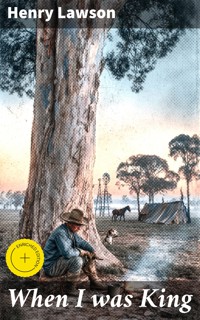
In "When I was King," Henry Lawson presents a poignant collection of short stories that captures the essence of the Australian experience at the turn of the 20th century. Lawson masterfully employs a colloquial yet evocative prose style, often utilizing vivid imagery and rich characterizations to convey themes of identity, belonging, and the harsh realities faced by the working class. Set against a backdrop of Australia's diverse landscapes, these narratives weave together the everyday lives of ordinary Australians, offering insights into societal struggles and the spirit of resilience that defines the nation. Henry Lawson, a pivotal figure in Australian literature, is often heralded as a voice for the marginalized and disenfranchised. Having grown up in rural New South Wales and experienced poverty and hardship firsthand, Lawson draws from his own life to infuse authenticity into his storytelling. His friendships with fellow writers of the time, as well as his deep commitment to social issues, inspired him to reflect on the Australian ethos, making "When I was King" not just a collection of stories but a significant commentary on the spirit of the land. This work is essential reading for anyone seeking to understand the complexities of Australian culture and identity. Lawson's sharp observations and evocative narrative style invite readers to engage with the struggles and triumphs of his characters, making it a timeless exploration of humanity that resonates even today. In this enriched edition, we have carefully created added value for your reading experience: - A succinct Introduction situates the work's timeless appeal and themes. - The Synopsis outlines the central plot, highlighting key developments without spoiling critical twists. - A detailed Historical Context immerses you in the era's events and influences that shaped the writing. - A thorough Analysis dissects symbols, motifs, and character arcs to unearth underlying meanings. - Reflection questions prompt you to engage personally with the work's messages, connecting them to modern life. - Hand‐picked Memorable Quotes shine a spotlight on moments of literary brilliance. - Interactive footnotes clarify unusual references, historical allusions, and archaic phrases for an effortless, more informed read.
Das E-Book können Sie in Legimi-Apps oder einer beliebigen App lesen, die das folgende Format unterstützen:
Veröffentlichungsjahr: 2021
Ähnliche






When I was King
Table of Contents
Introduction
At its core, When I Was King turns on the tension between the stories people tell about themselves and their country and the sober realities of hardship, companionship, and longing that test those stories, tracing how remembered triumphs and present privations rub against each other until grand claims about pride and belonging are pared back to the plain, durable truths of getting by, standing by your mates, and finding brief flashes of grace in a world that rarely pauses to reward them.
Written by Australian poet and storyteller Henry Lawson, this work is a collection of poems first published in 1906 under the title When I Was King and Other Verses. The volume belongs to the tradition of narrative and lyrical bush poetry, with settings that move between the Australian interior and the growing towns and cities of the period. Its publication sits in the early twentieth century, when print culture helped shape a shared sense of national voice. Readers encounter a writer who had already become a central figure in Australian letters, refining themes that had marked his prose and verse throughout the 1890s and early 1900s.
This is not a single narrative but a gathering of voices, scenes, and impressions that together form a mosaic of working lives and wandering paths. Lawson’s poems often carry the cadence of speech, the swing of a song, and the compression of a sketch, offering quick turns from wry humor to reflective melancholy. The reading experience is one of vivid snapshots: road, camp, pub, paddock, and street, observed with a steady eye and plainspoken wit. The mood ranges from defiant to elegiac, but the perspective stays human-scaled, attentive to the small gestures that reveal character, cost, and connection.
Key themes recur with quiet insistence. Mateship appears not as slogan but as a practical ethic, a way people survive rough seasons and lean paydays. The poems weigh myth against lived experience, particularly in depictions of the bush, where endurance matters more than legend. Memory and aging shape the title’s suggestion of once-held power, inviting a reflective stance toward success, status, and the fleeting nature of fortune. City and country, movement and stasis, hope and disillusion all intersect, raising questions about what sustains identity when work is precarious and recognition uneven. The result is unsentimental yet deeply empathetic.
Formally, the collection draws on ballad rhythms and clear, direct diction, favoring musical patterns that carry meaning without ornate display. Lawson’s craft lies in compression and timing: the spare image that lands hard, the closing turn that recasts a scene, the careful balance between humor and restraint. He uses the vernacular judiciously, anchoring the poems in the voices of everyday speakers while maintaining a measured, deliberate control of tone. Imagery tends toward the concrete and tactile, evoking dust, light, distance, and the press of work. The language’s accessibility is a strength, opening space for complexity beneath apparent simplicity.
The collection emerges from a moment when Australian literature was consolidating a recognizably local idiom, and Lawson’s verse was widely circulated through newspapers and magazines before being gathered in book form. That print context favored pieces that could travel easily between page and ear, and the poems meet that demand with clarity and momentum. They capture social realities of turn-of-the-century life without resorting to abstraction, reflecting debates about class, migration, and regional belonging that marked public conversation. Readers familiar with Lawson’s prose will recognize the same realist impulse, now tuned to the pressures and possibilities of concentrated lyric and narrative form.
For contemporary readers, When I Was King offers more than a literary landmark; it opens a conversation about work, care, and community that remains urgent. Its portraits of resilience and fatigue speak to modern precarity, while its skepticism toward grand narratives encourages a critical sympathy for lives lived at the edge of recognition. The poems’ economy, musicality, and observational honesty make them approachable, yet they reward slow reading with layered insight. In this balance of candor and craft, Lawson invites us to listen closely to voices that define a place from the ground up, and to consider what endures when prosperity does not.
Synopsis (Selection)
Henry Lawson's When I Was King and Other Verses is a collection of poems that gathers his mature reflections on Australian life at the turn of the twentieth century. Written in plain, musical language, the book balances personal memory with social observation. Lawson moves between bush and town, work and idleness, mateship and solitude, always attentive to the everyday details that shape lives. The title signals a looking back from modest circumstances to moments that felt larger and freer. Without polemic, the poems sketch character types, landscapes, and situations that defined an era while keeping the focus on human endurance and feeling.
The opening poems establish a reflective voice that measures present hardship against remembered promise. The speaker recalls seasons of confidence, energy, and camaraderie that once made him feel, in his own small way, like a king. That image recurs as a modest emblem of youth and freedom rather than grandeur. Lawson uses direct address and steady rhythms to set a conversational pace, inviting readers into familiar yards, sheds, and roads. Memory drives the movement, but recollection is tempered by candor about loss and change. This frame quietly introduces themes of resilience, humor under pressure, and loyalty that continue throughout the book.
From this vantage, the collection turns to the bush, portraying drovers, shearers, boundary riders, swagmen, and the makeshift camps that sustain them. Harsh distances, drought, and sudden weather shifts form an ever-present background, rendered with economy and care. The land shapes temperament: laconic speech, practical help, and acceptance of luck’s turns. Scenes of campfire yarns, river crossings, and lonely stations show a code of mateship built on shared risk rather than sentiment. Lawson emphasizes the ordinary heroism of finishing a job, dividing rations, or finding water, suggesting how endurance is learned in small acts rather than dramatic gestures.
Movement is a constant. Poems trace the routes of workers and wanderers along tracks, through river towns, and across rail sidings where news and work are exchanged. Lawson records the rituals of departure and return, the letters promised, the mates met by chance in distant places. He notes the practical economies of the road, from billy and blanket to the informal networks that make travel possible. Companionship and loneliness alternate, and the tone shifts accordingly, yet the emphasis remains on routines that keep people going. By following these circuits, the book maps a mobile culture shaped by necessity.
As the settings move inward to streets and wharves, the poems observe city life with the same clear eye. Boarding houses, factories, and public bars appear as shared spaces where fortunes rise or stall. Lawson depicts unemployment, hunger, and petty bureaucracy without ornament, allowing incidents and voices to convey the strain. His sympathy extends to strugglers on the margins, including casual laborers and families stretched thin. The criticism is implicit, grounded in scenes rather than argument, and balanced by flashes of wit. These urban sketches complement the bush pieces, showing hardship and fellowship under different conditions.
Interwoven are more intimate pieces that touch on love, family, estrangement, and the private costs of public bravado. Lawson notes small domestic rituals, the comforts of a tidy room, and the tension of partings that work demands. Regret and tenderness sit side by side, often conveyed through restraint rather than declaration. The poems acknowledge habits that damage as well as habits that sustain, and they weigh the effort of mending against the pride that delays it. By narrowing the focus to households and close friendships, the collection shows how the larger themes of loyalty and loss play out at home.
Across the middle of the book, reflections on a young nation surface through portraits of public events, rumours, and newspapers carried from town to town. Lawson registers pride in shared work and suspicion of empty ceremony, measuring patriotism by fairness rather than display. The poems frame civic ideals in practical terms: decent wages, room to breathe, a chance for the unlucky to start again. Regional detail anchors these ideas, linking local stories to wider change. Without claiming to speak for everyone, the voice gathers a common mood of wary hope as Australia settles into a new century.
Lawson occasionally turns the lens on his own craft, addressing readers, editors, and fellow writers in pieces that weigh sincerity against fashion. He favors strong rhyme and refrain, ballad measures that carry stories aloud, yet he trims ornament for clarity. Irony and satire slip in where they serve the subject, but the tone remains conversational. By showing how a song is shaped from incident and speech, the collection explains itself in practice as much as in statement. These metapoetic moments establish continuity between the author, his characters, and his audience gathered in print and memory.
In its closing stretch, the book returns to the perspective of a seasoned observer who accepts change without surrendering sympathy. The refrain implied by the title becomes a way to hold experience lightly, honoring what was possible while working within what is. Final poems gather motifs of travel, work, friendship, and time, and they settle on a measured confidence in ordinary decency. The collection’s central message is steady: endurance has value, and dignity belongs to those who share what they can. Read in sequence, the poems chart a passage from youthful certainty to reflective, resilient adulthood.
Historical Context
Henry Lawson’s When I Was King and Other Verses (1906) emerges from the closing decades of the nineteenth century and the first years after Australian Federation. Its settings range across the sheep country and small selection blocks of inland New South Wales and Queensland, to the streets and courts of inner Sydney. The period is marked by rapid urbanization, the contraction of rural fortunes, and the consolidation of a distinctly Australian working-class politics. Lawson’s speakers move through railway towns, shearing sheds, strike camps, and public houses, carrying memories of the colonial era into a new Commonwealth. Published by Angus and Robertson in Sydney, the collection distills this moment’s anxieties, solidarities, and rough humor.
Economic crisis and environmental hardship framed the world of these poems. The 1890s depression, triggered by collapsing land speculation and the 1893 banking crash, brought bank suspensions, business failures, and mass unemployment across Melbourne and Sydney. Simultaneously, the Federation Drought (1895–1903) devastated inland Australia; national sheep numbers fell from roughly 106 million in 1891 to about 54 million by 1903, compounded by the rabbit plague. Western Australia’s Rabbit-Proof Fence was built between 1901 and 1907 as a desperate measure. The book’s portraits of swagmen, shearers, and small settlers, and its tone of stoic mateship under pressure, mirror these lean years of tramping for work, failed seasons, and precarious livelihoods.
Industrial conflict in the 1890s decisively shaped Lawson’s outlook and the world reflected in When I Was King. The Maritime Strike of 1890 began in August when shipowners moved against union rules; wharf laborers and seamen in Sydney and Melbourne struck in solidarity with shearers and miners. The defeat, after police and strikebreakers kept the ports operating, radicalized a generation. In Queensland, the 1891 Shearers’ Strike centered on Barcaldine, where the so‑called Tree of Knowledge became a symbol of organizing. Premier Samuel Griffith deployed police and mounted troops; leaders were arrested and gaoled at Rockhampton. Renewed conflict in the 1894 shearers’ strike spread into New South Wales; outback towns witnessed armed escorts and burned woolsheds. These struggles spurred institutional consolidation: shearers’ unions merged into the Australian Workers’ Union in 1894, while labor electoral leagues delivered 35 Labor members to the New South Wales Assembly in 1891, and Queensland Labor formed its first parliamentary party. Nationally, the trajectory culminated in Chris Watson’s short‑lived federal Labor government in 1904, the first of its kind in the world. Lawson directly engaged this milieu: in 1891 he published the incendiary poem Freedom on the Wallaby in the Brisbane Worker, which was denounced in the Queensland Parliament. The ethos of strike camps—frugal collective living, suspicion of scabs, and an insistence on a fair go—echoes through the collection’s depictions of shearers, carters, and drifters. The poems’ wary treatment of politicians and employers, their celebration of union camaraderie, and their sympathy for men blacklisted after disputes all arise from this decade of bruising confrontations and organizing.
The transition from six colonies to the Commonwealth of Australia in 1901 provides crucial political background. Constitutional conventions in 1891 and 1897–1898 drafted the federal compact; referendums between 1898 and 1900 ratified it, and the Commonwealth was proclaimed on 1 January 1901 at Centennial Park, Sydney, with Edmund Barton as the first Prime Minister. Early federal statutes defined national priorities: the Immigration Restriction Act 1901 implemented the dictation test; the Pacific Island Labourers Act 1901 mandated the repatriation of Kanaka workers by 1906–1908; and the Conciliation and Arbitration Act 1904 created a federal court to settle industrial disputes. Lawson’s poems register the tension between republican-leaning nationalism and inherited imperial structures, praising local solidarity while measuring Federation’s promises against workers’ realities.
The Second Boer War (1899–1902) tied Australia to imperial conflict just as Federation approached. About 16,000 Australians served in contingents raised by the colonies and, after 1901, the Commonwealth; over 500 died, many from disease. Actions such as the defence of Elands River in August 1900—where Australian and Rhodesian troops held out under siege—became touchstones of colonial martial pride. Yet reports of scorched-earth tactics and concentration camps in South Africa sparked debate. In Lawson’s milieu, patriotic fervor coexisted with skepticism toward imperial adventures, and the collection’s occasional allusions to uniforms, departures, or disillusioned returnees mirror the ambivalence of working men whose loyalties were local and whose gains from war were uncertain.




