



Erhalten Sie Zugang zu diesem und mehr als 300000 Büchern ab EUR 5,99 monatlich.
- Herausgeber: CLXBX
- Kategorie: Gesellschafts- und Liebesromane
- Sprache: Englisch
A daring and philosophical exploration of love, despair, faith, and female independence, Lélia stands as one of George Sand's most provocative and introspective works. First published in 1833, this deeply emotional and intellectually charged novel challenges the moral, spiritual, and social conventions of its time, offering a portrait of a woman far ahead of her era. At the center of the story is Lélia, a brilliant, enigmatic, and profoundly disillusioned woman who struggles with the limitations imposed upon her by society, religion, and romantic expectation. Gifted with exceptional intelligence and acute self-awareness, she finds herself torn between spiritual longing and earthly desire, between the ideal of transcendent love and the harsh reality of human imperfection. Lélia is admired and pursued by Sténio, a passionate young poet who sees in her the embodiment of sublime beauty and inspiration. Yet she cannot fully surrender to his devotion. Haunted by doubt and philosophical questioning, she resists conventional love, fearing both emotional bondage and the loss of her independence. Her inner conflict forms the emotional core of the novel—an intense examination of longing, skepticism, and the search for meaning. Through lyrical prose and dramatic dialogue, George Sand weaves a narrative rich in romanticism and existential inquiry. The novel explores themes of spiritual crisis, the constraints of gender roles, the conflict between body and soul, and the isolation that can accompany intellectual superiority. Lélia's defiance of societal norms—especially those governing women's desires and autonomy—made the work controversial upon its publication, yet it remains a powerful statement of early feminist thought. More than a love story, Lélia is a meditation on human aspiration and disillusionment. Sand presents her heroine not as a simple romantic figure, but as a complex thinker wrestling with faith, morality, and the meaning of happiness. The novel's atmosphere is intense and poetic, filled with philosophical reflection and emotional depth. Bold, introspective, and revolutionary for its time, Lélia continues to resonate as a profound exploration of freedom, identity, and the restless search for truth. George Sand's masterpiece invites readers into the mind of a woman determined to define herself in a world determined to define her.
Sie lesen das E-Book in den Legimi-Apps auf:
Seitenzahl: 782
Veröffentlichungsjahr: 2026
Das E-Book (TTS) können Sie hören im Abo „Legimi Premium” in Legimi-Apps auf:
Ähnliche





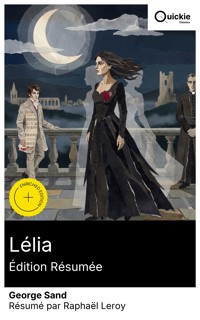













Lélia
George Sand
Copyright © 2026 by George Sand
All rights reserved.
No part of this book may be reproduced in any form or by any electronic or mechanical means, including information storage and retrieval systems, without written permission from the author, except for the use of brief quotations in a book review.
Contents
Preface
Part I
Chapter 1
Chapter 2
Chapter 3
Chapter 4
Chapter 5
Chapter 6
Chapter 7
Chapter 8
Chapter 9
Chapter 10
Chapter 11
Chapter 12
Chapter 13
Chapter 14
Chapter 15
Chapter 16
Chapter 17
Chapter 18
Chapter 19
Chapter 20
Chapter 21
Chapter 22
Part II
Chapter 23
Chapter 24
Chapter 25
Chapter 26
Chapter 27
Chapter 28
Chapter 29
Chapter 30
Chapter 31
Chapter 32
Chapter 33
Chapter 34
Part III
Chapter 35
Chapter 36
Chapter 37
Chapter 38
Chapter 39
Chapter 40
Part IV
Chapter 41
Chapter 42
Chapter 43
Chapter 44
Chapter 45
Part V
Chapter 46
Chapter 47
Chapter 48
Chapter 49
Chapter 50
Chapter 51
Chapter 52
Chapter 53
Part VI
Chapter 54
Chapter 55
Chapter 56
Chapter 57
Chapter 58
Chapter 59
Chapter 60
Chapter 61
Chapter 62
Chapter 63
Chapter 64
Chapter 65
Chapter 66
Chapter 67
Preface
It is rare for a work of art to arouse animosity without also inspiring some sympathy; and if, long after these various expressions of blame and goodwill, the author, matured by reflection and by the years, wishes to revise his work, he risks displeasing both those who condemned it and those who defended it: the latter, because he does not go as far in his corrections as their system would require; the former, because he sometimes removes what they had preferred. Between these two pitfalls, the author must act according to his own conscience, without seeking to appease his adversaries or to retain his defenders.
Although some of Lélia 's criticisms took on a singularly declamatory and bitter tone, I accepted them all as sincere and speaking from the most virtuous hearts. From this perspective, I had reason to rejoice, and to think that I had misjudged the men of my time by viewing them through a painful skepticism. Such indignation undoubtedly attested to the highest morality combined with the most religious philanthropy on the part of journalists. I confess, however, to my shame, that if I have been cured of the disease of doubt, it is not entirely to this consideration that I owe it.
I hope I will not be accused of wanting to disarm the austerity of such fierce criticism; nor will I be accused of wanting to enter into discussion with the last champions of the Catholic faith; such undertakings are beyond my capabilities. Lélia was and remains in my mind a poetic essay, a whimsical novel where the characters are neither completely real, as those exclusively interested in the analysis of manners have claimed, nor completely allegorical, as some synthetic minds have judged, but where each represents a fraction of the philosophical intelligence of the 19th century : Pulchérie, the Epicureanism heir to the sophisms of the previous century; Sténio, the enthusiasm and weakness of a time when intelligence soars very high, carried away by the imagination, and falls very low, crushed by a reality devoid of poetry and grandeur; Magnus, the remnant of a corrupt or stupefied clergy; and so on with the others. As for Lélia, I must confess that this figure appeared to me through a more striking fiction than those surrounding her. I remember taking pleasure in making her the personification even more than the advocate of the spiritualism of our times; a spiritualism which is no longer in man in the state of virtue, since he has ceased to believe in the dogma that prescribed it, but which remains and will forever remain, in enlightened nations, in the state of need and sublime aspiration, since it is the very essence of elevated intellects.
This prediction concerning the proud and suffering character of Lélia led me to a serious error from an artistic point of view: I gave her a completely impossible existence, which, because of the semi-reality of the other characters, seems shockingly real, striving to be abstract and symbolic. This flaw is not the only one in the work that struck me when, after having forgotten it for years, I reread it with a fresh perspective. Trenmor seemed to me vaguely conceived and, consequently, flawed in its execution. The denouement, as well as numerous stylistic details, much digression and declamation, shocked me as being contrary to good taste. I felt the need to correct these essentially defective parts according to my artistic ideas. This is a right that my readers, whether kind or hostile, could not deny me.
But if, as an artist, I have exercised my right over the form of my work, it does not mean that, as a man, I have been able to arrogate to myself the right to alter the substance of the ideas expressed in this book, even though my ideas have undergone great revolutions since I wrote it. This raises a more serious question, one without which I would not have taken the childish trouble of writing a preface to this second edition. After considering this matter, serious minds will forgive me for having spoken to them about myself for a moment.
In our time, the elements of a new social and religious unity are scattered amidst a great conflict of efforts and aspirations, the purpose of which is beginning to be understood and the bond to be forged by only a few superior minds; and even these have not yet attained the hope that now sustains them. Their faith has passed through a thousand trials; it has escaped a thousand dangers; it has overcome a thousand sufferings; it has grappled with all the elements of dissolution in the midst of which it was born; and even today, fought against and repressed by the selfishness, corruption, and greed of the times, it undergoes a kind of martyrdom and slowly emerges from the ruins that seek to bury it. If the great minds and souls of this century have had to struggle against such trials, how much more must those of humbler condition and common stock have doubted and trembled as they passed through this age of atheism and despair!
When we heard the great voices of our skeptically religious, or religiously skeptical, poets—Goethe, Chateaubriand, Byron, Mickiewicz—rising above this hell of lamentations and curses, powerful and sublime expressions of the dread, boredom, and pain afflicting this generation, did we not rightly claim the right to also utter our lament, and to cry out like the disciples of Jesus: “Lord, Lord, we are perishing!” How many of us have taken up the pen to express the deep wounds afflicting our souls and to reproach contemporary humanity for not having built us an ark where we could take refuge in the storm? Above us, did we not already have examples among the poets who seemed more closely connected to the bold movement of the age by the energetic color of their genius? Did not Hugo write on the frontispiece of his finest novel, ἁναγχἡ? Did not Dumas depict in Antony a beautiful and grand figure of despair? Did not Joseph Delorme exhale a song of desolation? Did not Barbier cast a somber gaze upon this world, which appeared to him only through the terrors of Dante's Inferno? And we, inexperienced artists, who came in their footsteps, were we not nourished by this bitter manna they scattered upon the desert of humankind ? Were not our first attempts plaintive songs? Did we not try to tune our timid lyre to the tone of their brilliant lyre? How many of us, I repeat, answered them from afar with a chorus of lamentations? We were so many that we could not be counted. And many of us, who clung to the life of the world, many others who found composure or consolation in feigned or sincere convictions, now look back and are horrified to see that so few years, perhaps so few months, separate us from our age of doubt, our time of affliction! In the poetic words of one of us, who at least remained faithful to his religious sorrow, we have all rounded the Cape of Storms around which the tempest held us wandering and half-broken for so long; we have all entered the Pacific Ocean, in the resignation of middle age, some sailing with full sails, filled with hope and strength, most panting and broken from having suffered too much. Well! Whatever lighthouse guided us, whatever port offered us refuge, will we have the pride or the cowardice, the bad faith to deny our weariness, our setbacks, and the imminence of our shipwrecks? Will a childish self-love, a dream of false grandeur, make us desire to erase the memory of the terrors felt and the cries uttered in the storm? Can we,Should we attempt it? As for me, I think not. The more we claim to be sincerely and loyally converted to new doctrines, the more we must confess the truth and allow others the right to judge our past doubts and errors. Only then will they be able to know and appreciate our present beliefs; for, however small our role, each of us holds a place in the history of the age. Posterity will record only the great names, but the clamor we have raised will not fall back into the silence of eternal night; it will have awakened echoes; it will have stirred controversies; it will have stirred intolerant minds to stifle its growth, and generous intellects to soften its bitterness; in short, it will have produced all the good and all the evil that it was in its providential mission to produce; for doubt and despair are great afflictions that the human race must endure to achieve its religious progress. Doubt is a sacred, inalienable right of the human conscience, which examines in order to reject or adopt its beliefs. Despair is its fatal crisis, its dreadful paroxysm. But, my God! This despair is a great thing! It is the soul's most ardent cry to you, the most irrefutable testimony of your existence within us and of your love for us, since we cannot lose the certainty of this existence and the feeling of this love without immediately falling into a dreadful night, full of terrors and mortal anguish. I do not hesitate to believe that the Divine has paternal solicitude for those who, far from denying it in the intoxication of vice, mourn it in the horror of solitude; and if it remains forever veiled from the eyes of those who discuss it with cold impudence, it is very close to revealing itself to those who seek it in tears. In the bizarre and magnificent poem of the Dziady, Mickiewicz's Konrad is supported by angels as he rolls in the dust cursing the God who abandons him, and Byron's Manfred refuses to the spirit of evil that soul which the demon has tortured for so long, but which escapes him at the hour of death.
Let us therefore acknowledge that we have no right to take up and transform, through cowardly patching, the social or religious heresies we have uttered. If recognizing a past error and confessing a new faith is a duty, denying that error or concealing it in order to clumsily reattach the dislocated parts of one's life is a kind of apostasy no less culpable, and more worthy of contempt than any other. Truth cannot change its temple and altar according to the whim or self-interest of men; if men err, let them confess their error; but let them not insult the naked goddess by clothing her in the patched cloak they have dragged along the way.
Deeply committed to the inviolability of the past, I have therefore exercised my right to revise my work only in terms of form. I have exercised this right extensively, and Lélia remains nonetheless a work of doubt, a lament of skepticism. Some people have told me that this book has harmed them; I believe that there are many more to whom this book has been able to do some good; for, after reading it, any mind sympathetic to the sorrows it expresses must have felt the need to seek its path to truth with greater ardor and courage; and as for those minds which, either through the power of conviction or through contempt for all conviction, have never suffered anything similar, this reading could do them neither good nor harm. It is possible that some people, steeped in indifference to all serious thought, may have felt, upon reading works of this kind, a sadness and a dread previously unknown to them. After so many works of the skeptical genius I mentioned earlier, Lélia can only play a very small part in the effect of these manifestations of doubt. Moreover, the effect is beneficial, and, provided a soul emerges from inertia, which is tantamount to nothingness, it matters little whether it tends to rise through sadness or joy. The question for us in this life, and in this century particularly, is not to lull ourselves to sleep in vain amusements and close our hearts to the great misfortune of doubt; we have something better to do: it is to combat this misfortune and emerge from it, not only to restore human dignity within ourselves, but also to open the way for the generation that follows us. Let us therefore accept as a great lesson the sublime pages where René, Werther, Obermann, Konrad, and Manfred exhale their profound bitterness; they were written with the blood of their hearts. They were soaked with their burning tears; they belong more to the philosophical history of humankind than to its poetic annals. Let us not be ashamed of having wept with these great men. Posterity, enriched by a new faith, will count them among its first martyrs.
And we, who have dared to invoke their names and walk in the dust of their footsteps, let us respect in our works the pale reflection that their shadow cast there. Let us try to progress as artists, and, in this sense, let us humbly correct our faults; let us above all try to progress as members of the human family, but without foolish vanity and without hypocritical wisdom: let us remember well that we have wandered in darkness, and that we have received there more than one wound whose scar is indelible.
PartOne
Chapter1
Who are you? And why does your love cause so much harm? There must be some dreadful mystery within you, unknown to humankind. Surely, you are not a being formed from the same clay and animated by the same life as we are! You are an angel or a demon, but you are not a human creature. Why hide your nature and your origin from us? Why dwell among us who cannot satisfy you or understand you? If you come from God, speak, and we will worship you. If you come from hell… You, come from hell! You, so beautiful and so pure! Do the spirits of evil possess this divine gaze, this harmonious voice, and these words that uplift the soul and carry it to the throne of God?
And yet, Lélia, there is something infernal about you. Your bitter smile belies the celestial promises in your eyes. Some of your words are as desolate as atheism: there are times when you make one doubt God and yourself. Why, why, Lélia, are you like this? What have you done with your faith, what have you done with your soul, when you deny love? Oh heavens! You, uttering such blasphemy! But who are you if you think what you sometimes say?
Chapter2
Lélia, I'm afraid of you. The more I see you, the less I understand you. You toss me about on a sea of worries and doubts. You seem to play with my anxieties. You lift me to the heavens, and then trample me underfoot. You carry me away with you into radiant clouds, and then plunge me into dark chaos! My weak reason succumbs to such trials. Spare me, Lélia!
Yesterday, when we were walking on the mountain, you were so tall, so sublime, that I wished to kneel before you and kiss the fragrant trace of your steps. When Christ was transfigured in a golden cloud and seemed to swim before his apostles in a fiery fluid, they prostrated themselves and said, “Lord, you are indeed the Son of God!” And then, when the cloud had vanished and the prophet descended the mountain with his companions, they no doubt wondered anxiously, “Is this man who walks with us, who speaks like us, who will dine with us, the same one we just saw enveloped in veils of fire and radiant with the spirit of the Lord?” So I do with you, Lelia! At every moment you transfigure yourself before me, and then you strip yourself of divinity to become my equal again, and then I wonder with dread if you are not some celestial power, some new prophet, the Word incarnate once again in human form, and if you act thus to test our faith and to know among us the true faithful!
But Christ! That great thought personified, that sublime embodiment of the immaterial soul, he was always above the human nature he had assumed. Even when he became man again, he could not conceal himself so well that he was always first among men. You, Lélia, what frightens me is that when you descend from your glories, you are no longer even on our level; you fall below us, and you seem to seek to dominate us only through the perversity of your heart. For example, what is this deep, burning, unquenchable hatred you have for our race? Can one love God as you do, and so cruelly detest his works? How can one reconcile this mixture of sublime faith and hardened impiety, these yearnings for heaven, and this pact with hell? Once again, where do you come from, Lélia? What mission of salvation or vengeance are you carrying out on earth?
Yesterday, as the sun sank behind the glacier, shrouded in bluish-pink vapors, while the warm air of a beautiful winter evening rustled through your hair, and the church bell cast its melancholy notes to the echoes of the valley; then, Lélia, I tell you, you truly were a child of heaven. The soft light of sunset faded upon you, enveloping you in a magical glow. Your eyes, raised toward the blue vault, where a few timid stars barely peeked through, shone with a sacred fire. I, a poet of woods and valleys, listened to the mysterious murmur of the waters, watched the gentle undulations of the pines, barely stirring, breathed in the sweet fragrance of the wild violets which, at the first warm day, at the first ray of the pale sun that beckons them, open their azure calyxes beneath the withered moss. But you, you thought of nothing of all that; neither the flowers, nor the forests, nor the stream, caught your eye. No object on earth stirred your senses; you were entirely in heaven. And when I showed you the enchanting spectacle that stretched out beneath our feet, you said to me, raising your hand toward the ethereal vault: “Look at that!” Oh, Lélia! You longed for your homeland, didn’t you? You asked God why he had forgotten you among us for so long, why he did not give you back your white wings so you could ascend to him?
But alas! When the cold that began to blow across the heath forced us to seek shelter in the town; when, drawn by the ringing of that bell, I begged you to enter the church with me and attend evening prayer, why, Lélia, did you not leave me? Why, you who are surely capable of far more difficult things, did you not summon a cloud from above to veil your face from me? Alas! Why did I see you like that, standing there, frowning, with a haughty air, a cold heart? Why did you not kneel on the flagstones, less cold than you? Why did you not fold your hands over that woman's breast, which the presence of God should have filled with tenderness or terror? Why this superb calm and this apparent disdain for the rites of our worship? Do you not worship the true God, Lélia? Do you come from the scorching lands where sacrifices are made to Brahma, or from the banks of those great nameless rivers where, it is said, man implores the spirit of evil? For we know neither your family nor the climes that saw your birth. No one knows, and the mystery that surrounds you makes us superstitious despite ourselves!
You insensitive! You impious! Oh! It cannot be! But tell me, in heaven's name, what becomes, in these terrible hours, of this soul, this great soul, where poetry flows, where enthusiasm overflows, and whose fire seizes us and carries us beyond all we had ever felt? What were you thinking yesterday, what had you done with yourself, when you stood there, mute and frozen in the temple, standing like the Pharisee, measuring God without trembling, deaf to the holy hymns, unmoved by the incense, the falling petals, the sighs of the organ, by all the poetry of the holy place? And how beautiful it was, though, that church, imbued with moist perfumes, throbbing with sacred harmonies! How the flame of the silver lamps exhaled, white and dull, in the opalescent clouds of burning benzoin, while the vermeil censers sent graceful spirals of fragrant smoke to the vault! How the golden blades of the tabernacle rose, light and radiant, beneath the reflection of the candles! And when the priest, that tall and handsome Irish priest, whose hair is so black, whose stature is so majestic, whose gaze so austere, and whose voice so sonorous, slowly descended the steps of the altar, trailing his long velvet cloak over the carpets; when he raised his great voice, sad and penetrating like the winds that blow in his homeland; when he said to us, presenting the gleaming monstrance, that word so powerful on his lips: Adoremus! Then, Lélia, I felt myself filled with a holy fear, and, throwing myself to my knees on the marble, I beat my breast and lowered my eyes.
But your thought is so intimately linked in my soul with all great thoughts, that I turned almost immediately to you to share with you this delightful emotion, or perhaps, may God now forgive me, to address to you half of these humble adorations.
But you stood there! You did not bend your knee; you did not lower your eyes! Your proud gaze wandered coldly and scrutinizingly over the priest, over the host, over the prostrate crowd: none of it spoke to you. Alone, all alone among us, you refused to pray to the Lord. Are you then a power above him?
Well, Lélia, may God forgive me again! For a moment I believed it, and I almost withdrew my homage to offer it to you. I let myself be dazzled and captivated by the power within you. Alas! I must confess, I never saw you so beautiful. Pale as one of the white marble statues that stand guard by tombs, you had nothing earthly about you. Your eyes shone with a somber fire; and your broad brow, from which you had parted your black hair, rose, sublime in pride and genius, above the crowd, above the priest, above God himself. This depth of impiety was terrifying, and, seeing you thus survey with your gaze the space between us and heaven, everything there felt small. Did Milton see you when he made the thunderstruck brow of his rebellious angel so noble and so beautiful?
Must I tell you all my terrors? It seemed to me that the moment the priest, standing and raising the symbol of faith above our bowed heads, saw you before him, standing like him, alone with him above all others; yes, it seemed to me that then his deep, stern gaze, meeting your impassive gaze, lowered involuntarily. It seemed to me that this priest paled, that his trembling hand could no longer support the chalice, and that his voice failed him. Is this a dream of my troubled imagination, or did indignation truly overwhelm the minister of the Most High when he...Did he see you resist the order emanating from his mouth? Or, tormented like me by a strange hallucination, did he believe he saw in you something supernatural, a power evoked from the depths of the abyss, or a revelation sent from heaven?
Chapter3
What does that matter to you, young poet? Why do you want to know who I am and where I come from?... I was born like you in the valley of tears, and all the wretches who crawl on the earth are my brothers. Is it then so vast, this earth that a thought encompasses, and that a swallow circumnavigates in the space of a few days? What can be strange and mysterious in a human existence? What great influence do you suppose a ray of sunlight, more or less vertical, to have on our heads? Come! This whole world is very far from it; it is very cold, very pale, and very narrow. Ask the wind how many hours it takes to turn it from one pole to the other.
Had I been born at the other end, there would still be little difference between you and me. Both condemned to suffer, both weak, incomplete, wounded by all our pleasures, always restless, yearning for a nameless happiness, always outside of ourselves, this is our common destiny, this is what makes us brothers and companions on the earth of exile and servitude.
You ask if I am a being of a different nature than you! Do you believe I do not suffer? I have seen men more unhappy than myself by virtue of their circumstances, who were far less so by virtue of their character. Not all men have the capacity to suffer to the same degree. In the eyes of the great architect of our miseries, these variations in constitution are surely of little consequence. For us, whose vision is so limited, we spend half our lives examining one another and noting the nuances that misfortune undergoes as it reveals itself to us. What is all this before God? What the difference between the blades of grass in the meadow is before us.
That's why I don't pray to God. What would I ask of him? That he change my destiny? He would laugh at me. That he give me the strength to fight my pain? He has placed it within me; it is up to me to use it.
You ask if I worship the spirit of evil! The spirit of evil and the spirit of good are one and the same spirit, it is God; it is the unknown and mysterious will that is above our wills. Good and evil are distinctions we have created. God knows them no more than happiness and misfortune. So do not ask heaven or hell for the secret of my destiny. It is you I could reproach for constantly throwing me above and below myself. Poet, do not seek these profound mysteries in me; my soul is sister to yours, you grieve it, you frighten it by probing it thus. Take it for what it is, for a soul that suffers and waits. If you question it so severely, it will withdraw into itself and no longer dare to open itself to you.
Chapter4
The harshness of my concern for you, I expressed it too frankly, Lélia; I have wounded the sublime modesty of your soul. For indeed, Lélia, I am truly unhappy! You believe I look upon you with the curious eye of a philosopher, and you are mistaken. If I did not feel that I belong to you, that my existence is now inextricably linked to yours, if, in short, I did not love you passionately, I would not have the audacity to question you.
Thus, these doubts, these anxieties that I dared to express to you, are shared by all who have seen you. They wonder with astonishment whether you are a cursed or privileged existence, whether to love you or fear you, welcome you or reject you; even the coarsest commoner loses his indifference to concern himself with you. He does not understand the expression of your features nor the sound of your voice, and, hearing the absurd tales about you, one sees that this people is equally ready to kneel before you or to conjure you up as a plague. Higher minds observe you attentively, some out of curiosity, others out of sympathy; but none makes the solution to the problem a matter of life and death for them as I do; I alone have the right to be audacious and ask you who you are. For I feel it intimately, and this sensation is linked to that of my very existence: I am now part of you, you have taken possession of me, perhaps without your knowledge, but at last I am enslaved, I no longer belong to myself, my soul can no longer live within itself. God and poetry are no longer enough for it; God and poetry are you now, and without you there is no more poetry, there is no more God, there is nothing.
Tell me then, Lelia, since you wish me to take you for a woman and speak to you as my equal, tell me if you have the power to love, if your soul is of fire or ice, if in giving myself to you, as I have done, I have agreed to my ruin or my salvation; for I do not know, and I do not look without dread upon the unknown path I am about to follow you. This future is shrouded in clouds, sometimes bright like those that rise to the horizon at sunrise, sometimes dark like those that precede a storm and conceal the lightning.
Did I begin life with you, or did I leave it to follow you into death? These years of calm and innocence that lie behind me, will you wither them or rejuvenate them? Have I known happiness and will I lose it, or, not knowing what it is, will I taste it? These years were so beautiful, so fresh, so sweet! But they were also so calm, so obscure, so barren! What have I done but dream and wait, and hope, since I came into this world? Will I finally produce anything? Will you make something great or abject of me? Will I emerge from this nothingness, from this repose that is beginning to weigh me down? Will I emerge to rise, or to fall?
This is what I anxiously ask myself every day, and you give me no answer, Lélia, and you seem unaware that there is an existence in question before you, a destiny inherent in your own, and for which you must now answer to God! Careless and distracted, you have grasped the end of my chain, and every moment you forget it, you let it fall!
Every moment, terrified of seeing myself alone and abandoned, I must call to you and force you to descend from these unknown realms where you venture forth without me. Cruel Lélia! How happy you are to have such a free soul and to be able to dream alone, to love alone, to live alone! I can no longer do that; I love you. I love only you. All those graceful figures of beauty, all those angels dressed as women who passed through my dreams, showering me with kisses and flowers, they are gone. They no longer come, neither in waking nor in sleeping. It is you now, always you, whom I see pale, calm, and silent, at my side or in my sky.
I am truly wretched! My situation is not ordinary; it is not merely a question for me of whether I am worthy of your love. I am now at the point of not knowing whether you are capable of loving a man, and—I only write this word with great difficulty, so horrible is it—I believe you are not!
Oh, Lélia! Will you answer this time? Now I shudder at having questioned you. Tomorrow I could still live with doubts and fantasies. Tomorrow perhaps I will have nothing left to fear or hope for.
Chapter5
Child that you are! You have barely been born, and already you are in a hurry to live! For it must be said to you, you have not yet lived, Sténio.
Why are you in such a hurry? Are you afraid you won't reach that cursed goal where we all fail? You'll come here and be shattered like the others. So take your time, play truant, and wait as long as you can to cross the threshold of the school where life is learned.
Happy child, who asks where happiness is, how it is made, if he has already tasted it, if he is destined to taste it one day! O profound and precious ignorance! I will not answer you, Sténio.
Fear not, I will not be so as to tarnish you as to tell you a single one of the things you wish to know. Whether I love, whether I am capable of love, whether I will bring you happiness, whether I am good or wicked, whether you will be made great by my love, or crushed by my indifference: all this, you see, is a rash knowledge that God withholds at your age and that He forbids me to give you. Wait!
I bless you, young poet, sleep in peace. Tomorrow will come as beautiful as the other days of your youth, adorned with the greatest blessing of Providence, the veil that hides the future.
Chapter6
That's how you always answer! Well! Your silence makes me sense such pain that I am reduced to thanking you for your silence. Yet this state of ignorance that you think so sweet is dreadful, Lélia; you treat it with disdainful lightness because you don't know it. Your childhood may have passed like mine; but the first passion that kindled in your heart was not, I imagine, in conflict with the anxieties that are in me. No doubt, you were loved before you loved yourself. Your heart, that treasure that I would still beg for on my knees if I were king of the earth, your heart was ardently called by another heart; you did not know the torments of jealousy and fear; love awaited you, happiness rushed toward you, and it was enough for you to consent to be happy, to be loved. No, you don't know what I suffer; otherwise, you would pity me, for you are, after all, good—your actions prove it, despite your words that deny it. I have seen you alleviate base suffering; I have seen you practice the charity of the Gospel with your wicked smile on your lips; feed and clothe the naked and hungry, all the while displaying a hateful skepticism. You are good, with an innate, involuntary goodness that cold reason cannot take away.
If you knew how unhappy you make me, you would have compassion for me; you would tell me whether to live or die; you would immediately give me the intoxicating happiness or the comforting reason.
Chapter7
Who is this pale man whom I now see appearing like a sinister vision in every place you are? What does he want from you? How does he know you? Where has he seen you? Why is it that, on the first day he appeared here, he crossed the crowd to look at you, and that you immediately exchanged a sad smile with him?
This man worries and frightens me. When he approaches me, I feel cold; if his garment brushes against mine, I experience a jolt like an electric shock. He is, you say, a great poet who keeps himself hidden from the world. His broad brow does indeed reveal genius; but I do not find there that celestial purity, that ray of enthusiasm that characterizes the poet. This man is gloomy and desolate like Hamlet, like Lara, like you, Lélia, when you suffer. I do not like to see him constantly at your side, absorbing your attention, monopolizing, so to speak, all the goodwill you had reserved for society and interest in human affairs.
I know I have no right to be jealous. Therefore, I won't tell you what I sometimes suffer. But I grieve (and I am permitted to say so) to see you surrounded by this dismal influence. You, already so sad, so discouraged, you whom one should sustain only with hope and gentle promises, now find yourself under the influence of a withered and desolate existence. For this man is desiccated by the breath of passions; no youthful freshness colors his petrified features anymore, his mouth can no longer smile, his complexion never animates; he speaks, he walks, he acts out of habit, out of memory. But the principle of life has long since been extinguished in his heart. I am certain of this, madam; I have observed this man closely, I have pierced the mystery with which he shrouds himself. If he tells you he loves you, he is lying! He is no longer capable of love.
But can he who feels nothing inspire nothing? It is a terrible question I have debated for a long time, ever since I have lived, ever since I have loved you. I cannot bring myself to believe that so much love and poetry emanates from you without your soul harboring its source. This man exudes such coldness from every pore, he instills such repulsion in everything that approaches him, that his example consoles and encourages me. If your heart were as dead as his, I would not love you; I would loathe you, as I loathe him.
And yet, oh! in what an inextricable labyrinth my reason struggles! You do not share the horror he inspires in me. On the contrary, you seem drawn to him by an irresistible sympathy. There are moments when, seeing him pass by with you amidst our festivities, you two so pale, so serious, so distracted amidst the whirling dance, the laughing women, and the fluttering flowers, it seems to me that, alone among us all, you can understand each other. It seems to me that a painful resemblance is established between your feelings and even between the features of your faces. Is it the seal of misfortune that imprints this family resemblance on your somber brows; or could this stranger, Lélia, truly be your brother? Everything in your life is so mysterious that I am ready to entertain any supposition.
Yes, there are days when I convince myself that you are his sister. Well! I want to say this so you understand that my jealousy is neither petty nor childish; I suffer no less from this idea. I am no less hurt by the trust you show him and the intimacy that exists between you and him—you, so cold, so reserved, so distrustful at times, and never so with him. If he is your brother, Lélia, what right does he have over you more than I do? Do you think I love you less purely than he does? Do you think I could love you with more tenderness, care, and respect if you were my sister? Oh, if only you were! You would have no mistrust of me, you would never fail to recognize the chaste and profound feeling you inspire in me! Do we not love our sister passionately, when we have a passionate soul and a sister like you, Lélia! The bonds of blood, which have so much weight on vulgar natures, what are they compared to those that heaven forges for us in the treasure of its mysterious sympathies?
No, if he is your brother, he doesn't love you any more than I do, and you owe him no more trust than you owe me. How fortunate he is, the wretched man, if you take pleasure in telling him your sufferings, and if he has the power to soothe them! Alas! You don't even grant me the right to share them! I am therefore so insignificant! My love is so worthless! I am such a weak and useless child, since you are afraid to entrust me with even a little of your burden! Oh! I am unhappy, Lélia! For you are unhappy too, and you have never shed a tear for me. There are days when you try to be cheerful with me, as if you were afraid of being a burden by giving free rein to your mood. Ah! That is a most insulting delicacy, Lélia, and one that has often caused me much pain! With him, you are never cheerful. See if I have reason to be jealous!
Chapter8
I showed your letter to the man known here as Trenmor, whose real name only I know. He tookSo much concern for your suffering, and it is a man whose heart is so compassionate (that heart you believe to be dead!) that he has allowed me to confide his secret to you. You will see that you are not treated like a child, for this secret is the greatest one man can entrust to another.
And first, know the reason for the interest I feel for Trenmor. It is that this man is the most unfortunate I have ever met; it is that, for him, not a drop of dregs remained at the bottom of the cup that did not have to be exhausted; it is that he has over you an immense, an undeniable superiority, that of misfortune.
Do you know what misfortune is, young child? You have barely entered life, you endure its first upheavals, your passions rise up, quicken the movements of your blood, disturb the peace of your sleep, awaken in you new sensations, anxieties, torments, and you call this suffering! You believe you have received the great, the terrible, the solemn baptism of misfortune! You suffer, it is true, but what a noble and precious suffering it is to love! How much poetry it gives rise to! How warm, how productive, is the suffering that can be spoken of and for which one can feel pity!
But the one that must be kept hidden under pain of a curse, the one that must be concealed deep within one's being like a bitter treasure, the one that doesn't burn you, but chills you to the bone; that has no tears, no prayers, no dreams; the one that always watches, cold and paralyzed, deep in the heart! The one that Trenmor has exhausted, that is the one he will be able to boast of before God on the day of judgment! For before men, it must be hidden. Listen to Trenmor's story.
He entered life under ominous auspices, though in the eyes of men his destiny was enviable. He was born rich, but rich like a prince, like a favorite, like a Jew. His parents had grown rich through the abjection of vice; his father had been the lover of a gallant queen; his mother had been the servant of her rival; and since these depravities were clothed in pompous livery, since they were clothed in pompous titles, these abject courtiers had caused far more envy than contempt.
Trenmor thus entered the world early and without hindrance; but, at the age when a kind of naive shame and modest fear make one hesitate at the threshold, his youthless soul approached the banquet without unease or curiosity; it was an uncultivated, ignorant soul, already full of insolent paradoxes and proud blindness. He had not been given the knowledge of good and evil: his family would have been careful not to, for fear of being scorned and disowned by him. He had been taught how to spend gold on frivolous pleasures, on stupid ostentation. All the false needs had been created for him, all the false duties taught to him that cause and sustain the misery of the rich. But if he could be deceived about the virtues necessary for man, at least the nature of his instincts could not be changed. There the demoralizing work was forced to stop; there the human breath of corruption came to grief against the divine immortality of intellectual creation. The feeling of pride, which is nothing other than the feeling of strength, rebelled against external events. Trenmor witnessed the spectacle of servitude, and he could not bear it, because everything weak filled him with horror. Forced to accept ignorance of all virtue, he found within himself the strength to reject everything that smacked of falsehood and fear. Nurtured on false riches, he learned only the debauchery and vanity that serve to destroy them; he neither understood nor tolerated the infamy that amasses and perpetuates them.
Nature has its mysterious resources, its inexhaustible treasures. From the combination of the basest elements, it often brings forth its richest creations. Despite the degradation of his family, Trenmor was born tall, but harsh, rugged, and formidable, like a force destined for struggle, like one of those desert trees that defend themselves against storms and whirlwinds thanks to their rough bark and tenacious roots. Heaven bestowed intelligence upon him; the divine instinct resided within him. Domestic influences strove to annihilate this instinct for spirituality, and, chasing away with mockery the celestial phantoms wandering around his cradle, taught him to seek the meaning of existence in material satisfactions. The animal within him was cultivated in all its savage fury; nothing else could be done. The animal itself was noble in this powerful creature: Trenmor was such that disorderly amusements produced in him exaltation rather than agitation. Brutal intoxication caused him furious suffering, an unquenchable thirst for the joys of the soul: joys unknown and whose very name he did not know! This is why all his pleasures easily turned to anger, and his anger to pain. But what pain was it? Trenmor searched in vain for the cause of those tears that fell to the bottom of his cup during the feast, like a storm's rain on a scorching day. He wondered why, despite the audacity and energy of his large estate, despite his unshakeable health, despite the harshness of his whims and the firmness of his despotism, none of his desires was appeased, none of his triumphs filled the emptiness of his days.
He was so far removed from understanding the true needs and abilities of his being that, from his earliest childhood, he suffered a strange madness. He imagined that a hateful fate weighed upon him, that the unknown driving force of events had taken a dislike to him in his mother's womb, and that he was destined to atone for faults of which he was not guilty. He blushed to owe his birth to courtiers, and he sometimes said that the only virtue he possessed, pride, was a curse, because this pride would inevitably be shattered one day by the hatred of destiny. Thus, terror and blasphemy were the only reflections he retained of the celestial light: dreadful reflections, the work of men, the sickness of a vast and noble mind compressed beneath the narrow and heavy diadem of weakness. The vulgar minds who witnessed Trenmor's catastrophe were struck by the kind of prophecy he had uttered, which had come true. They could not accept as a natural order of things, as an inevitable premonition and end, this tragic and painful story of which they saw only the outward faces: the palace and the dungeon; the one that displayed only noisy prosperity, the other that concealed the hidden anguish.
Taming horses, training huntsmen, surrounding himself indiscriminately and without appreciation with the most heterogeneous works of art, luxuriously feeding a vicious and lazy pack, with less care and love than a ferocious hound; living amidst noise and violence, the howls of bloodthirsty hounds, the songs of revelry, and the hideous gaiety of women enslaved by his gold; gambling his fortune and his life to make a name for himself: such were the amusements of this unfortunate rich man at first. His beard hadn't even grown long before these amusements had already wearyed him. The noise no longer tickled his ear, the wine no longer warmed his palate, the baying stag was no longer a sufficiently moving sight for his instincts of cruelty, instincts that exist in all men and that develop and grow with the satisfactions that a certain independent and powerful position seems to place beyond the reach of law and shame. He loved to beat his dogs; soon he beat his prostitutes. Their songs and laughter no longer enlivened him; their insults and cries roused him somewhat. As the animal grew in his dulled brain, the god faded from his entire being. The inactive intellect felt forces without purpose, the heart gnawed away in endless boredom, in nameless suffering. Trenmor had nothing to love. All around him was vile and corrupt: he didn't know where he could have found noble hearts, and he didn't believe in them. He despised poverty; he had been told that poverty breeds envy; and he despised envy, because he could not understand how it could endure poverty without rebelling. He despised theScience, because it was too late for him to understand its benefits; he saw only its results applicable to industry, and it seemed nobler to him to pay for them than to sell them. He pitied scholars and wished he could enrich them to give them the pleasures of life. He despised wisdom because he had a knack for disorder and mistook austerity for impotence; and, amidst all this veneration for wealth, all this love of scandal, there was an inexplicable inconsistency; for disgust had come to find him in the midst of his revelry. All the elements of his being were at war with one another. He hated the men and things that had become necessary to him; but he rejected everything that might have turned him away from his cursed ways and calmed his secret anxieties. Soon he was seized by a kind of rage, and it seemed that his golden temple, his atmosphere of pleasure, had become hateful to him. He was seen smashing his furniture, his mirrors, and his statues in the midst of his orgies and throwing them out of the windows to the rioting crowd. He was seen defiling his magnificent paneling and scattering his gold like rain for no other purpose than to rid himself of it, covering his table and his food with gall and filth, and throwing his flower-crowned wives far from him into the mud of the roads. Their tears pleased him for a moment, and when he mistreated them, he believed he found the expression of love in that of avaricious sorrow and abject fear; but, soon returned to the horror of reality, he fled, terrified by so much solitude and silence amidst so much agitation and clamor. He fled to his deserted gardens, consumed by the need to weep; but he had no more tears, because he had no more heart; just as he had no love because he had no God; and these dreadful crises ended, after frenzied convulsions, in a sleep worse than death.
I'll stop here for today. Your age is one of intolerance, and you would be too violently overwhelmed if I told you all of Trenmor's secret in a single day. I want to let this part of my story make its mark; I'll tell you the rest tomorrow.
Chapter9
You are right to be gentle with me: what I am learning It astonishes and overwhelms me. But you surely assume I have a certain interest in the rest of things if you believe I am so moved by Trenmor's secrets. It is your judgment on all this that troubles me. Are you then so far above men as to treat so lightly the crimes committed against them? This question may be insulting, perhaps humanity is so contemptible that I myself am worth more than it; but forgive the perplexities of a child who knows nothing yet of real life.
Everything you say has the effect on me of an overly harsh sun on eyes accustomed to darkness. And yet I feel that you spare me a great deal of light, out of friendship or compassion… Oh God! What is left for me to learn? What illusions have lulled my youth? Trenmor is not contemptible, you say; or, if he is in the eyes of superior beings, he cannot be in mine. I have no right to judge him and say: “I am greater than this man who harms himself and benefits no one.” Well then! So be it; I am young, I do not know what will become of me, I have not yet experienced life's trials; but you, Lélia, you greater in soul and genius than anything that exists on earth, you can condemn Trenmor and hate him, and you refuse to do so! Your indulgent compassion or your imprudent admiration (I don't know how to put it) follows him in the midst of his guilty triumphs, applauds his successes, and respects his setbacks…
But if this man is great, if he possesses such a wealth of energy, why doesn't he use it to repress such disastrous inclinations? Why does he misuse his strength? Are pirates and bandits great too? Is someone distinguished by audacious crimes or exceptional vices someone before whom the moved crowd should open with respect? Must one be a hero or a monster to please you?… Perhaps. When I consider the full and turbulent life you must have led, when I see how many illusions have died for you, how much weariness and exhaustion pervades your thoughts, I tell myself that an obscure and dull destiny like mine can only be a useless burden for you, and that unusual and violent impressions are needed to awaken the sympathies of your jaded soul.
Well then! Tell me a word that encourages me, Lélia!Tell me what you want me to be, and I will be it. You may believe that a woman's love cannot give the same energy as the love of gold…
Go on, go on with this story; it interests me horribly, for it is a revelation of your soul, after all; of that deep, mobile, elusive soul, which I always seek and never penetrate.
Chapter10
No doubt you are much better than us, young man; let your pride be reassured. But in ten years, in five years even, will you be worth Trenmor, will you be worth Lélia? That is the question.
As you stand, I love you, young poet! Let this word neither frighten nor intoxicate you. I do not presume to offer you here the solution to the problem you seek. I love you for your candor, for your ignorance of all the things I know, for that great moral youth which you are so eager to shed, imprudent as you are! I love you with a different affection than Trenmor; despite his misfortunes, I find less charm in that man's conversation than in yours, and I will explain to you in a moment why I sacrifice myself to the point of sometimes leaving you to be with him.
Before continuing my story, however, I will answer one of your questions.
Why, you say, did this man, so powerful in will, not use his strength to restrain himself? Why!… fortunate Sténio! — But how then do you conceive of the nature of man? What do you foresee of his power? — What do you expect of yourself, alas!
Sténio, you're being very unwise to throw yourself into our whirlwind! Look what you're forcing me to tell you!
Men who repress their passions for the sake of their fellow human beings—you see, they are so rare that I have yet to meet a single one. — I have seen heroes of ambition, of love, of selfishness, and above all, of vanity! — Of philanthropy?... Many boasted of it to me, but they lied through their teeth, the hypocrites! My sad gaze pierced the depths of their souls and found only vanity. Vanity is, after love, the most beautiful passion of man, and know, poor child, that it is still very rare. Greed, the coarse pride of social distinctions, debauchery, all base inclinations, even laziness, which for some is a sterile but stubborn passion—these are the ambitions that drive most men. Vanity, at least, is something grand in its effects. It compels us to be good, through our desire to appear so; it drives us to heroism, so sweet is it to be carried in triumph, so powerful and skillful are the seductions of popularity! And vanity is something that never admits itself. Other passions cannot deceive themselves: vanity can hide behind another word, which the duped accept. — Philanthropy! — Oh my God! What childish falsehood! Where is the man who prefers the happiness of others to his own glory?
Christianity itself, which has produced the most heroic achievements on earth, what is its foundation? The hope of rewards, a throne raised in heaven. And those who created this great code, the most beautiful, the most expansive, the most poetic monument of the human spirit, knew the human heart, its vanities, and its pettiness so well that they arranged their system of divine promises accordingly. Read the writings of the apostles, and you will see that there will be distinctions in heaven, different hierarchies of the blessed, chosen places, a regularly organized army with its leaders and ranks. A skillful commentary on these words of Christ: "The first will be last, and the last first!"
But for those who turn inward and question themselves seriously, for those who shed the gilded illusions of youth and enter the austere disenchantment of middle age, for the humble, the sorrowful, and the experienced, the word of Christ seems to be fulfilled even in this life. Having believed himself strong, the fallen man acknowledges his own nothingness. He takes refuge in the life of thought; through patience and effort, he acquires what he believed he possessed in the ignorance and vanity of his youth.




