


0,49 €
Mehr erfahren.
- Herausgeber: DigiCat
- Kategorie: Geisteswissenschaft
- Sprache: Englisch
In "Leonardo da Vinci: Thoughts on Art & Life," the illustrious Renaissance polymath delves into the profound interplay between artistic creation and the human experience. This compendium of thoughts showcases Leonardo's introspective reflections, tracing the origins of his masterpieces while illuminating his theories on beauty, nature, and the essence of creativity. The text, characterized by eloquent prose and rich insights, transcends mere art criticism, offering readers a glimpse into the mind of one of history's greatest geniuses amid the cultural resurgence of the 15th and 16th centuries. Leonardo da Vinci (1452-1519) is celebrated not only for his groundbreaking artistic achievements, such as the "Mona Lisa" and "The Last Supper," but also for his insatiable curiosity and scientific inquiries. His extensive observations on anatomy, physics, and engineering influenced his artistic vision, leading him to explore themes of human emotion and the natural world. The integration of art and science in his work reflects the quintessential humanistic ideals of the Renaissance, rooted in the belief that knowledge fosters creativity. For historians, art enthusiasts, and curious minds alike, "Leonardo da Vinci: Thoughts on Art & Life" offers invaluable insights into the motivations behind some of the most iconic artworks in history. This book serves as a profound meditation on the nature of artistry, making it a must-read for anyone seeking to understand the deeper connections between creativity and the human spirit. In this enriched edition, we have carefully created added value for your reading experience: - A succinct Introduction situates the work's timeless appeal and themes. - The Synopsis outlines the central plot, highlighting key developments without spoiling critical twists. - A detailed Historical Context immerses you in the era's events and influences that shaped the writing. - An Author Biography reveals milestones in the author's life, illuminating the personal insights behind the text. - A thorough Analysis dissects symbols, motifs, and character arcs to unearth underlying meanings. - Reflection questions prompt you to engage personally with the work's messages, connecting them to modern life. - Hand‐picked Memorable Quotes shine a spotlight on moments of literary brilliance. - Interactive footnotes clarify unusual references, historical allusions, and archaic phrases for an effortless, more informed read.
Das E-Book können Sie in Legimi-Apps oder einer beliebigen App lesen, die das folgende Format unterstützen:
Veröffentlichungsjahr: 2023
Ähnliche



Leonardo da Vinci: Thoughts on Art & Life
Table of Contents
Introduction
Between the restless spectacle of nature and the disciplined reach of a human hand, this book follows the demanding art of seeing, where patient observation confronts illusion, where measure steadies imagination, and where work becomes a way of life that marries experiment to form, proportion to wonder, and the quiet labor of the studio to the ceaseless movements of the world beyond its walls, asking again and again how a mind might grasp what the eye beholds and how a craft refined by knowledge can return the world to us with greater clarity, coherence, and meaning.
Leonardo da Vinci: Thoughts on Art & Life presents a carefully arranged selection from Leonardo’s notebooks, written over the late fifteenth and early sixteenth centuries. These pages gather reflections on painting, sculpture, architecture, optics, anatomy, movement, and conduct, drawn from notes he composed while working in the major artistic centers of Renaissance Italy. The volume is not a single treatise conceived at one moment, but a posthumous compilation that brings together his practical instructions, definitions, and meditations into a portable companion. Read as a whole, it offers a working philosophy of art grounded in looking, reasoning, and making.
The author is Leonardo da Vinci (1452–1519), painter, engineer, and investigator of natural phenomena. He kept notebooks throughout his career, recording observations, problems, diagrams, and rules for practice. He wrote in concise entries that move between workshop procedures and broader reflections on nature and knowledge. Composed during years of service to patrons in Florence, Milan, and elsewhere, his notes bear the marks of a life spent testing methods against results. Their voice is steady and practical, yet open to surprise; their horizon is broad, uniting the studio with the street, the laboratory, and the landscape.
At the heart of this book lies a premise both simple and demanding: art, and painting especially, depends upon exact observation of causes and effects in nature and the disciplined translation of those findings into form. The entries address materials, tools, perspective, light and shadow, proportion, and the study habits that foster mastery. They also weigh the purposes of making—why one image persuades where another fails, why certain practices endure, and how an artist’s life shapes judgment. Without narrative, the book nonetheless builds an argument for art as a rigorous inquiry into how we come to know.
Its classic status rests on the union it achieves between technical instruction and intellectual reach. The selections embody enduring themes—attention to evidence, respect for method, humility before complexity, and confidence that patient work can refine perception. They demonstrate that clear language can carry difficult ideas without ornament, and that a craftsman’s notebook can rise to the level of literature. Readers return to these pages because they articulate a standard of practice that is both exacting and humane, insisting that beauty is not an accident but the consequence of sustained, thoughtful labor.
The literary impact of these writings extends beyond the studio. Their aphoristic clarity and procedural cadence influenced later discussions of artistic method and the responsibilities of representation. Critics and historians have drawn upon Leonardo’s formulations when defining what makes painting distinct among the arts, while essayists have adopted his measured tone to explore how technique and ethics converge in the making of form. The book’s compact entries model a prose that is lucid, concrete, and testable—qualities that many writers on craft, science, and education have admired and emulated in their own analyses.
As the notebooks entered wider circulation, their ideas helped shape a tradition that treats the artist as a thinker whose practice is inseparable from inquiry. Writers on art theory have engaged Leonardo’s insistence that visual knowledge has its own procedures and proofs. Biographers and cultural historians have likewise used these thoughts to frame the Renaissance as an age of integrated pursuits, where making and knowing proceed together. While later authors may differ in conclusions, the method exemplified here—observe, compare, demonstrate—has furnished a durable framework for argument and critique.
The publication context matters. Leonardo’s notes were not issued in his lifetime; after his death, manuscripts were dispersed, preserved, and later copied and organized. Modern editors formed thematic sequences from these sources, allowing readers to encounter related concepts in a coherent order. This volume reflects that curatorial effort: it gathers passages on art and life to present a compact, navigable entry into a vast corpus. Such mediation is acknowledged rather than concealed, and the book invites readers to recognize both the immediacy of Leonardo’s voice and the careful arrangement that makes it accessible.
The range of subjects is wide but never diffuse. Entries move from the geometry of perspective to the fall of light across a surface, from the anatomy of the human body to the currents of water and air, from the handling of pigments to the pacing of study and rest. Comparisons among the arts illuminate the particular capacities of each medium. Reflections on practice extend to habits of attention and the cultivation of resilience. Throughout, observation is the anchor: visual facts are examined so that images might be constructed with authority rather than guesswork.
Reading this book is to experience a mosaic whose pieces fit by logic and use. One meets procedures, then reasons, then examples; the movement is brisk, and each fragment closes neatly even as it opens onto larger vistas. The style respects the reader’s intelligence, asking participation rather than passive admiration. Because the entries were first notes to self, they encourage the same active stance in us: to test, to verify, and to adopt what proves sound. The result is a companionable guide that rewards study without presuming mastery in advance.
For students, artists, designers, and readers across fields, the counsel here remains practical. It recommends the sharpening of perception through drawing and measurement, the steady comparison of model and result, and the disciplined use of time. Its approach travels easily into disciplines that value prototyping, evidence, and iteration. Many have found in these pages a vocabulary for discussing not only how to make images, but how to build any practice that honors reality while striving for refinement and grace.
In an age saturated with images and technologies that can outpace our attention, the themes of Leonardo da Vinci: Thoughts on Art & Life feel freshly relevant. The book affirms that careful looking is a civic skill, that method strengthens imagination, and that craft is a form of responsibility. It offers a durable ethic for creative work: observe well, reason clearly, proceed patiently, and let results be tested against the world. That ethic, articulated here with calm authority, explains the volume’s lasting appeal and its capacity to guide readers toward both excellence and understanding.
Synopsis
Leonardo da Vinci: Thoughts on Art & Life gathers passages from Leonardo’s notebooks into a compact portrait of his working mind. As a posthumous compilation rather than a single continuous treatise, it presents brief arguments, instructions, and reflections arranged to trace a movement from artistic principles to technical practice and finally to broader observations on knowledge and conduct. The volume emphasizes how Leonardo sought unity between seeing and understanding. He treats painting not merely as craft but as a disciplined inquiry into nature, and he treats life not as abstraction but as a field for methodical attention. The result offers a multifaceted guide to his values and methods.
In its opening selections, the collection establishes the dignity and scope of painting. Leonardo frames painting as a liberal art grounded in measurable principles, particularly those of geometry and optics. He contrasts its capacities with those of other arts to argue for its unique power to render the visible world with precision and breadth. Vision becomes the chief instrument of knowledge, and the painter its disciplined interpreter. From this standpoint, the demand for accurate perspective, proportion, and the truthful depiction of light is not decorative but necessary. The painter, he maintains, must learn to read nature before attempting to represent it.
After asserting painting’s status, the text turns to foundational techniques. Passages on perspective distinguish the geometry of lines from the gradations of distance in air and light. Leonardo links anatomy to proportion and movement, encouraging firsthand study of the body to inform convincing gesture and structure. He explains how shadows and reflections define form, how edges soften with distance, and how color is affected by medium and illumination. These notes stress the discipline of patient observation: to compare, measure, and test rather than rely on habit. The painter’s aim is to construct a coherent visual world that honors natural causes.
Leonardo then addresses composition and the shaping of narrative within a picture. He advises arranging figures for clarity, variety, and unity, balancing masses and paths of movement so the eye travels with intention. Gesture and expression should suit the subject, while drapery, landscape, and architecture serve the main action rather than distract from it. He favors transitions that allow forms to turn gently into light and shade, creating depth without harsh boundaries. Rehearsal through sketches, memory studies, and comparisons with nature builds the capacity to improvise convincingly. Underlying these counsels is a conviction that order arises from studied attention.
Technical notes widen into investigations of nature that feed artistic practice. Leonardo examines water in motion, the structure of plants, the layering of rocks, the paths of winds, and the mechanics of flight, always seeking repeatable patterns. He treats experiment as a companion to drawing, using diagrams and tests to check what the eye reports. The painter’s truthfulness depends on understanding how things work, whether the scattering of light in mist or the torque of a turning limb. In these pages, the boundaries between art and science blur, as careful measurement and curiosity inform the credibility of images.
Practical advice on the workshop follows, focused on conditions that favor accurate seeing and steady work. Leonardo notes the influence of light sources and the value of arranging the studio to control glare and shadow. He discusses preparation and patience, recommending studies of parts before attempting complex wholes, and cautious refinement rather than hurried display. Tools and materials receive attention primarily in relation to their effects on form and color. He encourages the testing of procedures, the correction of errors through mirrors or reversals, and the cultivation of habits that protect judgment from fatigue or distraction.
As the selections shift toward conduct, Leonardo articulates an ethic of learning grounded in humility and persistence. He warns against the complacency of unexamined tradition, asking for reasons, not merely authorities. The student should divide problems, proceed from simple to complex, and keep records of questions for later proof. He counsels moderation in social life to preserve time for study, and he treats criticism as a spur to clarity rather than as a personal affront. The same discipline expected in drawing—accuracy, patience, and fairness—should shape dealings with others, balancing ambition with restraint and attention to practical needs.
Broader reflections develop on time, nature, and human limitation. Leonardo acknowledges the brevity of life and the expansiveness of inquiry, urging selectivity in tasks and steadiness in purpose. Nature presents order mingled with irregularity; the senses offer access yet can mislead without checks. Experience thus becomes a method, not a mere accumulation of impressions. Notes and diagrams are tools to extend memory, and repeated trials sift appearance from cause. By situating artistry within this larger pursuit of knowledge, the collection portrays a thinker for whom curiosity, discipline, and wonder are inseparable from daily practice.
The book closes by reinforcing a durable message: art, study, and life form a single enterprise of attentive judgment. Leonardo’s advice does not seek to codify finished doctrines so much as to train habits of inquiry that adapt to changing problems. Painting emerges as a school for the mind, demanding a union of perception, measurement, and imagination. The reflections on conduct return that lesson to the sphere of action, where steady method meets contingency. As a distillation of notes, the work offers no grand conclusion; its enduring significance lies in modeling a way to see, test, and act with integrity.
Historical Context
Leonardo da Vinci’s Thoughts on Art & Life emerges from the world of Renaissance Italy, roughly the mid-fifteenth to early sixteenth centuries, when independent city-states like Florence, Milan, Venice, and papal Rome set the terms of cultural life. The Roman Church dominated institutions, but merchant oligarchies and princely courts also shaped patronage. Guilds regulated craft practice, and universities such as Bologna, Padua, and Pavia trained lawyers, physicians, and natural philosophers. Humanist scholars revived classical texts, and the printing press accelerated their spread. In this environment, art functioned as civic emblem, devotional instrument, and courtly spectacle, roles that the book reflects in its mingling of practice, theory, and ethics.
Leonardo was born in 1452 at Vinci near Florence, the illegitimate son of Ser Piero da Vinci and Caterina. As an apprentice in Andrea del Verrocchio’s Florentine workshop in the 1460s, he learned drawing, painting, sculpture, and mechanics within a craft system rooted in guild training; he was enrolled in the Guild of Saint Luke by 1472. His illegitimacy limited a traditional Latin education, pushing him toward a practical, workshop-grounded formation and later self-directed study. Thoughts on Art & Life distills the habits of mind forged in that matrix: the authority of firsthand seeing, step-by-step craft procedure, and a conviction that art rests upon demonstrable knowledge.
Patronage structures directed Leonardo’s trajectory. In Florence, Medici networks enabled artistic and ceremonial projects. Around 1482, he sought service with Ludovico Sforza in Milan, advertising military, engineering, and artistic skills. Court life demanded portraits, religious images, pageants, machines, and urban improvements. The monumental clay model for the Sforza equestrian statue, begun in Milan, was destroyed after the French conquest in 1499—an episode underscoring the vulnerability of court-sponsored art to political upheaval. Such experience informs the book’s concern with durable methods, the matching of means to ends, and the dependence of artistic endeavor on the priorities of rulers and institutions.
Renaissance workshop culture prized disegno—measured drawing, invention, and intellectual design—as the basis of all arts. Earlier treatises, notably Cennino Cennini’s Libro dell’arte and Leon Battista Alberti’s De pictura (1435), had framed painting as a liberal art grounded in geometry and optics. Leonardo’s notes enter this tradition and radicalize it, insisting that painting is a science of visual truth. The paragone debate—comparing painting with sculpture, poetry, and music—runs through his writings, where he defends painting’s supremacy in representing nature’s appearances. Thoughts on Art & Life condenses these arguments, articulating a theory that elevates the painter’s status from artisan to learned investigator.
Mathematics and perspective anchored the new pictorial science. Building on Euclidean geometry and developments by Italians such as Piero della Francesca, Leonardo pursued linear perspective, proportion, and optics to create convincing space and light. His close association with the mathematician Luca Pacioli in Milan in the late 1490s linked him to the treatise De divina proportione, printed in 1509, for which Leonardo provided polyhedral illustrations. His famous drawing commonly called the Vitruvian Man (c. 1490) reflects the humanist revival of Vitruvius and the search for harmonies between body, architecture, and the cosmos. The book’s maxims crystallize these mathematical and observational commitments.
The Italian Wars, beginning with the French invasion in 1494, destabilized courts and cities and reshaped artistic employment. The fall of Ludovico Sforza in 1499 uprooted Leonardo from Milan. In 1502–1503 he worked for Cesare Borgia as a military engineer and surveyor, producing, among other things, the precise plan of Imola and studies of fortification. His notebooks from these years combine fascination with hydraulics, artillery, and defensive works with reflections on the devastation of war. Thoughts on Art & Life preserves that duality, recording technical knowledge while implicitly measuring it against human costs evident across the warring peninsula.
Religious institutions commissioned much of the art Leonardo produced or theorized. His Last Supper (c. 1495–1498) for the Dominican refectory at Santa Maria delle Grazie in Milan exemplifies how monastic settings used images for meditation and instruction. The late medieval and early Renaissance church fostered processions, confraternal altarpieces, and cycles narrating Scripture and saints’ lives. Leonardo’s writings argue that painting communicates theological and moral truths by convincing representation of human emotion and natural effects. The book’s reflections on decorum, composition, and the movement of the soul through bodily signs respond to the period’s devotional aims and institutional expectations.
By the second decade of the sixteenth century, Rome became the chief artistic center under Popes Julius II and Leo X. Leonardo spent 1513–1516 there under the patronage of Giuliano de’ Medici. While Michelangelo and Raphael dominated major papal projects, Leonardo focused on experiments in optics, mechanics, and anatomy, and on small-scale commissions and devices. Papal Rome’s workshop rivalries, bureaucratic constraints, and the alignment of art with papal policy form a background to his notes on patience, the obstacles to inquiry, and the fit between patron demands and truthful representation. Thoughts on Art & Life carries that Roman awareness of institutional gatekeeping.
Anatomical study was a cornerstone of Leonardo’s inquiry. With permissions that varied by locale and period, he dissected human bodies at hospitals in Florence and Milan, and likely at Pavia, collaborating around 1510–1511 with the anatomist Marcantonio della Torre. The goal was both scientific description and a foundation for accurate art: muscles, tendons, proportion, and the mechanics of motion. He drafted an anatomy treatise that remained unpublished. The book’s passages on proportion, movement, and the linkage of inner structure to surface effect reflect this work, placing the painter at the crossroads of medicine, natural philosophy, and visual representation.
Technological change framed Leonardo’s pursuits. The printing press, flourishing in Venice through the Aldine enterprise from the 1490s, diffused classical and mathematical texts that nourished perspective theory. Yet Leonardo’s own writings stayed in manuscript, limiting their immediate impact compared with published contemporaries. He designed machines for theaters, festivals, and workshops, explored hydraulics for canals and flood control, and studied urban sanitation. Milan’s long-standing Navigli system provided a context for his interest in locks and water management. Thoughts on Art & Life preserves a technologist’s sensibility: precise procedures, experimental iteration, and the insistence that utility and beauty are not opposed.
Everyday craft knowledge also shaped his views. Quarries, pigment merchants, and apothecaries fed the supply chain for painters. Ultramarine from lapis lazuli, vermilion, lead white, charcoal, glues, and varnishes all appear in practical notes about preparation and durability. Northern European oil techniques, adopted widely in Italy in the fifteenth century, informed his exploration of layered color and atmospheric effects later called sfumato. His experimental method sometimes pushed materials beyond stability—most famously in The Last Supper, where a mixed technique on dry plaster hastened deterioration. Thoughts on Art & Life registers the lesson: mastery requires patient groundwork, tested recipes, and materials matched to purpose.
Florence’s political and moral climate shifted in the 1490s under the Dominican preacher Girolamo Savonarola, whose influence culminated in the “bonfires of the vanities” in 1497 and his execution in 1498. Leonardo spent much of that period in Milan, returning to Florence by 1500 to a republic steeped in civic rhetoric. In 1503 he received the commission for the Battle of Anghiari mural in the Palazzo Vecchio, an ambitious project employing experimental methods that ultimately failed. His writings from these years reflect on large-scale composition, the depiction of violent action, and the risks of innovation under civic scrutiny, themes audible in Thoughts on Art & Life.
Education in Renaissance Italy privileged Latin and, for some, Greek. Lacking formal humanist schooling, Leonardo taught himself languages and read technical and classical sources as his career advanced. He wrote copious notes in the vernacular, often in his characteristic left-handed mirror script, a habit that aided speed and smudging control rather than serving as a strict cipher. His repeated appeals to esperienza—experience—over untested authority align with currents in university natural philosophy at Padua and elsewhere that valued observation and mathematics. Thoughts on Art & Life channels this stance, arguing for a painter-philosopher whose claims rest on repeatable demonstrations.
Leonardo died in France in 1519, leaving his manuscripts to his pupil Francesco Melzi. After Melzi’s death, the papers were dispersed. In the late sixteenth century, the sculptor-collector Pompeo Leoni cut and rearranged many sheets into albums, contributing to what is now known as the Codex Atlanticus. A selection of Leonardo’s writings on painting, derived from Melzi’s compilation, was printed in Paris in 1651 as the Trattato della pittura, ensuring wide posthumous influence. Later, surviving codices took their names from holding institutions, and some were rediscovered only in modern times. Thoughts on Art & Life belongs to this editorial tradition of excerpting and organizing.
Leonardo’s afterlife unfolded in the age of academies. Giorgio Vasari’s Lives (1550, revised 1568) canonized him as a model of universal intellect. The Florentine Accademia del Disegno, founded in 1563, formalized drawing and theory as the foundation of art, echoing Leonardo’s elevation of disegno. The paragone debate persisted in writings by Lodovico Dolce and Giovanni Paolo Lomazzo, among others, while artists increasingly consulted anatomy and perspective manuals. Although Leonardo’s own texts were fragmented, the principles distilled in compilations shaped teaching, encouraging a union of empirical study and poetic invention that Thoughts on Art & Life succinctly advocates.
Leonardo’s final years at the French court under Francis I, beginning in 1516, epitomize transalpine cultural exchange. Residing near the Château d’Amboise, he advised on festivities, architecture, and engineering, brought Italian design to French audiences, and lived among collections that prized Italian painting and sculpture. Across Europe, prints circulated compositions and techniques; northern masters like Albrecht Dürer published treatises on geometry (1525) and proportion (1528), taking advantage of print culture that Leonardo never fully harnessed. Thoughts on Art & Life thus sits at a hinge: Italian workshop wisdom addressed to a manuscript world, and ideas soon to be standardized in printed pedagogy.
Culturally and economically, the era joined expanding trade to urban growth. Banking families underwrote churches and civic buildings; merchant networks supplied exotic pigments and fine papers; and craft guilds set standards for training and quality. Court festivals demanded machines, costumes, and stage illusions, disciplines Leonardo cultivated alongside painting and engineering. His reflections in Thoughts on Art & Life—on the conduct of the artist, the management of time, and the need for orderly studios—speak to the practicalities of sustaining a career within these markets and institutions, where reputation depended equally on reliability, novelty, and the capacity to interpret patrons’ ambitions in visible form. The book captures that professional ethos succinctly, linking art to the broader economy of skill and trust that defined Renaissance Italy.
Author Biography
Introduction
Leonardo di ser Piero da Vinci (1452–1519) was an Italian painter, draftsman, engineer, and thinker whose range of inquiry epitomizes the Renaissance ideal. His best-known paintings—the Mona Lisa and The Last Supper—remain central to art history, while drawings such as the Vitruvian Man encapsulate his pursuit of proportion and natural law. He worked across Florence, Milan, Rome, and, late in life, France, producing images, designs, and notes that interweave art with mechanics, anatomy, geology, and optics. Although relatively few paintings survive, his notebooks and surviving projects reveal a sustained, methodical curiosity that has shaped understanding of both artistic practice and scientific observation.
Born near the Tuscan town of Vinci, Leonardo developed a reputation for inventiveness and exacting standards that often led to extended work on commissions. His career advanced through service to powerful patrons, notably Ludovico Sforza in Milan and, later, Francis I of France. He became an emblem of the High Renaissance not merely for technical innovations such as atmospheric perspective and sfumato, but for the breadth of his studies, which encompassed urban planning, flight, hydraulics, and anatomical analysis. His image in cultural memory combines celebrated masterpieces with an extensive, fragmentary written corpus that has invited centuries of study and interpretation.
Education and Literary Influences
Leonardo’s early training took place in Florence, where he entered the workshop of Andrea del Verrocchio in the later 1460s. There he learned drawing from life, perspective, painting in tempera and oil, sculpture, and practical mechanics. The workshop’s collaborative model exposed him to metallurgy, casting, and the design of devices for festivals and civic pageantry. By the early 1470s he was registered among professional painters, accepting independent commissions while still drawing on Verrocchio’s studio resources. The combination of disciplined craft and open-ended problem solving characteristic of such workshops informed his method, emphasizing experiment, skilled handwork, and close observation over purely bookish authority.
Beyond workshop training, Leonardo pursued a broad self-education recorded in thousands of manuscript pages written largely in mirror script. He studied Euclidean geometry, perspective, and proportion, and consulted architectural and artistic treatises circulating in Florence and Milan, including the writings of Leon Battista Alberti and the ancient author Vitruvius. His collaboration with the mathematician Luca Pacioli in the late 1490s, including illustrations for a treatise on proportion, reflected his conviction that mathematics underlies visual harmony. He also carried out anatomical dissections and systematic observations of water, light, and mechanics, integrating textual sources with firsthand inquiry to formulate problems for art and engineering.
The humanist environment of Milan under the Sforza expanded Leonardo’s intellectual circle. Courtly projects demanded theatrical designs, automata, and ambitious engineering proposals, bringing him into contact with poets, musicians, and instrument makers. Exposure to collectors’ cabinets and antiquities fed his interest in classical ideals while exchanges with engineers and architects reinforced a pragmatic focus on function. This milieu encouraged him to conceive art as a science of visual knowledge linked to number and measure. It also supplied access to libraries and specialized workshops, enabling him to test ideas about fortification, hydraulics, and spectacle that would recur throughout his notebooks and commissions.
Literary Career
Leonardo’s early paintings establish hallmarks of composition and atmosphere that persist in his mature work. The Annunciation, Ginevra de’ Benci, and the unfinished Adoration of the Magi balance meticulous botanical detail with expansive spatial settings. In Saint Jerome in the Wilderness, an unfinished panel, the expressive anatomy and stark landscape reveal his investigations into musculature and geology. From the outset, he favored soft transitions of light and shade later identified as sfumato, which lends figures a convincing presence without hard contours. These works were noticed for refinement and invention, even when left incomplete, and positioned him as a leading talent in Florence.
In Milan under Ludovico Sforza, Leonardo undertook projects that joined painting, architecture, and engineering. The Virgin of the Rocks, in its celebrated Paris version, presents figures unified by atmospheric light and complex geology, a synthesis of devotional image and natural science. Lady with an Ermine offers nuanced characterization within a rigorously ordered design. His mural of The Last Supper at Santa Maria delle Grazie reconceived narrative through gesture and perspective, aligning spiritual drama with rational space. The experimental wall technique contributed to early deterioration, yet the composition drew wide acclaim, circulating through copies and prints that established Leonardo’s authority among contemporaries.
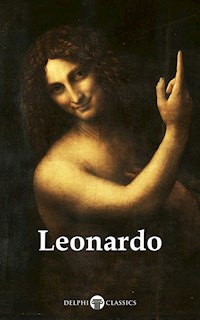
Returning to Florence in the early sixteenth century, Leonardo embarked on new projects while continuing earlier ones. He began the Mona Lisa, a portrait whose subtle modeling and atmospheric depth exemplify his mature sfumato and attentiveness to human psychology; evidence suggests he refined it over many years. He prepared large-scale designs such as the lost Battle of Anghiari project and developed the Virgin and Child with Saint Anne, known through a surviving painting and earlier drawings. Later works include Saint John the Baptist, with dramatic chiaroscuro. Many commissions remained unfinished, but the studies and cartoons shaped the work of younger artists across Italy.
Leonardo’s notebooks, later gathered in codices such as the Atlanticus, Arundel, and Leicester, record investigations in anatomy, hydraulics, optics, flight, mapping, and mechanics alongside plans for instruments and buildings. His prose is concise and procedural, often paired with diagrams that translate observation into experiment. He drafted a treatise on painting that analyzed perspective, light, and the behavior of color; after his death, a pupil compiled parts of these notes into a manual that circulated among artists. Though the manuscripts remained largely in private hands for generations, their eventual publication transformed understandings of scientific illustration and the theory of visual representation.
Beliefs and Advocacy
Leonardo’s convictions, as evidenced in his notes and practice, centered on experience as the test of knowledge and on the unity of art and science. He advocated measurement, repeated observation, and demonstration, using drawing as a cognitive tool. His dissections and comparative studies aimed to improve both medical knowledge and artistic truthfulness, while his proposals for canals, flood control, and urban sanitation reveal concern for practical civic improvement. He served as a military engineer for secular rulers and designed theatrical entertainments for courts and religious festivals. Rather than public campaigning, his influence operated through commissioned projects, workshop teaching, and manuscripts.
Final Years & Legacy
In his final years Leonardo entered the service of the French crown and relocated to the Loire Valley around 1516. Settling near Amboise, he held the title of painter and engineer and maintained close contact with the court. He continued to revise the Mona Lisa and to study geometry, mechanics, and hydrology, organizing his papers with assistance from his pupil Francesco Melzi. Contemporary accounts suggest his health declined, which limited painting but not planning and teaching. He died in Amboise in the spring of 1519 and was interred locally. Melzi took charge of the papers, preserving a substantial part of the written legacy.
Leonardo’s posthumous reputation grew as paintings were revered, drawings collected, and notebooks gradually dispersed, studied, and published. Pupils and associates, notably Melzi and the longtime assistant known as Salaì, transmitted compositions and workshop practices, while later artists mined his studies of light, anatomy, and movement. His synthesis of empirical method with poetic image became a touchstone for art academies and for the emerging sciences of anatomy, engineering, and cartography. Today he is viewed as a defining figure of the High Renaissance and a precursor to modern interdisciplinary research, with ongoing scholarship refining attributions, techniques, and the chronology of projects.




