


Erhalten Sie Zugang zu diesem und mehr als 300000 Büchern ab EUR 5,99 monatlich.
- Herausgeber: Paraclete Press
- Kategorie: Religion und Spiritualität
- Sprache: Englisch
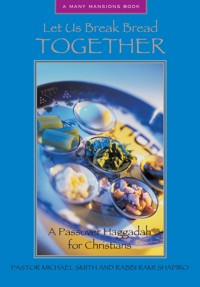
Jews have been celebrating the Passover through a special meal, called a seder, for millennia. Jesus himself celebrated the Passover feast with his disciples in what we refer to as The Last Supper. In this special book, co-authored by a rabbi and a pastor, we have the unique opportunity to experience an authentic Jewish Passover seder, from a distinctively Christian perspective. There are many haggadot used in Jewish homes and synagogues, but this one offers meaningful insights on how Christians can both learn from Judaism as a means of deepening their Christian faith, and better understand the Jewishness of Jesus. Always respectful of the differences between Judaism and Christianity, this Passover guide provides: - a complete guide (plan and script) to a meaningful seder experience - a deeper knowledge of the great themes of the Exodus story, in combination with Christian insights - rich opportunities for a better understanding of Lent and Holy Week - a fuller knowledge of why Jesus placed such importance on the universal themes of slavery, freedom, and community around the seder table. "Explores the rich liturgy of the Passover seder from both the Jewish and Christian traditions without compromising the distinctive beliefs of either faith tradition. Smith and Shapiro have given us a model of interfaith cooperation, based on their evident respect for one another, that contributes to greater mutual understanding. A splendid contribution to worship education!" –Timothy George, dean of Beeson Divinity School of Samford University; executive editor of Christianity Today "If Christian churches choose to observe Passover, this is the resource they should use. . . . a comprehensive but easy-to-use tool for broadening and deepening their understanding of Passover. –Jan Turentine, Managing Editor, Acacia Resources, Baptist Center for Ethics
Sie lesen das E-Book in den Legimi-Apps auf:
Seitenzahl: 61
Veröffentlichungsjahr: 2005
Das E-Book (TTS) können Sie hören im Abo „Legimi Premium” in Legimi-Apps auf:
Ähnliche








Let Us Break Bread
TOGETHER
A Passover Haggadah for Christians
PASTOR MICHAEL SMITHRABBI RAMI SHAPIRO
Let Us Break Bread Together: A Passover Haggadah for Christians
2007 Second printing2005 First printing
Copyright © 2005 by Michael A. Smith and Rami Shapiro
ISBN: 978-1-55725-444-3
Unless otherwise designated, the New Testament Scripture quotations are taken from the New Revised Standard Version of the Bible, © 1989, Division of Christian Education of the National Council of the Churches of Christ in the United States of America. Used by permission. All rights reserved.
Scripture quotations marked (NIV) are taken from the Holy Bible, New International Version. NIV. ©1973, 1978, 1984 by the International Bible Society. Used by permission of Zondervan Publishing House. All rights reserved.
Library of Congress Cataloging-in-Publication Data
Smith, Michael, 1954 Sept. 1-Let us break bread together : a Passover Haggadah for Christians /Michael Smith, Rami Shapiro p. cm. ISBN 1-55725-444-3 1. Passover—Christian observance. I. Shapiro, Rami M. II. Title. BV199.P25S63 2005 265′.9—dc22
2004025204
1 0 9 8 7 6 5 4 3 2
All rights reserved. No portion of this book may be reproduced, stored in an electronic retrieval system, or transmitted in any form or by any means—electronic, mechanical, photocopy, recording, or any other—except for brief quotations in printed reviews, without the prior permission of the publisher.
Published by Paraclete PressBrewster, Massachusettswww.paracletepress.comPrinted in the United States of America
Jesus said to his disciples,“I have eagerly desired to eat this Passover with you . . .”LUKE 22:15
TABLE OF CONTENTS
Preface
Acknowledgments
A Note on Translation
A Note to the Leader
The Christian-Passover Connection
Setting the Seder Table
THE SEDER
Leader’s Welcome
Candle Lighting
The Symbols of Passover
Kadesh/First Cup of Wine
Urchatz/Washing the Hands
Karpas/Blessing the Green Vegetable
Yachatz/Breaking the Middle Matzah
Maggid/Telling the Story
Dayyenu/It Is Enough
Motzi Matzah/Blessing over the Matzah
Maror/Bitter Herbs
Shulchan Aruch/Dinner Is Served
Tzafun/Finding the Hidden
Elijah’s Cup
Boraych/Grace After the Meal
Nirtzah/Conclusion
Further Reading
About Paraclete Press
PREFACE
This small book is called a haggadah, Hebrew for “The Telling.” It is the telling of the story of the Exodus of the Hebrew people from slavery in Egypt. The telling includes words and actions, using both mind and body to recall the horror of slavery and the joy of liberation. If you come to this haggadah at all familiar with the traditions of the Jewish Passover, you know that the bread of the title of this book refers to the unleavened bread, the matzah, that the Jews hurriedly baked in preparation for their exodus from Egypt. Breaking this matzah together has been a tribal and family ritual of the Jewish people for thousands of years. It is now finding its way into the homes and churches of Christians as well.
There are over two thousand versions of the Passover haggadah for Jews. This is not one of them. This is not a Jewish haggadah and is not meant for Jewish use. On the contrary, it is a Christian haggadah written explicitly for Christians in hopes of enriching their understanding of Passover.
For more and more churches and Christian families, the Passover seder (ritual Passover meal) is becoming a powerful opportunity to explore and honor the Jewishness of Jesus and the Jewish roots of Christianity. Yet the materials available to those Christians wishing to host a Passover seder are limited and often fail to explain the deeper meanings of the seder from either the Jewish or Christian perspectives. This haggadah addresses that need. It grew out of Rabbi Rami’s personal experience at a church seder in Murfreesboro, Tennessee, where he now lives. As Rabbi Rami puts it:
I was impressed by the sincerity of the participants but saddened at the inability of their haggadah to adequately explain Passover and to engage them in a manner that honored the Jewish faith and yet spoke directly to their faith as Christians. They did their best to follow the Jewish seder rituals but could not make them their own. I felt a need to help them understand Passover on a deeper level, and I knew this could best be done by creating a haggadah specifically addressed to Christians. Not being a Christian myself, I turned to my friend Mike Smith, pastor of the First Baptist Church of Murfreesboro. I felt certain we could collaborate to create a haggadah that would help Christians experience an authentic and meaningful Passover seder.
The haggadah you are reading is the result of that collaboration. We have labored in the context of friendship and mutual respect. Both of us are steeped in our respective religious traditions. We have no desire to blur the distinctions between those traditions or even to try to create a haggadah that might be used by both faiths. This is a Christian haggadah intended for use by Christians in their homes and churches.
In addition to its intended audience, another unique feature of our haggadah is that it follows a question-and-answer format. We chose this format for several reasons. First, asking questions is at the heart of both Judaism in general and the Jewish seder in particular. Second, asking and answering questions can serve as a catalyst for conversation among participants on the major themes of Passover: slavery, freedom, and one’s personal relationship with God. Third, the format maximizes the opportunity for guests to participate in the seder. While there are sections of the haggadah designated for the LEADER and others for the COMMUNITY as a whole, most of this haggadah is read by going around the table or room and inviting people to read the questions and answers in turn.
We hope that your participation will not end with the reading of the haggadah and that the questions wrestled with during the reading of the haggadah will set the tone for table discussion during the meal. While it is natural to engage in small talk, the seder is best experienced as an opportunity to seriously explore the reality of slavery and liberation in your life.
We have done our best to create a haggadah that honors the teachings of both Judaism and Christianity. Some in each of our faith traditions may conclude that we have failed, ought not to have undertaken such a task, or have created something a little dangerous. We feel the potential benefits outweigh the risks. As more and more Christians take on the Passover seder as part of their religious life, it will benefit everyone to do so not as an experience of the exotic, but as a way of enriching understanding and appreciation of Judaism even as Christians deepen their connection to Jesus.
Serious Jews and Christians have much to learn from one another. We do not have to become like one another in practice or belief to do so. In fact, exposure to our differences may help us grow in faith and understanding.
We hope our haggadah proves useful to individuals, families, and churches. Please feel free to adapt the haggadah as you see fit. We regard it as a task begun, not finished, and would welcome suggestions from our readers on how it might be improved.
May both faith and freedom deepen in your life.
Mike Smith, Pastor, First Baptist Church, Murfreesboro, Tennessee
Rami Shapiro, Rabbi, One River Foundation




