


Erhalten Sie Zugang zu diesem und mehr als 300000 Büchern ab EUR 5,99 monatlich.
- Herausgeber: Istros Books
- Kategorie: Krimi
- Sprache: Englisch
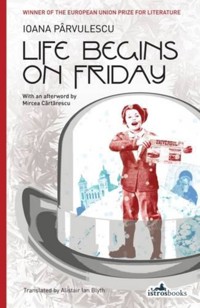
A young man is found lying unconscious on the outskirts of Bucharest. No one knows who he is and everyone has a different theory about how he got there. Within the pages of this charming book, the stories of a variety of characters unfold, each closely interwoven with the next, and outlining the features of what ultimately turns out to be the most important and most powerful character of all: the city of Bucharest itself. The plot of Life Begins on Friday takes place during the last 13 days of 1897 and culminates in a beautiful tableau of the future as imagined by the characters we have come to know and love. We might even say that it is we who inhabit their future, and so too does Dan Creţu, alias Dan Kretzu, the present-day journalist hurled back in time by some mysterious process for just long enough to allow us a wonderful glimpse into a remote, almost forgotten world. Parvulescus' book is a magical tale full of enchanting characters who can carry the reader to another time....
Sie lesen das E-Book in den Legimi-Apps auf:
Seitenzahl: 513
Veröffentlichungsjahr: 2015
Das E-Book (TTS) können Sie hören im Abo „Legimi Premium” in Legimi-Apps auf:
Ähnliche













Table of Contents
LIFE BEGINS ON FRIDAY
Foreword
Characters
Friday, 19 December: An Eventful Day
Saturday, 20 December: Commotion
Sunday, 21 December: A good day. With some exceptions...
Monday, 22 December: A Difficult Beginning to the Week
Tuesday, 23 December: The Chance Occurence
Wednesday, 24 December: Christmas Eve
Thursday, 25 December: Presents
Friday, 26 December: News
Saturday, 27 December: Visiting
Sunday, 28 December: Press Review
Monday, 29 December: Time Passes
Tuesday, 30 December: Time Stands Still
Wednesday, 31 December: Future and Past
Epilogue
Appendices.
Afterword: A Thing of Beauty by Mircea Cărtărescu
The Author
The Translator
Ioana Pârvulescu
LIFE BEGINS ON FRIDAY
Translated from the Romanian by Alistair Ian Blyth
For what you want is that life, and this,
and another – you want them all.
Miguel de Unamuno, July 1906
First published in 2016 by
Istros Books
London, United Kingdom www.istrosbooks.com
First published as Viaţa începe vineri, Editura Humanitas, Romania, 2009
Copyright © Ioana Pârvulescu, 2016
The right of Ioana Pârvulescu to be identified as the author of this work has been asserted in accordance with the Copyright, Designs and Patents Act, 1988
Translation copyright © Alistair Ian Blyth
Cover design and typesetting: Davor Pukljak, www.frontispis.hr
ISBN: 978-1-908236-29-6 (printed edition)
ISBN: 978-1-908236-72-2 (MOBI edition)
ISBN: 978-1-908236-68-5 (e-PUB edition)
Istros Books wishes to acknowledge the financial support granted by the Romanian Cultural Institute
The European Commission support for the production of this publication does not constitute an endorsement of the contents which reflects the views only of the authors, and the Commission cannot be held responsible for any use which may be made of the information contained therein.
Foreword
For a few years before 1900 the days were capacious. The people thrummed like telegraph wires. They were optimistic and believed, as never before and never again thereafter, in the power of science, in progress and the future. This is why the New Year was the most important time for them: the ever-renewed beginning of the future.
The texture of the world permitted every mad notion and often the mad notions became reality.
Romania was in Europe, and her capital was now a cosmopolitan city, which was making great efforts to become organized and civilised. In Bucharest, as every period document attests, you never had a chance to be bored, night or day.
Sensitive souls were fearful of unknown dangers. A man fended off electric light with his cane. A woman obstinately refused to let her son take her photograph, although she allowed her portrait to be painted. Neuroses were transformed into poetry; pain and opium went hand in hand. Tuberculosis, syphilis and dirt either killed or left deep wounds in body and soul. Evil had not vanished from the world, and ignoring it was not the best method of preparing for the future. There were people who fought it.
The newspapers had become aware of their own power and it was already possible to die for the written word. And already the written word betrayed them. Money was a problem, but not an end in itself, and there were plenty of people prepared to sacrifice all their money for the sake of a beautiful idea. Children were precocious in imitating grown-ups, grown-ups sometimes behaved like children, and curiosity about life was a joy that did not vanish at any age.
Before 1900, people believed that God desired their immortality, in the most palpable sense of the word. Nothing seemed impossible and nor was it. Every utopia was permitted. And playing with time was always the most beautiful utopia. Apart from that, people were quite similar in every respect to those who came before them and those who came after them.
For a few years before 1900 the days were capacious and people dreamed of our world.
They dreamed of us.
Characters
Dan Creţu or Dan Kretzu, 43, a stranger found unconscious in a forest at the edge of Bucharest
The Margulis family:
— Leon, physician, 47
— Agatha, his wife, 42
— Iulia, their daughter, 21
— Jacques (Iacob), their son, 10
Nicu (Niculae Stanciu, Nicuşor), 8, courier for Universul newspaper, the character who links all the other characters
Costache Boerescu, Chief of Public Security, deputy to the Prefect of Police, a friend of Leon and Agatha Margulis since their youth
General Ion Algiu, former Prefect of Police, friend of Costache Boerescu
Caton Lecca, current Prefect of Police
The Livezeanu family:
— Alexandru, aristocrat, homme à femmes
— Mihai (Mişu), studying Medicine in Paris
— Marioara, divorced, with three children, including twins Anica and Ștefan
— Maria and Hristea, parents of the above
Nicu’s mother, mentally ill washerwoman
Staff of Universul newspaper:
— Old man Cercel, the porter
— Neculai Procopiu, 43, the longest-serving newspaperman at Universul
— The brothers Mirto: Peppin, translator, proof reader, optimist, endowed with an operatic singing voice, and Pavel (Păvălucă), editor, introvert, pessimist, writing a novel
vThe Director, Italian Luigi Cazzavilan
Petre, coachman of Inger the pastry maker
Dr Rosenberg, runs the House of Health establishment on Strada Teilor (Lindens Street)
Mr and Mrs Movileanu, lawyer and his wife, resident on Strada Teilor
Epiharia, devout woman who frequents the Icoanei Church, preparing to become a nun
Fane, alias the Ringster, crook
Episodic characters
George Lahovary, newspaperman, director of the French-language L’Indépendance Roumaine, slain in a duel at the age of 43 by Nicu Filipescu (former Mayor of Bucharest, who ordered the demolition of the Sărindar Church)
Metropolitan Ghenadie, involved in a scandal culminating in the theft of a miracle-working icon
Dimitrie Gerota, physician, friend of Dr Margulis
Vasilica, Iulia’s cousin
Marwan, photographer for Universul
Elena Turnescu, widow of an eminent surgeon, involved in charitable works
Signor Giuseppe, Italian neighbour of the Margulis family
Otto, ethnic German from Transylvania who has come to the capital to work as a church painter
The wounded young aristocrat (Rareş-Ochiu-Zănoagă)
Coachmen: Yevdoshka (Russian Old Believer), Budacu and Ilie (in the employ of the Police)
Toader, servant of the Livezeanu family
Margareta, one of Alexandru Livezeanu’s mistresses
Pet animals
Liza, Costache’s old dog, Lord, General Algiu’s Borzoi hound, Fira the cow, a fridge magnet, Speckle, Nicu’s pigeon
Unconventional characters
Bucharest, Capital of Romania
Time
Friday, 19 December: An Eventful Day
1.
I like to read in the carriage. Mama takes me to task; Papa, who never forgets, not even en famille, that he is Dr Leon Margulis, primary physician with a surgery behind the National Theatre, says that I will ruin my eyes and give birth to near-sighted children. But I am obstinate and still bring a book with me. Back in their day they probably had the time to read and do lots of other things, but we youngsters have to dole out our hours with care. I could hardly wait to find out what Becky would get up to next in Vanity Fair. Although truth to tell, I think that I am more like that silly Amelia, and I shall end up loving some rascal all my life. Today I had no luck with my reading: firstly, because my hands were frozen; and then, no sooner did we climb into the carriage than Mama and Papa, chopping the subject as finely as our cook does the parsley, began to dissect the case of the unidentified man whom Petre found lying in the snow this morning, in a field near the Băneasa woods and lakes. He was taken to the Prefecture of Police and placed under arrest. Mama, who is up to date on absolutely everything, says he is a fugitive from the madhouse and that he must have been driven insane by too much learning. And here she gave me a minatory look: ‘It is high time that Iulia decided on a decent man to marry.’
Papa examined the stranger at the request of Costache, our friend from the Police, and said that he was not a vagrant, despite his wearing unbelievably odd clothes. Perhaps he is a clown from the circus. He is otherwise clean and has no “physiological” flaws apart from the fact that he does sometimes talk in a garbled way. But if he is a madman, then he is a cultivated madman; he “couches his words nicely”. But when Papa asked him whether he had tuberculosis, the man gave him a scornful look, as if infuriated, and answered cuttingly: ‘You’re a two-bit actor!’ Papa replied, as gravely as he does whatever the situation: ‘Sir, if you please, I am not an actor, but a physician!’ He added that his lungs sounded a little congested, that he was very pale, but that he could not find any serious illness. The man calmed down and said that he would like to smoke. Papa, who is against the habit, nonetheless brought him some fine tobacco and rolling papers from Mr Costache’s desk, but said that the man under arrest, after giving him a savage glance, quite simply turned his back on him. He is ill bred! They retained his valise for examination, and a silver box, like a safe, which indicates that he might be a money forger, but they released him after keeping him under arrest for only an hour, following a brief interrogation by Mr Costache. On finding himself free, he straightaway made himself scarce. But the best coachman in the police force was assigned to follow him unobtrusively.
‘How old is he?’ asked mother, her favourite question.
‘He declares himself forty-three. Well, that would mean he was four years younger than me, but I say he’s lying. I reckon he is no older than thirty or thirty-five. He says that he is a journalist and that he was born here. Dan Kretzu. What surprised me was that he was completely shaven. You see this only with actors who play the rôles of women. Hmm!’ And here Papa stroked the thin blond tuft of his beard, as wispy as maize silk, the cause of a lifetime’s suffering.
‘We shall find out more tomorrow, at dinner, because I have invited Mr Costache.’
Papa noticed that my face was flushed and immediately put his hand to my forehead to see whether I had a temperature. As far as he is concerned, all things have solid, bodily causes. He will not hear of the soul. Although Mama continued to interrogate him for a while, I preferred to take off one glove, now that my hands had warmed up, and to return to Becky. What I like about her is that exactly like me she can speak French and English. What I do not like about her is that exactly like me she has green eyes. I would have liked hazel eyes, the same as Jacques, and blond hair, the same as Becky, but it would seem the factory did not have that model in stock twenty-one years ago, and so I must content myself with black hair. How is it that from the same parents, both with hazel eyes, one child can turn out the same as them, while the other has green or blue eyes? I wish to finish the book by New Year, and so I shall try to write in my diary more seldom. There are still twelve days and a few hours to go.
2.
The people of Bucharest were having a good day. It had snowed, there were still twelve days till the end of the year, and twelve hours till the end of the day. The whiteness, which stretched from one end of the city to the other, from the Cotroceni Palace to the Obor district, and from the Șerban Vodă Cemetery to the flower-beds on the Chaussée, and then onward, into the horizon, was melting in the afternoon sun. The icicles looked as if they were coated in oil and here and there were beginning to drip onto the heads of the passers-by. The streets were quite busy, as they always were on the days before Christmas. Looking up, lest he get wet, Nicu fell head first into the snow, and was as annoyed as when he woke up with his face pressed to the sheet.
‘Looks like you’ve taken another tumble, young man!’ said the boy loudly, shaking off his red commissary’s cap. ‘I’ve told you time after time to look where you step,’ he grumbled in his small voice, but with the tone of a bad-tempered old man. Since the year before, when he started to attend school, that pedantic tone had stuck to his tongue and he could not rid himself of it. But he had been in the habit of talking to himself for as long as he could remember, because to his great misfortune and unlike other children, he had no siblings. He would have been happy to have even a sister, at a pinch.
He dusted the snow off his coat, cast a glance of vexation at the patch of ice on which he had slipped, and at a trot arrived under the clock with the mechanical soldier above the door of L’Indépnedance Roumaine newspaper offices. At twelve on the dot, the chimes began to sound. Nicu always tried to be in time to see the soldier. It was not easy, because he had to tell the time by the sun and the length of the shadows. This time the lad’s attention was caught by something else. On the ground, right in front of him, was a splendid icicle, more than a metre long, perfect for a sword. He picked it up and stroked its slightly rippled surface, oblivious to the chill of the ice. Holding it in both hands, he lowered it to his hip, raised it, still in a two-handed grip, and with a roar made a swordsman’s lunge at an unseen enemy. Unfortunately, the icicle, probably inured to the greater peace and quiet at the edge of the roof, struck where it ought not to: to a man in military uniform, holding a silver-handled cane; a gentleman of middling height who was just emerging through the door beneath the clock. He was the Prefect of Police’s right-hand man: the Chief of Public Security, Costache Boerescu, a man always in a hurry, his short legs rapidly scything the air. In that period he visited the Frenchmen’s newspaper two or three times a day, ever since the director, Mr Lahovary, had been slain in a duel by “that pig-headed Filipescu,” the director of the Epoca newspaper. And so the policeman was in the mood for anything but a duel, irritated as he was by the investigation, which was going nowhere, and by voices from the press, who were persecuting him ever more sorely. He could no longer stand newspapermen: when he did something good, they ignored him, but when he failed to solve some matter swiftly enough, they jumped on him and blackened his name using his own words, but truncating and turning them upside down. Whenever he had occasion and only men were present, he would cool off by calling the press a “painted whore.” Otherwise, he lived alone, and the brothel at Stone Cross had special reduced rates for him, should he so desire. He had visited the establishment both as a policeman and as a customer.
The cursed child ran off before the policeman could grab him by the ear. He made a suicidal dash across the road, dodging the carriages and sleighs, in the direction of Sărindar, not before being cursed by a number of coachmen heading in a column towards the Capșa restaurant, then by those on the other side, on their way towards the Dâmbovița River; one after the other, they had to pull on their reins, lest they crash into each other. The lad looked behind him at the same instant that the copper waved his stick at him threateningly. Nicu then put the incident out of his mind and headed towards the Prefecture, a few minutes’ walk away.
‘You were almost done for there, young man. Mr Costache won’t forget you, he never forgets anything, and he’s as cunning as a snake, he is. You’ve been getting into nothing but scrapes today,’ said the lad, addressing a large snow-laden bush that grew slantwise in a shady spot next to a wall. Some sparrows were hopping with abrupt, bullet-like movements from one branch to another, then lingering a little, touching the thick whiteness of the snow with their plump bellies, and scattering the flakes, before moving to another storey of the bush, as if it were a house. Nicu wondered why they moved around so much, since they did not seem to be following or looking for anything, unlike him. He had a precise goal, which loomed tall in front of him: the entrance of Universul, Bucharest’s most read newspaper. Granted, the men from Adevĕrul said otherwise, but they said everything otherwise. He stepped forward, having swiftly shaken all the sparrows off the bush.
He entered by the door on the left. The doorman shook his hand as if he was a grown-up. Old man Cercel told him that he would have to wait: the parcels had not yet been brought from the “distribution bee-oo-row.” Nicu sat down in his usual place. He was most satisfied. Conversations with old man Cercel were always instructive, because the doorman read the paper every day and kept him up to date with the news. Nicu asked him whether he had decided to play the big New Year’s lottery; the jackpot was ten thousand lei. Six numbers had to be chosen, and the lad had asked to try his luck, without any claim on the prize (although the money would not have gone amiss), just so that he could lend a helping hand. Nicu knew that as far as he was concerned, his choice was nine and eight, because next year would be 1898, and the doorman would choose the remaining numbers, except that he would make his mind up one day, only to change it the next. Old man Cercel replied yet again that it was no joking matter and he would have to think carefully. From today’s paper he had a news item even better than the one about Jack the Ripper, who had thitherto reigned supreme over the headlines.
The doorman picked up Universul, held it rather a long way from his eyes, and read slowly, syllabically: “Sundry items. From Bor-del-... Bor-der-and... Bor-der-land magazine. The planet Mars and the Martians.” ‘Hear that?’ And then he read on, slipping in his own comments, as he always did: “The Martians do not eat meat, but use mam-moths as beasts of burden. Their horses are no larger than our ponies.” As large as our ponies – what ponies? “Their oxen are smaller – in other words, we have larger oxen, and so where we are, if you’re an ox, you’re a big ox – and have just one horn. The Martians have very pen-et-rat-ive eyesight. They have learned how to fly, but only for short distances. They walk on water with the same ease as they do on land. War has been ab-ol-ished on Mars. The Government is the-o-crat-ic. They have twelve states. They have no private property.” Then I’m not going to Mars. This is my country here, my private property, my house, my garden, my wife, my pigeons, and my plum trees,’ said the doorman, folding up the newspaper thus ending all discussion, having been fully enlightened as to the Martians.’
Nicu did not agree. He was something of a Liberal. He knew very well that the Martians could fly and walk on water and that they rode mammoths, as he had seen the drawings in Universul Ilustrat. And so in that respect, the same as in many others, he could not share Cercel’s opinion, although the old man’s broad face and splayed nose, beneath which grew a shaving brush of a moustache, demanded respect.
Nicu said diplomatically: ‘I for one would go, if it were possible! I’d go to have a look and if it wasn’t any good, I’d come back straight away.’
‘For the time being, run and deliver these papers!’
Probably annoyed at having been contradicted, the doorman rather brusquely took the newspapers from the hand of the man who signed himself Peppin Mirto. Mirto was employed as a translator and proof reader, and was recently given the responsibility of dispatching the Gazette to important clients, if it included important articles: Mayor Robescu; Petre Grădișteanu, the director of the National Theatre; the Royal Palace; Caton Lecca, the Prefect of Police; and the directors of the other newspapers, even those with which Universul was at war. Nicu ran errands for the paper, earning five lei a month, paid on the first of each month, plus tips, in addition to his usual wage as a commissary. He had to deliver parcels containing all kinds of small items, which were sold from the newspaper premises. The items were kept in untidy heaps in the administrative office downstairs and in the director’s office upstairs, since the director himself was more likely to be found at home or at his club than on newspaper premises. Nicu worked for two hours a day at most, straight after school. He clandestinely hitched rides on the back of carriages and sometimes even the horse-drawn tram, when there was a lot of traffic and he could pass unnoticed. But it was rare that he had such luck.
‘How are you, laddie?’ asked Pepin Mirto, in his sonorous, operatic voice, and Nicu doffed his cap by way of greeting. He was about to tell him about his plans to go to Mars, but the man quite simply turned his back on him, shouting a ‘Be on your way now!’ that boomed as far as the courtyard. Why did people ask you questions if they did not wait for the answer? True, here at Universul you saw only men who were in twice as much of a hurry as Nicu’s other acquaintances. They were like Martians, the lot of them, but without their good qualities! As he was leaving with the parcel tied up with string, he almost collided with a young man who had slipped lizard-like through the door and was asking old man Cercel how he could place a small ad. He was agitated and kept knocking his gloved hands together, jerking his head.
‘Good day, young gentleman,’ said the doorman, still in the same voice as when he had been spelling out the words in the newspaper.
‘Good day, young gentleman,’ Nicu seconded, but without doffing his cap this time.
Too agitated to reply to these greetings, the young man got straight to the point: ‘Where can I place a small ad? A wallet has been lost and the owner...’
‘With money in it?’ the boy and the doorman both asked at the same time.
‘Not, not with any money...’
‘Any jewels?’ asked Nicu, just as the doorman was asking: ‘Any documents?’
‘No, with a... with something else. And my owner, its owner I mean, is offering a handsome reward. We live not far away from the Icoanei Church, on Strada Teilor, the new houses, which they were working on all summer.’
And here he knocked his fists together once more.
‘The second door on the right where it says: Announcements. This way, please.’
As the nervous young man with his lizard-like movements was walking away with the doorman, Nicu set off to his first address, the premises of the rival paper on Strada Sărindar, scanning the snow in front of him, just in case. He now had a goal to make him forget the tedium of his daily duties and the water dripping from the eaves. He was searching for a wallet in which there might be a diamond ring or maybe a ruby tiepin, like the one owned by Jacques’ father, Dr Margulis. But if the man-lizard had been telling the truth, which was not at all certain, then there were no jewels. All of a sudden he had a bright idea: it must contain a lottery ticket, the very one that was going to win!
‘That’s it!’ Nicu said to himself, rather proudly. He had rejoiced when the snow arrived, but now it annoyed him; a good job that it had started to melt. His grandmother, who believed in saints, like all women, had told him that there was a saint to allay every misfortune. He hoped that there was a saint of lost objects too, particularly those lost by other people.
‘Let us hope, young man, that you will lay your hands on that handsome reward.’
*
After he had completed his final errand, Nicu ran home to change out of his red work-cap and put on his free-time cap; for when he wore the red one, people stopped him on the street and sent him off on errands all over the place. From somewhere near the neighbours’ old walnut tree, a crow croaked bitterly a few times. Since there was nobody at home (who knows where his mother might be?), he was able to make his way to Strada Teilor, the place where his investigation must surely commence. It was worse than looking for a needle in a haystack, but he did not have anything better to do, as it was the Christmas holidays. In any case, school had been suspended for a month because of an outbreak of typhus, and so he had been quite well off from that point of view. Lessons had not recommenced until the eighth of December. Nicu had every faith in his luck, despite, or rather precisely because God had already punished him with a feeble-mined mother and no siblings, not even a sister, and so He owed him for the rest of his life. Prudently, he made the sign of the cross, as he always did when he thought he was speaking too familiarly about the Lord in Heaven, but it was a tiny one, more like he was scratching himself.
The boy knew the streets of Bucharest well and a large number of their residents knew Nicu well. He had even made friends with some of them, such as the Margulis family on Strada Fântânei. He was an errand boy on whom you could rely, very useful for urgent business that required discretion. Theirs was a dependable firm, his boss used to say, taking upon himself the merits of the five lads in his employ, who were individually responsible for any mistakes. He looked up and by the Central Girls School he saw a police carriage, as red as the cherries in the bottle from which his mother tippled. He once more fixed his eyes on the snow, which after melting in the afternoon, was now beginning to form a crust, like the skin on boiled milk. How was it that ice and the hot skin of boiled milk looked the same if you held them in your hand, and that both turned your skin red? Nicu walked with long strides and kept his eyes on the ground. It was then that he clapped eyes on the most unusual pair of footwear he had ever seen in the eight long (and hard) years since he had come into this world. They did not look like galoshes or overshoes or even the latest styles advertised in Universul. They were neither officers’ boots nor peasants’ bast shoes. There was not even a word for them; they were strange thingies, the likes of which had never been seen.
*
‘They were strange little thingies, the likes of which you’ve never seen, I don’t even know what to call them, brother dear, neither you nor I have ever seen the like,’ recounted Nicu that evening, in Strada Fântânei.
He was dead tired, having been on his feet the whole day, walking through the snow; the driver had not let him board the horse-drawn tram without paying for a ticket, and he had not wanted to waste the fortune in his pocket: ten pennies from tips alone. But his account of how he bumped into the stranger’s legs reinvigorated him. He felt that all of a sudden he had become an important person in the world. It was not every day that you saw wonderful things on the streets of Bucharest.
‘What do you mean?’ asked Jacques, overjoyed. For Jacques, the errand boy’s tales, mostly embellished and exaggerated as they were, were the water of life. Nicu’s homecoming had got him out of bed. ‘What do you mean, thingies, I don’t understand, explain!’
Jacques sat up straight in the deep armchair that all but enveloped him.
‘Just listen,’ answered Nicu, enveloped in the armchair alongside and twisting his head over the velvet armrest, ‘just listen, you’ll never believe it. They were coloured. Coloured!’
‘Colou-r-r-ed?’ marvelled Jacques, who rolled his r’s like a Frenchman. Therre’s no such thing. I’ve never seen footwear that wasn’t black, or brown, or white, in summer.’
‘And they didn’t have buttons, or laces, or hooks. It was like they were glued to his feet. I look up and I see ugly black trousers, without any stripes, and then an ordinary overcoat, like a cast-off, like a second-hand bargain, it didn’t fit in with the rest. And, ah, yes, just listen, for you’ll never believe it: he was bare-headed!’
‘Weren’t you afrraid? I would have run away, I mean...’ said the host and blushed slightly.
Nicu hastened to continue, as if he hadn’t heard.
‘Well, no, but his face was quite nice, like... like your sister’s there,’ said Nicu, pointing to above the sofa, where there was a small pastel portrait. ‘I don’t know why, but it bowled me over. I’ll never forget it as long as I live. Whether he was an angel, whether he was a devil, I liked him a lot; I’ll have you know. May you have a brother like him!’
Although Jacques was accustomed to the way Nicu spoke when he was excited – Nicu was in the habit of addressing himself in the second person – he thought that perhaps here he was referring to him, because he too wanted a brother. ‘He asked me.’
At that moment the “quite nice” face from the portrait above the sofa looked in through the half-open door. The face was rosier in the cheeks than the one in the framed picture, however. Iulia Margulis, wearing a green velvet dress entered, carrying two plates, two silver knives and two red apples. The doctor had demanded that the children eat at least one piece of fruit a day, and in the cellar there was a shelf full of apples, placed a finger’s width from each other lest one spread rot to the others.
‘Wait, I want to hear it too! What did the stranger ask you?’
‘Have you met him?’ marvelled Nicu.
His eyebrows were peaked like the outline of a roof, rather than finely arching, like the Margulis siblings’, and that made him look permanently surprised or perplexed.
‘He said... erm... he said to me: “Just a moment, lad, please. I’m quite cold and I’m afraid to go home.” ‘Why?’ says I. ‘I think somebody’s living there,’ says he. ‘I need a place to sleep. Any idea where?’ That’s what he said, I remember it very well: ‘Any idea where?’
‘You should have invited him here!’
‘No, no, no, how could I do that? Nor could I have invited him to my place, because I didn’t even know when my mother would be coming home. When she’s angry, she scares everybody, although she doesn’t do anybody any harm. Since we were near the Icoanei Church, I said to him, the same as Granny would have said: Go inside, bow to the miracle-working icon of the Mother of God, the one cased in silver, and you’ll be granted a miracle. I’ve already been granted one, he said, mockingly. And instead of making the sign of the cross, he asked me whether I had a cigarette. ‘I haven’t taken up smoking yet,’ says I. ‘Then don’t start!’ says he.’
Nicu rose from the soft depths of the armchair, thrust his hand in his trouser pocket, and produced an object.
‘And he gave you this, young man. Look at this!’
It was a toy that almost fit in the palm of his hand, a soft, snow-white cow with pink ears and a black patch over one eye, like a pirate. The cow’s four legs were folded under it, like four hands neatly resting in a lap. Jacques took the object with infinite care, as if it might break, he gazed at it gravely and then solemnly handed it to his sister.
‘Can I examine it?’ asked Iulia. And without waiting for an answer, she lifted one of the legs. When she released it, the leg snapped back in place alongside the other three. The young lady did the same with the other legs, but all four quickly snapped back.
‘Oh, Lord, it is almost alive!’ marvelled Jacques, his eyes bulging.
‘Alive or not, it’s got no udder, I’ve looked,’ mumbled the owner of the animal. ‘Who’s so stupid as to make a cow without an udder? I think the legs have got a spring or something. I’ve seen things like this among the Christmas toys in the newspaper. I’ll show you, I’ve got the issue at home, I asked old man Cercel for one, and because it had toys in it, he gave me it.’ Nicu stretched out his hand for his cow, retrieved it, and hid it rather abruptly in the depths of his pocket.
‘Did the strranger seem sane to you?’
‘Jacques means to say: was he in his right mind?’
‘Oh, yes.’ Nicu lowered his voice. ‘Ever since my mother... ever since they kept her there, I can tell one of them from a mile off.... The doctor says that it’s not right to call them madmen, they’re just ill. Anyways, that gentleman was sound in the head, just like you or me. I waited till he went inside the church. When I looked behind me, the police carriage was slowly approaching, at a walk, I recognized it by the colour: like rotten cherries. It stopped a little way away, by the bell tower, and some guard dogs started barking at it. The cops were on his trail, but I don’t know whether he realized... You don’t like the cops. I wanted to turn back and tell him, but I didn’t have time to spare, I was in a hurry, because I had... a job to do.’
‘I shall leave you now, because the cook is waiting for me, we have to confer about dinner tomorrow, when Mr Costache will be coming as our guest,’ said Iulia, casting Nicu a meaningful glance.
To reassure her, he looked at her serenely and with a smile of perfect innocence. The young woman swiftly left the room, but not before arranging the logs burning in the fireplace with two or three deft jabs of the poker. Nicu congratulated himself on not having delayed his visit to Jacques, as he had been tempted to do, knowing that the door was always open to him. And he decided not to pay a visit to Strada Fântânei the following evening, lest he come face to face with the policeman: it was too soon after the unfortunate accident... the duelling incident. But he said not a word about what had happened with the ice rapier or about the wallet: they were secrets. He could not tell Jacques everything, although he considered him his best friend, because he obeyed strict rules in life, rules laid down by the doctor, ever since Nicu had been left without a father and with a grandmother for a mother, and he could allow himself some liberties. He had only managed to examine an insignificant portion of Strada Teilor, alongside the new houses, before darkness fell. He kept telling himself that he and he alone would be the finger and that the handsome reward surely to be had from that lizard of a young man would crown his efforts.
3.
Four windows of the Universul offices were still lit. The newspapermen did not have a fixed schedule, they came at will, depending on how much work they had on any given day, but as for leaving, they left only after they had completed their duties. On the first floor, the room farthest to the left, as you looked from the street at the baroque façade of the building, or to the right, as you climbed the stairs and looked towards Sărindar, was the office of Pavel – Peppin Mirto’s brother – and Neculai Procopiu, the newspaper’s most faithful editor: he had been there for thirteen years, that is, from the very beginning. People treated him as they might a director. The newspaper had steadily increased in importance and had been the first to have a morning edition, and so now it was the most widely read. In the beginning it had been all advertisements, which was how it had accumulated capital, but now it had a little of everything. It did not dabble much in politics; at the most, it published the bare facts. They had tried to do two editions, a Morning Courier and an Evening Courier, but it had not lasted long, because of distribution problems: the newspapers arrived at the same time, and the news items repeated each other. Procopiu and Pavel Mirto had taken responsibility for the issue and so the last of the other staff had left. It was they who liaised with the printing press, located in the same building and extending like a huge train carriage to the bottom of the yard.
A knock caused both to lift their heads simultaneously. Marwan the photographer entered. It was an event: you did not often see photographs at Universul. There were daily illustrations, but of the drawn variety.
‘What have you brought us?’ Procopiu asked him directly and stood up to shake the photographer’s hand.
‘Nothing yet, but I photographed some scenes on the street such as you will never have seen before, on my honour. I waited for hours in the snow, camera at the ready, stalking my prey. And yesterday, I climbed out of the window above the entrance to the National Theatre, I think the roof must be at least fifteen metres high, taking my camera with me, to do a panorama. A good job I don’t get dizzy, not so much for my sake as much as for the camera’s sake, because it’s an expensive model. I’ll bring you the clichés, if you’re interested, I’ll give you them for the New Year issue, but for six lei apiece instead of four, because they’re quality goods,’ said Marwan, trying his luck.
He had a reputation as a bit of a skinflint.
‘Mind you don’t break them, like last time,’ he added with justified sorrow, causing the two other men to glance sideways, one at the wall calendar with lady skaters from Canada, the other at the papers on the desk.
It was an embarrassing memory. Marwan had brought them a glass cliché showing the trial of Dr Bastaki, one of a kind, the printer had dropped it and the glass had cracked in two. They had had to summon one of the three artists from home, a specialist in portraits–none other than Marwan’s rival–interrupting him as he was enjoying a late evening collation with some guests. The artist had joined the two fragments of glass and drawn the image from scratch: the courtroom, with Miss Elena Gorjan in the foreground, wearing a little hat with a feather atop her head, with her nose which, due to the artist’s haste, came out a little too long and drooping, and with the face of a splendidly moustachioed guard behind her, the artist’s own addition. He had not had time to draw the woman’s lover, Dr Bastaki, who was a paterfamilias, or Mr Horia Rosetti, one of the lawyers for the defence, although they could be glimpsed in the cliché, but he had drawn Miss Gorjan previously, her prudish countenance having appeared in the newspaper once before. Marwan had lost his temper and left closing the door very firmly behind him: very firmly indeed. And so now the two editors were eager to placate him.
Marwan sat down in front of Pavel, on the chair with a velvet cushion reserved for important visitors. Pavel took off his round spectacles, which tired his eyes, offered him a cheroot and took one for himself. Mr Procopiu discreetly opened the window a crack, letting in a blast of cold air.
‘What will we be reading in tomorrow’s newspaper?’ asked Marwen, with genuine interest in everything to do with the future.
He had become a photographer from a desire to have at least one foot in the door of the new times.
Unlike his brother, Peppin, who spoke in a loud, melodious voice – a fact appreciated by the director, Signor Luigi, an Italian who missed the beautiful voices of his native land – Pavel Mirto smoked heavily and spoke very softly, so that you had to prick up your ears to understand what he was saying.
‘What will we be reading?’ he whispered. ‘The usual, a small fire on Calea Victoriei, in the chimney of the house of a certain Ciuflea.’
‘What?’
‘Ciuflea. Ciu-flea. It was quickly extinguished by the firemen from the station on Strada Cometei. Then a lost wallet, whose contents seem to be very, very valuable, because the reward is three times bigger than usual – I don’t know what it might be, it’s an unusually closely kept secret – then two fraudsters who have been swindling the gullible, like the notorious Andronic used to do, in other words, he takes all their money to multiply them in a ‘machine’... and what else... a Turkish vessel sunk in the Black Sea. Ah, yes, that was the most important thing: it would seem that the Senate is finally going to propose a law against duelling.’
‘I heard that the Princess sent a cable to Lahovary’s mother, expressing her condolences.’
‘No,’ editor-in-chief Procopiu corrected him, ‘the mother of the deceased, Mrs Olympia Lahovary, is in Nice and the news was not sent to her immediately, the other son went there to break it to her gently, because she has a weak heart. Her Highness Princess Maria sent an immediate message to Mrs Lahovary, to the widow, as it were...’
And the editor sighed, for the sake of form: he was too much of a veteran newspaperman to be easily moved any more. Nevertheless, the slaying in a duel of a fellow newspaperman, one of Bucharest’s best journalists, George Lahovary, whom he had seen not long before, had rocked the capital. What was more, it had come after the campaign that Lahovary’s newspaper L’Indépendance Roumaine had waged all year against the present Constitution and after Lahovary had been attacked from every side. It certainly made you think... A good job that Universul was not political.
‘Ah, and another thing,’ continued Pavel Mirto in a barely audible voice, running his hand over his thick hair, ‘a curiosity, a man who says that he is forty-three, but looks much younger, he doesn’t even have a beard, this man was found half-dead in a field, he was rescued by Petre, the Inger coachman.
‘Which Inger, the confectioner from Strada Carol?’
‘Exactly,’ and here Pavel cleared his throat, before reaching for his cup of coffee. ‘It’s not known what the stranger is up to; the police are intrigued. He has a locked case with him, or something of the sort, and nobody can be found to vouch for him.’
Marwan was hard of hearing and did not make much of it, but he did understand that it was a trifle, like a bearded woman or some other circus act.
They moved on to a fashionable subject: Roentgen’s rays and how a surgeon from Germany had been able to see the stone in a man’s gall bladder and in another man’s liver, and how he had operated on the patients. ‘To see a man on the inside is worthy of the front page.’ Mr Procopiu had written an article on Roentgen’s discovery, titling it ‘The Miracle-working Ray.’ He had been happy to be able to write about his favourite subject: science. Apparently, one November day, exactly two years ago, the diligent researcher had seen in his rather dark laboratory a greenish ray that seemed to be coming from some cardboard covered with barium. He gazed in wonder before extinguishing the cathode tube, whereupon the light from the cardboard also vanished. He turned on the tube and placed his hand, probably by accident, between the piece of cardboard and the cathode tube. On the cardboard appeared some delicate and very real bones. His own hand, as if photographed on the inside! The upheaval he felt in his soul cannot be imagined! And so Mr Roentgen was the first mortal in the universe to see himself on the inside without so much as scratching his skin.
On learning this, his colleague Pavel, who was artistic rather than scientific by bent, declared that hypnotism was as good as proven, since it was probably also transmitted by an invisible ray. And the man who signed himself Marwen told how the director himself, Signor Luigi Cazzavillan, had recounted a few days previously, when he met him at the club, that in Rome a venerable lady had been sitting in the salon when all of a sudden she had clearly seen her husband, who was away in Milan, appear in the doorway and call her by name, before vanishing as if in a puff of smoke. The lady had fainted and, as a cable later revealed, her husband had died suddenly in Milan that very moment. Pavel recounted in a whisper a matter that was all the rage, especially among the servants, concerning a house maid who had told her master about how she dreamed that a wounded Turk had buried some gold in the roots of a gooseberry tree in his yard, and when the man dug there, sure enough, he found the gold. The girl had gone back home with a dowry, she never had to work again, and her master became a rich man and had built himself a palatial home in a leafy suburb. And then there was the startling case in the Procopiu family: a sister who at the age of thirteen dreamed she married a miller and her best friend drowned in a mill race, and now she was Mrs Miller, and her friend had indeed drowned, but in the waters of a lake. What was even stranger was that Mr Miller was an engineer. Neculai Procopiu sighed with envy; his brother-in-law’s profession had been his own dream.
‘You would say that all the things that have been and will be are now too, in the present,’ said Pavel softly.
Having heard but half of the phrase ‘all the things that will be,’ the photographer took his leave. No sooner had he left than to the surprise of the two editors there was another knock on the door, firm and polite, which was not like the knock of the lad from the printing press. They both lifted their eyes once again. Mr Costache Boerescu, the Chief of Public Security, entered. He did not like to shake hands or to sit around and chat, and so when he did so they knew he had an ulterior motive. This time he asked the two men in a hectoring voice to introduce a short announcement in the morning paper, right that instant, while maintaining the utmost discretion as to his identity. Pavel Mirto stood up and took the piece of paper down to the printing press.
‘Ah, lest I forget, is your number two-nine-seven?’ he asked Procopiu as he was leaving.
‘The telephone number? 297, yes, but in the evening there is nobody to answer it. Didn’t the girl at the switchboard tell you?’
An hour later, the proofs arrived, for a last quick look before the edition went to press. Mr Procopiu read the headlines in capital letters, and the beginnings of the news items, and the most important announcements: PLANNED LAW AGAINST DUELLING. OTTOMAN BRIG WRECKED in the Black Sea. Events from the capital. A confidence trick à la Andronic... Legal news. Births and deaths. Deeply moved by the tragedy... H.R.H. Princess Maria. Wedding banns. FROM ITALY. FROM LONDON. ... Opera. Mrs Olympia Mărculescu and Mr... in Rigoletto. ‘A chamois leather wallet has been lost in the Teilor-Clemenței area. Please contact...’ ‘A white cat has been lost. Left hind leg amputated...’ ‘The man under arrest found yesterday unconscious and half-frozen near the Băneasa estate (by the lakes) has declared that his name is Dan I. Kretzu, he is a journalist and not a malefactor...’ Neculai Procopiu’s eyes fell on Costache’s announcement, crammed rather incongruously between the advertisements for the Inger Confectionary Shop and the Romania Weaving Loom. He noticed that the brand name ‘Romania’ lacked quotation marks and added them with an indelible pencil, wetting the point on his tongue, in order to make it clear that it was not a loom that wove the beloved homeland, although that would not come amiss, every now and then. Because of the indelible pencil, the editor-in-chief’s tongue was permanently purple. He carefully read the Police announcement: ‘A young man who seems to be of good family, around twenty-two years of age, has been found shot and is in a serious condition in the Health Establishment of Dr Rosenberg. Anybody with information about this person or who has information about the circumstances of his wounding should contact the Prefecture of Police, in Calea Victoriei, No. 25.’
All these items would be perused at leisure and with thoroughness by those citizens of Bucharest who subscribed to Universul on the following day, 20 December 1897, according to the Julian calendar. The subscribers included Dr Margulis, who would read the paper before setting off to his surgery on Strada Sfântul Ionică, behind the National Theatre. And old man Cercel, who would then convey its contents, censored and commentated upon, to young Nicu. And Costache, over his second cup of coffee, which he always drank at work, and his boss, Prefect of Police Caton Lecca, sitting at the table at home, coddled by his large-boned wife. And Iulia Margulis, who was looking for ideas for Christmas presents. And Luigi Cazzavillan, the newspaper’s director, who, together with the diplomats from the Italian Legation, had already celebrated New Year. And there were many others, countless others, whose names and occupations do not concern us here.
The last lit window on the first floor of Universul, the farthest to the left as you look from the street, was plunged into darkness at midnight. Mr Procopiu set off home on foot. He was rather depressed, perhaps because they had been talking about so many unusual things. And so he hastened his steps and, when he heard a muffled sound behind him, he almost broke into a run. Feeling a hand on his shoulder, he let out a cry.
4.
Perhaps all that was and will be is now, in the present. Perhaps what was is what once more will be. Before you ask me any questions, try to get used to my voice, the voice of a man sundered from a world he had come to know quite well, and plunged into an unknown and unintelligible world. Perhaps without knowing it, we live in this endless moment, in many worlds at once. Perhaps the voice that speaks to you now and which thrashes among the voices here like a fish in a fisherman’s net – this voice that finds itself in the city and the country of its birth, more alone than the voice of any man imprisoned in a foreign land – speaks even now with beings which you have no way of seeing. Or perhaps I, the source of the voice, have already been extinguished, like the sun that has just now set, but you still hear me, there, in your world, where the sun is at its zenith, there in your warm room, or outside, in a green park, on a bench. Or perhaps precisely when you cannot hear me, when you are sleeping a dreamless sleep or when you are yelling at each other like madmen, or when you are bored to death, desperate for the time to pass, perhaps this will be when the essential things will take place here. Or perhaps I will never reach you, although that would not sadden me.
But look how I finally raise my voice to the heavens, and I pray for both you, those afar, and for myself, I pray here, to this silver icon, within whose casing can be seen with the naked eye the head of a woman and the smaller head of a child: I pray for your health, your welfare, and that you not be punished, as I am. I pray that you have an old age as beautiful and soothing as roses. I pray that, if you hear a man’s voice, you will understand. I pray out loud: ‘Thou, the Relentless, spare us, spare me, release me from this net in which I am tangled, that I might find a tear in the net and swim into the open sea.’ I pray: ‘Merciful one, have mercy.’ One day, I am sure, I will come to you somehow and you will hear me again. I don’t know why I am here, in a church, in front of an icon. I don’t know why I am shut up here, in the frozen silver of a world that I did not wish for, just as you, whatever you might say, are from birth shut up as if in a prison, as if in a butterfly net or as if in a birdcage, in a world that you did not wish for, did not know, and have no way of controlling. You thrash around in vain. We are prisoners, condemned, each in his own world, each in his own solitude. Why can you not see me? I am fettered in the frozen silver of the icon of a world that perhaps no longer is. I try to see you there, from the picture frame of my present day, and if you fall silent for an instant, like the waters deep in a well, perhaps you will hear what I say to myself, because I speak for myself and only for myself. I am alone: I who do and I who judge. I am the one who speaks, I the one who is silent and listens: It is always different than we think, dear Dan. You have been cast from life to life.
When I opened my eyes, I saw wide blue sky and many trees clad in hoarfrost. Hundreds of pinpoints took flight at each gust of wind. The air clasped me. I was lying on my back. With a city-dweller’s wonderment, I immersed my gaze in the sky. All of a sudden I heard a sound like water flowing from a tap. It came from nearby, to my right. I turned my head without raising it and I could not believe what I saw. There was no doubt about it: next to me a horse had released a gushing torrent of urine. Steam wafted around the jet. It seemed unending, and a round hollow had formed in the snow. The horse was harnessed to a sleigh laden with blocks of ice and a few logs.
There was complete silence, a petrified silence. All around was whiteness, sun, a silence such as I had never heard before, because even silence is audible. The beast thrust its muzzle into the bag hanging from its neck and began to chomp. Its tail was tied in a huge glossy knot.
‘On your feet, lad, or else nightfall will catch ub with you here in the snow. Who can have left you here to berish, where there’s not another berson as far as the eye can see?’
He was a swarthy man, with huge hands, in which he was holding an axe. I took fright. The valise was a few feet away and I struggled to get up, to go to it. I tottered. My legs were frozen.
‘Can’t you bick yourself ub? Some friends you’ve got, leaving you here bissed, to freeze in the snow, dressed like a scarecrow and without so much as a cab on your head.’
When you understand nothing, all you can do is keep silent. He was talking, but it was as if his mouth were full. The man tossed the axe into the sleigh, next to a pick and shovel. He untied the horse’s nosebag and stretched out a horny red hand to me. Half his index finger was missing and it ended in a knot, like the neck of a pouch pinched with a drawstring.
‘Jumb ub, I’ll take you back to town and you’ll bay me two lei and a cub of wine. Let’s fetch that box of yours... Bull this sheebskin over your shoulders. Can you stand ub? I’ve been out cutting logs. I cut some ice, too, on the way, from the lake, but I had to sharben the bickaxe. I’m all of a sweat now.’
As he spoke, steam poured from his mouth. He grasped the reins, and the horse gave its rump a lively shake. The sleigh glided back along its own tracks, as though along rails. It left the forest in its wake, and before it spread the endless white sun-lit plain. Everything glistened with droplets, like the sea. And so there it was: I still had not managed to leave the country. What was happening? Where had everything vanished to? From whence had everything appeared?
Unlike myself, who found not a trace of an answer, the man at the reins found an answer to all questions; he knew everything. A burly man, with long moustaches that joined to curly, greying sideburns, he inspired both trust and fear in me. But the fear was less aggressive than the curiosity. We advanced, gliding slowly.
‘What time is it?’
Here was my voice, for the first time, hoarse and muffled.
‘How should I know? It’s early! I was ub at the crack of dawn. Ain’t you got a timebiece? Lose it at boker, did you, the same as your coat and cab? Take that there overcoat. I was going to give it as alms, in memory of my old ba, who bassed away last month.’
The coat had bone buttons. He handed me a bottle, which was almost full, and again I saw the crudely stitched stump of his forefinger: ‘Have a swig, to warm yourself ub! If you’re feeling beckish, there’s bread in the knabsack.’
‘I drank; it was plum brandy. But I could not eat; a dreadful disquiet held me by the throat. We passed some crows, stark against the white of the road. They did not take flight, but minded their own business, croaking, tracing patterns in the snow with their claws.
‘Betre is my name,’ said the man. ‘My mother was from Russia.’
‘Petre?’
‘Yes, Betre. Betre!’ he shouted, as if I were deaf.
He was expecting me to reciprocate. Bored of my silence, he broached me directly: ‘What’s the name of your family? Where’re you from?’
‘Bucharest, Crețu,’ I answered unenthusiastically.
‘A relative of Kretzu the abothecary – with the ginger moustaches? And who was it shaved your moustaches off?’




