



0,49 €
Niedrigster Preis in 30 Tagen: 2,49 €
Niedrigster Preis in 30 Tagen: 2,49 €
Mehr erfahren.
- Herausgeber: Booksell-Verlag
- Kategorie: Gesellschafts- und Liebesromane
- Sprache: Englisch
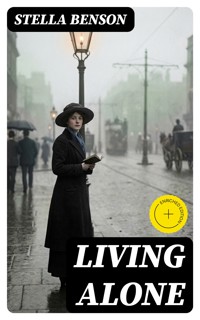
In her poignant novel "Living Alone," Stella Benson skillfully intertwines themes of loneliness and self-discovery against the backdrop of early 20th-century England. Written in a distinctive blend of modernist sensibility and vivid character portrayals, the narrative follows the life of a young woman who navigates the complexities of independence, societal expectations, and the quest for authentic connection. Benson's innovative literary style, marked by lyrical prose and sharp wit, reflects her deep engagement with the feminist discourse of her time, particularly regarding women's roles and their personal freedoms in an increasingly industrialized world. Stella Benson, a figure of the early feminist movement, draws from her own experiences as a trailblazing woman in a male-dominated literary landscape. Her unique position as a traveler and observer lends her writing a global perspective that enriches her characters' emotional journeys. Benson's life, marked by both adventure and introspection, undoubtedly influenced her exploration of solitude and the complexities of human relationships, making her work resonate with authenticity and depth. "Living Alone" is a must-read for anyone interested in the intersections of gender, identity, and individuality. Benson's insightful exploration of the human condition invites readers to reflect on their own experiences of solitude and the universal yearning for connection, making it a timeless and essential contribution to feminist literature. In this enriched edition, we have carefully created added value for your reading experience: - A succinct Introduction situates the work's timeless appeal and themes. - The Synopsis outlines the central plot, highlighting key developments without spoiling critical twists. - A detailed Historical Context immerses you in the era's events and influences that shaped the writing. - A thorough Analysis dissects symbols, motifs, and character arcs to unearth underlying meanings. - Reflection questions prompt you to engage personally with the work's messages, connecting them to modern life. - Hand‐picked Memorable Quotes shine a spotlight on moments of literary brilliance. - Interactive footnotes clarify unusual references, historical allusions, and archaic phrases for an effortless, more informed read.
Das E-Book können Sie in Legimi-Apps oder einer beliebigen App lesen, die das folgende Format unterstützen:
Veröffentlichungsjahr: 2019
Ähnliche

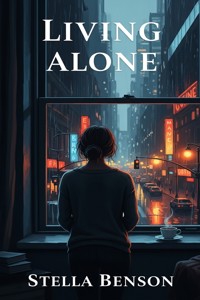












Living Alone
Table of Contents
Introduction
In a London rattled by war yet stubbornly domestic, Living Alone turns the spectacle of magic into a sly measure of solitude, showing how the wish to escape into privacy, into fantasy, into uncompromised selfhood tests the claims of duty, charity, and community, and suggesting that the strangest enchantment is not broomsticks or spells but the unshared room of the mind, a space at once liberating and perilous, where compassion is negotiated, obligations are weighed, and the ordinary world acquires a subversive shimmer that unsettles habits of seeing while revealing what loneliness can conceal and what it can clarify.
Living Alone is a novel by Stella Benson, first published in 1919. It blends fantasy with social satire and is set largely in London on the First World War home front, where air raids, shortages, and committees form the texture of daily life. Rather than building an elaborate secondary world, the book threads unpredictable magic through streets, offices, and lodgings that feel recognizably ordinary. In doing so, it reflects its moment of publication, when the war had ended but its aftershocks still shaped habit and mood. The result is a distinctly British urban fantasia that treats the marvelous as a casual intruder.
The premise is disarmingly simple and purposefully fluid. A witch arrives in the city and, without demanding belief, proceeds to rearrange expectations, sweeping a handful of harried civilians into episodes that run at a slant to ordinary chronology and logic. The encounters are less about destiny than about perspective: workaday people, tired by forms and queues, discover that enchantment alters not only what can happen but how motives look when pressure lifts for a moment. The story keeps its boundaries porous, allowing errands, shelters, and drawing rooms to open onto sudden flights that test the comfort and costs of escape.
Benson’s narrative voice is brisk, amused, and sharply observant, moving with ease from airy whimsy to an astringent aside. Scenes shift quickly, as if the city itself were turning a kaleidoscope, and the prose delights in surprising comparisons that keep the marvelous lightly worn. The book’s satire is genial but pointed, especially when institutions speak in cant or when benevolence shades into self-importance. At the same time, a quiet tenderness runs beneath the sparkle, attentive to fatigue, illness, and the small heroism of getting through a day. The mood is buoyant without denial, melancholy without surrender, and consistently alert.
As its title announces, solitude is central, but the book is less a celebration of withdrawal than a study of its uses and limits. It weighs self-possession against obligation, testing how much freedom can be claimed without abandoning sympathy. War amplifies this tension, magnifying both the need for coordinated effort and the temptations of retreat. Other themes accrue around that axis: the social performance of charity, the friction between imagination and pragmatism, the costs of conformity, the sly resilience of misfits, and the pressure of rules that multiply under stress. Magic becomes a metaphor for choices that feel unsanctioned yet necessary.
For contemporary readers, the novel’s relevance lies in its articulation of private space at a time of public urgencies. It asks how one sustains an inner life without lapsing into indifference, and how civic spirit can be preserved without policing imagination. Its urban vignettes of scarcity, anxiety, and odd camaraderie may sound familiar, yet the book resists despair through nimble humor and a refusal to flatten complexity. The fantasy elements are not an escape hatch so much as a diagnostic tool, exposing habits, anxieties, and desires that often go unnamed. In this way, the book feels both timely and bracing.
Approach Living Alone expecting a compact, inventive urban fantasy that reads as comedy of manners and as home front portrait. You will meet everyday figures who, touched lightly by the marvelous, reveal quirks and kindnesses that bureaucracy tends to blur, and you will traverse streets where the familiar shifts at a glance. The chapters move quickly, scenes end on glints rather than grand finales, and the cumulative effect is oddly heartening. Benson offers amusement, astringency, and sudden shafts of feeling, not moral instruction or puzzle-box plotting. The result is a novel that leaves a lingering clarity about how to belong.
Synopsis
Set in wartime London, Living Alone opens with the sudden appearance of a witch who treats magic as an ordinary craft amid air-raid warnings, ration queues, and official notices. Her broomstick excursions and unbothered defiance of rules establish a city where the everyday and the impossible coexist. A minor brush with the law introduces the book’s dry, procedural humor, as police and clerks react to enchantment with paperwork. The witch’s presence is not ominous; it is disruptive in a playful, unpredictable way that changes how people move through streets and shops. This arrival sets the stage for encounters that test habits formed by war and routine.
Sarah Brown, a shy, practical worker for a charitable committee, meets the witch while performing routine relief tasks. Her days are structured by lists, visits, and minutes from meetings, yet she is quietly receptive to wonder. The witch draws her into small expeditions above London’s roofs, where alarms and curfews seem distant. Their acquaintance forms the book’s central hinge: a contrast between disciplined service and uncommitted freedom. Sarah Brown neither rejects duty nor embraces reckless escape, and her perspective becomes a steady thread through episodes of magical misrule. Through her, the narrative follows how enchantment interrupts official processes without fully canceling responsibilities.
Seeking lodging, the witch is drawn to a singular boarding house known as Living Alone, a place where independent women conduct their lives with minimal interference. The house accepts eccentricity as ordinary, so broomsticks, sudden vanishings, and unorthodox errands are treated as quirks rather than crises. This setting provides a base from which the witch drifts in and out, leaving traces of altered expectations among residents and visitors. The social rhythms of the house—mealtimes, notes on the hall table, brief alliances—frame scenes in which magic meets domestic routine. The title’s phrase becomes literal here, describing both privacy of rooms and a chosen mode of life.
In parallel, the novel surveys the machinery of wartime charity and civic order. Sarah Brown attends meetings, conducts interviews, and navigates forms intended to distribute help fairly, while the witch cuts across these systems with spells that ignore queues and categories. The contrast produces episodes of mild chaos at offices, shops, and public entertainments, as rules collide with inexplicable shortcuts. Street patrols, air-raid practices, and blackout ordinances recur as background procedures, emphasizing a city organized against uncertainty. The narrative keeps these details clear and practical, using them to set stakes for both inconvenience and safety. Magic functions as a temporary detour rather than a solution.
A returned officer enters the story, carrying the brisk manner of someone trained to act under orders and the hesitations of recent memory. He is fascinated by the witch’s mobility and diverted by Sarah Brown’s steadiness. Their meetings gather around a charity event and a fanciful entertainment where uniforms, costumes, and illusions mingle. The witch’s interventions turn the occasion spectacular, unsettling decorum while enlivening the crowd. This sequence marks a turning point, bringing private desires to the surface and tying them to public display. The dynamics among the three become clearer: admiration, curiosity, and a wish for ordinary anchorage in a city still on alert.
In the aftermath, consequences ripple through the Living Alone house and beyond. The officer seeks footing between regulation and improvisation; Sarah Brown weighs the merits of constancy; the witch retains a principle of not belonging. Air-raids and alarms continue to structure nights, placing both romance and whimsy under practical constraints. Visits, letters, and brief appointments show the limits of sustained attention in a disrupted city. The witch’s unpredictable departures frustrate expectations, yet they also protect her from claims she does not intend to answer. Tension gathers not as catastrophe but as a series of choices about what time, care, and companionship can mean.
A later excursion carries the trio into a distinctly magical setting, apart from the mapped city, where ordinary rules pause. The place functions as a neutral ground for stating wishes plainly and testing what each character values when distraction falls away. The officer projects images of safety and restoration; Sarah Brown listens for a livable compromise; the witch articulates the logic of living alone—freedom from obligations that transform into debts. The chapter balances decorative fantasy with direct conversation, keeping outcomes undecided. The sense is of a holiday that clarifies rather than escapes the problem, returning each participant to London with sharper preferences.
As pressures mount, decisions move toward a quiet climax shaped by wartime schedules, committee duties, and the witch’s refusal to settle. Rooms at the Living Alone house change occupants; meetings are attended or missed; departures arrive as punctually as trains. The officer must choose a path that fits his training and temperament, while Sarah Brown measures loyalty against self-protection. The witch’s power remains intact but increasingly at odds with expectations of permanence. The narrative respects the privacy of outcomes, signaling changes without spectacle. What resolves is not a grand conflict but an alignment of separate courses that acknowledge affection without insisting on possession.
By closing, Living Alone has traced how magic, bureaucracy, and personal need intersect during a constrained historical moment. Its central message centers on the viability and cost of independence: living alone as a deliberate practice rather than an accident. The book presents enchantment as a lens that reveals how rules work and how attachments form, instead of as an escape from consequence. The tone stays measured, alternating brisk observation with brief flights, and the ending leaves characters placed in ways consistent with their earlier choices. The result is a narrative that outlines freedom, duty, and companionship without prescribing a single desirable arrangement.
Historical Context
Stella Benson’s Living Alone is set in wartime London during the final years of the First World War, roughly 1916–1919. The novel’s streets, trams, and queues, its dimmed lamps and air-raid alarms, place the narrative squarely in the metropolis under emergency regulation. Benson’s London is a city of committees, ration cards, official notices, and watchful police, alongside casual wit and surreal magic. Central neighborhoods—squares and terraces that recall Bloomsbury and Kensington—form the social topography, while the Thames Embankment and parks suggest spaces of escape. The house called “Living Alone,” half refuge and half club, gathers solitary people amid sirens, shortages, and the weary urban rhythms of the home front.
The Great War’s air raids on London form a crucial historical backdrop. German Zeppelins began bombing in 1915, notably the LZ 38 raid of 31 May 1915, which brought aerial warfare to the capital. From 1917, Gotha G.V and later Giant bombers conducted deadlier attacks; the daylight raid of 13 June 1917 killed 162 and injured 432. London’s Air Defence Area (LADA), organized under Major-General E. B. Ashmore in 1917, coordinated searchlights, anti-aircraft guns, and warning systems. Living Alone mirrors this climate of dread and improvisation: the Witch’s flights through the night sky collide, comically and critically, with sirens, searchlights, and a nervous bureaucracy primed to mistake wonder for threat.
Food shortages and rationing defined daily life by 1917–1918. Germany’s intensified U-boat campaign caused record Allied shipping losses—881,000 tons in April 1917—forcing Britain to centralize supply. The Ministry of Food appointed Lord Devonport in December 1916 and, after his resignation, Lord Rhondda in June 1917, who imposed price controls and, crucially, compulsory rationing. Sugar was rationed nationally from January 1918; meat, butter, and fats followed by spring, ration books becoming ubiquitous in London. Long queues, substitutions, and “meatless” days reshaped eating habits. Living Alone repeatedly invokes queues, scarcity, and makeshift meals, using magical intrusions to satirize a system in which official coupons and improvisation governed the urban table.
Emergency regulation and proliferating offices under the Defence of the Realm Act (DORA), enacted 8 August 1914, permeated the city’s social order. DORA enabled censorship, lighting restrictions, and controls on movement and speech; the Central Control Board (Liquor Traffic), created 1915, shortened pub hours and introduced anti-treating rules in 1916. Registration and labor oversight expanded through the National Registration Act (1915) and the Ministry of Munitions (1915) under David Lloyd George. Living Alone lampoons this culture of forms, permits, and committees: its charity counters and officious clerks dramatize a paperwork state that blurs care and control. Benson’s own war-time relief work in London acquainted her with administrative gatekeeping, shaping the novel’s precise humor about red tape.
Women’s wartime labor and political gains form a second decisive context. By 1918, some 900,000 women worked in munitions; others served as bus and tram conductors in London, or joined new auxiliaries—the WAAC (1917, later QMAAC), the WRNS (1917), and the WRAF (1918). Political recognition followed: the Representation of the People Act received Royal Assent on 6 February 1918, enfranchising about 8.4 million women over 30 who met property qualifications, while granting the parliamentary vote to all men over 21 (and many soldiers over 19). Living Alone’s independent heroines, who literally and figuratively “live alone,” echo the suffrage-era ethos of female autonomy and wartime competence, questioning marriage conventions and asserting a social space for single women in the capital.
The 1918–1920 influenza pandemic immediately succeeded the Armistice, killing an estimated 200,000–250,000 in the United Kingdom and perhaps 50 million worldwide. A mild summer wave (June–July 1918) gave way to a lethal autumn surge (October–November 1918) and a further wave in early 1919. London’s hospitals and undertakers were overwhelmed; public health messaging and local closures struggled under wartime dislocation, preceding the creation of the Ministry of Health in 1919 under Christopher Addison. Although influenza is not a plot motor, Living Alone’s 1919 publication and its insistence on frailty, breath, and absence resonate with a city grieving innumerable private losses. Benson’s own chronic illness deepens the novel’s tender attention to precarious bodies and solitary endurance.
Urban poverty, inflation, and charitable relief further shaped the wartime metropolis. Retail prices roughly doubled between 1914 and 1918, squeezing working-class households in London’s East End and inner suburbs. Organizations such as the Soldiers’ and Sailors’ Families Association (SSAFA), local War Relief Funds, and statutory bodies created by the Naval and Military War Pensions Act (1915) mediated allowances, prosthetics, and claims for the war’s wounded and dependents; British military losses exceeded 886,000 dead and about 1.6 million wounded. Living Alone opens onto charity counters and “cases,” exposing the paternalism and rationed benevolence of relief culture. Its comic-magical episodes dismantle the etiquette of deservingness, placing titled donors, clerks, and the poor in the same queue, under the same anxious London sky.
As social and political critique, Living Alone uses fantasy to defamiliarize wartime normality, exposing the moral costs of a regulated home front. The novel ridicules bureaucratic self-importance—permits, coupons, and forms—while insisting on the human needs such systems often eclipse. It interrogates class by staging encounters in queues, shelters, and charity rooms where old hierarchies appear arbitrary. It advances a gender critique by normalizing female independence amid patriarchal expectations, in the very year partial suffrage arrived. Finally, by juxtaposing air-raid fear with small acts of kindness and whimsy, Benson indicts a culture that polices risk more fiercely than it heals grief, granting solitary citizens the dignity of their own, unlicensed lives.




