


1,99 €
Niedrigster Preis in 30 Tagen: 1,99 €
Niedrigster Preis in 30 Tagen: 1,99 €
Mehr erfahren.
- Herausgeber: DigiCat
- Kategorie: Gesellschafts- und Liebesromane
- Sprache: Englisch
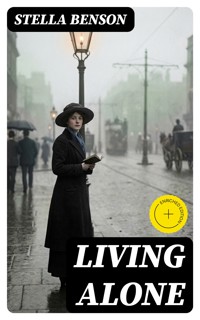
In "Living Alone," Stella Benson presents a vivid exploration of the themes of independence and isolation through the lens of a young woman navigating the complexities of single life in early 20th-century England. The novel is characterized by its lyrical prose and introspective style, weaving a tapestry of emotions as the protagonist confronts societal expectations, personal aspirations, and the nuances of solitary existence. Benson's work is a potent reflection of the changing dynamics of gender roles during the interwar period, intelligently critiquing the conventions of domesticity while simultaneously celebrating autonomy and self-discovery. Stella Benson, an early feminist and accomplished writer, was influenced by her own experiences of traveling and living in various cultures, shaping her perspective on individuality and societal norms. Her background as a suffragist and her keen observations of contemporary issues concerning women in society inform her narrative, providing depth and authenticity to the character's journey. Benson's commitment to highlighting the struggle for women's independence resonates throughout her work, marking her as a significant voice in literature. "Living Alone" is a profound examination of solitude and personal strength, making it a must-read for those interested in feminist literature and character-driven narratives. Readers will find themselves captivated by Benson's insightful portrayal of life's complexities, inviting them to reflect on their own experiences of independence and belonging. In this enriched edition, we have carefully created added value for your reading experience: - A succinct Introduction situates the work's timeless appeal and themes. - The Synopsis outlines the central plot, highlighting key developments without spoiling critical twists. - A detailed Historical Context immerses you in the era's events and influences that shaped the writing. - A thorough Analysis dissects symbols, motifs, and character arcs to unearth underlying meanings. - Reflection questions prompt you to engage personally with the work's messages, connecting them to modern life. - Hand‐picked Memorable Quotes shine a spotlight on moments of literary brilliance. - Interactive footnotes clarify unusual references, historical allusions, and archaic phrases for an effortless, more informed read.
Das E-Book können Sie in Legimi-Apps oder einer beliebigen App lesen, die das folgende Format unterstützen:
Veröffentlichungsjahr: 2022














Living Alone
Table of Contents
Introduction
Between the drab errands of a city at war and the unruly freedoms of magic, Living Alone turns solitude into a stage where duty, desire, and the wish to disappear all argue for precedence, following a set of wanderers who find, in a strange house and in sudden enchantments, both escape from the rules that bind them and an uneasy mirror of the selves they would rather not admit to, so that every bureaucratic queue, charitable impulse, and broom-borne flight measures the distance between the world that insists on usefulness and the private need to be gloriously, dangerously unaccountable.
Stella Benson’s Living Alone is a short novel of fantasy and social satire set in London during the First World War, first published in 1919. Written amid the shortages, anxieties, and officious routines of the home front, it imagines contemporary streets and offices crossed by the casual presence of a witch and a house for those who refuse ordinary life. The book belongs to a vein of early twentieth-century British fiction that tests reality with whimsy to expose social habits, yet it retains the bite of a city novel: trams, queues, committees, and shop windows jostle with broomsticks and spells.
At its simplest, the novel begins when an unassuming Londoner engaged in war work encounters a witch whose home—the House of Living Alone—opens a door to a different ethic of belonging and detachment. The plot proceeds by encounters rather than schemes: visits, invitations, disappearances, and small adventures that reframe familiar routines. Benson’s narrator is airy and conspiratorial, amused by human seriousness yet unexpectedly tender with the lonely. The style mingles quick, aphoristic observation with patches of dreamlike imagery. The tone is playful without frivolity, a comedy that keeps glancing at hunger, fatigue, and the numbing patience that wartime bureaucracy demands.
The reading experience is less a march of escalating events than a procession of scenes in which the ordinary and the impossible regard one another with equal nonchalance. Shops and shelters, lodging houses and river paths become thresholds where spells alter not only what happens but how people feel entitled to live. Humor arises from mismatched expectations: practical Londoners make room, grumbling, for marvels; marvels in turn expose how much convention asks people to ignore. Benson favors quick cuts and reflective asides, so episodes end on a sidelong insight rather than a flourish, and lightness delivers an aftertaste of poignancy.
Solitude is the book’s governing theme, but it is never simple. Living alone can be an assertion of freedom, a shield for grief, or a rebuke to a city that treats usefulness as the only passport to belonging. The novel weighs self-sufficiency against the claims of work, friendship, and public service, especially as wartime relief efforts blur the line between helping and managing the poor. It is attentive to women’s labor and the new spaces women occupied, without pretending that access equals ease. Magic poses a question rather than an answer: what forms of escape enlarge life, and which merely postpone courage?
For contemporary readers, the book speaks sharply to urban isolation and the demand to justify one’s time. Its satire of red tape, moral performance, and philanthropic busyness feels familiar in any age that prizes metrics over meaning, while its defense of private oddness anticipates later celebrations of chosen identity. As an ancestor of urbane fantasy, it shows how the marvelous can sharpen, rather than soften, social critique. Just as importantly, it models a compassionate attention to people who do not quite fit—those who pull back, who drift, who prefer a room of their own yet still crave a language for kinship.
Approached on its own terms—light on plot, rich in attitude—Living Alone offers an experience of glancing laughter and slow-blooming ache. The London of uniforms, shortages, and dimmed lights remains the backdrop, but the focus is on how a few people rethink the permissions of a life: what may be refused, what may be dreamed, and what, however briefly, may be flown above. Benson’s wit prevents solemnity; her tenderness prevents mere farce. To read the book now is to step into a house that honors private space without denying responsibility, and to leave it with a clearer sense of chosen company.
Synopsis
First published in 1919, Living Alone by Stella Benson is a satirical fantasy set in wartime London, where ration books, queues, and air-raid alarms coexist with broomsticks and spells. The novel frames its world with a light, ironic voice that treats magic as another shabby lodging on the home front, no stranger than official forms or charitable committees. Against this backdrop, Benson explores solitude and self-sufficiency, contrasting private dreams with public duty. Everyday detail is constantly skewed by sudden enchantments, producing a narrative that hovers between farce and elegy while attending to the strain, fatigue, and bureaucratic absurdities of civilian life during the First World War.
At the story's center is Sarah Brown, an anxious, capable young woman absorbed in small acts of war work and the etiquette of committees. She meets a witch whose blithe disregard for rules exposes the thinness of habits that pass for virtue. Their first encounters, half accident and half invitation, interrupt the routines of meetings, errands, and air-raid nights. The witch does not persuade so much as whisk people sideways, making nonsense of timetables and hierarchies. For Sarah Brown, who longs for meaningful usefulness yet mistrusts conventional consolations, this arrival opens a jagged path between dutiful participation and a wilder, inwardly honest freedom.
Through the witch, Sarah Brown reaches the Living Alone house, a shifting household for the unattached and the unclassifiable. The place resists addresses and inspections, preferring to exist just beyond clerks' ledgers. It offers sanctuary from family claims and patriotic pieties, yet it is no paradise; bills still arrive, and hunger and weather intrude. Episodes swirl around this base: a broomstick flight over blackout streets, a shop that sells what customers do not know they want, officialdom confounded by doors that will not stay put. Benson uses these motifs to balance bright whimsy against the startled seriousness of a city at war.
Sarah Brown's days become a collage of relief work, errands through smoky streets, and excursions at the witch's side into slippery magical logic. Her inward hesitations—about usefulness, affection, and the performance of goodness—are prodded into speech by experiences that collapse categories of real and unreal. The narrator's frequent asides, brisk and humane, widen the field of view to include bystanders, petty officials, and strays, suggesting a London populated by the lonely and the nearly invisible. In this movement, Benson experiments with tone and structure, letting fantasy unsettle decorum while exposing the self-protective habits that pass as common sense in a time of strain.
Encounters with soldiers home on leave, clerks counting shortages, and fellow housemates refine the book's central question: how to live without surrendering either autonomy or tenderness. The witch's freedom is exhilarating but unsentimental; she resists courts and cures, and her gifts often arrive as reversals of expectation. For Sarah Brown, the prospect of attachment hovers—never merely romantic, always entangled with obligation and the knowledge of loss. Scenes of parties, raids, and small rescues suggest that magic can ease burdens of fear and habit, but it cannot rewrite the ledger of a city under rationing. Choices begin to take clearer, costlier shape.
As the narrative gathers its later turns, departures and disappearances test what the title quietly promises. To live alone may mean to defend a space for fantasy, to refuse sentimental surveillance, or to endure the separations imposed by war. The witch's orbit does not dissolve grief or bureaucracy; it reveals their edges and loopholes. Sarah Brown's path bends toward a decision about where to stand when summonses arrive from love, duty, and escape. Without disclosing outcomes, the close maintains a glimmering ambiguity, leaving some characters glimpsed rather than concluded, and preserving the book's air of un-pin-downable freedom in the midst of constraint.
Living Alone endures as a curious, influential bridge between Edwardian satire and later modernist, feminist-inflected fantasies. Its wartime London is both documentary and dreamscape, recording the fatigue of the home front while insisting on the insurgent value of imagination. Benson's brisk, compassionate ironies challenge pious bureaucracy and tidy sentiment, suggesting that independence is neither selfishness nor cure-all but a way to keep integrity under pressure. The novel's playful structure, self-aware narration, and refusal of finality continue to resonate for readers interested in speculative approaches to social reality. It offers, without prescriptive answers, a durable meditation on autonomy, care, and escape.
Historical Context
Stella Benson’s Living Alone appeared in 1919, emerging from the final wartime and immediate post‑armistice atmosphere of London. Its scenes draw on the British home front of 1916–1918, when the Defence of the Realm Act regulated everyday life, blackouts darkened streets, and new ministries supervised production and consumption. The Ministry of Food, created in 1916, organized local Food Control Committees and, by 1918, ration books governed staples such as sugar, meat, and fats. Civilian routines adjusted to sirens, shelters, and official notices, while municipal and national agencies multiplied. Against this bureaucratized and anxious city, Benson stages a fantastical, satiric portrait of ordinary lives.
From 1915 to 1918 London endured aerial bombardment unprecedented in Britain. Zeppelin raids gave way to Gotha and Giant bombers, culminating in daylight attacks in 1917. On 13 June 1917 a Gotha raid killed more than 160 people and injured hundreds, intensifying calls for better defenses and stricter blackouts. Searchlights, anti‑aircraft guns, and warning systems became familiar, and civilians sought refuge in basements, cellars, and, at times, Underground stations. The atmosphere of interruption—sirens cutting across work and leisure—shaped urban psychology. Benson’s novel evokes that disruption and the surreal contrasts it produced: routine errands coexisting with sudden alarms and official instructions.
Shortages and price inflation reshaped domestic life during the war’s later years. Under Food Controller Lord Rhondda, the Ministry of Food promoted conservation, established national kitchens, and implemented compulsory rationing in early 1918 for sugar, meat, butter, and margarine. Queues, ration books, and substitute ingredients became ordinary, while posters urged thrift—“Eat Less Bread” became a familiar injunction. War Savings campaigns encouraged small investors to buy certificates, binding households to the national cause. Benson situates her narrative amid this culture of scarcity and moral exhortation, where meals, shopping, and even small pleasures are overseen by regulations, clerks, and notices that reach into private habits.
The British state expanded rapidly under wartime emergency powers. The Defence of the Realm Act authorized censorship, lighting restrictions, controls on drink and pub hours, requisitioning, and regulations on photography and movement near strategic sites. New or enlarged departments—the Ministry of Munitions (1915), Ministry of Food (1916), and Air Ministry (1918)—generated committees, forms, and inspection regimes. National Registration in 1915 created new record‑keeping and classification of labor. Posters, passes, and permits marked everyday transactions. Living Alone satirizes this administrative proliferation, depicting a city where notices and offices mediate the simplest acts, and where the logic of paperwork often eclipses human particularity and common sense.
War mobilization transformed women’s public roles. Hundreds of thousands worked in munitions, transport, agriculture, offices, and auxiliary services: the Women’s Army Auxiliary Corps (1917; later Queen Mary’s Army Auxiliary Corps), the Women’s Royal Naval Service (1917), and the Women’s Royal Air Force (1918). Political change followed. The Representation of the People Act 1918 enfranchised many women over 30, and the Parliament (Qualification of Women) Act 1918 allowed women to sit in the House of Commons; the Sex Disqualification (Removal) Act 1919 opened professions more widely. Benson, who supported women’s independence and wrote frequently about women’s work, draws on this shifting landscape to frame female agency and constraint.
Wartime London also relied on a dense network of relief institutions. The Charity Organisation Society, founded in 1869, promoted casework and the investigation of need; settlement houses such as Toynbee Hall in the East End fostered social reform; and organizations like the Soldiers’ and Sailors’ Families Association helped distribute separation allowances. Rising living costs and disrupted employment strained households, and relief often came with scrutiny and advice. Benson observed and wrote about urban social work in wartime London, and her satire reflects the tensions between help and control. Offices, interviews, and “deservingness” judgments form a backdrop to her portrayal of precarious, proud Londoners.
Living Alone belongs to a wartime and immediate postwar literary moment that mixed fantasy, satire, and modernist experiment to confront official euphemism and fatigue. Contemporary works such as Rose Macaulay’s What Not (1918) critiqued bureaucratic overreach, while Arthur Machen’s wartime tales used the uncanny to register anxiety. Women writers increasingly used ironic or fantastical frames to interrogate gender and authority. Published in 1919, Benson’s novel stands alongside this tendency, yet its lightness conceals precision: whimsical episodes are calibrated to expose the language of posters, the tone of committees, and the social choreography of queues, raids, and charitable interviews.
The armistice of November 1918 and the uneasy year of 1919—marked by demobilization, strikes, and the influenza pandemic’s lingering waves—left London balancing relief with exhaustion. Living Alone translates that mood into a comedy of evasion and exposure: magical disruptions test the authority of rules, while characters negotiate new liberties and old expectations. Without rehearsing battlefield scenes, Benson’s work distills the British home front’s central tensions—regimentation, scarcity, and shifting gender dynamics—into an urban fairy tale that both mirrors and mocks its time. Its critique resides in tone as much as plot, showing how ordinary people navigated an extraordinary apparatus of control.




