


Erhalten Sie Zugang zu diesem und mehr als 300000 Büchern ab EUR 5,99 monatlich.
- Herausgeber: IVP
- Kategorie: Religion und Spiritualität
- Sprache: Englisch
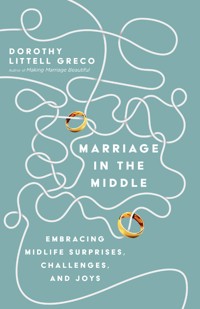
Midlife is a season of challenge and change—professionally, relationally, physically, and spiritually. On our better days, we experience a sense of growing clarity and satisfaction about who we are. We might even be coming to terms with our limitations and vulnerabilities, letting go of some dreams and creating new ones. But many days, we are overwhelmed and exhausted by the intense transitions of this season, leaving us feeling off-balance and insecure. And these challenges reverberate through our marriages, making us wonder how we're going to survive. Though many assume that "midlife" is synonymous with "crisis," Dorothy Littell Greco reminds us that it doesn't have to be that way. The demands of midlife actually force us to adjust and adapt, providing new opportunities for discovery and growth within our marriages. With vulnerability and insight, Marriage in the Middle will inspire and encourage you to invest in your relationship with your spouse, enabling you both to thrive as you face the challenges and changes of this era together.
Sie lesen das E-Book in den Legimi-Apps auf:
Seitenzahl: 293
Veröffentlichungsjahr: 2020
Das E-Book (TTS) können Sie hören im Abo „Legimi Premium” in Legimi-Apps auf:
Ähnliche















FOR
VAL AND TOM
DAN AND KATHY
ERIK AND JEAN
CHUCK AND MARIANNE
Thank you for showing us
the beauty and the wonder of marriage in the middle.
CONTENTS
INTRODUCTION
Congratulations on making it to the middle of life while married.
No single narrative could possibly encompass all of our lives. We might be unemployed, launching an encore career, retired, well established in the job of our dreams, or homeschooling young children. Some of us are training for marathons while others are recovering from heart attacks. We might be choosing preschools for our kids, grad schools for ourselves, and assisted living facilities for our parents—all in the same month. Some of us are newlyweds, some are newly remarried, and others are celebrating thirty or even forty years together. And as it pertains to the state of our marriage, we might be hitting our stride or wondering if we’re going to make it.
Regardless of where we find ourselves, at least two threads connect us.
First, we’re all facing the limits of our power. We cannot slow down the passing of time or stop the effects of aging. We can’t influence the stock market or control how our parents’ lives will end. These are sobering and often overwhelming realities.
Second, the intense demands and rapidly changing circumstances of midlife force all of us to constantly adjust and adapt. Caregiving responsibilities will decrease in certain areas and increase in others, leaving us off balance and uncertain about what’s being asked of us. Seismic shifts in the workplace will force us to be more agile. Spiritual practices that previously helped us to connect with God may begin to feel empty, compelling us to discover new forms of worship.
Yet in the same season, we should begin to experience a sense of satisfaction in all that we’ve accomplished and a growing clarity about who we are. We may even feel like we could teach a master class on adulting. At least on good days.
None of us will be exempt from the many reverberations of midlife. Ultimately, disequilibrium is a good thing because it forces us out of our comfortable routines and invites us to reinvest in every aspect of our life—including marriage.
My primary goals for this book are threefold: to articulate the hows and whys of the disequilibrium, to assure you that you’re not alone, and to offer both encouragement and strategies that will help you thrive in this season. You’ll discover a wealth of relevant, practical information in the coming pages, but you won’t find clichés or formulas. Instead, Marriage in the Middle will meet you where you are and model vulnerability, promote honesty, and offer grounded hope.
Vulnerability, honesty, and hope are all evident in the interviews that begin and end chapters two through ten. The men and women I spoke with are from diverse ethnic backgrounds, including African American, African Caribbean, Asian, Black, Latina, and Caucasian (these descriptors were chosen by the interviewees). Their words are verbatim, but names and some identifying details have been changed to protect their privacy. My husband, Christopher, also weighs in throughout the book. (He also signed off on everything. Even the painfully honest sections about his family.)
Marriage in the Middle addresses many, but certainly not all, of the issues faced by those of us who are roughly between the ages of forty and sixty-five. Though tomes have been written on trauma and attachment issues, I included a chapter on each, hoping that readers will recognize how these topics may affect their marriages. Questions at the end of each chapter will help you go deeper and serve as conversation starters for couples or small groups.
And if you’ve read my earlier book, Making Marriage Beautiful, please know that Marriage in the Middle does not repackage that content. However, you will recognize some thematic overlap—after all, I still follow Jesus and I’m still married to the same man.
Midlife can often leave us feeling like we’re out in the middle of the sea in a tiny boat with a single sail. Though we have little power over the frequency or intensity of the storms that rage around us, we do have tremendous agency in how we respond. My prayer is that Marriage in the Middle will inspire and motivate you to do whatever it takes so that you will be able to sail resolutely and joyfully into the final chapter of life.
CHAPTER ONE
THE PARADOX OF MIDLIFE MARRIAGE
Crisis or Opportunity?
Without even trying, my husband, Christopher, and I confronted almost every major midlife challenge in an extremely compressed period of time. When we dropped off our eldest son for his first year of college, we naively assumed that we were entering midlife’s sweet spot. In reality, we were saying goodbye to life as we knew it—and not in a way we would have chosen.
After settling him into his dorm, we drove east for seven hours. As we pulled into the hotel parking lot, an inebriated woman staggered out the front doors slurring, “Run! Get outta here.” We thought she was talking to an imaginary friend, but in retrospect she was warning us. While packing up the next morning, a small, moving object caught my eye. I instinctively grabbed it, popped it in an empty Ziplock bag, and typed bedbug into my handheld. My heart sank as the photos appeared.
The hotel manager assured us that putting our belongings in commercial clothes dryers would kill the bugs. He was wrong, but it took several weeks to figure that out. We piled into the minivan completely oblivious to how much collateral damage his ignorance would cost.
Upon crossing the New York-Massachusetts border, my husband’s sister called to inform us that their mom had been admitted to the hospital. We debated going back but decided that it was probably nothing serious and continued on our way to Boston.
Within an hour of arriving home, I went to the laundromat and dried all of our clothes to a crisp. All for naught. Two weeks later, we woke up with bites on our legs.
We then hired a bedbug-sniffing beagle who unceremoniously sat down in three separate places, confirming what we suspected. The pest removal specialist arrived shortly thereafter with massive portable heaters to bake each room. It looked like the Drug Enforcement Agency had come through: mattresses were pushed off the beds, chairs were turned upside down, and the contents of our closets and dressers were strewn across the room so they could be evenly cooked. The price tag exceeded two mortgage payments, and the hotel refused to share the fee.
Meanwhile, my mother-in-law’s health steadily worsened. Doctors initially thought she was suffering from kidney stones. Then pancreatitis. Finally, she was diagnosed with advanced pancreatic cancer. She never made it home from the hospital.
Next up, our youngest son took a shot to the neck while playing football, resulting in a concussion and a peculiar throat injury. We spent several weeks going back and forth to specialists exploring whether or not he’d need corrective surgery. He didn’t, but the injury ended his football career.
If you can believe it, things got worse.
For fifteen years Christopher had been on staff with an amazing, dynamic church. Though we both loved partnering with and serving these faith-filled men and women, we had been sensing that this chapter was coming to a close. The same week we returned from burying his mother, it became clear we needed to leave. Two months later, Christopher resigned with no next job lined up. Though I work full-time, my annual income could only cover our living expenses if we moved someplace significantly less expensive. Like a campground. In Florida.
All of this took place over three short months.
In the midst of this unraveling, I had a dream in which the two of us were hanging onto the edge of a cliff. I looked over at him and said, “I hope you’re doing okay because I can’t do anything to help you.” It was not uncommon for us to experience four of the five stages of grief—denial, anger, bargaining, and depression—in one week. Though we prayed, talking with God did not free us from anxiety or fear. Some days, keeping the faith meant choosing not to quit.
Prior to these events, we felt competent and stable. As often happens during a crisis, the tremors exposed preexisting fault lines. Christopher began to experience the natural insecurities that come from a sudden, midcareer job loss. Doubts about his capacity and worth—things he thought he had laid to rest in his twenties—came roaring back. Those feelings propelled him into anxious activism that crowded out the boys and me. His concerns were not unfounded; there was a lot on the line. Because I deemed Christopher’s experiences more consequential—and because I felt so overwhelmed—I shut down emotionally and marched resolutely through my days.
It was the most traumatic, destabilizing year we had gone through as a married couple. And yet this experience birthed deep transformation. Our crisis revealed itself as an opportunity to evaluate our life and make significant changes. My hunch is that we’re not outliers. There is much wisdom to be gleaned from tumult.
REFRAMING MIDLIFE CRISIS
Even though the years between forty and sixty-five do not represent the true middle of our lives—few of us will live to one hundred or beyond—midlife is a very real thing. There’s something essential going on that’s worth exploring, particularly as it relates to marriage.
This is a time of multidimensional change. As these shifts alter the landscapes of our lives, it can be disturbing and raise more questions than answers. Our disorientation gets exacerbated if strategies and coping mechanisms that previously served us no longer seem to work. When what’s familiar fails, we may find ourselves withdrawing, blaming, or fixating on relational dynamics that we previously overlooked. If any of this resonates with you, rest assured, you’re not alone.
Psychologist Elliott Jaques introduced the term midlife crisis in 1965. It’s no surprise that his discoveries about the inner turmoil that results from confronting one’s mortality coincided with the external turmoil of the 1960s, which included racial unrest, political corruption, the Vietnam War, and multiple assassinations. More than fifty years later the concept has taken on a life of its own. Culture has come to accept this much ballyhooed term as an unavoidable reality that lurks in the shadows, waiting for an opportune moment to sabotage our lives. But is that an accurate description of midlife, or is it unhelpfully fatalistic and passive?
Journalist Barbara Bradley Hagerty sees midlife through a far more hopeful frame of renewal: “This is a time when you shift gears—a temporary pause, yes, but not a prolonged stall. In fact, you are moving forward to a new place in life. This moment can be exhilarating rather than terrifying, informed by the experiences of your past and shaped by the promise of your future.”
As Christopher and I discovered, the crises that we encounter in midlife don’t have to result in unhappiness, dissatisfaction, or isolation. They can help us and our marriages to grow stronger.
Psychologist and author Mary Pipher identifies the “challenges and joys” of this stage as “catalytic.” She believes the seeming contradictions of this season create “a portal for expanding our souls.” The divergent experiences that we’re being thrust into can stimulate the kind of character development necessary to prevent us and our marriages from getting stuck or disintegrating. To get the most benefit from these soul-expanding experiences, we have to be willing to acknowledge those places where our marriages are currently fragile or even failing. And of course, an acknowledgment is not enough. We have to address those vulnerabilities with purpose and commitment.
THREE ESSENTIAL TRAITS
As we embark on this work, three qualities become imperative: malleability, resilience, and engagement. These three are not the only attributes that we need to navigate marriage in the middle of life, but they helped Christopher and me to make it through our year from hell.
Malleability fosters transformation. In the physical world a metal’s malleability is directly related to how much pressure it can withstand without snapping. Midlife is an extended season of pressure. If we’re malleable, the sustained stress will result in something new and good. If we resist change, we’re in danger of relational and spiritual rigidity.
We become increasingly malleable as we flex and adapt in the face of health scares, financial dilemmas, professional disappointments, family conflicts, etc. Malleability should help us to learn how far we can stretch and what happens when we overextend.
Whereas malleability is the willingness to be stretched and changed, resilience determines how quickly we’ll bounce back after something difficult or trying has happened. Facebook executive Sheryl Sandberg defines resilience as “the strength and speed of our response to adversity.” The Japanese have a proverb that explains resilience: Nana korobi Ya oki, which means “fall down seven times but get up eight.” In other words, persevere. Don’t quit.
Resilience is one measure of maturity. Children learn to be resilient when they have nurturing, caring parents (or caregivers) who teach them how to rebound after they’ve made mistakes or suffered losses. Even if we lacked those necessary ingredients when we were growing up, we can still become resilient by cultivating supportive relationships, choosing hope, and refusing to see ourselves as powerless victims.
Whether it’s the death of our parents, infertility, or loss of employment, we will all have the wind knocked out of us. But there’s no stopping the clock or taking time-outs in midlife. Our world might be shaken and our ego deeply bruised. We might even forget all the things we’ve done well. But after we’ve had a good cry (or a good sulk) and caught our breath, we have to get up and get back in the game because our spouses and our families need us.
Malleability and resilience presuppose that we’re engaged. Engagement means paying attention and remaining actively involved. The antithesis of engagement is passivity, withdrawal, or apathy—none of which work well in a high-stakes season like midlife.
The challenges of this time frame require us to be present in every sphere. If we’re parents, our children don’t need less of us as they get older; they need us in different capacities. After needing us peripherally or perhaps not at all for most of their lives, our mothers and fathers will increasingly look to us for emotional, practical, and spiritual support. Because of the chaotic nature of midlife, our spouses will continue to need comfort and reassurance.
Becoming more malleable, resilient, and engaged won’t simply help us to be better people: these attributes may actually prevent marital failure.
A CATALYST FOR CHANGE
In the course of that one disastrous year, Christopher and I had to navigate what felt like a decade’s worth of loss and disappointment. Though the events shook us to the core, they also presented us with opportunities to trust God more deeply. Each time the bottom fell out, we had a sense of God’s presence. Sometimes he held our hands during the free fall and sometimes he met us at the bottom, but he was always there and always helped us to heal and reconnect. Thanks to his abiding presence, we found our way through the losses and emerged more in love and more certain that choosing to marry each other was one of the best decisions we’d ever made.
The two of us have had to work hard for the marriage we now enjoy. Before we got married, Christopher and I had so much conflict that friends predicted a tumultuous first year. For the record, that first year exceeded our expectations. It was year ten that nearly sunk us. We’re both chronically opinionated and strong willed, which has its benefits and drawbacks. We’ve raised our voices, shamed each other, and withheld affection in the worst possible moments. In other words, we’re normal people who often fail.
Yet here we are in our late fifties, still appreciating each other’s company, still discovering new things, still having great sex, and still excited about following Jesus together. Christopher and I have spent enough time counseling and pastoring other couples to know that not all marriages land where we have. Couples dig in their heels. Instead of acknowledging their contribution to the problems, they blame each other and either endlessly cycle around the same conflicts or lose their will to fight.
There’s no simple explanation for why we’ve made it and why other couples haven’t because we’re all under unique stress during this time period. That does not mean we will inevitably spin out or land in despair. One of the gifts of midlife is learning to recognize our own limitations and then extending grace to ourselves—and others. Especially our spouse. In fact, by choosing to accept and fully embrace our limited spouse, we can actually experience greater intimacy (both emotional and physical), deeper trust, and more fulfilling friendship.
It’s true that the disruptive nature of midlife can leave us longing for peace and stability. That said, perhaps the opposite of crisis is neither peace nor stability. Maybe it’s discovery. And maybe the key for us is to use the crises as impetus to grow. My hope is that all of us will not only make it through this season with our marriages intact, but experience profound transformation and joy in the midst of it. This book is an invitation to join me on that journey.
GOING DEEPER
1. What’s surprised you about midlife? What’s been harder than you anticipated? What’s been easier or welcome?
2. How have the challenges of midlife invited you to change?
3. What is it like to realize that you’re at the halfway point of your life or even beyond? Are you energized? Discouraged? Hopeful? What are you looking forward to in the second half of your life? What are you fearing or even dreading?
4. If malleability, resilience, and engagement are key to thriving in midlife, how are you doing in each of these areas? Where would you like to grow? What might that growth look like?
CHAPTER TWO
TELOS
What Was, What Is, and What’s to Come
While Scot and Camille were working overseas, they had a car accident that claimed the life of their seven-year-old daughter. Three decades later their son lost his battle with cancer in his mid-thirties. In between those two tragic losses, Camille had an affair and a ministry partner embezzled their retirement funds.
Any one of those heartaches could capsize a marriage, but Scot and Camille never gave up on their relationship or on the church. Now both in their seventies, they are two of the most remarkable human beings I’ve ever met. They’re winsome, wise, and completely engaged in every aspect of life. Until recently, they both did pastoral care at their church.
Camille observes, “We’ve now been married for fifty years, and we can honestly say that we enjoy and understand one another more than ever before. We feel close to Jesus and experience his joy, direction, and peace through the Holy Spirit on a daily basis.”
Though none of us would ever choose to walk in their footsteps, my guess is that we all hope to experience similar contentedness and connectedness in the last chapter of our lives. Given that every marriage is unique, we can’t fabricate a formula based on Scot and Camille’s success and assume it will work for us. But we can glean practices and principles. Scot and Camille got through their challenges and emerged in a better, healthier place because they rooted themselves in God’s historic provision, went deeper in their faith, and then allowed the Holy Spirit to lead them toward something new.
THE PAST
Our histories play an important role in our marriages, particularly when storms are raging. The twenty-one years that Christopher and I had together served as ballast to keep us from capsizing during that season of loss. We remembered how God helped us to forgive each other during our broken engagement. We remembered how he led us to take a first-time homebuyers’ class that enabled us to purchase a house with a mere 5 percent down payment and no closing costs. We recalled the many adventures and trials that shaped our marriage. The more we remembered, the more fortified we felt.
To some degree, our pasts conjugate our present and future tenses. “We engage our memories in tandem with God,” writes pastor and spiritual director Casey Tygrett, “because they are the starting points for who we are now and who we have yet to become.” We’re not necessarily bound by the past, but it definitely shapes our todays and our tomorrows. In fact, looking back can help us to move forward.
Judaism has much to teach us about the role of our histories and the power of remembering. Perhaps because of the many times the Jewish people have been persecuted, they understand the importance of recalling God’s faithfulness. Certain holidays, such as Purim and Passover, facilitate community-wide opportunities to remember. Additionally, several millennia ago the Hebrews crafted tangible altars to keep their memories alive. These visual reminders made it impossible for them to forget God’s faithful provision. The Old Testament book of Joshua recounts how one of these altars came to be.
For forty years God miraculously sustained Moses and the twelve tribes of Israel as they escaped from slavery and wandered toward the Promised Land. After Moses died, Joshua became the new leader. On the last leg of their epic journey, the Israelites came to a full stop at the swollen Jordan River. There was no bridge or ferry, and we can assume it was not swimmable. But God once again proved that nothing can thwart his purposes.
The moment the priest carrying the Ark of the Covenant stepped into the river, the water stopped flowing, allowing them to pass on dry ground. God then directed Joshua to have one representative from each tribe take a stone from the middle of the Jordan, put it on their shoulder, and “build a memorial” out of them so that in the future when their children asked about the memorial, they could say, “‘They remind us that the Jordan River stopped flowing when the Ark of the LORD’s Covenant went across.’ These stones will stand as a memorial among the people of Israel forever” (Joshua 4:1-7).
Unlike the Jewish faith, contemporary Christianity by and large fails to provide traditions that help us to remember God’s supernatural provision and protection. Therefore, we have to be more intentional. The Psalms provide one example of what this might look like.
In Psalm 77 the author admits that he’s in a difficult space and seems to feel forgotten by God:
When I was in deep trouble,
I searched for the Lord.
All night long I prayed, with hands lifted toward heaven,
but my soul was not comforted.
I think of God, and I moan,
overwhelmed with longing for his help. (vv. 2-3)
Then there’s a pivot:
But then I recall all you have done, O LORD;
I remember your wonderful deeds of long ago.
They are constantly in my thoughts.
I cannot stop thinking about your mighty works.
O God, your ways are holy.
Is there any god as mighty as you?
You are the God of great wonders!
You demonstrate your awesome power among the nations.
By your strong arm, you redeemed your people,
the descendants of Jacob and Joseph.
(vv. 11-15, emphasis added)
The psalmist chooses to remember God’s character, which puts the brakes on his descent into despair. He then encounters hope. Just as the psalmist’s words inspire and encourage us today, when we tell others how God has come through in our lives, we not only refresh our own memories but bring encouragement to those who may be standing on the banks of the Jordan waiting for God to part the waters.
During the turbulent year that Christopher and I went through, God’s faithfulness became our own personal “stone of remembrance,” which provided the sustenance we needed to keep going. As we build and revisit memorials to God’s faithfulness, we begin to see a distinct through line that serves three purposes: it fills us with faith and hope, it brings us clarity about the future, and it shifts the focus from our weakness to his magnificent strength.
THE PRESENT
Sanctification: The process of becoming. Looking back should not result in regret or romanticizing what was. It should help us to root ourselves in God so we can grow toward Christ and do the heavy lifting that this season requires of us. The term sanctification is a helpful descriptor for that rooting and growing.
Sanctification involves “being fundamentally changed in the depths of our being so that the will of God can be done in our lives on earth as it is in heaven.” Fundamental change is a lifelong process. Becoming more like Christ and less selfish, less impatient, less lazy, less whatever requires years of work and prayer. As my friend Rebecca reminds me, “There are no shortcuts for sanctification.”
One aspect of sanctification is reordering our desires. This happens not by cutting ourselves off from desire but by developing an increasingly intimate relationship with God, which then allows us to align our hearts and minds with his will. As we do this, we find that we want God’s kingdom more than the offerings of the world. Instead of filling ourselves with sugar or carbs when we’re feeling sad, we turn to God and our spouse to meet our need for comfort. Instead of overinvesting in work, we confess our anxieties about the future, learn what it looks like to trust God more fully, and redirect more of our creative energies toward the people we love.
The long-term nature of sanctification can be wearisome and discouraging, in part because we sometimes wonder if change will ever come. In my experience, we can spend years wanting and trying to change particular behaviors or thought patterns with little measurable success. And then one day the work pays off. It’s like the atmosphere changes. There’s an openness, a grace, and because we’re empowered by the Holy Spirit, something suddenly shifts.
As I was writing this section, outside my office window I noticed an oak sapling pinned to the ground by an early, wet snowfall. A slight breeze blew across the yard, and the sapling quivered. The snow fell off in a big plop, and the little oak snapped upright. That’s a suddenly. When these suddenlies happen, it’s unmistakable and welcome, particularly to our spouse. Whether we’ve been faithfully following Jesus for decades or just started last week, we can all experience radical change because the Holy Spirit is available to everyone.
The Holy Spirit: Our faithful companion. The Holy Spirit functions as our direct link to Jesus and God the Father. The Spirit is distinct from both but coequal. According to Scripture, the Holy Spirit is our comforter, guide, teacher, intercessor, and the guarantee of our salvation. At the Last Supper, Jesus explained how his imminent departure would ultimately benefit not only his disciples but all of his followers for generations to come: “I will ask the Father, and he will give you another Advocate, who will never leave you. He is the Holy Spirit, who leads into all truth” (John 14:16-17).
Upon deciding to follow Christ, we receive the Holy Spirit. Some faith traditions teach that there is a one-time filling that lasts for our entire lives. Other traditions teach that we can get topped off, for lack of a better explanation, by simply asking for more. Whatever your personal belief, the idea of being filled by or with the Holy Spirit seems to imply that we have to make space for this person of the Trinity (see Acts 2 and Ephesians 5:18 for more on this). By reordering our desires and moving toward Christ, we displace sin and free up more room for the Spirit.
When Camille and Scot immersed themselves in church cultures that valued the Holy Spirit, Camille felt compelled to confess her long-held secret and end the affair. This breakthrough changed the trajectory of their life. As Camille discovered, pursuing sanctification and embracing the Holy Spirit make us increasingly—and often uncomfortably—aware of any idolatry (which is a form of disordered attachment).
Identifying and breaking free from our idols. We might be tempted to dismiss idol worship as an ancient practice that has little or no relevance in the twenty-first century. That would be a mistake. We’re all vulnerable to idolatry. Our hearts are made to worship and if we do not bow down to our Creator, we bow down to the created. God knows this. That’s why the very first commandment instructs us to forsake all other gods (Deuteronomy 5:7).
Idols not only vie for the limited real estate in our hearts, they intend to evict God. Idols can be people (particularly those who carry power and influence such as celebrities and politicians), objects (such as electronic devices or cars), and things we invest our time and energy in (such as careers or sporting events). Most of the people, activities, or objects are not intrinsically evil nor do they have power over us in and of themselves (assuming we’re not talking about political dictators or Sauron’s ring). Demonic forces prop them up, and they gain control when we habitually trust and value them above God. When we’re sober and objective, we know it’s foolish to depend on idols rather than on God. So why do we fall for it?
Human nature prefers easy. And let’s be honest; it’s often much easier to eat ice cream, drink a few glasses of wine, or practice retail therapy than acknowledge our emotional pain and talk about it with someone. Even if that someone is our spouse. Our proclivity toward idolatrous behavior makes more sense when we realize that the idol’s promise often represents (or symbolizes) a legitimate need. For example, the pursuit of money might indicate a felt need for security and safety. A preoccupation with certain types of food or women’s breasts might suggest a need for comfort.
No one aspires to become an idolater, and typically, the objects of our affection don’t become idols overnight. Our relationship with sports, money, food, sex, social media, or whatever usually starts out quite innocently and shifts over time. This can make it difficult for us to notice when we cross over into idolatrous behaviors. One of the ways we can identify the presence of an idol in our lives is by paying attention to what we think about, where we spend our money, and how we react when the object of our adoration becomes unavailable. One could say that the 2020 pandemic gave us plenty of opportunities to topple our idols because so many of the things we normally depend on for comfort and security were stripped away.
What we inevitably discover after a season of kneeling before our small-g-gods is that we’re dissatisfied and angry. This makes sense because we’ve been deceived. Idols always overpromise and underdeliver. Our God-given spiritual and relational needs for security, comfort, companionship, and love can only be satisfied by our Creator and in the context of healthy relationships. If we don’t truly believe this fundamental truth, we will probably continue chasing idols. That plays out in a myriad of ways, including through broken expressions of sexuality and unreflective consumerism.
Sexual idolatry has ancient roots. That’s part of why it’s so powerful. One of the idols mentioned in Scripture and other ancient Near Eastern literature is Baal, a fertility god. You might recall how Baal’s prophets lost the remarkable showdown with Elijah as recounted in 1 Kings 18. Worship of this god included temple prostitution and human sacrifice. The enemy took something that God created and blessed—sex—and fused it with the abuse of power, destruction, and murder.
Engaging in sexual behavior with anyone other than our spouse not only violates trust but also causes excruciating pain. However, because we live in a hypersexualized culture and because there are so many stressors and insecurities in midlife, we are particularly vulnerable to sexual idolatry’s promise of escape and pleasure. When we engage in idolatrous behaviors, we’re not simply choosing to ignore God’s boundaries—we’re saying we know better and trusting our judgment over God’s. This never ends well. Particularly as it pertains to our sexuality.
The longer we chase after the idol, the more deceived we become. Camille couldn’t see this until after she ended the affair, but her desires had become disordered. She didn’t want sex; she wanted affirmation, attention, and affection from her husband. The affair temporarily distracted her from her pain and disappointment, but it failed to deliver what she really needed. This is always true of idols.
Like sexual idolatry, consumerism constantly pulls at us. As the pop icon Madonna crooned back in the ’80s, we live in a material world. The idea that buying and owning lead to popularity, power, and happiness has been etched into the American psyche. Shopping is part of our civic responsibility. That’s how we keep our capitalistic economy afloat. Perhaps the most blatant example of consumerism is Black Friday, when bargain hunters camp out in the parking lots of big box stores and forget all the rules of civility when the doors open Friday morning. It’s ironic that this happens less than twenty-four hours after the one day of the year set aside for us to be thankful.
Meeting our needs while avoiding the “tiny parasite” called greed is complicated. We can’t live without material goods, which drives us into stores. While there, we happen to notice those cute shoes, the latest iPhone, and the still-warm donuts. Noticing leads to wanting, which leads to justifying, which leads to impulse buying and, sometimes, hoarding. (I’m preaching to myself here. I currently own twenty-one pairs of shoes and boots.) If we hope to purge the parasite of greed from our system and curtail unnecessary buying, we will have to regularly repent and choose gratitude. Even when our lives do not measure up to cultural ideals. After all, contentment is not a commodity. It’s a choice.




