


1,99 €
Mehr erfahren.
- Herausgeber: Quickie Classics
- Kategorie: Gesellschafts- und Liebesromane
- Sprache: Englisch
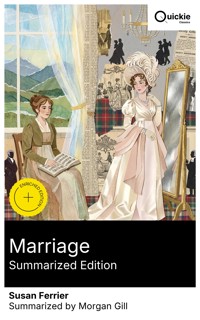
Marriage (1818) is a spirited comedy of manners that anatomizes the delusions of the nuptial marketplace. Through the misalliance of spoiled Lady Juliana and the impecunious Highlander Henry Douglas, and the divergent fates of their daughters, Adelaide and Mary, Ferrier contrasts fashionable London vanity with Scottish domestic prudence. Her omniscient narrator, tart asides, and deft Scots idiom yield portraits at once comic and corrective. In dialogue with Edgeworth's national tale and Austen's marriage plots, the novel probes female education, class pretension, and the ethics of choice across Edinburgh, the Highlands, and London. Ferrier, an Edinburgh novelist who published anonymously with Blackwood and was encouraged by Walter Scott, drew on an upbringing among legal and clerical elites and on Highland visits to craft her scenes. A Presbyterian moral sense tempers her satire, while the capital's intellectual circle honed the observational acuity that animates household economies and kinship skirmishes. This edition rewards readers of Austen, Edgeworth, and Scott, as well as scholars of British and Scottish studies, gender, and the history of the novel. Read Marriage for its brisk wit, its shrewd anthropology of courtship and kin, and its enduring argument that sense, not splendor, is the soundest dowry. Quickie Classics summarizes timeless works with precision, preserving the author's voice and keeping the prose clear, fast, and readable—distilled, never diluted. Enriched Edition extras: Introduction · Synopsis · Historical Context · Brief Analysis · 4 Reflection Q&As · Editorial Footnotes.
Das E-Book können Sie in Legimi-Apps oder einer beliebigen App lesen, die das folgende Format unterstützen:
Veröffentlichungsjahr: 2026
Ähnliche















Marriage (Summarized Edition)
Table of Contents
Introduction
Marriage is a novel about the uneasy balance between inclination and judgment, tracing how desire dressed in finery, family pride, and the thrill of fashionable approval can hurry lovers toward choices whose consequences stretch across households and years, until the private vows of the heart are forced to meet the public claims of duty, economy, and reputation, and the very meaning of happiness becomes a question to be tested not by rapture or rhetoric but by patience, sympathy, and the steady work of learning one another’s faults, limits, and needs amid the bustle, temptations, and comic delusions of society.
A work of domestic realism and social satire, Marriage appeared anonymously in 1818, in the early nineteenth century when British fiction was refining the comedy of manners around courtship, kinship, and property. Its settings move chiefly through Scottish locales—country houses, provincial towns, and the orbit of Edinburgh—while occasionally glancing toward more glittering circles. The book belongs to the tradition that relishes intimate moral tests within family life, yet it bears the stamp of Scottish perspectives and humor. Ferrier’s narrative stance is observant and amused, energized by caricature that never quite loses sight of the ordinary claims of feeling and conscience.
The premise is simple and fertile: an impulsive match draws two people into a life neither fully imagined, and the ripples of that decision shape the fortunes and education of the next generation. Ferrier arranges a sequence of households, guardians, and companions whose opinions and habits act upon impressionable minds, molding taste and temper. Readers encounter drawing-room bustle, Highland quiet, and a succession of visits and social occasions that reveal character by degrees. The voice is omniscient, witty, and brisk, balancing comic set pieces with moments of sober reflection, so the reading experience feels both vivacious and gently corrective.
At its core the novel interrogates what marriage asks of individuals and communities: affection, prudence, constancy, and a willingness to see beyond display. It considers the economic frameworks that underwrite romance, the discipline and latitude owed to young women and men, and the machinery of advice—from well-meaning aunts to worldly acquaintances—that can either steady or distort judgment. Vanity, hypocrisy, and moral laziness are skewered with good humor, while kindness, patience, and neighborly obligation are quietly affirmed. The ethical argument emerges through situations, not sermons, inviting readers to weigh the difference between appearances and character, impulse and settled principle.
Marriage also engages with place. Its Scottish settings offer more than scenery; they shape expectations about hospitality, frugality, pride, and social rank, and they complicate the attractions of metropolitan fashion. Ferrier contrasts rhythms of provincial life with the restlessness of showier circles, not to idealize one or condemn the other, but to emphasize how character is tested in each. Landscapes, households, and communities become instruments that expose pretension or cultivate resilience. The narrative’s comic energy often springs from regional habits and speech, while its sympathy rests in the recognition that attachment to local ways can coexist with broader cultural curiosity.
For contemporary readers, the novel’s questions are strikingly current: How much should partners weigh shared values against the sparkle of novelty? What part do money, status, and reputation play in private commitments? How do families and friends amplify pressures or provide ballast when decisions must be made quickly? Ferrier’s scenes of miscommunication, performance, and social comparison mirror dynamics recognizable in any age. The book’s humor keeps judgment from hardening into scold, even as it insists that durable intimacy requires candor and self-command. Its critique of shallow distinction speaks to modern anxieties about image, aspiration, and the costs of belonging.
Approach Marriage as a lively sequence of encounters in which character is revealed through choice and conversation, noticing how comic exaggeration clears space for sober insight. The prose moves swiftly through parties, journeys, and visits, yet it lingers over the small frictions of daily life where affections are tested and refined. Readers who enjoy domestic fiction will find here a Scottish inflection to familiar forms, and an argument for balancing sentiment with sense. Without spoiling its turns, one can say the book rewards attention to mentors and models. It endures for its clarity of feeling and its quietly exacting moral vision.
Synopsis
Published in 1818 as Susan Ferrier’s debut, Marriage opens with a fashionable English heiress, Lady Juliana, eloping with an impecunious Scottish gentleman, Henry Douglas. Defying her family, she expects romance to outrun reality, but the move north replaces glitter with economy, kinship obligations, and a stricter moral climate. Ferrier satirizes both the heroine’s pampered expectations and the bustling, well-meaning but officious Highland household that attempts to reform her. The clash between temperament and circumstance frames the novel’s central inquiry: what, beyond infatuation, sustains a marriage when money, status, and patience are thinly stretched and cultural habits refuse to blend.
Domestic discomfort hardens into estrangement. In the midst of quarrels and dwindling funds, twin daughters are born. Practical relatives step in, and the infants are separated: Mary remains in Scottish care, while Adelaide joins her mother’s orbit in England. This structural divide furnishes the book’s governing contrast—two educations, two value systems, and two futures—through which Ferrier explores how character is shaped by example, place, and expectation. The split also lets the narrative shuttle between comic Highland scenes and metropolitan polish, continually weighing immediate gratifications against quieter virtues that sustain households when fashion and fortune shift.
Mary’s Scottish upbringing is marked by frugality, bustling hospitality, and a chorus of elderly advisers whose fussiness is offset by genuine affection. Ferrier finds comedy in their circular counsels and tactless kindness, yet she treats their homely wisdom with respect. Amid rugged landscapes and modest comforts, Mary learns steadiness, gratitude, and clear-sighted judgment. Social life is livelier than first appears—visits, music, and local alliances—while moral lessons are embedded in daily economies rather than set speeches. By the time she reaches young womanhood, her tastes and sympathies are formed less by novelty than by example, labor, and mutual obligation.
Adelaide’s path runs through drawing rooms, assemblies, and the measured choreography of fashionable life. Under Lady Juliana’s management and the guidance of worldly acquaintances, she becomes quick-witted, elegant, and attentive to rank. Ferrier’s satire exposes how such polish can rest on precarious finances and performative feeling, training a young woman to prize admiration over discernment. Flirtations, patronage, and tactical alliances dominate her horizon, and marriage appears chiefly as advancement. The mother’s disappointments color the daughter’s prospects, as calculations about settlements and connections threaten to eclipse any inquiry into compatibility, conduct, or the endurance of affection.
The sisters’ reunion as debutantes sets a central test for Ferrier’s contrasts. Mary enters a wider world—Edinburgh, then English circles—carrying provincial candor into a setting that rewards display. Adelaide maneuvers through suitors and subtle rivalries; Mary observes more than she competes. Invitations, rumors, and indiscreet confidences propel the action, while older figures—some benevolent, some domineering—assert claims in the name of prudence. Ferrier interleaves misunderstandings with humor, showing how small vanities can swell into larger hazards when pride, impatience, and financial pressure intercept judgment, especially where parental guidance has proved inconsistent or self-serving.
Courtships sharpen these pressures. Adelaide faces tempting prospects that promise éclat but rest on shallow foundations; Mary encounters attentions that challenge her principles without flattering her ambition. Anxieties over income, inheritance, and reputation tighten around the family, and past imprudences return with new costs. Ferrier steers the narrative toward recognition rather than melodrama, using mishaps and near-scandals to test what each young woman has truly learned. Reconciliations and partings are managed with restraint, as the story emphasizes deliberation over impulse and insists that the terms of a good marriage are ethical before they are social or financial.
Without disclosing final pairings, the novel resolves its design by affirming that feeling must be schooled by duty and that taste, uncorrected, invites misery. Marriage endures as a lively Scottish counterpart to the English domestic novel, notable for its comic portraits, deft social observation, and clear critique of ill-judged unions. Ferrier’s blend of satire and sympathy gives lasting force to questions about women’s education, family authority, and the cultural gap between metropolitan fashion and provincial integrity. Its resonance lies in exposing how marriages are made not just by vows but by habits, and how character, once formed, governs fate.
Historical Context
Published in 1818, Susan Ferrier’s Marriage is set within the overlapping social worlds of Scotland and England during the Regency. Its action moves between Highland estates, Scottish household interiors, and London’s fashionable sphere, invoking institutions central to that society: the British aristocracy, the Church of Scotland, and the distinctive Scottish legal system governing property and marriage. The novel’s attention to entailed estates, guardianship, and advantageous matches reflects legal and social norms that shaped family strategy across Britain. Scottish marriage law, which long recognized irregular unions by mutual consent, underpins plot possibilities involving elopement and precipitous vows, including famous Gretna Green runaways.
Ferrier wrote amid profound Scottish change rooted in the aftermath of the 1745 Jacobite rising. The Crown’s suppression of the Highlands, the erosion of clan authority, and subsequent “Improvement” policies reordered landholding and social relations. From the late eighteenth century, many Highland estates pursued agricultural consolidation, while genteel proprietors cultivated polite manners and English-language education. Although Marriage remains a domestic, not documentary, narrative, its contrasts between rural seclusion and urban polish, and between customary ties and market values, echo these shifts. The Highlands’ cultural distinctiveness and the Lowlands’ commercial modernity provide a framework for characters’ assumptions about rank, duty, refinement, and economy.
Edinburgh’s rise as an intellectual and administrative capital forms part of the novel’s cultural horizon. The city’s New Town, laid out from 1767, housed lawyers, clergy, physicians, and literati associated with the later Scottish Enlightenment and polite sociability. Ferrier (1782–1854), daughter of James Ferrier, a Writer to the Signet, grew up within reach of that professional elite and its emphasis on prudence, education, and decorum. Her fiction registers the city’s dual identity: a locus of refinement and a stern moral monitor. References to tutors, boarding schools, and female accomplishments reflect common expectations for genteel upbringing, while household economy and rational management were prized civic virtues.
In Ferrier’s lifetime, the Church of Scotland—Presbyterian, parish-based, and influential in schooling and poor relief—was divided between Moderate and Evangelical tendencies. Moderates stressed polite learning and clerical deference; Evangelicals emphasized personal piety and moral reform. Across Britain, Evangelical activism, including the writings of Hannah More, reinforced didactic ideals of domestic virtue, charity, and self-discipline. Marriage engages these currents through satire of fashionable irreligion and negligent parenting, and through scenes where moral suasion, rather than mere lineage, determines worth. The novel’s clergy, Sabbath observances, and catechetical habits evoke a social order in which religious institutions shaped conscience, reputation, and communal oversight.
Early nineteenth-century marriage implicated property, guardianship, and reputation under distinct English and Scottish regimes. Coverture subsumed a married woman’s legal identity under her husband’s; entails guarded estates from fragmentation; and primogeniture preserved lineage. In Scotland, informal but legally recognized “irregular” marriages—formed by consent declared before witnesses—endured until 1939, making cross-border elopements to Gretna Green a notorious shortcut for couples evading parental control. Such frameworks inform Marriage’s emphasis on prudent choice, parental guidance, and the hazards of alliance based on vanity or whim. The novel probes how law, money, and custom constrain female agency while rewarding foresight, constancy, and domestic competence.
Marriage appeared as a three-volume novel, anonymously—standard practice for women writers seeking privacy or market advantage. Edinburgh’s William Blackwood published Ferrier’s fiction, and London’s circulating libraries carried it to a wide readership. The work emerged amid a vibrant novel market shaped by Jane Austen’s domestic fictions (1811–1817) and Walter Scott’s Waverley novels (from 1814). Contemporary observers praised Ferrier’s comic characterization and moral point; Scott himself admired her work. Where Scott treated national history and clan memory, Ferrier mined everyday manners, education, and family negotiation, placing Scottish locales and idiom into the broader British conversation about class mobility, sensibility, and social performance.
Regency Britain (1811–1820) framed Ferrier’s depiction of rank and fashion. The Napoleonic Wars ended in 1815, followed by economic volatility, poor harvests, and a tightening of credit that unsettled households across the social spectrum. London’s “Season” concentrated aristocratic display, marriage-making, and conspicuous consumption, while provincial elites balanced hospitality with fiscal caution. Fashion plates, new commodities, and urban entertainments signaled status; debts and duns shadowed extravagance. Marriage satirizes this milieu through the contrast between glittering appearances and sober management, a tension familiar to readers confronting postwar austerity and the costs of display. The novel’s moral economy values thrift, benevolence, and practical instruction.
As a Scottish domestic satire published in 1818, Marriage distills early nineteenth-century debates over national character, religious discipline, and women’s education into the intimate theater of family life. It juxtaposes metropolitan polish with provincial steadiness, testing reputations against the demands of household order, childcare, and charitable duty. Without disclosing outcomes, the narrative consistently measures beauty, rank, and sensibility against patience, prudence, and reform. In doing so, it reflects contemporaneous institutions—the Kirk, the law, the estate—and critiques the pretensions of taste unmoored from principle. Ferrier’s comedy of manners thus serves as social diagnosis as much as entertainment for her Regency audience.
Marriage (Summarized Edition)
MISS FERRIER'S NOVELS. [1]
In November 1854 Edinburgh lost almost the last star of the Scott circle: Susan Edmonstone Ferrier, author of the sparkling satires Marriage, The Inheritance and Destiny. Celebrated for a laugh that caught every human foible, she gave Scotland the vivid portraits Jane Austen and Maria Edgeworth bestowed on England and Ireland. Yet clamorous presses soon buried her vigorous, wholesome tales in pulp. A casual question echoes through drawing-rooms: “Did you ever read ‘Marriage’?” “No, never. Who wrote it?” “Miss Ferrier.” “I never heard of her or her novels.” These pages rise to restore that forgotten brilliance.
Born in Edinburgh on 7 September 1782, the youngest daughter of James Ferrier, Writer to the Signet[1], she grew amid legal ledgers and illustrious visitors: Scott, Burns, Blair, Mackenzie. Her father, clerk of Session and steward of Argyll estates, carried her to Inveraray Castle, where she watched society preen and later pinned its absurdities to the page. She admits in an 1840 note: “The first book was begun at a friend’s urgent desire, then tossed aside until idleness reclaimed it. I published believing my name would never be guessed.” The step once taken, “Inheritance and Destiny followed as matters of course.
That friend was Anne Clavering, Lady Augusta’s daughter, seven years her junior, whose help faltered early yet whose affection endured until death in 1869. In a lively exchange Susan frets over postage and plot: “Your proposals flatter and delight me, but how, in the name of postage, are we to transport our brains to and fro? We’d pawn our flannel petticoats to bring about our heroine’s marriage.” She demands a moral, rejects a suicidal hero, and sketches a tale of a runaway English beauty jolted into a Highland household of “tall red-haired sisters and grim-faced aunts”—a warning every matron will press into a daughter’s hands.




