



0,49 €
Mehr erfahren.
- Herausgeber: e-artnow Collections
- Kategorie: Gesellschafts- und Liebesromane
- Sprache: Englisch
Masterpieces of Sin and Redemption – 3 Classic Transgression Novels is a compelling anthology that explores the complex interplay of morality, guilt, and salvation. This collection brings together landmark works by literary giants, presenting a tapestry of narratives that navigate the shadowy corridors of the human condition. From the oppressive puritanical mores in Hawthorne's intricate narratives to the existential ponderings of Russian literature, the anthology traverses a broad stylistic spectrum. Each novel probes the ethical dilemmas faced by characters who grapple with sin and the quest for redemption, offering a profound exploration of human flaws and virtues. The anthology features contributions from Nathaniel Hawthorne, Fyodor Dostoevsky, and Leo Tolstoy, whose works are seminal to the exploration of transgression and morality. These authors, pivotal figures in their respective literary traditions, intertwine American and Russian cultural narratives with universal themes. Their collective works engage with major 19th-century literary movements, such as Romanticism and realism, delivering multifaceted discussions that deepen the reader's understanding of sin and redemption. This volume invites readers to a profound contemplation of the human experience through the lenses of these literary masters. By offering diverse cultural perspectives and styles, the anthology serves as an invaluable resource for exploring ethical and philosophical questions. Readers are encouraged to engage with the collection as both a scholarly endeavor and an intellectual journey, gaining insights into the perennial themes that continue to resonate in our own moral landscapes. In this enriched edition, we have carefully created added value for your reading experience: - An Introduction draws the threads together, discussing why these diverse authors and texts belong in one collection. - Historical Context explores the cultural and intellectual currents that shaped these works, offering insight into the shared (or contrasting) eras that influenced each writer. - A collective Analysis highlights common themes, stylistic variations, and significant crossovers in tone and technique, tying together writers from different backgrounds. - Reflection questions encourage readers to compare the different voices and perspectives within the collection, fostering a richer understanding of the overarching conversation.
Das E-Book können Sie in Legimi-Apps oder einer beliebigen App lesen, die das folgende Format unterstützen:
Veröffentlichungsjahr: 2026
Ähnliche
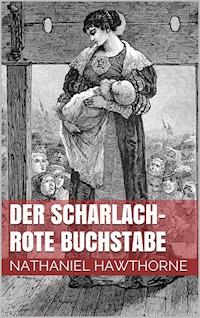










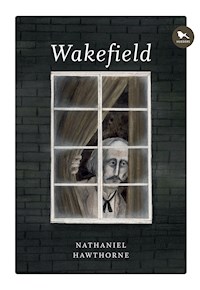








Masterpieces of Sin and Redemption – 3 Classic Transgression Novels
Table of Contents
Introduction
Curatorial Vision
This collection brings together Nathaniel Hawthorne’s The Scarlet Letter, Fyodor Dostoevsky’s Crime and Punishment, and Leo Tolstoy’s The Death of Ivan Ilych as three major investigations of transgression and the search for moral renewal. Read side by side, these works reveal how classic fiction turns acts of violation, whether social, legal, or spiritual, into occasions for testing conscience. The selection emphasizes not scandal as spectacle but wrongdoing as an inward crisis. Each work examines the burden of judgment, the loneliness of estrangement, and the possibility that suffering may become a path toward clearer self-knowledge and altered relation to others.
The through-line uniting these books is philosophical as much as narrative. Hawthorne, Dostoevsky, and Tolstoy each ask what remains of the self when inherited moral forms are breached and public identities no longer hold. Their protagonists move under pressure from shame, guilt, fear, and mortality, yet the deepest drama unfolds within thought and feeling. Sin here is never merely an offense recorded by society; it becomes a condition of consciousness. Redemption, likewise, is not reduced to acquittal or relief. It appears as painful recognition, moral awakening, and the difficult recovery of truth amid self-deception and isolation.
Presented together, these works trace a broad arc across nineteenth-century fiction, showing how different national traditions converged on related ethical questions. The aim is to illuminate a shared concern with conscience while preserving the distinct imaginative methods of each author. Hawthorne frames transgression within a symbolic and communal order, Dostoevsky drives inward toward psychological and philosophical extremity, and Tolstoy strips experience to the stark encounter between ordinary life and ultimate judgment. Their juxtaposition highlights how the novel can function as moral inquiry, social diagnosis, and spiritual drama at once, without dissolving the singularity of any one work.
This collection differs from encountering these titles separately because it encourages a sustained comparative reading of transgression as a central modern theme rather than as an isolated concern within three famous books. Seen in sequence, the works disclose continuities among public stigma, criminal culpability, and the quieter evasions of a respectable life. They also map different thresholds of accountability: one governed by communal signs, one by fevered interior debate, and one by the nearness of death. The result is a shaped conversation about how literature renders guilt visible, tests the adequacy of moral language, and imagines renewal under severe inward pressure.
Thematic & Aesthetic Interplay
The Scarlet Letter, Crime and Punishment, and The Death of Ivan Ilych speak to one another through recurring images of exposure and concealment. In all three, the hidden life presses against outward form, and social roles prove fragile under moral strain. Hawthorne gives this pressure emblematic clarity, Dostoevsky turns it into restless interior argument, and Tolstoy reveals it through the narrowing lens of illness and self-scrutiny. Across these differences, each work studies the distance between what can be displayed before others and what must be confronted alone. That tension creates a rich dialogue on confession, evasion, and the longing to be seen truthfully.
A network of motifs links the books without collapsing their differences. Marks, thresholds, rooms, feverish thought, and bodily suffering all become ways of registering moral disturbance. Hawthorne’s symbolic method grants visible form to inward burden; Dostoevsky repeatedly transforms physical and urban pressure into signs of spiritual crisis; Tolstoy renders the body itself an uncompromising medium of truth. In each case, pain is not only punishment but revelation, forcing attention to realities long denied. Yet suffering does not guarantee transformation. These works remain alert to pride, rationalization, and the subtle persistence of self-love even where remorse or fear appears most intense.
The contrasts among the three authors are as important as their affinities. Hawthorne writes with historical distance and allegorical poise, creating a world where communal judgment and symbolic meaning interpenetrate. Dostoevsky intensifies tempo and conflict, producing a charged atmosphere of argument in which ideas become lived torment. Tolstoy, by contrast, achieves power through compression, ordinary detail, and a nearly clinical moral clarity. Together these modes create a dialogue among romance, psychological novel, and novella. The collection thus shows that the literature of transgression need not adopt a single style; it can be meditative, fevered, or austere while pursuing related ethical concerns.
Direct influence is most evident in the broader inheritance Hawthorne helped shape and that Dostoevsky and Tolstoy develop differently: the serious novel as a forum for probing guilt beyond legal categories. Hawthorne’s concern with the visible sign of hidden wrong finds a transformed echo in Dostoevsky’s fixation on consciousness under accusation and in Tolstoy’s attention to the spiritual falsity embedded in ordinary success. Any relation among them should be understood less as explicit borrowing than as participation in a shared nineteenth-century effort to test moral ideas through fiction. Their allusions are often structural or thematic, emerging in parallel confrontations with judgment, suffering, and inner division.
Enduring Impact & Critical Reception
These works remain vital because they address experiences that modern life has not overcome: stigma, self-justification, moral loneliness, and the fear that outward success may conceal inward ruin. Their settings belong to the nineteenth century, yet their central pressures continue to define contemporary debates about responsibility and identity. Hawthorne examines how communities turn moral codes into spectacle; Dostoevsky explores the intoxication and collapse of theories that place individuals above ordinary obligation; Tolstoy confronts the emptiness of life organized around status and habit. Read together, they clarify why transgression is never merely an event but an ongoing struggle over meaning, truth, and human relation.
Critical reception has long recognized each title as a landmark in the moral imagination of fiction. The Scarlet Letter has been central to discussions of symbolism, public shame, and the relation between individual conscience and communal law. Crime and Punishment has become a touchstone for psychological depth, ethical conflict, and the drama of divided consciousness. The Death of Ivan Ilych is widely regarded as one of the most piercing literary studies of mortality and spiritual awakening. Across differing schools of interpretation, readers have returned to these works because they join narrative force to philosophical seriousness without sacrificing emotional immediacy.
Their afterlives have been extensive across culture and thought. Hawthorne’s scarlet sign, Dostoevsky’s tormented criminal consciousness, and Tolstoy’s deathbed reckoning have entered a wider vocabulary for discussing guilt, punishment, hypocrisy, and the stripping away of illusion. These books have inspired adaptation in stage and screen traditions and have informed debates in theology, philosophy, law, and psychology. Their influence persists not simply because they are often cited, but because they offer durable forms for understanding moral crisis. Each provides images and patterns that later artists and thinkers continue to revisit when examining the cost of wrongdoing or the hope of renewal.
As a collection, these three works sharpen one another’s continuing significance. Hawthorne shows how sin is inscribed within the social field, Dostoevsky how it detonates within the mind, and Tolstoy how the final measure of a life exposes hidden falsity. Together they form a compact history of transgression as public sign, psychological ordeal, and existential reckoning. That progression helps explain their lasting appeal in classrooms, scholarship, and general reading alike. They endure because they refuse easy consolation. Instead, they insist that redemption, if attainable at all, requires truthfulness severe enough to unsettle every comforting fiction by which individuals and societies protect themselves.
Historical Context
Socio-Political Landscape
Nathaniel Hawthorne’s The Scarlet Letter emerged in the United States during the decades before the Civil War, when the young republic was intensely preoccupied with moral authority, religious inheritance, and the legitimacy of social discipline. Although set in seventeenth-century Puritan New England, the novel was written in an era marked by democratic expansion, reform movements, and fierce public arguments over sin, punishment, and communal responsibility. Hawthorne looked backward to a colonial theocracy in order to examine how institutions convert private wrongdoing into public spectacle. His reconstruction of magistrates, clergy, and townspeople reflects anxieties familiar to nineteenth-century Americans confronting the pressure of conformity in an ostensibly liberal society.
The political culture surrounding Hawthorne was shaped by Jacksonian democracy, the widening of white male suffrage, and the simultaneous hardening of exclusions based on gender, race, and class. Public life celebrated individual liberty while preserving intrusive moral surveillance through churches, courts, and local communities. The Scarlet Letter speaks to this contradiction by dramatizing how authority claims sacred legitimacy even as it depends on collective shaming. Hawthorne’s distance from Puritan certainty was sharpened by an America alive with revivalism and reform, where campaigns for temperance, penitentiaries, and social improvement often blurred compassion with coercion. The novel thus reflects both skepticism toward inherited dogma and unease about modern moral crusades.
Crime and Punishment belongs to the turbulent atmosphere of imperial Russia after the emancipation of the serfs in 1861, when reforms promised renewal yet exposed deep fractures in the social order. The Russian Empire remained autocratic, bureaucratic, and unequal, but old hierarchies were destabilized by urban migration, educational expansion, and growing public debate. Dostoevsky places his novel within a city of poverty, overcrowding, and administrative indifference, where new ambitions meet persistent humiliation. The text registers the strain of a society neither feudal in the old manner nor securely modern, and it captures how legal reform and social mobility could intensify, rather than relieve, moral disorientation.
The atmosphere of debate in Dostoevsky’s Russia was also conditioned by censorship, surveillance, and the memory of revolutionary unrest across Europe. Mid-century Russians argued over the authority of the state, the usefulness of Western models, and the ethical consequences of radical social theories. Crime and Punishment does not merely portray an individual crisis; it also absorbs contemporary fear that abstract ideas about progress or exceptional persons might justify violence in the name of history. The novel’s emphasis on destitution, drunkenness, prostitution, and debt ties psychological transgression to structural misery, suggesting that social reform without moral reckoning leaves the foundations of civic life profoundly unstable.
Leo Tolstoy wrote The Death of Ivan Ilych in the later nineteenth century, when the Russian Empire had undergone major legal and administrative reforms yet remained dominated by rank, service, and social display. The creation of new courts and bureaucratic procedures after the Great Reforms expanded the professional middle and upper strata to which Ivan belongs. Tolstoy presents this world not through overt political conflict but through routines of careerism, decorum, and ambition that reveal the moral shape of the state. The novel’s officials inhabit a society organized by titles, appointments, and appearances, where public success often conceals spiritual emptiness and fear.
The broader Russian setting of Tolstoy’s novella included intensified discussion of modernization, class relations, and the costs of a secularizing, status-conscious elite culture. Even without foregrounding peasant unrest or revolutionary politics, The Death of Ivan Ilych is inseparable from a society unsettled by reform from above and by widening awareness of social injustice below. Tolstoy turns from public upheaval to the private sphere, yet the home, office, and sickroom become political in their own way, displaying how institutions teach people to prize propriety over sincerity. The result is a critique of a modernizing empire whose respectable surfaces are sustained by denial, self-interest, and emotional estrangement.
Read together, the three works chart different regimes of power: colonial theocracy in Hawthorne, imperial autocracy under reform in Dostoevsky, and bureaucratic modernity in Tolstoy. In each case, transgression is never purely private, because sin or guilt is mediated by courts, churches, offices, and public opinion. These books arise from societies debating how punishment should function, whether suffering can purify, and who has the right to judge. Their historical settings differ sharply, yet all three expose the instability of moral order when institutions claim to defend truth while also reproducing cruelty, hierarchy, and blindness. That shared concern gives the anthology a coherent political and ethical frame.
Across these settings, gender and family also operate as instruments of social regulation. In The Scarlet Letter, womanhood is made legible through visible shame and communal scrutiny, revealing the gendered asymmetry of punishment in a patriarchal religious culture. Crime and Punishment depicts women constrained by poverty and dependence, showing how urban modernity intensifies vulnerability even as it multiplies choices. The Death of Ivan Ilych examines domestic life as an extension of social performance, where marriage and household decorum can become part of bureaucratic self-fashioning. Historically, each text illuminates how public order is reproduced through intimate roles, making redemption inseparable from the moral politics of everyday life.
Intellectual & Aesthetic Currents
Hawthorne wrote amid American Romanticism, yet his version of that movement was darker, more historical, and more morally ambiguous than celebratory accounts of selfhood. The Scarlet Letter draws on symbolic form, psychological inwardness, and an interest in hidden motives, while resisting any simple confidence in innocence or transparent meaning. Its fascination with inherited guilt, secrecy, and emblematic objects belongs to a broader nineteenth-century effort to probe the depths beneath social appearances. At the same time, Hawthorne’s style reflects a cultivated distance from both doctrinal religion and optimistic reformist rhetoric, turning the romance into a medium for exploring ambiguity rather than resolving it.
The novel’s aesthetic method was shaped by antiquarian interest in colonial records, by the expanding archive culture of the nineteenth century, and by a print world increasingly attentive to national literary identity. Hawthorne frames the past as something recovered through documents, memory, and interpretation, not merely reproduced. This historical self-consciousness aligns The Scarlet Letter with debates over whether American literature should imitate European forms or develop native materials from Puritan and colonial experience. Hawthorne’s answer is neither simple nationalism nor escapist nostalgia. He makes the early settlement a laboratory for examining modern conscience, using romance conventions to challenge the authority of official history and the moral simplifications of civic myth.
Crime and Punishment stands at the intersection of realism, urban social analysis, and philosophical fiction. Dostoevsky uses the crowded streets and cramped rooms of Saint Petersburg with realist intensity, yet he pushes beyond descriptive exactitude toward fevered moral and metaphysical conflict. The novel belongs to an age when literature increasingly examined poverty, crime, and the city as interconnected subjects. It also reflects the pressure of new social sciences, legal thinking, and journalistic attention to deviance. Rather than treating criminality as a merely technical problem, Dostoevsky transforms it into a test case for ideas about freedom, responsibility, and the limits of rational explanation.
The intellectual climate informing Dostoevsky included disputes over utilitarian ethics, secular radicalism, and the prestige of reason as a tool for reorganizing society. Crime and Punishment engages these currents by staging the temptation to subordinate ordinary moral prohibitions to abstract theory. Yet the novel refuses reduction to a single doctrine, combining philosophical argument with dream, confession, and spiritual crisis. Its aesthetic energy lies partly in this resistance to system: thought appears as lived pressure, not detached proposition. In that sense, the book participates in and contests modern intellectual life, confronting the allure of explanation while insisting on the irreducibility of conscience, suffering, and interpersonal recognition.
The Death of Ivan Ilych belongs to the mature realist tradition, but its compression and severity give it a distinctive place within late nineteenth-century prose. Tolstoy strips away ornament to expose the rituals of respectable existence, creating a narrative that is socially precise yet relentlessly focused on interior awakening. The novella reflects a period when realism had become a powerful instrument for diagnosing the falseness of convention. It also bears the mark of Tolstoy’s moral and spiritual preoccupations, especially his suspicion of institutions, luxury, and evasive language. In aesthetic terms, the work joins psychological scrutiny to ethical simplification, seeking truth through the removal of social camouflage.
Scientific and technological change forms an important backdrop to Tolstoy’s treatment of illness and authority. By the late nineteenth century, professional medicine enjoyed rising prestige, and educated society increasingly trusted specialists, procedures, and diagnostic vocabularies. The Death of Ivan Ilych registers that world while questioning whether technical knowledge can address existential terror. Medical consultations in the novella are not dismissed as irrelevant, but they are shown to coexist with evasion, impersonality, and the fragmentation of the suffering person into symptoms. More broadly, the text reflects a culture wrestling with whether modern expertise deepens human understanding or merely refines the management of discomfort and appearances.
As an anthology, these three works trace a movement from symbolic romance to urban psychological realism to concentrated moral novella, revealing how nineteenth-century literature expanded the representation of transgression. Hawthorne historicizes guilt through emblem and communal ritual; Dostoevsky dramatizes it through ideological conflict and fractured consciousness; Tolstoy distills it into the ordinary falseness of socially approved life. Their differences illuminate competing aesthetic answers to a common question: how should literature render the invisible operations of conscience? Together they show that sin and redemption were not marginal religious themes but central categories through which modern writers tested the capacities of narrative, psychology, and historical imagination.
Legacy & Reassessment Across Time
Over time, The Scarlet Letter has been repeatedly reinterpreted through changing American debates about gender, religion, and dissent. Earlier readers often treated it as a moral tale about wrongdoing and endurance, but later criticism increasingly emphasized its exposure of patriarchal power and the violence of public shaming. Twentieth-century scholarship, shaped by modern psychology and by renewed attention to symbolism, deepened interest in ambiguity rather than lesson. In eras marked by concern over censorship, sexual regulation, and national origins, Hawthorne’s novel came to seem less a historical costume piece than an enduring analysis of how communities police identity. Its afterlife in classrooms has made it a central text for arguing about moral judgment itself.
Crime and Punishment acquired renewed force in the twentieth century as revolutions, totalitarian regimes, mass violence, and ideological extremism made its concerns newly urgent. Readers increasingly saw in Dostoevsky’s novel not only a study of individual criminality but also a warning about theories that exalt historical necessity or exceptional persons above common morality. Existentialist, psychoanalytic, and theological approaches each claimed the book, treating it respectively as a drama of freedom, divided consciousness, or spiritual estrangement. The novel’s many translations and adaptations broadened its reach, while scholarship continued to debate whether its deepest center lies in social protest, religious vision, or relentless psychological experimentation.
The Death of Ivan Ilych has been continually rediscovered in relation to modern medicine, bureaucratic life, and the ethics of dying. In the twentieth and twenty-first centuries, as hospitals, professional caregiving, and bioethical debate expanded, Tolstoy’s novella gained special resonance for its portrayal of institutional detachment and the loneliness of the patient. Critics have read it as a spiritual parable, a social satire, and a phenomenology of mortality. It has also become important beyond literary studies, frequently invoked in discussions of humane care and existential suffering. The work’s brevity has aided its circulation, but its durability comes from how precisely it links ordinary success to profound self-deception.
Taken together, these works have invited successive generations to rethink the language of sin and redemption in secular and plural societies. Modern criticism often translates older religious categories into terms such as stigma, alienation, ideology, authenticity, or ethical relation, yet the original moral vocabulary remains stubbornly alive. That tension has kept the anthology’s texts critically productive. They have inspired adaptations across stage and screen, entered legal, philosophical, and medical conversations, and remained fixtures in comparative study. Their continued reassessment suggests that historical distance has not diminished their force. Instead, new crises repeatedly return readers to these novels as searching accounts of judgment, suffering, and the possibility of renewal.
Masterpieces of Sin and Redemption – 3 Classic Transgression Novels
Transgression, Guilt, and Conscience
Judgment, Punishment, and Redemption
Nathaniel Hawthorne
The Scarlet Letter
THE CUSTOM-HOUSE.
INTRODUCTORY TO “THE SCARLET LETTER.”
t is a little remarkable, that—though disinclined to talk overmuch of myself and my affairs at the fireside, and to my personal friends—an autobiographical impulse should twice in my life have taken possession of me, in addressing the public. The first time was three or four years since, when I favored the reader—inexcusably, and for no earthly reason, that either the indulgent reader or the intrusive author could imagine—with a description of my way of life in the deep quietude of an Old Manse. And now—because, beyond my deserts, I was happy enough to find a listener or two on the former occasion—I again seize the public by the button, and talk of my three years' experience in a Custom-House. The example of the famous “P.P., Clerk of this Parish,” was never more faithfully followed. The truth seems to be, however, that, when he casts his leaves forth upon the wind, the author addresses, not the many who will fling aside his volume, or never take it up, but the few who will understand him, better than most of his schoolmates or lifemates. Some authors, indeed, do far more than this, and indulge themselves in such confidential depths of revelation as could fittingly be addressed, only and exclusively, to the one heart and mind of perfect sympathy; as if the printed book, thrown at large on the wide world, were certain to find out the divided segment of the writer's own nature, and complete his circle of existence by bringing him into communion with it. It is scarcely decorous, however, to speak all, even where we speak impersonally. But, as thoughts are frozen and utterance benumbed, unless the speaker stand in some true relation with his audience, it may be pardonable to imagine that a friend, a kind and apprehensive, though not the closest friend, is listening to our talk; and then, a native reserve being thawed by this genial consciousness, we may prate of the circumstances that lie around us, and even of ourself, but still keep the inmost Me behind its veil. To this extent, and within these limits, an author, methinks, may be autobiographical, without violating either the reader's rights or his own.
It will be seen, likewise, that this Custom-House sketch has a certain propriety, of a kind always recognized in literature, as explaining how a large portion of the following pages came into my possession, and as offering proofs of the authenticity of a narrative therein contained. This, in fact,—a desire to put myself in my true position as editor, or very little more, of the most prolix among the tales that make up my volume,—this, and no other, is my true reason for assuming a personal relation with the public. In accomplishing the main purpose, it has appeared allowable, by a few extra touches, to give a faint representation of a mode of life not heretofore described, together with some of the characters that move in it, among whom the author happened to make one.
In my native town of Salem, at the head of what, half a century ago, in the days of old King Derby, was a bustling wharf,—but which is now burdened with decayed wooden warehouses, and exhibits few or no symptoms of commercial life; except, perhaps, a bark or brig, half-way down its melancholy length, discharging hides; or, nearer at hand, a Nova Scotia schooner, pitching out her cargo of firewood,—at the head, I say, of this dilapidated wharf, which the tide often overflows, and along which, at the base and in the rear of the row of buildings, the track of many languid years is seen in a border of unthrifty grass,—here, with a view from its front windows adown this not very enlivening prospect, and thence across the harbor, stands a spacious edifice of brick. From the loftiest point of its roof, during precisely three and a half hours of each forenoon, floats or droops, in breeze or calm, the banner of the republic; but with the thirteen stripes turned vertically, instead of horizontally, and thus indicating that a civil, and not a military post of Uncle Sam's government is here established. Its front is ornamented with a portico of half a dozen wooden pillars, supporting a balcony, beneath which a flight of wide granite steps descends towards the street. Over the entrance hovers an enormous specimen of the American eagle, with outspread wings, a shield before her breast, and, if I recollect aright, a bunch of intermingled thunderbolts and barbed arrows in each claw. With the customary infirmity of temper that characterizes this unhappy fowl, she appears, by the fierceness of her beak and eye, and the general truculency of her attitude, to threaten mischief to the inoffensive community; and especially to warn all citizens, careful of their safety, against intruding on the premises which she overshadows with her wings. Nevertheless, vixenly as she looks, many people are seeking, at this very moment, to shelter themselves under the wing of the federal eagle; imagining, I presume, that her bosom has all the softness and snugness of an eider-down pillow. But she has no great tenderness, even in her best of moods, and, sooner or later,—oftener soon than late,—is apt to fling off her nestlings, with a scratch of her claw, a dab of her beak, or a rankling wound from her barbed arrows.
The pavement round about the above-described edifice—which we may as well name at once as the Custom-House of the port—has grass enough growing in its chinks to show that it has not, of late days, been worn by any multitudinous resort of business. In some months of the year, however, there often chances a forenoon when affairs move onward with a livelier tread. Such occasions might remind the elderly citizen of that period before the last war with England, when Salem was a port by itself; not scorned, as she is now, by her own merchants and ship-owners, who permit her wharves to crumble to ruin, while their ventures go to swell, needlessly and imperceptibly, the mighty flood of commerce at New York or Boston. On some such morning, when three or four vessels happen to have arrived at once,—usually from Africa or South America,—or to be on the verge of their departure thitherward, there is a sound of frequent feet, passing briskly up and down the granite steps. Here, before his own wife has greeted him, you may greet the sea-flushed shipmaster, just in port, with his vessel's papers under his arm, in a tarnished tin box. Here, too, comes his owner, cheerful or sombre, gracious or in the sulks, accordingly as his scheme of the now accomplished voyage has been realized in merchandise that will readily be turned to gold, or has buried him under a bulk of incommodities, such as nobody will care to rid him of. Here, likewise,—the germ of the wrinkle-browed, grizzly-bearded, care-worn merchant,—we have the smart young clerk, who gets the taste of traffic as a wolf-cub does of blood, and already sends adventures in his master's ships, when he had better be sailing mimic-boats upon a mill-pond. Another figure in the scene is the outward-bound sailor in quest of a protection; or the recently arrived one, pale and feeble, seeking a passport to the hospital. Nor must we forget the captains of the rusty little schooners that bring firewood from the British provinces; a rough-looking set of tarpaulins, without the alertness of the Yankee aspect, but contributing an item of no slight importance to our decaying trade.
Cluster all these individuals together, as they sometimes were, with other miscellaneous ones to diversify the group, and, for the time being, it made the Custom-House a stirring scene. More frequently, however, on ascending the steps, you would discern—in the entry, if it were summer time, or in their appropriate rooms, if wintry or inclement weather—a row of venerable figures, sitting in old-fashioned chairs, which were tipped on their hind legs back against the wall. Oftentimes they were asleep, but occasionally might be heard talking together, in voices between speech and a snore, and with that lack of energy that distinguishes the occupants of almshouses, and all other human beings who depend for subsistence on charity, on monopolized labor, or anything else, but their own independent exertions. These old gentlemen—seated, like Matthew, at the receipt of customs, but not very liable to be summoned thence, like him, for apostolic errands—were Custom-House officers.
Furthermore, on the left hand as you enter the front door, is a certain room or office, about fifteen feet square, and of a lofty height; with two of its arched windows commanding a view of the aforesaid dilapidated wharf, and the third looking across a narrow lane, and along a portion of Derby Street. All three give glimpses of the shops of grocers, block-makers, slop-sellers, and ship-chandlers; around the doors of which are generally to be seen, laughing and gossiping, clusters of old salts, and such other wharf-rats as haunt the Wapping of a seaport. The room itself is cobwebbed, and dingy with old paint; its floor is strewn with gray sand, in a fashion that has elsewhere fallen into long disuse; and it is easy to conclude, from the general slovenliness of the place, that this is a sanctuary into which womankind, with her tools of magic, the broom and mop, has very infrequent access. In the way of furniture, there is a stove with a voluminous funnel; an old pine desk, with a three-legged stool beside it; two or three wooden-bottom chairs, exceedingly decrepit and infirm; and—not to forget the library—on some shelves, a score or two of volumes of the Acts of Congress, and a bulky Digest of the Revenue Laws. A tin pipe ascends through the ceiling, and forms a medium of vocal communication with other parts of the edifice. And here, some six months ago,—pacing from corner to corner, or lounging on the long-legged stool, with his elbow on the desk, and his eyes wandering up and down the columns of the morning newspaper,—you might have recognized, honored reader, the same individual who welcomed you into his cheery little study, where the sunshine glimmered so pleasantly through the willow branches, on the western side of the Old Manse. But now, should you go thither to seek him, you would inquire in vain for the Locofoco Surveyor. The besom of reform has swept him out of office; and a worthier successor wears his dignity, and pockets his emoluments.
This old town of Salem—my native place, though I have dwelt much away from it, both in boyhood and maturer years—possesses, or did possess, a hold on my affections, the force of which I have never realized during my seasons of actual residence here. Indeed, so far as its physical aspect is concerned, with its flat, unvaried surface, covered chiefly with wooden houses, few or none of which pretend to architectural beauty,—its irregularity, which is neither picturesque nor quaint, but only tame,—its long and lazy street, lounging wearisomely through the whole extent of the peninsula, with Gallows Hill and New Guinea at one end, and a view of the almshouse at the other,—such being the features of my native town, it would be quite as reasonable to form a sentimental attachment to a disarranged checker-board. And yet, though invariably happiest elsewhere, there is within me a feeling for old Salem, which, in lack of a better phrase, I must be content to call affection. The sentiment is probably assignable to the deep and aged roots which my family has struck into the soil. It is now nearly two centuries and a quarter since the original Briton, the earliest emigrant of my name, made his appearance in the wild and forest-bordered settlement, which has since become a city. And here his descendants have been born and died, and have mingled their earthy substance with the soil; until no small portion of it must necessarily be akin to the mortal frame wherewith, for a little while, I walk the streets. In part, therefore, the attachment which I speak of is the mere sensuous sympathy of dust for dust. Few of my countrymen can know what it is; nor, as frequent transplantation is perhaps better for the stock, need they consider it desirable to know.
But the sentiment has likewise its moral quality. The figure of that first ancestor, invested by family tradition with a dim and dusky grandeur, was present to my boyish imagination, as far back as I can remember. It still haunts me, and induces a sort of home-feeling with the past, which I scarcely claim in reference to the present phase of the town. I seem to have a stronger claim to a residence here on account of this grave, bearded, sable-cloaked and steeple-crowned progenitor,—who came so early, with his Bible and his sword, and trode the unworn street with such a stately port, and made so large a figure, as a man of war and peace,—a stronger claim than for myself, whose name is seldom heard and my face hardly known. He was a soldier, legislator, judge; he was a ruler in the Church; he had all the Puritanic traits, both good and evil. He was likewise a bitter persecutor, as witness the Quakers, who have remembered him in their histories, and relate an incident of his hard severity towards a woman of their sect, which will last longer, it is to be feared, than any record of his better deeds, although these were many. His son, too, inherited the persecuting spirit, and made himself so conspicuous in the martyrdom of the witches, that their blood may fairly be said to have left a stain upon him. So deep a stain, indeed, that his old dry bones, in the Charter Street burial-ground, must still retain it, if they have not crumbled utterly to dust! I know not whether these ancestors of mine bethought themselves to repent, and ask pardon of Heaven for their cruelties; or whether they are now groaning under the heavy consequences of them, in another state of being. At all events, I, the present writer, as their representative, hereby take shame upon myself for their sakes, and pray that any curse incurred by them—as I have heard, and as the dreary and unprosperous condition of the race, for many a long year back, would argue to exist—may be now and henceforth removed.
Doubtless, however, either of these stern and black-browed Puritans would have thought it quite a sufficient retribution for his sins, that, after so long a lapse of years, the old trunk of the family tree, with so much venerable moss upon it, should have borne, as its topmost bough, an idler like myself. No aim, that I have ever cherished, would they recognize as laudable; no success of mine—if my life, beyond its domestic scope, had ever been brightened by success—would they deem otherwise than worthless, if not positively disgraceful. “What is he?” murmurs one gray shadow of my forefathers to the other. “A writer of story-books! What kind of a business in life—what mode of glorifying God, or being serviceable to mankind in his day and generation—may that be? Why, the degenerate fellow might as well have been a fiddler!” Such are the compliments bandied between my great-grandsires and myself, across the gulf of time! And yet, let them scorn me as they will, strong traits of their nature have intertwined themselves with mine.
Planted deep, in the town's earliest infancy and childhood, by these two earnest and energetic men, the race has ever since subsisted here; always, too, in respectability; never, so far as I have known, disgraced by a single unworthy member; but seldom or never, on the other hand, after the first two generations, performing any memorable deed, or so much as putting forward a claim to public notice. Gradually, they have sunk almost out of sight; as old houses, here and there about the streets, get covered half-way to the eaves by the accumulation of new soil. From father to son, for above a hundred years, they followed the sea; a gray-headed shipmaster, in each generation, retiring from the quarter-deck to the homestead, while a boy of fourteen took the hereditary place before the mast, confronting the salt spray and the gale, which had blustered against his sire and grandsire. The boy, also, in due time, passed from the forecastle to the cabin, spent a tempestuous manhood, and returned from his world-wanderings, to grow old, and die, and mingle his dust with the natal earth. This long connection of a family with one spot, as its place of birth and burial, creates a kindred between the human being and the locality, quite independent of any charm in the scenery or moral circumstances that surround him. It is not love, but instinct. The new inhabitant—who came himself from a foreign land, or whose father or grandfather came—has little claim to be called a Salemite; he has no conception of the oyster-like tenacity with which an old settler, over whom his third century is creeping, clings to the spot where his successive generations have been imbedded. It is no matter that the place is joyless for him; that he is weary of the old wooden houses, the mud and dust, the dead level of site and sentiment, the chill east wind, and the chillest of social atmospheres;—all these, and whatever faults besides he may see or imagine, are nothing to the purpose. The spell survives, and just as powerfully as if the natal spot were an earthly paradise. So has it been in my case. I felt it almost as a destiny to make Salem my home; so that the mould of features and cast of character which had all along been familiar here,—ever, as one representative of the race lay down in his grave, another assuming, as it were, his sentry-march along the main street,—might still in my little day be seen and recognized in the old town. Nevertheless, this very sentiment is an evidence that the connection, which has become an unhealthy one, should at last be severed. Human nature will not flourish, any more than a potato, if it be planted and replanted, for too long a series of generations, in the same worn-out soil. My children have had other birthplaces, and, so far as their fortunes may be within my control, shall strike their roots into unaccustomed earth.
On emerging from the Old Manse, it was chiefly this strange, indolent, unjoyous attachment for my native town, that brought me to fill a place in Uncle Sam's brick edifice, when I might as well, or better, have gone somewhere else. My doom was on me. It was not the first time, nor the second, that I had gone away,—as it seemed, permanently,—but yet returned, like the bad half-penny; or as if Salem were for me the inevitable centre of the universe. So, one fine morning, I ascended the flight of granite steps, with the President's commission in my pocket, and was introduced to the corps of gentlemen who were to aid me in my weighty responsibility, as chief executive officer of the Custom-House.
I doubt greatly—or, rather, I do not doubt at all—whether any public functionary of the United States, either in the civil or military line, has ever had such a patriarchal body of veterans under his orders as myself. The whereabouts of the Oldest Inhabitant was at once settled, when I looked at them. For upwards of twenty years before this epoch, the independent position of the Collector had kept the Salem Custom-House out of the whirlpool of political vicissitude, which makes the tenure of office generally so fragile. A soldier,—New England's most distinguished soldier,—he stood firmly on the pedestal of his gallant services; and, himself secure in the wise liberality of the successive administrations through which he had held office, he had been the safety of his subordinates in many an hour of danger and heart-quake. General Miller was radically conservative; a man over whose kindly nature habit had no slight influence; attaching himself strongly to familiar faces, and with difficulty moved to change, even when change might have brought unquestionable improvement. Thus, on taking charge of my department, I found few but aged men. They were ancient sea-captains, for the most part, who, after being tost on every sea, and standing up sturdily against life's tempestuous blasts, had finally drifted into this quiet nook; where, with little to disturb them, except the periodical terrors of a Presidential election, they one and all acquired a new lease of existence. Though by no means less liable than their fellow-men to age and infirmity, they had evidently some talisman or other that kept death at bay. Two or three of their number, as I was assured, being gouty and rheumatic, or perhaps bedridden, never dreamed of making their appearance at the Custom-House, during a large part of the year; but, after a torpid winter, would creep out into the warm sunshine of May or June, go lazily about what they termed duty, and, at their own leisure and convenience, betake themselves to bed again. I must plead guilty to the charge of abbreviating the official breath of more than one of these venerable servants of the republic. They were allowed, on my representation, to rest from their arduous labors, and soon afterwards—as if their sole principle of life had been zeal for their country's service, as I verily believe it was—withdrew to a better world. It is a pious consolation to me, that, through my interference, a sufficient space was allowed them for repentance of the evil and corrupt practices into which, as a matter of course, every Custom-House officer must be supposed to fall. Neither the front nor the back entrance of the Custom-House opens on the road to Paradise.
The greater part of my officers were Whigs. It was well for their venerable brotherhood that the new Surveyor was not a politician, and though a faithful Democrat in principle, neither received nor held his office with any reference to political services. Had it been otherwise,—had an active politician been put into this influential post, to assume the easy task of making head against a Whig Collector, whose infirmities withheld him from the personal administration of his office,—hardly a man of the old corps would have drawn the breath of official life, within a month after the exterminating angel had come up the Custom-House steps. According to the received code in such matters, it would have been nothing short of duty, in a politician, to bring every one of those white heads under the axe of the guillotine. It was plain enough to discern, that the old fellows dreaded some such discourtesy at my hands. It pained, and at the same time amused me, to behold the terrors that attended my advent; to see a furrowed cheek, weather-beaten by half a century of storm, turn ashy pale at the glance of so harmless an individual as myself; to detect, as one or another addressed me, the tremor of a voice, which, in long-past days, had been wont to bellow through a speaking-trumpet, hoarsely enough to frighten Boreas himself to silence. They knew, these excellent old persons, that, by all established rule,—and, as regarded some of them, weighed by their own lack of efficiency for business,—they ought to have given place to younger men, more orthodox in politics, and altogether fitter than themselves to serve our common Uncle. I knew it too, but could never quite find in my heart to act upon the knowledge. Much and deservedly to my own discredit, therefore, and considerably to the detriment of my official conscience, they continued, during my incumbency, to creep about the wharves, and loiter up and down the Custom-House steps. They spent a good deal of time, also, asleep in their accustomed corners, with their chairs tilted back against the wall; awaking, however, once or twice in a forenoon, to bore one another with the several thousandth repetition of old sea-stories, and mouldy jokes, that had grown to be passwords and countersigns among them.
The discovery was soon made, I imagine, that the new Surveyor had no great harm in him. So, with lightsome hearts, and the happy consciousness of being usefully employed,—in their own behalf, at least, if not for our beloved country,—these good old gentlemen went through the various formalities of office. Sagaciously, under their spectacles, did they peep into the holds of vessels! Mighty was their fuss about little matters, and marvellous, sometimes, the obtuseness that allowed greater ones to slip between their fingers! Whenever such a mischance occurred,—when a wagon-load of valuable merchandise had been smuggled ashore, at noonday, perhaps, and directly beneath their unsuspicious noses,—nothing could exceed the vigilance and alacrity with which they proceeded to lock, and double-lock, and secure with tape and sealing-wax, all the avenues of the delinquent vessel. Instead of a reprimand for their previous negligence, the case seemed rather to require an eulogium on their praiseworthy caution, after the mischief had happened; a grateful recognition of the promptitude of their zeal, the moment that there was no longer any remedy.
Unless people are more than commonly disagreeable, it is my foolish habit to contract a kindness for them. The better part of my companion's character, if it have a better part, is that which usually comes uppermost in my regard, and forms the type whereby I recognize the man. As most of these old Custom-House officers had good traits, and as my position in reference to them, being paternal and protective, was favorable to the growth of friendly sentiments, I soon grew to like them all. It was pleasant, in the summer forenoons,—when the fervent heat, that almost liquefied the rest of the human family, merely communicated a genial warmth to their half-torpid systems,—it was pleasant to hear them chatting in the back entry, a row of them all tipped against the wall, as usual; while the frozen witticisms of past generations were thawed out, and came bubbling with laughter from their lips. Externally, the jollity of aged men has much in common with the mirth of children; the intellect, any more than a deep sense of humor, has little to do with the matter; it is, with both, a gleam that plays upon the surface, and imparts a sunny and cheery aspect alike to the green branch, and gray, mouldering trunk. In one case, however, it is real sunshine; in the other, it more resembles the phosphorescent glow of decaying wood.
It would be sad injustice, the reader must understand, to represent all my excellent old friends as in their dotage. In the first place, my coadjutors were not invariably old; there were men among them in their strength and prime, of marked ability and energy, and altogether superior to the sluggish and dependent mode of life on which their evil stars had cast them. Then, moreover, the white locks of age were sometimes found to be the thatch of an intellectual tenement in good repair. But, as respects the majority of my corps of veterans, there will be no wrong done, if I characterize them generally as a set of wearisome old souls, who had gathered nothing worth preservation from their varied experience of life. They seemed to have flung away all the golden grain of practical wisdom, which they had enjoyed so many opportunities of harvesting, and most carefully to have stored their memories with the husks. They spoke with far more interest and unction of their morning's breakfast, or yesterday's, to-day's, or to-morrow's dinner, than of the shipwreck of forty or fifty years ago, and all the world's wonders which they had witnessed with their youthful eyes.
The father of the Custom-House—the patriarch, not only of this little squad of officials, but, I am bold to say, of the respectable body of tide-waiters all over the United States—was a certain permanent Inspector. He might truly be termed a legitimate son of the revenue system, dyed in the wool, or, rather, born in the purple; since his sire, a Revolutionary colonel, and formerly collector of the port, had created an office for him, and appointed him to fill it, at a period of the early ages which few living men can now remember. This Inspector, when I first knew him, was a man of fourscore years, or thereabouts, and certainly one of the most wonderful specimens of winter-green that you would be likely to discover in a lifetime's search. With his florid cheek, his compact figure, smartly arrayed in a bright-buttoned blue coat, his brisk and vigorous step, and his hale and hearty aspect, altogether he seemed—not young, indeed—but a kind of new contrivance of Mother Nature in the shape of man, whom age and infirmity had no business to touch. His voice and laugh, which perpetually re-echoed through the Custom-House, had nothing of the tremulous quaver and cackle of an old man's utterance; they came strutting out of his lungs, like the crow of a cock, or the blast of a clarion. Looking at him merely as an animal,—and there was very little else to look at,—he was a most satisfactory object, from the thorough healthfulness and wholesomeness of his system, and his capacity, at that extreme age, to enjoy all, or nearly all, the delights which he had ever aimed at, or conceived of. The careless security of his life in the Custom-House, on a regular income, and with but slight and infrequent apprehensions of removal, had no doubt contributed to make time pass lightly over him. The original and more potent causes, however, lay in the rare perfection of his animal nature, the moderate proportion of intellect, and the very trifling admixture of moral and spiritual ingredients; these latter qualities, indeed, being in barely enough measure to keep the old gentleman from walking on all-fours. He possessed no power of thought, no depth of feeling, no troublesome sensibilities; nothing, in short, but a few commonplace instincts, which, aided by the cheerful temper that grew inevitably out of his physical well-being, did duty very respectably, and to general acceptance, in lieu of a heart. He had been the husband of three wives, all long since dead; the father of twenty children, most of whom, at every age of childhood or maturity, had likewise returned to dust. Here, one would suppose, might have been sorrow enough to imbue the sunniest disposition, through and through, with a sable tinge. Not so with our old Inspector! One brief sigh sufficed to carry off the entire burden of these dismal reminiscences. The next moment, he was as ready for sport as any unbreeched infant; far readier than the Collector's junior clerk, who, at nineteen years, was much the elder and graver man of the two.
I used to watch and study this patriarchal personage with, I think, livelier curiosity, than any other form of humanity there presented to my notice. He was, in truth, a rare phenomenon; so perfect, in one point of view; so shallow, so delusive, so impalpable, such an absolute nonentity, in every other. My conclusion was that he had no soul, no heart, no mind; nothing, as I have already said, but instincts: and yet, withal, so cunningly had the few materials of his character been put together, that there was no painful perception of deficiency, but, on my part, an entire contentment with what I found in him. It might be difficult—and it was so—to conceive how he should exist hereafter, so earthly and sensuous did he seem; but surely his existence here, admitting that it was to terminate with his last breath, had been not unkindly given; with no higher moral responsibilities than the beasts of the field, but with a larger scope of enjoyment than theirs, and with all their blessed immunity from the dreariness and duskiness of age.
One point, in which he had vastly the advantage over his four-footed brethren, was his ability to recollect the good dinners which it had made no small portion of the happiness of his life to eat. His gourmandism was a highly agreeable trait; and to hear him talk of roast-meat was as appetizing as a pickle or an oyster. As he possessed no higher attribute, and neither sacrificed nor vitiated any spiritual endowment by devoting all his energies and ingenuities to subserve the delight and profit of his maw, it always pleased and satisfied me to hear him expatiate on fish, poultry, and butcher's meat, and the most eligible methods of preparing them for the table. His reminiscences of good cheer, however ancient the date of the actual banquet, seemed to bring the savor of pig or turkey under one's very nostrils. There were flavors on his palate that had lingered there not less than sixty or seventy years, and were still apparently as fresh as that of the mutton-chop which he had just devoured for his breakfast. I have heard him smack his lips over dinners, every guest at which, except himself, had long been food for worms. It was marvellous to observe how the ghosts of bygone meals were continually rising up before him; not in anger or retribution, but as if grateful for his former appreciation and seeking to resuscitate an endless series of enjoyment, at once shadowy and sensual. A tender-loin of beef, a hind-quarter of veal, a spare-rib of pork, a particular chicken, or a remarkably praiseworthy turkey, which had perhaps adorned his board in the days of the elder Adams, would be remembered; while all the subsequent experience of our race, and all the events that brightened or darkened his individual career, had gone over him with as little permanent effect as the passing breeze. The chief tragic event of the old man's life, so far as I could judge, was his mishap with a certain goose which lived and died some twenty or forty years ago; a goose of most promising figure, but which, at table, proved so inveterately tough that the carving-knife would make no impression on its carcass, and it could only be divided with an axe and handsaw.
But it is time to quit this sketch; on which, however, I should be glad to dwell at considerably more length because, of all men whom I have ever known, this individual was fittest to be a Custom-House officer. Most persons, owing to causes which I may not have space to hint at, suffer moral detriment from this peculiar mode of life. The old Inspector was incapable of it, and, were he to continue in office to the end of time, would be just as good as he was then, and sit down to dinner with just as good an appetite.
There is one likeness, without which my gallery of Custom-House portraits would be strangely incomplete; but which my comparatively few opportunities for observation enable me to sketch only in the merest outline. It is that of the Collector, our gallant old General, who, after his brilliant military service, subsequently to which he had ruled over a wild Western territory, had come hither, twenty years before, to spend the decline of his varied and honorable life. The brave soldier had already numbered, nearly or quite, his threescore years and ten, and was pursuing the remainder of his earthly march, burdened with infirmities which even the martial music of his own spirit-stirring recollections could do little towards lightening. The step was palsied now that had been foremost in the charge. It was only with the assistance of a servant, and by leaning his hand heavily on the iron balustrade, that he could slowly and painfully ascend the Custom-House steps, and, with a toilsome progress across the floor, attain his customary chair beside the fireplace. There he used to sit, gazing with a somewhat dim serenity of aspect at the figures that came and went; amid the rustle of papers, the administering of oaths, the discussion of business, and the casual talk of the office; all which sounds and circumstances seemed but indistinctly to impress his senses, and hardly to make their way into his inner sphere of contemplation. His countenance, in this repose, was mild and kindly. If his notice was sought, an expression of courtesy and interest gleamed out upon his features; proving that there was light within him, and that it was only the outward medium of the intellectual lamp that obstructed the rays in their passage. The closer you penetrated to the substance of his mind, the sounder it appeared. When no longer called upon to speak, or listen, either of which operations cost him an evident effort, his face would briefly subside into its former not uncheerful quietude. It was not painful to behold this look; for, though dim, it had not the imbecility of decaying age. The framework of his nature, originally strong and massive, was not yet crumbled into ruin.
To observe and define his character, however, under such disadvantages, was as difficult a task as to trace out and build up anew, in imagination, an old fortress, like Ticonderoga, from a view of its gray and broken ruins. Here and there, perchance, the walls may remain almost complete, but elsewhere may be only a shapeless mound, cumbrous with its very strength, and overgrown, through long years of peace and neglect, with grass and alien weeds.
Nevertheless, looking at the old warrior with affection,—for, slight as was the communication between us, my feeling towards him, like that of all bipeds and quadrupeds who knew him, might not improperly be termed so,—I could discern the main points of his portrait. It was marked with the noble and heroic qualities which showed it to be not by a mere accident, but of good right, that he had won a distinguished name. His spirit could never, I conceive, have been characterized by an uneasy activity; it must, at any period of his life, have required an impulse to set him in motion; but, once stirred up, with obstacles to overcome, and an adequate object to be attained, it was not in the man to give out or fail. The heat that had formerly pervaded his nature, and which was not yet extinct, was never of the kind that flashes and flickers in a blaze; but, rather, a deep, red glow, as of iron in a furnace. Weight, solidity, firmness; this was the expression of his repose, even in such decay as had crept untimely over him, at the period of which I speak. But I could imagine, even then, that, under some excitement which should go deeply into his consciousness,—roused by a trumpet-peal, loud enough to awaken all his energies that were not dead, but only slumbering,—he was yet capable of flinging off his infirmities like a sick man's gown, dropping the staff of age to seize a battle-sword, and starting up once more a warrior. And, in so intense a moment, his demeanor would have still been calm. Such an exhibition, however, was but to be pictured in fancy; not to be anticipated, nor desired. What I saw in him—as evidently as the indestructible ramparts of Old Ticonderoga already cited as the most appropriate simile—were the features of stubborn and ponderous endurance, which might well have amounted to obstinacy in his earlier days; of integrity, that, like most of his other endowments, lay in a somewhat heavy mass, and was just as unmalleable and unmanageable as a ton of iron ore; and of benevolence, which, fiercely as he led the bayonets on at Chippewa or Fort Erie, I take to be of quite as genuine a stamp as what actuates any or all the polemical philanthropists of the age. He had slain men with his own hand, for aught I know,—certainly, they had fallen, like blades of grass at the sweep of the scythe, before the charge to which his spirit imparted its triumphant energy;—but, be that as it might, there was never in his heart so much cruelty as would have brushed the down off a butterfly's wing. I have not known the man to whose innate kindliness I would more confidently make an appeal.




