


0,49 €
Niedrigster Preis in 30 Tagen: 1,99 €
Niedrigster Preis in 30 Tagen: 1,99 €
Mehr erfahren.
- Herausgeber: Booksell-Verlag
- Kategorie: Bildung
- Sprache: Englisch
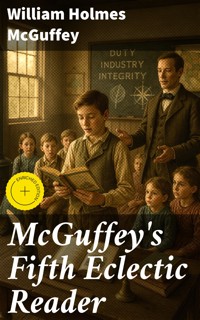
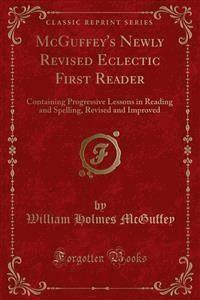
In "McGuffey's Fifth Eclectic Reader," William Holmes McGuffey presents a rich tapestry of literature designed to educate and engage young readers in the mid-19th century. The text combines a variety of genres'—including poetry, prose, and essays'—reflecting moral teachings, historical narratives, and scientific observations that align with the educational philosophies of the period. McGuffey's literary style is characterized by clear organization and a pedagogical approach that emphasizes moral instruction and critical thinking, placing this work firmly within the context of antebellum America's education reform movement. William Holmes McGuffey, a prominent educator and Presbyterian minister, dedicated his career to creating materials that would shape the moral character of American youth. His experiences in teaching and a deep commitment to moral pedagogy influenced his creation of the Eclectic Readers, making them not only instrumental in literacy but also in instilling values such as responsibility and integrity. McGuffey's fifth installment was particularly designed to challenge more advanced students, thus reflecting his progressive understanding of education's role in shaping society. This essential text is highly recommended for educators, historians, and anyone interested in the development of American educational systems. "McGuffey's Fifth Eclectic Reader" not only serves as a valuable historical artifact but also offers timeless insights into character formation and the importance of literature in personal development, making it a worthy addition to both academic and personal libraries. In this enriched edition, we have carefully created added value for your reading experience: - A succinct Introduction situates the work's timeless appeal and themes. - The Synopsis outlines the central plot, highlighting key developments without spoiling critical twists. - A detailed Historical Context immerses you in the era's events and influences that shaped the writing. - A thorough Analysis dissects symbols, motifs, and character arcs to unearth underlying meanings. - Reflection questions prompt you to engage personally with the work's messages, connecting them to modern life. - Hand‐picked Memorable Quotes shine a spotlight on moments of literary brilliance. - Interactive footnotes clarify unusual references, historical allusions, and archaic phrases for an effortless, more informed read.
Das E-Book können Sie in Legimi-Apps oder einer beliebigen App lesen, die das folgende Format unterstützen:
Veröffentlichungsjahr: 2019
Ähnliche












McGuffey's Fifth Eclectic Reader
Table of Contents
Introduction
A disciplined voice can cultivate a disciplined mind and heart. William Holmes McGuffey’s Fifth Eclectic Reader presents an advanced course in reading designed to shape intellect and character through practiced speech and careful comprehension. As part of the McGuffey Readers, this volume gathers prose and poetry chosen to challenge older students, guiding them from fluent decoding toward thoughtful interpretation and expressive delivery. Rather than offering a single story, it assembles selections that model clarity, moral seriousness, and rhetorical force. The result is a classroom companion that treats reading as both a skill to refine and a formative habit for life.
First introduced in the 1830s within the American common-school movement, the McGuffey Readers became standard classroom texts across much of the United States, and the Fifth Eclectic Reader belongs to that tradition. Issued as an upper-level installment and revised in subsequent decades, it reflects a nineteenth-century approach to literacy that links eloquence with ethics. The book’s selections and lesson apparatus draw students beyond basic phonics and into rhetoric, taste, and judgment. Understanding its historical context clarifies its aims: to prepare readers not only to decode print, but to participate responsibly in civic, religious, and familial life through articulate, reasoned speech.
As an educational anthology, the Fifth Eclectic Reader offers a structured encounter with varied forms—narratives, essays, biographical sketches, orations, and lyric and didactic verse—selected for their clarity and moral weight. The voice that emerges is formal and earnest, favoring elevated diction and measured cadence. Lessons move toward longer, more complex passages, encouraging sustained attention and an appreciation for structure, imagery, and argument. The mood can shift from contemplative to stirring, depending on the passage, yet the overarching experience is one of disciplined engagement. Readers are invited to inhabit language aloud, discovering how phrasing, emphasis, and tempo shape understanding.
Pedagogically, the volume pairs its readings with practical aids that support mastery. Vocabulary lists and definitions build precision; questions prompt recall and inference; and elocutionary notes direct the mechanics of delivery, from pauses and stress to tone. The emphasis on oral performance encourages students to connect thought with breath and posture, translating comprehension into expressive speech. Such scaffolding reflects a belief that literacy matures through practice: repeated readings, careful articulation, and attentive listening. In this way, the book functions both as a reader and as a manual for rhetoric, providing a bridge between silent study and confident public expression.
Across its selections, the Fifth Eclectic Reader foregrounds themes that nineteenth-century teachers prized: personal responsibility, perseverance, temperance, compassion, and devotion to truth. Many pieces explore civic duty and the durable consequences of actions, urging readers to weigh motives and outcomes with sobriety. Others dwell on the beauty and sublimity of the natural world, cultivating patience, gratitude, and awe. Biographical or historical passages model character under pressure, while reflective essays pose questions about conduct, conscience, and the use of time. The cumulative effect is ethical as well as aesthetic, aligning literary taste with habits of self-command and service.
For contemporary readers, the book offers several points of value. It provides a window into how schooling once framed literacy as a social and moral practice, revealing assumptions that shaped classrooms and communities. It also supplies a compact course in close reading and voice: parsing syntax, tracking argument, and coordinating breath with sense. Educators may find adaptable exercises in articulation and emphasis; independent learners may appreciate the challenge of sustained, expressive reading. Engaging the volume today invites comparison between past and present expectations, prompting discussion about how language forms judgment, and how public speech sustains a shared civic life.
Approached as a historical artifact, a training manual, or an anthology of serious prose and verse, McGuffey’s Fifth Eclectic Reader rewards patient attention. Its selections and lesson frames encourage readers to slow down, listen for structure, and let meaning emerge through practiced delivery. The tone is earnest rather than ironic, aiming to elevate taste and strengthen resolve. In an era of quick skimming, its deliberate pace can feel bracing, yet the discipline it fosters remains timely. By yoking eloquence to reflection, the book offers an enduring invitation: to read with care, to speak with purpose, and to think with integrity.
Synopsis (Selection)
McGuffey’s Fifth Eclectic Reader is an advanced volume in the 19th-century graded series designed to cultivate fluent reading, clear elocution, and sound character. Compiled as an anthology, it presents prose and poetry from a wide range of authors, arranged to progress in difficulty and depth. The book integrates vocabulary definitions, pronunciation cues, and comprehension questions to guide study. Its selections emphasize moral themes alongside literary appreciation, aligning reading practice with ethical instruction. Intended for upper-level pupils, it builds on earlier Readers by expanding rhetorical skill, critical attention, and expressive delivery, preparing students for the most demanding materials in subsequent volumes.
The book opens with instructional matter on elocution, setting a framework for how to read aloud with precision and effect. It outlines principles of articulation, enunciation, emphasis, and inflection, with attention to pitch, force, rate, and pause. Short illustrative sentences and phonetic drills model correct habits before extended readings begin. Guidance addresses common errors, encouraging steady breath, clear consonants, and distinct syllabication. These preliminary sections serve as reference points throughout the volume, offering standards by which students can judge their performance. With these foundations, the Reader links technical control of voice to the understanding and communication of meaning.
Initial lessons apply these principles to manageable selections and targeted exercises. Students practice difficult vowel sounds and consonant combinations, then read brief passages that reward precise stress and cadence. Definitions appear near the text to clarify rare or specialized terms, while questions test comprehension and reinforce usage. Attention to accent marks and syllable division develops confidence in pronouncing unfamiliar words. The arrangement ensures that mechanics and understanding advance together: articulation guides sense, and sense guides expression. Early units focus on accuracy, fluency, and careful attention to punctuation as cues for pauses and changes in tone.
As the book advances, selections broaden to descriptive sketches, reflective essays, and instructive narratives. These pieces present themes of industry, honesty, compassion, temperance, and responsibility, encouraging readers to connect sound reading with sound judgment. Poetry is introduced strategically to practice rhythm, imagery, and varied intonation, balancing prose’s logical progression with verse’s musical demands. Notes point out difficult constructions or allusions, and review prompts consolidate vocabulary and main ideas. The progression moves from straightforward scenes and moral incidents to more layered reflections, consistently asking students to sustain attention, interpret meaning, and embody tone through voice.
Historical and biographical readings appear next, combining literary merit with civic instruction. Sketches of notable figures, accounts of decisive moments, and patriotic addresses give practice in narrative clarity and heightened oratorical style. The volume includes authors from American and British traditions, providing perspectives on duty, liberty, and public virtue within a broader literary context. Questions often direct students to identify argument structure and stylistic devices, such as antithesis or parallelism. These selections build familiarity with elevated diction and complex sentences, preparing readers to maintain composure and coherence when delivering extended passages with the appropriate emphasis and restraint.
Subsequent units emphasize formal orations and argumentative essays, inviting students to apply elocutionary principles to persuasive prose. Texts exemplify logical progression, appeals to reason and sentiment, and controlled intensification toward a conclusion. Editorial aids highlight transitional phrases, climactic structure, and the rhetorical effects of repetition and contrast. Exercises encourage practice with varying pitch, force, and tempo to match the author’s intention. Through graded difficulty, the Reader leads students from accurate recitation to expressive declamation, aiming for a union of clarity, conviction, and decorum that reflects the standards of public speaking valued by the curriculum.
The poetry selections deepen this training by emphasizing meter, cadence, and the musical line. Lyric and narrative poems require attention to phrasing, caesura, and the balance between sound and sense. Students encounter vivid imagery, moral reflection, and patriotic feeling, along with scenes from nature and domestic life. Brief glossaries support understanding of archaic or figurative language, while recitation prompts encourage memorization and delivery. The arrangement juxtaposes varied moods—solemn, contemplative, and celebratory—to teach adaptable expression. By practicing scansion and controlled emphasis, readers learn to preserve rhythm without sacrificing clarity of thought or naturalness of speech.
In later lessons, the anthology culminates in denser essays, richly descriptive passages, and extended speeches that demand sustained attention and refined control. Mixed-genre units encourage transitions among narration, exposition, and argument within a single reading sequence. Review sections revisit core elocution topics, challenging students to apply articulation, emphasis, and modulation to more intricate syntax and advanced vocabulary. Annotations assist with historical context and rhetorical terminology. These final materials consolidate the Reader’s training aims: independent interpretation, disciplined voice, and mature judgment. The volume closes having prepared students for the broader scope and rigor of the series’ highest level.
Overall, McGuffey’s Fifth Eclectic Reader integrates language mastery with moral and civic formation. Its sequence moves from principles to practice, from shorter drills to complex texts, and from basic fluency to accomplished expression. By coupling vocabulary and comprehension aids with selected literature, it offers a systematic pathway toward articulate reading and effective speaking. The book’s central message is that clear thought, ethical sensibility, and trained voice belong together. Within its concise framework, it models exemplary English prose and verse, directs attention to structure and meaning, and equips students to read and recite with accuracy, dignity, and purpose.
Historical Context
McGuffey’s Fifth Eclectic Reader arose in the antebellum United States, centered on the rapidly developing Ohio Valley where William Holmes McGuffey taught at Miami University in Oxford, Ohio. Issued in the 1840s and repeatedly revised—notably in a broad 1857 “Revised Eclectic” series and again after the Civil War in 1879—it was used in common schools from New England to the Old Northwest. The period was defined by westward migration, evangelical reform, and the professionalization of public schooling. Cincinnati’s burgeoning publishing trade furnished classrooms, and the Reader’s elocution drills, civic biographies, and moral maxims mirror a society intent on social cohesion amid mobility, immigration, and sharpening sectional tensions.
The American common school movement supplied the institutional frame for the Fifth Reader. After Massachusetts created a state board of education (1837) under Horace Mann, states expanded tax-supported, graded schools and teacher training, beginning with the first state normal school in Lexington, Massachusetts (1839). “Graded readers” standardized a sequential curriculum in reading, elocution, and morals. The Fifth Reader, positioned for older pupils, delivered advanced rhetoric, history, and civic exempla suited to recitation. Its wide adoption—tens of millions of McGuffey Readers circulated by the late nineteenth century—reflects state and local school boards’ push for uniform texts. The book thus functioned as a tool of mass civic education envisioned by reformers and administrators.
Westward expansion and frontier schooling shaped the book’s tone and purpose. The Old Northwest—organized under the Northwest Ordinance (1787) and populated after the War of 1812—saw settlement spread across Ohio, Indiana, and Illinois. Cincinnati emerged as a print hub for riverine commerce and education. McGuffey, a professor and Presbyterian minister, taught at Miami University (1826–1836), writing for pupils in one-room schools who balanced farm labor with studies. The Reader’s emphasis on self-reliance, thrift, piety, and public virtue echoed the social aims of frontier communities striving for order. By offering models of civic conduct and polished speech, it translated eastern republican ideals to newly settled counties and township schools.
Evangelical reform currents from the Second Great Awakening (c. 1790s–1840s) profoundly influenced school culture and the Reader’s moral pedagogy. Voluntary societies—including the American Bible Society (1816), American Sunday School Union (1824), and American Temperance Society (1826)—linked personal piety to social improvement. In the Ohio Valley, Lyman Beecher’s arrival at Lane Seminary in Cincinnati (1832) symbolized the region’s moral activism. The Fifth Reader’s narratives and essays on duty, sobriety, and benevolence advanced these reform ideals in secularized form suitable for public schools. By coupling elocution with ethical exemplars, the book channeled nationwide campaigns against intemperance and vice into daily classroom recitations and memory work.
National memory and unionist oratory informed its historical selections. Public commemorations—from the laying of the Bunker Hill Monument cornerstone (Boston, 1825) to its completion (1843)—popularized speeches by Daniel Webster that fused Revolutionary remembrance with appeals to national unity. Webster’s 1830 Senate “Reply to Hayne,” with its “Liberty and Union” peroration, and addresses by Edward Everett and other statesmen became staple school texts. The Fifth Reader drew on such orations to model republican eloquence and patriotism. By rehearsing the Revolution’s dates (1775–1783), heroes, and civic virtues, the book inculcated a shared national story that could bind diverse classrooms in the decades preceding the Civil War.
Slavery and sectional crisis supplied the era’s defining conflict. The American Anti-Slavery Society formed in Philadelphia (1833); flashpoints included the Fugitive Slave Act (1850), the Kansas–Nebraska Act (1854), and Dred Scott v. Sandford (1857), culminating in the Civil War (1861–1865). Schoolbook markets straddled these divisions: publishers moderated sectarian or sectional references to secure adoptions across states. The Fifth Reader’s later revisions emphasized constitutional order, civic duty, and the moral language of liberty and Union without explicit polemic, sometimes excerpting statesmen whose rhetoric framed the crisis. In postwar classrooms, such pieces helped narrate the conflict as a national moral test while reaffirming the legitimacy of federal union and citizenship.
Industrialization, urban growth, and mass immigration reshaped classrooms and the Reader’s utility. The Erie Canal opened (1825), rail mileage surged to over 30,000 miles by 1860, and the telegraph spread after 1844, integrating markets. Between 1840 and 1860, more than four million immigrants—many fleeing Ireland’s famine (1845–1849) and Central European upheavals (1848)—arrived, provoking nativist politics (Know-Nothing movement, mid-1850s). Schools became engines of linguistic and civic assimilation. The Fifth Reader’s lessons in pronunciation, cadence, and decorum, along with biographies of exemplary citizens, trained heterogeneous pupils to a standardized English and public demeanor valued by employers and civic leaders, addressing anxieties about social disorder in crowded towns and cities.
As a social and political critique, the Fifth Reader framed the era’s problems—intemperance, demagoguery, indolence, and factionalism—as failures of character remediable through disciplined education. Its praise of industry, punctuality, and public virtue implicitly rebuked corruption and class idleness, while its unionist speeches warned against sectional aggrandizement. At the same time, the book’s Protestant, Anglo-American moral horizon exposed the period’s limited inclusivity, channeling assimilationist expectations toward immigrants and marginal groups. By making eloquence a civic duty and morality a public trust, the Reader challenged contemporary injustices in the language of duty, yet also reinforced prevailing hierarchies that defined who counted as the model American citizen.




