


4,49 €
Mehr erfahren.
- Herausgeber: Cactus Publishing House
- Kategorie: Ratgeber
- Sprache: Englisch
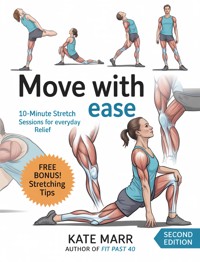
Move with Ease: 10-Minute Stretch Sessions for Everyday Relief
By Kate Marr
Discover the simple secret to a more comfortable, flexible, and energized body—without spending hours at the gym.
In
Move with Ease, wellness coach Kate Marr guides you through gentle yet powerful 10-minute stretching routines designed for real life. Whether you're stuck at a desk all day, recovering from stiff mornings, or simply looking to move better, this book will help you release tension, improve posture, and feel more at home in your body.
No complex equipment. No overwhelming plans. Just quick, effective sessions that easily fit into your daily routine—morning, midday, or night.
Inside, you’ll find:
- Step-by-step stretch sequences for every lifestyle and body type
- Routines targeting common pain zones like neck, shoulders, hips, and lower back
- Tips for breathing, relaxing, and getting the most from your stretch time
- Special sessions for stress relief, energy boosts, and better sleep
Feel the difference in just 10 minutes a day. Your body will thank you.
Das E-Book können Sie in Legimi-Apps oder einer beliebigen App lesen, die das folgende Format unterstützen:
Veröffentlichungsjahr: 2025
Ähnliche






Move with Ease
10-Minute Stretch Sessions for Everyday Relief
Kate Marr
Copyright © 2024 Kate Marr
All rights reserved. No part of this book may be reproduced, stored in a retrieval system, or transmitted in any form or by any means, without the prior written permission of the publisher, except in the case of brief quotations embedded in critical articles or reviews.
Legal Notice:
This book is copyright protected. This book is only for personal use. You cannot amend, distribute, sell, use, quote or paraphrase any part, or the content within this book, without the consent of the author or publisher.
Disclaimer Notice:
Please note the information contained within this document is for educational and entertainment purposes only. All effort has been executed to present accurate, up-to-date, reliable, and complete information. No warranties of any kind are declared or implied. Readers acknowledge that the author is not engaging in the rendering of legal, financial, medical or professional advice. The content within this book has been derived from various sources. Please consult a licensed professional before attempting any techniques outlined in this book.
By reading this document, the reader agrees that under no circumstances is the author responsible for any losses, direct or indirect, which are incurred as a result of the use of the information contained within this document, including, but not limited to, errors, omissions, or inaccuracies.
Coordination Editor: Alex Morgan
Manufacturing Supervisor: Jordan Taylor
Photography Copyright © 2021 Samira Bennett. Styled by Taylor Smith.
With deep gratitude to all the elders who have gone before us, keeping the knowledge alive.
Introduction
Stretching is one of the most powerful things you can do for your body—and the best part? It’s completely free. You don’t need a gym membership. You don’t need fancy gear. You don’t even need much space. All you need is a little time, a willingness to move, and a desire to feel better in your own skin.
My passion for stretching didn’t come from a sports team or a fitness class. It began on a rainy afternoon in my early teens. I remember trying to reach for a book on the top shelf at home and feeling an uncomfortable tightness in my back. It wasn’t painful, just awkward—but it stuck with me. I started doing little stretches before bed, mimicking moves I saw in magazines or fitness shows. At the time, I had no idea what I was doing—but I could tell that I felt better afterward. A few minutes of movement left me lighter, calmer, and somehow more in control of my body.
Years later, while working in a wellness clinic, I started to take stretching more seriously. I saw people from all walks of life—retirees with stiff joints, parents who couldn’t bend down to tie their shoes without discomfort, office workers with tight necks from hunching over screens. Many of them didn’t need intense exercise programs. They needed relief. They needed mobility. And they needed it in a way that was gentle, accessible, and empowering. That’s when it clicked for me: stretching wasn’t just a warm-up routine. It was a form of healing.
The more I studied the body, the more I realized how much inflexibility affects everyday life. Tight muscles can lead to poor posture, reduced balance, and even chronic pain. Something as ordinary as unloading groceries or stepping out of a car can feel exhausting when your body isn’t moving freely. Over time, that tension builds up and starts to limit what you can do—not just physically, but emotionally too. Stretching is a quiet, powerful way to reverse that.
One of my favorite moments was when a client in his sixties told me he finally managed to get up from the floor without using his hands. For the first time in years, he could play on the carpet with his grandson without worrying about how to stand up. That moment, to him, was more meaningful than any number on the scale. These are the kinds of transformations that stretching makes possible—not overnight, but gradually, with consistency and care.
This book is designed for people like you—people who want to move better, feel stronger, and live more comfortably in their bodies. You’ll learn the basics of stretching, including why it works and how to do it safely. I’ve included over 60 unique stretches with clear instructions and helpful tips, along with gentle alternatives for different levels of mobility, flexibility, and body types. You’ll never be expected to force your body into a shape it’s not ready for.
Stretching doesn’t have to be complicated. In fact, the simpler it is, the better. A few mindful minutes a day can bring big rewards—less stiffness, more energy, better posture, reduced pain, and a greater sense of calm. You might not notice it on day one, but keep going, and in a week or two, your body will thank you.
So roll out a mat, find a quiet space, and let’s begin. You’re about to give your body one of the kindest gifts it can receive—freedom to move, room to breathe, and space to heal.
PART I
Understanding the Science Behind Stretching
Stretching is one of those things that just feels good. Whether it’s a big morning yawn that makes your arms reach overhead or the gentle bend you make while tying your shoes, stretching is something we all do naturally—even without thinking about it. It’s the body’s quiet way of asking for space, movement, and release.
Many people see stretching as a type of fitness activity, something to do before or after a workout. But in reality, it’s much more than that. Stretching is a form of care. It’s a way for your body to reconnect with itself, to reset after sitting for too long, to ease tension after a stressful day, or to gently remind tight muscles that they’re allowed to relax. It’s your body expressing what it needs—and when you listen, amazing things happen.
As we move through life, our bodies go through changes. Years of sitting at desks, recovering from injuries, carrying children, or simply growing older can all lead to reduced mobility, muscle tightness, and changes in posture. Unfortunately, a lot of people believe this is just the way things have to be as we age. But here’s the truth: while aging is natural, losing flexibility and freedom of movement doesn’t have to be. There is always room for improvement, no matter your age or ability. And stretching can be a powerful part of that journey.
With just a little time each day, stretching can help reduce stiffness, improve how you move, and even ease nagging aches. You don’t need to spend hours or become a yoga expert to feel the difference. What you do need is a basic understanding of how flexibility works and how to approach stretching with care and intention.
That’s where this part of the book comes in.
In the pages ahead, you’ll learn the foundational science of stretching in a simple and easy-to-follow way. We’ll cover what flexibility really is, how your muscles and joints respond to stretching, and the many ways stretching can support your physical and emotional health. You’ll also learn about the different styles of stretching—from slow, relaxing holds to more active and movement-based techniques—and when to use each one.
But perhaps even more important than the science is the mindset. Stretching should never be about pushing through pain or forcing your body into uncomfortable positions. One of the most common mistakes people make is bouncing during a stretch or ignoring discomfort in hopes of “getting deeper.” That approach can do more harm than good. Proper stretching is gentle, intentional, and respectful of your limits. The goal is progress, not perfection.
In fact, one of the best ways to tell you’re doing it right is when your body feels more open and at ease afterward—not sore or strained. Listening to your body’s signals and adjusting your stretches accordingly is the safest and most effective way to stretch.
This first section will give you everything you need to begin with confidence. Once you understand how stretching works and what your body needs, you’ll feel empowered to make real changes in how you move and feel. You might be surprised at how quickly things improve—even with just a few minutes of stretching a day.
Let’s begin by exploring the science behind stretching, and then move into the wonderful benefits it can bring to your life. You’re about to discover that something this simple can truly be life-changing.
CHAPTER 1
Why Stretching Actually Works
Let’s start with a simple question: how well do you understand your muscles? Most of us use them every day without giving them much thought. We walk, lift, sit, stand, twist, and turn—all thanks to a complex network of muscles working together behind the scenes. By learning just a little bit about how your muscles operate, you’ll be much more prepared to stretch them in a safe and effective way.
There are hundreds of muscles throughout the human body—more than 600, in fact. These muscles vary in size and shape, depending on their location and purpose. Some are large and powerful, like the ones in your thighs that help you walk and climb stairs. Others are small and precise, like those in your hands and face that allow you to write, eat, smile, or speak. Even your tongue is controlled by a collection of tiny muscles that work together like a well-coordinated team.
Despite their differences, all muscles are built from the same basic material. They’re made of long, thin fibers grouped together in bundles, and these fibers are incredibly elastic—kind of like a rubber band. This stretchiness allows muscles to lengthen and shorten, which is how we create movement. Every time you bend your arm or reach overhead, your muscle fibers are sliding, contracting, and expanding.
Inside each muscle fiber are two important proteins: actin and myosin. These proteins interact by sliding past one another, which is what causes the muscle to contract or relax. It’s like a tiny chemical dance happening in your body every time you move. These movements happen so fast and so frequently that we often forget how intricate they really are.
Muscles are connected to our bones through strong cords of tissue called tendons. Tendons are made of collagen, which is the same protein that helps give your skin structure. These tendons anchor your muscles to your skeleton, so when a muscle contracts, it pulls on the bone and causes your body to move. Every movement—from the smallest wiggle of your toe to the largest leap—is made possible by this system of muscles, tendons, and bones working together.
But here’s something many people don’t know: your muscles have built-in safety systems to prevent injury. These are known as muscle spindles and the Golgi tendon organ.
Muscle spindles are located throughout the muscle fibers and are sensitive to changes in length. When you stretch too quickly or too far, these spindles send a signal for the muscle to contract as a protective response. That’s why bouncing or forcing a stretch can make your muscle tighten up—it’s your body’s way of saying, “Hold on, let’s not go too far.”The Golgi tendon organ, on the other hand, is found in the tendons. It senses how much tension is building up in the muscle. When that tension gets too high, it tells the muscle to relax to prevent damage to the tendons. This is one reason why slowly easing into a stretch and holding it for a little while can be so effective—it gives your body time to adjust and let go.Understanding these natural protective systems is important. When you stretch the right way—gently, gradually, and with awareness—you’re not just making your muscles more flexible. You’re also building trust with your body, helping it feel safe enough to release tension.
What Affects Your Flexibility?
You might be wondering why some people seem naturally bendy while others struggle to touch their toes. Several factors influence how flexible someone is. Let’s take a closer look at what can affect your range of motion:
Joint Structure: The way your bones are shaped can play a big role in how far you can move. For example, the hip joint is a ball-and-socket joint, but the way that ball fits into the socket varies from person to person. Some people may never be able to do a full split—not because they aren’t trying hard enough, but simply because their bones aren’t shaped to allow that movement. Age: As we get older, our muscles and tissues tend to lose moisture and elasticity. This natural process can make us feel stiffer and less mobile. However, aging doesn’t mean flexibility is lost forever. Many older adults experience incredible gains in mobility simply by starting a regular stretching routine. It’s never too late to improve.Gender: In general, women tend to be more flexible than men. This is largely due to differences in joint structure and hormones. For instance, during pregnancy, the body produces a hormone called relaxin, which increases flexibility to prepare for childbirth. That said, anyone—regardless of gender—can improve their flexibility over time with practice.Injuries and Surgeries: After an injury or surgical procedure, the body forms scar tissue as part of the healing process. While this is normal, it can create dense tissue and adhesions that limit movement. Stretching carefully and consistently can help restore range of motion and prevent long-term stiffness.Posture: The way you carry your body throughout the day impacts how your muscles adapt. For example, if you often sit hunched over a desk, the muscles in your chest and hips may become shortened while the muscles in your upper back and neck become overstretched and weak. Over time, poor posture reinforces these imbalances, making it harder to move freely. Regular stretching can help undo some of that tension and bring your body back into alignment.Muscle Size: Larger muscles—such as those developed through intense strength training—can sometimes limit movement. A person with highly developed chest muscles may find it difficult to fully raise their arms overhead. This doesn’t mean muscle is bad, but it does mean stretching is especially important for maintaining balance and range of motion.Opposing Muscles: Muscles often work in pairs. One muscle contracts while the opposing one stretches. For example, if you’re trying to stretch the muscles in the front of your thigh (your quadriceps), but the muscles in the back (your hamstrings) can’t contract fully, your stretch may be limited. Strength and flexibility need to be balanced between these pairs.Genetics: Some people are simply born with more joint mobility due to a condition called hypermobility. These individuals may appear very flexible, but that doesn’t necessarily mean they’re stronger or healthier. In fact, too much flexibility without control can sometimes lead to joint instability. If you don’t have this condition, don’t worry—you can still become more flexible through regular, mindful stretching.Stretching is not about trying to become someone else or copying a pose perfectly. It’s about giving your own body the space and attention it needs In the next chapter, we’ll explore the many benefits stretching can bring to your daily life—and how those benefits extend far beyond just being more limber.
The Many Benefits of Stretching
Stretching may seem like a small habit, but its effects are wide-reaching. Whether you’re doing a gentle forward fold in the morning or easing into a hip opener before bed, stretching has the potential to improve your life in so many meaningful ways.
There are different styles of stretching—like static stretching (where you hold a position for a period of time), dynamic stretching (where you move through a range of motion), and PNF stretching (short for proprioceptive neuromuscular facilitation, often done with a partner or therapist for deeper release). While each method offers something unique, researchers agree on one thing: people respond to stretching in different ways. That’s why it’s so important to listen to your body, go at your own pace, and make adjustments that feel right for you.
Before starting a new stretching routine—especially if you have medical conditions, joint concerns, or previous injuries—it’s a good idea to talk to your healthcare provider or a physical therapist. They can help guide you toward the most beneficial and safe stretches for your body’s needs.
Even a simple stretching session that lasts just five or ten minutes can lead to impressive results—especially when done regularly. The more consistent you are, the more benefits you’ll notice over time. And no, you don’t have to be able to twist into complicated poses or touch your toes from day one. Everyone starts somewhere, and no matter your current range of motion, you still gain all the positive effects stretching has to offer.
Here are ten powerful benefits of incorporating stretching into your daily life:
1. Pain Relief
One of the most noticeable and immediate benefits of stretching is relief from physical discomfort. Tight muscles can pull on joints and surrounding areas, causing everything from lower back pain to headaches. Stretching helps reduce that tension by loosening up those tight spots. It also encourages blood to flow into sore areas, speeding up the healing process. As an added bonus, stretching releases feel-good brain chemicals like dopamine and endorphins, which can naturally reduce the perception of pain and improve your mood.
Example: A short session targeting the lower back and hips can often relieve stiffness caused by long hours of sitting at a desk or driving.
2. Improved Flexibility and Mobility
A flexible body is more capable of handling life’s daily demands. From bending to tie your shoes, to reaching into high cupboards, to gardening on your knees—flexibility makes these movements smoother and safer. Although flexibility tends to decrease as we age, stretching regularly can actually reverse some of that decline. The earlier you begin, the more you’ll preserve your freedom of movement for the long haul.
3. Better Circulation
Stretching increases blood flow to your muscles, joints, and connective tissues. It encourages oxygen and nutrients to move more freely through your bloodstream, which not only helps with healing but also supports overall health. Good circulation keeps the body energized, reduces inflammation, and helps regulate body temperature.
4. Higher Energy Levels
If you’ve ever stretched after waking up or during a midday slump, you know how refreshing it can feel. That boost isn’t just in your head—stretching stimulates blood flow and releases mild stimulants like endorphins, which help wake up your system. You may notice you feel more alert, refreshed, and ready to tackle the rest of your day, even after just a few minutes of movement.
5. Improved Posture
Poor posture often develops when some muscles are too tight and others are too weak. Over time, this imbalance can pull your body out of alignment, causing slouched shoulders, forward head posture, or a tilted pelvis. Stretching helps correct these imbalances by lengthening the tight muscles, allowing your body to find a more natural and upright position.
Example: Stretching your chest, shoulders, and hip flexors regularly can reduce that rounded posture caused by computer work.
6. Reduced Stress and Anxiety
When we’re stressed, our bodies react by tensing up—especially in the neck, shoulders, jaw, and back. Gentle stretching, paired with slow and steady breathing, sends signals to your nervous system that it’s safe to relax. This activates what’s known as the parasympathetic nervous system, or the “rest and digest” state. In this calm mode, your heart rate lowers, your breath deepens, and your body can begin to release both physical and emotional tension.
Tip: A short stretching routine before bed can help you sleep more peacefully and reduce nighttime anxiety.
7. Injury Prevention
When your muscles are stiff and tight, they’re more prone to strains, sprains, and tears—especially during sudden movement. Stretching keeps your muscles supple and responsive, which allows them to handle changes in movement and direction more gracefully. This is especially helpful for athletes and active individuals, but it also applies to everyday movement like walking, bending, or picking things up.
8. Better Balance and Coordination
Stretching, especially in the lower body, helps with proprioception—your body’s ability to sense where it is in space. When your joints and muscles move more freely, you’re better able to react to uneven surfaces, sudden shifts, or quick direction changes. This leads to better balance, more confidence in movement, and a reduced risk of falls—particularly important as we age.
9. Faster Recovery After Exercise
If you’re active or involved in any fitness routine, stretching plays a key role in how your body recovers. Gentle post-workout stretches can reduce muscle soreness, help flush out waste products like lactic acid, and speed up the repair process. Recovery is not just about resting—it’s about giving your body the tools to bounce back stronger.
10. Greater Body Awareness
Stretching helps you tune in to your body in a way that many forms of exercise don’t. It teaches you to notice where you hold tension, which areas feel tight or tender, and how your range of motion changes from day to day. This mindfulness fosters a stronger connection between your body and your mind, helping you care for yourself more intentionally and prevent future problems before they begin.
Stretching may seem simple, but its benefits run deep. Whether you’re looking to ease pain, boost your energy, improve your posture, or simply feel more comfortable in your body, stretching is one of the easiest and most accessible ways to get there.
You don’t need to stretch for hours each day to feel a difference. Just a few minutes of focused, gentle stretching can create noticeable changes in how your body feels and functions. In the next chapter, we’ll explore the different types of stretching and how to use each one to your advantage.
Why Just 10 Minutes a Day?
One of the most common questions people ask when starting a stretching routine is: How much time do I really need to spend to see results? The answer might surprise you.
Over the years, I’ve had the opportunity to work with people of all ages—especially those in their 50s, 60s, and beyond—who wanted to improve their flexibility but weren’t sure how much time they could realistically commit. Many were dealing with tight joints, reduced mobility, or general stiffness that had crept in slowly over time. For most of them, the idea of long stretching sessions felt overwhelming or out of reach.
But here’s the encouraging truth: you don’t need to spend hours each day stretching. In fact, a simple 10-minute routine—done consistently—is often enough to create real, measurable changes in your flexibility, comfort, and overall well-being.
Through hands-on experience and observation, I’ve seen that just two 10-minute sessions per week can lead to noticeable improvements, especially for older adults or those who are new to stretching. Within about six weeks, many of my clients were able to move more freely, bend with ease, and even return to activities they thought were no longer possible—like gardening, playing with grandkids, or getting up from the floor without strain.
Science backs this up, too. Recent studies suggest that stretching as little as five minutes a day, five times per week can already help improve range of motion, ease tension in the muscles, and support joint health. That means even small efforts—if done regularly—can lead to big rewards.
So, why settle on 10 minutes? Here’s why it’s the sweet spot:
It’s easy to fit into your day – You can stretch in the morning before work, during a short break, or even while watching TV in the evening. Ten minutes passes quickly, but the benefits last all day.It’s not too overwhelming – For beginners, long routines can feel intimidating. Starting with 10 minutes helps you stay consistent and build confidence without overdoing it.It gives you time to breathe and relax – Stretching isn’t just about the body. When you take a few minutes to focus on your breath and slow down, you also calm your mind and reduce stress.It’s enough time to address multiple areas – A well-structured 10-minute routine can target key muscle groups like the neck, shoulders, hips, and back—areas where people tend to hold the most tension.Let’s say you begin with a 10-minute routine twice a week focused on your hips and lower back. After just a couple of weeks, you may notice you can sit for longer periods without discomfort, get in and out of the car more easily, or even wake up with fewer aches in the morning. These are real, practical changes that can truly improve your quality of life.
As you progress, you might find yourself adding a third session or increasing the time a bit—but even if you stay at 10 minutes, you’re already doing something wonderful for your body.
So if you’re asking yourself, “Can 10 minutes really make a difference?”—the answer is a confident yes. The key is showing up, even in small ways. Your body doesn’t need perfection—it just needs attention.




