



1,99 €
Niedrigster Preis in 30 Tagen: 1,99 €
Niedrigster Preis in 30 Tagen: 1,99 €
Mehr erfahren.
The "Mystery & Crime Collection" offers an intriguing exploration into the shadowy realms of suspense and criminal adventure, bridging the golden age of crime fiction with contemporary narrative flair. Exhibiting a vast range of literary styles, from tightly wound thrillers to slowly unraveling mysteries, this anthology captures the essence of the genre's evolution. It meticulously curates tales that surprise, challenge, and mesmerize, presenting audiences with the complexity of human nature, the duality of morality, and the eternal allure of the unknown. Each piece within this collection stands as a testament to the art of mystery, with certain narratives exhibiting particularly gripping plots and clever twists that redefine the limits of the genre. The editors have curated a compilation that showcases the talents of authors deeply entrenched in the traditions of crime fiction while pioneering new avenues in suspense literature. Drawing upon their diverse backgrounds and distinct storytelling prowess, these contributors collectively amplify the anthology's thematic cohesion. Rooted in the broader cultural and historical movements that breathe life into crime literature, the authors craft narratives that both honor and challenge genre conventions, inviting readers to engage with the undercurrents of societal tension and intrigue. This anthology presents a unique opportunity to traverse an array of perspectives and artistic approaches within a single, immersive volume. Ideal for both enthusiasts of mystery and newcomers alike, the "Mystery & Crime Collection" promises to be a compelling addition to any library, encouraging readers to explore the complexities and ingenuity found within. Whether for its rich educational insights or the thrilling journeys it portrays, this collection stimulates dialogue between its eclectic mix of stories, offering invaluable additions to the ever-evolving tapestry of crime fiction. In this enriched edition, we have carefully created added value for your reading experience: - A comprehensive Introduction outlines these selected works' unifying features, themes, or stylistic evolutions. - A Historical Context section situates the works in their broader era—social currents, cultural trends, and key events that underpin their creation. - A concise Synopsis (Selection) offers an accessible overview of the included texts, helping readers navigate plotlines and main ideas without revealing critical twists. - A unified Analysis examines recurring motifs and stylistic hallmarks across the collection, tying the stories together while spotlighting the different work's strengths. - Reflection questions inspire deeper contemplation of the author's overarching message, inviting readers to draw connections among different texts and relate them to modern contexts. - Lastly, our hand‐picked Memorable Quotes distill pivotal lines and turning points, serving as touchstones for the collection's central themes.
Das E-Book können Sie in Legimi-Apps oder einer beliebigen App lesen, die das folgende Format unterstützen:
Veröffentlichungsjahr: 2022
Ähnliche












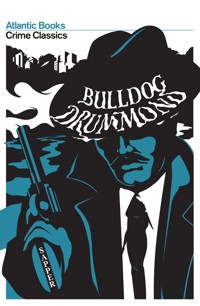

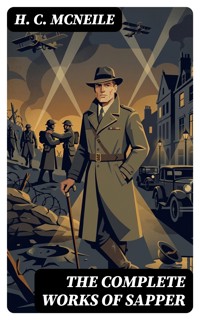

Mystery & Crime Collection
Table of Contents
Introduction
This single-author compendium presents H. C. McNeile’s crime and adventure fiction under his familiar pen name, Sapper, in a broad yet focused panorama. It assembles twelve novels and multiple collections of shorter work drawn from across his career, centering on the celebrated Bulldog Drummond sequence while showcasing allied heroes and sleuths. Readers will find long-form thrillers, detective stories, and war-time sketches gathered to demonstrate range and continuity rather than exhaustive completeness. The aim is twofold: to preserve the propulsive pleasures of the original publications and to situate them together so the hallmarks of Sapper’s craft—pace, atmosphere, and bravado—can be appreciated as a coherent achievement.
Bulldog Drummond, The Black Gang, The Third Round, The Final Count, The Female of the Species, Temple Tower, The Return of Bulldog Drummond, Knock-Out, Bulldog Drummond at Bay, and Challenge chart the development of Sapper’s signature adventurer through a series of high-stakes confrontations. In these novels, plots are propelled by urgent menace, intricate schemes, and camaraderie forged in the aftermath of the Great War. The settings range from London clubs to country houses and shadowed hideouts, with sudden shifts from drawing-room exchanges to explosive action. Dialogue is clipped, humor dry, and loyalties clear, producing a distinctive blend of swashbuckling energy and modern urban intrigue.
Alongside the principal cycle stand vigorous companion novels. Jim Maitland and Tiny Carteret offer portraits of bold, resourceful protagonists whose solutions to danger favor ingenuity as much as force. The Island of Terror widens the canvas to remote locales and concentrated peril, showing Sapper’s aptitude for building tension from stark premises. These works share the briskness and clean lines of the Drummond books while varying tone and setting, moving from metropolitan neighborhoods to far-flung theaters of adventure. Codes of sportsmanship and friendship underpin the action, and the narrative tempo—short scenes, decisive turns—keeps attention fixed on movement, risk, and unembarrassed decisiveness.
Shorter forms supply a complementary register. Ronald Standish gathers cases for a cool, observant gentleman-detective, emphasizing timing, inference, and the patient dismantling of alibis. The Horror At Staveley Grange adds an episode of concentrated dread within the investigative tradition. The Saving Clause, Out of the Blue, and The Finger of Fate present compact crime and mystery tales, many with twist-led structures and moral turns revealed in the final pages. These stories demonstrate Sapper’s compression: clues are planted cleanly, reversals arrive without waste, and atmosphere is conjured in a handful of strokes, balancing puzzle interest with the momentum that powers his novels.
Men, Women and Guns, written from first-hand experience of the First World War, contributes a crucial axis to the collection. Though not detective fiction, its sketches and tales shape the cadence of Sapper’s later mysteries and thrillers. The clipped sentences, the matter-of-fact acceptance of danger, and the fellowship under strain all echo through the clubland adventures and the meticulous short cases. Reading these pieces alongside the crime narratives clarifies how discipline, improvisation, and stoic humor migrated from the front to the city street and the country lane, giving his peacetime protagonists a soldier’s composure in the face of conspiracy.
Unifying these diverse texts are themes of initiative, loyalty, and the contest between order and clandestine threat. Sapper’s stylistic signatures—economical chapters, rapid entrances and exits, purposeful dialogue, and mechanically neat plotting—create a forward thrust that favors action while respecting logic. The books also register interwar preoccupations: the pull of civilian routine against a taste for peril, and the allure of secret organizations as emblems of instability. As with many works of their era, certain attitudes and portrayals reflect their period. Encountered critically, they remain instructive documents of their time and vital engines of suspense, still quick on the page.
Taken together, these novels and story collections outline the architecture of British popular thrillers between the wars and beyond, and they secure Sapper’s position among the defining voices of the genre. The volume invites two approaches: sustained immersion in the Drummond saga’s surging arcs, and selective reading of compact investigations where deduction and irony take the lead. Either route shows how recurring methods—tight setups, decisive confrontations, cleanly signposted clues—produce durable narrative satisfaction. This edition’s purpose is simple: to offer an accessible, authoritative gateway to Sapper’s essential mystery and crime writing, gathered in one place for continuity, comparison, and renewed enjoyment.
Historical Context
Herman Cyril McNeile (1888–1937), better known as “Sapper,” forged his worldview in the trenches of the First World War. Serving with the Royal Engineers on the Western Front, he absorbed the camaraderie, improvisation, and ruthlessness of industrialized warfare. Publishing wartime sketches in London newspapers under a pseudonym necessitated by military regulations, he later gathered such material in Men, Women and Guns (1916). With the Armistice of 1918 and Britain’s uneasy return to peacetime, McNeile shifted from frontline vignettes to peacetime thrillers, creating ex-officer protagonists like Bulldog Drummond who channeled demobilized energies into combatting perceived threats at home and abroad throughout the 1920s.
Postwar Britain wrestled with strikes, unemployment, and ideological conflict, conditions that animate The Black Gang, The Final Count, and related Drummond adventures. The 1917 Bolshevik Revolution, waves of industrial unrest in 1919–1921, the sensational “Zinoviev letter” affair of October 1924, and the General Strike of May 1926 fed anxieties about subversion. McNeile’s conspirators speak to this climate: shadowy foreign agents, saboteurs, and profiteers threaten civic order while respectable institutions seem hesitant. His ex-officers reclaim initiative through vigilant fraternities, an extension of wartime small-unit cohesion. Readers found reassurance in decisive action, though critics worried about extra-legal methods and simplistic political binaries.
McNeile wrote amid the British “Golden Age” of crime fiction, yet he favored kinetic thrillers over intricate puzzles. Alongside contemporaries like John Buchan and, later, Dornford Yates, he popularized the clubland hero: a well-connected amateur who operates between the police and the secret state. Institutions such as Special Branch and the domestic security service founded in 1909 provided a backdrop, but Drummond and Ronald Standish often act first, report later. London’s clubs, Mayfair flats, and Home Counties estates become staging grounds for pursuit and interrogation, reflecting a social world where class networks, wartime friendships, and private means enabled rapid, unsanctioned responses.
Scientific modernity—hailed and feared after 1918—drives several plots. Wartime gas, clandestine laboratories, and the promise of electrical, automotive, and chemical breakthroughs provided plausible menace. In The Third Round, industrial secrets and synthetic processes provoke criminal enterprise; in The Final Count and Temple Tower, clandestine research, surveillance arts, and new communications intensify cat‑and‑mouse struggles. Automobiles, telephones, and improved forensics allow villains to extend reach, but also arm pursuers with speed and coordination. McNeile repurposed wartime ingenuity for peacetime detection, suggesting that technical knowledge, discipline, and courage—skills honed under fire—could master the destabilizing surprises of interwar science and crime.
Imperial horizons shaped the collection’s adventures beyond London. Jim Maitland’s globe‑trotting and Tiny Carteret’s sporting derring‑do draw on routes familiar to ex‑officers and colonial administrators, from Mediterranean ports and North African coasts to Asian entrepôts. Such settings capitalize on the travel networks of the British Empire during the 1920s, even as imperial authority was contested from Ireland’s independence in 1922 to unrest in India and the Middle East. Exotic locales provide moral testing grounds and treasure‑hunt stakes, but they also reveal a nostalgia for cohesion and hierarchy. Ronald Standish and island mysteries echo the period’s appetite for remote frontiers.
Shifting gender roles inform the series’ recurring femmes fatales and loyal comrades. The Representation of the People Act (1918) and Equal Franchise Act (1928) expanded women’s political presence, while the “flapper” symbolized new freedoms. McNeile often counters this modernity with traditional masculinity: Bulldog Drummond’s camaraderie and physical courage dominate the page. Yet The Female of the Species foregrounds a formidable adversary—Irma—whose intelligence and allure complicate moral certainties. Such portrayals echo ambivalence in interwar Britain, where admiration for female competence coexisted with anxiety about social change, inviting both fascination and unease among readers of thrillers and detective tales.
Production and reception were amplified by the era’s media ecology. Bulldog Drummond leapt from page to West End stage in 1921, and film versions appeared through the 1920s and 1930s, including the 1929 talking picture starring Ronald Colman. International distribution, especially to the United States, broadened the audience and reinforced a transatlantic taste for gentleman adventurers. Popular London publishers and magazine serializations ensured visibility, while eye‑catching dust jackets marketed continuity across sequels from The Third Round to Knock‑Out. Critics questioned the politics but praised narrative drive; later, George Orwell would class Sapper among “good bad” writers whose stories compelled despite limitations.
Economic shocks and political extremes of the 1930s inflect the later works in this volume. The Great Depression from 1929 deepened insecurities; the rise of authoritarian movements in Europe and Britain’s own paramilitary fringes sharpened debates about order, liberty, and force. Domestic settings—country houses, market towns, and isolated granges—host anxieties about infiltration and betrayal, as in tales like The Horror at Staveley Grange. McNeile died in 1937, but his characters persisted under Gerald Fairlie, cementing a legacy of high‑velocity, conservative thrillers. Today, the stories register both their era’s assumptions and its fears, invaluable for reading interwar Britain’s mindset.
Synopsis (Selection)
Bulldog Drummond: Early Novels (Bulldog Drummond; The Black Gang; The Third Round; The Final Count)
A demobilized gentleman-adventurer forms a loyal band to smash audacious conspiracies, delivering brisk clubland thrills, banter, and high-risk gambits over formal detection.
These tales pit nerve and camaraderie against shadowy masterminds and modern schemes, foregrounding chivalry, postwar restlessness, and cliffhanger action.
Bulldog Drummond: Later Novels (The Female of the Species; Temple Tower; The Return of Bulldog Drummond; Knock-Out; Bulldog Drummond at Bay; Challenge)
The later cases tighten into darker, faster set pieces—sieges, abductions, and international intrigues—while preserving the hero’s bluff cheer and team spirit.
Themes of loyalty and duty meet rising technological threats and subtler villains, marking a shift from carefree escapade to grimmer, precision-tooled suspense.
Standalone Adventure Novels (Jim Maitland; The Island of Terror)
Jim Maitland sends a roving soldier-of-fortune across continents in pursuit of legends, treasure, and danger, with a swaggering, romantic tone and exotic backdrops.
The Island of Terror traps characters in an isolated, perilous setting where resourcefulness and courage test colonial-era certainties, showcasing momentum, atmosphere, and moral nerve.
Ronald Standish (Short Stories)
These tales spotlight a cool, observant amateur who solves intricate problems through quiet deduction and calm persistence rather than force.
The tone is understated and fair-play oriented, emphasizing clues, crisp dialogue, and Sapper’s clipped prose as a counterpoint to his action-heavy adventures.
Tiny Carteret (Short Stories)
Stories of a tough, athletic hero who relies on courage, quick wits, and loyalty to outface criminals and tight corners.
Paced with punchy action and sportsmanly honor, they prefer bold gambits and physical stakes over intricate puzzles.
War and Crime Story Collections (Men, Women and Guns; The Saving Clause; Out of the Blue; The Finger of Fate; The Horror At Staveley Grange)
Men, Women and Guns offers frontline and home-front sketches where comradeship, sacrifice, and dry humor reveal character under strain.
The crime and twist collections deliver compact mysteries, legal tangles, and ironic reversals, highlighting fate, duty, and the cost of courage within taut, economical storytelling.
Mystery & Crime Collection: 12 Novels & 70+ Detective Stories in One Volume (Bulldog Drummond, The Blank Gang, Jim Maitland, The Final Count, Tiny Carteret, Knock-Out, Temple Tower…)
Jim Maitland
FOREWORD
THE first time I heard Jim Maitland's name mentioned was in the bar of a P.&O. We were two days out of Colombo, going East, and when I confessed my complete ignorance of the man a sort of stupefied silence settled on the company.
"You don't know Jim?" murmured an Assam tea-planter. "I thought everyone knew Jim."
"Anyway, if you stay in these parts long you soon will," put in someone else. "And once known—never forgotten."
They fell into reminiscences of old times, and I was well content to listen. Ever and anon Maitland's name was mentioned, and gradually my curiosity was aroused. And when one by one they went off to turn in, leaving me alone with the tea-planter, I asked him point-blank for further details.
He smiled thoughtfully, and took a sip of his whisky-and-soda.
"Ever been in a brawl, Leyton, with ten men up against you, and only the couch keeping a fellow with a knife in the background from sticking it into your ribs? Well, that's Jim's heaven, though he'd prefer it to be twenty. Ever seen a man shoot the pip out of the ace of diamonds at ten paces? Jim cuts it out by shooting round it at twenty. He's long and thin, and he wears an eyeglass, and rumour has it that once some man laughed at that eyeglass." The tea-planter grinned. "Take my advice and don't—if you meet him. It's not safe. He's got his own peculiar code of morals, and they wouldn't wash with an Anglican bishop. He never forgives and he never forgets—but he'd sell the shirt off his back to help a pal. Who he is and what he is I can't tell you; whether it's his right name even I don't know. And I've never asked; Jim doesn't encourage curiosity."
"Yes—but what's he do?" I asked as he finished.
"Do?" echoed the tea-planter. "Why, man, he lives. He lives: he doesn't vegetate like nine out of ten of us have to."
With a short laugh he rose and finished his drink.
"Well—I'm turning in. That's what he does, Leyton—he lives."
The door closed behind him and for a while I sat on thinking. "He lives: he doesn't vegetate." The words were running in my head, the man to whom they had been applied was only a name to me. Nine out of ten! Ninety-nine out of a hundred would have been nearer the mark.
And since the doings of the one may be of passing interest to the ninety and nine, I have ventured to put on record these random recollections. For Fate decreed that I was to meet Jim Maitland, and eat with him, and drink with him, and fight with him. Fate decreed that the man who was only a name to me should become my greatest friend.
But for those who may read I have one word of warning. By the very nature of things, when a man is a wanderer on the face of the earth, the people he meets are here today and gone tomorrow. Maybe paths may touch again: more likely it is that they do not. The bunch with whom one drank at Shanghai and found good fellows one and all, disappear and are no more seen—just lives that crossed for an instant never to touch again. And so it must be in these pages. Across them will flit men and women—only to disappear as suddenly as they came. Today, as I write, they may be alive; they may be dead—I know not. MacAndrew, the Scotch trader at Tampico: Count von Tarnim of the Prussian Guard: Colette of the dancing hall in Valparaiso— where are they? How has life dealt with them? Has Captain James Kelly got his poultry farm in Dorset? No: by Jove! a U-boat got him in the war, and he went down with his flag flying having pot-shots with a rifle at the submarine commander who had shown himself on the conning-tower too soon. And does Jock Macgregor still wander in strange seas cursing the Government for his inadequate pay? As I said before, I know not. Which is why those who may read will not know either.
I. — RAYMOND BLAIR—DRUNKARD
YOU probably do not know the Island of Tampico. I will go further and say you have probably never even heard of the Island of Tampico. And in many ways you are to be pitied. If ever there was a flawless jewel set in a sapphire sea Tampico is that jewel. And because flawless jewels are few and far between the loss is yours.
But on balance you win. For if ever there was a place where soul and body rotted more rapidly and more completely I have yet to find it. That beautiful island, a queen even amongst the glories of the South Seas, contained more vice to the square mile than did ever the slums of a great city. For in any city there is always work to be done; through a portion of the twenty-four hours at least, the human flotsam are given in labour. But in Tampico there was no work to be done, save by the very few who came for a space on business and departed in due course.
In Tampico, where fruit and enough food could be had for the asking, there was no struggle to survive. In fact, no one ever struggled in Tampico save for one thing—drink. Drink could not be had for the asking. Drink had to be paid for in hard cash. And hard cash was not plentiful amongst the derelicts who came to that island, and having come remained till death took them, and another false name was written roughly on a wooden cross to mark the event. Wood is cheap in Tampico, which is why the tombstones in the graveyard of the lost are monotonous to look at. After all, who could be expected to put, up the price of a perfectly good bottle of gin in order to erect some fool ornamental stone on the grave of a man who had died of delirium tremens?
It was out of the beaten track of the big liners by many hundred miles: only small boats ever called—boats principally engaged in the fruit trade, with passenger accommodation for six in the first class. For fruit was the particular trade of Tampico; fruit and various tropical products which grew so richly to hand that it was almost unnecessary to pick them. If you waited long enough they fell into your hands. And nobody ever did anything but wait in Tampico, which is why it is so utterly rotten. Even when a lump of ambergris comes ashore—fat and stinking and an Event with a capital E—the fortunate finder does not hurry. True, he may knife the man who tries to steal it, but otherwise his movements are placid. There is a dealer in the town, and ambergris means drink for weeks, or maybe days, according to the capacity for liquid of the finder. The scent upon your dressing-table, my lady, has ambergris in it, though the whale which supplied it is dead, and the man who found it is dead too.
The first time I saw Raymond Blair he had just found a lump of the stuff and was, in consequence, utterly and supremely happy. I'd heard, about him from MacAndrew the trader, and I watched him with the pitiful interest a sound man always feels for the down and outer.
"The most hopeless case of all," MacAndrew had said to me in the club the night before. "A brilliantly educated man—Balliol—he told me one evening just before he got insensible. He'll spout classics at you by the yard, and if he's in good form—not more than one bottle inside him—he'll keep a dinner-table in roars of laughter."
"He belongs to the club?" I said in some surprise. MacAndrew shrugged his shoulders.
"It's easier to belong to our club here than the Bachelors' in London. He's got money, you see—quite a bit of money. Comes out every month. And, he's educated—a gentleman. And he's a drunkard. Hopeless, helpless, unredeemable." He filled his pipe thoughtfully. "And though it's a strange thing to say, it's better to keep him drunk. It's all that keeps what little manhood is left in him alive. When he's sober he's dreadful.
"Towards the end of the month always, before the money comes— he isn't a man, he's a crawling, hideous thing. Anything, literally anything will he do to get drink. And there's a Dago swine here who torments him. He loathes him because one night Blair—who was drunk and therefore in good form—put it across the Dago in a battle of words, so that the whole club roared with laughter. And the Dago gets his revenge that way. Why, I've seen him, when Blair has been crawling on the floor—and that's not a figure of speech, mark you, I mean it—crawling on the floor for the price of a drink, make him stand up on a table and recite Humpty Dumpty,' and other nursery rhymes, and then give him a few coppers at the end as a reward. And he's Balliol."
"But can't anything be done?" I asked.
MacAndrew had laughed a little sadly.
"When you've been here a little longer, you won't ask that question."
I was sitting in the window of the club as Raymond Blair came in, and we had the room to ourselves. He had been pointed out to me a few days previously, but he had then been far too drunk to recognise anybody, and from the look he gave me as he crossed the room it was evident that he regarded me as a stranger. I took no notice of him, and after a while he came over and drew up a chair.
"A stranger I think, sir, to our island?"
His voice was cultivated, and he spoke with the faintest suspicion of a drawl.
"I arrived about a week ago," I answered a little abruptly. Somehow or other the thought of this English gentleman standing on a table reciting nursery rhymes at the command of a Dago stuck in my throat. It seemed so utterly despicable, and yet—poor devil, who was I to judge?
"And are you staying long?"
"Probably a month," I said. "It depends."
He nodded portentously, and it was then that I saw he was already drunk.
"A charming island," he remarked, and his hand went out to the bell-push. "We must really have a drink to celebrate your first visit."
"Thank you—not for me!" I answered briefly, and he gave a gentle, tolerant smile.
"As you like," he remarked, with a wave of his hand. "Most new arrivals refuse to drink with me, in a well-meant endeavour to save me from myself. But I'm glad to say it's quite useless—I passed that stage long ago. Such a fatiguing stage, too, when one is struggling uselessly. Far better to drift, my dear sir, far better."
He took a long gulp of the double whisky-and-soda which the native waiter, without even asking for orders, had placed beside him.
"I am only myself now," he continued gravely, "when I am drunk. I am supplied regularly with money from—er—a business source at home, and I am thereby enabled to be myself with comparative frequency."
It was then, I think, that I realised what an utterly hopeless case he was, but I said nothing and let him ramble on.
"I get it monthly." He was gazing dreamily out of the window, across the water to the white line of surf where the lazy Pacific swell lifted and beat on a great coral reef. "A most prosperous business, though this month the remittance has not arrived. Most strange; most peculiar. The boat came in as usual, but nothing for me. And so you can imagine my feelings of pleasure when I found yesterday afternoon a quite considerable lump of ambergris on the shore. The trouble is that the dealer is such a robber. A scandalous price, sir, he gave me—scandalous. Still, better than nothing. Though I am afraid my less fortunate confreres outside will have to suffer for his miserliness. Charity and liquor both begin at home. It is the one comfort of having the club, one can escape from them."
I glanced into the street, and there I saw his confreres. Five haggard, unshaven human derelicts clustered under the shade of a palm tree, eyeing the door of the club hungrily, wolfishly, waiting for this product of a university to share with them some of the proceeds of his find.
"As you see," he continued affably, "they are not quite qualified for election even to the Tampico club." He dismissed the thought of them with a wave of his hand. "Tell me, sir, does the Thames still glint like a silver-grey streak by Chelsea Bridge as the sun goes down? Do the barges still o chugging past Westminster? Do children still sail boats on the Round Pond back London way?"
And for the life of me I could not speak. Suddenly, with overwhelming force, the unutterable pathos of it all had me by t he throat, so that I choked and muttered something about smoke going the wrong way. Hopeless, helpless, unredeemable, MacAndrew had said. Aye—but the tragedy of it; the ghastly, fierce tragedy. Back London way—
With wistful eyes he was staring once more over the wonderful blue of the sea, and he seemed to me as a man who saw visions and dreamed dreams. Dreams of the might have been; dreams of a dead past. And then he pulled himself together and ordered another whisky and soda. He was himself once more— Raymond Blair—drunkard and derelict; and as for me, the moment of overwhelming pity had passed.
I was in Tampico—and facts were facts. But it left its mark—that moment: through all that followed the memory of the haunting tragedy in his face stuck to me. Maybe it made me more tolerant than others were: more tolerant certainly than Jim Maitland. For it was in Tampico that I first met Jim, and Blair was the unwitting cause of it.
It must have been a month or five weeks later. The fortnightly boat had just come in, and I intended to leave Tampico in her next day. It was tea- time, and, as I turned into the club, I saw a stranger lounging on the veranda. And because in the outposts of Empire one does not wait for an introduction, I went up to him and spoke. He rose as I reached him, and I noticed that he was very tall.
"I'd better introduce myself," he said with a faint, rather pleasant drawl. "My name is Maitland—Jim Maitland."
I looked at him with suddenly awakened interest. So this was the man of whom the Assam tea-planter had spoken—the celebrated Jim Maitland who lived and didn't vegetate.
"My name is Leyton," I answered, "and I'm glad to meet you. Several strong men had to be helped to bed a few weeks ago after the shock they got when I said that not only had I never met you, but that I'd actually never heard of you."
He grinned—a slow, lazy grin—and then and there I took to him. And, strange to say, after all these years the memory of him which lives freshest in my mind is the memory of that first evening before I knew him at all.
If I shut my eyes, though it's fifteen years ago, I can still see that immaculately dressed figure—tall, lean and sinewy, the bronzed clean- cut face tanned with years of outdoor life—and clearest of all, the quite unnecessary eyeglass. Of the inward characteristics that went to make up Jim Maitland—of his charm, of his incredible lack of fear, of his great heart, I knew nothing at the time. That knowledge was to come later. On that afternoon in Tampico I saw only the outside man, and, in spite of the eyeglass, I pronounced him good.
"Yes—I know most of the odd corners out here," he said as we sat down, and I rang for a waiter. "Though funnily enough I've never been to Tampico before."
"What's yours?" I said as the waiter appeared.
"Whisky and soda, thanks," he answered, stretching out his long legs in front of him.
"Yes—as I say—I've never been here before. I've just arrived in the boat, and I want to get off in her again tomorrow rather particularly."
A peculiar look, half cynical, half amused, came into his eyes for a moment—a look to the meaning of which I had no clue. And then the amusement and the cynicism changed, I thought, to sadness, but, maybe, I was wrong, and it was only my imagination. Certainly his eyes were expressionless as they met mine over the top of his glass.
"Here's how," he said. "You know this place well?"
"Been here six weeks," I answered. "Going tomorrow myself."
"Six weeks should be enough for you to tell me what I want to know. I joined the Moldavia at Port Said, and struck up an acquaintance with a little woman on board. She was all by herself—extraordinarily helpless, never-been-out-of-England-before type and all that—and she was coming here. In fact, she's come this afternoon by the boat to join her husband. I gather he's a fruit merchant in Tampico on rather a big scale. Well, when we berthed there was no sign of him on the landing. So I took her up to that shack of an hotel, and started to make inquiries. Couldn't find out anything, so I came along here." He put down his glass suddenly and rose. "Hullo! here she is."
I glanced up and saw a sweet-looking girl coming towards us along the dusty street. Her age may have been about twenty-five, but her wonderful freshness was that of a girl of seventeen. And it seemed to me as if Tampico had vanished, and I was standing in an old English garden with the lilac in full bloom.
"Mr. Leyton," murmured Maitland, and I bowed.
She nodded at me charmingly, and then gave him the sweetest and most beseeching of smiles.
"I couldn't wait in the hotel, Jim," she said. "It's a horrible place."
"The Tampico hotel," I laughed, "is not an hotel but a sports club for the insect world."
She sat down daintily, and I thought of the few leather-skinned products of Tampico. And then—why, I know not—I glanced at Jim Maitland. And his eyes were fixed on the girl, with that same strange, baffling expression in them that I had noticed before—the expression that in years to come I was destined to see so often. But at the moment I remember thinking that it was, perhaps, as well that he was going by the boat next day. Strange things are apt to happen in the Tampicos of this world— things which are not ordained by the Law and the Prophets.
Then I realised he was speaking, and recalled my wandering attention to the question before the house.
"He can't have got your letter, Sheila. Or, perhaps, he may be away from the island on business."
"Well, I asked everyone at the hotel, after you went out, but they didn't seem to understand," she said a little tremulously.
The man turned to me.
"Mrs. Blair has lost or temporarily mislaid her husband," he remarked whimsically. "A large reward is offered information as to his whereabouts."
"Blair," I said, puzzled, my mind being busy with fruit merchants of the place. "Blair! I don't seem know the name."
"Raymond Blair," she cried, leaning forward. "Surely you must know him."
And for a moment it seemed to me as if the street behind her and everything within my vision turned black. How long I sat there staring at her foolishly I know not—perhaps but the fraction of a second. A kindly Providence has endowed me with a face which has enabled me to win more money at poker than I have lost, and when I heard myself speaking again in a voice I hardly recognised, her face still wore the same little eager, questioning smile.
"How stupid of me," I remarked steadily. "Raymond Blair! Why— of course. The last time I saw him he was going into the interior of the island, and he did say, if I remember aright, that he might be catching the boat which left a fortnight ago."
I felt the eye behind that eyeglass boring into me, and I wouldn't meet it. In an island where if a man sneezes the fact is known by the whole community in half an hour, the whereabouts of a leading member of society are not a matter of vague conjecture. But she didn't know it, poor child—with her English ideas. And I watched the smile fade from her face, to be replaced by a little pitiful questioning look which she turned on Jim Maitland.
"Perhaps I could go to his house," she said doubtfully. "If you could tell me where it is."
And now I was lying desperately, furiously.
"He was going to have it done up," I remarked. "I think, Mrs. Blair, that the best thing to do would be for you to go back to the hotel, while I make inquiries as to where your husband is. If he is away from the island, I think you had better put up with the chaplain's wife until—er— until he returns."
And it was at that moment that MacAndrew passed by to go into the club and nodded to me.
"Perhaps your friend might know," she hazarded. There was nothing for it, and I rose and caught MacAndrew by the arm. My grip was not gentle, and, as he swung round, my eyes blazed a message at him.
"Mrs. Blair has come out to join her husband, Mac," I said. "You know—Raymond Blair."
I heard him mutter "God in Heaven," under his breath, but MacAndrew was a poker player himself of no mean repute. "I have a sort of idea that he sailed on business by the last boat, didn't he?" I continued.
He took his cue.
"I believe he did," he said thoughtfully. "Yes—now you mention it—I believe he did."
And then Jim Maitland began to take a hand.
"I think you had better do what this gentleman suggested, Sheila. I'll take you back to the hotel, and I'll see you get a good room. Then you can lie down and rest for a bit, while we find out for certain where your husband is." He turned to us, and we knew he'd guessed something. "Shall I find you here when I've seen Mrs. Blair back to the hotel?"
"We'll be here," said MacAndrew quietly, and in silence we watched them go up the street. In silence, too, did we wait for his return, save for a brief period when Mac cursed savagely and horribly with no vain repetitions.
"Where is he, Mac?" I said, as he finished.
"In Dutch Joe's gin hell," he answered. "And they're baiting him. He's got no money. Who is the fellow with the pane of glass in his eye?"
"Jim Maitland," I remarked briefly, and MacAndrew whistled.
"So that's Jim Maitland, is it?" he said slowly. "Well, if one-tenth of the yarns I've heard about him are true, there will be murder done tonight. He doesn't like Dagos, I've been told—and that swine who is baiting Blair is half drunk himself." He looked at me shrewdly. "How does Maitland stand with the girl?"
"Don't ask me," I answered. "I know no more than you. They both came in today's boat; that's all I can tell you. And, anyway, she's Blair's wife."
MacAndrew grunted, and relapsed once more into silence. Five minutes later Jim Maitland returned, and strode straight up to us.
"Mrs. Blair is a friend of mine. I don't know her husband from Adam, but I know her. You take me?"
His blue eyes, hard as steel, searched our faces.
"Well, gentlemen, I'm waiting. I don't know what the hell the game is, but your lies, sir "—and he turned on me—"wouldn't have deceived an unweaned child who knew these parts."
And strangely enough I felt no offence.
"I lied right enough," I said heavily. "I lied for her benefit, not yours."
"Why?" snapped Maitland.
"You'd better come and see for yourself," said Mac-Andrew.
"Then Raymond Blair is on the island," said Maitland slowly.
"He is," returned MacAndrew briefly. "Nothing on God's earth is quite as sure as that."
And in silence he led the way along the dusty street towards the native part of the little town. Once or twice I stole a glance at Jim Maitland's face as he strode along between us, and it was hard and set, almost as if he realised what was in front of him. But he spoke no word during the ten minutes it took us to reach Dutch Joe's gin hell; only a single long-drawn "Ah!" came from his lips when he realised our destination.
"Nothing on God's earth is quite as sure as that," repeated MacAndrew grimly, as he flung open the door and we stepped inside.
It came with almost as much of a shock to me as it must have to Jim Maitland. For since that day at the club I had not seen Blair again, and, if Blair drunk was a pitiful sight, Blair sober was a thousand times worse. Almost, in fact, did I fail to recognise him. He was crawling about the' floor like a dog and barking, and sometimes the spectators kicked him as he passed, and sometimes they threw him a copper which he clawed at wolfishly.
Leaning over the bar was Dutch Joe, his fat face oozing perspiration and geniality; while, seated at tables round the room, were a dozen or so of the sweepings of every nation—Greeks, English, Germans, Chinamen—temporarily united in the common bond of watching an ex-Balliol man giving an imitation of a dog at the order of a swarthy-looking Dago sitting at a table by himself. It was the Dago who noticed us first, and an ugly sneer appeared on his face. Baiting this drunken sot would prove more interesting in front of three of his own countrymen.
"Thank you, Mr. Blair," he remarked, affably. "A most excellent imitation of a pariah; but then, of course, you would be able to give a good one of such an animal. You will now please stand on the table and recite to us 'Mary had a little lamb.' You will then get this nice shining dollar."
Amidst a shout of half-drunken laughter, Blair, his eyes fixed longingly on the silver coin which the Dago was holding loosely in his hand, proceeded to climb on to one of the tables. He was shaking and quivering; he was a dreadful, terrible sight, but he was spared that final indignity.
I had one brief vision of a man whose nostrils were white, and who wore that very unnecessary eyeglass, going in on that Dago, and then the fighting began. Mercifully for us, Blair, the temporary bond which had united the divers creeds and colours in the room, had subsided foolishly in a corner and was forgotten. The one thing they all understood—a gin-hell fight—had taken his place. And in a gin-hell fight you scrap with the nearest man to you whose nationality is not your own. Wherefore, out of the tail of my eye I saw no less than four fights going on in different parts of that bar, while Dutch Joe, no longer genial, cursed everyone impartially.
It was hot while it lasted, so hot that I had no chance see what an artist Jim Maitland was till quite the end. I w too busy myself with a greasy Portuguese who tried to knit me. But I got in on the point of his chin, and it was no indifferent blow. He slept, even as a child, and I had leis to watch the principal event. And I saw Jim do a thing had never seen before, or since. His Dago—the main Blair baiting Dago—had gone down twice and was snarling like mad dog. There was murder in his heart, and there would have been murder in that room if he had been fighting any one else.
Like a flash of light he flung a knife at Maitland, and I heard afterwards that he could skewer a card to the wall at ten paces five times out of six. It was then that Jim did this thing—so quick that my eye scarce followed it. He side-stepped and caught the knife in his right hand by the hilt, and, so it seemed to me, all in the same motion he flung it back. And the next moment it was quivering in the fleshy part of the right arm of that Dago, who was so astounded that he could do nothing save curse foolishly and pluck at it with his left hand.
"Get out of it," said Jim tersely; "I'll bring Blair."
I got MacAndrew, who was enjoying himself in his own way with an unpleasant-looking Teuton in a corner, and together we made our way to where Maitland had hauled Blair to his feet. We all got round him and then we rushed him through the door out into the sunny street. I was sweating and MacAndrew was breathing hard, but Jim hadn't turned a hair. His eyeglass was still in position, his clothes were as immaculate as ever, and his face wore a faint, satisfied smile.
"Not bad," he remarked quietly. "But it was time to leave. They'll be drawing guns soon."
And even as he spoke, there came the sudden, sharp crack of a revolver from Dutch Joe's gin hell.
With Jim on one side and me on the other, and MacAndrew pushing behind, we got Raymond Blair along, gibbering foolishly. We took him to MacAndrew's house, and we dropped him in a chair—and then we held a council of war.
"Merciful God!" said Jim, after he'd taken stock of the poor sodden wreck. "How can such things be? This thing—married to that divine girl."
He said the last sentence under his breath, but I heard it, and I saw the look in his eyes and certain vague suspicions of mine were confirmed.
"What are we going to do?" he continued. "She's come out here from England to join her husband whom she hasn't seen for two years. She thinks he's a prosperous fruit trader. And there he is. What are we going to do?"
"He's better when he's drunk," said MacAndrew. "He's almost normal then."
"But, good Lord, man!" cried Jim angrily, "do you propose that he should be kept permanently drunk by his wife?"
"There's the alternative," answered MacAndrew, quietly pointing to the chair.
For a while there was silence, broken only by the mutterings of Blair.
"Why on earth didn't you say he was dead?" Jim swung round on me, and I shrugged my shoulders.
"It might have been better, I admit," I answered. "But think of the complications. And at any moment he might have heaved in sight himself—normal, as MacAndrew says."
And once again there was silence in the room, while Jim Maitland paced up and down smoking furiously. Suddenly he stopped, and I saw he had come to a decision.
"There's only one thing for it," he said. "His wife must know: it's impossible to keep it from her. If we say he's gone on a voyage, she'll wait here till he comes back. If we say he's dead—well, even she will hardly swallow the yarn that we've only discovered the fact since we last saw her. Besides "—he frowned suddenly—"I can't say he's dead. There are reasons."
"Aye," said MacAndrew quietly. "Let's take that for granted."
"She's got to see him at his best, you understand. At his best. And then—if, well—if—" He was staring out of the window, and MacAndrew's eyes and mine met.
"Aye, lad," said the gruff Scotchman gently, "it's the only straight game."
He rose and crossed to a cupboard in the corner, and having opened it he took out a bottle of gin. Without a word he handed it to Blair, and then, signing to us to follow him, he left the room.
"There are things," he said, "on which it is best for a man not to look."
"Will one bottle be enough?" asked Jim Maitland.
"There's plenty more where it came from," answered MacAndrew, and with that we sat down to wait. Five minutes passed; ten—and then we heard the sounds of footsteps coming along the passage. They were comparatively steady, and Jim, who had been standing motionless staring out of the window, swung slowly round as the door opened and Raymond Blair came in. He was still shaky; his face was still grey and lined, but he was sane. He was a man again, as far as in him lay, and in his hand he held an empty bottle of gin.
"I thank you, MacAndrew," he said quietly. "It was badly needed."
And then he saw Jim Maitland, and paused as he realised there was a stranger present.
"Mr. Blair, I believe," remarked Jim in an expressionless voice.
"That is my name," returned the other.
"I have recently arrived from England, Mr. Blair," continued Jim, "and your wife was with me on the boat." Raymond Blair clutched at the table with a little shaking cry.
"She is at the hotel," went on Jim inexorably, "waiting to see her husband, whom she believes to be a prosperous fruit trader."
I couldn't help feeling sorry for the poor devil—his distress was too pitiful. Even Jim Maitland's eyes softened a little, as bit by bit the rambling, incoherent secrets and degradations of his soul came out.
We heard how he'd lied to her in his letters, writing glowing accounts of the success of his fictitious business: we heard how he'd on one excuse and another prevented her coming out to join him before. And we heard that the money which he'd received each month had not come from any business at home, but from her, out of the small private means she had. And he had pretended he was investing it for her in the island. All that and many other things did we hear as we sat in the darkening room—things which may not be written in black and white.
And then, gradually, a new note crept into his voice—the note of hope. The reason for the non-arrival of the usual remittance was clear now; she had come—his little Sheila. With her at his side he could make a new start; she would help him to fight against his craving. And then at last he fell silent, while MacAndrew lit the lamp on the table beside him. Jim's face, I remember, was in the shadow, but instinctively MacAndrew and I said nothing; it was for that tall, clean-living sportsman to speak first.
And at length we heard his voice quiet and assured.
"You had better come and see her at the hotel now, Mr. Blair. But on one thing I insist. You must tell her what you have told us here tonight, otherwise I shall tell her myself."
* * * * *
And that was almost the last I ever saw of Raymond Blair. I saw him go to his wife in the hotel; I saw her welcome him with a glad little cry, though even then it seemed to me that her eyes went over his shoulder to Jim. And then, grey and shaking, he went to her room, while the man who had no right there turned on his heel and strode out into the night. And MacAndrew and I had a split whisky and soda, and discussed some futility, being made that way.
An hour later she came down the stairs, and her face made me catch my breath with the pity of it. But she came up to me quite steadily, and we both rose.
"Where is Mr. Maitland?" she said quietly, and at that moment he came in.
And from then on her eyes never left his face; as far as she was concerned MacAndrew and I were non-existent.
"Why did you give him that bottle of gin?" she asked, still in the same quiet voice. "Why did you send my husband to me drunk just after he had recovered from a dose of fever?"
I saw MacAndrew's jaw drop, but it was Jim Maitland I was staring at. After one sudden start of pure amazement, he gave no sign; he just stood there quietly, looking at her with grave, thoughtful eyes.
"I trusted you utterly," she went on. "You were good to me on the boat—and I thought you were my friend. And you presumed—you dared to presume—that you might become more than that. You thought, I suppose, that if I saw Raymond drunk I might leave him in disgust—and that you—Oh! how dared you do such a wicked, wicked thing?"
I opened my mouth to speak, and Jim Maitland's hand gripped my arm like a steel vice. And I saw that he was looking over her head—upstairs. For just a second I caught a glimpse of Raymond Blair, staring at him beseechingly—his hands locked together in agonised entreaty; then the vision vanished, and once more Jim was looking gravely at the girl with a strangely tender expression in his eyes.
For two or three minutes she continued—speaking with cold, biting scorn—and Jim never answered a word. As I said, she seemed to have forgotten our existence; her world consisted at the moment of the poor derelict upstairs and Jim Maitland—the man who had made him drunk. Once MacAndrew did stick in his oar to affirm that it was his gin, and she brushed the remark aside contemptuously. MacAndrew and I were nothing to her; only Jim Maitland counted.
"Have you anything to say—any excuse to make?" she asked at length, and he shook his head.
"You cur," she whispered very low. "Oh, you cur!" Then without a backward glance she went up to her room like a young queen and we heard the door close. And after a while he turned to us with a little twisted smile on his face.
"It's better so," he said gravely, "much better so."
But MacAndrew was not so easily appeased.. His sense of fair play was outraged, and he said as much to Maitland.
"He's lied—yonder swine," he growled. "He's lied to her after his promise to you. She should be told."
The smile vanished from Jim Maitland's lips, and he stared very straight at the Scotchman.
"The man who tells her," he said quietly, "answers for it to me."
And with that he swung out of the hotel.
* * * * *
Thus ended my first meeting with Jim Maitland. We left in the boat next day, and I saw him leaning over the stern staring at the island till it was but a faint smudge on the horizon. Then he went to his cabin and I saw him no more till the following morning. He sat down at ten o'clock and played poker for six hours without a break: won a hundred and fifty pounds, and rose from the table with the concentrated weariness of all hell in his eyes. And two days later he left the boat.
It was six months before I saw him again. I was up in Nagasaki and he lounged into the bar just before dinner. He greeted me as if we had parted the day before—that was one of his peculiarities—and we took our cocktails outside. And after a while he looked at me with a faint smile.
"Been back to Tampico, Leyton?"
"No," I answered. "Have you?"
"Just come from there." He took out his pocket-book. "There's an additional ornament in the island."
He handed me a photograph, and I stared at it in silence. It was the cemetery with its rows of little wooden crosses. But in the centre rose a big white stone cross, and on the cross was written:
IN LOVING MEMORY OF RAYMOND BLAIR
"How long ago did it happen?" I asked.
"He lasted three months—and he nearly broke her heart. But she stuck it—and she never complained. MacAndrew told me. And when it was over she went home to England."
"Why don't you go after her?" I said quietly, and Jim Maitland stared at the cherry tree opposite.
"You cur," he said below his breath. "Oh, you cur! Man, I can hear her now. And I'd have given my hopes of heaven for that girl."
"Then you're a fool," I answered. "Go back to her." But he shook his head.
"She wouldn't understand, old man; she wouldn't understand. No— I'm a wanderer born and bred: and I shall wander to the end. But it's a funny life sometimes—isn't it?—a damned funny life."
He glanced at his watch. "What about some dinner?"
And it was over the coffee that the conversation took a personal turn. The death of an uncle in England had made me independent, and I was at a loose end. I had half made up my mind to go back home by the States and buy a small property, and Maitland shrugged his shoulders as I said so.
"You'll be able to do all that when you're fifty," he remarked. "Why do it now?"
"What else is there?" I asked.
He looked at me thoughtfully.
"Care to join forces with me?" he said at length. "As I said before, I'm a wanderer, and I go whenever and wherever the spirit moves me. But I enjoy life."
It took me one second to decide.
"I'd like it immensely," I said, and he nodded as if pleased.
"Good," he remarked, holding out his hand. "We'll have some fun. There's a tramp going tomorrow for Colombo and the Mediterranean, and the skipper is a pal of mine. We might go in her."
"Where to?" I asked.
"Heaven knows," laughed Jim. "We'll get off when we feel inclined."
"Right you are," I said. "I'll get my kit sent down."
"How much have you got?" he demanded.
"A couple of trunks and a hand grip."
"I'd leave the two trunks and take the grip," he remarked. "A man can go round the world with a spare set of underclothes and a gun, you know."
I suppose I stared at him a little blankly, for he laughed suddenly.
"There's plenty of time for you still to take that property in England, old man."
That night the trunks were dispensed with.
II. — THE KILLING OF BARON STOCKMAR
WE left that tramp at Alexandria—though Heaven knows why. Going up the Red Sea we fully made up our minds to go on in her as far as Gib., and pop over from there to Africa, where Jim assured me that trouble was brewing.
But going through the Canal we changed our minds—or rather Jim did.
"I want to go to Shepheard's," he announced, "and see all the tourists buying genuine Egyptian scarabs. I own shares in the factory that makes. them."
So we went to Shepheard's, and when the soul of the capitalist was satisfied with what he saw, we adjourned to the bar to find a chubby-faced youth eating salted almonds and consuming something that tinkled pleasantly in a glass. "Hullo, Pumpkin," cried Jim cheerfully from the door. "Order two more of the same."
"Jim!" shouted the drinker. "Jim! This is a direct answer from Providence. I would sooner see you at this moment than the shores of England."
"A fiver is the utmost I can manage," remarked Jim gravely. "And in the meantime let me introduce—Dick Leyton—Captain Peddleton—otherwise known as Pumpkin, owing to his extreme slenderness—a Bimbashi of repute."
Peddleton nodded to me, and we all three drew up to the bar.
"Jim," he said earnestly, "one of the Great Ones will be very glad to see you. Are you doing anything in the immediate future?"
"Nothing to write home about," said Jim. "I might take a tram and go out and see the Pyramids by moonlight."
"Dry up," laughed the other.
"My dear boy," answered Jim, "there's a fat woman in the lounge there, wearing five veils, who is going to do it tonight. Surely with such an example—"
"Jim," interrupted the other seriously, "I'm not joking." He lowered his voice to a whisper. "It's a little Secret Service job south of Khartoum. It won't take long, but you're one of the few men in the world who can do it."
Jim grunted non-committally.
"Will you come up and see the Chief this afternoon?" continued the other, only to break off suddenly and stare at the door. "Good Heavens!" he muttered, "what have we here?"
Coming into the bar was the most unpleasant-looking individual I have ever seen in my life. His height must have been at least six feet three, and he was broad in proportion. His face seemed set in a permanent scowl, which deepened to a look of positive fury as he saw us staring at him. He possessed a straggling black beard, which did not improve his appearance, and his great arms, abnormally long, terminated in two powerful hands which were so covered with black hair as to be positively repulsive. In short the man looked like a huge gorilla dressed in clothes.
Now, as luck would have it, Jim was nearest to him as he came up to the bar. He had his back turned, and was on the point of resuming his conversation with Peddleton, when the newcomer—either by accident or design—shoved into him heavily, so heavily that Jim, who was quite unprepared, lurched forward and spilt his drink. But for our subsequent discoveries of the gentleman's character, I would have been inclined to think it was accidental. In view of what we afterwards found out, however, I have not the slightest doubt that the thing was done deliberately. It appeared that he wanted the high stool which was just behind Jim, though there were several others vacant. In fact the bar was empty save for the four of us.
As I say, it was unfortunate, because I would sooner play tricks with a man-eating tiger than with Jim if he gets angry. His face went white and his eyes blazed ominously, then he turned round slowly. And the newcomer was about to sit down. He did, heavily—on the floor. It is an old trick for which I have distinct recollections of having been severely beaten at my preparatory school. Rumour has it that removing a chair just as a person is about to sit down on it is apt to damage that person's spine. And, judging by the way the floor shook, the damage in this case must have been considerable, though it certainly did not produce unconsciousness. In fact, I have witnessed many unpleasant scenes in my life, though the one that followed lives ever in my memory.




