


Erhalten Sie Zugang zu diesem und mehr als 300000 Büchern ab EUR 5,99 monatlich.
- Herausgeber: Musaicum Books
- Kategorie: Religion und Spiritualität
- Sprache: Englisch
In John Milton's "Paradise Lost and Its Sequel, Paradise Regained (Illustrated Edition)", the reader delves into the epic poem that narrates the fall of man and his eventual redemption. Written in blank verse, Milton's work showcases his mastery of language and deep understanding of biblical texts, making it a quintessential piece of English literature from the 17th century. The juxtaposition of good and evil, the struggles faced by mankind, and the ultimate triumph of grace are intricately woven throughout the narrative, leaving the reader captivated by the poetic beauty and timeless themes presented. The illustrated edition enhances the reading experience, providing visual representations of the characters and scenes described by Milton. John Milton, a devout Christian and influential philosopher, drew on his religious beliefs and political turmoil of his time to craft this profound literary work. His background as a scholar and political activist adds depth to the themes explored in the book, offering a unique perspective on the human condition and divine intervention. For readers seeking a challenging yet rewarding literary experience, "Paradise Lost and Its Sequel, Paradise Regained (Illustrated Edition)" is a must-read. Milton's poetic brilliance and insightful commentary on morality and redemption make this work a timeless classic that continues to resonate with audiences today. In this enriched edition, we have carefully created added value for your reading experience: - A comprehensive Introduction outlines these selected works' unifying features, themes, or stylistic evolutions. - The Author Biography highlights personal milestones and literary influences that shape the entire body of writing. - A Historical Context section situates the works in their broader era—social currents, cultural trends, and key events that underpin their creation. - A concise Synopsis (Selection) offers an accessible overview of the included texts, helping readers navigate plotlines and main ideas without revealing critical twists. - A unified Analysis examines recurring motifs and stylistic hallmarks across the collection, tying the stories together while spotlighting the different work's strengths. - Reflection questions inspire deeper contemplation of the author's overarching message, inviting readers to draw connections among different texts and relate them to modern contexts. - Lastly, our hand‐picked Memorable Quotes distill pivotal lines and turning points, serving as touchstones for the collection's central themes.
Sie lesen das E-Book in den Legimi-Apps auf:
Seitenzahl: 544
Veröffentlichungsjahr: 2017
Das E-Book (TTS) können Sie hören im Abo „Legimi Premium” in Legimi-Apps auf:
Ähnliche



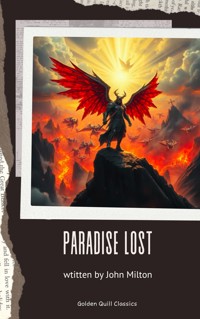
Paradise Lost and Its Sequel, Paradise Regained
(Illustrated Edition)
Published by
Books
Table of Contents
Introduction
This illustrated collection brings together John Milton’s two great English epics, Paradise Lost and its sequel, Paradise Regained, in their standard divisions. Paradise Lost appears complete in twelve books, and Paradise Regained follows in four. Presenting them side by side allows readers to trace Milton’s comprehensive poetic design, from the loss implied in the first title to the restoration suggested by the second. The visual component is intended to illuminate, not replace, the poems’ intricate scenes, figures, and symbols. By uniting both works within a single volume, the edition offers an integrated approach to Milton’s epic project and its enduring questions about human freedom, responsibility, and hope.
Milton’s chosen form is epic poetry in unrhymed iambic pentameter, commonly called blank verse. Paradise Lost was first published in 1667 in ten books and revised in 1674 into the now-familiar twelve, while Paradise Regained appeared in 1671. In keeping with Milton’s practice, each book is prefaced by a brief prose summary, the Argument, guiding readers to the primary episode and design. The genres represented here are therefore long narrative poems accompanied by concise paratexts. The edition preserves these structural features, which reveal Milton’s architectural care and his interest in combining sustained narrative with explicit, navigational commentary.
Paradise Lost sets its action on a cosmic scale and addresses humanity’s first disobedience as related in Scripture. The poem’s premise is both grand and intimate: it moves between vast celestial perspectives and the immediacies of earthly life, all while examining motives, choices, and consequences. It introduces a tempter’s designs, the innocence of the first human pair, and the moral drama that follows. Without anticipating particular scenes, readers can expect a narrative that ranges across multiple orders of being, invites ethical reflection, and situates personal agency within a wider providential frame. Its story is foundational, but its questions are vividly present to every age.
Paradise Regained narrows the focus to a single, decisive contest: the Temptation of Christ in the wilderness, following the Gospel accounts. Across four books, an adversary presents enticements and arguments, and the protagonist responds with steadfast discernment. The premise is deliberately concentrated in scope and setting, offering an incisive counterpart to the expanse of Paradise Lost. Milton’s sequel explores how wisdom, patience, and obedience withstand trial. It complements, rather than repeats, the earlier epic, inviting readers to consider what true victory looks like when measured not by outward spectacle but by inward constancy and unyielding faithfulness.
A signature feature of both poems is Milton’s masterful blank verse: supple, unrhymed lines capable of high ceremony and conversational directness. His syntax often unfolds in periodic, Latinate structures, rewarding attentive reading while sustaining momentum through enjambment. Extended similes, rich in historical and natural detail, provide perspective and resonance. Traditional epic elements—invocation, elevated diction, and catalogic breadth—appear, but they are adapted to a Christian subject. The result is a style that can soar with magnificence, turn with argumentative precision, and settle into moments of pastoral calm, each register contributing to the poems’ ethical and imaginative range.
The sequel’s verse, though formed by the same meter, typically adopts a sparer, more austere music. Where Paradise Lost frequently paints vast panoramas, Paradise Regained favors pointed exchanges and concentrated images. The rhetorical emphasis shifts toward probing dialogue and careful distinction, reflecting its focus on discernment under pressure. This stylistic discipline mirrors the poem’s themes, emphasizing restraint, clarity, and patient judgment. Readers will find that the difference in tonal profile between the two epics is not a departure but a deliberate complement: Milton modulates the instrument of blank verse to suit a different kind of heroism and a more focused dramatic field.
Milton’s epics are intertextual achievements, harmonizing classical and biblical inheritances. He experiments with the forms associated with Homer and Virgil—invocation, epic simile, and expansive narrative—while grounding his matter in scriptural history and theology. Allusion and echo are integral to his method, drawing on ancient history, geography, philosophy, and natural lore to deepen meaning and complicate perspective. This synthesis does not merely adorn the surface; it conditions how we apprehend freedom, law, and virtue. The poems thus invite rereading, as recognizable patterns from earlier literature intersect with scriptural episodes to illuminate old questions in a new poetic light.
Among the unifying themes are free will, obedience, justice, and the education of desire. Milton’s characters confront temptations that often masquerade as goods, testing their ability to distinguish appearance from substance. Reason, grounded in moral order, is repeatedly called upon to steady the will in moments of allure or fear. The poems ask what it means to rule oneself, to choose well amid competing claims, and to understand power in relation to wisdom. Heroism, accordingly, is recalibrated: its truest form emerges not in outward conquest, but in the rightly ordered mind and the clarified purpose that resists deception.
The poems’ architecture balances narrative movement with set pieces of deliberation. Councils, journeys, and vantage points supply dynamic frames for action and reflection. Shifts in scale—from intimate dialogue to comprehensive survey—equip the reader to see moral decisions within larger histories and destinies. In the sequel, the wilderness setting sharpens attention to speech, silence, and measured reply, with fewer scene changes and a stronger emphasis on argumentative turns. Across both works, Milton varies pace and texture to ensure that the ethical stakes of each episode register clearly, even when the sights and sounds are grand or spare.
The influence of Milton’s epics on literature and the arts has been far-reaching. They have shaped English poetic technique, informed Romantic and later debates about the nature of heroism and imagination, and provided a rich resource for painters, illustrators, and composers seeking to visualize or score scenes and figures. Their arguments about liberty, authority, and conscience continue to provoke discussion in classrooms and beyond. Editorially, the twelve-book arrangement of Paradise Lost has become the standard, and Paradise Regained’s concise four books offer a counterpoise prized for clarity and force. Together, they remain central texts in the study of epic and sacred narrative.
This illustrated edition invites both first-time and returning readers to engage with text and image in concert. The Arguments that preface each book supply orientation to the immediate episode and aim, while the illustrations offer visual cues to setting, symbolism, and tone. Readers may find it helpful to attend to Milton’s sentence architecture, letting the syntax guide understanding line by line. The images are designed to clarify without prescribing interpretation, supporting the poems’ layered meanings. As with all epic, patience repays attention, and thoughtful pacing allows the verse’s rhythms, references, and insights to unfold.
Taken together, Paradise Lost and Paradise Regained trace a movement from loss to recovery, not by erasing difficulty but by redefining victory. The first poem establishes the conditions of human vulnerability and the grandeur of moral choice; the second models steadfastness that restores by refusing false goods. This volume’s purpose is to present the pair as a coherent whole, in the poet’s measure and order, with visual accompaniment that serves comprehension and contemplation. Readers are invited to enter the moral imagination they sustain, where language, vision, and judgment work together to clarify what it means to live well.
Author Biography
Introduction
John Milton (1608–1674) stands among the defining poets of the English language and a central figure of seventeenth‑century intellectual life. His reputation rests above all on two epics: Paradise Lost, presented here in its full twelve‑book form, and Paradise Regained, in four books prefaced by concise Arguments. Composed largely after he lost his sight, these works fuse classical learning, biblical narrative, and the civic concerns of a nation unsettled by civil war and restoration. In their amplitude and moral ambition, they shaped how later readers conceived the possibilities of English blank verse and the epic as a vehicle for theology, philosophy, and politics.
Milton’s career spanned the English Civil Wars, the Commonwealth, and the Restoration, and his epics both absorb and transcend those upheavals. Paradise Lost became the touchstone for epic in English, admired for its scale, imaginative daring, and linguistic resource. Paradise Regained offered a concentrated, meditative counterpoise. Early readers were struck by the achievement; over time, critics from Joseph Addison to the Romantic poets consolidated Milton’s canonical status. The collection gathered here highlights the fullness of his epic reach—from infernal counsels and Edenic colloquy to wilderness debate—revealing a poet whose art sought to engage the deepest questions of freedom, obedience, and human destiny.
Education and Literary Influences
Milton’s education followed the rigorous humanist path typical of his era but with unusual intensity. He studied at St Paul’s School in London, then at Christ’s College, Cambridge, where he mastered Latin and Greek and read widely in philosophy, rhetoric, and theology. After university he undertook years of private study, deepening his command of Hebrew and Italian and refining a style nourished by classical authors and Scripture. Early poems honed his ear for cadence and image, but the ambition already visible there would later find its grandest scope in Paradise Lost and its concentrated counterbalance in the four-book architecture of Paradise Regained.
Travel in Italy in the late 1630s strengthened Milton’s ties to European humanism. Encounters with scholars and artists in cities such as Florence and Rome broadened his sense of poetic vocation and of epic precedent. Italian epicists, especially Tasso, and the example of Dante’s theological imagination helped shape his vision of a Christian epic in the vernacular. He refers to Galileo in Paradise Lost, signaling his awareness of contemporary scientific discourse and cosmology. These experiences, combined with constant return to ancient texts, furnished the comparative framework—classical, biblical, and modern—within which the twin epics were conceived and executed.
Milton’s reading in Scripture, the Church Fathers, and Reformation debates undergirded the theological architecture of both epics. From Homer and Virgil he drew large-scale narrative design, invocation, and simile; from biblical prose and poetry he absorbed prophetic cadence and ethical gravity. English models—especially Edmund Spenser—suggested how allegory and moral argument could animate narrative. Rhetorical training shaped the forensic energy of debate that runs through the speeches of Paradise Lost and the austere disputations of Paradise Regained. The fusion of humanist pedagogy with Protestant exegesis proved decisive for his diction, imagery, and the epic scope of his subjects.
Literary Career
Milton’s early lyric and dramatic work announced formidable gifts, but his long-anticipated epic arrived after the political tempests of mid‑century England. Paradise Lost appeared in 1667 in ten books and, in a 1674 revision, in twelve, the form preserved in this collection. It deploys unrhymed iambic pentameter of great flexibility and elevation, pressing English syntax toward Latinate periodicity. The poem’s reach is historical and cosmic, yet it remains intimate in its representation of moral choice. Through this vast frame, Milton integrates classical decorum with biblical source material, staging an epic meditation on creation, will, and the responsibilities of knowledge.
Across its twelve books, Paradise Lost moves through varied registers—council, pastoral, martial, visionary, and domestic—rather than relying on continuous battle narrative. Readers encounter infernal deliberation and heroic rhetoric; a celestial vantage on providence; Edenic conversation and instruction; recollected warfare among angels; and expansive cosmological description. The progression shifts from grand exterior vistas to searching interior scrutiny. By structuring the poem as a sequence of changing scenes and discourses—some panoramic, others intensely dialogic—Milton creates a capacious epic capable of holding philosophical argument and narrative momentum without exhausting either.
Paradise Regained, published in 1671, complements rather than repeats Paradise Lost. In four books, each prefaced by an Argument, Milton concentrates on the testing of Jesus in the wilderness, developing a spare, dialogic mode. The scale tightens; the language becomes more astringent; the drama unfolds through questions of appetite, power, and wisdom rather than through martial spectacle. The Arguments orient readers to each book’s stakes, underscoring the poem’s pedagogic aim. Issued in the same year as Samson Agonistes, Paradise Regained confirmed Milton’s late style: severe, lucid, and exacting, turning from panoramic narration to concentrated ethical and scriptural dispute.
Reception of the epics evolved over time. Seventeenth‑century readers recognized their grandeur, even when uneasy with their boldness. Eighteenth‑century essays, notably Joseph Addison’s in The Spectator, helped codify standards for epic sublimity by reference to Paradise Lost. Romantic poets revered Milton as a liberating force in language and imagination, while later critics have explored his politics, theology, and representations of gender and authority. The poems have been translated widely, inspiring painters, composers, and novelists. Their influence persists in modern epic, speculative fiction, and theological poetics, where Milton’s strategies of scope, simile, and debate remain generative.
Beliefs and Advocacy
Milton’s public commitments were as consequential as his art. During the Commonwealth he served in the government’s Latin secretariat, composing diplomatic correspondence and defenses of the regime. In prose tracts such as Areopagitica he argued against prior restraint on the press, advancing a vision of truth tested through open contestation. He also wrote polemics on church governance and political legitimacy, including The Tenure of Kings and Magistrates. These commitments inform the epics’ recurrent concern with liberty, tyranny, and conscience, where political thought becomes poetic action, and where arguments about authority are staged in scenes of counsel, temptation, and choice.
Religious conviction and scriptural study were central to Milton’s imagination. Though he engaged doctrinal controversies of his time, his epics foreground questions that resist simple formulas: the scope of free will, the nature of obedience, the relation of reason and revelation. Paradise Lost probes the educative possibilities of error and the responsibilities attached to knowledge; Paradise Regained tests the sufficiency of humility and patience against offers of spectacle or dominion. Milton’s advocacy of learning—articulated elsewhere in his tract Of Education—appears here as poetic pedagogy. The Arguments to the four books of Paradise Regained reinforce this didactic bent without sacrificing narrative life.
Final Years & Legacy
By the early 1650s Milton had gone blind, composing thereafter by dictation to family members and friends. After the Restoration he withdrew from public service, publishing Paradise Lost (later reissued in twelve books) and, in 1671, Paradise Regained alongside Samson Agonistes. He died in London in 1674 and was buried at St Giles, Cripplegate. The epics’ legacy is vast: they shaped English blank verse, reframed epic for a Protestant culture, and offered a touchstone for debates about freedom, authority, and interpretation. Artists across media continue to mine their imagery and arguments, while scholars revisit their political theology, narrative technique, and linguistic invention.
Historical Context
John Milton’s epics emerge from the convulsions of seventeenth‑century Britain, when religious reformation, humanist learning, and imperial horizons collided with civil war. Born in 1608 and educated within rigorous classical curricula, Milton wrote during the reigns of James I and Charles I, through the English Civil Wars (1642–1651), the Commonwealth and Protectorate (1649–1660), and the Restoration under Charles II. These decades saw intensified debates over church governance, sovereign power, and individual conscience. The epics’ biblical settings and classical form converse with these upheavals, translating the era’s anxieties about authority, liberty, and interpretation into a universal register recognizable to readers across confessional and political lines.
Milton’s public career intertwines with this turbulence. He composed anti‑prelatical tracts in the early 1640s, defended press liberty in Areopagitica (1644), and served the Commonwealth as Latin Secretary from 1649. He lost his sight around 1652, subsequently dictating poetry to amanuenses. The Restoration placed him at risk; some writings were condemned and he was briefly in custody before release. Paradise Lost was likely shaped in the 1650s and 1660s and first appeared in 1667 (revised to twelve books in 1674). Paradise Regained, a concise sequel focused on Christ’s temptation, was published in 1671 alongside Samson Agonistes, as Milton re‑articulated ideals after republican defeat.
The period’s print culture frames the poems’ circulation and form. The Licensing Order of 1643 and the Restoration’s 1662 Licensing Act tightened censorship, yet London’s vibrant book trade continued to channel polemic, scholarship, and devotional reading. Educated in the humanist republic of letters, Milton chose vernacular blank verse over the fashionable heroic couplet, defending “ancient liberty” of verse in his preface “The Verse.” He adapts classical epic procedures—invocation, catalog, council scenes—while privileging scriptural authority. The poems entered a market newly attuned to extended prose and poetic works, where readers negotiated issues of doctrinal correctness, political danger, and the expanding horizons of learned conversation.
Paradise Lost confronts questions central to seventeenth‑century thought: sovereignty, obedience, and the nature of law. The epic refracts the English Revolution’s debates about kingship and resistance—intensified by the trial and execution of Charles I in 1649 and the Restoration in 1660—through a sacred narrative and classical form. It invites readers trained in rhetoric and history to weigh competing claims of freedom and order. By yoking biblical exegesis to civic discourse, the poem models an interpretive culture shaped by Protestant habits of reading and by humanist attention to eloquence, turning contemporary controversies into a meditation on universal justice.
The opening councils and debates of Paradise Lost, especially in the early books, register the age’s fascination with deliberative rhetoric and the problem of political legitimacy. Seventeenth‑century England teemed with assemblies—parliamentary, ecclesiastical, and military—where persuasion contended with prudence. The poem’s staged orations evoke the era’s oratorical training and the precariousness of leadership in exile, themes familiar to royalists and republicans scattered across Europe. These passages scrutinize how communities cohere after catastrophe, a question pressing for Britons who had witnessed war, regicide, and the reconfiguration of national institutions.
When the epic turns to providence, knowledge, and human freedom, it engages long‑running theological disputes. The Arminian–Calvinist controversy over predestination energized university and parish life in the 1620s–1640s, while Laudian reforms provoked Puritan resistance. Paradise Lost’s discussions of free will and foreknowledge reflect a learned environment in which doctrinal precision mattered intensely. Later discovery of the Latin De Doctrina Christiana (found 1823; published 1825 and widely attributed to Milton) suggested heterodox, even anti‑Trinitarian, tendencies, underscoring how the poem’s theologically careful language participates in contested seventeenth‑century debates without mapping neatly onto any single system.
Milton’s representation of celestial conflict draws on both classical epic warfare and the new realities of early modern militarization. The 1640s had made professional armies, artillery, and logistical innovation a daily concern in Britain. In books depicting martial array and newly introduced engines, the poem registers the unsettling transformation of war by technology, echoing contemporary reflections on discipline, strategy, and the ethics of force. By subsuming military spectacle under questions of right and authority, Milton aligns epic struggle with the moral scrutiny that accompanied Britain’s civil wars and the uneasy peace that followed.
Creation and cosmology in the middle books speak to the scientific ferment of Milton’s century. Telescopes, “optic glasses,” and astronomical controversy made the structures of the heavens a matter of public discussion. Milton had visited Galileo in Florence in 1638–1639, while the scientist lived under house arrest, and the epic signals awareness of Copernican and Ptolemaic models without binding itself dogmatically to either. These books illuminate how natural philosophy, travel, and global description were reshaping scholarly imagination, even as theologians and lay readers debated how best to read Genesis alongside the new instruments and hypotheses of the Scientific Revolution.
The poem’s meditation on desire, labor, and knowledge intersects with seventeenth‑century arguments about reading, education, and household governance. Milton’s Areopagitica had contended that virtuous choice requires exposure to disputable books; the epic explores the risks and promises of such intellectual appetite in a sacred frame. The poem also reflects Puritan advocacy of “companionate” marriage, the dignity of work, and the responsibilities of domestical authority—concerns visible in Milton’s divorce tracts of the 1640s and in broader Protestant discourse that dignified ordinary vocations while probing the hazards of misdirected will.
Consequences, judgment, and clemency—central to the poem’s later movements—bear the imprint of Restoration legal and political settlements. After cycles of rebellion and revenge, the Act of Indemnity and Oblivion (1660) sought national reconciliation while punishing selected offenders. Milton, once a state servant, experienced the precarious mercy of victors. The epic’s reflections on law, repentance, and moderated punishment would have resonated in a culture debating how to balance justice with stability. Its legal idiom converses with sermons, pamphlets, and courtroom rhetoric that tried to conceptualize a durable peace after a period of radical constitutional experiment.
The concluding books’ panoramic sacred history embodies Protestant habits of typology and providential reading. English Protestants, nourished by chronicles such as John Foxe’s Actes and Monuments, interpreted events within a scriptural timeline that discerned divine patterns in national and global affairs. Seventeenth‑century apocalyptic expectation—articulated by groups from cautious conformists to radical Fifth Monarchists—inflected political imagination. By tracing a future oriented by promise rather than spectacle, the poem reframes such expectations into moral and pastoral counsel, guiding readers toward patient endurance rather than millenarian program, a stance legible amid the disappointments of the Restoration.
Reception helped stabilize the poem’s status. Early readers admired its ambition; Andrew Marvell supplied a 1674 commendatory poem. John Dryden adapted elements to his 1677 opera The State of Innocence, signaling the epic’s entry into Restoration stage culture. In 1712 Joseph Addison’s Spectator essays canonized Paradise Lost within neoclassical criticism, judging it by—and sometimes against—Homeric and Virgilian rules. Eighteenth‑century editions multiplied, reframing the work less as partisan intervention than as the English epic, even as political and theological undercurrents remained legible to dissenting and Anglican audiences alike.
Illustrated editions shaped public imagination. A 1688 folio supplied a suite of engravings, inaugurating a rich visual tradition. In the late eighteenth and nineteenth centuries, artists such as William Blake, John Martin, and Gustave Doré reinterpreted scenes through watercolor, mezzotint, and wood engraving, technologies that expanded access and affected tone—from visionary intimacy to apocalyptic grandeur. These images mediated the poems for readers formed by Romantic and Victorian aesthetics, linking Milton’s epics to galleries and gift‑book markets. Visual culture thus became a vehicle through which shifting theological and political emphases were communicated to new constituencies.
Paradise Regained, published in 1671, answers the Restoration moment with restraint. Where Paradise Lost is encyclopedic, the sequel focuses on the temptation of Christ as a contest of interpretation, authority, and vocation. Its sparer style and emphasis on inward obedience align with a culture of nonconformist endurance under the Clarendon Code (1661–1665), which restricted dissenting worship and office‑holding. The poem revisits questions of kingship and conquest in the wake of republican failure, proposing a model of rule grounded in patience and truth rather than force—an ideal Milton had defended in prose and now reasserted through a concentrated biblical drama.
The first half of Paradise Regained privileges retreat, fasting, and scriptural dispute, mirroring seventeenth‑century practices of self‑examination and catechesis. Humanist education had trained readers to marshal authorities, while Protestant household devotion normalized daily engagement with the Bible, especially in the wake of the King James Version (1611). Milton’s own classical training and linguistic reach inform the poem’s contests of memory and judgment, in which the weighings of text and tradition dramatize wider disagreements about the uses of philosophy. The sequel thus reflects a culture that valued learning yet insisted on its subordination to inspired wisdom.
As the sequel interrogates offers of culture, spectacle, and empire, it evokes contemporary geopolitics. Seventeenth‑century Europe had witnessed Habsburg decline, Dutch commercial ascent, Ottoman power, and English ventures from the Atlantic to the Mediterranean. Britain’s debates over “reason of state,” mercantile policy, and colonial ambition formed a background against which true dominion could be measured. Milton’s Commonwealth service in foreign correspondence acquainted him with international propaganda and alliance‑building; Paradise Regained recasts these concerns as a principled refusal of glory on worldly terms, aligning political prudence with the humility prized in reformed piety.
The poem’s culminating scenes return to rhetoric, civic order, and liberty of conscience in ways that recall Milton’s Areopagitica and his republican hopes. By invoking classical sites of judgment and debate alongside scriptural authority, Paradise Regained aligns the integrity of speech with the legitimacy of rule. Later readers have treated both epics as mirrors of their times: Romantics like William Blake provocatively judged the poet “of the Devil’s party without knowing it,” while Victorians moralized sublime terror through illustration. Twentieth‑century critics—from C. S. Lewis to historicists—have recovered the poems’ engagement with theology and politics, ensuring the collection remains a lens on shifting modern concerns.
Synopsis (Selection)
Paradise Lost (Book I–Book XII)
This twelve-book epic traces the aftermath of a celestial revolt and the moral drama that gathers around a newly created world. Moving from infernal councils to heavenly vantage points and, finally, to an unfallen garden, it probes ambition, obedience, free will, and the risks inherent in the desire for knowledge. The tone is grand and tragic, blending high rhetoric with theological and philosophical inquiry to reveal the human stakes of choice.
Paradise Regained (The First Book–The Fourth Book: The Argument)
Conceived as a focused sequel in four books, this poem shifts the cosmic struggle to the wilderness, where a messianic figure confronts the tempter’s escalating trials of appetite, authority, and wisdom. The conflict unfolds through concentrated dialogue and argument rather than martial spectacle, testing what true kingship and steadfastness require. In contrast to the prior epic’s vast canvas, the style is austere and meditative, redefining victory as moral resilience and aligning freedom with disciplined obedience.
Paradise Lost and Its Sequel, Paradise Regained (Illustrated Edition)
Paradise Lost
Book I
The Argument
This first Book proposes first in brief the whole Subject, Mans disobedience, and the loss thereupon of Paradise wherein he was plac’t: Then touches the prime cause of his fall, the Serpent, or rather Satan in the Serpent; who revolting from God, and drawing to his side many Legions of Angels, was by the command of God driven out of Heaven with all his Crew into the great Deep. Which action past over, the Poem hasts into the midst of things, presenting Satan with his Angels now fallen into Hell, describ’d here, not in the Center (for Heaven and Earth may be suppos’d as yet not made, certainly not yet accurst) but in a place of utter darknesse, fitliest call’d Chaos: Here Satan with his Angels lying on the burning Lake, thunder-struck and, astonisht, after a certain space recovers, as from confusion, calls up him who next in Order and Dignity lay by him; they confer of thir miserable fall. Satan awakens all his Legions, who lay till then in the same manner confounded; They rise, thir Numbers, array of Battel, thir chief Leaders nam’d, according to the Idols known afterwards in Canaan and the Countries adjoyning. To these Satan directs his Speech, comforts them with hope yet of regaining Heaven, but tells them lastly of a new World and new kind of Creature to be created, according to an ancient Prophesie or report in Heaven; for that Angels were long before this visible Creation, was the opinion of many ancient Fathers. To find out the truth of this Prophesie, and what to determin thereon he refers to a full Councell. What his Associates thence attempt. Pandemonium the Palace of Satan rises, suddenly built out of the Deep: The infernal Peers there sit in Counsel.
OF MANS First Disobedience, and the Fruit
Of that Forbidden Tree, whose mortal tast
Brought Death into the World, and all our woe,
With loss of Eden, till one greater Man
Restore us, and regain the blissful Seat,
Sing Heav’nly Muse, that on the secret top
Of Oreb, or of Sinai, didst inspire
That Shepherd, who first taught the chosen Seed,
In the Beginning how the Heav’ns and Earth
Rose out of Chaos: or if Sion Hill
Delight thee more, and Siloa’s Brook that flow’d
Fast by the Oracle of God; I thence
Invoke thy aid to my adventrous Song,
That with no middle flight intends to soar
Above th’ Aonian Mount, while it pursues
Things unattempted yet in Prose or Rhime.
And chiefly Thou O Spirit, that dost prefer
Before all Temples th’ upright heart and pure,
Instruct me, for Thou know’st; Thou from the first
Wast present, and with mighty wings outspread
Dove-like satst brooding on the vast Abyss
And mad’st it pregnant: What in me is dark
Illumine, what is low raise and support;
That to the highth of this great Argument
I may assert Eternal Providence,
And justifie the wayes of God to men.
Him the Almighty Power Hurld headlong flaming from th’ Ethereal Skie.
Say first, for Heav’n hides nothing from thy view
Nor the deep Tract of Hell, say first what cause
Mov’d our Grand Parents in that happy State,
Favour’d of Heav’n so highly, to fall off
From their Creator, and transgress his Will
For one restraint, Lords of the World besides?
Who first seduc’d them to that fowl revolt?
Th’ infernal Serpent; he it was, whose guile
Stird up with Envy and Revenge, deceiv’d
The Mother of Mankinde, what time his Pride
Had cast him out from Heav’n, with all his Host
Of Rebel Angels, by whose aid aspiring
To set himself in Glory above his Peers!
He trusted to have equal’d the most High,
If he oppos’d; and with ambitious aim
Against the Throne and Monarchy of God
Rais’d impious War in Heav’n and Battel proud
With vain attempt. Him the Almighty Power
Hurld headlong flaming from th’ Ethereal Skie
With hideous ruine and combustion down
To bottomless perdition, there to dwell
In Adamantine Chains and penal Fire,
Who durst defie th’ Omnipotent to Arms.
Nine times the Space that measures Day and Night
To mortal men, he with his horrid crew
Lay vanquisht, rowling in the fiery Gulfe
Confounded though immortal: But his doom
Reserv’d him to more wrath; for now the thought
Both of lost happiness and lasting pain
Torments him; round he throws his baleful eyes
That witness’d huge affliction and dismay
Mixt with obdurate pride and stedfast hate:
At once as far as Angels kenn he views
The dismal Situation waste and wilde,
A Dungeon horrible, on all sides round
As one great Furnace flam’d, yet from those flames
No light, but rather darkness visible
Serv’d only to discover sights of woe,
Regions of sorrow, doleful shades, where peace
And rest can never dwell, hope never comes
That comes to all; but torture without end
Still urges, and a fiery Deluge, fed
With ever-burning Sulphur unconsum’d:
Such place Eternal Justice had prepar’d
For those rebellious, here their Prison ordain’d
In utter darkness, and their portion set
As far remov’d from God and light of Heav’n
As from the Center thrice to th’ utmost Pole.
O how unlike the place from whence they fell!
There the companions of his fall, o’rewhelm’d
With Floods and Whirlwinds of tempestuous fire,
He soon discerns, and weltring by his side
One next himself in power, and next in crime,
Long after known in Palestine, and nam’d
Beelzebub. To whom th’ Arch-Enemy,
And thence in Heav’n call’d Satan, with bold words
Breaking the horrid silence thus began.
If thou beest he; But O how fall’n! how chang’d
From him, who in the happy Realms of Light
Cloth’ d with transcendent brightness didst outshine
Myriads though bright: If he Whom mutual league,
United thoughts and counsels, equal hope,
And hazard in the Glorious Enterprize,
Joynd with me once, now misery hath joynd
In equal ruin: into what Pit thou seest
From what highth fal’n, so much the stronger provd
He with his Thunder: and till then who knew
The force of those dire Arms? yet not for those
Nor what the Potent Victor in his rage
Can else inflict do I repent or change,
Though chang’d in outward lustre; that fixt mind
And high disdain, from sence of injur’d merit,
That with the mightiest rais’d me to contend,
And to the fierce contention brought along
Innumerable force of Spirits arm’d’
That durst dislike his reign, and me preferring,
His utmost power with adverse power oppos’d
In dubious Battel on the Plains of Heav’n,
And shook his throne. What though the field be lost?
All is not lost; the unconquerable Will,
And study of revenge, immortal hate,
And courage never to submit or yield:
And what is else not to be overcome?
That Glory never shall his wrath or might
Extort from me. To bow and sue for grace
With suppliant knee, and deifie his power
Who from the terrour of this Arm so late
Doubted his Empire, that were low indeed,
That were an ignominy and shame beneath
This downfall; since by Fate the strength of Gods
And this Empyreal substance cannot fail,
Since through experience of this great event
In Arms not worse, in foresight much advanc’t,
We may with more successful hope resolve
To wage by force or guile eternal War
Irreconcileable, to our grand Foe,
Who now triumphs, and in th’ excess of joy
Sole reigning holds the Tyranny of Heav’n.
So spake th’ Apostate Angel, though in pain,
Vaunting aloud, but rackt with deep despare:
And him thus answer’d soon his bold Compeer.
O Prince, O Chief of many Throned Powers,
That led th’ imbattelld Seraphim to Warr
Under thy conduct, and in dreadful deeds
Fearless, endanger’d Heav’ns perpetual King;
And put to proof his high Supremacy,
Whether upheld by strength, or Chance, or Fate,
Too well I see and rue the dire event,
That with sad overthrow and foul defeat
Hath lost us Heav’n, and an this mighty Host
In horrible destruction laid thus low,
As far as Gods and Heav’nly Essences
Can perish: for the mind and spirit remains
Invincible, and vigour soon returns,
Though all our Glory extinct, and happy state
Here swallow’d up in endless misery.
But what if he our Conquerour, (whom I now
Of force believe Almighty, since no less
Then such could hav orepow’rd such force as ours)
Have left us this our spirit and strength intire
Strongly to suffer and support our pains,
That we may so suffice his vengeful ire,
Or do him mightier service as his thralls
By right of Warr, what e’re his business be
Here in the heart of Hell to work in Fire,
Or do his Errands in the gloomy Deep;
What can it then avail though yet we feel
Strength undiminisht, or eternal being
To undergo eternal punishment?
Whereto with speedy words th’ Arch-fiend reply’d.
Fall’n Cherube, to be weak is miserable
Doing or Suffering: but of this be sure,
To do ought good never will be our task,
But ever to do ill our sole delight,
As being the contrary to his high will
Whom we resist. If then his Providence
Out of our evil seek to bring forth good,
Our labour must be to pervert that end,
And out of good still to find means of evil;
Which oft times may succeed, so as perhaps
Shall grieve him, if I fail not, and disturb
His inmost counsels from their destind aim.
But see the angry Victor hath recall’d
His Ministers of vengeance and pursuit
Back to the Gates of Heav’n: The Sulphurous Hail
Shot after us in storm, oreblown hath laid
The fiery Surge, that from the Precipice
Of Heav’n receiv’d us falling, and the Thunder,
Wing’d with red Lightning and impetuous rage,
Perhaps hath spent his shafts, and ceases now
To billow through the vast and boundless Deep.
Let us not slip th’ occasion, whether scorn,
Or satiate fury yield it from our Foe.
Seest thou yon dreary Plain, forlorn and wilde,
The seat of desolation, voyd of light,
Save what the glimmering of these livid flames
Casts pale and dreadful? Thither let us tend
From off the tossing of these fiery waves,
There rest, if any rest can harbour there,
And reassembling our afflicted Powers,
Consult how we may henceforth most offend
Our Enemy, our own loss how repair,
How overcome this dire Calamity,
What reinforcement we may gain from Hope,
If not what resolution from despare.
Thus Satan talking to his neerest Mate
With Head up-lift above the wave, and Eyes
That sparkling blaz’d, his other Parts besides
Prone on the Flood, extended long and large
Lay floating many a rood, in bulk as huge
As whom the Fables name of monstrous size,
Titanian, or Earth-horn, that warr’d on Jove,
Briarios or Typhon, whom the Den
By ancient Tarsus held, or that Sea-beast
Leviathan, which God of all his works
Created hugest that swim th’ Ocean stream:
Him haply slumbring on the Norway foam
The Pilot of some small night-founder’d Skiff,
Deeming some Island, oft, as Sea-men tell,
With fixed Anchor in his skaly rind
Moors by his side under the Lee, while Night
Invests the Sea, and wished Morn delayes:
So stretcht out huge in length the Arch-fiend lay
Chain’d on the burning Lake, nor ever thence
Had ris’n or heav’d his head, but that the will
And high permission of all-ruling Heaven
Left him at large to his own dark designs
That with reiterated crimes he might
Heap on himself damnation, while he sought
Evil to others, and enrag’d might see
How all his malice serv’d but to bring forth
Infinite goodness, grace and mercy shewn
On Man by him seduc’t, but on himself
Treble confusion, wrath and vengeance pour’d.
Forthwith upright he rears from off the Pool
His mighty Stature; on each hand the flames
Drivn backward slope their pointing spires, & rowld
In billows, leave i’ th’ midst a horrid Vale.
Then with expanded wings he stears his flight
Aloft, incumbent on the dusky Air
That felt unusual weight, till on dry Land
He lights, if it were Land that ever burn’d
With solid, as the Lake with liquid fire;
And such appear’d in hue, as when the force
Of subterranean wind transports a Hill
Torn from Pelorus, or the shatter’d side
Of thundring AEtna, whose combustible
And fewel’d entrals thence conceiving Fire,
Sublim’d with Mineral fury, aid the Winds,
And leave a singed bottom all involv’d
With stench and smoak: Such resting found the sole
Of unblest feet. Him followed his next Mate,
Both glorying to have scap’t the Stygian flood
As Gods, and by their own recover’d strength,
Not by the sufferance of supernal Power.
Forthwith upright he rears from off the Pool
Is this the Region, this the Soil, the Clime,
Said then the lost Arch Angel, this the seat
That we must change for Heav’n, this mournful gloom
For that celestial light? Be it so, since hee
Who now is Sovran can dispose and bid
What shall be right: fardest from him is best
Whom reason hath equald, force hath made supream
Above his equals. Farewel happy Fields
Where Joy for ever dwells: Hail horrours, hail
Infernal world, and thou profoundest Hell
Receive thy new Possessor: One who brings
A mind not to be chang’d by Place or Time.
The mind is its own place, and in it self[1q]
Can make a Heav’n Hell, a Hell of Heav’n.
What matter where, if I be still the same,
And what I should be, all but less than hee
Whom Thunder hath made greater? Here at least
We shall be free; th’ Almighty hath not built
Here for his envy, will not drive us hence:
Here we may reign secure, and in my choyce
To reign is worth ambition though in Hell:
Better to reign in Hell, then serve in Heav’n.
But wherefore let we then our faithful friends,
Th’ associates and copartners of our loss
Lye thus astonisht on th’ o blivious Pool,
And call them not to share with us their part
In this unhappy Mansion, or once more
With rallied Arms to try what may be yet
Regained in Heav’n, or what more lost in Hell?
So Satan spake, and him Beelzebub
Thus answer’d. Leader of those Armies bright,
Which but th’ Onmipotent none could have foyld,
If once they hear that voyce, their liveliest pledge
Of hope in fears and dangers, heard so oft
In worst extreams, and on the perilous edge
Of battel when it rag’d, in all assaults
Their surest signal, they will soon resume
New courage and revive, though now they lye
Groveling and prostrate on yon Lake of fire
As we erewhile, astounded and amaz’d,
No wonder, fall’n such a pernicious highth.
He scarce had ceas’t when the superior Fiend
Was moving toward the shore; his ponderous shield
Ethereal temper, massy, large and round,
Behind him cast; the broad circumference
Hung on his shoulders like the Moon, whose Orb
Through Optic Glass the Tuscan Artist views
At Ev’ning from the top of Fesole,
Or in Valdarno, to descry new Lands,
Rivers or Mountains in her spotty Globe.
His Spear, to equal which the tallest Pine
Hewn on Norwegian hills, to be the Mast
Of some great Ammiral, were but a wand,
He walkt with to support uneasie steps
Over the burning Marle, not like those steps
On Heavens Azure, and the torrid Clime
Smote on him sore besides, vaulted with Fire;
Nathless he so endur’d, till on the Beach
Of that inflamed Sea, he stood and call’d
His Legions, Angel Forms, who lay intrans’t
Thick as Autumnal Leaves that strow the Brooks
In Vallombrosa, where th’ Etrurian shades
High overarch’t imbowr; or scatterd sedge
Afloat, when with fierce Winds Orion arm’d
Hath vext the Red-Sea Coast, whose waves orethrew
Busiris and his Memphian Chivalrie,
While with perfidious hatred they pursu’d
The Sojourners of Goshen, who beheld
From the safe shore their floating Carkases
And broken Chariot Wheels, so thick bestrown
Abject and lost lay these, covering the Flood,
Under amazement of their hideous change.
He call’d so loud, that all the hollow Deep
Of Hell resounded. Princes, Potentates,
Warriers, the Flowr of Heav’n, once yours, now lost,
If such astonishment as this can sieze
Eternal spirits; or have ye chos’n this place
After the toyl of Battel to repose
Your wearied vertue, for the ease you find
To slumber here, as in the Vales of Heav’n?
Or in this abject posture have ye sworn
To adore the Conquerour? who now beholds
Cherube and Seraph rowling in the Flood
With scatter’d Arms and Ensigns, till anon
His swift pursuers from Heav’n Gates discern
Th’ advantage, and descending tread us down
Thus drooping, or with linked Thunderbolts
Transfix us to the bottom of this Gulfe.
Awake, arise, or be for ever fall’n.
They heard, and were abasht, and up they sprung
So numberless were those bad Angels seen
They heard, and were abasht, and up they sprung
Upon the wing, as when men wont to watch
On duty, sleeping found by whom they dread,
Rouse and bestir themselves ere well awake.
Nor did they not perceave the evil plight
In which they were, or the fierce pains not feel;
Yet to their Generals Voyce they soon obeyd
Innumerable. As when the potent Rod
Of Amrams Son in Egypts evill day
Wav’d round the Coast, up call’d a pitchy cloud
Of Locusts, warping on the Eastern Wind,
That ore the Realm of impious Pharaoh hung
Like Night, and darken’d all the Land of Nile:
So numberless were those bad Angels seen
Hovering on wing under the Cope of Hell
‘Twixt upper, nether, and surrounding Fires;
Till, as a signal giv’n, th’ uplifted Spear
Of their great Sultan waving to direct
Thir course, in even ballance down they light
On the firm brimstone, and fill all the Plain;
A multitude, like which the populous North
Pour’d never from her frozen loyns, to pass
Rhene or the Danaw, when her barbarous Sons
Came like a Deluge on the South, and spread
Beneath Gibraltar to the Lybian sands.
Forthwith from every Squadron and each Band
The Heads and Leaders thither hast where stood
Their great Commander; Godlike shapes and forms
Excelling human, Princely Dignities,
And Powers that earst in Heaven sat on Thrones;
Though of their Names in heav’nly Records now
Be no memorial, blotted out and ras’d
By thir Rebellion, from the Books of Life.
Nor had they yet among the Sons of Eve
Got them new Names, till wandring ore the Earth,
Through Gods high sufferance for the tryal of man,
By falsities and lyes the greatest part
Of Mankind they corrupted to forsake
God their Creator, and th’ invisible
Glory of him, that made them, to transform
Oft to the Image of a Brute, adorn’d
With gay Religions full of Pomp and Gold,
And Devils to adore for Deities:
Then were they known to men by various Names,
And various Idols through the Heathen World.
Say, Muse, their Names then known, who first, who last,
Rous’d from the slumber, on that fiery Couch,
At thir great Emperors call, as next in worth
Came singly where he stood on the bare strand,
While the promiscuous croud stood yet aloof?
The chief were those who from the Pit of Hell
Roaming to seek their prey on earth, durst fix
Their Seats long after next the Seat of God,
Their Altars by his Altar, Gods ador’d
Among the Nations round, and durst abide
Jehovah thundring out of Sion, thron’d
Between the Cherubim; yea, often plac’d
Within his Sanctuary it self their Shrines,
Abominations; and with cursed things
His holy Rites, and solemn Feasts profan’d,
And with their darkness durst affront his light.
First Moloch, horrid King besmear’d with blood
Of human sacrifice, and parents tears,
Though for the noyse of Drums and Timbrels loud
Their childrens cries unheard, that past through fire
To his grim Idol. Him the Ammonite
Worshipt in Rabba and her watry Plain,
In Argob and in Basan, to the stream
Of utmost Arnon. Nor content with such
Audacious neighbourhood, the wisest heart
Of Solomon he led by fraud to build
His Temple right against the Temple of God
On that opprobrious Hill, and made his Grove
The pleasant Vally of Hinnom, Tophet thence
And black Gehenna call’d, the Type of Hell.
Next hemos, th’ obscene dread of Moabs Sons,
From Aroer to Nebo, and the wild
Of Southmost Abarim; in Hesebon
And Horonaim, Seons Realm, beyond
The flowry Dale of Sibma clad with Vines,
And Eleale to th’ Asphaltick Pool.
Peor his other Name, when he entic’d
Israel in Sittim on their march from Nile
To do him wanton rites, which cost them woe.
Yet thence his lustful Orgies he enlarg’d
Even to that Hill of scandal, by the Grove
Of Moloch homicide, lust hard by hate;
Till good Josiah drove them thence to Hell.
With these came they, who from the bordring flood
Of old Euphrates to the Brook that parts
Egypt from Syrian ground, had general Names
Of Baalim and Ashtaroth, those male,
These Feminine. For Spirits when they please
Can either Sex assume, or both; so soft
And uncompounded is their Essence pure,
Not ti’d or manacl’d with joynt or limb,
Nor founded on the brittle strength of bones,
Like cumbrous flesh; but in what shape they choose
Dilated or condens’t, bright or obscure,
Can execute their aerie purposes,
And works of love or enmity fulfill.
For those the Race of Israel oft forsook
Their living strength, and unfrequented left
His righteous Altar, bowing lowly down
To bestial Gods; for which their heads as low
Bow’d down in Battel, sunk before the Spear
Of despicable foes. With these in troop
Came Astoreth, whom the Phoenicians call’d
Astarte, Queen of Heav’n, with crescent Horns;
To whose bright Image nightly by the Moon
Sidonian Virgins paid their Vows and Songs,
In Sion also not unsung, where stood
Her Temple on th’ offensive Mountain, built
By that uxorious King, whose heart though large,
Beguil’d by fair Idolatresses, fell
To Idols foul. Thammuz came next behind,
Whose annual wound in Lebanon allur’d
The Syrian Damsels to lament his fate
In amorous dittyes all a Summers day,
While smooth Adonis from his native Rock
Ran purple to the Sea, suppos’d with blood
Of Thammuz yearly wounded: the Love-tale
Infected Sions daughters with like heat,
Whose wanton passions in the sacred Porch
Ezekiel saw, when by the Vision led
His eye survay’d the dark Idolatries
Of alienated Judah. Next came one
Who mourn’d in earnest, when the Captive Ark
Maim’d his brute Image, head and hands lopt of
In his own Temple, on the grunsel edge,
Where he fell flat, and sham’d his Worshipers:
Dagon his Name, Sea Monster, upward Man
And downward Fish: yet had his Temple high
Rear’d in Azotus, dreaded through the Coast
Of Palestine, in Gath and Ascalon,
And Accaron and Gaza’s frontier bounds.
Him follow’d Rimmon, whose delightful Seat
Was fair Damascus, on the fertil Banks
Of Abbana and Pharphar, lucid streams.
He also against the house of God was bold:
A Leper once he lost and gain’d a King,
Ahaz his sottish Conquerour, whom he drew
Gods Altar to disparage and displace
For one of Syrian mode, whereon to burn
His odious offrings, and adore the Gods
Whom he had vanquisht. After these appear’d
A crew who under Names of old Renown,
Osiris, Isis, Orus and their Train
With monstrous shapes and sorceries abus’d
Fanatic Egypt and her Priests, to seek
Thir wandring Gods disguis’d in brutish forms
Rather then human. Nor did Israel scape
Th’ infection when their borrow’d Gold compos’d
The Calf in Oreb: and the Rebel King
Doubl’d that sin in Bethel and in Dan,
Lik’ning his Maker to the Grazed Ox,
Jehovah, who in one Night when he pass’d
From Egypt marching, equal’d with one stroke
Both her first born and all her bleating Gods.
Belial came last, then whom a Spirit more lewd
Fell not from Heaven, or more gross to love
Vice for it self: To him no Temple stood
Or Altar smoak’d; yet who more oft then hee
In Temples and at Altars, when the Priest
Turns Atheist, as did Elys Sons, who fill’d
With lust and violence the house of God.
In Courts and Palaces he also Reigns
And in luxurious Cities, where the noyse
Of riot ascends above thir loftiest Towrs,
And injury and outrage: And when Night
Darkens the Streets, then wander forth the Sons
Of Belial, flown with insolence and wine.
Witness the Streets of Sodom, and that night
In Gibeah, when hospitable Dores
Yielded thir Matrons to prevent worse rape.
These were the prime in order and in might;
The rest were long to tell, though far renown’d,
Th’ Ionian Gods, of Javans Issue held
Gods, yet confest later then Heav’n and Earth
Thir boasted Parents; Titan Heav’ns first born
With his enormous brood, and birthright seis’d
By younger Saturn, he from mightier Jove
His own and Rhea’s Son like measure found;
So love usurping reign’d: these first in Creet
And Ida known, thence on the Snowy top
Of cold Olympus rul’d the middle Air
Thir highest Heav’n; or on the Delphian Cliff,
Or in Dodona, and through all the bounds
Of Doric Land; or who with Saturn old
Fled over Adria to th’ Hesperian Fields,
And ore the Celtic roam’d the utmost Isles.
All these and more came flocking; but with looks
Down cast and damp, yet such wherein appear’d
Obscure som glimps of joy, to have found thir chief
Not in despair, to have found themselves not lost
In loss it self; which on his count’nance cast
Like doubtful hue: but he his wonted pride
Soon recollecting, with high words, that bore
Semblance of worth not substance, gently rais’d
Their fainted courage, and dispel’d their fears.
Then strait commands that at the warlike sound
Of Trumpets loud and Clarions be upreard
His mighty Standard; that proud honour claim’d
Azazel as his right, a Cherube tall:
Who forthwith from the glittering Staff unfurld
Th’ Imperial Ensign, which full high advanc’t
Shon like a Meteor streaming to the Wind
With Gemms and Golden lustre rich imblaz’d,
Seraphic arms and Trophies: all the while
Sonorous mettal blowing Martial sounds:
At which the universal Host upsent
A shout that tore Hells Concave, and beyond
Frighted the Reign of Chaos and old Night.
All in a moment through the gloom were seen
Ten thousand Banners rise into the Air
With Orient Colours waving: with them rose
A Forrest huge of Spears: and thronging Helms
Appear’d, and serried shields in thick array
Of depth immeasurable: Anon they move
In perfect Phalanx to the Dorian mood
Of flutes and soft Recorders; such as rais’d
To highth of noblest temper Hero’s old
Arming to Battel, and in stead of rage
Deliberate valour breath’d, firm and unmov’d
With dread of death to flight or foul retreat,
Nor wanting power to mitigate and swage
With solemn touches, troubl’d thoughts, and chase
Anguish and doubt and fear and sorrow and pain
From mortal or immortal minds. Thus they
Breathing united force with fixed thought
Mov’d on in silence to soft Pipes that charm’d
Thir painful steps o’re the burnt soyle; and now
Advanc’t in view they stand, a horrid Front
Of dreadful length and dazling Arms, in guise
Of Warriers old with order’d Spear and Shield,
Awaiting what command thir mighty Chief
Had to impose: He through the armed Files
Darts his experienc’t eye, and soon traverse
The whole Battalion views, thir order due,
Thir visages and stature as of Gods,
Thir number last he summs. And now his heart
Distends with pride, and hardning in his strength
Glories: For never since created man,
Met such imbodied force, as nam’d with these
Could merit more then that small infantry
Warr’d on by Cranes: though all the Giant brood
Of Phlegra with th’ Heroic Race were joyn’d
That fought at Theb’s and Ilium, on each side
Mixt with auxiliar Gods; and what resounds
In Fable or Romance of Uthers Son
Begirt with British and Armoric Knights;
And all who since, Baptiz’d or Infidel
Jousted in Aspramont or Montalban,
Damasco, or Marocco, or Trebisond,
Or whom Biserta sent from Afric shore
When Charlemain with all his Peerage fell
By Fontarabbia. Thus far these beyond
Compare of mortal prowess, yet observ’d
Thir dread Commander: he above the rest
In shape and gesture proudly eminent
Stood like a Towr; his form had yet not lost
All her Original brightness, nor appear’d
Less then Arch Angel ruind, and th’ excess
Of Glory obscur’d: As when the Sun new ris’n
Looks through the Horizontal misty Air
Shorn of his Beams, or from behind the Moon
In dim Eclips disastrous twilight sheds
On half the Nations, and with fear of change
Perplexes Monarchs. Dark’n’d so, yet shon
Above them all th’ Arch Angel: but his face
Deep scars of Thunder had intrencht, and care
Sat on his faded cheek, but under Browes
Of dauntless courage, and considerate Pride
Waiting revenge: cruel his eye, but cast
Signs of remorse and passion to behold
The fellows of his crime, the followers
(Far other once beheld in bliss) condemn’d
For ever now to have their lot in pain,
Millions of Spirits for his fault amerc’t
Of Heav’n, and from Eternal Splendors flung
For his revolt, yet faithfull how they stood,
Thir Glory witherd. As when Heavens Fire
Hath scath’ d the Forrest Oaks, or Mountain Pines,
With singed top their stately growth though bare
Stands on the blasted Heath. He now prepar’d
To speak; whereat their doubl’d Ranks they bend
From Wing to Wing, and half enclose him round
With all his Peers: attention held them mute.
Thrice he assayd, and thrice in spite of scorn,
Tears such as Angels weep, burst forth: at last
Words interwove with sighs found out their way.
O Myriads of immortal Spirits, O Powers
Matchless, but with th’ Almighty, and that strife
Was not inglorious, though th’ event was dire,
As this place testifies, and this dire change
Hateful to utter: but what power of mind
Foreseeing or presaging, from the Depth
Of knowledge past or present, could have fear’d,
How such united force of Gods, how such
As stood like these, could ever know repulse?
For who can yet beleeve, though after loss,
That all these puissant Legions, whose exile
Hath emptied Heav’n, shall faile to re-ascend
Self-rais’d, and repossess their native seat?
For me, be witness all the Host of Heav’n,
If counsels different, or danger shun’d
By me, have lost our hopes. But he who reigns
Monarch in Heav’n, till then as one secure
Sat on his Throne, upheld by old repute,
Consent or custome, and his Regal State
Put forth at full, but still his strength conceal’d,
Which tempted our attempt, and wrought our fall.
Henceforth his might we know, and know our own
So as not either to provoke, or dread
New warr, provok’t; our better part remains
To work in close design, by fraud or guile
What force effected not: that he no less
At length from us may find, who overcomes
By force, hath overcome but half his foe.
Space may produce new Worlds; whereof so rife
There went a fame in Heav’n that he ere long
Intended to create, and therein plant
A generation, whom his choice regard
Should favour equal to the Sons of Heaven:
Thither, if but to prie, shall be perhaps
Our first eruption, thither or elsewhere:
For this Infernal Pit shall never hold
Caelestial Spirits in Bondage, nor th’ Abysse
Long under darkness cover. But these thoughts
Full Counsel must mature: Peace is despaird,
For who can think Submission! Warr then, Warr
Open or understood must be resolv’d.
He spake: and to confirm his words, out-flew
Millions of flaming swords, drawn from the thighs
Of mighty Cherubim; the sudden blaze
Far round illumin’d hell: highly they rag’d
Against the Highest, and fierce with grasped arm’s
Clash’d on their sounding shields the din of war,
Hurling defiance toward the vault of Heav’n.
There stood a Hill not far whose griesly top
Belch’d fire and rowling smoak; the rest entire
Shon with a glossie scurff, undoubted sign
That in his womb was hid metallic Ore,
The work of Sulphur. Thither wing’d with speed
A numerous Brigad hasten’d. As when bands
Of Pioners with Spade and Pickaxe arm’d
Forerun the Royal Camp, to trench a Field,
Or cast a Rampart. Mammon led them on,
Mammon, the least erected Spirit that fell
From heav’n, for ev’n in heav’n his looks and thoughts
Were always downward bent, admiring more
The riches of Heav’ns pavement, trod’n Gold,
Then aught divine or holy else enjoy’d
In vision beatific: by him first
Men also, and by his suggestion taught,
Ransack’d the Center, and with impious hands
Rifl’d the bowels of their mother Earth
For Treasures better hid. Soon had his crew
Op’nd into the Hill a spacious wound
And dig’d out ribs of Gold. Let none admire
That riches grow in Hell; that soyle may best
Deserve the pretious bane. And here let those
Who boast in mortal things, and wondring tell
Of Babel, and the works Memphian Kings,
Learn how thir greatest Monuments of Fame,
And Strength and Art are easily outdone
By Spirits reprobate, and in an hour
What in an age they with incessant toyle
And hands innumerable scarce perform.
Nigh on the Plain in many cells prepar’d,
That underneath had veins of liquid fire
Sluc’d from the Lake, a second multitude
With wondrous Art founded the massie Ore,
Severing each kinde, and scum’d the Bullion dross:
A third as soon had form’d within the ground
A various mould, and from the boyling cells
By strange conveyance fill’d each hollow nook,
As in an Organ from one blast of wind
To many a row of Pipes the sound-board breaths.
Anon out of the earth a Fabrick huge
Rose like an Exhalation, with the sound
Of Dulcet Symphonies and voices sweet,
Built like a Temple, where Pilasters round
Were set, and Doric pillars overlaid
With Golden Architrave; nor did there want
Cornice or Freeze, with bossy Sculptures grav’n,
The Roof was fretted Gold. Not Babilon,
Nor great Alcairo such magnificence




