


7,99 €
Mehr erfahren.
- Herausgeber: Bisma Basma
- Kategorie: Ratgeber
- Sprache: Englisch
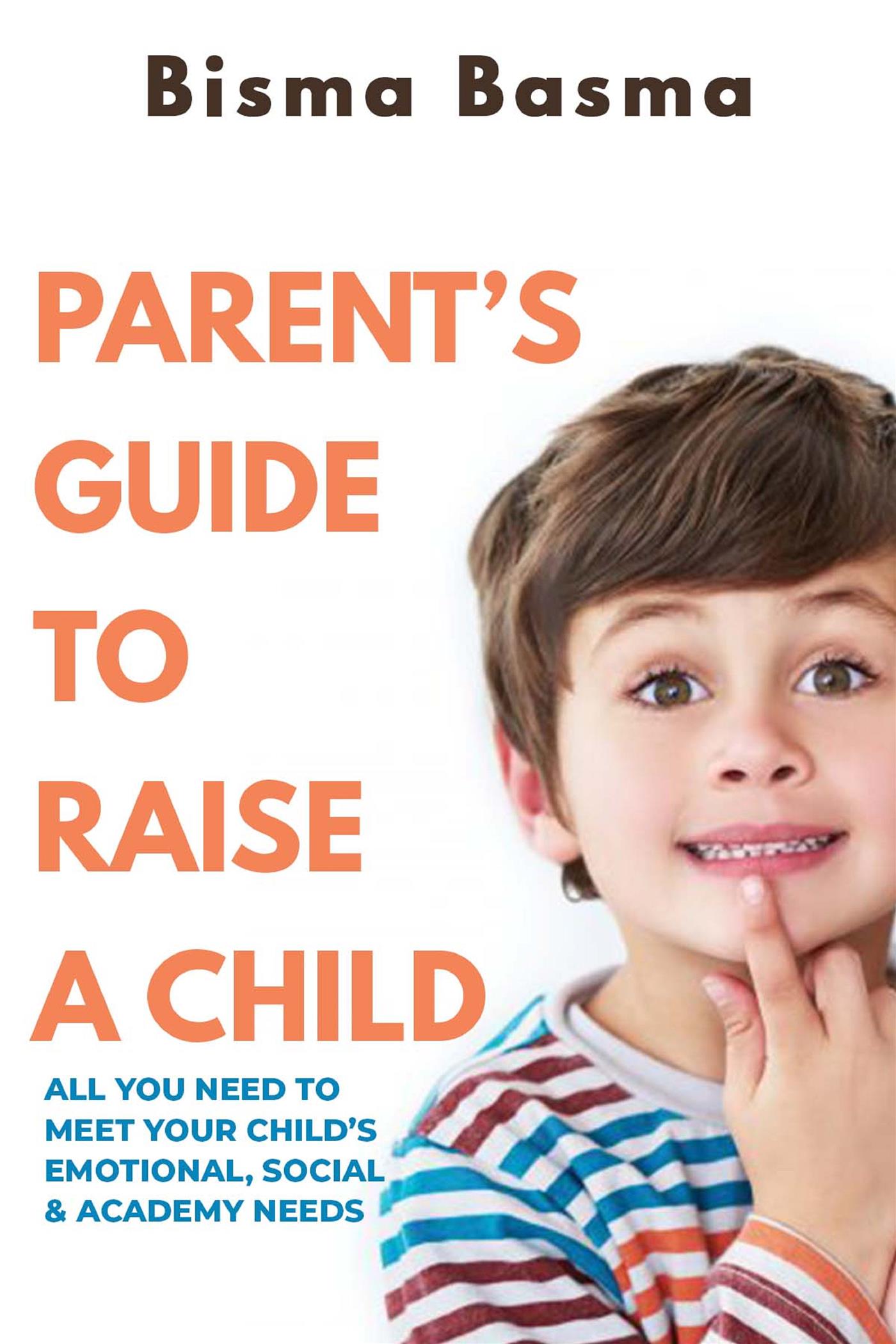
The key to raising a well-rounded child is to establish a solid support system at home so that she grows up satisfied with her achievements and ambitions. The goal as a parent is to help your child feel competent and confident, and to help her develop a sense of passion and purpose. If you want to enhance your child's learning abilities to eventually boost her academic performance, it will take consistency, dedication, and patience. Consider these book if you're looking to raise a child who is well-balanced, healthy, and happy with her accomplishments.
Das E-Book können Sie in Legimi-Apps oder einer beliebigen App lesen, die das folgende Format unterstützen:
Veröffentlichungsjahr: 2020
Ähnliche








Parent’s Guide to Raise A Child
Bisma Basma
Published by Bisma Basma, 2020.
While every precaution has been taken in the preparation of this book, the publisher assumes no responsibility for errors or omissions, or for damages resulting from the use of the information contained herein.
PARENT’S GUIDE TO RAISE A CHILD
First edition. April 30, 2020.
Copyright © 2020 Bisma Basma.
Written by Bisma Basma.
10 9 8 7 6 5 4 3 2 1
PARENT’S GUIDE TO RAISE A CHILD
All You Need to Meet Your Child’s Emotional, Social and Academy Needs
Bisma Basma
© Copyright 2020 – Bisma Basma.
All rights reserved.
The contents of this book may not be reproduced, duplicated or transmitted without direct written permission from the author.
Under no circumstances will any legal responsibility or blame be held against the publisher for any reparation, damages, or monetary loss due to the information herein, either directly or indirectly.
Legal Notice:
This book is copyright protected. This is only for personal use. You cannot amend, distribute, sell, use, quote or paraphrase any part of the content within this book without the consent of the author.
Disclaimer Notice:
Please note the information contained within this document is for educational and entertainment purposes only. Every attempt has been made to provide accurate, up to date and complete, reliable information. No warranties of any kind are expressed or implied. Readers acknowledge that the author is not engaging in the rendering of legal, financial, medical or professional advice. The content of this book has been derived from various sources. Please consult a licensed professional before attempting any techniques outlined in this book.
By reading this document, the reader agrees that under no circumstances is the author responsible for any losses, direct or indirect, which are incurred as a result of the use of information contained within this document, including, but not limited to, —errors, omissions, or inaccuracies.
Table of Contents
PARENT’S GUIDE TO RAISE A CHILD
INTRODUCTION
CHAPTER ONE
CHILD DEVELOPMENT
WHAT IS CHILD DEVELOPMENT PSYCOLOGY?
CHILD DEVELOPMENT AND LEARNING
STAGES OF CHILD DEVELOPMENT
CHAPTER TWO
CONCERENS WITH CHILD DEVELOPMENT STAGES
IMPORTANT OF CHILD DEVELOPMENT
THE IMPORTANT THINGS YOU MUST KNOW ABOUT IN CHILD DEVELOPMENT
CHILDHOOD
CHAPTER THREE
DEVELOPMENTAL STAGES OF CHILDHOOD
CHARACTERISTICS OF EARLY CHILDHOOD DEVELOPMENT
THINGS EVERY PARENT MUST KNOW
WHAT EVERY NEW PARENT SHOULD KNOW
CHAPTER FOUR
HOW TO IMPROVE YOUR CHILD BEHAVIOUR
CHILD BEHAVIOUR TIPS AND STRATEGIES
TIPS TO MAKE POSITIVE CHANGES TO YOUR CHILD'S BEHAVIOUR
CHILD BEHAVIOUR PROLEMS
CHAPTER FIVE
WAYS NOT TO RAISE A CHILD
HOW TO RAISE A CHILD
HOW TO MEET CHILDREN’S EMOTIONAL NEEDS
CHAPTER SIX
WHAT EVERY CHILD NEEDS FOR GOOD MENTAL HEALTH
STEPS TO TAKE WHEN SCHOOL ISN’T MEETING THE NEEDS OF YOUR CHILD
BENEFITS OF POSITIVE PARENTING
CONCLUSION
INTRODUCTION
––––––––
The Lord has set on you as a parent the essential obligation to show your kids. Even though this is an extraordinary duty, it is additionally an excellent benefit to have Heavenly Father's kids depended to your consideration. A standout amongst the most important ideas that the Lord anticipates that you will instruct your youngsters is the equal importance and utilization of intimate physical relations between a man and a lady. This guide was set up to enable you to show your kids these physical affections and to set them up to pursue the Lord's arrangement in communicating their very own intimacy.
Intimacy, as utilized in this production, does not confine itself to the affections of physical affiliation. Maybe the most profound type of privacy is knowledgeable about the sharing of otherworldly encounters and wants. All attachments are proposed to happen in exemplary nature. Affections that occur outside this domain uncover more desire and profane territory than they do the genuine articulation of love as instructed by the Savior when he stated, "another charge I give unto you, That ye love each other; as I have loved you, that ye likewise love each other" (John 13:34). Nobody can understand such an announcement to incorporate any profaneness.
As you utilize this archive if it's not too much trouble remember that legitimate relationships bring genuine intimacy while wickedness brings doubt, uncertainty, and loss of confidence concerning those persons involved.
At the point when the expression "physical intimacy" is utilized, it will allude to those relationships that generally incorporate some physical contact between the persons involved. It doesn't generally allude to a sexual relationship. The fastening of hands or the delicate contacting of a parent and tyke can pass on a comprehension of a profoundly private nature that exchanges a sentiment of authentic love and responsibility between the two. Such an articulation not exclusively does not require any sexual involvement between the two to offer legitimacy to the coveted message of love, yet the word would be demolished by sexual involvement. Genuine intimacy involves the authority of salacious emotions or contemplations. Sexual involvement outside legitimate marriage relationships annihilates certainty and the confirmation of duty by one individual to the next. Such relationships outside the holiness of marriage obliterate the capacity of a person to perceive genuine intimacy and trust in relational connections. Marriage agreements, regardless of whether commonly or clerically made, lose their adequacy when a marriage accomplice damages the confidence of the other by two-faced demonstrations of any sort.
Intimacy is identified with the level of trust and certainty that exists between two individuals or inside a family. Private issues among a couple are essential in making their relationship exceptional and official. At the point when that trust is broken, the marriage accomplices feel sold out, and that which was once in the past personal has been made standard. Intimacy between them might be extraordinarily stressed. This is especially evident when a marriage accomplice imparts data to someone else about physical relations among a couple.
Planning for keeping up a suitable level of trust in marriage starts in the family. Here a tyke figures out how to treat family "business" at home instead of to impart it to companions or neighbors. Some circumstances happen between family members that are not talked about with persons outside the family circle. Ordinarily held confidences make a power of profound devotion that empowers more prominent solidarity and creates more noteworthy unwaveringness among family members.
CHAPTER ONE
CHILD DEVELOPMENT
Child development involves the natural, mental and passionate changes that happen in human beings among birth and the finish of puberty, as the individual advances from reliance to expanding self-governance. It is a persistent procedure with an anticipated grouping, yet having an excellent course for each child. It doesn't advance at a similar rate, and the first developmental encounters influence each stage. Since these developmental changes might be affected by hereditary components and occasions amid pre-birth life, innate qualities and pre-birth development are generally included as a significant aspect of the investigation of child development. Related terms incorporate developmental brain research, alluding to development all through the life expectancy, and pediatrics, the part of medication identifying with the consideration of children. Developmental change may happen because of hereditarily controlled procedures known as development, or because of ecological factors and adapting, yet most ordinarily include cooperation between the two. It might likewise happen because of human nature and our capacity to gain from our condition.
There are different meanings of periods in a child's development since every period is a continuum with individual contrasts in regards to beginning and closure. Some age-related development periods and precedents of characterized interims are: infant (ages 0– a month); baby (ages a month – 1 year); little child (ages 1– 3 years); preschooler (ages 4– 6 years); school-aged child (ages 6– 11 years); juvenile (ages 12– 19).




