


19,99 €
Mehr erfahren.
- Herausgeber: Edizioni Sette Città
- Kategorie: Religion und Spiritualität
- Sprache: Englisch
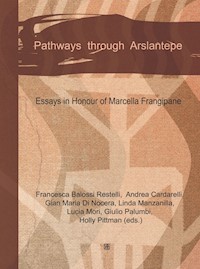
Raccolta di articoli in onore di Marcella Frangipane riguardo il sito archeologico Arslantepe, in Antaolia orientale
Das E-Book können Sie in Legimi-Apps oder einer beliebigen App lesen, die das folgende Format unterstützen:
Veröffentlichungsjahr: 2021
Ähnliche













Ebook realizzato da Cristina D'Andrassi nell'ambito del progetto di collaborazione DISUCOM, Università degli Studi della Tuscia
Indice dei contenuti
PREMESSA
PRESENTAZIONE
INTRODUCTION
GİRİŞ
EDITORS' PREFACE
PREFAZIONE DEI CURATORI
BIBLIOGRAPHY OF MARCELLA FRANGIPANE
TABULA GRATULATORIA
EQUALITY AND INEQUALITY IN SOCIAL SYSTEMS
The analysis of the settling modes to trace the social organisation of the predynastic lower egyptian sites: the example of Maadiis of the settling modes to trace the social organisation of the predynastic lower egyptian sites: the example of Maadi
ABSTRACT
INTRODUCTION
STRATIGRAPHY AND SPATIAL ORGANISATION OF THE AREA EXCAVATED BY THE ITALIAN TEAM
DISCUSSION AND CONCLUSIONS
BIBLIOGRAPHY
The Horizontal and vertical egalitarian systems in the vision of Marcella Frangipane: a comparison with the Terramare society of the Po valley (Italy)
ABSTRACT
BIBLIOGRAPHY
The origin of inequality in central and southern Italy during the Copper Age
ABSTRACT
DEMOGRAPHY AND SOCIAL DIVERSIFICATION
GRAVE GOODS, FUNERARY STRUCTURES AND SPATIAL ORGANISATION OF THE CEMETERIES
WHAT ABOUT COPPER AGE WARRIORS?
METALLURGY AND COMMUNAL ENDEAVOURS
CONCLUDING REMARKS
BIBLIOGRAPHY
Differences in archaeological sources on early metallurgy between cemeteries and settlements in Northern Latium
ABSTRACT
THE SETTLEMENT OF POGGIO OLIVASTRO (CANINO, VITERBO)
THE SELVICCIOLA NECROPOLIS (ISCHIA DI CASTRO, VITERBO)
BIBLIOGRAPHY
Late Chalcolithic Anatolian fruit-stands: significance, function and cultural interactions
ABSTRACT
INTRODUCTION
KIZILIRMAK BASIN
UPPER EUPHRATES VALLEY
THE ORIGINS OF FRUIT-STANDS
SIGNIFICANCE AND FUNCTION OF FRUIT-STANDS
DISCUSSION AND DATING
CONCLUSIONS
ACKNOWLEDGEMENTS
BIBLIOGRAPHY
Feasting the collapse. Ceremonial buildings at the beginning of the Early Bronze Age between highlands and lowlands: some considerations.
ABSTRACT
ARSLANTEPE
GODIN TEPE
HASSEK HÖYÜK
CEREMONIAL BUILDINGS IN THE HIGHLANDS: COMPARISON AND INTERPRETATION
CEREMONIAL BUILDINGS IN THE LOWLANDS
CONCLUDING REMARKS
BIBLIOGRAPHY
Late 4th millennium BCE infant burials from Oylum Höyük, Eastern Step Trench
ABSTRACT
INTRODUCTION
LIMITATIONS TO THE STUDY OF INFANT BURIALS
INFANT BURIALS IN GREATER MESOPOTAMIA
THE OYLUM HÖYÜK EASTERN STEP TRENCH
THE INFANT BURIALS
SMALL INFANT BURIALS IN WIDER CONTEXT: COMPARISON AND INTERPRETATION
YOUNG CHILDREN IN CHALCOLITHIC MESOPOTAMIA
CONCLUSION
ACKNOWLEDGEMENTS
BIBLIOGRAPHY
Tracing inequality: A reflection on ‘royal tombs’ in eastern Anato-lia at the beginning of the third millennium BCE
ABSTRACT
THE IMPORTANCE OF ROYAL FUNERARY CONTEXTS IN CREATING IDEOLOGICAL INE-QUALITIES IN ANCIENT SOCIETIES
‘ROYAL’ TOMBS IN EASTERN ANATOLIA AT THE BEGINNING OF THE THIRD MILLENNIUM BCE
CAN WE CONSIDER THIS FORM OF INEQUALITY AS ROYAL OR NOT?
CONCLUSIONS
BIBLIOGRAPHY
Trajectories of complexity in the fifth millenium BC: a comparative approach
ABSTRACT
NORTH OF THE TAURUS MOUNTAINS IN THE FIFTH MILLENNIUM BC: THE CENTRAL ANATOLIAN PLATEAU
DISCUSSION AND CONCLUSION
BIBLIOGRAPHY
Diversity in Late Chalcolithic 4 glyptic imagery: what did it mean?
ABSTRACT
VARIETIES OF DIVERSITY IN GLYPTIC ART
DIVERSITY WITHIN THE GLYPTIC FROM ARSLANTEPE
DIVERSITY WITHIN THE LATE CHALCOLITHIC 4 GLYPTIC
CONCLUSIONS
BIBLIOGRAPHY
Approaches to the nature of the Kura-Araxes Societies in their homeland
ABSTRACT
EQUALITY AND INEQUALITY: TYPES OF EGALITARIAN SOCIETY IN MESOPOTAMIA.
SOCIETIES OF THE KURA-ARAXES CULTURAL TRADITION
CHARACTERISTICS
ARCHITECTURE AND TOWN PLANNING
RITUAL AND MORTUARY PRACTICE
CONCLUSION
BIBLIOGRAPHY
Leadership strategies and the multi-linear development of social complexity in Ubaid Mesopotamia and Susa A southwestern Iran (5500-4000 BCE)
ABSTRACT
SOUTHERN MESOPOTAMIA – UBAID (CA. 5500-4100 BC)
NORTH MESOPOTAMIA - UBAID, LC-1, AND LC-2
SOUTHWESTERN IRAN - SUSIANA: SUSA A/SUSA I (LATE 5TH MILLENNIUM BC)
CONCLUSIONS
BIBLIOGRAPHY
ECONOMY, PRODUCTION AND POWER
On the Neolithic Equids of Umm Dabaghiyah, Iraq
ABSTRACT
INTRODUCTION
SITE DESCRIPTION AND CONTEXTUALISATION
REFERENCE MATERIALS
RESULTS
DISCUSSION
CONCLUSIONS
BIBLIOGRAPHY
Redistribution, central storage and social consumption in south eastern Italy during the final Bronze Age
ABSTRACT
A FRIEND IN NEED IS A FRIEND INDEED
STOREROOMS AND CENTRAL STORAGE
THE CONTAINERS AND THE CONTENTS
MARGINS OF DIFFERENCE
BIBLIOGRAPHY
Storage facilities during the Middle and Late Chalcolithic periods at Güvercinkayası
ABSTRACT
GENERAL INTRODUCTION TO THE SETTLEMENT
PRODUCT STORAGE INDICATORS IN GÜVERCINKAYASI MIDDLE AND LATE CHALCOLITHIC PERIOD
ASSESSMENT
BIBLIOGRAPHY
Une liaison dangereuse: mass-produced bowls and cretulae at Arslantepe during period VI A
ABSTRACT
ARSLANTEPE VI A CRETULAE AND MASS-PRODUCED BOWLS
THE CRETULAE DUMP A206
OTHER CONTEXTS WITH CRETULAE AND MASS-PRODUCED BOWLS
MANY MPBS ALMOST WITHOUT CRETULAE: THE WEIRD CASE OF A450 LOCUS 1
DISCUSSION AND CONCLUDING REMARKS
MANY MPBS ALMOST WITHOUT CRETULAE: THE WEIRD CASE OF A450 LOCUS 1
ACKNOWLEDGEMENTS
BIBLIOGRAPHY
The Late Chalcolithic and Early Bronze Age technologies in Anatolia: a review of the studies on chipped stones.
ABSTRACT
INTRODUCTION
THE CONTRIBUTION OF THE CHIPPED STONES ANALYSIS TO THE KNOWLEDGE OF THE LATE CHALCOLITHIC AND EARLY BRONZE AGE CONTEXTS: A SHORT SYNTHESIS
A SOCIO-ANTHROPOLOGICAL APPROACH TO LITHICS
OPEN QUESTIONS AND WORK IN PROGRESS
CHIPPED STONE TOOLS UNDER THE MICROSCOPE: THE “LONG BLADE” CASE STUDY
DISCUSSION
BIBLIOGRAPHY
Struggle for power in the highlands? On the relationships between the light-ware and the black-ware crafting communities in the Caucasus and beyond (C. 4300-2900 BCE)
ABSTRACT
THE CULTURAL BACKGROUND OF THE HIGHLANDS DURING THE 5TH AND 4TH MILLENNIA
EVIDENCE OF POLITICAL CENTRALISATION, HIERARCHY, OR SOCIAL COMPLEXITY IN THE LIGHT-WARE CULTURES OF THE HIGHLANDS
THE SLOW DISAPPEARANCE OF LIGHT-WARE CULTURES FROM THE HIGHLANDS (3350-2900 BC): A TENTATIVE ANALYSIS.
THE LIGHT-WARE AND THE BLACK-WARE CRAFTING WORLDS DURING THE 5TH-4TH MILLENNIA: TWO COMPETING SYSTEMS?
CONCLUSIONS
BIBLIOGRAPHY
Food production at Arslantepe (Turkey): botanical evidences from kitchens of the Late Chalcolithic and Early Bronze Age
ABSTRACT
INTRODUCTION
MATERIALS AND METHODS
RESULTS
DISCUSSION AND CONCLUSION
BIBLIOGRAPHY
Observations concerning Pottery Trays in the Caucasus during the Chalcolithic and Early Bronze Ages
ABSTRACT
INTRODUCTION
TRAY FORMS AND TECHNOLOGY
TRAYS FROM LATER CONTEXTS
CONTEXT AND FUNCTION OF THE TRAYS
CONCLUSIONS
BIBLIOGRAPHY
A Mitannian Period mold from Alalakh: digging below the floor of Idrimi’s Level IV Palace
ABSTRACT
INTRODUCTION
THE CONTEXT
THE MOLDS
DISCUSSION
CONCLUSIONS
BIBLIOGRAPHY
ADMINISTRATION AND BUREAUCRACY
Stamp seals of the local Late Chalcolithic from the Kahramanmaraş Region
ABSTRACT
DISCUSSION
BIBLIOGRAPHY
Clay sealings from Telloh: new evidence from a 3rd millenium BC corpus
ABSTRACT
INTRODUCTION
EARLY DYNASTIC IIIB CLAY SEALINGS
AKKADIAN CLAY SEALINGS
SOME CONCLUSIONS
ACKNOWLEDGEMENTS
BIBLIOGRAPHY
Gable seals from Tell Afis: a group of Chalcolithic stamps across Syria and Anatolia
ABSTRACT
BIBLIOGRAPHY
Experiments in recording practices in 4th millennium BC Northern Mesopotamia
ABSTRACT
INTRODUCTION
OBJECT DESCRIPTION
SYMBOLIC MARK
TAGS
COMPARANDA
INTERPRETATIONS
THE ARGUMENT FOR A CONNECTION TO LATE URUK WRITING
THE ARGUMENT FOR A SEPARATE SYSTEM
CONCLUSION
BIBLIOGRAPHY
Administrative practices in the Syrian Jezirah: sealings from Jebel Aruda
ABSTRACT
THE CRETULAE OF JEBEL ARUDA
THE SEALED OBJECTS
OTHER ADMINISTRATIVE DEVICES
SEALING PRACTICES AND GLYPTIC
FINAL REMARKS
ACKNOWLEDGEMENTS
BIBLIOGRAPHY
Use (and non-use) of seals in Neo-Hittite Anatolia
ABSTRACT
INTRODUCTION
THE STATE OF RESEARCH
BICONVEX SEALS AND A SPECIAL TYPE OF CYLINDER SEAL THAT ONLY BEARS HIEROGLYPHIC INSCRIPTIONS
THE USE OF SEALS DURING THE NEO-HITTITE PERIOD
BIBLIOGRAPHY
“Kunuk aḫḫī” the “seal of the brothers”: notes on the use of a collective seal at Ekalte during the Late Bronze Age
ABSTRACT
INTRODUCTION
THE ROLE OF THE “BROTHERS” AT MUNBĀQA
THE TEXTUAL EVIDENCE
CONCLUSIONS
BIBLIOGRAPHY
Seals and Sealings from Dehsavar
ABSTRACT
SITE DESCRIPTION
THE SEALS AND SEALING
COMPARANDA, DATING, AND SEALING USE
CONCLUSIONS
ACKNOWLEDGEMENTS
BIBLIOGRAPHY
ORIGIN OF STATE
A tale of three cities, about proto-urban centers and their organization
ABSTRACT
LATE CHALCOLITHIC CORES
THREE CITIES
TWO POLITICAL MODELS IN GREATER LATE CHALCOLITHIC MESOPOTAMIA?
CONCLUSIONS
BIBLIOGRAPHY
Tracing a model of proto-urbanization in Northern Aegean and Western Anatolia in the late 4th millennium BC
ABSTRACT
INTRODUCTION: A CHALLENGE BETWEEN EVOLUTIONIST AND REVOLUTIONIST ALTERNATIVE
A QUESTION OF TIME: CHALCOLITHIC CHRONOLOGY IN MAINLAND GREECE AND WESTERN ANATOLIA
PROTO-URBANIZATION AS MODEL(S) OF TRANSFORMATION
THE BLACK PERIOD AT POLIOCHNI: RECONFIGURING A NEW COMMUNITY
SETTLEMENT PATTERNS AND DIFFERENTIATED SETTLEMENT STRUCTURE
CONCLUSIONS: A TYPICAL OR ANOMALOUS URBANISM PROCESS?
ACKNOWLEDGEMENTS
BIBLIOGRAPHY
1964 Excavations at Söğüt Tarlası and the Reminiscences of an Uruk Related Assemblage
ABSTRACT
SOME CONSIDERATIONS IN RETROSPECT
BOZOVA BASIN AND SÖĞÜT TARLASI
PROBLEMS ENCOUNTERED IN CONTEXTUALIZING THE URUK ASSEMBLAGE OF SÖĞÜT TARLASI
BIBLIOGRAPHY
Between the plains and the mountains: A brief look at Upper Ti-gris region in the Post-Uruk period according to data from Başur Höyük
ABSTRACT
POST-URUK PERIOD IN THE UPPER TIGRIS REGION: THE CASE OF BAŞUR HÖYÜK
DISCUSSION
ACKNOWLEDGEMENTS
BIBLIOGRAPHY
RESTORATION, MANAGEMENT AND EXHIBIT OF ARCHAEOLOGICAL SITES
Restoration at Arslantepe: a balance between quality and compromise
ABSTRACT
INTRODUCTION
THE OBJECTIVES
THE LABORATORY
PREMISES FOR OPERATIONAL PHASES
INTERVENTION PROCEDURES
BIBLIOGRAPHY
Traditional architecture and the disguised Cem houses of Onar village, Malatya-Arapgir
ABSTRACT
INTRODUCTION
SETTLEMENT FEATURES OF ONAR VILLAGE
ARCHITECTURAL AND STRUCTURAL FEATURES OF HOUSES
ARCHITECTURAL AND STRUCTURAL FEATURES OF CEM HOUSES
CONCLUSION
BIBLIOGRAPHY
Wall decorations at Arslantepe: study and conservation
ABSTRACT
THE WALL SUPPORT
FINISHING LEVELS
THE PAINTINGS
COMPLEX STRATIGRAPHY
STUDY AND CONSERVATION
ACKNOWLEDGEMENTS
BIBLIOGRAPHY
Aktopraklık cultural heritage management project
ABSTRACT
INTRODUCTION
THE CULTURAL HERITAGE MANAGEMENT PROJECT
SUSTAINABILITY AND GENERAL REMARKS
ACKNOWLEDGEMENTS
BIBLIOGRAPHY
ARSLANTEPE
Structural damage from earthquakes in the Late Chalcolithic palatial complex at Arslantepe, Malatya (Turkey)
ABSTRACT
INTRODUCTION
SEISMICITY OF THE STUDIED AREA
THE PALATIAL COMPLEX OF ARSLANTEPE
DAMAGE PATTERN OF THE STUDIED STRUCTURES
DISCUSSION
ACKNOWLEDGEMENTS
BIBLIOGRAPHY
Pottery analysis and the archaeological context. Chosing samples, counting, weighing and interpreting materials in context
ABSTRACT
INTRODUCTION
ARSLANTEPE LATE CHALCOLITHIC 3-4. CHOICE OF CONTEXTS FOR DATA COLLECTING
METHODS OF DATA COLLECTING
THE USE OF IN SITU MATERIAL
CONCLUSIONS
ACKNOWLEDGEMENTS
BIBLIOGRAPHY
Tales from the floor: investigating the use of space in the site of Arslantepe (Malatya, Turkey) by means of micro-residues.
ABSTRACT
INTRODUCTION
CONTEXT AND ANALYSED STRUCTURES
MATERIALS AND METHODS
METHODOLOGICAL CONSIDERATIONS
INTERPRETATION OF THE MICRO-RESIDUES PATTERNS
CONCLUSIONS
ACKNOWLEDGEMENTS
BIBLIOGRAPHY
Reappraising the Middle Bronze Age at Arslantepe and in the Malatya plain
ABSTRACT
INTRODUCTION
ARSLANTEPE: STRATIGRAPHIC, ARCHITECTURAL, AND CHRONOLOGICAL DATA
ARSLANTEPE: POTTERY
THE MBA FORTIFICATION IN ARSLANTEPE
THE MALATYA PLAIN IN THE MBA
EXTERNAL RELATIONS
CONCLUSIONS
BIBLIOGRAPHY
Building a digital repository for the Arslantepe archaeological record (ArsDB)
ABSTRACT
INTRODUCTION
ARSLANTEPE AND ITS COLLECTION OF ARCHAEOLOGICAL RECORDS
THE ARCHITECTURE OF THE DIGITAL REPOSITORY
BIBLIOGRAPHY
Plano-occipital flattening: intentional or unintentional treatment?
ABSTRACT
HUMAN PLASTICITY AND SKULL MORPHOLOGY
INTENTIONAL HEADSHAPING: DEFINITION AND TYPOLOGIES
HEAD SHAPING IN THE NEAR EAST
PLANO-OCCIPITAL FLATTENING IN THE MIDDLE EAST AND ANATOLIA
OLD OBSERVATIONS, NEW INTERPRETATION
CRADLING AND PLANO-OCCIPITAL FLATTENING
PLANO-OCCIPITAL FLATTENING INTENTIONAL OR UNINTENTIONAL TREATMENT
INTERPRETATION OF PLANO-OCCIPITAL FLATTENING IN ANATOLIA: THE CASES OF ARSLANTEPE
CONCLUSION
BIBLIOGRAPHY
Pottery archaeometry in a multi-layered settlement: methodological and theoretical considerations
ABSTRACT
ORGANIZATION OF THE POTTERY PRODUCTION OVER THE LONGUE DURÉE
THE CHAÎNE OPÉRATOIRE APPROACH: FROM MICRO- TO MACROCOSM
AN IDEAL GEOLOGICAL MOSAIC FOR PETROGRAPHY-BASED INVESTIGATIONS
CONCLUSIONS
ACKNOWLEDGEMENTS
BIBLIOGRAPHY
Preliminary faunistic research of the Middle Bronze Age (V-A) at Arslantepe
ABSTRACT
THE FAUNAL ASSEMBLAGE
THE FLOCKS AND THEIR COMPOSITION- SHEEP/GOAT RATIO
MORTALITY PROFILES
WILD ANIMALS AND THE ENVIRONMENT
CONCLUSIONS
BIBLIOGRAPHY
Contextualizing crisis? Some thoughts on the end of the Bronze Age in the Euphrates Region.
ABSTRACT
CRISIS: CAUSES AND EFFECTS
CONTEXTUALIZING CRISIS
WHERE IS COLLAPSE?
ACKNOWLEDGEMENTS
BIBLIOGRAPHY
MISCELLANEA
Red painted plaster at Neolithic Yumuktepe: a case of symbolic remembering?
ABSTRACT
BIBLIOGRAPHY
Mud brick platforms during the Iron Age in Central Asia Impressions in Izat Kuli, Dahistan (Turkmenistan)
ABSTRACT
GEOGRAPHY OF DAHISTAN-VEHRKĀNĀ
THE REDISCOVERY OF A CULTURE
THE SPANISH-TURKMEN PROJECT IN DAHISTAN
GEOKTCHIK DEPE: A UNIQUE MONUMENT
IZAT KULI: A PROTO-CITY AND ITS AGRICULTURE
THE “MUD BRICK” PLATFORMS OF THE IRON AGE IN CENTRAL ASIA. NEW DATA.
ACKNOWLEDGEMENTS
BIBLIOGRAPHY
Material for a history of Eneolithic research in Italy
ABSTRACT
ACKNOWLEDGEMENTS
BIBLIOGRAPHY
Karaz - From today to yesterday. Kura-Araxes pottery of the Erzurum plain: study and observation of its decoration
ABSTRACT
INTRODUCTION
KURA-ARAXES CULTURE AND ITS POTTERY ON THE ERZURUM PLAIN
AN EXPERIMENTAL STUDY ON THE DECORATIONS ON THE KARAZ CERAMICS OF THE ERZURUM PLAIN
AIM AND METHODOLOGY OF THE PROJECT
FROM ARCHAEOLOGICAL VALUE TO AESTHETIC CATEGORY: THE KARAZ CERAMICS
CONCLUSION
BIBLIOGRAPHY
A Late Bronze II terracotta figurine of Ishtar from Ruseifah, Jor-dan
ABSTRACT
INTRODUCTION
THE LATE BRONZE AGE II RESIDENCY
THE FIGURINE
THE ICONOGRAPHY
CONCLUSIONS
BIBLIOGRAPHY
A fragment of an old Syrian sculpture from Ebla
ABSTRACT
BIBLIOGRAPHY
A lesson in photography. For my shoes there are no sundays
An overview of potsherds with building and tree depictions recovered in Domuztepe
ABSTRACT
INTRODUCTION
PAINTED POTTERY
POTTERY WITH PAINTED BUILDING AND TREE DECORATION
CONCLUSION
BIBLIOGRAPHY
The domestication of plants and the role of Anatolia
ABSTRACT
LEADING A SEDENTARY LIFE: WAS IT A CHOICE OR A NECESSITY?
NATUFIAN SETTLEMENT: THE ROLE OF THE “MIDWIFE” FOR THE BIRTH OF DOMESTICATION
THE SOUTHEASTERN TAURUS REGION: SEDENTARY GROUPS THAT DID NOT USE CEREALS
THE SOUTHEASTERN TAURUS REGION: THE “CORE AREA” OF THE ORIGIN OF DOMESTICATION?
ACKNOWLEDGEMENTS
BIBLIOGRAPHY
Materiality of two vessels in Southern Turkmenian style from Shahr-i Sokhta (Sistan, Iran, c. 3100-2900 BC)
ABSTRACT
INTRODUCTION
GEOLOGY OF THE HELMAND BASIN
DESCRIPTION, MATERIAL ANALYSIS AND RESTORATION OF VESSELS IG. 11445 AND 6215
COMPARISON WITH OTHER SAMPLES OF LOCALLY PRODUCED BUFF WARE
CONCLUSIONS
BIBLIOGRAPHY
PREMESSA
La Professoressa Marcella Frangipane ha lavorato dal 1976 e lavora ancora attivamente nel sito archeologico di Arslantepe in Turchia Orientale. Laureatasi alla Sapienza con il suo maestro Salvatore Maria Puglisi, dal 1981 ha svolto le sue ricerche in Preistoria del Vicino e Medio Oriente e insegnato per quasi un quarantennio presso la Facoltà di Lettere e Filosofia in quello che ora si chiama Dipartimento di Scienze dell’Antichità. Sotto la sua direzione, il sito di Arslantepe, che era stato scelto dagli archeologi e filologi italiani Meriggi e Puglisi nella speranza che portasse alla luce monumentali fasi di occupazione e archivi relativi al periodo ittita imperiale e post-imperiale, ha invece assunto fama mondiale per aver rivoluzionato le conoscenze sulle dinamiche di formazione delle prime società statuali. In linea con quanto prima di lei avviato da Salvatore Maria Puglisi e Alba Palmieri, i precedenti direttori dello scavo e anch’essi professori del nostro ateneo, Marcella Frangipane, con estremo rigore e ottime capacità scientifiche, ha portato alla luce quello che oggi è l’unico complesso palatino del IV millennio a.C. conosciuto al mondo e dal quale provengono le più antiche spade in metallo e un complesso sistema archivistico che antecede l’origine della scrittura.
Oltre allo scavo ed alle ricerche, da ottima rappresentante della Scuola Italiana di Archeologia, ha posto particolare attenzione alla conservazione di tali monumenti, sostenendo la fondamentale collaborazione con il rinomato Istituto Centrale del Restauro. Essa ha altresì intrattenuto in tutti questi anni ottimi rapporti di collaborazione con le autorità della Repubblica di Turchia, condividendone le finalità di valorizzazione e esposizione in loco dei risultati della ricerca sul campo, oltreché contribuendo alla formazione di generazioni di professionisti turchi e stranieri, molti dei quali suoi studenti universitari. Grazie a questo impegno, il sito di Arslantepe è ora inserito nella lista temporanea del patrimonio dell’umanità dell’UNESCO e ci auguriamo che entri al più presto in via definitiva.
In oltre quarant’anni di attività sul campo e di pubblicazione di tali ricerche, Marcella Frangipane è divenuta un punto di riferimento nel dibattito internazionale sulle dinamiche di sviluppo delle società complesse, sulla nascita delle differenze di classe, delle forme di accentramento di potere, e sullo sviluppo delle prime forme di stato, trasformazioni della società avvenute tra V e IV millennio a.C. che hanno però creato le basi della nostra stessa società moderna. Assieme allo statunitense Guillermo Algaze, il nome di Marcella Frangipane è oggi universalmente legato al dibattito su tali tematiche e per questo ha ricevuto numerosi riconoscimenti nazionali ed internazionali, che non sono io a dover ricordare; mi piace sottolineare che è l’unica donna tra i solo otto scienziati italiani membri della prestigiosa National Academy of Sciences degli Stati Uniti d’America.
Lo scavo ad Arslantepe, Malatya (Turchia) è uno dei Grandi Scavi di Ateneo, una delle storiche imprese archeologiche a cui con grande lungimiranza a partire da Antonio Ruberti, il nostro ateneo ha riservato dei fondi di ricerca appositi. Si tratta di grandi imprese di scavo e ricerca, avviate negli anni ’50 del secolo scorso in Italia (Pyrgi e Lavinio dal 1957) e quasi contemporaneamente all’estero (tra le prime vi furono il Sahara Libico 1955, Arslantepe 1961, Ebla 1966), che hanno tutte in modo diverso permesso di scrivere nuovi capitoli di storia. Il costante sostegno che questi progetti ricevono dal nostro ateneo ancora oggi è dovuto alla convinzione dell’importanza di una ricerca archeologica di alto profilo scientifico, una ricerca che ha necessariamente bisogno di tempi lunghi, come dimostra eccellentemente il caso di Arslantepe, che con la maturità di una ricerca di oltre mezzo secolo di studi riserva ancora più sorprese che in passato.
La collaborazione multidisciplinare che Marcella Frangipane ha costruito, che va dagli studi genetici (Max Plank Institut) e le analisi isotopiche (Università di Parma), agli studi iconografici (University of Pennsylvania), annovera la partecipazione di 13 istituti di ricerca di sette paesi ed è motivo di orgoglio per la Sapienza.
Vorrei infine ricordare il suo impegno con gli studenti e il rigore con cui li ha formati, visibile dal coinvolgimento nei contesti internazionali di ricerca di molti di loro oggi.
È dunque con vivo piacere che accolgo e partecipo al festeggiamento che colleghi e amici hanno riservato con questo libro a Marcella Frangipane.
Eugenio Gaudio
Rettore della Sapienza Università di Roma
PRESENTAZIONE
Quando Marcella Frangipane ha iniziato a lavorare ad Arslantepe, uno dei “Grandi Scavi” del nostro Ateneo, arrivare in Anatolia Orientale era ancora un’avventura e un’impresa in sé. Con una Land Rover si partiva in macchina, attraversando Jugoslavia, Grecia e tutta la Turchia, oppure si usufruiva di un aeroporto militare, attendendo l’aereo a bordo pista. La missione archeologica durava più di tre mesi e in quel periodo i docenti sparivano letteralmente dall’università. Si perdevano completamente i contatti. Chi andava in missione aveva due vite parallele: una vita universitaria, da novembre inoltrato a giugno, quando insegnava e condivideva quanto scoperto durante la campagna di scavo, e l’altra in estate e autunno, sul campo, quando raccoglieva con fatica le tante informazioni sulla storia che il ricco terreno offriva loro. Questa è stata la vita di Marcella Frangipane, tra Roma e Malatya, per quarantasei anni. Cittadina onoraria di Battalgazı, l’antica Malatya (la Melitene dei romani e la Melid dei neo-assiri), ha contribuito a una rilettura delle dinamiche di formazione delle società complesse ed in particolare delle prime forme di stato.
Nel 1976, il suo primo anno di attività ad Arslantepe, è stato rinvenuto un gruppo di lance e spade in un vano di rappresentanza del palazzo del 3300 a.C.; si tratta delle nove spade tutt’ora più antiche al mondo, in rame arsenicato e con intarsi d’argento sull’elsa.
Esattamente vent’anni dopo, nel 1996, quando Marcella Frangipane era già direttrice di questa impresa, è stata portata alla luce una tomba reale, in cui un capo era stato sepolto attraverso un complesso rituale che comprendeva il sacrificio di quattro fanciulli; sia il personaggio principale che due dei sacrificati erano riccamente ornati con spilloni d’argento, perline di materiali rari, diademi in rame arsenicato, vasellame e armi.
Nel frattempo era gradualmente emerso un complesso palatino, che ha ora superato i 4000 m 2 di dimensione e non è ancora stato interamente svelato; alla sua unicità e alle sue ottime condizioni di conservazione è dovuta la richiesta della Turchia all’UNESCO di inserimento del sito nelle liste del Patrimonio Mondiale dell’Umanità da parte della Commissione Permanente.
Tutto questo è stato scavato con estremo rigore scientifico e con la partecipazione di esperti di varie discipline che hanno contribuito in modo significativo alla ricostruzione da più punti di vista delle dinamiche sociali, economiche e politiche delle società le cui tracce si andavano recuperando. Il coordinamento e la gestione di Marcella Frangipane hanno fatto di Arslantepe un esempio di missione archeologica di fama mondiale, additato a modello sia dalle autorità ministeriali turche che negli ambienti accademici internazionali. Si è passati infatti dalla esclusiva partecipazione italiana alla creazione di un team di ricerca spiccatamente internazionale, dando così vita ad un ambiente stimolante che ha potuto oltrepassare confini geografici e culturali. Si tratta dunque di un progetto scientifico, una ricerca storica e archeologica, una missione interdisciplinare e multiculturale, di cui come dipartimento di Scienze dell’Antichità siamo fieri e felici di aver condiviso la gestione e di aver supportato per tutti gli aspetti istituzionali e amministrativi.
Marcella Frangipane è stata per quasi quarant’anni docente del nostro dipartimento e ha fatto appassionare molti giovani alla preistoria del Vicino Oriente; diversi hanno avuto l’opportunità di partecipare alle campagne di scavo in Turchia e alcuni hanno ora trovato posto in istituti di ricerca e universitari sia italiani che stranieri e continuano a portare avanti studio e attività sul campo con impegno e passione. Se il nostro dipartimento è salito in questi anni ai ranghi più alti delle valutazioni internazionali questo è dovuto certamente anche a Marcella Frangipane. Sono però gli studenti ad offrire la testimonianza e la soddisfazione più forti che un docente universitario può ricevere e Marcella Frangipane può, anche da questo punto di vista, ritenersi pienamente soddisfatta.
Non è stata quindi una sorpresa vedere l’ampia partecipazione di studiosi di così diversa provenienza a questo volume in suo onore che ben rappresenta i temi di ricerca cari a Marcella: tanti infatti sono coloro che con vivo piacere condividono il desiderio di riconoscerle un ruolo importante nel diffondere la ricerca archeologica della Sapienza nel mondo. Per tali motivi abbiamo deciso far precedere ai contributi un elenco di chi, per esclusivo motivo di spazio, non potevamo accogliere in altro modo. In questo il mio ruolo di direttore del dipartimento mi ha avvantaggiato rispetto ai tanti colleghi che avrebbero voluto esprimere parole di congratulazione e di ringraziamento e che mi auguro qui di ben rappresentare.
Giorgio Piras
Direttore del Dipartimento di Scienze dell’Antichità
Sapienza Università di Roma
INTRODUCTION
This volume has been prepared as a homage to Prof. Dr. Marcella Frangipane on the occasion of her retiring bureaucratically; however still, in experiencing how she was in hold of things with great vigour when I last met earlier this year, and her vivid handling of the arduous burdens of Arslantepe World Heritage Nomination procedures, it is more than evident that her retirement is something on bureaucratic level and that she is more active then ever. Perhaps it is now the time to further exploit her profound knowledge and experience, not only in matters related to excavation but also in the dissemination of knowledge and in managing cultural heritage.
This present volume, bringing together contribution of Marcella’s colleagues and friends, exemplifies the wide range of her interests and the adorable sphere of friendships she had developed. Needless to say, her collegial relations have always been triumphed by the virtues of her personality, based on mutual openness, respect and honesty. This in a way makes writing a simple introduction much more difficult.
Prof. Frangipane deserves to be acknowledged in foregrounding salient points related to cultural history that otherwise may easily overlooked. In this respect, we consider as important to heighten Prof. Frangipane’s ground-breaking contribution to explicate and contextualize modalities leading to the emergence of complex social systems in the Near East; as will be further elaborated below, her narratives had been forcing to revise and to reconsider our conventional views on the cultural processes, particularly on the formation of the Near Eastern State. Her seminal work on defining the trajectories that led to cultural changes have now been widely accepted, though still we need her insight for further elaboration and for feeding in new data. In this respect, someone like Marcella Frangipane, being full of new ideas and endless energy actually can never retire, particularly at the time when she is most needed.
Marcella Frangipane, or as we all call her “Marcella Hanım” is one of the few academicians who, knowing every detail of the work down to its minute particulars, still able in developing an overview based on the essentials. There are not many who can do it; most of us are lost in our own details, considering what we have excavated, recovered through our work in the field as the being the most important. Archaeologists excavate, expose what had been carried on from the past, most excavate to find “things” – what is implied by the term “things” varies from fabulous objects of art to a single carbonised plant or an animal bone -, while others excavate to find new evidence that would contribute in developing a better, more subtle understanding on the subject they are working on. Spending our life in either in the field on working with pottery sherds or fragmented bones, we tend to focus on the particulars of a single time period and geography. However, there are others who do not loose the vision of the “big picture”, try to place their findings into a bigger narrative and look for modalities how they would fit into it. These are the “great scholars” who maintain genuine interest and solid understanding of the past regardless of time period or of geographic zone. In the past there were such scholars who could speak of Palaeolithic or of Late Medieval, keeping interest in the entire scope of civilization, regardless whether it is in Meso-America or China. Marcella Hanım is one of such, and not many are left.
Our first acquittance with Marcella dates back to 1978, when our team under Prof. Ufuk Esin began working at Değirmentepe, not too far from Arslantepe. Actually, a close friendship based on mutual collegiality and understanding among the two teams had already been established in 1971 when Arslantepe team came for a visit to Elazığ Munzuroğlu village, then our base in excavating Tepecik and Tülintepe. We have always considered this as an exceptional occasion to know and then to follow not only the high quality of work accomplished by the Arslantepe team but their benevolences as reflected in the exceptional personality of late Alba Palmieri. In meeting Marcella as the new field director of the Arslantepe excavations, at first, we were rather startled in learning that her earlier experience was in Egypt and in Mexico and not in the Near East; now in retrospect we surmise her overarching approach and supra-regional vision to have been rooted from her earlier multifarious experience.
Cultural process leading to the formation of the state has always been considered as the second most significant breaking point in the history of civilization after the Neolithic Revolution - the emergence of food producing economies. Since the early years of archaeology, it was taken as an accepted fact that the incipient stage of state and of bureaucratic record keeping took place in Mesopotamian lowlands; Anatolian highlands were considered as an area marginal during at least during the earlier stages of this episode. In this respect all what had been recovered in the East Anatolian highlands bordering Syro-Mesopotamian lowlands related to Mesopotamian cultures, such as those of Tepecik, Norşuntepe or of Değirmentepe were taken the indicators of trading colonies. There was a consensus on no local socio-economic complexity taking place on the region of the highlands. Likewise, until about a few decades ago the intriguingly rich assemblage that our Italian colleagues had been recovering at Arslantepe were also taken as an off shoot of Mesopotamian centres, though considered odd.
To overcome the deeply rooted Mesopotamia-centric perception of cultural history it required an unbiased vision to perceive the essentials; it was thus Marcella Frangipane to discern that the emergence of social system of the Near East was much more multifarious then previously envisaged and that while temple-based socio-economic system was developing in the Mesopotamian lowlands, a distinct palace-based system was taking place in regions further to the North, the latter being marked by the bureaucratic accounting. In this respect, modalities of how Prof. Frangipane embedded the evidence of Arslantepe into the general picture of Near Eastern historic process needs to be highly acknowledged. Evidently, the excavation strategy, exposing substantial areas, attaining as much evidence as possible, greatly helped to substantiate Marcella Hanım’s vision. At the present, Arslantepe, with its palatial complex with the outstanding assemblage is the prime archaeological site picturing the power and organization of local elite authority, pushing the limits of simple socio-economic system to become an actor in supra-regional complexity. Among the ground-breaking findings of Arslantepe, the storage of door sealings- indicator of bureaucratic record keeping and accounting- earliest swords with silver inlays evincing the high-level of technological achievement and control of metal rich mountains, the presence of ration vessels in hundreds implying the implementations of a strict redistribution system are among the several of outstanding materials recovered. In conspectus, these helped Prof. Frangipane to come up with a ground-breaking novel approach in explaining the emergence and establishment of bureaucratic state and inequality.
When Prof. Frangipane first published her theory, it had met with considerable scepticism, now, over two decades Marcella Frangipane stands as one of the most eminent scholars in the domain of Near Eastern archaeology brining in new ideas overriding biased conventional views.
The site, Arslantepe has had a long history of research being worked by several outstanding scholars, Claude Schaeffer, Louis-Joseph Delacorte, Piero Meriggi, Alba Palmieri, all preceding Marcella Frangipane; however, at present the site has been so much affiliated with Marcella Hanım that it is almost impossible to think one without the other. With the outstanding performance of Marcella, Arslantepe is not only an archaeological site under excavation, it has been one of the exceptional scenes of protection and heritage management, fully integrated with the local environment. The team of Arslantepe and more in the person of Marcella has been fully integrated to Turkey that we hardly ever see them as of from another country. Many colleagues come to Turkey to work, make friends, contribute to science and then leave, Marcella is one of the few who became full-heartedly a part of it; perhaps even more merged with the medium of the Malatya then many of us ever been able to.
One other point that I could not help my temptation to mention, though possibly not to be included to such a paper, is Marcella Hanım’s cats and dogs. Her genuine love for animals, taking all the trouble to carry them to and from Malatya to Roma, to my understanding fully exemplifies the essential and deeply rooted humane personality of her. In the year 2000 we were called to join rescue excavations to work at sites to remain within the reservoir of the Kargamış Dam on the Euphrates. Our team had selected Mezraa Teleilat to work, establishing our base camp at the Turcoman village of Zeytinlibahçe. Arslantepe team under Marcella Frangipane had decided to work at the mount by the Zeytinlibahçe Village, a substantial mound site of the Uruk Period. We took a very critical decision to merge our teams using the same excavation house. Considering the potential problems that can easily emerge among the different ways of living, working and being social it was a difficult decision to take for both sides. We worked together at the Zeytinlibahçe excavation house for four seasons, not even realizing that we were two different teams, the only problem that I remember in retrospect was Marcella’s dog and the cat brought by one of my students. Even, they finally came to a peaceful consensus.
Mehmet Özdoğan
İstanbul University
GİRİŞ
Elimizdeki bu yayın Prof.Dr. Marcella Frangipane’ye dost ve meslektaşları tarafından emekliliği vesilesi ile bir armağan kitap olarak hazırlanmıştır; ancak bu bağlamda Marcella Frangipane’nin emekliliğinin yalnızca bürokrasinin bir gereği olduğu, yoksa gerçek yaşam olgusu ile hiçbir bağlamda ilişkilendirilemeyeceği de açık bir gerçektir. Daha birkaç ay önce kendisi ile bir toplantıda rastlaştığımızda tükenmez enerjisi ile üstlendiği işleri ne kadar canlılıkla sürdürdüğünü gördüğümde, “emekli olma” kavramının ne denli bürokrasinin getirdiği bir açmazı içerdiğini düşünmüştüm. Nitekim Arslantepe UNESCO Dünya Kültür Mirası adaylık başvurusunun zorlu bürokratik işlemlerini en ince noktalarına kadar mükemmel bir şekilde hazırlayarak sunup savunması bile Marcella Frangipane’nin verimliliğinin doruğunda olduğunu göstermiştir. Her ne kadar Marcella Frangipane son yılların en başarılı ve iyi yönetilmiş bilimsel kazılarından biri olan Arslantepe’de yaptığı çalışmalar ile öne çıkmışsa da, onun deneyim ve bilgi birikiminin esas yansıması alan çalışmalarının çok ötesinde, bilgiyi kurama dönüştürmek ve bunu paylaşmaktır. Kendisinden bundan sonraki beklentilerimiz de daha çok bu bağlamdadır.
Marcella Frangipane’nin dost ve meslektaşlarının katkılarını bir araya getiren bu yayın, bir yanda onun ilgi alanlarının çeşitliliğini gösterirken, aynı zamanda ne kadar geniş bir dostluk çevresine sahip olduğunu da yansıtmaktadır. Dost çevresinin zenginliği, kuşkusuz Frangipane’nin özgün kişiliğinin yanı sıra meslektaşları ile olan ilişkisini dürüstlük, açıklık ve karşılıklı saygı temelinde geliştirmiş ve sürdürmüş olmasının bir yansımasıdır. Bu kitabın giriş bölümünü yazarken Marcella Frangipane’nin renkli ve çok yönlü kişiliğini ifade etmek çok kolay olmadı.
Prof. Frangipane’nin bilim dünyasına yapmış olduğu en önemli katkı, kültürel sürecin anlaşılması için kritik öneme sahip ancak kolaylıkla göz ardı edilebilen dönüşümleri irdeleyip, değerlendirmelerini somut kanıtlarıyla ortaya koyabilmiş olmasıdır. Devletin, bürokrasinin ve ekonomik farklılıklara dayalı toplumsal katmanların ortaya çıkışı ve gelişmesiyle ilgili kalıplaşmış görüşlere karşı bizlerin ezberini bozan yeni bir kuram geliştirmiştir.
Bu konu üzerinde aşağıda daha ayrıntılı olarak duracağız, ancak bu bağlamda Marcella Frangipane’yi birçok yeni kuşak kuramcıdan ayıran, kuramını bilgi birikiminin süzülmüşünden gelen somut verilere dayayarak geliştirmiş olmasıdır. Frangipane’nin kuramı, yeni kuşakta yaygın olduğu gibi toplum bilimlerinin başka dallarından üzerinde hiç düşünülmeden, kanıtlayacak verilerin olup olmadığı bile araştırılmadan ileri sürülen kurgusal bir model değildir. Frangipane’nin katmanlı toplum yapısının gelişimi ve çeşitlenmesi üzerine ileri dürdüğü kuram, artık hemen bütün bilim insanları tarafından kabul edilmektedir; ancak gene de bu kuramın daha geliştirilmesi, yeni kazılar ile ortaya çıkan veriler ile bütünleşmesi için Prof. Frangipane’ye belki de önceden olduğundan çok daha fazla ihtiyacımız olacaktır.
Prof. Marcella Frangipane bizler için her zaman “Marcella Hanım” olmuştur. O, alanı ile ilgili en ince ayrıntısına kadar bütün verilere kelimenin tam anlamı ile hakim olup, üst bakış açısını yitirmeden doğru sentezleri yapabilen ender bilim insanlarından biridir. Çoğu zaman biz kendi alanımızın ayrıntıları içinde kaybolup, en önemli bulguların kendi kazımızda bulduklarımız olduğu tuzağına, çoğu kez farkını varmadan, düşeriz. Mesleğimizde bazen “geçmiş dönemlerden günümüze ne kalabilmişse” onları açığa çıkartmak, bazen bir “şeyler” bulmak – bu bağlamda “şeyler” tanımı olağanüstü sanat değeri olan bir eserden yanmış bir tahıl tanesi ya da hayvan kemiği parçasına kadar çok geniş bir çeşitlemeyi kapsar- daha ender olarak da yanıtlamak istediğimiz, kültür tarihi ile ilgili bir sorunun çözümüne katkıda bulunacak veriler bulmak için kazı yaparız. Hangi yaklaşım ile alanda çalışıyorsak, kazının getirdiği yük ve sorumluluk, binlerce taş, çanak ya da hayvan kemiğini sınıflandırmak için gerekli olan çaba ister istemez bizleri tek bir dönem ve tek bir bölge üzerinde uzmanlaşmaya, bakış açımızı sınırlı tutmaya zorlamaktadır. Gene de bunu aşabilen, uygarlık tarihine üst bakış açısını yitirmeden, bulgularını “büyük resmin” içine doğru ve anlamlı bir şekilde yerleştirebilen meslektaşlarımız, sayıca çok az da olsa hala vardır. Bu “büyük bilim insanları” belirli bir coğrafya ya da zaman diliminin bakış açısını, düşünsel sınırlayıcılığını aşarak kültürel süreci ilgi alanlarının temeline oturtabilmişlerdir. Onlar ile Paleolitik dönemden Orta Çağa, Çin’den Orta Amerika’ya kadar her konuda konuşup tartışabilirsiniz ve kuşkusuz Marcella Hanım bunlardan biridir. Günümüzde bu bakış açısını sürdürebilen çok kimsenin kalmadığı da bir başka durumdur.
Marcella Hanım ile ilk olarak 1978 yılında, Prof.Dr. Ufuk Esin’in başkanlığında, Arslantepe höyüğünün yakınlarındaki Değirmentepe kazısına başladığımızda tanıştık. Esasen Arslantepe ekibi ile olan dostluğumuz çok daha eskilere, 1971 yılında, o yıllarda kazı başkanı Dr. Alba Palmieri’nin bizimle tanışmak için Tepecik ve Tülintepe kazıları için kullandığımız Munzuroğlu köyüne gelmesi ile başlar. Palmieri’nin bu ziyareti iki ekip arasında açık mesleki paylaşıma dayalı dostluğun temellerini atmanın yanı sıra, bize Alba Palmieri’nin seçkin kişiliğini yakından tanıma ve bunun da ötesinde Arslantepe kazı ekibinin çalışmalarını sürekli olarak izleme ve bilgilerimizi paylaşma olanağı sağlamıştı. İlk tanıştığımızda, açıkçası Arslantepe gibi bir kazının alan yöneticisi olarak Marcella Hanımı biraz yadırgamış, Alba Palmieri’nin seçimine şaşmıştık. Marcella daha önceleri Mısır ve Orta Amerika’da çalışmış, Yakın Doğu kazılarında sorumluluk almamıştı. Yıllar sonra geri dönüp baktığımızda Alba Palmieri’nin ne kadar doğru bir seçim yapmış olduğunu, Marcella Hanım’ın kazı ile ortaya çıkanların ayrıntısının tuzağına düşmeden geniş bakabilmesinde bu deneyim çeşitliliğin de önemli bir yeri olduğunu gördük.
Genel olarak kent devletinin ortaya çıkışı, besin üretimine dayalı Neolitik dönemin ardından uygarlık tarihinin en önemli kırılma noktalarından biri olarak kabul edilir. Arkeolojinin zaman içinde kökleşerek artık kalıplaşmış kabulleri arasında, bürokrasi ve kayıt tutmaya dayalı kent devletine giden sistemin ilk olarak Mezopotamya düzlüklerinde ortaya çıkarak geliştiği yer alır. Bu bağlamda Anadolu’nun daha yüksek ve dağlık kesimlerinin, hiç değilse bu sürecin başlangıç aşamalarında çekirdek bölge dışında kaldığı düşünülmekteydi. Yakın zamanlara kadar da Suriye – Mezopotamya düzlüklerini çevreleyen Doğu Anadolu’nun yüksek kesimlerinde güney kültürleri ile ilişkili olarak Tepecik, Norşuntepe, Değirmentepe gibi kazı yerlerinde ortaya çıkan bulgular da güneyin ticaret kolonileri olarak yorumlanmaktaydı. Bu dağlık ve dağarası ovaların olduğu bölgede etkin bir kültürel modelin gelişemeyeceği üzerinde hemen hemen görüş birliği vardı. Aynı şekilde, yakın zamanlara kadar İtalyan meslektaşlarımızın Arslantepe’de bulduğu şaşırtacak kadar zengin buluntular da Güney etkilerinin - biraz aykırı da olsa – yansımaları olarak görülmekteydi.
Kalıplaşmış Mezopotamya odaklı bakış açısını, ancak neden ve sonuç ilişkilerini önyargı çıkmazına saplanmayan özgün bir bakış açısı değiştirebilirdi. Yakın Doğu’da kent ve devlete evrilen sosyo-ekonomik sistemin, geleneksel bakış açısının ön gördüğünden çok daha farklı boyutlarının olduğunu Marcella Hoca ortaya koymuş, güneyde, Mezopotamya düzlüklerinde tapınak çevresinde gelişen kurgudan farklı olarak Anadolu platosunda bürokratik kayıt tutmayı öne çıkartan, saray temelli farklı bir yapılaşmanın olduğunu koymuştu. Bu bağlamda Marcella Frangipane’nin Arslantepe bulgularını yeni bir bakış açısı ile süzgeçten geçirerek kuramı nasıl geliştirdiği, geleneksel kalıpların dışında düşünebilmenin en güzel bir örneği olmuştur. Kuşkusuz Marcella Hanım’ın bu bakış açısını geliştirmesinde, Arslantepe’de kazının olabildiğince geniş alanları açacak şekilde sürdürülmesi ile, kuramı besleyecek gerekli verilerin elde edilmiş olması da etkili olmuştur. Arslantepe, erken tarihli sarayı ve ortaya çıkartılmış olan sıra dışı buluntu topluluğu ile yerel bir yönetimin basit bir sosyo-ekonomik yapının sınırlarını zorlayarak bölgesinde söz sahibi olacak güce nasıl eriştiğini açık olarak göstermektedir. Arslantepe’nin sıra dışı buluntularının arasında, bürokratik kayıt tutma ve hesaplaşmanın göstergesi olan saklanarak depolanmış kiler kapı mühürleri, gümüş kakmalı, maden teknolojisinde ulaşılan yüksek düzeyi ve hammadde yataklarının denetim altında tutulduğunu gösteren bilinen en eski kılıçları, ücret olarak besin dağıtımının varlığını kanıtlayan, yüzlerce üleşim kabını ve daha nicelerini sayabiliriz. Marcella Frangipane, Arslantepe’nin bu beklenmedik sıra dışı buluntu topluluğundan yola çıkarak bürokratik devlet ve eşitsizlik temelinde katmanlaşmış toplumsal dokunun nasıl oluştuğu ve geliştiğini açıklayan kuramı ortaya koymuştur. Frangipane bu kuramı yayınladığında ilk önceleri kuşku ile karşılanmıştı; aradan 20 yıl kadar geçtikten sonra Marcella Frangipane, geniş bakış açısı, ezber bozan kuramların sahibi olarak Yakın Doğu arkeolojisinin en seçkin bilim insanlarından biri olarak tüm bilim dünyasına kendisini artık kabul ettirmiştir.
Arslantepe’nin arkeoloji tarihinde ayrıcalıklı bir yeri vardır, Louis-Joseph Delaporte, Claude Schaeffer, Piero Meriggi, Salvatore Puglisi, Alba Palmieri gibi ünlü isimler Marcella Frangipane’den önce bu alandaki kazıları yönetmişlerdir. Ancak günümüzde “Marcella” adı Arslantepe ile öylesine özdeşleşmiş durumdadır ki, birini diğerinden ayrı olarak düşünmek hemen hemen olanaksızdır. Marcella’nın kazı başkanlığı döneminde Arslantepe herhangi bir kazı yeri olmanın çok ötesine geçmiş, yerelin ortamı ile bütünleşmiş, koruma uygulamaları ve kültürel miras yönetimi gibi farklı alanlardaki kapsamlı ve başarılı çalışmaları ile örnek gösterilen bir arkeolojik sit konumuna gelmiştir. Başka Marcella Frangipane olmak üzere Arslantepe ekibi ülkemiz ile öylesine bütünleşmiştir ki, onların bir dış ülkeden gelen konuklar olduğunu güçlükle kabullenebiliyoruz. Ülkemize birçok yabancı bilim insanı gelir, bunlar ülkemizde çalışır, bilime katkı yapar, dostluklar kurar ve daha sonra ayrılırlar; diğer bazıları bizimle ayrılmaz bir şekilde bütünleşir, bizim bir parçamız olur, Marcella Frangipane ve ekibi gibi. O Malatya ile belki hepimizden daha fazla bütünleşmiş, Malatya’nın ayrılmaz bir parçası olmuştur.
Değinmeden geçemeyeceğim ve esasen bu yayının giriş kısmında yer alıp almaması konusunda ikircikli kaldığım son bir konu, Marcella Hanım’ın kedi ve köpekleri. Gerçek bir hayvansever olarak hayvanlarını Malatya ile İtalya arasında getirip götürebilmek için harcadığı emek ve çözdüğü bürokrasi, bana hep onun içten nasıl yoğun insancıl duygular taşıdığını düşündürmüştü. 2000 yılında Kargamış Baraj gölü altında kalacak höyüklerde kurtarma kazıları yapılması için yapılan çağırıya, biz Mezraa Teleilat kazısı ile katılmış ve kazı evimizi de, o bölgenin Türkmen köylerinden olan Zeytinlibahçe’ye kurmuştuk. Arslantepe ekibi de Zeytinlibahçe köyünün bitişiğindeki büyük bir Uruk merkezi olduğu anlaşılan höyüğü seçmişti. Orada, iki kazı ekibinin birlikte kalacağı ortak kazı evi oluşturmaya karar vermiştik; esasen ayrı alışkanlıkları, yaşam biçimleri olan ve ağır iş yükü altına girecek iki farklı ekibin bir arada bulunması her iki taraf için de çok riskli bir karardı. Zeytinlibahçe kazı evini dört yıl birlikte, ayrı ekiplerin parçası olduğumuzun ayırdına bile varmadan kullandık. Anımsadığım kadarı ile çıkan tek sorun Marcella Hanım’ın İtalya’dan getirdiği köpek ile bizim bir öğrencimizin İstanbul’dan getirdiği kedisi arasında çıkmıştı ki, o da bir süre sonra iki hayvanın karşılıklı iyi niyeti ile çözülmüştü.
Mehmet Özdoğan
İstanbul University
EDITORS' PREFACE
In preparing this volume in honour of Marcella Frangipane, a scholar and professor who has devoted her entire life to research, teaching, and to “her” one and only university, the “Sapienza” University of Rome, we wish to express our most sincere, authentic appreciation and deepest esteem. The amazing response in terms of participation by so many Italian and foreign colleagues, pupils, and collaborators is proof – and acknowledgement – of the active and pro-active role that Marcella Frangipane has constantly played both in academia, as a professor, and in the national and international scientific community, as a researcher. We are sincerely glad to acknowledge that her teaching and especially her research activity will continue and we will be able to rely on her extraordinary vitality as a researcher. The future still holds opportunities for fruitful scientific discussions with her, allowing us to promote and improve our role as archaeologists, paleo-ethnologists, and historians specialised in the Near East.
We have embraced the idea of a book for Marcella Frangipane with great enthusiasm since the very beginning; however, the question arose of how we should organise a collection of studies in her honour. We immediately realised that a collection of contributions written exclusively by her pupils and closest colleagues would end up minimising the role that Marcella has actually played in education and, first and foremost, in scientific research. In organising a collection of contributions devoted to Marcella Frangipane, it was impossible not to take into consideration the way she has always conceived research: an activity which must know no barriers or national borders. For this reason, we chose to organise the book so as to reach the widest possible audience, thanks to a very diverse range of topics. This choice resulted into colleagues, scholars, and pupils of eight different nationalities offering their contribution to Marcella, an academic who has always conceived science as free of constraints and open to the world. Moreover, this organisation of the volume better suits Marcella Frangipane’s character, because it has allowed us to involve well-established scholars, but also young graduates and PhD students. This choice was certainly in line with the idea of supporting young scholars always actively promoted by Marcella.
The authors of the contributions suggested some topics to be included in the book, in addition to the ones that we, as editors, had suggested (although as a very general input) when we started to organise the structure of the volume. The wide range of topics tackled by the various authors is proof of the close network of scientific relations created by Marcella, both at the national and international level. Such scope and variety of topics has later been organised into ample chapters, characterised by different thematic approaches.
The beginning of Marcella’s adventure in science was marked by collaboration with two academics of immeasurable value: Salvatore Puglisi and Alba Palmieri. Supported by Puglisi, Marcella Frangipane took part in the Joint Paleo-Ethnological Expedition in the Teotihuacan Valley, Mexico, where she had the opportunity to work on some of the topics that her research would later revolve around. This expedition would also mark the beginning of a long friendship and collaboration with one of this book’s editors. She would later take part in the Arslantepe excavations, initially directed by Salvatore Puglisi, then by Alba Palmieri, with whom she established relations based on mutual esteem, collaboration, and friendship which lasted until Alba Palmieri’s premature death (1990). Marcella Frangipane shared with Alba Palmieri not only the Arslantepe investigations, but also other campaigns carried out in Egypt, at the site of Maadi, between 1977 and 1983. Under Alba Palmieri’s direction, investigations at Arslantepe were already being conducted according to a strict multidisciplinary approach, which made the excavation one of the greatest Italian prehistoric archaeological endeavours abroad. When, in 1990, Marcella Frangipane took over direction of the excavation, she did not only confirm Alba Palmieri’s methodological approach, but she also turned Arslantepe into an actual training ground for future Italian and foreign archaeologists. Indeed, although the Arslantepe excavation was not a merely didactic one, didactic activity was (and still is) constantly closely intertwined with scientific investigations. Many researchers, professors, and archaeologists now holding posts at the Ministry of Cultural Heritage gained significant benefit from their experience at the Turkish excavation and their collaboration with Marcella. Methodological rigour, a special focus on context, careful scrutiny of archaeological sources, a mindset open to innovation but disinclined to embrace mere technological fads were the main ingredients of Marcella Frangipane’s approach to research.
Marcella Frangipane’s scientific activity is outstanding in many ways. She devoted her entire life to the Arslantepe excavation, one of the most significant projects that the “Sapienza” University of Rome has included in the Grandi Scavi d’Ateneo [the University’s main Excavation projects]. More than forty years of work devoted to a single site. Contrary to the widespread assumption that experience in a single site can be limiting for an archaeologist’s professional life, Marcella has turned this excavation into one of the most active scientific laboratories at the international level. Each single excavation campaign, thanks to careful selection of the most suitable strategies of intervention, has resulted into surprising discoveries: for Marcella and her scientific sensibility, this was an opportunity to tackle topics which, today, constitute the very core of research on prehistory. Marcella Frangipane’s focal interests revolve around the origins of complex societies and the state in the “Near East”, and are aimed at providing understanding of how mechanisms of social inequalities arose. A close and fruitful collaboration with Enrica Fiandra and Piera Ferioli has allowed Marcella to open a new line of research on the development of administrative activities in pre-literate societies, implementing a methodological approach to research which later became an actual model and point of reference for many other researchers. The strictly multidisciplinary approach of this study was supported by Marcella’s basic and abiding belief in the importance of sharing data and by the network of international collaborations which stemmed from it. Archaeometallurgy also became a consolidated topic for Marcella at Arslantepe, thanks to her collaboration with Alberto Palmieri. Actually, Marcella has also dealt with a wide variety of other topics, promoted and supported an equally large number of studies through her pupils.
Marcella was able to transform Arslantepe into a real think-tank of ideas, a workshop of scientific creativity, a place where the application of the latest technological innovations and the innovation of thought come together to serve the final aim of reconstructing history.
For a short decade, Marcella Frangipane implemented this investigation system (with its multidisciplinary approach) also in another small site, Zeytinli Bahçe, where Marcella was able to delve more in depth and from a different point of view into some research topics she was particularly interested in.
Furthermore, Marcella is also an excellent professor, with a special eye for her students’ needs and, at the same time, an extremely demanding mentor. It is in this spirit that, for decades, she has carried out her didactic activity as a Professor of Prehistory of the Near and Middle East, based on a strictly paleo-ethnological approach. In her lectures (as dozens of students who have attended her courses over the years can confirm), she has always combined science and didactics. Marcella is the best example of how university teaching should be conceived. Seminars, lessons, conferences, are an opportunity for her to present contents full of novelty and original points of view, which give students stimulating food for thought but also provide specialists with useful contributions.
In 2004, Marcella Frangipane’s special focus on the divulgation-related aspect of science and her will to involve a wider audience in sharing the outcomes of her multidecadal research produced a great exhibition, Arslantepe. Alle origini del potere [ Arslantepe. At the origins of power], which took place at the Trajan’s Market Museum in Rome on the occasion of the 700 th anniversary of the “Sapienza” University. In the same years, Marcella promoted an all-Italian project implemented by Turkish authorities, whose aim was opening the archaeological site of Arslantepe to the general public, making it an open-air museum. The project revolves around the idea of protecting the site’s ancient earthen architecture, safeguarding its construction canons, and, at the same time, creating a footpath which actively involves the visitor and clarifies the historical and archaeological features of the site. This project was very successfully implemented.
Marcella Frangipane was awarded several honours and prizes by Italian and international authorities. We would like to list some of them, because they are evidence of her hard work. In 2005, Marcella was awarded honorary residence of Eski Malatya (Battalgazı), an acknowledgement of her collaboration and commitment to research, protection, and promotion of Turkey’s archaeological heritage, but also a sign of gratitude for the constant bond of friendship connecting Marcella with the inhabitants of Malatya. Indeed, the İnönü University of Malatya awarded her an honorary doctorate in 2011.
Since 2005, Marcella has been a Knight of the Order of the Star of Italy. This distinction is particularly meaningful, because it is awarded by the President of the Italian Republic to those who have acquired special merit in the promotion of friendly relations and cooperation between Italy and other countries and the promotion of ties with Italy. In 2013, she was the first Italian woman to be elected as a foreign member of the National Academy of Sciences of the United States of America. On November 26 th, 2015, she was awarded the “ Vittorio De Sica” Prize for Science (Archaeology). The Prize, established in 1975, is bestowed on an annual basis to Italians and foreigners who have distinguished themselves for their careers in cinema and other arts, but also in the domains of culture, science, and in society at large. Another important acknowledgement bestowed to Marcella is the Field Discovery Award of the International Shanghai Archaeology Forum for “Italian Excavations at Arslantepe”, which she received in Shanghai on December 14 th, 2015. In 2017 she was awarded the Premio Rotondi ai Salvatori dell’Arte. This prize too perfectly reflects Marcella’s attitude towards Arslantepe, a place she gradually brought to life, whose value she understood immediately and into whose preservation she put an enormous amount of energy, studies, and work. Finally, it must not be forgotten that Marcella Frangipane is a corresponding member of several scientific associations and institutions, including the Deutsches Archäologische Institut in Berlin, Accademia Nazionale dei Lincei and the Archaeological Institute of America.
We hope that many will recognize themselves in the intentions animating this volume. We are referring not only to the authors who have offered their contributions, but to all those who have had the opportunity to benefit from Marcella Frangipane’s experience, drawing from her scientific work the attitude to research she has always so actively promoted: research viewed as a means to broaden our knowledge of ancient times and reconstruct our most ancient past.
Francesca Balossi Restelli, Andrea Cardarelli, Gian Maria Di Nocera,
Linda Manzanilla, Lucia Mori, Giulio Palumbi, Holly Pittman
PREFAZIONE DEI CURATORI
Nel preparare un volume dedicato a Marcella Frangipane c’è tutto l’apprezzamento sincero e autentico, nonché la profonda stima, verso una studiosa ed una insegnante che ha dedicato la propria vita alla ricerca e alla didattica lavorando presso il “suo” unico ateneo, la “Sapienza” Università di Roma. La magnifica risposta di partecipazione al volume di moltissimi colleghi italiani e stranieri, allievi e collaboratori, costituisce una testimonianza e un riconoscimento del ruolo attivo e propositivo che Marcella Frangipane ha svolto costantemente in seno all’istituzione accademica, come docente, e nella comunità scientifica nazionale e internazionale, come ricercatrice. Ci conforta il fatto che le sue attività di insegnamento e soprattutto di ricerca non si interrompano qui e siamo certi di poter contare ancora sulla sua straordinaria vitalità di studiosa. Con lei non mancheranno future occasioni per stimolanti confronti scientifici, che potranno valorizzare e migliorare il nostro ruolo di archeologi, di paletnologi e di storici del vicino oriente.
L’idea di realizzare questo volume per Marcella Frangipane ci ha subito entusiasmati, ma al contempo ha posto il problema di come dovesse configurasi una raccolta di studi in suo onore. Un volume del genere che avesse ospitato solo i contributi di allievi e di studiosi a lei più vicini, ci è sembrata da subito una scelta riduttiva rispetto al ruolo che Marcella ha avuto nell’ambito dell’insegnamento, ma soprattutto in campo scientifico. Dedicando a lei un volume non era possibile prescindere dal suo modo di concepire la ricerca, cioè un’attività che non poteva conoscere barriere o confini nazionali. Per questo motivo, nell’organizzare il volume abbiamo scelto la formula che consentisse, attraverso la diversità delle tematiche affrontate, di raggiungere un pubblico più ampio. Il risultato è stato che colleghi, studiosi e allievi di otto nazionalità diverse hanno voluto offrire un contributo a chi ha sempre considerato la scienza priva di vincoli ed aperta al mondo. Inoltre una impostazione di questo tipo ci è sembrata congeniale al carattere di Marcella Frangipane, dal momento che ha consentito una partecipazione di studiosi affermati, ma anche di giovani laureati e dottori di ricerca. Tale scelta è stata sicuramente aderente a quell’idea di sostegno ai giovani studiosi che Marcella ha sempre concretamente promosso.
Alle tematiche che noi curatori avevamo proposto in forma del tutto orientativa, organizzando originariamente il volume, se ne sono aggiunte altre suggerite dagli stessi autori. L’ampio spettro di argomenti trattati nei vari contributi, costituisce la testimonianza della fitta rete di rapporti scientifici creata da Marcella sul piano nazionale e internazionale. Una tale vastità e varietà di contributi è stata da noi raggruppata in ampi capitoli con diversi approcci tematici.
Marcella inizia la sua avventura scientifica collaborando con due straordinarie figure: Salvatore Puglisi ed Alba Palmieri. Sostenuta da Puglisi partecipa alla Missione Paletnologica Congiunta nella Valle di Teotihuacan, in Messico, dove ha l’opportunità di confrontarsi con alcune di quelle tematiche che saranno poi il fulcro delle sue ricerche e dove avvia una lunghissima amicizia e collaborazione con uno dei curatori di questo volume. In seguito partecipa agli scavi di Arslantepe, inizialmente diretti da Salvatore Puglisi, in seguito da Alba Palmieri con cui instaura un profondo rapporto di stima, collaborazione e amicizia, fino alla sua prematura scomparsa (1990). Con Alba Palmieri condivide non solo le ricerche ad Arslantepe ma anche quelle in Egitto, nel sito di Maadi tra il 1977 e il 1983. Già con la direzione di Alba Palmieri le ricerche ad Arslantepe venivano condotte attraverso consolidati criteri di multidisciplinarità, rendendo lo scavo una delle più grandi imprese di archeologia preistorica italiana all’estero. Nel dirigere dal 1990 lo scavo Marcella Frangipane non solo conferma le scelte metodologiche introdotte da Alba Palmieri, ma Arslantepe diventa una vera e propria palestra per futuri archeologi italiani e stranieri, perché pur non essendo uno scavo didattico, l’attività didattica era, come lo è ancora, intrinsecamente legata a quella scientifica. Molti sono stati coloro che, inizialmente studenti, poi ricercatori, docenti o funzionari archeologi, hanno tratto vantaggi significativi dall’esperienza di scavo in Turchia e dalla collaborazione con Marcella. Rigore metodologico, attenzione al contesto, capacità di critica attenta delle fonti archeologiche, apertura verso le novità, ma non facile alle semplici infatuazioni tecnologiche, hanno costituito gli ingredienti del suo approccio alla ricerca.
L’attività scientifica di Marcella Frangipane è straordinaria. La sua vita è stata dedicata allo scavo di Arslantepe, uno dei progetti più significativi tra quelli che la “Sapienza” Università di Roma ha inserito tra i Grandi Scavi di Ateneo. Più di quaranta anni svolti ininterrottamente in un unico sito. Contrariamente a quanti ritengano che lo scavo in un unico sito possa essere limitativo per la vita professionale di un archeologo, Marcella ha reso questo scavo uno dei più attivi laboratori scientifici a livello internazionale. Il fatto che ogni campagna di scavo, con adeguate strategie di intervento, abbiano permesso sorprendenti scoperte, ha dato l’opportunità a Marcella, attraverso la sua sensibilità scientifica, di affrontare tematiche che costituiscono oggi il fulcro della ricerca preistorica. I punti focali dei suoi interessi ruotano infatti intorno alle origini delle società complesse e dello stato nel “Vicino Oriente” e cercano di comprendere la nascita dei meccanismi di disuguaglianza sociale. La stretta e fruttuosa collaborazione con Enrica Fiandra e Piera Ferioli ha permesso a Marcella di aprire un filone di indagine sullo sviluppo delle attività amministrative nelle società preletterarie con un approccio metodologico alla ricerca che ha “fatto scuola”. L’approccio fortemente multidisciplinare di tale studio è stato possibile anche grazie alla profonda convinzione di Marcella sull’importanza della condivisione dei dati e alla rete di collaborazioni internazionali che questa le ha permesso. Anche l’archeometallurgia è diventato un tema consolidato per Marcella ad Arslantepe, grazie alla collaborazione con Alberto Palmieri. In realtà sono anche molte altre le tematiche affrontate da Marcella, ma sono anche moltissimi gli studi da lei promossi e sostenuti attraverso i suoi allievi.
Marcella ha saputo trasformare Arslantepe in una vera e propria fucina di idee, un laboratorio di creatività scientifica, un luogo dove l’applicazione delle più recenti innovazioni tecnologiche e l’innovazione di pensiero si fondono con il fine ultimo di ricostruire la storia.
Questo sistema di indagine, con il suo approccio multidisciplinare, Marcella Frangipane lo ha messo in pratica per un breve decennio anche in un altro piccolo sito, Zeytinli Bahçe, dove ha potuto approfondire da un altro punto di vista alcuni temi di ricerca che le stavano particolarmente a cuore.
Ma Marcella è anche una eccellente insegnante, attenta alle esigenze degli studenti ed al contempo estremamente esigente. Con questo spirito ha svolto per decenni un’attività didattica in Preistoria del Vicino e Medio Oriente con un approccio strettamente paletnologico. Nelle sue lezioni, e lo possono testimoniare le decine di studenti che negli anni hanno seguito i suoi corsi, ha sempre coniugato scienza e didattica. Marcella è l’esempio più stringente di come deve essere concepito l’insegnamento universitario. Seminari, lezioni, conferenze, costituiscono per Marcella un’occasione per proporre contenuti densi di novità e punti di vista originali, che offrono proficui spunti di riflessione allo studente, ma anche utili contributi ad un pubblico specialista.
L’attenzione all’aspetto divulgativo e alla volontà di raccontare ad un più vasto pubblico i risultati delle sue decennali ricerche emerge nel 2004 con l’organizzazione della grande mostra dal titolo Arslantepe. Alle origini del potere presso il Museo dei Mercati di Traiano a Roma in occasione dei 700 anni dell’Università “La Sapienza”. Negli stessi anni Marcella promuove un progetto, tutto italiano, ma realizzato dalle autorità turche, che ha lo scopo di rendere fruibile al grande pubblico il sito archeologico di Arslantepe, come museo all’aperto. L’idea é quella di proteggere l’antica architettura in terra del sito, rispettandone i canoni costruttivi, ma di creare un percorso coinvolgente e al tempo stesso chiarificatore delle dinamiche storico-archeologiche. Un progetto portato avanti con successo.
Marcella Frangipane ha ottenuto numerose onorificenze e premi, non solo dalle autorità italiane. Ci piace ricordarne alcune, perché sono la concreta testimonianza del suo operato. Nel 2005 le viene conferita la cittadinanza onoraria di Eski Malatya (Battalgazı), un riconoscimento per la sua collaborazione e il suo impegno nella ricerca, tutela e valorizzazione per i beni archeologici della Turchia, ma anche un ringraziamento per la costante amicizia tra Marcella e la popolazione di Malatya. E’ proprio la İnönü University di Malatya che le attribuisce nel 2011 il Dottorato Honoris Causa.
Dal 2005 Marcella è Cavaliere dell’Ordine della Stella d’Italia. La motivazione per questa onorificenza è significativa, perché viene concessa dal Presidente della Repubblica Italiana a coloro che abbiano acquisito particolari benemerenze nella promozione dei rapporti di amicizia e di collaborazione tra l’Italia e gli altri Paesi e nella promozione dei legami con l’Italia. Nel 2013 è stata la prima donna italiana eletta come membro straniero della National Academy of Sciences degli Stati Uniti d’America. Il 26 novembre del 2015 le viene conferito il Premio “Vittorio De Sica” per la Scienza (Archeologia). Il premio, istituito nel 1975, viene attribuito annualmente a personalità sia italiane che straniere che si siano distinte, nella loro intera carriera nel cinema e nelle altre arti, ma anche nell’ambito della cultura, delle scienze e nella società. Un importante riconoscimento è quello del Field Discovery Award dell’International Shanghai Archaeology Forum riguardante “Italian Excavations at Arslantepe”, che le è stato consegnato a Shanghai il 14 dicembre del 2015. Nel 2017 ha ottenuto il Premio Rotondi ai Salvatori dell’Arte. Anche questo premio rispecchia perfettamente lo spirito di Marcella nei confronti di Arslantepe, il luogo che lei ha piano piano portato alla luce, di cui ha avuto la prontezza di capire il valore e alla cui conservazione ha dedicato energie, studi e tantissimo lavoro. E’ infine da ricordare che Marcella Frangipane è membro corrispondente di numerose associazioni ed enti scientifiche tra cui il Deutsches Archäologische Institut di Berlino, l’ Accademia Nazionale dei Lincei e l’ Archaeological Institute of America.
Ci auspichiamo che negli intenti di questo volume si possano riconoscere quanti, pur non presenti con un proprio contributo, abbiano avuto l’opportunità di attingere all’esperienza di Marcella Frangipane, traendo dalla sua testimonianza scientifica, quell’approccio alla ricerca rivolto alla conoscenza e alla ricostruzione del nostro più antico passato.
Francesca Balossi Restelli, Andrea Cardarelli, Gian Maria Di Nocera,
Linda Manzanilla, Lucia Mori, Giulio Palumbi, Holly Pittman
BIBLIOGRAPHY OF MARCELLA FRANGIPANE
1975 - Considerazioni sugli aspetti culturali neolitici a ceramica tricromica dell’Italia meridionale, Origini IX, 1975: 63-152.
1983 - (eds.) Perspectives on Protourbanization in Eastern Anatolia: Arslantepe (Malatya). An Interim Report on 1975-1983 campaigns, Origini XII/2: 287-668 (with A. Palmieri).
1983 - A Protourban centre of the Late Uruk period, Origini XII/2: 287-454 (with A. Palmieri).
1983 - Cultural developments at Arslantepe at the beginning of the third millennium, Origini XII/2: 523-574 (with A. Palmieri).
1985 - I metalli di Arslantepe nel quadro dei più antichi sviluppi della metallurgia vicino-orientale”, Quaderni de «La Ricerca Scientifica» 112, CNR, Rome: 115-137. (with C. Caneva, A.M. Palmieri).
1986 - Assetto redistributivo di una società protourbana della fine del IV millennio”, Dialoghi di Archeologia, IV/1: 35-44 (with A. Palmieri).
1987 - Urbanization in peri-Mesopotamian areas: the case of Eastern Anatolia, in Studies in the Neolithic and Urban Revolutions, The V.Gordon Childe Colloquium, L. Manzanilla (ed.), B.A.R. Intern. Series 349, 1987: 295-318 (with A. Palmieri).
1987 - Excavations at Arslantepe 1986, IX Kazi Sonuçlari Toplantisi, Ankara 1987: 127-129 (with A. Palmieri).




