


24,99 €
Mehr erfahren.
- Herausgeber: epubli
- Kategorie: Geisteswissenschaft
- Sprache: Englisch
Achieving mental stability, personal growth, and ethical integrity is a profound journey that requires a comprehensive and integrative approach. This book introduces the Pathway to Mental Clarity (PMC), a novel therapeutic framework that combines the principles of Integrative Cognitive Behavioral Therapy (ICBT) with structured techniques to promote mental clarity and personal well-being. The PMC framework focuses on cognitive restructuring, behavioral activation, self-reflection, ethical living, and mind-body practices, guiding individuals toward a Clear State of Mind—a state characterized by cognitive clarity, emotional balance, and ethical living. The Clear State of Mind represents the ultimate goal of PMC, symbolizing a life free from cognitive distortions and emotional turmoil. Achieving this state involves navigating through various stages of personal development, each addressing different aspects of mental health and well-being. The chapters that follow provide a detailed exploration of these stages, offering practical techniques, case studies, and scenarios for active studying to help you apply these concepts in your daily life. Dr. Benjamin Koch is a distinguished psychologist with a Ph.D. in Psychology and extensive expertise in Integrative Cognitive Behavioral Therapy (ICBT) and the Pathway to Mental Clarity (PMC). With over 10. years of professional experience, Dr. Benjamin Koch has successfully applied these therapeutic approaches to help countless individuals achieve mental stability, emotional resilience, and ethical integrity. Throughout their career, Dr. Benjamin Koch has dedicated themselves to advancing the field of psychology by integrating evidence-based techniques with innovative practices. Their unique blend of cognitive restructuring, behavioral activation, self-reflection, and mind-body practices has garnered remarkable success, transforming the lives of many grateful clients.
Das E-Book können Sie in Legimi-Apps oder einer beliebigen App lesen, die das folgende Format unterstützen:
Veröffentlichungsjahr: 2024
Ähnliche


















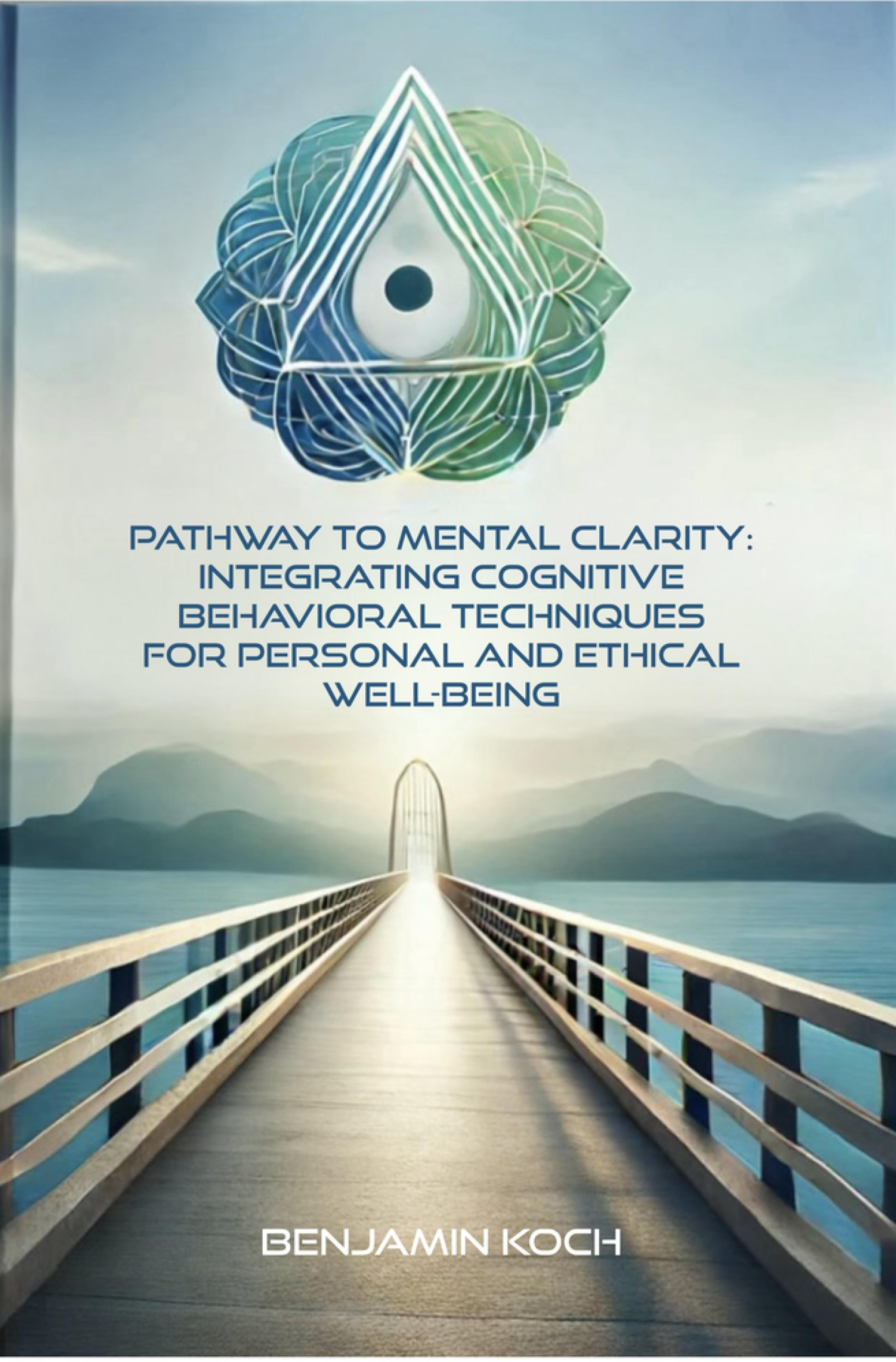
Pathway to Mental Clarity:
Integrating Cognitive Behavioral Techniques
for Personal and Ethical Well-Being
–
by
Dr. Benjamin Koch
1
Achieving mental stability, personal growth, and ethical integrity is a profound journey that requires a comprehensive and integrative approach. This book introduces the Pathway to Mental Clarity (PMC), a novel therapeutic framework that combines the principles of Integrative Cognitive Behavioral Therapy (ICBT) with structured techniques to promote mental clarity and personal well-being.
The PMC framework focuses on cognitive restructuring, behavioral activation, self-reflection, ethical living, and mind-body practices, guiding individuals toward a Clear State of Mind—a state characterized by cognitive clarity, emotional balance, and ethical living.
The Clear State of Mind represents the ultimate goal of PMC, symbolizing a life free from cognitive distortions and emotional turmoil. Achieving this state involves navigating through various stages of personal development, each addressing different aspects of mental health and well-being. The chapters that follow provide a detailed exploration of these stages, offering practical techniques, case studies, and scenarios for active studying to help you apply these concepts in your daily life.
2
Copyright © 2024 - Benjamin Koch
All rights reserved.
3
4
Index:
1. Introduction
- Overview of the Pathway to Mental Clarity (PMC)
- Importance of achieving a Clear State of Mind
2. Chapter 1: Cognitive Restructuring
- Cognitive Distortions and Their Impact
- Techniques for Cognitive Restructuring
- Thought Records
- Socratic Questioning
- Case Studies and Examples
3. Chapter 2: Behavioral Activation
- Behavioral Activation and Emotional Regulation
- Techniques for Behavioral Activation
- Activity Scheduling
- Behavioral Experiments
- Case Studies and Examples
5
4. Chapter 3: Self-Reflection and Analysis
- Importance of Self-Awareness and Insight
- Techniques for Self-Reflection and Analysis
- Journaling
- Guided Self-Inquiry
- Case Studies and Examples
5. Chapter 4: Ethical Living
- Aligning Actions with Core Values
- Techniques for Ethical Living
- Value Clarification
- Ethical Decision-Making Scenarios
- Case Studies and Examples
6. Chapter 5: Mind-Body Practices
- Promoting Overall Well-Being
- Techniques for Mind-Body Practices
- Mindfulness Meditation
- Physical Exercise
6
- Case Studies and Examples
7. Chapter 6: The ARC Model: Affinity, Reality, Communication
- Enhancing Relationships and Interpersonal Interactions
- Techniques for Enhancing ARC
- Developing Affinity
- Aligning with Reality
- Enhancing Communication
- Case Studies and Examples
8. Chapter 7: The Bridge to Freedom
- Achieving the Clear State of Mind
- Importance of Avoiding Drugs and Harmful Behaviors
- Avoiding Drugs
- Refraining from Harmful Behaviors
- Avoiding Criminal Activities
- Practical Applications of the Bridge to Freedom
- Case Studies and Examples
7
9. Chapter 8: Practical Applications and Future Directions
- Practical Applications of PMC in Various Settings
- Future Directions for Research and Practice
10. Conclusion
- Summary of PMC's Benefits and Applications
- Final Thoughts on Achieving Mental Clarity
11. Further Inquiries and Contact Information
- Contact Details for Personalized Guidance
12. Glossary of Terms
- Definitions of Key Concepts and Techniques
---
8
Chapter Summaries and Detailed Content:
Chapter 1: Cognitive Restructuring
- Cognitive Distortions and Their Impact:
Understanding how biased thinking patterns contribute to negative emotions and behaviors.
- Techniques for Cognitive Restructuring:
- Thought Records: Structured worksheets to identify and evaluate automatic thoughts.
- Socratic Questioning: Guided questions to challenge cognitive distortions.
- Case Studies:
- Example 1: Overcoming catastrophic thinking.
- Example 2: Addressing all-or-nothing thinking.
Chapter 2: Behavioral Activation
- Behavioral Activation and Emotional Regulation: Increasing engagement in meaningful activities to improve mood and reduce avoidance.
- Techniques for Behavioral Activation:
9
- Activity Scheduling: Planning activities that align with personal values.
- Behavioral Experiments: Testing negative beliefs through real-life activities.
- Case Studies:
- Example 1: Overcoming avoidance.
- Example 2: Challenging negative beliefs.
Chapter 3: Self-Reflection and Analysis
- Importance of Self-Awareness and Insight:
Examining thoughts, emotions, and behaviors to identify patterns and conflicts.
- Techniques for Self-Reflection and Analysis:
- Journaling: Writing down thoughts and experiences.
- Guided Self-Inquiry: Structured questions to explore thoughts and emotions.
- Case Studies:
- Example 1: Understanding emotional triggers.
- Example 2: Exploring underlying beliefs.
Chapter 4: Ethical Living
- Aligning Actions with Core Values:
Fostering integrity and social responsibility.
- Techniques for Ethical Living:
10
- Value Clarification: Identifying and prioritizing core values.
- Ethical Decision-Making Scenarios: Practicing value-driven decisions.
- Case Studies:
- Example 1: Clarifying personal values.
- Example 2: Practicing ethical decision-making.
Chapter 5: Mind-Body Practices
- Promoting Overall Well-Being:
Reducing stress and enhancing present-moment awareness.
- Techniques for Mind-Body Practices:
- Mindfulness Meditation: Focusing on the present moment.
- Physical Exercise: Promoting physical and mental health.
- Case Studies:
- Example 1: Reducing stress through mindfulness.
- Example 2: Enhancing mood through exercise.
Chapter 6: The ARC Model: Affinity, Reality, Communication
- Enhancing Relationships and Interpersonal Interactions: Developing love, shared reality, and effective communication.
- Techniques for Enhancing ARC:
11
- Developing Affinity: Fostering love and self-love.
- Aligning with Reality: Ensuring perceptions align with objective reality.
- Enhancing Communication: Improving expression and interaction skills.
- Case Studies:
- Example 1: Building self-love.
- Example 2: Improving communication.
Chapter 7: The Bridge to Freedom
- Achieving the Clear State of Mind:
Navigating through PMC stages to achieve mental clarity.
- Importance of Avoiding Drugs and Harmful Behaviors:
- Avoiding Drugs: Promoting a drug-free lifestyle.
- Refraining from Harmful Behaviors: Aligning actions with values.
- Avoiding Criminal Activities: Fostering ethical living.
- Practical Applications of the Bridge to Freedom:
- Example 1: Overcoming substance abuse.
- Example 2: Reducing harmful behaviors.
12
Chapter 8: Practical Applications and Future Directions
- Practical Applications of PMC in Various Settings: Adapting PMC principles for therapy, family, and community.
- Future Directions for Research and Practice:
Exploring PMC’s effectiveness in diverse populations and contexts.
Conclusion
- Summary of PMC's Benefits and Applications:
Highlighting the comprehensive approach and its impact.
- Final Thoughts on Achieving Mental Clarity:
Emphasizing continuous growth and community engagement.
Further Inquiries and Contact Information
- Contact details for personalized guidance and auditing.
13
Glossary of Terms
- Definitions of key concepts and techniques to support understanding and application.
---
14
Scenarios for Active Studying:
Scenario 1: Cognitive Restructuring Practice
- Task: Identify a recent situation that caused stress or anxiety. Use a thought record to evaluate and reframe the automatic thoughts associated with this situation.
- Goal: Practice identifying cognitive distortions and developing balanced thoughts.
Scenario 2: Behavioral Activation Exercise
- Task: Plan and schedule a week of activities aligned with your core values.
Participate in these activities and monitor your mood.
- Goal: Increase engagement in meaningful activities to improve emotional regulation.
Scenario 3: Self-Reflection Journaling
- Task: Spend 15 minutes each day journaling about your thoughts, emotions, and experiences. Reflect on any patterns or insights that emerge.
- Goal: Enhance self-awareness and identify areas for personal growth.
15
Scenario 4: Ethical Decision-Making Role-Play
- Task: Discuss a hypothetical ethical dilemma with a partner. Identify the relevant values, explore options, and decide on the best course of action.
- Goal: Develop ethical reasoning skills and practice making value-driven decisions.
Scenario 5: Mindfulness Meditation Session
- Task: Practice mindfulness meditation for 10 minutes each day, focusing on your breath and bringing your attention back whenever it wanders.
- Goal: Reduce stress and enhance present-moment awareness.
Scenario 6: Enhancing Communication
- Task: Practice active listening in a conversation with a friend or family member.
Focus on fully understanding their message and responding thoughtfully.
- Goal: Improve communication skills and strengthen relationships.
---
16
This comprehensive approach, Pathway to Mental Clarity (PMC), integrates cognitive-behavioral techniques and ethical principles to foster mental stability and personal growth, providing a robust framework for achieving a Clear State of Mind.
17
Pathway to Mental Clarity: Integrating Cognitive Behavioral Techniques for Personal and Ethical Well-Being
Introduction
Achieving mental stability, personal growth, and ethical integrity is a profound journey that requires a comprehensive and integrative approach. This book introduces the Pathway to Mental Clarity (PMC), a novel therapeutic framework that combines the principles of Integrative Cognitive Behavioral Therapy (ICBT) with structured techniques to promote mental clarity and personal well-being.
The PMC framework focuses on cognitive restructuring, behavioral activation, self-reflection, ethical living, and mind-body practices, guiding individuals toward a Clear State of Mind—a state characterized by cognitive clarity, emotional balance, and ethical living.
The Clear State of Mind represents the ultimate goal of PMC, symbolizing a life free from cognitive distortions and emotional turmoil. Achieving this state involves navigating through various stages of personal development, each addressing different aspects of mental health and well-being. The chapters that follow provide a detailed exploration of these stages, offering practical 18
techniques, case studies, and scenarios for active studying to help you apply these concepts in your daily life.
Chapter 1: Cognitive Restructuring
Cognitive Distortions and Their Impact
Cognitive distortions are biased ways of thinking that contribute to negative emotions and maladaptive behaviors. These distortions often stem from unresolved psychological conflicts and manifest as irrational beliefs or exaggerated thoughts. Cognitive restructuring is a critical process for identifying and challenging these distortions to promote mental clarity.
19
Techniques for Cognitive Restructuring Thought Records
Thought records are structured worksheets that help individuals identify and evaluate their automatic thoughts. By examining the evidence for and against these thoughts, individuals can reframe them in a more balanced and realistic way. This process involves several steps:
1. Situation: Describe the situation that triggered the thought.
2. Automatic Thought: Write down the automatic thought that occurred.
3. Emotion: Identify the emotions associated with the thought.
4. Evidence For: List evidence that supports the automatic thought.
5. Evidence Against: List evidence that contradicts the automatic thought.
6. Alternative Thought: Develop a more balanced alternative thought.
20
Socratic Questioning
Socratic questioning involves asking a series of guided questions to help individuals challenge their cognitive distortions. This technique encourages critical thinking and self-reflection, leading to a deeper understanding of one's thoughts and beliefs. Common Socratic questions include:
- What evidence do you have for this thought?
- Are there any alternative explanations?
- What would you tell a friend in a similar situation?
- How might this thought be affecting you?
21
Case Studies and Examples
Case Study 1: Overcoming Catastrophic Thinking
Jane, a 35-year-old woman, frequently experienced catastrophic thinking, believing that minor setbacks would lead to disastrous outcomes. Through cognitive restructuring, she learned to identify and challenge these thoughts. For example, when she thought, "If I make a mistake at work, I'll be fired," she used a thought record to evaluate the evidence. She realized that she had never been fired for a mistake before and that her supervisor often praised her performance.
By developing more balanced thoughts, such as "It's normal to make mistakes, and I can learn from them," Jane reduced her anxiety and improved her work performance.
Case Study 2: Addressing All-or-Nothing Thinking John, a 28-year-old man, struggled with all-or-nothing thinking, believing that if he wasn't perfect, he was a failure. Through Socratic questioning, John learned to challenge this distortion. When he thought, "If I don't get an A on this test, I'm a failure," his therapist asked him to consider alternative explanations. John 22
recognized that one test grade didn't define his overall success and that he could still do well in the course. By adopting a more flexible mindset, John reduced his stress and improved his academic performance.
Scenarios for Active Studying
Scenario 1: Cognitive Restructuring Practice
- Task: Identify a recent situation that caused stress or anxiety. Use a thought record to evaluate and reframe the automatic thoughts associated with this situation.
- Goal: Practice identifying cognitive distortions and developing balanced thoughts.
23
Chapter 2: Behavioral Activation Behavioral Activation and Emotional Regulation
Behavioral activation focuses on increasing engagement in meaningful activities to counteract avoidance behaviors and improve emotional regulation. This approach is based on the principle that behavior influences mood, and by changing one's actions, individuals can alter their emotional state.
24
Techniques for Behavioral Activation Activity Scheduling
Activity scheduling involves planning and participating in activities that align with personal values and goals. This technique helps individuals break the cycle of avoidance and engage in behaviors that promote positive emotions. Steps for activity scheduling include:
1. Identify Values: Determine the individual's core values and interests.
2. Set Goals: Establish specific, achievable goals related to these values.
3. Plan Activities: Schedule activities that align with these goals.
4. Monitor Progress: Track participation and evaluate the impact on mood.
Behavioral Experiments
Behavioral experiments involve testing the validity of negative beliefs through real-life activities. This technique helps individuals gather evidence to challenge their cognitive distortions and develop more adaptive beliefs. Steps for conducting behavioral experiments include:
25
1. Identify Belief: Determine the specific negative belief to be tested.
2. Design Experiment: Plan an activity that tests the belief.
3. Predict Outcome: Predict the expected outcome based on the negative belief.
4. Conduct Experiment: Participate in the planned activity.
5. Evaluate Results: Compare the actual outcome with the predicted outcome and re-evaluate the belief.
Case Studies and Examples
Case Study 1: Overcoming Avoidance
Sarah, a 40-year-old woman, struggled with depression and avoided social interactions. Through activity scheduling, she identified her value of connecting with others and set a goal to attend a weekly book club. By planning and participating in this activity, Sarah gradually reduced her avoidance behaviors and experienced an improvement in her mood and social connections.
26




