


Erhalten Sie Zugang zu diesem und mehr als 300000 Büchern ab EUR 5,99 monatlich.
- Herausgeber: epubli
- Kategorie: Geisteswissenschaft
- Sprache: Englisch
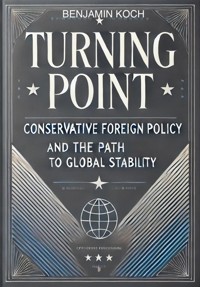
In an era of uncertainty and transformation, the Western world stands at a crossroads. *Turning Point: Conservative Foreign Policy and the Path to Global Stability* offers a bold and comprehensive vision for navigating modern challenges while preserving the timeless values that have shaped society for generations. This groundbreaking book explores critical dimensions of governance, including: - Economic Stability: Harnessing fiscal discipline, trade policies, and resource security for long-term growth. - Cultural Renewal: Strengthening family values, education, and national identity in a rapidly changing world. - Global Leadership: Reinforcing transatlantic alliances and promoting shared values on the international stage. - Security and Resilience: Safeguarding sovereignty through pragmatic policies and strategic investments. Drawing from history, innovative strategies, and a commitment to integrity, this book provides a roadmap for policymakers, leaders, and engaged citizens to foster stability, prosperity, and unity. Whether addressing geopolitical tensions, economic volatility, or cultural fragmentation, *Turning Point* inspires a renewed commitment to progress with purpose, tradition, and modernity. This book is a call to action - a guide for preserving the foundations of society while embracing the opportunities of the future. Discover how the principles of conservative governance can shape a brighter, more resilient future for generations to come.
Sie lesen das E-Book in den Legimi-Apps auf:
Seitenzahl: 88
Veröffentlichungsjahr: 2024
Das E-Book (TTS) können Sie hören im Abo „Legimi Premium” in Legimi-Apps auf:
Ähnliche
















Turning Point: Conservative Foreign Policy and the Path to Global Stability
A Comprehensive Vision for the Future of the Western World
By Dr. Benjamin Koch
Copyright © 2024 – Benjamin Koch
All rights reserved.
Table of Contents
Preface
Acknowledgments
Introduction: A New Era of Governance
Part I: The Economic Foundations of Conservative Policy
1. Trade Dynamics in a Conservative Framework
2. Resource Security and Stability
3. Fiscal and Monetary Alignment Between the U.S. and Europe
Part II: Diplomacy in a Time of Crisis
4. Conflict Resolution: Ukraine, Russia, and the Art of Negotiation
5. Middle East Diplomacy: Balancing Stability and Interests
6. The Strategic Role of Bilateral Agreements
Part III: Security as a Pillar of Stability
7. Border Control and National Sovereignty
8. Fighting Crime and Drug Trafficking in a Globalized World
9. Balancing Security with Economic Mobility Part IV: Transatlantic Collaboration in an Age of Realignment
10. The Conservative Shift in European Politics
11. Germany and France: Pivotal Partners in Global Stability
12. The Challenges of Divergent Policies Within the EU
Part V: Vision for the Future
13. Integrating Economic, Security, and Diplomatic Strategies
14. Challenges of Adaptability in an Uncertain World
15. Pathways to Resilient Global Governance
Part VI: Charting a Path Forward
16. The Socio-Cultural Foundations of Stability
17. Strengthening Economic and Social Foundations
18. Preserving Western Heritage in a Globalized World
19. Building Resilience for the Long Term
Part VII: The Path to Enduring Prosperity
20. Redefining Success in a Conservative Vision
21. The Cultural Renaissance
22. A Future Built on Families
23. Education for a Stronger Tomorrow
24. A Sustainable Legacy
Part VIII: The Blueprint for Enduring Prosperity
25. Modern Challenges, Timeless Solutions
26. Technology and Tradition
27. Leadership in the Global Arena
28. Strengthening Communities and Families
29. A Roadmap to a Resilient Future
Part IX: The Western Renaissance
30. The Case for a Conservative Renaissance
31. Bridging the Old and the New
32. Education and the New Civic Order
33. Strengthening the Transatlantic Alliance
34. The Next Chapter for the Western World
Part X: The Meaningful Conclusion – Strengthening the Path of Linearity and Purpose
35. Consolidating Vision and Values
36. The Legacy of the Western World
Appendix
A. Key Policy Frameworks
B. Case Studies
C. Data Visualizations and Tables
D. Policy Recommendations for Future Alignment
E. Sources and References
F. Glossary of Terms
Bibliography
Preface
In an era defined by rapid change and increasing complexity, societies across the globe face a crossroads. Economic volatility, cultural fragmentation, and geopolitical tensions challenge the stability and prosperity of nations. Yet, within these challenges lies an opportunity - a chance to reaffirm the enduring values that have historically guided the Western world toward progress, resilience, and unity.
This book, Turning Point: Conservative Foreign Policy and the Path to Global Stability, is a call to reimagine governance through the lens of tradition and purpose. It advocates for a cohesive approach that balances modern innovation with timeless principles, addressing the pressing issues of our time while ensuring a foundation for future generations.
The ideas presented here are not merely theoretical but are grounded in historical success and pragmatic foresight. They are designed to inspire policymakers, scholars, and citizens alike to engage in meaningful dialogue about the trajectory of our societies. From economic policy to cultural preservation, from international diplomacy to the role of families and communities, this book provides a comprehensive framework for addressing the challenges of today and tomorrow.
Writing this book has been both a privilege and a responsibility. It represents an attempt to unify diverse perspectives into a coherent vision - one that draws from the wisdom of the past to illuminate the path forward. My hope is that readers will find within these pages not only a roadmap for governance but also a reaffirmation of the values that define our shared humanity. This work would not have been possible without the insights and contributions of countless thinkers, leaders, and historical examples that continue to shape our understanding of governance and society. To all who have engaged in the pursuit of knowledge and the betterment of the human condition, I extend my deepest gratitude.
As you read, I invite you to consider how these principles and strategies might apply to your own context, your own communities, and your own aspirations. Together, we can strengthen the foundations of our world and ensure that the principles of stability, purpose, and unity endure for generations to come.
Dr. Benjamin Koch
Acknowledgments
This book is the culmination of countless hours of research, reflection, and collaboration, and it would not have been possible without the support and contributions of many individuals and institutions.
First and foremost, I would like to express my heartfelt gratitude to my family, whose unwavering support and encouragement have been the foundation of this endeavor. To my partner, whose patience and her belief in this vision have sustained me through the challenges of writing, to inspire me to think about the future with hope and determination - thank you for being my constant source of strength.
I am deeply indebted to the mentors and colleagues who have shaped my understanding of the subjects explored in this book. Your guidance, constructive feedback, and intellectual rigor have enriched my work immeasurably. To the educators and scholars who instilled in me a passion for history, governance, and global affairs, I owe a profound debt of gratitude.
This project also benefited greatly from the insights and expertise of policymakers, diplomats, and analysts who shared their perspectives on the complexities of modern governance. Your willingness to engage in dialogue and share your experiences has added depth and nuance to this work.
To my research team and collaborators, your tireless efforts in gathering data, refining arguments, and ensuring the accuracy of the material have been indispensable. I am deeply appreciative of your dedication and expertise. I also extend my thanks to the publishing team, whose professionalism and creativity have brought this vision to life. Your commitment to excellence has made this book possible.
Finally, to the readers - whether policymakers, academics, or engaged citizens - thank you for your curiosity and willingness to explore the ideas presented here. It is my hope that this book serves as a catalyst for meaningful discussion and action in the pursuit of stability, prosperity, and unity.
To everyone who has contributed to this journey in ways both big and small, I offer my sincerest gratitude. This work is a testament to the power of collaboration and shared purpose, and I am honored to share it with you.
Benjamin Koch
Introduction: A New Era of Governance
The world stands at a pivotal moment, shaped by rapid technological advances, shifting geopolitical dynamics, and evolving societal values. Nations find themselves navigating unprecedented challenges: economic volatility, cultural fragmentation, environmental concerns, and the reemergence of great-power competition. In this turbulent landscape, the Western world - long a beacon of progress and stability - must chart a deliberate course forward, rooted in both modern innovation and the timeless values that have historically underpinned its success.
This book, Turning Point: Conservative Foreign Policy and the Path to Global Stability, seeks to offer a comprehensive framework for addressing these challenges. It is a call to action for policymakers, leaders, and citizens to engage with the pressing issues of our time through a lens that harmonizes tradition and purpose with adaptability and foresight.
Why a Conservative Approach?
Conservatism is often misunderstood as resistance to change, yet at its core, it is about preserving what works while adapting to what is necessary. A conservative approach values responsibility, integrity, and continuity - principles that are as relevant today as they were in the past. This perspective seeks to balance progress with prudence, ensuring that change is guided by a clear sense of purpose and respect for the lessons of history. The principles of conservative governance are particularly well-suited to the challenges of the 21st century. Economic policies rooted in fiscal discipline and market-driven growth can address global volatility. Cultural preservation efforts can foster cohesion in increasingly fragmented societies. Diplomatic strategies that emphasize pragmatism and alliance-building can stabilize regions in conflict. Security measures that prioritize sovereignty and resilience can safeguard nations against external threats. Together, these pillars form the foundation for a sustainable and meaningful trajectory.
The Western World’s Responsibility
The United States and Europe, as cornerstones of the Western world, have a unique responsibility to lead. Their shared history, values, and institutions position them as guardians of democracy, freedom, and innovation. However, this leadership role is not guaranteed - it must be earned and sustained through deliberate action and alignment.
A cohesive transatlantic policy framework is essential for addressing shared challenges and maximizing collective strengths. Whether through trade agreements, coordinated defense strategies, or unified cultural initiatives, the alignment of U.S. and European policies can amplify their impact and set a global standard for governance. This book argues that a renewed commitment to this partnership, rooted in a conservative vision, is critical for maintaining the Western world’s influence and stability.
A Path Rooted in Purpose
The ideas explored in this book are guided by the principle of linearity - a structured, goal-oriented approach to governance that rejects chaos and fragmentation. By focusing on intentional, cohesive strategies, we can create policies that address immediate needs while securing long-term prosperity.
This vision extends beyond policy to encompass societal values. It emphasizes the importance of strong families, thriving communities, and an education system that prepares individuals to contribute meaningfully to society. It champions the preservation of cultural heritage while embracing the opportunities of modernity. It seeks to foster resilience in the face of uncertainty, ensuring that nations are prepared for the challenges ahead.
What This Book Offers
Turning Point is organized into ten parts, each exploring a critical dimension of conservative governance:
•Economic Foundations: Strategies for trade, resource security, and
fiscal alignment.
•Diplomatic Efforts: Practical approaches to conflict resolution and
alliance-building.
•Security Measures: Policies that prioritize sovereignty, crime
prevention, and national resilience.
•Transatlantic Collaboration: The importance of U.S.-Europe
alignment in global leadership.
•Socio-Cultural Strength: The role of family, education, and cultural
preservation in societal stability.
•Technological Integration: Balancing innovation with ethical
considerations.
•Sustainability and Resilience: Long-term strategies for economic and
environmental stewardship.
•The Western Renaissance: A renewed commitment to shared values
and global leadership.
Each section builds on the last, creating a comprehensive roadmap for addressing modern challenges while staying true to the values that define the Western world.
A Call to Action




