


0,49 €
Niedrigster Preis in 30 Tagen: 1,99 €
Niedrigster Preis in 30 Tagen: 1,99 €
Mehr erfahren.
- Herausgeber: DigiCat
- Kategorie: Poesie und Drama
- Sprache: Englisch
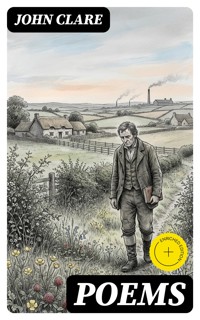
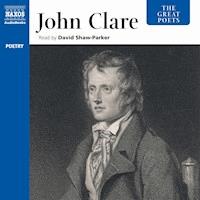
In his collection, "Poems," John Clare masterfully intertwines the rich tapestry of rural life with profound reflection on nature and human existence. Written during the tumultuous early 19th century, his poems evoke the romantic spirit while employing a distinctive, lyrical style characterized by vivid imagery and an authentic voice that resonates with the challenges of his time. Clare's work also captures the socio-economic changes brought about by the Industrial Revolution, often lamenting the loss of the pastoral landscapes and simple, peasant life he cherished, thus situating his poetry within a larger environmental and cultural critique. John Clare (1793-1864), often hailed as the 'peasant poet,' forged his path through a world marked by hardship and isolation. Born into a farming family, Clare's intimate knowledge of the English countryside imbued his poetry with an authenticity that connected deeply with nature. His personal struggles with poverty and mental health shaped his outlook, resulting in verses that reflect both a celebration of the natural world and a poignant awareness of its fragility and decline. "Poems" is an essential read for lovers of nature poetry and those interested in the intersection of art and environmental consciousness. Clare's work not only captivates with its beauty but also invites readers to engage critically with the landscapes we inhabit. This collection stands as a testament to a voice that must be heard, illuminating the profound bond between humanity and the natural world. In this enriched edition, we have carefully created added value for your reading experience: - A comprehensive Introduction outlines these selected works' unifying features, themes, or stylistic evolutions. - A Historical Context section situates the works in their broader era—social currents, cultural trends, and key events that underpin their creation. - A concise Synopsis (Selection) offers an accessible overview of the included texts, helping readers navigate plotlines and main ideas without revealing critical twists. - A unified Analysis examines recurring motifs and stylistic hallmarks across the collection, tying the stories together while spotlighting the different work's strengths. - Reflection questions inspire deeper contemplation of the author's overarching message, inviting readers to draw connections among different texts and relate them to modern contexts. - Lastly, our hand‐picked Memorable Quotes distill pivotal lines and turning points, serving as touchstones for the collection's central themes.
Das E-Book können Sie in Legimi-Apps oder einer beliebigen App lesen, die das folgende Format unterstützen:
Veröffentlichungsjahr: 2022
Ähnliche





Poems
Table of Contents
Introduction
This single-author collection presents a concentrated selection of John Clare’s poems, arranged to reflect the range of his subjects and tones. It is not a complete works; rather, it gathers essential lyrics and descriptive pieces alongside a brief biographical and critical note under Biography and Comment. Readers will find landscape pastorals, seasonal vignettes, love songs, elegies, and reflective addresses, chosen to show Clare’s powers of observation and his musical plainness of speech. The aim is to offer an inviting, self-contained introduction to a body of work that continues to shape how English poetry imagines nature, memory, and the textures of rural life.
The texts represented are primarily poems in varied modes: songs, ballads, addresses, and meditative pieces. Titles such as Song, Ballad, Effusion, and The Universal Epitaph indicate distinct lyric kinds, while addresses like To the Clouds, To John Milton, and To the Rural Muse place Clare in conversation with weather, tradition, and inspiration. Descriptive set-pieces such as Summer Images and The Nightingale’s Nest stand beside occasional poems like The Harvest Morning. The inclusion of Biography and Comment supplies concise orientation, but the emphasis remains on Clare’s verse, whose clarity of image, supple rhymes, and flexible stanzas accommodate both close detail and inward reflection.
Seasonal change is one of the book’s organizing threads. June, December, Winter, Autumn, The Approach of Spring, A Spring Morning, and Summer Evening follow the year’s turning, while Rural Evening and Noon anchor particular hours. In these poems, weather, light, and growth are not backdrop but animate presences that set the pace of thought. The recurring movement from budding to withering and back again steadies the collection’s rhythms and coordinates its themes of renewal and loss. Clare’s habit of attentive naming gives each season specific colors, sounds, and labors, so that time is felt locally, field by field and hedgerow by hedgerow.
Another strand attends to the occupations and scenes of country life. The Harvest Morning and Rustic Fishing depict work and pastime without sentimentality, and The Gipsy’s Camp registers encounter at the edges of settled habit. The Crab-Tree and Summer Images dwell on flora and place, while The Nightingale’s Nest is exemplary for its scrupulous observation and restraint. Clare’s lines often move by steady accumulation, letting hedges, birds, and paths come forward until a landscape coheres. His use of everyday idiom and, at times, local naming gives these pieces a distinctive texture, grounding description in lived knowledge rather than picturesque display.
The collection also gathers Clare’s love lyrics, where intimacy and countryside share a single register. Patty, Patty of the Vale, My Love, Thou Art a Nosegay Sweet, The Meeting, and A World for Love show how his song measures affection by familiar flowers, lanes, and seasons. The recurrent name Patty signals an addressee within the poems; the tone varies from shy ardor to quietly steadfast devotion. These pieces favor brevity, refrain, and clear imagery, aligning them with popular song while remaining unmistakably Clare’s. Feeling is conveyed less by declaration than by the way objects are looked at and cherished.
Elegy and metaphysical candor form a further axis. Graves of Infants and On an Infant’s Grave reckon with grief directly; Thoughts in a Church-Yard and The Universal Epitaph contemplate common fate; Love Lives Beyond the Tomb and Decay test endurance against ending. I Am! Yet What I Am condenses the pressure of solitude into spare, resonant statement. The prevailing style is lucid rather than ornate, its gravity arriving through cadence and carefully placed plain words. These poems enlarge the range of the collection by setting the intimate scale of Clare’s landscapes against questions of identity, mortality, and what endures in memory.
Taken together, these works display Clare’s signature union of exact observation, flexible lyric form, and an ethic of attention to the overlooked. Old Poesy and To John Milton locate him within a lineage while asserting a local authority; To the Rural Muse restates his commitment to finding poetry in ordinary fields and footpaths. The continuing significance of this poetry lies in how it records a lived countryside and invites a patient way of seeing. In an age attentive to ecological particulars and social histories of place, Clare’s Poems persist not as relics, but as guides to looking, naming, and dwelling.
Historical Context
John Clare (1793–1864) wrote from Helpston, a fen-edge village in Northamptonshire whose fields, lanes, and hedges supplied the topography of his imagination. Emerging amid British Romanticism, he admired and diverged from contemporaries such as Wordsworth by grounding exalted feeling in minute local knowledge. His first success, Poems Descriptive of Rural Life and Scenery (1820), drew London readers to a voice they called the “Northamptonshire Peasant Poet.” Yet the poems in this collection show less novelty than continuity: a rural calendar attentive to labor, weather, and wildlife, from “Summer Evening” and “June” to “Rural Evening,” and an explicit vocation declared in “To the Rural Muse.”
Clare’s formative shock was the Parliamentary enclosure of the open fields and commons around Helpston in the early 1810s. Hedges, ditches, and new roads privatized access, erased footpaths, and reordered habitats, producing ecological loss alongside legal dispossession. Poems such as “Decay,” “Summer Images,” “Autumn,” “The Crab-Tree,” “Rustic Fishing,” and the observational tour de force “The Nightingale’s Nest” record species once common and customs suddenly precarious. He names plants and birds with vernacular precision, preserving a commons in language as the physical commons vanished. The tone varies from elegy to defiance, but across the volume enclosure supplies the historical ground-note of memory, protest, and conservation.
The years after Waterloo brought agricultural depression, wage cuts, and hunger to England’s countryside. The Corn Laws of 1815 protected grain prices but burdened the poor; parish relief was uneven; and the Swing disturbances of 1830 signaled desperation. Clare’s winter pieces—“Address to Plenty in Winter” and “December”—frame scarcity as lived experience, while “The Harvest Morning,” “Noon,” and “Rural Evening” show seasonal labor under pressure. Statutes like the Vagrancy Act (1824) policed itinerant lives, a tension glimpsed in “The Gipsy’s Camp.” Game and fishery regulations curtailed customary food sources, a background to “Rustic Fishing.” Thus nature becomes an argument for common rights and humane subsistence.
Clare’s career unfolded in a transforming literary marketplace that prized rural authenticity yet filtered it through urban publishers. John Taylor and James Hessey issued his 1820 volume, arranged subscriptions, and brought him to London, where curiosity about a “peasant poet” mingled with condescension. Local gentry, notably the Marquess of Exeter, supplied patronage, and occasional address-poems to patrons (e.g., “To P”) acknowledged dependence; yet reviewers expected polished grammar and standardized diction. Poems such as “Old Poesy,” “To John Milton,” and “To the Rural Muse” register his negotiation with learned tradition while defending vernacular exactness. Editorial prefaces and later “Biography and Comment” shaped how readers read him.
Clare’s minute noticing belongs to the era’s flourishing natural history, from parish notebooks to Gilbert White’s The Natural History of Selborne (1789). He adapts that empirical gaze to poetry, mapping phenological change—the first notes of the robin, the arrival of swallows, the precise nest of a nightingale—into lyric time. Pieces like “A Spring Morning,” “Summer Evening,” “June,” and “To the Clouds” catalogue weather signs, bird calls, and fieldwork cues with the taxonomic care of a collector. This observational method resisted the fashionable picturesque; instead, it preserved local knowledge threatened by enclosure, improving agriculture, and the scientific standardization of names.
Amid these environmental pressures, Clare’s love lyrics draw on rural courtship customs—fairs, May sports, shared gleaning—and on his own attachments. He married Martha “Patty” Turner in 1820, and poems like “Patty,” “Patty of the Vale,” “My Love, Thou Art a Nosegay Sweet,” “The Meeting,” and several “Song” pieces celebrate affection in cottage, lane, and field. Yet an earlier idealized first love, Mary Joyce, shadows later work, lending elegy to “A World for Love,” “Love,” and “Love Lives Beyond the Tomb.” The resulting doubleness—domestic gratitude alongside yearning—reflects both personal history and a culture balancing evangelical propriety with lingering folk festivities.
Early nineteenth‑century rural life bore a heavy burden of mortality. High infant deaths, periodic fevers, and the cholera epidemic of 1831–32 made churchyards repositories of communal memory. Clare’s elegiac mode is rooted in this reality: “On an Infant’s Grave,” “Graves of Infants,” “Thoughts in a Church‑Yard,” and “The Universal Epitaph” adapt epitaphic conventions, scriptural cadence, and village lore. Anglican rites ordered the seasons of life, yet dissenting and folkloric beliefs persisted alongside. In poems such as “Home Yearnings” and “My Early Home,” memory becomes a moral geography, situating grief within hearth, field, and lane rather than the sublime distances preferred by metropolitan taste.
Clare’s later poems emerge from illness and institutionalization that mirrored broader debates about “moral treatment.” He entered High Beach Asylum in Epping Forest in 1837, escaped in 1841, and was then confined at the Northampton General Lunatic Asylum until 1864. In this context, introspective pieces like “I Am! Yet What I Am” intensify themes of estrangement first stirred by enclosure and modernization, now compounded by the railway age and urban migration. Contemporary regard waned as fashions shifted, but later readers valued his ecological witness and class-inflected perspective, recognizing in “Decay,” “To the Clouds,” and “Old Poesy” a durable record of a changing England.
Synopsis (Selection)
Rural Seasons and Landscapes (NOON; SUMMER EVENING; RURAL EVENING; SUMMER IMAGES; JUNE; AUTUMN; DECEMBER; WINTER; THE APPROACH OF SPRING; A SPRING MORNING)
A cycle of descriptive pastorals tracks light and weather through the year and day, rendering hedgerows, lanes, fields, and skies with taxonomic precision and musical plainness.
The tone moves from basking ease to bracing austerity, articulating a rural ethos where time is bodily felt and nature is both livelihood and lyric subject—a signature Clare motif.
Work, Camps, and Country Scenes (THE HARVEST MORNING; RUSTIC FISHING; THE CRAB-TREE; THE GIPSY’S CAMP)
Vignettes of labor and communal life observe reapers, anglers, a wayside tree, and a travelling camp with unsentimental sympathy and exact, sensory detail.
They balance curiosity and respect for marginal lives with awareness of custom, toil, and changing economies, blending documentary realism with lyric warmth.
Birds and Blooms: Minute Wild Life Studies (THE NIGHTINGALE’S NEST; THE AUTUMN ROBIN; TO AN APRIL DAISY; THE TELL-TALE FLOWERS)
These pieces distill a naturalist’s eye, lingering on bird behavior and wildflowers as if sketched from the field.
A quiet, protective tone treats secrecy and fragility as ethical matters, making restraint and close looking into Clare’s poetics.
Love Lyrics and Courtship Songs (PATTY; PATTY OF THE VALE; MY LOVE, THOU ART A NOSEGAY SWEET; THE MEETING; EFFUSION; BALLAD; SONG; SONG; A WORLD FOR LOVE; LOVE; ’TIS SPRING, MY LOVE, ’TIS SPRING)
Simple stanzas and lilting refrains frame courtship, praise of the beloved, and the quickening of desire alongside seasonal change.
The mood ranges from playful to yearning, favoring fresh images from fields and flowers over high-flown rhetoric and foregrounding songlike cadence.
Mortality, Loss, and Consolation (ON AN INFANT’S GRAVE; GRAVES OF INFANTS; THE UNIVERSAL EPITAPH; THOUGHTS IN A CHURCH-YARD; LOVE LIVES BEYOND THE TOMB)
Clare’s elegiac mode faces death’s universality in plain diction, often set among churchyards and common ground.
Despite grief’s blunt fact, the poems seek humble consolations in memory, communal ritual, and a love imagined as persisting beyond the grave.
Home, Memory, and Change (MY EARLY HOME; HOME YEARNINGS; DECAY; PASTORAL FANCIES)
Reflective pastorals revisit childhood scenes and lost commons, measuring the ache of displacement against the sustaining power of recollection.
Their blend of tenderness and protest registers social transformations in the countryside, a recurring Clare signature of nostalgia sharpened by critique.
Identity and Philosophic Self-Portraiture (BIOGRAPHY AND COMMENT; WHAT IS LIFE?; I AM! YET WHAT I AM; THE VANITIES OF LIFE; OLD POESY)
An austere, inward register interrogates selfhood, purpose, and poetic calling through pared syntax and stark assertions.
Across these pieces the voice moves from reportorial self-account to existential solitude, revealing class awareness, mental struggle, and faith in the making of verse.
Addresses to Poets and Powers (TO THE RURAL MUSE.; TO JOHN MILTON; TO P; TO THE CLOUDS; ADDRESS TO PLENTY IN WINTER)
Apostrophes to patron, predecessor, muse, weather, and abundance situate the speaker within a lineage and in dialogue with impersonal forces that govern art and season.
The rhetoric is ceremonious yet humble, using invocation to link private aspiration to public tradition and the mutable sky.




