


Erhalten Sie Zugang zu diesem und mehr als 300000 Büchern ab EUR 5,99 monatlich.
- Herausgeber: Musaicum Books
- Kategorie: Krimi
- Sprache: Englisch
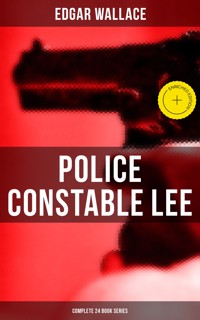
In 'Police Constable Lee: Complete 24 Mysteries' by Edgar Wallace, readers are taken on a thrilling journey through the world of crime solving, with each story featuring the diligent and resourceful police constable, Lee. Wallace's writing style is highly engaging, combining intricate plots with moments of suspense and unexpected twists that keep the reader on the edge of their seat. Set in early 20th century England, the book provides a fascinating glimpse into the police procedures and criminal investigations of the time, shedding light on the challenges faced by law enforcement in solving complex cases. The collection is a testament to Wallace's talent for crafting compelling narratives that capture the essence of classic detective fiction. Edgar Wallace, a prolific writer of mystery and detective fiction, draws on his own experiences as a journalist and war correspondent to bring authenticity and realism to the stories in 'Police Constable Lee'. His deep understanding of human nature and the intricacies of criminal behavior add depth to the characters and plot developments, making each mystery a riveting read. Wallace's dedication to his craft is evident in the meticulous attention to detail and meticulous research that permeates his work. I highly recommend 'Police Constable Lee: Complete 24 Mysteries' to mystery enthusiasts and fans of classic detective fiction. Edgar Wallace's skillful storytelling and vivid descriptions make this collection a must-read for anyone who enjoys a good whodunit with a twist. In this enriched edition, we have carefully created added value for your reading experience: - A comprehensive Introduction outlines these selected works' unifying features, themes, or stylistic evolutions. - A Historical Context section situates the works in their broader era—social currents, cultural trends, and key events that underpin their creation. - A concise Synopsis (Selection) offers an accessible overview of the included texts, helping readers navigate plotlines and main ideas without revealing critical twists. - A unified Analysis examines recurring motifs and stylistic hallmarks across the collection, tying the stories together while spotlighting the different work's strengths. - Reflection questions inspire deeper contemplation of the author's overarching message, inviting readers to draw connections among different texts and relate them to modern contexts. - Lastly, our hand‐picked Memorable Quotes distill pivotal lines and turning points, serving as touchstones for the collection's central themes.
Sie lesen das E-Book in den Legimi-Apps auf:
Seitenzahl: 365
Veröffentlichungsjahr: 2017
Das E-Book (TTS) können Sie hören im Abo „Legimi Premium” in Legimi-Apps auf:
Ähnliche












Police Constable Lee: Complete 24 Book Collection
Published by
Books
Table of Contents
Introduction
This volume presents Police Constable Lee: Complete 24 Book Collection, bringing together the full cycle of short fiction Edgar Wallace devoted to his streetwise London policeman. The pieces gathered here are not novels but self-contained tales and case-sketches, unified by the recurring perspective of P.-C. Lee and the milieu of the metropolis he patrols. Read consecutively, they form a mosaic of law, luck, and local knowledge on the pavement edge of crime. Read individually, each offers a compact premise, a problem to be puzzled out, and a human situation observed with economy and poise—hallmarks of Wallace’s enduring popular craft.
Within these pages the genres represented are predominantly crime and mystery short stories, with several pieces taking the form of anecdotal sketches and character studies that shade into humor and social observation. The tales are concise, plot-driven narratives that nevertheless make room for the rhythms of the beat, the gossip of shopfronts, and the quiet calculations of a constable who must balance instinct and instruction. There are no plays, poems, letters, or diaries here; rather, the collection assembles discrete prose narratives intended to be read in a single sitting, each relying on situation, motive, and voice rather than elaborate apparatus.
Wallace’s stylistic signature in the P.-C. Lee stories is speed without haste: a brisk march of incidents tempered by a conversational ease that suggests testimony given across a station desk. Scenes turn on observation rather than bravura deduction, and on the incremental work of notice, inquiry, and timing. The humor is dry, often arising from mismatched expectations between constable, culprit, and crowd. Yet compassion tempers the satire; motives are weighed alongside infractions, and the letter of the law meets the lives of those who bend it. Throughout, Wallace prefers practical ingenuity to melodrama, and the steady accumulation of facts to flourish.
Range rather than repetition gives the series its pulse. Mr. Simmons’ Profession opens upon the puzzle of a respectable front that may conceal an irregular livelihood; The Sentimental Burglar invites sympathy to complicate culpability; The General Practitioner weighs a professional’s reputation against rumor. Elsewhere, confidence tricks and courtroom strategy come to the fore in pieces such as Confidence and The Story of a Great Cross-Examination, while street-corner craft animates Mouldy the Scrivener and Sergeant Run-A-Mile. From domestic lodgings to racecourse bustle in The Derby Favourite, the geography of crime is local, legible, and always tethered to Lee’s practical sense of consequence.
In several tales Wallace glances beyond the beat to the wider machinery that surrounds it. A Case for Angel, Esquire gestures toward the world of specialist problem-solvers beyond the uniform, while Fireless Telegraphy and Tanks register the impact of changing methods and machines on how information travels and how opportunities are seized. Yet the focus remains personal and immediate: the constable’s judgment at a doorway, the witness who hesitates, the crowd that gathers. Names like The Snatchers, The Gold Mine, and The Convict’s Daughter suggest appetite, windfall, and inheritance—motives that, once translated to the kerb, become matters for steady hands.
Within Edgar Wallace’s large and varied output, the P.-C. Lee cycle occupies a distinctive place. It privileges the view upward from the rank-and-file rather than downward from the omniscient sleuth or mastermind, and thereby catches everyday textures of policing that his larger thrillers speed past. The stories also preserve a portrait of urban Britain in the early twentieth century, with its hierarchies, prejudices, solidarities, and economies of chance. Readers may encounter attitudes reflective of their time; recognizing that context enhances appreciation without excusing harm. What endures most is the craftsmanship: clear stakes, nimble construction, and the quiet authority of earned experience.
This complete assemblage of twenty-four tales preserves the internal variety and cumulative logic of the P.-C. Lee series, from curiosities like How He Lost His Moustache and Pear-Drops to tense moral studies such as Contempt and The Silence of P.-C. Hirley. Read straight through, the sequence traces shifts in tone and emphasis; sampled at will, each entry remains intelligible and satisfying on its own terms. The Power of the Eye, Mrs. Flindin's Lodger, and The Last Adventure exemplify Wallace’s ability to compress character, place, and predicament into a few swift pages. The result is a compact, durable showcase of his urban imagination.
Historical Context
Edgar Wallace (1875–1932) developed Police Constable Lee during the Edwardian and immediate postwar decades, when London policing and urban life were rapidly changing. The stories, published in magazines and later gathered as a cycle, draw on the city’s dense network of streets, courts, and lodging houses, from the Old Bailey to outlying districts served by tram and omnibus. Wallace’s background in crime reporting and his ear for working-class speech lend the collection a documentary air. Against the long legacy of the Metropolitan Police, founded in 1829, P.C. Lee moves through a metropolis negotiating modernity, petty vice, and the human dramas of everyday lawbreaking.
Turn-of-the-century journalism shaped the series’ tone and pacing. Wallace wrote for newspapers such as the Daily Mail after returning from the Boer War as a correspondent, and he learned how headlines, courtroom sketches, and serialized narratives kept readers enthralled. London’s popular magazines—Pearson’s, The Strand, and others—cultivated appetite for brisk, twisty crime tales with recognizable settings and institutions. Regular reporting from the Old Bailey and police courts made barristers, magistrates, and constables into minor celebrities. In this environment, P.C. Lee became a plausible guide to the capital’s rhythms, his observations compressed into anecdote-sized cases that mirrored the press’s quick-turn depictions of crime and punishment.
Institutional modernization within the Metropolitan Police supplies crucial context. Under Commissioner Sir Edward Henry (1903–1918), Scotland Yard expanded the fingerprint bureau opened in 1901 and regularized identification practices alongside lingering Bertillon methods. Telephones, electric lighting, and the spread of motorcars altered patrol patterns and response times, culminating in specialized units like the Flying Squad in 1919. Wallace’s stories frequently juxtapose such innovations with the beat constable’s craft—patient notice of faces, habits, and street corners. Titles that nod to communication and surveillance, like Fireless Telegraphy or The Power of the Eye, engage a contemporary debate about whether science or experience best secures order.
Edwardian social reform reshaped what counted as crime and how offenders were treated. The Street Betting Act 1906 targeted ubiquitous curbside wagering that threads through racing tales such as The Derby Favourite, while the Probation of Offenders Act 1907 and the Children Act 1908 encouraged leniency, supervision, and child protection over automatic imprisonment. Common lodging houses, charitable societies, and magistrates’ courts formed a porous welfare–justice frontier that Wallace knew well. Stories such as The Sentimental Burglar or The Convict’s Daughter echo a reformist sensibility: motives, poverty, and chance matter. P.C. Lee’s discretion often proves as important as the statute book, reflecting contemporary debates on humane policing.
Public order politics also filtered into crime fiction. Immigration anxieties after the Aliens Act 1905 and the 1911 Siege of Sidney Street in London’s East End—where Home Secretary Winston Churchill famously appeared—intensified scrutiny of foreign radicals and armed gangs. Simultaneously, suffragette militancy between 1908 and 1914 prompted novel crowd-control tactics and controversial arrests, notably after “Black Friday” in 1910 and under the Prisoners (Temporary Discharge for Ill Health) Act 1913. Wallace’s constables navigate these pressures not through polemic but by emphasizing proportionality and local knowledge. The collection’s vignettes quietly weigh the difference between keeping the peace and criminalizing the community that supplies witnesses and informants.
War accelerated both technology and uncertainty. With the Defence of the Realm Act (1914) restricting movement and speech, and with Zeppelin raids and blackouts unsettling Londoners, policing acquired new wartime dimensions. Tanks, introduced on the Western Front in 1916, symbolized industrialized secrecy and state power—a mood reflected in stories attentive to invention, rumor, and the misdirection of spies or profiteers. Demobilization in 1919 brought unemployment, strikes, and a perceived surge in robbery, as well as a Metropolitan Police strike that exposed grievances inside the force. Wallace’s narratives, alert to morale and public trust, register how the beat looked different when the nation returned from war.
Empire and finance thread through several plots. Wallace’s years in South Africa during and after the Second Boer War (1899–1902) gave him insight into mining booms, speculative syndicates, and colonial supply chains. London’s markets digested tales of Rand gold and company flotations, even as the 1907 financial panic and postwar slumps tested investors and clerks. Stories like The Gold Mine and Mr. Simmons’ Profession treat fraud, betting coups, and confidence games as twin faces of the same speculative culture. P.C. Lee’s vantage point—street-level yet citywide—shows how scams move from public house to bank office, and from horse track to newspaper tip column.
The courtroom remained the theatre where these currents converged. Celebrity advocates such as Sir Edward Marshall Hall, famed for dramatic defenses between the 1890s and 1920s, shaped public expectations of cross-examination and judicial spectacle, echoed in pieces like The Story of a Great Cross-Examination. Wallace’s experience covering trials sharpened his dialogue and grasp of procedure, helping readers trust the plausibility of Angel, Esquire crossovers and constabulary lore. By the time of his death in 1932, the P.C. Lee tales had helped normalize the sympathetic, commonsense British beat officer in popular fiction, bridging Victorian moralism and the interwar appetite for brisk, procedural realism.
Synopsis (Selection)
Police Constable Lee: Series Overview
These interlinked tales follow a beat constable through London’s alleys, lodging houses, and courts, blending dry humor with close, ground-level observation.
Recurring motifs include small-time grifts, class performance, quick-witted improvisation, and a humane eye for motives, with tones shifting from comic vignette to sober procedural as cases demand.
Street Rogues and Confidence Tricks (Mr. Simmons’ Profession; The Sentimental Burglar; Change; Confidence; The Snatchers; The Gold Mine)
Lee crosses wits with pickpockets, soft-hearted thieves, and get-rich-quick schemers whose modest scams expose larger truths about want and aspiration.
These stories prize character and motive over spectacle, using nimble dialogue and ironic turns to show how vanity and hope fuel petty crime.
Legal and Courtroom Anecdotes (Contempt; Mouldy the Scrivener; The Story of a Great Cross-Examination)
Set around chambers and court, these pieces turn legal ritual into character study, spotlighting clerks, barristers, and witnesses under pressure.
Procedure becomes drama as plainspoken police work meets the theater of advocacy, probing credibility, decorum, and the gap between truth and proof.
Policing and Police Characters (Sergeant Run-A-Mile; The Silence of P.-C. Hirley)
Focused on colleagues and craft, these sketches present endurance, discretion, and solidarity as the quiet virtues behind unglamorous but decisive results.
Humor arises from station lore and nicknames, while the stakes rest on judgment calls that separate officiousness from earned authority.
Identity, Reputation, and Social Standing (A Man of Note; How He Lost His Moustache; The Power of the Eye)
These tales play with appearances—status symbols, imposing stares, and public repute—and how surfaces can sway suspects, crowds, and even constables.
Light comic beats frame a sharper look at intimidation, respectability, and the ease with which a persona can mislead.
Neighborhood and Domestic Mysteries (Pear-Drops; Mrs. Flindin's Lodger; The General Practitioner; The Convict's Daughter)
Clues here are habits, smells, rent books, and family loyalties, as disputes born in kitchens, surgeries, and back rooms reach the street.
The tone balances curiosity with compassion, tracing how illness, poverty, and pride complicate the simple stories a complaint first suggests.
Technology, Signals, and Ingenuity (Fireless Telegraphy; Tanks)
Improvised signaling and unexpected uses of everyday apparatus drive these problem-solving puzzles at the edge of the beat.
Method and practicality matter more than force, giving the cases a light procedural snap as tools become clues.
Crossovers and Professional Networks (A Case for Angel, Esquire)
A case brushes against the orbit of a celebrated problem-solver, testing cooperation across institutional lines without losing streetwise instincts.
The interest lies in contrast—clubroom polish versus curbside pragmatism—and in how differing methods converge on tidy results.
Gambling, Horse Racing, and Chance (The Derby Favourite)
Racing chatter, touts, and sudden tips create a setting where rumor moves money faster than facts.
Luck’s allure meets the constable’s steady skepticism, yielding a study in crowd psychology and risk.
Underworld Debts and Time Served (For Jewey's Laggin')
A past sentence shadows present choices as old favors and grudges tug at a figure on Lee’s patch.
The piece weighs loyalty and necessity in a milieu where survival often outruns tidy redemption.
Farewells and Thresholds (The Last Adventure)
A reflective close looks back on risks taken and streets walked, treating departure as another round to be paced with calm.
The note is quietly valedictory, valuing craft, decency, and luck over melodrama.
Police Constable Lee: Complete 24 Book Collection
Mr. Simmons’ Profession
The magistrate looked over his glasses at the prisoner in the dock, and the prisoner nodded in the friendliest way.
The clerk at his little desk before the magistrate jerked his head round in the direction of the dock.
“Were you drunk last night?” he asked pointedly. “I were in a manner of speakin’ excited,” said the prisoner carefully.
“You are charged with being drunk. Are you guilty or not guilty?”
“Not guilty,” said the accused loudly.
The clerk nodded, and a constable made his way to the box.
A stolid-looking constable, who moved with surprising agility, and glanced at the resentful prisoner with a twinkling eye.
“P.C. Lee 333 ‘D’,” he began, “I was on duty last night—”
“Hold hard,” said the aggressive prisoner, “let’s have all this took down in black an’ white.”
He fished out from the depths of his mud-stained overcoat a tattered memorandum book and the stump of pencil.
“Now then,” he said sternly, “what did you say your name was, me man?”
“P.C. Lee, of ‘D’,” repeated the goodnatured constable.
“Oh!”
Very deliberately the accused closed his book and replaced it. He looked benevolently round, then:
“Guilty,” he said.
“Seven and six or five days,” said the magistrate. “The fact of it is, sir,” said the accused man later — he was sitting in the waiting room whilst his wife was collecting the necessary three half-crowns— “I didn’t catch your name.”
“I dessay,” said P.C. Lee with a smile.
“I respect you, Mr. Lee,” said the prisoner oratorically, “as if you was me own brother — hopin’ there’s no offence.”
“None whatever,” said P.C. Lee, “an’ talkin’ about brothers, where’s your brother Elf?”
“Elf?” said the other wonderingly, “Elf? Why, he’s in Orstralian.”
“I don’t knew a public house of that name,” said P.C. Lee reflectively. “but I dessay I shall find him.”
P.C. Lee lives quite close to me. We have met professionally when he was severely reticent and remarkably polite and respectful: we have met privately, when he was more communicative.
Inspector Fowler, to whom I mentioned the fact of our acquaintance, had nothing but praise for Lee.
“He’s a remarkable chap,” he said enthusiastically. “He’s practically the last court of appeal in the Notting Dale district. They take him all their little disputes to settle and he holds an informal court at his lodgings.”
For P.C. Lee lives in the heart of Notting Dale, in a tiny house near Arbuckle Street. and sometimes, when he’s off duty, and when there is a slack time in his arbitration court, he comes to me to smoke a pipe and talk shop.
“Crime,” reflected P.C. Lee, “ain’t always murder, nor highway robbery, nor forgin’ cheques for £10,000. That’s the crimes authors — present company excepted — write about. It’s generally a tale about how a detective with whiskers fails to discover the lost diamonds, an’ a clean. shaven feller, who plays the fiddle, works it out on paper that the true robber was the Archbishop of Canterbury, But crime, as we know it in the ‘D’ Division, is mostly made up of ‘bein’ a suspected person[1q]’ or ‘loiterin’ with intent’ or ‘being found on unoccupied premises for the purpose of committin’ a felony’; or, as you have seen yourself,, ‘drunk an’ usin’ abusive language’.
“I’ve done all kinds of duty, plain clothes an’ otherwise, an’ although I’ve had my share of big cases, an’ have been to the Old Bailey scores an’ scores of times, the gen’ral run of life has been takin’ violent an’ insultin’ ‘drunks’ to the station, an’ pullin’ people in for petty larceny.
“One of the most extraordinary chaps I’ve had to deal with was a man by the name of Simmons. He moves into 64, Highfield Street, an’ I got a tip from headquarters to look after him. A quiet little man, who smoked a briar pipe, an’ went about his work sayin’ nothing to anybody.
“He was a bachelor so far as I could find out, an’ there was an old woman, who was his aunt, who kept house for him.
“The rum thing was that he didn’t associate with any of the ‘heads’.
“There was a nice lot of lads in my district. Nick Moss who did seven years for armed burglary; Teddy Gail, who did five for runnin’ a snide factory*; Arthur Westing, the tale-pitcher — Lord! I could fill a book with their names.
>[* A counterfeit coin manufactory.]
“Somehow, they knew he was in a queer line of business, an’ naturally they tried to be friendly with him — but he had nothin’ to do with them, an’ that made ’em wild. They tried to find out what his lay was, but he was as close as an oyster. They came to me, some of ‘em, an’ worked the conversation round innocently to Simmons.
“Nick Moss was the most curious.
“‘That’s a queer chap in 64, Mr. Lee,’ he says. ‘Can’t make him out.’
“‘Can’t you?’ says I.
“‘No,’ says Nick, shakin’ his head. ‘Do you think he’s quite straight, Mr. Lee?’
“‘I hope so,’ says I. ‘It’d be a dreadful thing if a dishonest feller came into this pure an’ innercent neighbourhood corruptin’ the morals of its upright citizens.’
“‘It would,’ says Nick.
“To tell you the truth, I had no more idea of what Simmons’ game was than they had. My instructions were worded rather curiously. ‘Watch Simmons, but don’t interfere with him.’
“I thought once that he must be a nark*, but the station Inspector told me he wasn’t on the books, an’ none of our C.I.D. men knew him. All I knew about him was that from time to time he used to go away for two or three days at a time carryin’ his little brown bag an’ smokin’ his pipe. My mate, who’s an energetic young chap, stopped him one night when he was coming home an’ asked to see inside of his bag.
[* Police spy.]
“But there was nothin’ except a paper of sandwiches an’ a couple of short luggage straps. The sandwiches was wrapped up in a paper that bore the name of a Chelmsford confectioners, an’ we watched for the Chelmsford report to see if there had been a burglary — but nothin’ appeared. I ‘don’t know whether Simmons reported the matter; so far as we knew at the station he didn’t, but a few days afterwards my mate was transferred to ‘R’ Division, and got a nasty letter from the Yard tellin’ him not to exceed his duty.
“One night, soon after this, I was standin’ on duty at the corner of Ladbroke Grove, when a woman came to me sobbin’.
“I recognised her at once. She was the wife of Crawley Hopper, a chap well known to the police as a ladder larcernist.*
[* A “ladder larceny” is a definite form of housebreaking. Whilst a family is at dinner a ladder is placed against a bedroom window, the thief enters and clears the bedroom of portable valuables.]
“‘Mr. Lee,’ she sobs, ‘look at my eye…!’
“‘I wouldn’t mind the beatin’,’ she says, ‘but he’s took up with another girl.’
“‘Go home to your mother, Mrs. Hopper,’ I says, ‘He’s in drink an’ he’ll be sorry in the morning.’
“‘He’ll he sorry tonight,’ she says savagely, ‘because he was the man that did the Highbury job last Wednesday.’
“‘Oh!’ I says — we’d been on the lookout for the man who did the Highbury job—’in that case I’ll ask you for a few particulars.’
“The end of it was, I found Crawley in a little pub standin’ drinks all round. He had his arm round the neck of his new girl an’ I beckoned him outside.
“‘I want you, Hopper,’ I says.
“‘What for?’ says Hopper, as white as a sheet.
“‘The Highbury job. Come along quietly to the station.’
“‘It’s a fair cop,’ says Hopper, an’ went like a lamb.
“‘Who gave me away?’ he says.
“‘Information received,’ I answered.
“He nodded his head.
“‘I think I know the lady’s name,’ he says, ‘an’ when I come out she’ll know mine,’ he says.
Crawley had lots of pals, an’ as soon as they found e’d been pinched, they had a whip round to get the money together for a mouthpiece (as they call a lawyer), an’ naturally they went to Simmons.
“From all accounts, Nick Moss an’ a feller named Peter called on him one night.
“‘We are making a collection, Mr. Simmons,’ says Nick, ‘for a friend of ours that got into a bit of trouble.’
“‘What kind of trouble?’ says the little man.
“He stood in the doorway in his shirtsleeves smokin’ his pipe most furious.
“‘To tell you the truth,’ says Nick frankly, ‘he’s been pinched.’
“‘By the police?’ says Simmons.
“‘By the police,’ says Nick.
“Simmons shook his head.
“‘It’s no good comin’ to me,’ he says. ‘I don’t pay a single penny to help criminals,’ he says, cool as a cucumber.
“‘What?’ says Nick wrathfully, ‘you undersized little crook! For two pins I’d scruff you!”
“An’ with that he reached out a handy left — but somehow it never reached Simmons, an’ before he knew what was what a pair of hands like steel clamps caught his arm, an’ he found himself chucked into the street, an’ the door banged.
Nick an’ the feller Peter waited for ten minutes bangin’ at the door an’ askin’ Simmons to be a man an’ come out an’ be smashed, but Simmons took no notice, an’ just then I strolled up and cleared away the little crowd that had collected.
“Nick was so wild that he wouldn’t go at first, but I persuaded him, first by kind words, an’ then by a smack on the head. After that I got the tip that the boys were waitin’ for Mr. Simmons to do him in, an’ when I saw him I gave him a friendly warnin’. He smiled as though the idea of his being done in was an amusin’ one, but knew our lads too well to see any joke in it.
“Sure enough they laid for him, six of the brightest boys in Nottin’ Dale.
“The first I knew about it was from hearin’ shouts of ‘Murder!’ an’’Police!’ an’ I ran as fast as I could, blowin’ my whistle.
“I found Simmons with his back to the wall, his head bleedin’ but grinnin’ cheerfully. He had a life preserver his han’ an’ two of the lads was sleepin’ peacefully on the pavement.
“‘Hullo,’ says Simmons, ‘just in time.’
“‘Was that you shoutin’?’ I says.
“‘Not me,’ says he, with a chuckle. ‘I rather think it was a gent named Moss — you’ll know him by the bump on his forehead.’
“They left Simmons alone after this. They used to scowl at him, an’ he used to grin at them, but they never tried any more tricks. Nick Moss was rather bitter.
“‘A little feller like that didn’t ought to be strong — do he, Mr. Lee?’ he says indignantly. ‘It’s deceptful, that’s what I call it.’
“Failin’ to get satisfaction in one way they tried another. They did their best to put him away. There wasn’t a thief in London, nor a receivin’ shop either, where they not did make inquiries to find out what Simmons’ particular hobby was. But for a long time they worked without any result.
“One day this chap Peter I told you about was standin’ on the arrival platform at Euston, an’ he sees Simmons get out of the Manchester train. Peter was a bag-claimer an’ used to do quite an extensive line of business at big railway stations, pickin’ up other people’s bags beggin’ pardon if they found him at it, an’ he was too busy to think much about Simmons till that night when he was talking things over to Nick at the little pub.
“‘Manchester!’ says Nick, quite upset. ‘Lord love a duck! Why, ain’t you heard the news?’
“‘No,’ says Peter.
“‘The Manchester an’ Salisbury Bank was cleared out last night — eight thousand pounds taken an’ the chap got clear away.’
“Peter whistled.
“‘He’s one of the swell mob, that’s what he is.’ Says Nick excited, ‘an’ if I don’t put him away my name’s not Nick Moss.’ Which as a matter of fact,” commented P.C. Lee thoughtfully, “it wasn’t.
“‘Go out an’ get a late paper,’ says Nick, tremblin’ with excitement; ‘perhaps there’ll be a description of the feller that did it.’
“So Peter went out an’ bought one, an’ together they read it over.
“‘Here it is,’ says Nick, who ain’t much of a reader. “Thomas Cadaver was executed this mornin’ at Manchester for — no, that ain’t it — here we are—’ an’ he read in the late news: ‘“Description of the suspected man: short, strongly built, clean shaven, wearing a black bowler hat—”
‘That’s him for a dollar,’ says Nick, an’ round they came to me with the paper. I was just goin’ on duty at time.
“‘Mr. Lee,’ says Nick, ‘we’ve got a good thing for you.’
“Good,’ I says. ‘Did you buy it or find it?’
“‘It’s the Manchester Bank bloke,’ says Nick, very solemn, an’ handed me the paper. I read it carefully.
“‘I’ll take it down to the station,’ I says.
“There was a lot of news in the paper that night, but the news that mostly interested the boys was that Crawley Hopper had been found not guilty. There was some technical mistake in framin’ the indictment, an’ the evidence was a bit contradictory an’ between the two Crawley got off.
He was discharged at six o’clock, an’ I met him at eight. He come up to me, an’ I could see he’d been celebratin’ the occasion, for he was what I’d call ‘nasty drunk’.
“‘Hullo, P.C. Lee,’ he says, ‘seen my missis?’
“‘Which one’?’ I says.
“‘You know which one, he says with an ugly look, ‘the one that gave me away.’
“‘Don’t talk foolish,’ I says, ‘nobody gave you away,’
“‘All right,’ he says, turnin’ to go, ‘I’ll know all about it very soon.’
“There are instincts that come to a man,” said P.C. Lee gravely, “that oughtn’t to be suppressed. My instinct told me to arrest him — on any charge. To give him a night at the station. But I hesitated. He’d just been released from prison an’ was naturally excited. I didn’t want to kick a man who was down, so I let him go.
“At eleven thirty I was in Pointer Street, when I saw him comin’ towards me. There was somethin’ in his air that I didn’t like, an’ I stopped him.
“‘Where are you goin’, Crawley?’ I says.
“He sort of hesitated before he answered; then he ran. But I caught him in a dozen yards.
“‘Let go!’ he hissed an’ he struck at me.
“It was a stingin’ blow in the face, an’ I felt somethin’ warm an’ sticky. I thought he must have used a knife me, so I took my stick to him an’ that quietened him.
“With the help of another constable I got him to the station.
“My face was covered with blood, but I couldn’t feel the cut, an’ as soon as I got him into the steel pen the Station Inspector ordered one of the men to go for the divisional surgeon.
“Then Crawley spoke.
“‘It’s all right,’ he says in a matter-of-fact tone, ‘he not wounded.’
“‘Where did the blood come from?’ says the Inspector.
‘Off my hands,’ says Crawley, and showed us.
“‘I’ve done in my missis,’ he says simply.
“An’ it was the truth, for we found the poor creature stone dead in her mother’s house. It was one of the most dreadful things that had ever happened in our division for a long time, but it wasn’t what you’d call a paper murder, for there was no mystery about it. It was just a low down, sordid wicked murder, an’ Crawley’s trial lasted two hours, an’ he was sentenced to death. There’s always a lot of mad people who’ll sign a petition to get a brute like Crawley reprieved an’ there was the usual procession of old ladies walkin’ about askin’ people to sign papers to save the life of this ‘poor creature’.
“All the boys did their best in the way of gettin’ mouthpieces but when it came to signin’ petitions they wouldn’t.
“Nick put the situation to me.
“‘I’m a thief, Mr. Lee.’ he says, quite serious; ‘you know all about me. I was born a thief, an’ will die a thief ‘ — but I’ve got no use for a man who does a thing like Crawley did. We did our best to prove him innercent, but now there’s no doubt about his bein’ guilty he’s got to go through it.’
“I hadn’t much bother with ’em on my beat durin’ the weeks followin’ the trial. Everybody was subdued an’ upset, an’ I had time to keep my eye on Simmons. I’d got a fuller account of the wanted man from the Manchester police, an’ I must confess that it filled the bill so far as appearances went. We reported the matter to Scotland Yard, an’ they sent one of their best men down to have a look at him.
“But he poured cold water on the idea — in fact, he was very much amused.
“‘Him!’ he said. ‘Don’t you know who he is?’
“‘No, sir,’ I says, an’ I waited for him to tell me, but he didn’t.
“I missed Simmons for a bit. With the Crawley business finished, an’ almost forgotten, things began to liven up in our quarter, an’ what with one thing an’ another I didn’t trouble about Simmons.
“I saw him one night. He was walkin’ home briskly an’ nodded to me. He passed me when suddenly he stopped an’ walked back.
“‘I’ve got a message for you,’ he says. ‘Crawley told me to tell you that if he’d taken your advice he wouldn’t have been where he was.’
“‘Crawley,’ I says puzzled, ‘Crawley’s dead.’
““I know that,’ he says quietly, ‘but he told me just before he dies.’
“‘How could you see him?’ I says.
“‘Oh, I saw him all right,’ he says, turnin’ away, ‘I’m the hangman!’”
A Man of Note
Once I hinted delicately to P.C. Lee that it was remarkable, considering his popularity not only with his superiors but with the man in the street equally with the man on the bench, that he had never achieved promotion. I did this with some trepidation because I feared that I might have disturbed a hornet’s nest of grievances, and the best fellow in the world is a wearisome bore if he has a grievance. But P.C. Lee was very frank. With no false shame he told me that it was a matter of education with him, and he was content to remain a first class constable.
“The force gen’rally,’ he said, “is filled with men who find no difficulty in passin’ the stiffest educational examination you can set ‘em. There isn’t a better educated police force in the world, as I’ve heard, than the Metropolitan — unless it’s the City.
“But I have not the patience to go in for schoolin’. I tried it once. Went to a private evenin’ class, an’ a chap wanted to teach me decimal fractions, but there didn’t seem much sense in it to me, although I dessay I’m wrong. I can write a report, an’ tell the truth, an’ know enough about the law to know when to arrest a man, an’ that’s about as much as I’m anxious to know. The fact that the River Danube empties itself into the Arctic Ocean doesn’t worry me, because the Arctic Ocean ain’t on my beat.
“I never deny that education is a good thing — in spite of its difficulty. Lots of people think that education has increased the number of criminals, but I say it has reduced ‘em. I once took a young fellow for embezzlement. He was a milkman, an’ his mother cried an’ carried on something dreadful.
‘“It’s what a board school education has done for my poor boy,’ she says, ‘fillin’ his head with stuff an’ nonsense.’
“But my own opinion was that if he’d been better educated he’d have had more sense than try to alter the customer’s account book so as to make it tally with his cash book. It’s ignorance that makes criminals, having no sense to look ahead, no imagination[2q].
“There was a feller once,” reflected P.C. Lee, who gave a lecture at the Police Institute, an’ he said a very true thing: he said ‘True happiness you pay for in advance, false happiness you pay for afterwards’; and if criminals knew this there’d be no criminals. It’s because a chap doesn’t bother to think about tomorrow an’ the policeman who’s waitin’ round the corner to pinch him, that he finds the easiest way to make money is to take money. There are exceptions, of course, an’ a case in point, that shows how education sometimes works the wrong end first, was the case of Albert Walker.
“When I first knew Albert he was a little barefooted boy runnin’ wild in Lambeth. I was in the ‘L’ Division at the time. His parents were a bad lot: his father was in and out of prison most of the time, an’ his mother — well, got a livin’; it wasn’t much in the food line at home, but knowin’ how the poor help the poor, I should say that the neighbours kept him from starvin’. Then the School Board got hold of him, an’ from what I’ve heard he was a rare boy for learnin’, an’ sucked up education like a sponge till he was the best writer in the school an’ the best at arithmetic an’ geography.
“He was a prime favourite with the schoolmaster, who got him some old cast-off clothes to wear in place of his rags, an’ helped him in many ways. The school was on my beat, an’ I’ve often spoke to the boy, just a word of encouragement now an’ then. I never used to mention his father to him, because I didn’t want the kid to think I had any other reason for takin’ an interest in him. He wasn’t a bit shy, an’ would tell me how he’d taken prizes for reg’lar attendance an’ for geometry.
“The only time he ever spoke about his people was just after his father had gone down for nine months for stealin’ pewter pots.
“The boy was then well up in the school; he was a sort of pupil teacher now, an’ had just won a scholarship, an’ I was sayin’ how pleased I was. I specially bought him a little book called ‘A Man of Note’ which was all about a boy who rose to a wonderful position through study.
“‘Yes,’ he says, after thankin’ me, ‘I’m glad I’ve got on so well at school, too. I don’t want to be like father.’
“‘Quite right,’ I says.
“‘Father is a strikin’ example of unintelligent application,’ he says — he was a rare one for usin’ long words an’ could spell ‘Constantinople’ before he was nine—’he is the unskilled labourer, for whom no real need exists. Here’s father doing nine months for stealing pewter. Another man, scarcely any more intelligent, will one day get two years for converting these pewter pots into spurious coin of the realm, yet another man will probably go to prison for passing the counterfeit coin — it is inevitable.’
“He sighed regretfully.
‘With silver at its present price,’ he went on, ‘there is no need at all why the coins should not be made of silver an’ a handsome profit made. The chances of detection would be reduced to a minimum.’
‘That’s against the law, Albert,’ I says, sternly; ‘It don’t matter whether the coin is made of silver or made of pewter, it’s coinin’.’
“He waved his hand with a lordly air, which looked curious in a boy of his age.
“‘I am not discussin’ the ethical side of the question, he says.
“That conversation made me think a bit. What with his long words an’ his ready tongue, I hadn’t an answer ready for him, an’ I had my misgivings.
“The next thing I heard about him was that he’d gone to a trainin’ college, an’ that he’d passed through that with every kind of honour.
“All this time his father was in an’ out. Three month’ for larceny, six months for robbery from the person, twelve months for felony.
“Then his mother died. ‘Chronic alcoholism’ was the verdict of the coroner’s jury. Albert didn’t go to the funeral, but sent a beautiful wreath with a Latin inscription which, properly translated, meant ‘She was all right accordin’ to her lights, but her lights were pretty bad.’
“One of the masters at the school translated it to me, an’ shook his head.
“I saw Albert again soon after an’ he gave me his views on the subject.
“‘Bein’ my mother was only an accident,’ he said, very serious, ‘she couldn’t help it any more than me. Gen’rally speakin’, I’m glad she’s dead.’
“‘That’s not the way for a boy to speak about his mother, however bad she was,’ I says reprovingly.
“‘I’m speakin’ less as a son than as a philosopher,’ he says very thoughtful, then he added, ‘Father looks very healthy, don’t you think, Mr. Lee?’
“‘Yes,’ I says, for he’d just come out of the ‘College’.
“Albert shook his head.
“‘The short sentence system is wasted on father,’ he says sadly, ‘he’ll last for ages.’
“I never saw Albert again for eight — nine — why, it must have been ten years.
“One day I was on duty in the Kensington Park Road — one summer day it was — when a cab drove up to one of the swaggerest houses an’ out stepped — Albert! He was well-dressed, not showily dressed like one of the ‘nuts’ would have been, but quietly in dark grey, an’ he recognised me instantly.
“‘Hullo, constable!’ he said with a smile, ‘I think we’ve met before?’
“‘Not Albert!’ I says, astonished.
“‘He nodded. ‘You can go on calling me Albert,’ he says easy and affable. ‘I don’t want ‘sir’ from you.’
He told me he lived in the big house, was goin’ to be married, and was makin’ money.
“His father was dead, an’ he’d forgotten about the old Lambeth life.
‘‘It seems a nightmare,’ he says.
“He told me how he’d left school-teaching an’ had gone in for business at printin’ in High Street, Kensington. Started in a small way, an’ worked up until he was employin’ over a hundred workmen.
“He was very enthusiastic about printin’ — it was as much a hobby as anything else with him. I could see his heart was in his work, an’ in my mind I marked him down as bein’ a brand from the burnin’.
“He must have guessed my thoughts.
“‘Honesty’s the best policy, eh, Lee?’ he says, smilin’, ‘especially in the case of the modern thief who endeavours to combat scientific safeguards with a half-digested education from which the very elements of science are absent.’
“I used to meet him occasionally, an’ I got into the habit of touchin’ my hat to him. At Christmas time he sent me a fiver with a little note askin’ me to accept it in the spirit in which it was sent.
“He was very good to the poor, too; gave ’em dinner an’ coal an’ started a soup kitchen down Latimer Road way — in fact people got to look on him as a rich man, an’ Nick Moss an’ a pal of his named ‘Copper’ went down to Kensington Road an’ had a look at the house. Nick told me afterwards there was twenty ways of gettin’ into it.
There was a kitchen window without bars, an’ a conservatory, an’ a billiard room — in fact, it was the easiest crib he’d ever seen.
“So, accordingly, Nick an’ his pal took their swag — nice little centre-bits an’ glass cuttin’ machines, an’ drills — an’ as we say in court ‘effected an entrance’. I happened to be strolling up Kensington Park Road at about 2 a.m. smokin’ a pipe, contrary to all regulations, when passin’ Albert’s house I tried the front gate. It was fastened all right, but as I stepped up to it I trod on something soft. I stooped down an’ picked it up. It was a thin cotton glove — a new one what had never been worn.
“Now I know that all up-to-date burglars carry cotton gloves because of the fear of leavin’ finger prints, an’ a policeman’s mind being naturally a suspicious one, I nipped over the low gate an’ walked quietly up to the house. I’d got my rubber heels on an’ made no noise. I put the light of the lantern over the front door. It was not marked, so I walked round to the servants’ entrance. There was no sign of chisel marks, then I put up my hand to the little window that opens from the pantry. ‘Opens is a good word, for wide open it was.
“Very quietly I got back into the street again. I knew I should find P.C. Sampson at the corner of Kensington Park Square. He came to the ‘point’ to time an’ I called him quietly, an’ together we walked back to the house.
“To cut a long story short we took Nick Moss as he came out of the servants’ entrance, an’ a few minutes afterwards we took his pal. I put the irons on Nick, because he was a dangerous character. Then I left Sampson to guard the two whilst I knocked up Mr. Walker. At the second knock up went a window an’ out came his head.
“Hullo,’ says he, quietly. ‘what do you want?’
“‘Will you come down here for a moment?’ says I.
“‘What do you want?’ he asked again, so in as few words as possible I told him that his house had been broken into, an’ that we had caught the man. He came down, an’ opened the door cautiously. To my surprise he had a revolver in his hand — not an ordinary revolver, but one of these automatic pistols that you sometimes find in the possession of foreign anarchists.
“‘Come in,’ says he, so me an’ Sampson an’ the two prisoners went in, an’ he switched on the light of the dinin’ room.
“It seemed to me that when they met face to face — the man who had been robbed an’ the burglars — there a curious, eager look on Mr. Walker’s face, an’ a sort triumphant smile on the other’s.




