


Erhalten Sie Zugang zu diesem und mehr als 300000 Büchern ab EUR 5,99 monatlich.
- Herausgeber: Corvus
- Kategorie: Krimi
- Serie: Daniel Connell Series
- Sprache: Englisch
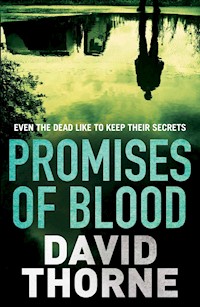
Even the dead like to keep their secrets. When William Gove, a dying millionaire and patriarch of a vast estate in Essex, asks Daniel Connell to execute his will, Daniel has no idea what he's getting himself into. Rather than leave his fortune to his three children, Gove has chosen ten names at random from the phone book. When he dies, Daniel sets out to track down the recipients. But a chance remark by one of them - that perhaps this is God's way of compensating her for the disappearance of her daughter - gives him pause. When another recipient also mentions a missing person, Daniel begins to suspect that there may be something darker at work. What he discovers is both shocking and dangerous - it sets him on a lethal trajectory with a powerful family who believe themselves to be above the law, no matter how dark and twisted their secrets may be....
Sie lesen das E-Book in den Legimi-Apps auf:
Seitenzahl: 440
Veröffentlichungsjahr: 2016
Das E-Book (TTS) können Sie hören im Abo „Legimi Premium” in Legimi-Apps auf:
Ähnliche

















Contents
Chapter 1
Chapter 2
Chapter 3
Chapter 4
Chapter 5
Chapter 6
Chapter 7
Chapter 8
Chapter 9
Chapter 10
Chapter 11
Chapter 12
Chapter 13
Chapter 14
Chapter 15
Chapter 16
Chapter 17
Chapter 18
Chapter 19
Chapter 20
Chapter 21
Chapter 22
Chapter 23
Chapter 24
Chapter 25
Chapter 26
Chapter 27
Chapter 28
Chapter 29
Chapter 30
Chapter 31
Chapter 32
Chapter 33
Chapter 34
Chapter 35
Chapter 36
Chapter 37
Chapter 38
Chapter 39
Chapter 40
Chapter 41
Author Biography
Copyright
1
THEMORNINGTHATmy closest friend Gabe is charged with the attempted murder of a seventeen-year-old straight-A schoolboy, I am taking the last will and testament of a dying millionaire who is, I believe, the most frightened man I have ever met.
His name is William Gove and he is lying on his back, his sickly wasted skin stretched tight across a nose which might once have been proud. His hands clutch a rosary weakly, green veins under waxed-paper skin. We are in his bedroom on the first floor of his mansion, surrounded by antique furniture, heavy drapes at the windows, although his bed is modern, tubular, metal. I am at his side on a velvet-upholstered chair which looks French and is so delicately wrought that I am afraid that my bulk might break it.
‘Mr Connell,’ he says, ‘are you a Catholic?’ He watches me without blinking, his eyes watery and yellow, the blue iris pale and indistinct. His voice trembles.
‘No,’ I say.
He nods, closes his eyes briefly, sighs. ‘So few of us, in these parts.’ Makes him sound as if he is a defender of the faith from Reformation days. He worries his rosary beads and they snick gently inthe quiet of the room. ‘But you have heard of mortal sin?’
‘I’ve heard of it,’ I say.
‘A sin which is committed with full knowledge and complete consent. You have heard it described thus?’
Described thus.The way this man speaks, he might as well be from a different century. His hands on his bedcover shake.
‘Mr Gove,’ I begin. I have not come here to take his confession; I want to finish our business as quickly as possible and get away from him, from his desperate presence, his smell of fear and imminent death. ‘I have prepared everything. I just need your signature. But before that, I do need to be sure that this really is what you want.’
He does not reply. His eyes are closed and I wonder whether he has given up the ghost; I would not be surprised. He is as close to dying as anybody I have ever seen, kept alive only by the sucking of the various machines he is plugged into.
‘Mr Gove,’ I say again, but he opens his eyes and glares at me with a fierceness driven by terror.
‘A hell is waiting for me,’ he says, a panicked whisper. ‘A place beyond your imagination. You do understand this?’
He continues to watch me and as our silence grows I have to admit that, sick as this man is, he is capable of posing questions that are very difficult to respond to.
William Gove is the owner of one of the largest fruit orchards in Essex, a vast estate extending over a thousand acres and with a heritage which reaches back to the middle of the eighteenth century; the Gove family is one of the oldest and most respectable in the county. For centuries they have occupied the first pews of the nearest Catholic church, had the ear of the authorities, shaped laws, held sway over their workers’ lives. But looking at him gasp at the air above his bed I am reminded of the saying about rich people entering heaven. He does not appear to rate his chances of getting into paradise, and there is something in the defiant set of his head, the authoritarian manner covering his abject fear, which makes me believe he has a point. This man, sick as he is, does not strike me as heaven material.
‘Mr Gove, I just want to go over your will,’ I say. ‘In a case like this—’
‘Like this?’ he says.
‘Unusual,’ I say, ‘and changed at…’ I wonder how to frame what I have to say with delicacy, decide that it is impossible, ‘this late stage.’
Gove smiles at this, his thin lips showing a line of dried salt; he has not drunk enough from the plastic straw angled towards his face. ‘Ah,’ he says. He does not say anything more, plays with his rosary beads.
‘Your liquid assets,’ I say, ‘totalling two point seven million sterling. You have decided to distribute them evenly between ten people, ten strangers, who you chose at random from the telephone directory.’
‘Correct.’ He looks directly at the ceiling, does not meet my eye.
‘You do understand that this will lead to some… speculation,’ I say.
‘That I have lost my mind?’
‘That you are non compos mentis, yes. Like I say, it is unusual.’
‘They say that charity is the first and greatest of the virtues,’ Gove says. ‘Perhaps you have heard that?’
I shake my head, but he is still gazing at the ceiling so I say, ‘No. But—’
‘Tell me, Mr Connell. Why would anybody wonder why I, a devoted and contrite Catholic, would not want to leave my wealth to better the lives of others?’
‘Unfortunately, Mr Gove, that is not the question they will be asking.’ I lean closer to him, but still he stares directly upwards. ‘Instead they’ll be wondering, quite naturally, why you didn’t choose to evenly distribute your wealth between your three children.’
But before Gove can respond to this, we are interrupted by a young woman who enters his bedroom without knocking and inspects the white machines that surround his bed, clucking her tongue. She looks down at him without affection or sympathy, flicks his drinking straw with an orange-painted nail.
‘Drink,’ she says in an accent which might be Nigerian.
‘You go to hell,’ he hisses at her with a force which surprises me. She does not respond to this insult, does not even blink; I suspect she has become inured to this treatment, although I am shocked by the malice in Gove’s voice. Heaven is looking further away by the second.
She lifts a corner of Gove’s bedcovers and peers underneath, sniffs in disdain. She looks across his bed at me. ‘Come back. Five minutes.’
William Gove’s home is a three-storey Georgian mansion with two round wings like turrets either side of the main building; it is at the end of a long gravel driveway and must have at least twenty bedrooms. I wait outside Gove’s room at the top of a wide staircase which sweeps down to a black-and-white-tiled entrance hall you could fit most of my house into.
There is a huge window next to me which looks out over the drive; I suspect that everything I can see out of it is owned by William Gove, right up to the horizon. I pace uncomfortably, do not wish to sit down; this place is a world away from my normal business, small-town lawyering for small-time clients: visas and conveyancing and ambulance-chasing. I was referred this case by an ex-colleague from a large City firm which did not want to go anywhere near Gove’s bizarre will, did not want to be associated with the inevitable publicity once the papers got hold of the story: Essex fruit-grower turns fruitcake, gives his fortune away to strangers. I do not care about bad PR; I care more about bad cheques. And William Gove, scared and odious as he is, is not a man whose resources I need to worry about.
The nurse, if that is what she is, leaves Gove’s room and passes me without saying anything, which I take to mean that I am free to go back in. The place is so thickly carpeted that her passing makes no sound and I can hear nothing but the artificial respiration of Gove’s machines, a steady suck and sigh. I push open his door, and that too makes no sound. Gove is lying still. I wonder again if he has gone, slipped away; or perhaps the nurse spent her five minutes with a pillow over his face.
But as I sit down he takes a deep and shuddery breath and when he opens his eyes I can see that he is on the verge of losing it, that fear has nearly overwhelmed him and it is only through a supreme effort of will that he manages to control his voice.
‘How is it that they can keep me alive?’
I do not know how to respond to such a question, do not want to answer. Instead I take papers from my briefcase, find a pen.
‘My wife,’ he says, ‘died twenty years ago. From the first visit to the hospital they said that there was nothing they could do. How is it they can keep me alive?’
‘Mr Gove, I need you to sign these papers.’
‘Money,’ he says. ‘I offered them everything. They just looked at me.’
I do not want to listen to this man; is this not what priests are for? I stand up, show him the papers that I am holding.
‘I’m sorry, Mr Gove…’
He nods, sighs and presses a button which causes his bed to whine and tilt up so that he is in a sitting position. He holds out a hand and I give him the pen, the first sheet for him to sign.
‘So many papers,’ he says, ‘over my lifetime. Contracts, agreements, the deals I have made.’ He scribbles his signature and I take the paper, pass him the next. ‘Do you think that a man can make a deal with the afterlife?’
He looks up at me and drops the pen and his expression is as needy and supplicatory as a child’s. I look down at him and he seems small and vulnerable and very, very frightened. I pick up the pen and put it back in his weak hand which is trembling and I cannot think of anything to say to him.
At the bottom of the stairs a man and a woman are waiting for me, two of William Gove’s children. I know them by sight, have been introduced to them: Luke, the elder son, and Saskia. They watch me as I walk down the stairs and I have a strange feeling of trespass, as if I have been caught rifling through the jewellery and they are waiting to deal with me, put me in my place. My habitual unease around the wealthy and privileged.
‘Mr Connell,’ says Luke. He is in his mid-thirties and wearing a green polo shirt, and his face is tanned and handsome, Ray-Bans pushed up over his slicked-back hair.
‘Mr Gove,’ I say.
‘Luke, please,’ he says. ‘How is he?’
I am momentarily stuck for something to say; ‘dying’ does not seem like the right response but no other seems appropriate. Saskia sees my discomfort, laughs.
‘He tell you he was going to hell?’ she says.
‘He mentioned it.’
‘Christ’s sake,’ says Luke.
‘Do you believe in hell, Mr Connell?’ she says. She smiles and tilts her head, and there is something so sly in her expression, her dark eyes so knowingly taunting, that I cannot help but smile back.
‘I’m a lawyer. I’m not paid to have an opinion.’
She laughs again and turns to Luke, who nods but there is no warmth in his eyes. ‘What did he want with you?’ he says.
I shake my head. ‘You know the rules. Client confidentiality.’
‘How about I take your briefcase, find out for myself?’ He is smiling, but there is no humour in his voice, and Saskia puts a hand on his arm, which is bronzed and muscular.
Perhaps an upbringing of privilege has led him to expect that he can throw his weight about, but he is at least five stone lighter than me and I am willing to bet that he has seen a lifetime’s less violence. I smile back at him and offer my briefcase with one hand. ‘Give it a try.’
Saskia steps between us, says, ‘Boys, boys,’ lightly. She turns to Luke and places both palms flat on his chest, a strangely intimate gesture. ‘Let’s all be lovely.’
Luke nods slowly, looks at me. ‘That your car outside?’
My car is the only one parked on the driveway; it is also nearly ten years old and nudging 100,000 miles with an exhaust which will not pass its next inspection. I do not reply.
‘It’s making the place look untidy,’ says Luke. He places his Ray-Bans over his eyes. ‘Next time you’re here, would you park around the back?’
There is a buzz in my ears as I walk out of the Goves’ mansion towards my car and the crunch of the gravel beneath my feet seems to come from a long way away. My hands tingle and my heart is beating so fast that it seems to cloud my vision even though the day is hot and bright. Thinking of bouncing Luke Gove’s head against the banister of his staircase, watching his eyes lose their assurance as fear and humiliation steal in, makes me clench my fists so hard that one of my nails pierces my skin.
That he said it in front of her only makes it worse; I have never, I do not think, seen eyes with such life, such impish vivacity. Saskia Gove may be well into her thirties but she has within her some quality which makes me wish that I had worn a better suit today, had a haircut more recently. Did not drive the car that I do.
I am saved from my dark thoughts of humiliation and retribution by my mobile ringing. I take it from my pocket, put it to my ear.
‘Daniel?’
‘Gabe.’
‘Yeah. Daniel, I think I’m going to need you.’
2
I HAVE HEARDpeople say that corruption has a smell, that it can be physically sensed. I do not believe this, but from the moment I am shown into the interview room and meet the two police detectives in charge of Gabe’s case, I have a feeling that something is not right. The way that they stand, arms crossed in front of them. The complacent grins on their faces, the lazy challenge in their eyes. Anybody who wears such open disdain for others is a law unto themselves and nothing more.
‘Connell?’ one of them says. He is overweight and radiates contempt as he would body odour after five minutes on a treadmill.
‘And you are?’
He yawns, a fat hand over his mouth. Gabe is sitting at a table next to the wall and he has not yet looked at me. The interview room is brightly lit, the walls a pale green. There are four chairs, two either side of the table. The policemen are at the back of the room, leaning against the far wall. The overweight man yawns again. I wait for him to finish.
‘DI Doolan,’ he says. ‘This here’s DI Akram. You know your client?’
I do not reply, look at Gabe. ‘You all right?’
Gabe smiles, fixes me with his pale eyes. He looks tired. ‘Surviving.’
‘Don’t say anything else,’ I say. I turn to the policemen. ‘He doesn’t have anything to drink.’
DI Akram shrugs. He is a slim, handsome Asian man with eyes which smile drowsily and lips which are turned up as if he is remembering a joke. ‘Didn’t ask for one.’
‘Well,’ I say, sitting down on the chair next to Gabe, ‘I’ll have a tea. Black, one sugar.’
The two men look at one another and for a moment they seem unsure; I am willing to bet that they have not been spoken to like this for months, perhaps years. But the first exchanges of any encounter can prove decisive. I have given them an order, wrong-footed them in their own backyard, silenced them for a few seconds. Small victories.
‘Fuck off,’ says the fat detective, Doolan, at last. ‘Think I look like, a fucking waitress?’
I look him up and down, appraising, take my time. ‘No, Doolan. No, you don’t. Now, shall we get the tapes running and make this official?’
Doolan pushes himself off the wall, walks past me to the other side of the table, passing me so closely that I can feel the air move, my shirt tugged. He sits down opposite me. He has short fair hair which is beaded with perspiration, and although he is fat, he gives the impression that he was once powerful, athletic. Akram stays behind us; I can feel his mocking presence as a tingle around my collar.
Doolan presses a button on the tape machine on the table. Again he yawns.
‘Interview commencing…’ he looks at his watch, ‘thirteen twenty-seven.’
Before Gabe left the army, losing a leg to an IED disguised as a lump of camel shit on a tour of Afghanistan, he had been a decorated captain in the Cavalry who had been adored by the men who served under him. Since he left, his life has been bereft of the purpose the army gave him and he has drifted, flirted with depression, violence and, occasionally, alcohol abuse. He is a decent, kind and honourable man who early in life found something he loved and was good at. Now, robbed of that, he struggles to find a reason to leave his bed in the morning.
I dispute that Gabe was drunk when Doolan puts it to him. But it was two o’clock in the morning, Gabe was on a night out with former colleagues, making his way home on his own; it is unlikely that he was sober.
‘Which is when you encountered Rafiq Jahani.’
‘And you know this how?’ I say.
‘I know this, Mr Connell, because the CCTV footage of the incident tells me. It was his face on it, his fists. You can take that to a jury and put your house on it.’ He pauses. ‘I’ll grant him this. Your client knows how to fight.’
Another thing the army gave Gabe: the ability to physically outmatch almost anybody he comes across, fighting off one leg or not.
Doolan describes the footage: two men meeting in a street, an altercation, one coming off better. No big deal. Nothing exceptional.
‘Remind me,’ I say. ‘What exactly are you charging my client with?’
‘Attempted murder,’ says Akram from behind me. He draws the second word out as if it has too many vowels. I do not turn around to look at him; know that he would love me to, love to stare me down with those sleepy, smiling eyes.
‘Please,’ I say. ‘We’re talking about a drunken brawl. Some little chancer comes across my client, decides to try his luck. Juries go for war veterans. Doesn’t sound like you’ve got anything.’
Doolan makes a show of taking out a notepad, takes his time finding the right page. He is not yet forty and I wonder about his diet. Lager must play an important role.
‘Doctor I spoke to,’ he says, ‘told me Rafiq’d been stabbed so many times they gave up counting. Said they couldn’t get blood into him fast enough, it was coming out quicker than it was going in. Made a hole this big,’ he makes a circle with his thumb and index finger, ‘got through forty litres of it.’ Doolan sits back, nods his head at Akram. ‘How many litres of blood’s your average Kurdish scumbag got?’
‘Six?’
‘So, take the positives, that’s all new blood he’s walking around with. English blood. Might change him, stop him being a thieving wanker.’ Doolan rubs his chin. ‘I say thieving wanker. Turns out this one’s a straight-A student, a credit to his family, on his way to university. If he ever wakes up.’
Gabe shifts in his chair and before I can stop him he says, ‘I didn’t stab anyone.’
‘Gabe,’ I say.
‘And you,’ he continues, pointing a finger at Doolan, ‘are a fucking liar.’
Doolan smiles. ‘Go on.’
I put my hand on Gabe’s wrist, squeeze hard, watch the veins stand out on the back of his hand. He is furious, outraged by these men’s casual disdain, their air of untouchable authority. I imagine that the army is more rigorous, that its rules are, on the whole, better defined and adhered to. But this is not the army, this is the police, and in my experience the rules they are governed by owe as much to the jungle as they do to the law. Gabe needs to stop talking, and fast.
‘You’ve got that on camera? The stabbing?’
Doolan shakes his head. ‘What we have got is this young man, Rafiq, getting up off the floor and going after your client. Minutes later he’s leaking blood all over the street. Doesn’t take a genius to put it together.’
‘You’re going to need to do better than that,’ I say.
‘And we will,’ says Doolan. He says this with a confidence which makes it seem like a preordained event.
‘My client would like some time out,’ I say. I feel Gabe tense next to me and I squeeze harder, feel his bones shift together under my hand.
Doolan raises an eyebrow, amused. He looks over my shoulder at Akram but I do not follow his gaze, keep my eyes steady on the fat detective.
‘It wasn’t a request,’ I say. ‘We’re done for now.’
Again Doolan seems momentarily unsure, unused to being spoken to in this way. Then he stands up abruptly, says, ‘Interview terminated,’ stops the machine. He looks down at me, tries to use his bulk to intimidate.
‘Your client’s going down,’ he says. ‘That much I fucking guarantee you.’
He nods at Akram and they leave us, close the door behind them; and for a moment in the silence left behind it feels as if we are both prisoners in this room.
‘You didn’t stab him,’ I say to Gabe. It is not a question. Gabe laughs briefly but not with any humour.
‘Where’d I get a knife from?’ he says. ‘Think I go down the pub carrying weapons?’
‘You know the guy who attacked you?’
‘Never seen him before. He was just a kid.’
‘Tell me what happened.’
‘I’m walking down the street, he crosses the road. Like he wants something from me, wants to ask me something. Next thing, he’s taking a shot.’
‘He ask you for anything? Money?’
‘Nothing. Just walked up and, bang.’ He sighs.
‘What’d you do?’
Gabe looks at me as if the question I have asked is beneath his contempt. ‘I subdued him.’
‘Just that?’
‘He was a kid,’ says Gabe. ‘Of course just that.’
‘And that was that?’
Gabe doesn’t answer, sits in silence for some moments. It is very quiet in the interview room, and warm, too warm.
‘This isn’t right,’ he says.
I nod. ‘Just… Gabe? Don’t say anything. Don’t react. They’re trying to wind you up. Get a rise.’
‘Can they keep me?’
‘They’ve got nothing,’ I say. ‘You on camera defending yourself. No stabbing, no witnesses, no weapon. Nothing.’
But we do not have time to talk any further. The door to the interview room opens and Doolan and Akram walk back in with a barely contained excitement, as if they have just heard a piece of gossip they cannot wait to share. Akram is holding a clear plastic bag and in it is a kitchen knife, the kind used for carving meat. Doolan walks straight over to the tape machine, says, ‘Interview recommenced at fourteen oh seven.’
‘Detective Inspector,’ I begin, but Akram throws the bag on the table, and before I can say anything more, Doolan says:
‘Mr Gabriel McBride, we are formally charging you with the attempted murder of Rafiq Jahani.’
Doolan tells us that the knife was found in Gabe’s waste bin, outside his house, that it has Rafiq Jahani’s blood on it. I ask them how they can be sure it is his blood, but ultimately I know the answer to that one: they know, because they put it there.
There is no way that they could have found Gabe’s identity so soon from the CCTV footage alone. No way they could have found that knife so quickly. No way they could have found it in Gabe’s bin, as I do not believe for a second that Gabe stabbed anybody. I do not understand what is happening, but this is not right.
There is little I can do; there is no way that Doolan and Akram are going to release Gabe until I can get before a judge and argue his case, ask how they found the weapon so quickly, whether it was obtained legally. Akram puts his hand under Gabe’s armpit to lift him and I see Gabe stiffen. I will him not to react, lash out; Doolan and Akram are the kind of policemen for whom any excuse will do. Gabe gets to his feet, his artificial leg causing him to lean slightly as he rises, compensating. I watch him leave and he does not look around. But Akram does; at the door of the interview room he turns to look at me with his smiling eyes, and slowly, very slowly, with his upturned lips he blows me a kiss.
The day is almost over when I leave the station, but on my way home I stop in at my office. In a previous life I worked on the fourteenth floor of a steel and glass building in the heart of the City, handling cases worth sums which were hard to fathom, impossible to imagine. I now operate a one-man, one-room law firm out of a shopfront office on a street where the main trade is in gambling and discounted alcohol and cheap rental accommodation.
I sit behind my desk and look at the case I am working on, one concerning professional negligence; my client is a young up-and-coming snooker player who lost three fingers of his bridging hand while using an industrial lathe at his workplace. He wants to sue his employers for potential loss of earnings, which he estimates in the millions. His record on the amateur circuit, however, suggests differently; in eighty-seven matches, he only won four, one of which was given to him after his opponent was killed in a car accident on the way to the game. I push my papers aside and wonder why I bothered coming in, why I didn’t just go straight home to Maria.
The light on my answering machine is blinking and I get up from my desk, cross my office.
‘Mr Connell, this is Saskia Gove. I just wanted to call and apologise for Luke’s behaviour this morning. He has issues with… well, he has issues with how to take his coffee in the morning.’
She pauses and I picture her eyes, lights dancing in them, some lithe animal cunning hiding within.
‘So listen, how about I make it up to you? Give me a call.’ She leaves a number which I do not write down, and then there is the beep and she is gone.
I sit back at my desk and wonder about the Goves, about the relationship between Saskia and Luke, and about William Gove. I remember his fear, the abject terror of where he will be going after he dies, an event which cannot be long coming. I wonder what makes a man give his fortune away to ten random people he chooses from a telephone directory. And just how Luke Gove, with all his issues, will take the news.
But of course the Goves are not my main concern. At this moment Gabe is alone in a cell beneath Gidea Park police station, at the mercy of two policemen who I suspect are working to their own agenda, entirely divorced from any notions of justice and due process. I sit at my desk until the sun goes down and my office is dark, and the question I keep asking myself is: why?
3
‘SO ANYWAY, IT’Sbeen off the forecourt what, hour, couple of hours tops, he’s giving it the proper big one up the M11, and he sees a fuck-off cardboard box come off the back of this lorry up ahead. Like…’ he extends his arms to demonstrate, ‘big.’
I have known Tommy since I was a young boy and he is one of the few men I would hate to get on the wrong side of; he was always larger than me when we were growing up, but today he is the size of a small bull and I doubt I could get my fingers around his wrist. Maria is watching him with a fascination I cannot read; amused or horrified, it is difficult to tell. Tommy does not talk. Tommy shouts.
‘The 911 GS, I said that, dint I?’ he asks. I nod.
‘Right, so, he’s seen this box and he’s thinking, I’m going to have it, give it some Hollywood, drive straight through it, really flatten it. So he’s put his foot down and he reckons he was doing hundred and ten when he hit it. Only thing is…’ Tommy pauses, enjoying his moment, Maria’s rapt attention, ‘it’s got a fucking washing machine in it.’
He puts his huge head back and barks out a delighted laugh, lager slopping from his glass over the signet rings on his thick fingers. He tells us that Bobby, the driver of the Porsche, had to be cut out and that the doctors think he will need a new knee, that he may never walk again. I look at Maria and she is not laughing; her lips are slightly parted and she seems frozen in place. I clap Tommy on the shoulder, tell him that it is good to see him. He nods, still laughing at the thought of Bobby’s crushed body being hauled out of the wreckage of his destroyed 911.
It is my father’s sixty-fifth birthday and Maria insisted that we go. Her father had given her a childhood which contained only happiness and love, and although she knows my father, his cruelty and malice, she cannot accept that any parent is beyond redemption. His party is being held at the Seven Stars, a pub which caters to the kind of drinkers who form a queue outside in the morning, who measure their days in pints and shots. He is standing at the bar, drinking lager in an open-mouthed pour; from here I can see the gold of his fillings through his glass. His face is red and he is sweating, his grey hair oiled back. It is a face that I have only ever seen smile at others’ misfortune.
‘Come on,’ says Maria. ‘You can say happy birthday, can’t you?’
‘Happy birthday,’ I say.
‘Idiot,’ she says. She looks around. ‘Nice place your dad chose.’
I can feel my shoes sticking to the carpet as we walk over to my father. One of the windows is boarded up and the place smells of spilt beer and a lifetime of neglect. Maria is wearing a dress, heels; she has had something done to her hair and it is dark and frames her face in glossy waves. Walking her over to the bar, I feel like I am bringing royalty to a dogfight. A group of men around a fruit machine watch her. One of them whistles, a long, low sound, staring at her with a look which is as clinically detached as if he is assessing a cut of steak. I catch his eye and he does not react, goes back to watching Maria. There are five of them, seem to be some kind of crew. I step closer to Maria, put an arm around her waist. My property; a return to the Stone Age.
‘Fuck me, it came,’ my father says, looking at me without interest.
‘Now then, Francis,’ says Maria. She leans forward, gives him a kiss on his cheek. ‘Happy birthday.’ As ever, attention from Maria causes a change in my father. He nods at the floor a couple of times to regain his composure and manages to say, ‘Drink?’
‘I’ll have a gin and tonic,’ Maria says.
‘Lager,’ I say.
‘And you don’t look a day over fifty,’ says Maria.
‘Stop it,’ says my father.
‘You’ve even lost weight,’ she says. She takes a step back, cocks her head to one side, frowns. ‘Have you got a lady friend, Francis?’
The landlord of the Seven Stars, Paddy, a man I have known for years, laughs from behind the bar. ‘Couldn’t pull a muscle, Frankie. Got a lady.’ He shakes his head.
‘I don’t know,’ says Maria. ‘Looks like there’s plenty of life left in him.’
My father’s face is dark with blood, and although he is trying to look indifferent, a smile is fighting to appear which he cannot fully master. He turns to the bar, holds out a twenty. Regardless of how many drinks he has and how many lurid stories he swaps tonight, I know that Maria has just given him the standout moment of the day.
We stay at the bar and I stand with my back to it, keeping an eye on the group next to the fruit machine, who are looking in our direction too frequently, talking too quietly. I can hear Tommy telling his story of the Porsche to another man across the room; he is still finding it as funny, head thrown back as he gets to the punchline. The atmosphere is full of good-natured aggression, bonhomie with an edge, which is about as cosy as you get in the kind of pub my father frequents.
‘Gents,’ I say to Maria, putting my glass down on the bar.
‘You don’t need permission,’ she says. She is jabbing her drink with her straw, trying to pretend that she is enjoying herself.
‘We’ll go after,’ I say.
‘Go?’ she says. ‘And miss all this?’
Somebody at some point has attempted to put their fist through the door of the men’s, although given the state of disrepair of the place it could have happened last week or in the previous century. There is an old man at the washbasin and as I pass him the door opens and I look around and Tommy is in the doorway. He is so big he has to duck to get into the room, which is tiny, and once he is in it feels even smaller, claustrophobic. Tommy looks at the man at the washbasin, says, ‘Go on. You’re finished.’
The man shakes his hands and leaves without drying them.
‘You all right, Tommy?’
Tommy looks me up and down and although I know and like him, I feel a dose of adrenalin shoot through my heart.
‘Need to speak to you,’ he says.
‘So speak.’
He takes a step closer to me and I have to will myself not to take a step backwards, to hold my ground.
‘This didn’t come from me.’
‘Course.’
‘Don’t know any details,’ he says, ‘but Danny, there’s a lot of talk. Hearing your name.’
‘Who from?’
‘Halliday. His mob. You seen that lot out there?’
‘I saw them.’
‘You don’t want to be here.’
I nod. Halliday is a prominent figure in the local underworld, a man who controls drugs, prostitution, doors. Two years ago I shattered the bones in one of his hands with a wrench, retribution for having destroyed my mother’s life, for having treated her like a piece of livestock to be traded for profit. But I never for a moment imagined he would see it as a fair exchange, an equitable settling of scores; I have been waiting for this.
‘Danny, I think it’s serious,’ says Tommy. He says it quietly and I am filled with affection for this man, for his genuine concern for my safety.
‘Thanks, Tommy,’ I say. ‘Excitement was getting too much anyway.’
He doesn’t smile, nods. ‘Get her out of here.’
But of course I cannot just leave. It is my father’s birthday, and whether or not I wish to be here, I will not be intimidated by a group of men ten years my junior, regardless of who they are connected to. They are still clustered around the fruit machine and I walk over to them.
‘You old enough to be playing on that?’ I say.
There is always a leader of a group and this one is my height, with a nose that has been broken more than once. He has blond hair and innocent baby-blue eyes and his mouth is laughing stupidly as if I have just told him a joke, though the laugh does not touch his eyes. He looks no older than twenty-five. But the muscles on his forearms are pronounced and his wrists are thick, the fingers holding his glass large and battered. All of the men are dressed alike, white trainers and polo shirts and too much hair product, the dense smell of aftershave. The blond man raises his eyebrows, still smiling in amusement.
‘Say again?’
‘Finish your game and get out of here,’ I say.
He sniggers and nods. ‘Like to do that. But we can’t. On for a jackpot. Anyway,’ he says, and nods again, this time across the room, ‘enjoying the view too much.’
I follow his gaze. He is again looking at Maria, who is waving a finger at my father in admonishment, as if he has just said something inappropriate. But my father is not paying attention, is watching us.
I walk around the group and squat down and unplug the power cord for the machine, stand up with it in my hand.
‘Fun’s over,’ I say. ‘Bedtime.’
The blond man I have been speaking to hands his glass to one of his crew. His biceps are large and he has a thick gold bracelet around his wrist. I take a step forward, into his space. But before anything can happen my father is there and he takes the man by the throat and pushes him into the fruit machine with such force that it rocks back against the wall. I have been there, know my father’s strength. Maria was right. There is life in him yet.
‘Walk away while you still can,’ says my father. He is standing next to me so that we are shoulder to shoulder. The group look at the man my father is holding. His blue eyes have gone flat and he is completely still although I can see a pulse in a vein over his temple. Nobody moves for one, two, three seconds. Then, slowly, he takes my father’s wrist and lifts his hand away from his throat as if my father possesses no strength at all, as if he is as weak as a child. The man smiles, shakes his head and laughs, again as if he has just heard a joke. But I now suspect that his air of amusement and stupidity is an act, cultivated to hide something much darker and more dangerous.
‘Nice meeting you, Daniel,’ he says and nods to his crew, pushes himself away from the fruit machine. He moves carelessly, sways as if he is punch-drunk.
‘Do I know you?’ I say but he ignores me and walks out of the pub, followed by the other men, people parting to let them through. My father and I stand and watch them leave.
When they are gone he turns to me, says, ‘Didn’t like the way they were looking at Maria.’
We stay for another drink, although my father does not say anything more to me, as if embarrassed by his actions, his backing me up. Maria saw what happened and is looking at me too closely and too often. As we leave, a policewoman comes into the bar, a sight as unlikely as my father in an art gallery. I take Maria’s arm and hustle her outside, though not before the policewoman begins to unbutton her shirt and the look on my father’s face is as hungry and content as a five-year-old blowing out the candles on a cake with his name on.
It has taken thirty-nine years, my entire life, to share any fellow feeling with my father. Given the violence of my upbringing, perhaps it should come as no surprise that the first time I experience it, we are involved in some kind of altercation. But I cannot deny that in those few seconds, side by side facing down those men, I felt a bond of some kind between us.
Maria is next to me in the car. ‘He’ll be out tomorrow,’ she says.
For a moment I do not know who she is talking about, and then I realise with guilt that she means Gabe.
‘I hope,’ I say. The truth is that his release from police custody should be a formality, there should be no problem with him getting bail. But the police have their own agenda and I cannot be sure; cannot help but worry that Gabe is being dealt a stacked deck.
‘What did they want?’ she says. ‘Those men?’
‘To ruin the mood,’ I say. ‘Forget them.’
‘They knew you?’
‘Never met them before.’
Maria nods but does not look at me, gazes out of the window of the car as we join the ring road. ‘You couldn’t leave it.’
‘They would have made trouble,’ I say. ‘It would have been worse.’
‘Of course.’
We drive in silence for some minutes, past boarded-up houses waiting to be destroyed to make room for more lanes, perforated metal sheets screwed over their windows, families long gone.
‘Is there anything I need to know?’ she says.
Last year Maria was kidnapped by men who wanted something from me that I was not prepared to give. She was found naked with broken lines inked over her body, the kind you find drawn by cosmetic surgeons prior to operating, to cutting somebody open. It was a warning to me, a crude act of coercion. And although she was not permanently scarred, I was sure that I would lose her, that she would walk away from me and the violence which follows me like an unwanted shadow.
When she was released from hospital, she asked me to make her a promise, to swear that I would renounce that side of my life, turn my back on it; turn the other cheek, if necessary. Made it clear that this was something I needed to do if I wanted to keep her.
Maria is the best thing to have ever happened to me, a miracle I could never have imagined, would never have dared to. She is kind, compassionate, gentle; she teaches six-year-olds at a local primary school and believes in the fundamental goodness of people. I will do anything to protect her. Do anything to keep her.
‘No,’ I say. I watch the road and we drive back to my house, and along the way she does not say anything more. I wonder whether or not she believes me.
4
GABE IS CALLEDbefore the magistrates’ court at eleven o’clock the next morning. He stands in the dock as straight as if he is being inspected on a parade ground as the charges against him are read out, and does not react despite knowing that they are entirely fabricated. There are three magistrates sitting at a long table: a thin grey-haired man with glasses in the middle, a younger woman to his left, an older woman to his right. The grey-haired man raises his eyebrows to me, invites me to speak.
‘I am applying for bail on behalf of my client,’ I say.
‘On the grounds…?’ the man says. He sounds bored and speaks with an upper-class accent ripe with moral superiority. He draws something on a piece of paper in front of him.
‘My client has a clean criminal record, along with a distinguished service record as a captain in the Cavalry,’ I say. ‘There is no reason to suspect that he will interfere with witnesses, or that he is a risk to the public. I can see no reason why bail should be refused.’
The man looks down at his paper. ‘Attempted murder?’
‘We contest that charge.’
‘Indeed,’ he says drily, as if I am to be humoured. He turns to the women next to him; the older, then the younger. I look across at Gabe. If being kept in police custody has caused him to lose sleep, then it does not show; he looks fresh, rested. I know that in the army he spent weeks sleeping rough, in jungles, deserts, behind enemy lines. A warm police cell is no hardship to him.
‘This was a particularly violent attack.’
‘My client is entirely innocent,’ I say. ‘He has proven himself on the battlefield. He deserves our respect, nothing more.’
The man nods at this; perhaps he has children, grandchildren in the services. He is upper class enough to have them in the Cavalry. He sighs, takes off his glasses and rests them on the table.
‘You have his passport?’
‘I do.’
He nods to a clerk, who walks over to me. I give him Gabe’s passport, which I picked up from his home this morning. I catch Gabe’s eye, give him a nod. The man has asked for his passport; they are letting him go.
Gabe is required to attend court in three weeks’ time but until that point he is free. Three weeks to get to the truth, to take on Doolan and Akram and discredit their case, find out what their agenda is, who is behind this set-up. I have driven to the court and we get into my car. As I blip it unlocked I cannot help but think of Luke Gove’s taunts, asking me to park it around the back; of Saskia Gove, her dark laughing eyes and my feeling of humiliation in front of her.
‘You all right?’ I say to Gabe across the roof.
‘Fine,’ he says and gets in, ducks out of view so that I cannot read his face. I open the door, climb in, start the car.
‘They treat you okay?’
‘I’m here, aren’t I?’
Gabe is the most self-contained and capable man I have ever met. His years in the army have milled away anything that might have been yielding, leaving only a core of brass. Two nights in police custody were, I suspect, less troubling to him than they were demeaning. He was a soldier. He feels himself above them. I do not say anything else, watch the road. Gabe racks his seat back, stretches out his injured leg. I am willing to bet that he has not taken his prosthetic limb off all the time he was locked up; no way he was going to show any weakness. I feel a rush of affection for him, for his understated strength. I try again.
‘Listen, Gabe, I’ll get this sorted.’
‘Yeah? Got a plan?’
He looks across at me, and the gaze from his pale eyes is so direct that I cannot match it. I am grateful that I have to look back at the road.
‘We’ve got three weeks. No way this is going to court.’
Gabe leans forward, massages his leg. ‘We get a coffee?’
But before we can find anywhere to stop, I see lights behind me and pull over, an unmarked BMW swinging in behind us, its grille big in my mirror. Doolan climbs out; he is wearing sunglasses which, with his short hair and meaty face, make him look like a hick cop from some American backwater. Akram slides up and out of his seat, rests his arms on the top of his open door and watches us over it with sly amusement. I step out of my car, push a palm towards Gabe to tell him to stay where he is.
‘Help you?’ I say, straightening up and putting an elbow on the roof. ‘There a problem?’
‘Brake light,’ says Doolan. ‘You want to get it seen to.’
We are on the side of an A road. Cars, lorries pass us by and we have to shout to hear one another. It is hot and there is a smell of warm fuel in their wake, dust in the air which I can feel on my eyeballs and in my throat.
‘Seemed okay this morning.’
Akram eases himself around his open door. He is holding a police stick. He bends down and with two hands jabs it into my brake light as if he is spearing a wounded animal. I watch him and do not react. Luke Gove will have more to sneer at now.
Doolan walks closer and I can see sweat rolling down past his ears; his limp skin is wide-pored and unhealthy-looking, like rolled dough in a too-warm kitchen.
‘What do you want?’ I say.
‘Just a courtesy visit,’ he says. ‘So we’re all on the same page.’
I nod again. ‘Go on.’
‘We’ve got your friend by the balls,’ says Doolan. ‘He’s looking at fifteen years.’
‘You think.’
‘This Rafiq Jahani, who your friend stabbed—’
‘According to you.’
Doolan puts his hands out, palms up. ‘Nobody else matters. We’re the police. You get it, right?’
I do not respond. An eighteen-wheeler passes us and its draught lifts dried leaves, plastic rubbish, tugs at our clothes and hair. Doolan pauses to let the air settle.
‘He woke up this morning. Looked through a selection of photographs. Pointed his dirty little Kurdish finger right at the face of one Mr Gabriel McBride, no hesitation.’ Doolan holds a hand up, counts on his fingers. ‘On camera. Murder weapon. Testimony of the victim. What did I say? Fifteen years? Might be more.’
But I have had enough; it is too hot and Gabe deserves peace, time alone, a coffee. ‘What exactly is the point of this?’ I say to Doolan.
‘Just to let you know,’ he says. ‘We’ve got you. What happens next? I strongly advise you to do what you’re told.’
I frown, look more closely at Doolan, whose eyes I cannot read through his sunglasses. ‘What happens next?’
‘All I’m saying,’ says Doolan. He turns and walks away.
‘Doolan,’ I call after him. ‘What do you mean? What happens next?’
But he only lifts a hand in the air, does not turn, gets back into his car. Akram walks backwards to the vehicle and he is smiling, pushing his police stick through his curled fingers as if it is a phallus he is trying to stimulate. I do not get back into my car until they pull away and I can no longer see them.
At the same time that Rafiq Jahani was showing signs of life, William Gove was taking his final terrified breaths in a metal bed on the first floor of his magnificent home. He died at around eleven-thirty in the morning; there is a message left on my office phone by Saskia Gove asking me to call her, although she does not say why, and when I do not, she calls back, catches me at my desk after dropping off Gabe.
‘Daniel?’
‘Ms Gove.’
‘Saskia, please. Jesus. Anyway, thought you should know that my father is dead.’ She sounds tired and her voice has none of the vivacity I remember.
‘I’m sorry.’
‘Really? And why is that?’
I do not react. ‘I’ll start with his affairs.’
‘Do that. Quickly as you can.’ I can hear her brother’s peremptory tone in her voice; she too is clearly used to dealing with the staff.
‘Anything more?’ I say.
‘Not big on the small talk, are you?’ she says. I have no idea what this woman wants from me.
‘I’ll be in touch,’ I say and wait for a response, but there is none, and I put the phone down with her still on the line. As soon as I hang up I feel guilt for cutting off somebody recently bereaved. Immediately my phone begins to ring again. I am sure that it will be her and I do not answer, although I cannot explain why.
Instead I bring William Gove’s papers to my desk and look through them. Before he died his request seemed simply bizarre but, now that he is dead and I have to deal with it, it seems worse: the deranged demand of an old man who had long since lost his mind. What have I let myself in for?




