


Erhalten Sie Zugang zu diesem und mehr als 300000 Büchern ab EUR 5,99 monatlich.
- Herausgeber: Oldcastle Books
- Kategorie: Wissenschaft und neue Technologien
- Sprache: Englisch
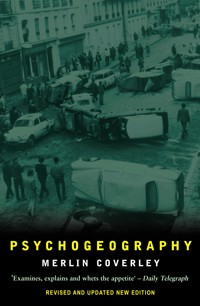
Psychogeography. In recent years this term has been used to illustrate a bewildering array of ideas from ley lines and the occult, to urban walking and political radicalism. But where does it come from and what exactly does it mean? This book examines the origins of psychogeography in the Paris of the 1950s, exploring the theoretical background and its political application in the work of Guy Debord and the Situationists. Psychogeography continues to find retrospective validation in much earlier traditions, from the visionary writing of William Blake and Thomas De Quincey to the rise of the flâneur and the avant-garde experimentation of the Surrealists. These precursors to psychogeography are discussed here alongside their modern counterparts, for today these ideas hold greater currency than ever through the popularity of writers and filmmakers such as Iain Sinclair, Will Self and Patrick Keiller. From the urban wanderer to the armchair traveller, psychogeography provides us with new ways of experiencing our environment, transforming the familiar streets of our everyday experience into something new and unexpected. Merlin Coverley conducts the reader through this process, providing an explanation of the terms involved and an analysis of the key figures and their works.
Sie lesen das E-Book in den Legimi-Apps auf:
Seitenzahl: 262
Veröffentlichungsjahr: 2018
Das E-Book (TTS) können Sie hören im Abo „Legimi Premium” in Legimi-Apps auf:
Ähnliche













Psychogeography.In recent years this term has been used to illustrate a bewildering array of ideas from ley lines and the occult, to urban walking and political radicalism. But where does it come from and what exactly does it mean?
This book examines the origins of psychogeography in the Paris of the 1950s, exploring the theoretical background and its political application in the work of Guy Debord and the Situationists. Psychogeography continues to find retrospective validation in much earlier traditions, from the visionary writing of William Blake and Thomas De Quincey to the rise of the flâneur and the avant-garde experimentation of the Surrealists. These precursors to psychogeography are discussed here alongside their modern counterparts, for today these ideas hold greater currency than ever through the popularity of writers and filmmakers such as Iain Sinclair, Will Self and Patrick Keiller.
From the urban wanderer to the armchair traveller, psychogeography provides us with new ways of experiencing our environment, transforming the familiar streets of our everyday experience into something new and unexpected. Merlin Coverley conducts the reader through this process, providing an explanation of the terms involved and an analysis of the key figures and their works.
Merlin Coverley is the author of six books: London Writing, Psychogeography, Occult London, Utopia, The Art of Wandering, and South, a critical and wide-ranging study of the allure of the South across geography, mythology, literature and history. He lives in London.
Books by Merlin Coverley
London Writing
Occult London
Utopia
The Art of Wandering
South
To Catherine
CONTENTS
Preface to the 2018 Edition
Introduction
1: London and the Visionary Tradition
Daniel Defoe and the Reimagining of London; William Blake and the Visionary Tradition; Thomas De Quincey and the Northwest Passage; Robert Louis Stevenson and the Urban Gothic; Arthur Machen and the Art of Wandering; Alfred Watkins and the Theory of Ley Lines
2: Paris and the Rise of theFlâneur
Poe, Baudelaire and the Man of the Crowd; Walter Benjamin and the Arcades Project; Robinson and the Mental Traveller; Psychogeography and Surrealism
3: Guy Debord and the Situationist International
The Pre-Situationist Movements; The Situationist International (1957-1972); Walking the City with Michel de Certeau
4: Psychogeography Today
JG Ballard and the Death of Affect; Iain Sinclair and the Rebranding of Psychogeography; Peter Ackroyd and Chronological Resonance; Stewart Home and the London Psychogeographical Association; Patrick Keiller and the Return of Robinson; Will Self and Long-Distance Walking; Nick Papadimitriou and Deep Topography
Appendix I: Psychogeography on Film
Appendix II: Psychogeography Online
Bibliography and Further Reading
Copyright
Preface to the 2018 Edition
Since Psychogeography was first published in 2006, the term has fallen into disfavour. Overused to the point of exhaustion, particularly in regard to London’s contested topography, its ubiquity seemed only to point towards an inevitable decline, as a term which had now served its purpose was finally superseded. Certainly the terminology has moved on; place-hacking and deep topography are now the current labels of choice, ably supported by a cast of exotic new hybrids: schizocartography, mythogeography, poetopography, cyclogeography. Thepermutations appear endless.
Yet as each of these new terms emerges, staking out a territory of its own amidst an increasingly crowded marketplace, one cannot but recall the origins of psychogeography itself, and Guy Debord’s own attempts to emphasise the originality of his ideas through the disavowal of earlier avant-garde movements. For what differentiates these terms, beyond simply the vagaries of intellectual fashion, is far less apparent than that which unites them, and once the terminology has been stripped away what we are left with is the by now familiar figure of the walker ‘drifting purposefully’ through his or her chosen environment.
Whether such an environment is predominantly urban or rural is another issue which has come to the foreground over the last decade, as the exploration of towns and cities with which psychogeography has traditionally been associated has been eclipsed by a growing preoccupation with the ‘wild places’ of the natural world. A proliferation of publications by writers such as Richard Mabey, Kathleen Jamie and Robert Macfarlane has fuelled the publishing phenomenon now known as ‘the new nature writing’, which celebrates these often threatened spaces. Of course, such writing is not new at all, having a well-established tradition of its own. But despite psychogeography’s seemingly limitless elasticity, an engagement with the genre of natural history falls beyond the scope of this survey. More relevant here, however, is the point at which these landscapes, both urban and rural, intersect to create indistinct borderlands which are themselves neither city nor countryside. It is towards these peripheral locations that increasingly psychogeography has been attracted, and they have been recorded most memorably in works such as Paul Farley and Michael Symmons Roberts’ Edgelands (2011) and Nick Papadimitriou’s Scarp (2012).
Psychogeography or deep topography? City or countryside? One further source of division to have been highlighted in recent years takes the form: flâneur or flâneuse? It has not gone unnoticed that the history of psychogeography, both that of its practitioners and literary antecedents, is one which has been almost exclusively the preserve of men, and predominantly white, middle-aged men at that. Arguments of the ‘dead white male’ variety often appear to confuse causes with their symptoms, and in this case the largely unbroken lineage of white men, both dead and living, with which this book is concerned owes less to the practice of psychogeography and its origins than it does to the cultural and political backdrop of white male-dominated society against which it has been played out. This demographic of aging masculinity is challenged by Lauren Elkin in Flâneuse (2016), a welcome counter-narrative in which she painstakingly recovers a tradition of female writer-walkers from George Sand and Virginia Woolf to Jean Rhys and Martha Gellhorn. While Elkin goes some way towards rebalancing the history of flânerie in favour of its overlooked female cohort, the ranks of contemporary psychogeographical practitioners now appear less unwaveringly male than their predecessors: from the historian, Rachel Lichtenstein, to the author of Savage Messiah, Laura Oldfield Ford; from the ‘schizocartographer’, Tina Richardson, to Morag Rose, founder of the most aptly named of all the many psychogeographical groups, the LRM or Loiterers Resistance Movement.
But the most pressing question facing psychogeography today is neither one of terminology nor gender but of economics. For in a city such as London in 2018, is such an activity even still possible? As public space is increasingly monitored and movement on foot curtailed, can the walker, the wanderer, the flâneur, still find a space within which to operate? In a city in which economic forces, with an inexorable centrifugal logic, are emptying the centre and displacing its inhabitants ever outwards, can the would-be psychogeographer afford to remain?
Merlin Coverley
London, 2018
Introduction
Psychogeography: a beginner’s guide. Unfold a street map of London, place a glass, rim down, anywhere on the map, and draw round its edge. Pick up the map, go out into the city, and walk the circle, keeping as close as you can to the curve. Record the experience as you go, in whatever medium you favour: film, photograph, manuscript, tape. Catch the textual run-off of the streets; the graffiti, the branded litter, the snatches of conversation. Cut for sign. Log the data-stream. Be alert to the happenstance of metaphors, watch for visual rhymes, coincidences, analogies, family resemblances, the changing moods of the street. Complete the circle, and the record ends. Walking makes for content; footage for footage. Robert Macfarlane1
Psychogeography. A term which has become strangely familiar – strange because despite the frequency of its usage no one seems quite able to pin down exactly what it means or where it comes from. The names are familiar too: Guy Debord and the Situationists, Iain Sinclair and Peter Ackroyd, Stewart Home and Will Self. Are they all involved? And if so, in what? Are we talking about a predominantly literary movement or a political strategy, a series of New Age ideas or a set of avant-garde practices? The answer, of course, is that psychogeography is all of these things, resisting definition through a shifting series of interwoven themes and constantly being reshaped by its practitioners.
The origins of the term are less obscure and can be traced back to Paris in the 1950s and the Letterist movement, a forerunner of the Situationist International. Under the stewardship of Guy Debord, psychogeography became a tool in an attempt to transform urban life, first for aesthetic purposes but later for increasingly political ends. Debord’s oft-repeated ‘definition’ of psychogeography describes ‘the study of the precise laws and specific effects of the geographical environment, consciously organized or not, on the emotions and behavior of individuals.’2 In broad terms, psychogeography, as the word suggests, describes the point at which psychology and geography collide, a means of calibrating the behavioural impact of place. With characteristic playfulness, Debord describes the adjective psychogeographical as retaining a ‘pleasing vagueness.’3 This is just as well, because since his day the term has become so widely appropriated and has been used in support of such a bewildering array of ideas that it has lost much of its original significance.
Debord was fiercely protective of his brainchild and dismissive of attempts to establish psychogeography within the context of earlier explorations of the city. But psychogeography has since resisted its containment within a particular time and place. In escaping the stifling orthodoxy of Debord’s Situationist dogma, it has found both a revival of interest today, as well as retrospective validation in traditions that predate Debord’s conception by several centuries.
In a book of this size, one must inevitably offer an introduction and an overview rather than an exhaustive analysis, and those seeking a meticulous examination of psychogeographical ideas within the strict confines of Debord’s schema are likely to be disappointed. I will be discussing the origins and theoretical underpinning of the term, but to my mind, of far greater interest than this often rather sterile debate is an examination of the literary tradition that psychogeographical ideas have since engendered and from which they can clearly be shown to have originated. As a result, I have broadened the scope of the book to include separate but allied ideas. So urban wandering will be discussed here alongside the figure of the mental traveller, the flâneur and the stalker. The rigorous and scientific approach of the Situationists will be offset by the playful and subjective methods of the Surrealists. Key figures from the psychogeographical revival, such as Iain Sinclair and Stewart Home, will be preceded by their often unacknowledged forebears, from Blake and De Quincey to Baudelaire and Benjamin. For psychogeography may usefully be viewed less as the product of a particular time and place than as the meeting point of a number of ideas and traditions with interwoven histories. To a large extent, this history of ideas is also a tale of two cities, London and Paris. Psychogeographical groups and organisations (many of whom are listed at the end of this book) now operate worldwide, but the ideas with which this book is primarily concerned rarely stray beyond these two locations.
The reason why psychogeography often seems so nebulous and resistant to definition is that it appears to harbour within it such a welter of seemingly unrelated elements.4 Yet amongst this mélange of ideas, events and identities, a number of predominant characteristics may be recognised. The first, and most prominent, of these is the activity of walking. The wanderer, the stroller, the flâneur and the stalker – the names may change, but from the nocturnal expeditions of De Quincey to the surrealist wanderings of Breton and Aragon, from the Situationist dérive to the heroic treks of Iain Sinclair, the act of walking is ever present in this account. This act of walking is principally an urban affair, and in cities that are often hostile to the pedestrian, it inevitably becomes an act of subversion. Walking has long been seen as contrary to the spirit of the modern city. The promotion of swift circulation and the street-level gaze that walking requires allows one to challenge the official representation of the city by cutting across established routes and exploring those marginal and forgotten areas often overlooked by the city’s inhabitants. In this way, the act of walking becomes bound up with psychogeography’s characteristic opposition to political authority. This is a radicalism that is confined not only to the protests of 1960s Paris but one which may also be recognised in the spirit of dissent that animated both Defoe and Blake, as well as in the vocal criticism of London governance to be found in the work of contemporary psychogeographers such as Iain Sinclair and Will Self.
Alongside the act of walking and this spirit of political radicalism, psychogeography also demonstrates a playful sense of provocation and trickery. With its roots in the avant-garde activities of the Dadaists and Surrealists, psychogeography and its practitioners provide a history of ironic humour that is often a welcome counterbalance to the portentousness of some of its more jargon-heavy proclamations. If psychogeography is to be understood in literal terms as the point where psychology and geography intersect, one further characteristic may be identified in the search for new ways of apprehending our environment. Psychogeography seeks to overcome the process of ‘banalisation’ through which the experience of our familiar surroundings is rendered one of drab monotony. The writers and works that will be discussed here all share a perception of the city as the site of mystery, as they seek to uncover the true nature of that which lies beneath the flux of the everyday.
This sense of urban life as essentially mysterious and unknowable immediately lends itself to gothic representations of the city. Hence the literary tradition of London writing that acts as a precursor to psychogeography, and which includes figures such as Defoe, De Quincey, Robert Louis Stevenson and Arthur Machen, tends towards a uniformly dark picture of the city as the site of crime, poverty and death. Indeed crime and lowlife in general remain a hallmark of psychogeographical investigation and the revival of psychogeography in recent years has been supported by a similar resurgence of gothic forms. Sinclair and Ackroyd are particularly representative of this tendency to dramatise the city as a place of dark imaginings. An obsession with the occult is allied to an antiquarianism that views the present through the prism of the past and which results in psychogeographical research that increasingly contrasts a horizontal movement across the topography of the city with a vertical descent through its past. In this respect, contemporary psychogeography as closely resembles a form of local history as it does a geographical exploration.
These then are the broad currents with which psychogeography concerns itself and which the traditions outlined in this book reveal: the act of urban wandering; the spirit of political radicalism; allied to a playful sense of subversion and governed by an inquiry into the ways in which we can transform our relationship to the urban environment. This entire project is then further coloured by an engagement with the occult, and is one that is as preoccupied with excavating the past as it is with recording the present.
In outlining these themes and the traditions which support them, this book will provide a history of psychogeographical ideas and practices, and will be ordered chronologically. It will close in the present day with those writers, walkers and filmmakers who have successfully restored psychogeography to the dominant position it now enjoys. Finding a place to begin is more problematic. I have chosen to place psychogeography within a predominantly literary tradition, and any examination of the relationship between the city and the behaviour of its inhabitants is soon revealed to be as old as the novel itself. In English writing, or more particularly in London writing, there is a visionary tradition that is best represented by the motif of the imaginary voyage, a journey that reworks and reimagines the layout of the urban labyrinth and which records observations of the city streets as it passes through them. The earliest examples of this tradition can thus be seen as pioneering psychogeographical surveys of the city, and the first of these was conducted by a pioneer of the novel in English, Daniel Defoe.
Defoe’s contribution to the history of psychogeography is two-fold: his novel Robinson Crusoe (1719) releases a character who not only haunts the subsequent history of the novel but also provides a curious intersection with the evolution of psychogeography. As we shall see, the figure of Robinson links Defoe both to the flâneur, as well as to more recent incarnations of the urban wanderer in the films of Patrick Keiller and elsewhere. But it is in his Journal of the Plague Year (1722) that Defoe provides us with the prototype psychogeographical report, inaugurating London as the most resonant of all psychogeographical locations.
Defoe’s fictional reconstruction of the plague year of 1665 was published in 1722, almost 60 years after the events which it describes. In depicting London as an unknowable labyrinth, Defoe employs a crucial metaphor, one which has since informed numerous representations of the city, from the gothic to the present day. The successful navigation of Defoe’s London is dependent upon the composition of a mental map, which can then be transposed upon the physical layout of the city. In this case, however, the composition of such a map is dislocated by the progress of the plague, which renders a familiar topography strange and threatening. Here, Defoe foreshadows the subjective reworking of the city that the Situationists were later to promote. While the figure of an urban wanderer, moving aimlessly across the city before reporting back with his observations, has since become a crucial part of psychogeographical practice.
Defoe establishes a tradition of London writing in which the topography of the city is refashioned through the imaginative force of the writer. This is the visionary tradition described by Peter Ackroyd, in which London is overlaid by the fictional and poetic reworking of successive figures, creating patterns of continuity that can be detected by those attuned to the city’s eternal and unchanging rhythms. These ‘Cockney visionaries’, as Ackroyd calls them, are able to recognise sites of psychic and chronological resonance and can align these points in order to redraw the city. This sense of an eternal landscape underpinning our own is more commonly described as genius loci, or sense of place, a kind of historical consciousness that exposes the psychic connectivity of landscapes both urban and rural. Another figure attuned to such resonance is William Blake, whose poetry celebrates the spiritual city behind our own, the New Jerusalem, whose coordinates he identifies within the streets of eighteenth-century London. Blake’s vision is rooted in his wanderings through the streets, his appreciation of the eternal evident in the familiar and unchanging experiences of its inhabitants. Like Defoe before him, Blake allies this sense of the visionary with the voice of dissent, his poetry questioning both the political and intellectual systems of his day, and promoting the subjective in opposition to the prevailing systematic modes of thought. If the New Jerusalem is to be established, however, it must be preceded by the revolutionary overthrow of the power structures of the day. It was precisely such a call for renewal through revolution that was to become the hallmark of Situationist thought some two centuries later.
If Defoe and Blake provide the imaginative impetus for psychogeographical ideas, it is Thomas De Quincey who stands as their first actual practitioner. The drug-fuelled ramblings through the London of his youth, recalled by De Quincey in his Confessions of an English Opium-Eater (1821), anticipate the aimless drifting and creative revelry of both Surrealist and Situationist experimentation. De Quincey is the prototype psychogeographer, his obsessive drifting affording him new insights into the life of the city and granting him access to the invisible community of the marginalised and dispossessed. For De Quincey the city becomes a riddle, a puzzle still perplexing writers and walkers to this day, and one replayed by later devotees of the urban gothic such as Robert Louis Stevenson and Arthur Machen. These authors continue the tradition of the writer as walker established, at least in urban form, by De Quincey, in which the city becomes a dreamscape in which nothing is as it seems, only to be navigated by those possessing secret knowledge. This image of the city as subject to arcane and occult practices has since become something of a staple in contemporary psychogeographical accounts. Robert Louis Stevenson’s Strange Case of Dr Jekyll and Mr Hyde (1886) transposes the psychological doubling of his protagonist onto the topography of the city itself, his mental division reflected in an equally divided city in which wealth and respectability conceal the existence of poverty and depravity. While Arthur Machen follows in De Quincey’s footsteps, his journeys through the city’s outer limits proving highly influential upon later generations of urban explorers. Machen sought out the strange and otherworldly within our midst, a single street, event or object capable of transforming the most mundane surroundings into something marvellous or sinister. Like De Quincey before him, he was in search of the ‘Northwest Passage’, that elusive shortcut to the magical realm behind our own.
This strand of visionary London writing is concluded by a figure whose influence upon psychogeography today has been at least as significant as that of the Situationists. Alfred Watkins’ The Old Straight Track (1925) was for many years largely neglected. Thanks, however, to the resurgence of New Age ideas in the 1970s, it has since gained an occult significance barely warranted by the original text. Watkins’ book is a study of ley lines, the alignments between sites of prehistoric antiquity which provide a means of reading the landscape anew. Watkins applied his theory predominantly to rural landscapes, although he did identify several London leys. His work was to influence the writing of Lud Heat (1975), Iain Sinclair’s celebrated remapping of London through the alignment of Hawksmoor’s surviving London churches.
This is the visionary tradition, with London at its centre, which has provided a wellspring for many of today’s psychogeographic ideas. A home-grown tradition that has completely circumvented the work of Debord and the Situationists, while demonstrating an engagement with similar ideas. My analysis of Debord and the Situationists is postponed further, however, by the examination of another tradition which, taking Paris as its starting point, focuses not upon the 1950s but the previous century.
Just as London can be shown to have its own tradition of visionary walkers and writers, so too can one trace the development of a corresponding tradition on the other side of the Channel. In Paris, the figure of the solitary stroller who both records and comes to symbolise the emergence of the modern city has a name: the flâneur.
Having been the subject of a great deal of cultural commentary in recent years, the flâneur would appear to provide us with a forerunner to the activities of the Situationists. Yet Debord, clearly anxious to defend the originality of his ideas, was wilfully to overlook the influence of this figure, who had been, in effect, conducting a psychogeographical survey of Paris street life more than 100 years earlier.5
I will be examining the role of this figure in greater detail later, through a discussion of Baudelaire and Walter Benjamin, in whose work the flâneur was first identified. Yet both these writers acknowledge an earlier portrayal of the detached observer walking the streets of London in Edgar Allan Poe’s short story ‘The Man of the Crowd’ (1840). It was Baudelaire’s translations of Poe which helped to ensure that the flâneur became part of a specifically European tradition. For this was not a figure to be found amidst the frantic bustle of the London street, and was more commonly associated with the elegant arcades of Paris. These arcades were soon to be demolished, however, giving way to a more strictly regimented topography. Thus even as the flâneur first emerges, he may be recognised as a nostalgic figure who symbolises both the birth of the modern city and the destruction of his former home. The fate of the flâneur is, then, inseparable from the fate of the city he inhabits. For this is a figure whose struggles anticipate those of later generations of urban walkers, as the city is redeveloped in a manner increasingly hostile to their activities.
With the street no longer his home, the would-be stroller is forced to retreat inwards and to internalise his wandering from the safety of his armchair. The figure of the stationary traveller was to be immortalised in Joris-Karl Huysmans’ notorious decadent novel Against Nature (1884), in which the domesticated flâneur Des Esseintes contrasts the advantages of mental travel with the discomfort of the real thing. While a few years earlier, in his poem ‘Roman’ (1870), Rimbaud had coined the verb robinsonner, meaning to travel mentally, in recognition of this very activity. As the nineteenth century closes, it becomes increasingly difficult to distinguish between these two figures: the wandering flâneur and his stationary cousin, the mental traveller. With the rise of the avant-gardes in Paris after the First World War, these two activities were finally to merge, as first the Dadaists and then the Surrealists promoted a brand of automatism in which the urban wanderer is governed solely by the dictates of his unconscious mind. In true Freudian fashion, these unconscious drives were dominated by the sexual impulse, and the walks conducted by André Breton, Louis Aragon and others seemed to revolve unerringly around the pursuit of ‘la femme idéale’. The city had become primarily an erotic location, and it was the prostitute who first came to represent, in the minds of these writers at least, the figure of the flâneuse.
It is in Aragon’s Paris Peasant (1926), Breton’s Nadja (1928) and Soupault’s The Last Nights of Paris (1928) that we find the blueprint for the psychogeographical novel. With an absence of plot and a digressive style that mirrors the aimless journeys they recount, these three novels are the clearest pre-Situationist accounts of psychogeography in action. With its description of the effects wrought by Haussmann’s redevelopment of the city and the destruction of the arcades, Paris Peasant also introduces an element of political protest. Here, in a manner later to be replicated in critiques of Thatcherite redevelopment in London, Aragon’s work demonstrates the future trajectory of psychogeography, as it moves away from predominantly literary and artistic concerns towards a call for political intervention. The flâneur can no longer stand by the wayside as an impartial observer, but must face up to the destruction of the city and engage in the struggle for its protection. The rise of the flâneur and the history of the urban wanderer in Paris may then be characterised as a process of political awakening. From Baudelaire and Benjamin, to Aragon and Breton, Paris is represented as the site of growing unrest and radicalism, and in this environment, the wanderer was soon to be involved in an attempt to reclaim the streets.
By the end of the Second World War, the Surrealist movement was effectively finished. The avant-garde in Paris lived on, however, through a number of truly obscure – in fact, barely visible – groups, which were now discarding their artistic preoccupations in favour of political projects inspired by the prevailing intellectual fashion for Marxist revisionism. It was through one such group, the Letterist International (LI), that psychogeography first found its way into print. The first issue of the Letterist journal Potlatch, in June 1954, contained a ‘Psychogeographical Game of the Week’. This was soon followed by Potlatch #2 and Guy Debord’s ‘Exercise in Psychogeography’. I have included these articles in my discussion of Debord, but those looking for a cogent expression of psychogeographical ideas may well be disappointed by these uninspired offerings. The Letterist movement as a whole, despite providing a debut for many of the terms later made familiar by the Situationists, remains difficult to take seriously.
In 1957 the Letterists merged with several equally insignificant groups and the Situationist International (SI) was born. Under Debord’s leadership the playful but harmless activities of the Letterists soon gave way to a more serious-minded attempt to challenge the bourgeois orthodoxies of the day. As a more rigorous and scientific approach was adopted, largely at odds with the more subjective style of its predecessors, definitions of the key terms were provided, amongst them Debord’s definition of psychogeography, as well as a detailed account of the dérive and détournement. Yet despite the clear role allocated to psychogeography by Debord and others, it would be quite misleading to equate psychogeography as a single technique with the larger strategies of Situationism as a whole. In fact, psychogeography plays only a minor role in the history of the Situationist International, and after 1960 it was to receive barely any mention at all. Certainly it is noticeable by its absence in the two major theoretical statements of the movement, Debord’s The Society of the Spectacle (1967) and Raoul Vaneigem’s The Revolution of Everyday Life (1967), both of which are concerned with a more philosophical engagement with questions of society and history. The reasons for this apparent demotion are not difficult to find. For behind the endless theoretical statements there appears to be next to no actual psychogeographical activity taking place. While the style may have changed, the increasingly ambitious pronouncements of the Situationists reveal little more in terms of actual results than the openly ludicrous antics of their forbears, the Letterists. The few examples they produced are rather fragmentary and mundane descriptions that read rather like an outdated travel guide. The Situationists themselves appear to have recognised as much, and their former enthusiasm for psychogeography was soon redirected into Debord’s increasingly grandiose plans for revolutionary upheaval. In short, a great deal of legwork was expended for little obvious reward, and as a scientific tool for measuring the emotional impact of urban space, Situationist psychogeography must be regarded as an abject failure.
By 1962, Debord had distanced himself further from the more artistic and subjective components of Situationism that had characterised its early years, in favour of the political radicalism that was to culminate in the Paris uprising of 1968. Ultimately, however, Debord was to acknowledge that his attempts to fashion psychogeography into a rigorous scientific discipline placed the methodology at odds with the subject of his investigation. The subjective realm of human emotion remained stubbornly resistant to the objective mechanisms he chose to employ.
As a useful addendum to the Letterist and Situationist approach, I have included a brief discussion of a later theoretical account of urban walking in Michel de Certeau’s often impenetrable The Practice of Everyday Life (1980). Taking New York as his subject, Certeau provides a useful distinction between the street-level gaze of the walker and the panoptical perspective of the voyeur. Like Debord before him, however, his comments cannot help but demonstrate the clear limitations of theoretical systems in attempting to capture the often incommunicable relationship between a city and its inhabitants. The programmatic approach of social theorists and geographers has been unable to replicate the imaginative reworking of the environment conducted by those writers whose traditions predate the Situationist and pre-Situationist movements. Ironically, it would seem that psychogeography is less well served by those theories with which it is most closely associated, than it is by those earlier traditions which it has so forcefully disowned.




