


Erhalten Sie Zugang zu diesem und mehr als 300000 Büchern ab EUR 5,99 monatlich.
- Herausgeber: Sama Publishing House
- Kategorie: Religion und Spiritualität
- Sprache: Englisch
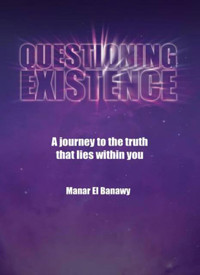
Questioning Existence by Manar El Banawy, published in English by Sama Publishing and Distribution House, discusses thorny questions about atheism and the rational justification for faith.
Sie lesen das E-Book in den Legimi-Apps auf:
Seitenzahl: 193
Veröffentlichungsjahr: 2024
Das E-Book (TTS) können Sie hören im Abo „Legimi Premium” in Legimi-Apps auf:
Ähnliche






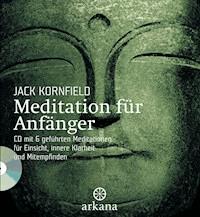













QUESTIONING EXISTENCE
"A Journey to the truth that lies within you"
Manar El Banawy
Introduction
A lot of people are starting to question their existence; especially those who are striving to know and understand the true meaning of life. The reason I wrote this book is because my whole life I have always been curious about different aspects concerning god, religion, the reason behind our existence and its purpose.
I had a strong feeling that I don’t belong to this world since I was a kid. I’ve always desired to return to the place where I came from, the place where we all came from; the feeling that there is nowhere else to go. Knowing that I am trapped in this world made me desperate to seek a way for living peacefully, and I knew that in order to find peace in this world I had to understand the reason behind existence and this is where the searching began.
This book consists of four parts, as I consider them the four main subjects that could resolve the mystery of life. First subject is “our true identity”, we have all misunderstood our true identity throughout different ages by creating divisions through labeling. Second subject is “conflict” as most of us are angry at the world, angry at god or even at ourselves; asking why there is so much chaos in our world and why god didn’t create a peaceful world if he is capable of doing anything. Third subject is “oneness” the great truth that lot of people aren’t aware of; a truth that brings strong connections not only between people, but also with animals, plants, mother earth and the universe. Fourth subject is “peace” it’s what everyone is striving to feel, attempting to search for it everywhere, trying to find different roads to reach it, while it’s an inner state that is reachable anywhere and anytime.
The purpose of this book is to show you a bigger picture of existence, taking you to a higher state of being. Taking you to another dimension where you can see all the things that you couldn’t see even though they were in front of you and within you all the time.
Learning ideas that are based on inner knowledge, scientific theories and religious teachings, bringing you back to life with more wisdom and a deeper understanding of the great mystery of life and the beauty that lies within it.
I’ve always wished I could make people happier, and I hope this book will serve this purpose. The truth about existence gives a great feeling of peace and joy which I would love to share with others. I would like to give a special thanks to those who have influenced me, taught me, believed in me and encouraged me Dr. Wafaa Hadaad and Omar Sherif. Also to my special friends who helped me out in publishing this book Mahmoud El Bendary and Layla El Nakeeb.
Part 1 Our true identity (we are spiritualbeings having a human experience)
Who am I? This is a question we all ask ourselves. Am I special? Am I a sinner? Why do certain events take place in my life? Why do I feel pain? Why is joy so fleeting? Are we all going to burn in Hell? Can God hear me? Do I have a purpose for being here on earth? Does evil exist? These are just some of the endless questions we constantly ask ourselves.
We all come into this world with the knowledge that we are human. The first thing we notice as we grow up is our parents and family. Then we notice those who are different from us and are living a different life. In other words, it seems that everyone is trapped within the conditions of their own life; we usually see ourselves as separate from the others. We are identified firstly by what region we come from—for example, Arab, Asian, European, or American—and then by other factors such as which religious belief we follow and to what social class we belong.
Most of us are born into a family that follows a certain religion (for example, we could be a Hindu, Buddhist, Jew, Christian, Muslim, Baha’i, or something else) and most of us are followers of our parents’ path; very few people stop following the faith of their parents and start searching for something else. There are also those who disbelieve in the idea of God or religion entirely or are unsure if they believe (atheist or agnostic). The religious path that each of us follow plays an important role in our life; in fact, it is often what identifies a person the most, simply because we see it as our path to salvation. Religion essentially plays a role in everyone’s life, either directly or indirectly, because even if a person isn’t religious they are usually identified by others based on their similarities or differences and by the belief they follow. As well as being a way of identifying us, our religion often shapes the group of people that we surround ourselves with. Many countries are also identified by their religion based on the number of followers of a particular religion amongst the population. So whether you are aware of it or not, religion is often the number one foundation of identity, regardless of whether or not you identify yourself as religious
We are also largely influenced by the cultural traditions of the society in which we live. These traditions are shaped throughout time through the beliefs and actions of the people within that society. We automatically become a part of the society and culture into which we are born, inheriting its traits. So essentially, we come into this world with the path we will follow already laid out, which is usually determined by the traditions of our parents.
Then we start the process of living, with each of us trying to find the best way to live to the fullest and be happy. Each of us is different and thus we find happiness in different ways: through remaining single, through marriage and children, through making money, through career progression, through worshipping God, through learning, through teaching, and so on.
Many people view life as something to be enjoyed and get the best from; being born, experiencing different relationships, getting married when the time is right, making money, seeking success in our work, and worshipping God. This is the cycle of life for most people.
So why do we always feel that there is more to life than that? Why is it so hard for us to be fully satisfied? Why do so many of us feel that there is something greater and something missing that we can’t see? We are looking for it everywhere but we don’t know what it is. We just know deep inside ourselves that there is something bigger. Am I referring to God? Yes, I am. Our beliefs are imperative because they shape who we are and how we live our lives; beliefs are the roots from which everything grows. Is it enough that everyone is following their God? Are people already satisfied?
Man has a history of destruction and corruption. We are destroying our home, Mother Earth. We destroy forests, we destroy countries, we destroy people who are different, and we even destroy ourselves. Throughout time, people have also destroyed the idea of religion. Once a certain amount of time passed after revelations took place, they became misinterpreted by people and their true meaning and intention was corrupted. Hence, God sent prophets to remind people of the true message. Each time a new messenger arrived, people started believing in the truth again. So historically, mankind has continuously corrupted the idea of faith and the belief in the unknown.
All religions are from God, but how many people truly know God? Lately, religion has become about the external rather than the internal, about fear instead of love, about following instead of knowing, about an identity instead of a path. In most religions, the idea is put forth that ceasing to follow their path will lead you to eternal punishment in Hell, which is often one of the main reasons why people continue to follow it. Accordingly, religion has become about dominance rather than knowing, understanding, and a way of living to experience peace. Dominance has nothing to do with knowing God; wherever there is dominance there is pressure, which is the reason it no longer brings satisfaction to most people. This is the key reason why there is such a lack of satisfaction within us.
But the positive side is that you are able to know God through yourself, through direct experience. Direct experience is the best way to know and comprehend God. Regardless of what you’ve heard or how you’ve been educated, direct experience is the only way to truly know God. According to Descartes, “We can arrive at the conception of God only through the self.” This does not suggest excluding the teachings of messengers and masters. They were all enlightened and came here to help humanity, not to see the light alone but also to teach people how to experience the light within for themselves.
We all affect others and are in turn ourselves affected by others. As such, sharing knowledge is necessary, as we absorb this awareness from enlightened masters either consciously or subconsciously. However, God wants you to know him directly, which is why there are many times when you ask yourself questions to which you don’t know the answer. What is God like? Why did I come into this world? Why am I living this life? Where did I come from?
What we think we are
We know we are humans who have come to Mother Earth. We build ideas of what it means to be human from our families and our societies, and from these ideas theories have developed about the purpose of existence. One of the basic teachings of religion since childhood is that we came here to earth to be tested by God. If you pass the test, you will go to Heaven; if not, you will burn in Hell for eternity. Part of the test is to listen to your parents, be a good son or daughter, be a good student, have decent friends, and not to repeat mistakes. Of course, some people raise their children differently, depending on their background and beliefs. As you grow older you may go to college, develop life goals, get a job you like with a good salary, and get married and have children. As you continue to grow older, your children may repeat the cycle and then at some point you will die. This is life. You try hard to be a good, respectable person and get the best out of life. Isn’t that why you are here?
We are all seeking to manifest material things in this material world, things with form that need to be heard, seen, felt, tasted, or smelled in order to be enjoyed. This is human nature. We see ourselves as human beings who reach our end when we lose our bodies and die. We see ourselves as humans who have a soul and a mind. When the body is gone, everything else goes with it.
This is how most people live their lives; this cycle of being born, then growing older and older and older, then dying. Although we are surrounded by it, we tend not to think much about it until some crisis takes place, such as losing a loved one. Then we start realizing that this is going to occur to us someday, so we start wondering what is going to happen after death. Does anything actually happen? Where do we go? Do Hell and Heaven truly exist?
Why we think so
Our thoughts and ideas about life, who we become, and the image we want to create for ourselves in order to be accepted by others are based on our background, where we live, how we’ve been raised, and the society in which we’ve been raised. All these elements combine to give us a sense of who we need to be in order to be accepted and respected by others. We start forming ideas about things such as how we should dress, how we should talk, and what car we should drive. In the end, we are creating a false idea of what it takes to be somebody significant, which makes people competitive and struggle over who is more superior. Cultures have shaped these societies throughout time. All these ideas of who we should become are created by humans or, more precisely, by the ego of the human mind. There is no truth in it because it is all created by man in order to please the ego of oneself. How could that be?
The desires and needs of each individual are totally subjective. Whatever is joyful for you could be meaningless for me and vice versa; these desires and needs are different for everyone because we are diverse; we are all unique in our own way and therefore the things that we want in life are dissimilar. But although we might understand this, we still attempt to satisfy our ego by trying so hard to fit in and be accepted by others that we end up becoming someone other than who we truly are. We tend to think that this will make us satisfied, but it doesn’t.
We all have the urge to get the best out of life. We may want the best car, the best house, to be the most beautiful, to achieve success, or to be famous. All these things give us a false idea of who we must become in order to be respected and loved. There is nothing wrong with trying to get the best out of life; it is our human right to manifest material things. If we are living in this material world where there is a form for everything, then we need to live on the same level. But is that all we need in order to be happy? Does it bring complete satisfaction?
Although everyone wants different things, the desire and craving for anything in life stems from one common feeling that encompasses all others: love. It is love which makes us feel joyful, peaceful, blissful, and safe. We are all seeking to experience these feelings; everything we strive to do or get in our lives is to bring about these emotions. But a struggle within takes place when people start competing to become the best. We do things in our lives in the belief that being better is what will bring us satisfaction; in fact, while it may bring fulfillment to the ego, it is ego that leads to the destruction of who we truly are.
What is the ego?
The ego is the false idea of loving oneself. We tend to think that we love ourselves when we gain certain possessions that we have been craving, especially if they make us feel superior to others.
The mind feeds on the ego, wanting to be better, prettier, stronger, or richer. When you feel less of these things, you become less confident, you start judging yourself, you start comparing yourself to others, you start creating this idea that you are unworthy and this is when you stop loving yourself.
So does this mean that if you become everything you wish to be you will love yourself and be fully satisfied? There is a huge difference between wanting and desiring. Wanting usually comes from the ego; it’s less truthful because it is derived from the ego. Desiring, on the other hand, usually comes from the heart; desires are more sincere because they are usually related to the soul’s longing, which is necessary in order to achieve the purpose of the soul.
Wanting things in order to be superior to others is only satisfying to your ego and has nothing to do with loving yourself. Even loving the idea of who you are becoming is a false love if it is based on wanting approval from others. That is nothing more than the ego, and not actually who you are; it is the artificial idea that you have created about who you should be or who you want to become. But if you are everything you are truly passionate about, then you will be the happiest and most satisfied person.
From where does the ego come?
Does the ego come from the devil, when he whispers constantly in our ears?
No, the ego doesn’t come from the devil; the ego is the devil himself. It is the devil within you and within each human. In the three Abrahamic religions, when God created Adam and asked the angels and the demons to bow to Adam, Lucifer’s ego didn’t accept the idea of doing so, as he considered himself to be better and to allow this would make less of him, so God damned him for eternity. Being damned here doesn’t necessarily refer to Hell as a place; if the devil has already been created from fire (as based on religious teachings), then what would Hell—which is very hot, dense fire—do to him? Hell here could refer to a sense of unease, in which there is no peace and a lack of love—that is the true Hell. The moral of the story here is that our ego will lead us to Hell, which is the suffering within; our ego will prevent us from feeling peaceful and will prevent us from feeling love for ourselves, which means we won’t be able to love others. The ego always makes us compare ourselves to others, so in the attempt to seek approval from others we become someone that we don’t really want to be, which makes us struggle continuously, always unsatisfied, simply because nothing satisfies the ego.
Suffering comes from not recognizing who you truly are, because if you really know yourself, you accept yourself as you are; when you accept yourself, you will love yourself no matter where you are in your life, and to love yourself means that you will love everyone else. Your attitude will change from competing with others to wishing the best for everyone; you will be aware that everyone is unique and special, including yourself; jealousy, hatred, anger, and depression will all cease when you truly love and accept yourself. You will be unable to love everyone and everything around you until you truly embrace your own self.
Hearing voices
Loving oneself may sound very easy to do, but you only know that you really love yourself when you feel affection towards everything else, from humans to animals to nature. So how are we able to reach that feeling of love towards everything?
It is said that there are only two emotions from which all other emotions generate: love and fear. Fear is the lack of love, while love is a feeling of completeness. The highest state of love is unification with God.
What does love have to do with God?
Everything we act on in our lives is for the sake of feeling love. What if I told you that it is not only we who are trying to reach love, but that love is also seeking to be found by us humans?
We search for this feeling of completeness, this great love, by trying to get things in life. But material things give only temporary happiness, not real happiness, because anything real is eternal and cannot be temporary. As much as we continuously seek happiness in the wrong places, love is also seeking to be found; it wants to be found by us. So if love wants to be found, then why is it often so elusive?
Love is easy to find, but only for those who are open and trust that it is there. Love in this context doesn’t refer to love of the other gender or anything attached to earthly life but, rather, refers to the greatest love of all: the eternal love from where we all came.
As much as we do things in our life to satisfy our ego, throughout our journey here on earth, from childhood, we hear voices. These voices are the call of love trying to find us.
We all have an inner voice asking questions and questioning everything about life. At times, it is a guiding voice telling us what to do and what not to do. Unfortunately, most people tend to ignore their inner voice.
The questions that cross our minds are very common, especially when it comes to the philosophy of life and its endless questions, such as: Why did we come here? What is God like? Is my religion the right path? Where did I come from? Where will I go when I die?
Why do we question these things even though we grow up knowing that we come to this world to worship God and we return to him when we die? Even though each of us at least knows the basic teachings of our own religion, we still ask ourselves these questions. Perhaps it is because some religions seem to have lost their value and true purpose, which is to enable people to become peaceful, joyful, and full of love. Despite their knowledge about existence, natural human curiosity gives people the urge to want to understand things more deeply. People like to analyze things, and if they fail to find a convincing explanation, they become skeptical about what is true and what is not true. So what does love have to do with these voices?
Why we must listen carefully
Many people living among us feel that they are somehow lost; they sense that this isn’t their true home and that they belong somewhere else. On the other hand, some people feel that they belong just where they are, which is here on earth; for them, it is the right place and the right fit. What is common between them is that most have some questions in their heads that pop out from time to time; some pay no attention to these questions, while others listen carefully and seek answers.
In most cultures and societies, people often ask questions about the mysteries of life, such as Where do we come from? Why are we here? Where does God come from? Do Hell and Heaven really exist? And it is often the case that family, friends, priests, and sheikhs will advise them to ignore these questions, telling them that deeper questioning may lead to a loss of faith in God and the religious beliefs that they are following, which in turn will lead to them burning in Hell. That’s what most of us have been told! It is true that such questions could make you lose your faith, to disbelieve in God and start to believe in nothing except the material world. Many people have fallen into this trap. But surely there is only one ultimate reality and one ultimate truth that can lead you to peace and happiness and give you great joy. And that is the whole purpose of the soul.




