


0,99 €
Niedrigster Preis in 30 Tagen: 0,99 €
Niedrigster Preis in 30 Tagen: 0,99 €
Mehr erfahren.
- Herausgeber: Booksell-Verlag
- Kategorie: Geisteswissenschaft
- Sprache: Englisch
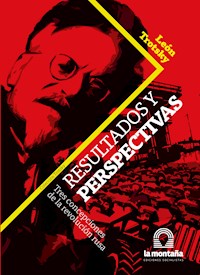
In "Results and Prospects," Leon Trotsky delves into the dynamics of the Russian Revolution and its broader implications for socialist movements worldwide. Written in a compelling and incisive style, the book combines rigorous analysis with passionate advocacy for permanent revolution, challenging the notion of a linear progression in revolutionary struggles. Trotsky meticulously critiques prevailing Marxist theories while providing a detailed depiction of the socio-political landscape of early 20th-century Russia, positioning the revolution not merely as a national event but as a pivotal moment with international ramifications. Leon Trotsky, a key figure in the Russian Revolution and one of Marxism's most influential theorists, wrote this work during a time of intense ideological struggle within the Communist movement. His experiences as a revolutionary leader, coupled with his understanding of international dynamics, informed his perspective on the necessity of sustained revolutionary action. Trotsky's exile and opposition to Stalinism further galvanized his commitment to articulating a vision of socialism that transcended national borders, making his insights all the more poignant and relevant. "Results and Prospects" is a vital read for anyone seeking to understand the complexities of revolutionary theory and practice. Trotsky's incisive arguments and historical insights provide an intellectual framework that resonates in contemporary discussions about socialism and the nature of revolution. This book is essential for students of political theory, historians, and activists committed to the ideals of social change. In this enriched edition, we have carefully created added value for your reading experience: - A succinct Introduction situates the work's timeless appeal and themes. - The Synopsis outlines the central plot, highlighting key developments without spoiling critical twists. - A detailed Historical Context immerses you in the era's events and influences that shaped the writing. - An Author Biography reveals milestones in the author's life, illuminating the personal insights behind the text. - A thorough Analysis dissects symbols, motifs, and character arcs to unearth underlying meanings. - Reflection questions prompt you to engage personally with the work's messages, connecting them to modern life. - Hand‐picked Memorable Quotes shine a spotlight on moments of literary brilliance. - Interactive footnotes clarify unusual references, historical allusions, and archaic phrases for an effortless, more informed read.
Das E-Book können Sie in Legimi-Apps oder einer beliebigen App lesen, die das folgende Format unterstützen:
Veröffentlichungsjahr: 2021
Ähnliche







Results and Prospects
Table of Contents
Introduction
Revolution, once in motion, refuses to halt at the boundaries others draw for it. In Results and Prospects, Leon Trotsky distills the convulsions of 1905 Russia into a rigorous meditation on how social forces collide, align, and overrun expectations. The work confronts the tension between prescribed stages of historical development and the unruly logic of mass action. Trotsky’s analysis moves from the streets and councils of workers to the problem of state power, situating immediate events within an international frame. The result is a concentrated exploration of how outcomes emerge from conflict and why the future often stretches beyond cautious forecasts.
This book is considered a classic because it set a durable benchmark for revolutionary analysis, combining historical precision with conceptual boldness. Its argument helped inaugurate a twentieth‑century conversation about strategy, class alliances, and internationalism that would reverberate far beyond Russia. In the literature of political thought, Results and Prospects endures for its clarity of categories, economy of exposition, and insistence that ideas be tested against lived struggle. Subsequent authors in Marxist theory, political sociology, and historiography have returned to it for its method as much as for its conclusions, treating it as a touchstone for thinking about rapid, crisis‑driven social change.
Leon Trotsky, a Marxist revolutionary and theorist, wrote Results and Prospects in the immediate aftermath of the Russian Revolution of 1905. First published soon after those events and often appearing as the concluding essay to his book 1905, it examines both the lessons of that uprising and the dynamics likely to shape what would follow. The text belongs to the early twentieth century, when Russia’s autocracy confronted rising urban labor, peasant unrest, and imperial pressures. Trotsky’s aim was to assess the balance of forces and sketch a strategic perspective that responded to Russia’s specific development while remaining firmly anchored in international conditions.
The work offers a concise, layered overview rather than a narrative chronicle. Trotsky parses the capacities and limits of the liberal bourgeoisie, the organizational emergence of the industrial working class, and the combustible alliance between town and countryside. He studies how partial concessions, repression, and economic cycles alter the tempo of struggle. From these materials he draws a picture of what reforms could achieve and where their limits would lie. Without announcing a detailed blueprint, he outlines the mechanisms by which a democratic upheaval might acquire broader social content, and how that process would hinge on leadership, institutions, and global interdependence.
Trotsky’s purpose is both diagnostic and strategic. He seeks to clarify why the 1905 movement advanced, stalled, and transformed, and to intervene in debates within Russian social democracy about the path forward. Against mechanical notions of an orderly, stage‑bound progression, he argues for a perspective that follows the real motion of classes rather than preassigned schemas. The text’s intention is not to predict a calendar of events but to specify tendencies: which alliances are viable, which institutions matter, and which contradictions sharpen under pressure. It is an effort to make theory answer to history’s speed without sacrificing rigor or comparative breadth.
As a classic of revolutionary literature, Results and Prospects shaped the century’s most consequential discussions on transition, democracy, and socialist possibility. Its conceptual center—later identified with the theory of permanent revolution—reframed how thinkers approached countries with belated capitalist development and fragile liberal elites. The book’s influence can be traced in debates over strategy before and after 1917, and in subsequent analyses of anticolonial and dependent capitalist contexts. Its durability in political thought comes from a method that integrates structural constraints with conjunctural openings, showing how crises recompose class relations and how political initiative can accelerate or brake transformations already germinating in the economy.
Generations of Marxist authors, organizers, and historians have read Results and Prospects as a model of disciplined argument under conditions of upheaval. Its formulations echo across commentaries on revolution, development, and international linkages, informing discussions of how local victories depend on wider solidarities and markets. While rooted in Russia, the book’s questions traveled: what leadership can do when liberal modernization stalls; how working‑class institutions can project authority beyond factories; how peasant demands reshape urban strategy. By coupling analytic tightness with historical sensitivity, Trotsky offered a framework that later writers could adapt, dispute, or extend, ensuring its continued presence in theoretical and strategic literature.
Part of the book’s power lies in its style and architecture. Trotsky writes with compressed urgency, moving from empirical observation to theoretical synthesis without losing the thread of argument. The prose is polemical yet controlled, alert to counterarguments and alive to complexity. He refuses both fatalism and voluntarism, instead situating initiative inside structural constraints and international interdependence. The chapters cohere as a set of problems—state form, class composition, rural‑urban ties, timing—rather than as a closed system. That openness makes the book intellectually generous: it invites readers to test its claims against new evidence and to apply its method beyond its initial terrain.
Context is crucial. Russia in 1905 presented an uneven social landscape: advanced industry clustered in cities alongside vast agrarian backwardness, an autocratic state grappling with external shocks and internal dissent. Results and Prospects reads this terrain as a matrix of possibilities, clarifying why partial reforms could coexist with explosive demands, and why openings could widen or narrow rapidly. In treating 1905 as a laboratory of modern politics, the book illuminates how moments of crisis compress time, erode inherited balances, and force actors to improvise. Those dynamics, though historically specific, became defining features of the twentieth century’s recurring upheavals across different geographies.
For contemporary readers, the text remains relevant because it addresses problems that persist: stalled liberalization, fragile institutions, and global markets that magnify local shocks. It offers tools for thinking about coalition‑building without dissolving principles, about democratization under authoritarian legacies, and about the ways international constraints shape domestic horizons. Rather than presenting easy answers, Trotsky models how to reason strategically under uncertainty, weighing risks and pathways as they evolve. That approach appeals to students of history, political theory, and social movements who seek analysis that neither romanticizes spontaneity nor reduces agency to structures, but instead situates practice within a changing world system.
The themes that animate Results and Prospects are clear and enduring. They include the capacities and limits of liberal elites, the agency of the working class, the role of the peasantry in national transformation, the temporality of change, and the necessity of international perspectives. The book engages questions of leadership, organization, and state power without detaching them from economic rhythms and cultural formations. It probes how reforms can both open space and set traps, how victories in one arena may shift the ground in another, and how strategy must account for uneven development. These concerns retain force wherever accelerated change tests institutions.
Ultimately, this is a work of analysis animated by conviction: that history moves in leaps and contradictions, and that understanding those motions matters. Results and Prospects endures because it fuses an exacting reading of a specific experience with a framework adaptable to new conjunctures. Its insights continue to provoke, instruct, and challenge readers to think beyond incrementalism while refusing simplifications. By clarifying what is at stake in alliances, timing, and international linkages, Trotsky’s book invites engagement rather than passive admiration. Its lasting appeal lies in how it renders complexity navigable and turns urgent questions into disciplined, illuminating inquiry.
Synopsis
Results and Prospects, written in 1906 after the Russian Revolution of 1905, presents Leon Trotsky’s assessment of what occurred and what might follow. He combines a narrative of events with an analysis of Russia’s social structure and political forces, aiming to explain why the uprising unfolded as it did and what strategy could succeed in the future. The book opens by situating Tsarist Russia within the modern world economy, noting the tension between autocratic rule and rapid industrialization. Trotsky frames the text as a study of “results” achieved by the revolution’s first wave and “prospects” implied by the balance of class forces.
Trotsky outlines Russia’s peculiar path of development, emphasizing uneven and combined growth. Large, modern factories financed by foreign capital stood alongside a vast, impoverished countryside and archaic state institutions. This pattern concentrated workers in major cities while leaving the peasantry burdened by debt and landlord power. The autocracy relied on military-bureaucratic coercion and on alliances with landowners, yet it presided over an economy tied to international markets. Trotsky argues that this configuration compressed historical stages, creating a relatively young but cohesive proletariat and a cautious, dependent bourgeoisie, setting the stage for sharp political confrontations and unconventional alignments in the coming crisis.
He then surveys the principal classes. The landed nobility sought to preserve privilege through limited reforms. The liberal bourgeoisie favored constitutional change but feared mass upheaval and labor militancy. The intelligentsia oscillated between radicalism and moderation. The peasantry, numerous and discontented, demanded land and relief from obligations but lacked unified leadership. The industrial working class, concentrated and organized through strikes and unions, increasingly acted as a political force. Trotsky stresses the potential for worker–peasant solidarity under urban leadership, while highlighting the reluctance of the bourgeoisie to challenge the state decisively, a constraint that would shape both tactics and outcomes in 1905.
The book recounts the sequence of 1905. Beginning with Bloody Sunday in January, mass protests and strikes spread from St. Petersburg across industrial centers and railways. Political agitation intensified, newspapers multiplied, and demands for civil liberties, an elected assembly, and land reform gained coherence. By autumn, a general strike paralyzed transport and administration, forcing the government to issue the October Manifesto promising limited political freedoms and a representative Duma. Trotsky describes how these concessions opened space for further organization while provoking reaction from conservative forces, leaving the central question of power unresolved and pushing movement centers toward more coordinated and confrontational forms.
Central to his narrative is the emergence of workers’ councils, notably the St. Petersburg Soviet. Formed as strike committees, they became representative bodies coordinating economic stoppages, public services, and political demands. The Soviet established routines for delegates, debated tactics, and negotiated with authorities, serving as a focus for worker unity. Trotsky details arrests, censorship, and clashes, culminating in intensified repression and the Moscow December uprising, which was defeated. The councils’ brief existence demonstrated new methods of mass self-organization and leadership under pressure. Their dissolution marked the ebb of the revolutionary wave, yet they left an institutional model and strategic lessons for subsequent struggles.
Assessing the immediate results, Trotsky notes that the autocracy survived, reasserting control through arrests, military force, and administrative restrictions. The Duma emerged as a constrained parliament, limited by the Crown and electoral arrangements. Nonetheless, the revolution broadened political participation, created durable labor and peasant networks, and clarified the positions of parties and classes. The experience sharpened organizational capacities, revealed the potential of general strikes, and tested forms of dual power. For Trotsky, these outcomes were partial but significant: they closed one phase, exposed the limits of reform under autocracy, and supplied practical experience necessary for future confrontations on a higher level.
From these findings Trotsky advances his central theoretical conclusion: the democratic revolution in Russia could not be completed by the bourgeoisie. Given its dependence and fear of mass action, the tasks of political liberty, agrarian transformation, and national questions would fall to the proletariat, supported by the peasantry. Once in power, the working class would be compelled to enact measures crossing from democratic into socialist terrain. This uninterrupted sequence, later termed the theory of permanent revolution, connects immediate demands to broader transformations, positing that the momentum of struggle and the logic of governance would fuse stages previously imagined as separate.
Trotsky extends the argument internationally. Russia’s economy was embedded in European finance and markets; its industry mirrored advanced techniques while its polity lagged. Consequently, he maintains that a workers’ government in Russia would depend on support from the proletariat of more developed countries, especially in Europe, to withstand isolation and economic pressures. International solidarity, reciprocal revolutions, and the spread of socialist policies are presented as necessary conditions for durable change. The prospects thus hinge on the interplay between domestic initiative and global dynamics, reinforcing the idea that Russian developments both drew from and could accelerate broader continental upheavals.
In closing, Results and Prospects synthesizes narrative experience with strategic perspective. It treats 1905 as a rehearsal that disclosed alignments, institutions, and methods likely to reappear, while identifying the agency capable of carrying the process forward. The work’s overall message is that Russia’s modernization compressed political possibilities, making working-class leadership central to achieving democratic goals that would inevitably open onto socialist measures, conditioned by international support. The synopsis of results informs the prospects: limited constitutionalism within autocracy cannot resolve fundamental issues; only a new configuration of power, sustained domestically and abroad, could realize the revolution’s unresolved aims.
Historical Context
Results and Prospects is anchored in the Russian Empire at the turn of the twentieth century, above all in the revolutionary year 1905 and its immediate aftermath. The book was composed in early 1906, when Leon Trotsky, recently a leading figure of the St. Petersburg Soviet, reflected on the conditions of an autocratic polity shaken by war, economic crisis, and mass strikes. It examines the capital St. Petersburg and Moscow, as well as industrial regions like the Donbass and Baku, and the rural provinces where peasant unrest surged. The time is defined by Tsar Nicholas II’s faltering regime, a wounded state after defeat by Japan, and a politically awakening working class.
The setting includes the compressed, uneven modernization of late imperial Russia. Foreign investment and state-led industrialization created giant factories, rail hubs, and dense working-class quarters enclosed by a largely agrarian countryside. The Okhrana monitored political dissent as underground socialist circles and legal unions multiplied. In 1905, soviets of workers’ deputies emerged as novel institutions of mass representation. Trotsky analyzes this moment as one in which a weak liberal bourgeoisie, a militant but politically inexperienced proletariat, and a vast peasantry with acute land hunger confronted a rigid autocracy. The book situates Russia within a world market that accelerated both development and instability.
The 1890s industrial surge under Finance Minister Sergei Witte (1892–1903) transformed Russia’s economy. Rail mileage more than doubled, with the Trans-Siberian Railway effectively completed by 1904, and heavy industry expanded in St. Petersburg, Moscow, the Donbass, and the Baku oil fields. French and Belgian capital financed factories, mines, and state bonds, while urban populations swelled. This uneven modernization concentrated workers into large enterprises like the Putilov Works, sharpening class antagonisms. Results and Prospects draws on these facts to theorize combined and uneven development: advanced industrial forms imposed upon a backward social structure, generating a proletariat capable of leading a democratic revolution beyond bourgeois limits.
The Russo-Japanese War (1904–1905) shattered imperial prestige and magnified domestic tensions. After setbacks in Manchuria and the fall of Port Arthur in January 1905, the decisive naval defeat at Tsushima on 27–28 May 1905 exposed the regime’s incompetence. War costs devastated the budget and disrupted supply chains, aggravating price rises and unemployment in industrial centers. Returning soldiers carried disillusionment home. Trotsky situates the war as the immediate detonator of the 1905 upheaval: a modern imperial conflict that exposed the fragility of a semi-feudal polity. In the book, military disaster catalyzes mass political consciousness and clarifies the inability of the autocracy to enact meaningful reform.
Bloody Sunday, 9 January 1905 (Old Style), marked the moral rupture between workers and the Tsar. Led by Father Georgy Gapon, tens of thousands marched to the Winter Palace in St. Petersburg with a petition for rights, an eight-hour day, and relief from hardship. Troops fired on the unarmed crowd, killing and wounding hundreds. The massacre ignited strikes and demonstrations in major cities and emboldened underground parties. Trotsky treats Bloody Sunday as the irrevocable end of monarchist illusions among workers, establishing a psychological and political precondition for soviet organization. The event anchors his argument that the proletariat would no longer wait upon a hesitant liberal intelligentsia.
The 1905 Revolution, stretching across the empire from January to December, is the central event shaping Results and Prospects. It unfolded in waves: spring strikes; peasant disturbances; mutinies in the fleet and garrisons; the summer’s regional upheavals; and, crucially, the October general strike that paralyzed railroads, mines, and factories. In St. Petersburg and Moscow, workers formed soviets—elected councils coordinating strikes, provisioning, and self-defense. The Petersburg Soviet, founded in October, issued proclamations, negotiated with employers, and organized the city’s life during stoppages. Under pressure, Tsar Nicholas II signed the October Manifesto (17 October, O.S.), promising civil liberties and a State Duma. Yet repression soon resumed; the Black Hundreds rampaged; censorship tightened; and the regime regrouped. December witnessed the armed uprising in Moscow, where barricades in the Presnia district held out for days against artillery. By late December, mass arrests dismantled the Petersburg Soviet. Trotsky, who had become a principal voice within it, was seized on 3 December (O.S.). This cycle—spontaneous mass action generating new organs of representation, a wavering monarchy tacking toward concessions, and a renewed counteroffensive—structures Trotsky’s theory. He contends the liberal bourgeoisie, tied to the state and finance, feared the movement from below more than autocracy; only the working class, allied with the peasantry, could complete democratic tasks and carry the struggle into socialist measures. The revolution’s rise and defeat demonstrate, in his view, the intrinsic linkage between democratic demands and proletarian power, and the necessity of international extension of the struggle.
The St. Petersburg Soviet, established in October 1905, became the emblem of workers’ self-organization. After the arrest of its first chair, Georgy Khrustalyov-Nosar, Trotsky emerged as a leading figure and orator. On 2 December (O.S.) the Soviet issued a Financial Manifesto urging a tax boycott, withdrawal of bank deposits, and refusal to buy government bonds to pressure the regime. The Okhrana responded swiftly, arresting the Soviet’s deputies on 3 December in the Technological Institute. Tried in 1906 and exiled to Siberia, Trotsky later escaped. Results and Prospects generalizes from this experience, presenting soviets as embryos of revolutionary power and linking finance to political struggle.
The Moscow Uprising of December 1905 tested the prospects for insurrection. Following a citywide strike beginning 7 December (O.S.), armed detachments of workers, notably in the Presnia district, erected barricades and engaged troops over several days. The government deployed artillery against working-class neighborhoods, leaving hundreds dead and many more arrested. The uprising’s defeat revealed the uneven spread of the movement and the army’s continued loyalty in decisive units. In Trotsky’s analysis, Moscow demonstrated both the courage and organizational ingenuity of the proletariat and the need for broader national coordination and fractures within the armed forces. The episode informs his insistence on leadership and strategy.




