


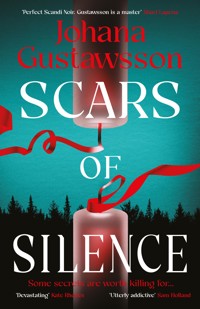
Erhalten Sie Zugang zu diesem und mehr als 300000 Büchern ab EUR 5,99 monatlich.
- Herausgeber: Orenda Books
- Kategorie: Gesellschafts- und Liebesromane
- Serie: Lidingö Mysteries
- Sprache: Englisch
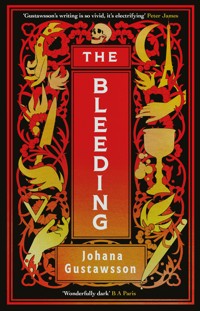
When two teenagers are found brutally murdered on the island of Lidingö, dressed in white tunics and wearing crowns of candles, former French police officer Maïa Rehn joins local Commissioner Aleksander Storm to unravel a mystery with a shockingly dark heart. The highly anticipated sequel to the international bestselling gothic mystery, Yule Island. `A horrific, baffling crime startles a small Swedish community. This is perfect Scandi Noir, dripping with atmosphere. The writing shines, and the story is impossible to resist. Gustawsson is a master´ Shari Lapena `A gripping mystery simmering with social outrage – this is what crime fiction should be´ Alexandra Sokoloff `Johana Gustawsson is an extraordinarily talented storyteller, with a beautiful, eloquent writing style. Scars of Silence unfolds at a breathless pace, and the climax is devastating´ Kate Rhodes ___________ Twenty-three years ago, a young woman was murdered on the Swedish island of Lidingö. The island has kept its silence. Until now… As autumn deepens into darkness in Lidingö, on the Stockholm archipelago, the island is plunged into chaos: in the space of a week, two teenaged boys are murdered. Their bodies are left deep in the forest, dressed in white tunics with crowns of candles on their heads, like offerings to Saint Lucia. Maïa Rehn has fled Paris for Lidingö after a family tragedy. But when the murders shake the island community, the former police commissioner is drawn into the heart of the investigation, joining Commissioner Aleksander Storm to unravel a mystery as chilling as the Nordic winter. As they dig deeper, it becomes clear that a wind of vengeance is blowing through the archipelago, unearthing secrets that are as scandalous as they are inhuman. But what if the victims weren't who they seemed? What if those long silenced have finally found a way to strike back? How far would they go to make their tormentors pay? And you – how far would you go? _______ `Haunting, human and wholly unputdownable … unforgettable characters caught in the web of a chilling mystery, set against the stark, mesmerising backdrop of Sweden. Few writers balance heart and horror so masterfully – this is Scandi Noir at its finest´ Thomas Enger `A shockingly cold slice of Scandi noir that combines the darkness of folk horror with a sharp-eyed exploration of consent´ Sarah Hilary `Relevant and timely, Scars of Silence is compulsive whodunnit, with a strong and important message, tackling issues of great relevance in today's world. Once I started reading, I couldn't stop – utterly addictive´ Sam Holland `Magnificent! So chilling and atmospheric … I was utterly gripped. Johana Gustawsson gets better and better with every book´ Lisa Hall `A page-turner full of twists and turns, told with devastating tenderness; I felt bereft when it ended. Scars of Silence is a masterclass in Nordic Noir´ Heidi Amsinck `Scars of Silence is incredible – powerful, timely, superb – with layers of emotion even in the darkness. Such a talent!´ Louise Swanson `Gustawsson's writing is so vivid, it's electrifying´ Peter James
Sie lesen das E-Book in den Legimi-Apps auf:
Seitenzahl: 391
Veröffentlichungsjahr: 2025
Das E-Book (TTS) können Sie hören im Abo „Legimi Premium” in Legimi-Apps auf:
Ähnliche













i
THANK YOU FOR DOWNLOADING
THIS ORENDA BOOKS EBOOK!
Join our mailing list now, to get exclusive deals, special offers, subscriber-only content, recommended reads, updates on new releases, giveaways, and so much more!
CLICK HERE TO SIGN UP
Thanks for reading!
TEAM ORENDA
i
SCARS OF SILENCE
JOHANA GUSTAWSSON
Translated from the French by David Warriner
iii
For Maximilian, William and Alexander, my three little dragon hearts.
iv
Silence is my secret lover
We meet whenever we can
I crave her. An unbendable urge to sit in her embrace
Letting every fibre in me be caressed by her presence.
—Sussi Louise Smith, ‘If You Must, Sing’, in Seachanger – Wave Weaver
Contents
1
2 June 2023
Anna had put an ocean between herself and her mother. She wasn’t the one who came up with that image. It was the woman who gave birth to her. Anna didn’t have the imagination. That was something her oh-so cultured family never let her forget. But it was hardly an ocean, this mere strip of sea. A moat, more like – cutting Lidingö off from the life of the Stockholm mainland. A ghost-infested moat surrounding a poisoned island, where that all-powerful matriarch still reigned supreme, in spite of all that had happened.
Shaking – more with infuriation than from fear – she drove over the bridge connecting Lidingö to the capital, past the shabby stacks of the cement factory that greeted you as you reached the island, and followed the road that hugged the shore, where those lucky enough had once built holiday homes. Those shacks were now luxury villas clad in white, yellow or pink wood. Each had its own slipway and sweeping views over the bay of Stockholm.
Anna pulled over for a moment to gaze at the glassy depths. There was some strength to the sun that morning. It had none of its spring pallor and all of its summer swagger. It wasn’t enough to warm your blood, but it was turning the leaves green and tinting the sea a bluer shade of grey. June was when day devoured night and put smiles back on faces. When the Swedes were drawn to the light just as strongly as they avoided conflict.
Driving on, a shiver ran down Anna’s spine as she passed the golf club. She had been there so many times with her grandfather, arriving at dawn during the summer months, when it was easier to get away from her mother. She had ended up becoming an 2excellent caddie, despite her lack of talent for anything else. Especially for the sport itself, which reeked of old money, even in Sweden. Goosebumps broke out on her skin as she continued towards the neighbourhood of Sticklinge – the light at the end of a green tunnel.
The school was coming up on her left, on the crest of a hill by the edge of the forest. It was straight out of a Montessori brochure (printed on recycled paper, of course) – a series of small red buildings grouped around a central courtyard, plus a football field, swings and a slide snaking down the natural contours of a rock face.
Anna parked near the bus stop and zipped up her down jacket. Then she set about climbing the twenty or so steep steps that spiralled their way around a cemented-in boulder up to the school playground. Through the windows of the classroom, she saw the students in 5A sitting at their desks. Lukas, their teacher, was sitting at his, too, one leg crossed over the other, gesturing with his hands to get his point across.
Anna entered the building through the cloakroom, where trainers, coats, backpacks and rain boots were strewn all over the floor as if they had been torn out of the lockers and off the coat hooks by a tornado.
Keeping her shoes on she stormed into the classroom.
Startled, Lukas shook his head and gave her a bemused smile. Then he blinked a few times and slowly got up from his desk.
It was as if he had flipped a switch. Anna’s anger turned to rage.
She slammed the door and sat down with her back against it.
Then she pulled out the gun.
The children started screaming even before she pointed it at Lukas. Some of them curled up in fear. Others hid under their desks. Lukas froze, his mouth gaping but making no sound. There was a first time for everything.
‘Now all of you, gather around Lukas. Sit down. On the floor.’ Anna drew an oval in the air around all the children with the barrel of the gun. ‘Now!’ 3
Chairs scraped and socks slipped and slid across linoleum.
‘I don’t want to hear a peep out of you, do you understand? Not a sound. Not a word. And don’t even think about crying.’
One of the twenty or so pre-teens in the class stood out to Anna – a blonde girl who was sitting cross-legged with her hands clasped between her thighs. Her lips were moving silently. The centre parting in her hair looked like it had been drawn with a ruler. The collar of her polo shirt was starch-stiff.
‘You, with the pearl headband and the stripy-blue polo shirt,’ Anna said. ‘Go and close the blinds.’
All eyes turned to the girl, who looked down at her chest as if she needed to remind herself what she had put on that morning.
‘Now!’
The girl stood and bit her lips, which were as pale as her skin. Keeping her eyes glued to the floor, she made her way to the nearest windows, behind where her classmates were sitting. The first blind put up a fight, one side of it fanning downwards with a screech that made some of the children scream.
‘Sssh! Not a sound, I said.’
The girl tried again. This time she managed to get the slats horizontal and lower the blind to the window sill with a thunk. The girl did the same with the next two windows, then went across to the other side of the room, her fingers trying to pull imaginary sleeves over her wrists.
After closing the blinds on the three windows overlooking the playground, she hurried back towards her place on the floor.
‘Come here.’
The girl stopped and looked at Anna, terrified.
Lukas opened his mouth and hesitated for a second before he spoke. ‘Anna, please, don’t—’
‘Shut up. Shut up! I don’t want to hear another word out of you. Is that clear? Is that clear?!’
‘Her name is Louise Dahl, Anna. Don’t…’
Anna strode across the classroom. 4
Lukas dropped to his knees and put his hands in the air.
She pressed the gun to the crown of his head.
‘I don’t give a shit what her name is!’
‘Alright, Anna. I’m sorry—’
‘I said, shut up!’
She drew herself tall and reached into the pocket of her parka for her phone, then unlocked the screen with a quick swipe of her thumb.
‘Come here,’ she barked again at Louise, who was still standing in front of her classmates, not daring to move.
Her skinny shoulders shaking, the girl took a few steps forwards.
Keeping the barrel of the gun pressed to Lukas’s head, Anna leaned down and pinched the girl’s chin between her thumb and forefinger.
Louise closed her eyes as tightly as she could.
‘Look at me,’ Anna said.
Louise opened her eyes again. They were streaming with tears.
‘You’re going to film us, alright? And don’t even think about using that phone to make a call, do you hear me?’
Louise nodded frantically and clenched her jaw in an attempt to stop crying.
‘Be careful, it’s filming already,’ Anna said, handing the device to the girl. ‘Go and stand over there, in front of the window.’
Slowly, Louise stepped backwards, holding the phone with both hands like it was something precious. Then she raised it in front of her face.
Anna moved her hand so the gun was pointing at the back of Lukas’s head. Then she started to speak:
‘My name is Anna Hellström. On 28 May, my son Gustav hanged himself.’
She bit the inside of her lip to stop herself from shouting.
‘But it was you – all of you – who drove him to suicide. All your accusations. All the harassment. You all have my son’s blood on your hands.’ 5
She swallowed the tears that caught in her throat.
‘No one. No one tried to find out what really happened. You all sentenced him to death. You all sentenced my son to death. And you, Lukas, more than anyone,’ she said, never taking her eyes away from the unblinking lens of the phone camera. ‘You really had it in for my son. You took everything away from him. And now I’m left with nothing.’
Anna moved the gun away from Lukas’s head. For a few seconds, her arm hung by her side. She blinked. Then she put the barrel of the gun in her mouth and fired.
2
Maïa Rehn
31 October 2023
I had to create some rituals.
Keep myself to a strict, almost military, routine. Tame my thoughts by organising my days like a production line. One thing after another. An email. A meeting. Lunch. An arrest. A court hearing. Dinner.
Writing, too. Actually no, journalling isn’t the same as writing. Scribbling about where your life is at doesn’t make you a writer. Writing means daring to dream and flirting with fancy. Letting go a little. Seeking revenge.
A routine forces you to accept that grief isn’t something you can rush. You can’t just skip a stage. Seriously? I can’t? No, not even you can, Maïa. Five, that’s how many there are, apparently. According to the specialists – and all the crappy websites I’ve combed in search of advice. Personally, I’ve counted seven. Resignation and rebuilding seem to be missing from the usual list.
For a long time I was stuck at stage two: anger. That anger was nothing like my usual outbursts. I’d always been such a hothead. But then, suddenly, I wasn’t. This new anger was like gangrene. No, that’s not right. It was like cancer. I was rotting from the inside out. So, I had to suck it up and spill my guts to a therapist, because – spoiler alert – friends aren’t actually that great at listening. And because writing, working out and wallowing in denial are only sticking plasters that end up peeling off and exposing the wound. The gaping, festering wound that’s never been treated.
Eventually, it was talking to a psychologist friend of mine that 7helped me see how getting away didn’t mean running away. And it was something I had to do.
That’s how I’ve found myself here. In the far North. In Sweden. The country where the tips of my fingers freeze in winter. The country where Krisprolls come from, as my friends used to tease when I first got together with Ebbe (whose name is pronounced ‘eh beh,’ not ‘ebby,’ by the way). This corner of Scandinavia where my fabulous husband was born; a statistician who could never be enough of a talker for my liking, but who’s always known how to listen, which isn’t so bad, I suppose – you can probably imagine which of us, the Swede or the French, is more of a thinker. Our Sweden, the place I fell in love with the very first time Ebbe brought me here, two months after we met and a few days before a New Year. I saw a swan gliding between sheets of ice on the frozen Sticklinge sea and thought, one day, I would plant my own roots not far from this beach.
Twenty-five years later, that thought has gone from prophecy to reality and our life in Paris is now a thing of the past. For just shy of a month now, I’ve woken up in the Falu-red-painted house Ebbe grew up in. Every morning begins with a steaming mug in the cold and the dark, and with long breaths of autumn drawn in the sloping garden beside the bay at Rödstuguviken, the sea lapping at my feet. The first intake of air, with its whiff of coffee and damp earth, lasts mere seconds. It’s the only breath of the day free from any thoughts. Because as soon as I exhale, the pain and the pictures flood back into my mind.
Christian, that psychologist friend, has taught me to consider every thought without judgement. To accept it as an uninvited guest and let it sit there painfully and awkwardly. He’s taught me to accept my scattered mind, my moments of absence, the times I wallow in memories. ‘Grief is a unique, personal process for everyone.’ That’s what I read on some funeral home website. It’s true.
It’s not even five o’clock in the afternoon when this place 8plunges into darkness. It sneaks up on me every time. I’ve spent most of today sanding the kitchen worktop. It’s funny, you know. For the past twenty-five years I’ve been poking fun at the Swedes for doing it all themselves, IKEA-style, and only now, by calling this place home, have I realised that working with one’s hands is the best way to busy the mind. I suppose it’s not the only way – working out is another – but I can’t spend my life lifting weights. Basically, this house needs some love, and that’s all I have to give.
I’ve taken a quick shower and written a list of all the projects I want to do around the house, putting off getting dressed and doing my makeup. I knew in a heartbeat what I was going to wear tonight, though. The little black dress. Always my go-to, never a hassle. I hate getting all sweaty and dishevelled trying on dusty old outfits from the back of my wardrobe, only to be reminded why I haven’t worn them in a while. Once I’ve put it on, I reach for some old-school pearl earrings and pick out an evening bag. Now I’m ready – and unrecognisable.
‘You know, I had no desire whatsoever to get dressed up to the nines, but it does feel good.’
Ebbe doesn’t say a word, obviously. My monologues are essential to the stringing out of our dying relationship. But as much as I need them, they do weigh on me. I don’t turn around. I’m content with the picture of him, lying in bed, computer in his lap, glasses on the end of his nose. His combed-back fair hair the only part of his appearance he gives any thought to.
I smile, and yet I feel a lump of sadness rising in my throat. I’m about to ask him if he’s sure he doesn’t want to join me, but I bite my tongue.
Making my way downstairs to the hallway, I realise I’d better put trainers on and carry my stilettos, in case I have to walk half a mile when I get there. The Swedes are always full of surprises. Their idea of comfort is not the same as mine. Twenty years ago, the thought of wading through mud in an evening gown to get to a party would have horrified me. But not anymore. Experience 9and plenty of stories to tell have taught me otherwise. Better safe than sorry, I figure, slipping my heels into a tote bag. Thank goodness my dress isn’t long enough to drag on the ground.
Headlights sweep across the vestibule and my phone beeps. It’s Christian. My carriage awaits.
I put on my coat and gloves, but snub the woolly hat that would ruffle my hair beyond repair. Then I grab both bags and step out into the night, my heart hammering in my mouth, ready as I’ll ever be to face the world for the first time in eleven months.
3
Maïa
Ellery Beach House is a place I know by name only. Christian’s told me he treats himself to a writer’s retreat there every time he starts working on a new book. An all-inclusive stay at a luxury spa hotel with a sea view. Maybe I should become a writer too.
The hotel is in Elfvik, at the eastern tip of Lidingö, and opened during the pandemic. I’ve never set foot there myself. In the past, we would holiday in Sweden in the summer and, when Ebbe’s parents were still alive, every other Christmas. I remember being horrified by how many layers of clothes I had to wrap Alice in before she went outside. But I was the only one complaining. The Swedes have an eternally optimistic saying that my mother-in-law never let me forget: ‘There’s no such thing as bad weather, only the wrong clothes.’ That was how I ended up with an outfit and gloves for every kind of shitty weather.
During our Swedish escapades, we lived the opposite of our life in Paris. Gone were the exhausted parents who spent more time working than sleeping, couldn’t survive without a nanny and nourished their family with takeaway dinners and supermarket ready meals. In Sweden, we could take the time to do everything. To cook, explore nature and love one another.
‘So, you’re going to lug those muddy shoes around with you all night?’ Christian teases me as we walk down the paved path to the hotel. ‘How very un-Parisienne of you. Just think how disappointed our hosts will be. You do know that French women have a duty to be chic, don’t you, Maïa?’
‘And scoff croissants without gaining weight – I know.’
‘It’s more polite to say “savour” not “scoff.” Everyone has a secret crush on French women. Even Swedish women.’ 11
With a hot flush that has more to do with apprehension than my age, I leave my shoe bag and my shame at the door and follow Christian through the lobby.
To our right, the space opens into a restaurant with a view over the gardens that flow down to the pebbled shoreline, the whole ensemble accented by the subtlest of spotlights. The tables are pale wood. The chairs and benches are upholstered in a vintage shade of pink velvet. The music is jazzy. And my sole desire is to return to Ellery Beach House without a man on my arm. It’s no wonder I’m hot and sweaty. The room is packed. I must have been crazy to say yes.
Christian is accosted by a woman in a dress with sleeves so puffy they’re all but tickling her ears.
I leave them to it and find my way to the far side of the room, drawn by the sight of an illuminated gazebo in the gardens. This folly of sorts, perched on a rock, lends the place an air of romance. I find myself picturing a wedding taking place inside, an exchanging of vows, a promise of eternity.
I shake my head to keep the feelings rising in me at bay, and observe the other guests gravitating politely towards the champagne. Seeing them all with their apple-green and ruby-red velvet cocktail dresses, the creative knots in their hair, their suits with patterns way bolder than Christian’s subtle beige and chestnut check, I can’t help but feel somewhat naked in my little black dress.
There he is now, carrying two champagne flutes.
‘Sorry, it’s a bit like a Disneyland parade here tonight. You’re rubbing shoulders with all of Sweden’s literary elite, I tell you. Not bad for your first time out on the town, eh?’
‘The only authors I’d recognise are Annie Ernaux and Stephen King, so I’m afraid we’re doomed.’
A hostess offers us canapés on a silver platter. Christian gives her a smile and reaches for a fancy meatball with what looks like a strip of beetroot on top. 12
‘Ooh, I could scoff … I mean savour a few of these,’ I say, before plucking a tiny salmon and dill creation from the tray.
A tinkling of crystal hushes the conversations.
A woman whose face seems frozen in time is standing on a low podium in front of the bay window, glass of bubbles in hand, smiling at the crowd. Her gaze sweeps across the room, taking in all the faces.
‘Hej, välkomna. Out of respect to our overseas authors here this evening, I’ll continue in English. Good evening, everyone, and welcome. My name is Leonor Andersson, and it’s a great pleasure for me to manage Akerman Editions. Sophia Akerman,’ she says, motioning to someone in the audience, ‘has asked me to speak to you all this evening, on behalf of the company.’
All eyes flit to a woman with a time-weathered face, sitting tall, graceful and alone at the back of the room. She raises a hand to thank the spokesperson, who nods and carries on.
‘It’s heartwarming to see so many of you here. Thank you for joining us to celebrate the bicentennial of our fabulous publishing house. Two hundred years of making history, publishing bestsellers, defending our independence … and a few flops thrown in for good measure.’
Peals of laughter reward her honesty.
‘And that’s what helped – and still helps – us grow, don’t you think? Making mistakes and trying again.’
She pauses to embrace the audience with her gaze.
‘We share our birthday with Halloween. Even though there’s no shortage of dead bodies in our catalogue, the date of our founding is a pure coincidence, I assure you.’
This time, the laughter is less generous.
‘The books we’ve published over the last two centuries all have one thing in common – they were written by passionate people with passionate stories to tell. These people are doctors,’ she says, with a nod to a man in the front row. ‘Teachers, lawyers,’ she continues, making eye contact with others in the audience. 13‘Criminologists,’ she adds, raising her glass to Christian, ‘and novelists, who play and dream with the small but mighty written word. Thank you all for investing your talent for us, so we can share it with the world.’
Murmurings of approval ripple through the room.
‘Now, let’s raise our glasses to the good health of Akerman Editions. Here’s to the next two hundred years! Skål!’
The crowd responds with a hearty cheer of skål! Then chins start wagging again around the room.
A woman with tomboy hair and lipstick as vivid as her earrings immediately strikes up a conversation with Christian in Swedish, every damned word of which escapes me. I’ve never learned the language. Not really. I’ve picked up enough of the basics to get by from day to day, but there’s no way I could keep up with the storyline of a movie, make sense of the TV news or hold a conversation of any depth.
As I sidle away from them, my gaze is drawn to Sophia Akerman. I imagine she must be a descendant of the company’s founder. She’s still sitting in the same spot. Still alone, her champagne untouched, unless one of the hostesses has topped up her glass. There’s something magnetic about her. I feel a sudden urge for the two of us to share our solitude.
‘Good evening. I wondered if you might like something else to drink,’ I lead with. ‘Or perhaps I can offer you some company? I’m sorry, I don’t speak Swedish, though.’
‘I like the idea of champagne and what it symbolises,’ she replies in perfect English. ‘I just can’t bring myself to let a drop past my lips, however. I don’t have the palate to truly appreciate it … And you are?’
‘Maïa Rehn. I must admit, I’m not one of your authors.’
‘Oh, I knew that already. I know all the authors in my publishing house, even the ones who hide behind those silly pen names. As if one should ever be ashamed of what one writes. Are you a … budding writer yourself?’ she asks, making little circles in the air as if to conjure the right words. 14
I smile. Nothing could be further from my reality right now.
‘No, I’m a detective.’
‘Oh yes, of course,’ she replies, slapping a palm on the table. ‘You’re Christian Bergvall’s friend from France, aren’t you? He mentioned you’d be joining us. You live in the old ferryman’s house in Lidingö, I believe? I seem to recall it was the Rehn family that bought the place. I live in Brevik, in the south of the island. Did you know that your in-laws’ property has such a storied history?’
I nod, transfixed by the clarity of her voice, which sounds thirty years younger than her face suggests.
‘Are you here on holiday?’
I hesitate, wondering how to label this indefinite leave I’ve taken. I suppose I could call it a de-maternity leave.
‘I’m on sabbatical for a year.’
Now it’s her turn to smile – or at least give me the hint of one. I’m not sure if she’s smirking because she can tell that’s not quite the truth, or if she’s making fun of me. Either way, I immediately regret my honesty and start to seriously question these stupid good intentions of mine.
‘Too many bad guys wearing you down, was it, Detective?’
I try to swallow the lump I can feel growing in my throat. I remember the promise I made to myself. To own my grief. To use the right words, the real words. To tell it like it is.
‘My daughter died.’
‘Mine too.’ Her quick retort feels like a slap in the face.
We exchange a glance imbued with a whole new intimacy. As if we’ve bared our wounds to each other, comparing our pain.
‘You know what I found out when I lost my daughter?’ she suddenly blurts, breaking the silence. ‘There’s no word in Swedish, or in English for that matter, to describe a parent who’s been widowed – or orphaned – from their child.’
‘There’s a word for it in Sanskrit: vilomah. It means “against the natural order”.’ 15
Sophia Akerman locks her gaze on mine. She’s clinging desperately to me with her eyes. Like a lost soul in a foreign land finally finding someone who speaks the same language.
‘Against the natural order,’ she repeats, tightening her grip on her glass, not realising she isn’t quite holding it straight.
A few drops of champagne spill onto the table.
She nods a few times without releasing me from her gaze.
‘Thank you, Detective, for giving a name to my pain. Thank you so much.’
4
Aleksander Storm
Two quick sips are all it takes for me to down my espresso.
Fanny is already waiting by the door for me, raring to go. It’s only two minutes past four in the morning, but I know there’s no point trying to get back to sleep.
I don’t sleep as soundly as my wife does. I don’t snore like she does, either. The slightest sound bothers me. In the early hours, I was woken by a group of drunken youths – well, I assume they were youths – laughing and singing in our street. The racket they made, so unusual for a mid-week dawn in our sleepy neighbourhood of Sticklinge, cut my night short by a good two hours.
I give Fanny’s head a rub. She’s wide awake and wagging her tail impatiently. Then I pull on my hat, gloves and head torch and venture out into the ice-cold air.
Snow’s coming, I think to myself. I hope I’m right. It brings the light that autumn steals from us. I hate this in-between slice of the season. November, when the days are grey and darkness descends in the middle of the afternoon. If it weren’t for our colourful wooden houses, we’d be wading through a world of brown when the trees drop their leaves.
Jogging down from the porch, I give the neighbours’ garden a sideways glance. It’s filled with skeletons and cobweb-covered pumpkins. Ah, how could I have forgotten? Last night was Halloween, which explains the drunken revellers making their way home.
I pause for a moment in the street and hop from one foot to the other, wondering which way to go. Since I have the time, I decide to head down to the beach and hug the shoreline. The 17moon is hiding behind a curtain of cloud. I won’t see the sea, but I will hear it.
I’ve been running for the last forty years. I started with my father when I was eleven years old. What seemed like a chore in the beginning became an addiction. Neither of my two daughters has been bitten by the bug. Nor my wife. She’s too smitten with her bike. Birgitta is one of those die-hard Swedes who rides in all weathers. She even puts studded tyres on her bike in the autumn so she can ride on the ice and snow.
And so the only other runner in the family is Fanny. She was supposed to be my eldest daughter’s dog, but the shine wore off caring for a puppy after three days of picking up poop. That was four years ago. Our snarky pre-teen named her golden shepherd Fanny after the character in the film Fanny and Alexander, so it was only fitting, she insisted, for me to look after her from now on and take her along on my morning runs. How could I say no to a kid who’s a Bergman fan?
Suddenly, Fanny stops and barks. She’s staring at something in the bushes downhill from us. Immediately I stop and sweep the beam of my head torch around us.
Last winter, a wolf ventured onto the island. Someone spotted it crossing the frozen sea. Lots of islanders and holidaymakers took videos of the wolf as the year went on, but no one has seen it for months.
Fanny barks again. I’m breathing too heavily to hear any ambient sounds. The head torch illuminates the forest ahead, projecting pools of yellow wherever I look. For a split second, I see something, but it’s just a fleeting glimpse because I’ve turned my head too quickly. I repeat the movement, more slowly this time. And freeze. There it is. A shock of fur, and grey eyes staring at me from between two trees. Then before I know it, it’s disappeared. I try to track the silhouette, following the sounds of snapping twigs and rustling bushes, but to no avail. Was it a fox? A wolf? I’ll never know. 18
Fanny takes off again, and I run after her. The first breath of air after the brief pause stings in my lungs. I’ve just set foot on the Sticklinge beach when my phone rings, scaring away in a chorus of quacking a family of ducks who were gliding towards the shore.
I reach into my pocket and see the call is from Dominic, one of the boys on the football team I coach.
I stop running and answer the phone. Sounds of heavy breathing and childlike crying fill my ear.
‘Dominic? Are you there?’
‘Holy shit. Holy shit, Coach. Shit, shit, shit.’
‘Dominic, what’s wrong?’
I hear something rustling, as if an object or a piece of clothing is covering the phone’s microphone, then I hear a few sniffs and short, sharp breaths.
‘Holy shit, Coach. There’s a … a … girl. She’s dead! Fuck. Her head … there’s blood everywhere!’
‘Where are you?’
‘Abborrparken. In the woods. Behind the school.’
I change direction and start running around the edge of the marina, Fanny at my heels, phone glued to my ear with the sound of crying still in the background.
‘Who else is there with you?’
‘Annette … my girlfriend. We were … Holy shit.’
‘Are you both alright? You’re not hurt in any way?’
‘No, no, we’re OK, Coach. Just … Fuck.’
‘Listen: don’t touch anything, alright? Wait for me in front of the school. I’ll be there in five minutes.’
5
Aleks
When I get to Abboren primary school, my lungs and throat are burning from the effort and I’m sweating in spite of the cold.
I can see Dominic and Annette sitting on the pavement, in the yellow pool of a street lamp. They spring to their feet and hurry towards me. I switch off my head torch, not wanting to dazzle them.
Dominic is holding a ghost mask, like the one from the Scream film. His girlfriend’s face is painted white, with two black circles around her eyes and a black cross on her right cheek. The hem of a torn white dress or skirt and a pair of fishnet stockings are sticking out from the bottom of her puffer jacket.
Fanny dashes towards Dominic.
‘Fanny, heel!’
My dog turns around straight away and comes back to nuzzle my leg.
‘I’m going to take a look, alright? You two, wait here. Are you going to be OK?’
They nod.
‘Where is she, exactly?’
‘Follow the path behind the school,’ Dominic explains, pointing somewhere in the distance, past the fence. ‘And when you get to the gazebo, where the barbecue is, go left. You’ll see the light.’
‘The light?’
‘Yes. From her Saint Lucia crown.’
‘OK. Fanny, stay.’
I point to the pavement in front of the school gate. She whimpers in resignation and goes to sit down. 20
Starting up the rocky path, I skirt around the side of the school, taking care to walk in a straight line so I can retrace my steps on the way back. I’m using the light on my phone as well as my head torch to see where I’m going. I usually love striding into the night on my runs, but now, as the darkness swallows my every step, I feel uneasy.
I dread to think what I’m going to find. Trying to shake the thought that it could be one of my daughters, I tell myself that they’re safe at home, tucked up in bed. That all this is just a cruel prank, because it’s the perfect night for kids to toy with death and give their friends a fright.
Before long, I spot the glow through the trees ahead. I switch off the light on my phone and keep my head torch on. The beam is high and bright enough to light my way without overpowering what looks like flickering candle flames.
Another ten metres or so down the path, the beam reveals a white dress. And a body lying face up on the ground, between a rock and a tree stump. Moving closer, I realise that what I thought was a dress is actually a tunic. A crown of greenery planted with five LED candles sits askew on the head, obscuring half of the face and highlighting a bashed-in section of skull.
Twigs crack beneath my feet as I circle the body to the left. I’m acutely aware of the silence of a forest consumed by night. Not a hoot, not a chirp, not a rustle of leaves trampled by deer or fox. Nothing but the sound of my own shallow breath as I contemplate this poor girl, whose one uncovered eye stares lifelessly into the darkness, flickering in the glow of these tawdry plastic candles.
It suddenly strikes me that this is the first time I’ve been alone, face to face, with a dead body. Suddenly, I feel like I can’t breathe.
I take a few steps back, place my hands on my thighs and bend forwards, trying to find the space I need. Eventually, the breath comes with the sensation of a bubble bursting between my lungs and my heart.
Drawing myself upright, I decide to take off my head torch and 21use it with my hand. A spatter of blood on the rock next to the dead body is the first thing the beam sweeps over.
The second is the rest of the victim’s face.
And I realise it isn’t a girl lying there in a Saint Lucia costume with her head caved in.
It’s a boy.
6
Aleks
Retracing my steps along the path I took to get to the crime scene, I take out my phone and call the cavalry.
I can hear Fanny barking as I come down the slope towards the school.
Dominic hurries towards me. Fanny stays, pawing at the ground until I signal for her to come too. She soon catches up with him. Annette, whose name has just come back to me, isn’t far behind, eyes still glued to her phone. She quickens her step and soon puts the device away in the pocket of her puffer jacket.
‘So?’ Dominic asks.
I simply nod, not wanting to get into any of the gruesome details.
‘Holy shit,’ he says, bringing a hand to his face as if to scratch an itch, before realising his fingers are gloved.
‘What’s that?’ I ask, pointing to some reddish streaks on Annette’s dress.
She follows my finger with her gaze, not quite sure what I mean, then shakes her head. ‘It’s … it’s nothing. It’s part of my costume, that’s all. Fake blood. We didn’t go anywhere near her.’
‘Hell no. We didn’t dare.’ Dominic smooths a hand across his forehead as Annette clasps hers around his waist and clings to him.
‘And you didn’t cross paths with anyone out there, or here, by the school?’
They both shake their heads.
‘You didn’t see any shadows or hear any voices? What about the sound of a car or boat engine? You didn’t hear any footsteps?’
‘No, Coach, nothing at all.’ 23
‘Right. I’ll need you to stay here with me until the police get here. Have you phoned your parents?’
They look at each other sheepishly, then stare at the ground.
I should have known. For a couple of teens, there’s nothing normal about being out at four in the morning, even if it is Halloween.
‘Sneaked out of the house, did you? I suppose you were at a party?’
Annette turns to Dominic, who breathes a shaky sigh and nods.
‘My dad’s in Bergen for work. He gets home tomorrow morning. And the plan was for Annette to…’ He scratches his nose. ‘She was going to sleep over. Her parents think she’s staying at her friend Camilla’s house tonight.’
‘And I suppose your dad doesn’t know, either – that Annette was going to spend the night at yours?’
He shakes his head.
‘Where was the party?’
Dominic’s mouth twitches with a nervous tic.
‘Over in Stockholm … Well, no, Djursholm, actually,’ Annette replies, drying her eyes with a trembling hand.
‘We took my dad’s boat,’ Dominic adds.
‘Is that why you phoned me instead of calling 112?’
Dominic sniffs. ‘No … I honestly thought of you first, Coach. I … we were worried that the police would think it had something to do with us … and arrest us. But we didn’t do anything. I swear, Coach, we had nothing to do with this.’
He wipes his eyes before the tears have time to flow.
‘We left my dad’s boat at the dock in Rödstuguviken at about four, and we were taking a shortcut through the woods when we came across that … light. We wondered what it was. We thought it might be some kind of Halloween decoration, so we went to have a look. It never even crossed our minds that we might stumble across a real … Holy shit…’
He pauses and bites his lip.
‘I knew that if I called you, Coach, you’d believe me. And anyway, you are the police, so it’s almost like I phoned 112, isn’t it?’
7
Aleks
The headteacher gets out of her mustard-coloured Volvo in a hurry and tugs a woolly hat over her ears.
Agneta has been in charge of the school since before my daughters came here. Every day for seven months, my youngest would refuse to let go of my leg and scream bloody murder when her despicable dad insisted on abandoning her at drop-off time. Agneta would crouch down and whisper gently in her ear to reassure her. Not once did she lose patience or raise her voice.
‘Hej, Agneta! Thanks for coming so quickly.’
She looks surprised to see the area around the bottom of the hill cordoned off. The crime scene is up the hill, in the woods, but marking the perimeter down here will keep the gawkers away. Of course, the blue-and-white tape won’t exactly reassure the parents and their kids, but you can’t have it all.
‘God almighty, Aleksander, what’s going on? On the phone, you said there’s been a death, but … was it accidental, or…’ Hands out in front of her like two sides of a scale, she looks like she’s weighing up the possibilities.
‘We don’t know yet, Agneta.’
Her mouth forms a silent ‘o’. ‘So who’s investigating, then?’ she asks.
‘What do you mean?’
‘Well, there’s no police station in Lidingö anymore, is there?’
‘That’s right; we’re attached to Stockholm now.’
‘Ah, OK. Do you think I should close the school?’ Her voice is quivering with panic. ‘What I mean is, are the children in danger?’
I shake my head. ‘No, not at all, Agneta, I assure you.’ 25
‘Dear Lord, thank you.’ She presses her hands together in prayer then places them against her heart and lifts her gaze to the sky.
‘Nothing will happen to the children, Agneta, I promise.’ I mean what I say.
She bobs her chin a few times in approval.
What I don’t say is that we’ve already erected two tents up the hill. The forecast is calling for the first snow of the season this morning, so the NFC – the forensics team – put up the first one in record time to preserve the scene. The second tent, where I’m about to go, is up by the gazebo, on the only level ground in the vicinity of the body. That one is for us to store equipment and change into and out of our coveralls. None of the children, parents or teachers need to see a bunch of crime-scene technicians clad in white suits coming and going. What an ominous and disturbing sight that would be for them.
My phone vibrates in my hand. A quick glance at the screen tells me I have an incoming call from Siv Nord, who’s recently been promoted to chief of section. My model of resilience, as my wife would say. I’ll call her back later.
‘One thing you could do, Agneta, is send a message to all parents to let them know there’s a police presence in the woods at Abborrparken. Explain that it’s related to an incident that has nothing to do with the school. I’d also appreciate it if you would ask them to bring their kids to school on foot or by bike, if possible, to lessen the traffic today.’
We both know they won’t get the message until it’s too late. In the morning rush, wrapping their tired, cranky, wriggling little ones in three layers of weather protection, none of them will have a second to check their phones. But at least the information will have been sent, and no one will be able to say that this remarkable woman didn’t do her job.
‘Alright, yes … of course, Aleksander.’ Her gaze flits left and right like a moth stirred by light.
I walk with Agneta to the school gate, promising to keep her 26abreast of the situation. Then I carry on past the playground towards the crime scene, where Alvid, the head of the forensics team, is waiting for me.
My phone vibrates again.
‘Hej, Siv…’
‘What the hell, Storm? Do you have two arseholes for eyes? Do you have any idea what a shit storm you’ve caused?!’
‘Siv, what are you talking about?’
Her voice is really hitting the high notes, but I keep my tone calm and measured. This throws her off a bit, I think, as she responds with a second or two of silence. I’ve never heard Siv raise her voice, other than to call Arnold, her old dog, who’s getting hard of hearing, or to make herself heard while she’s preparing another liquid breakfast with her handheld blender. For herself, not the dog.
‘Are you serious? What am I talking about?’
I’ve just arrived at the tent where I’ll be donning my crime-scene suit.
‘Siv, please stop shouting at me. What’s got into you?’
‘What’s got into me, Storm, is that the editor-in-chief of TV4 just phoned me to ask if I could confirm that the dead body of a minor has been found near a primary school at the north end of Lidingö.’
‘Oh, shit.’
‘You can say that again. You’re the one who left it steaming, but I’m the one who has to scoop it up! That witness of yours, Annette Lykke, had the bright idea to “Snapchat” – that’s her expression, not mine – a friend, who then posted something on bloody TikTok. You can imagine the rumours, I’m sure. Apparently, there’s now a bloodthirsty Halloween killer on the loose in Lidingö, hashtag bloodandgore. For fuck’s sake, Aleks, you do know what teenagers are like, don’t you? How the hell could you screw things up this badly?’
If I believed in being hard on myself, I’d curl up into a ball and die right now. I’m the father of two teenage girls. Why the hell 27




