



Erhalten Sie Zugang zu diesem und mehr als 300000 Büchern ab EUR 5,99 monatlich.
- Herausgeber: Musaicum Books
- Kategorie: Religion und Spiritualität
- Sprache: Englisch
In 'Sinners in the Hands of an Angry God' by Jonathan Edwards, readers are exposed to a powerful sermon that serves as a cornerstone in American literature. Edwards' adept use of vivid imagery and fervent language captures the fear of damnation and the wrath of God in a way that leaves a lasting impact on readers. The sermon is a prime example of the Great Awakening movement in colonial America, highlighting the emphasis on personal salvation and the need for repentance. Edwards' cautionary tale serves as a stark reminder of the consequences of sin and the urgency for spiritual awakening. The book's straightforward yet evocative prose sets it apart as a classic piece of religious literature that continues to resonate with audiences today. Jonathan Edwards, a prominent theologian and preacher in the 18th century, drew upon his Puritan beliefs and the religious fervor of his time to deliver this influential sermon. As a key figure in the Great Awakening, Edwards' dedication to preaching the word of God is evident in the passion and urgency conveyed in 'Sinners in the Hands of an Angry God'. This book is highly recommended for those interested in American religious history, literature, and the study of sermons as a literary genre. In this enriched edition, we have carefully created added value for your reading experience: - A comprehensive Introduction outlines these selected works' unifying features, themes, or stylistic evolutions. - The Author Biography highlights personal milestones and literary influences that shape the entire body of writing. - A Historical Context section situates the works in their broader era—social currents, cultural trends, and key events that underpin their creation. - A concise Synopsis (Selection) offers an accessible overview of the included texts, helping readers navigate plotlines and main ideas without revealing critical twists. - A unified Analysis examines recurring motifs and stylistic hallmarks across the collection, tying the stories together while spotlighting the different work's strengths. - Reflection questions inspire deeper contemplation of the author's overarching message, inviting readers to draw connections among different texts and relate them to modern contexts. - Lastly, our hand‐picked Memorable Quotes distill pivotal lines and turning points, serving as touchstones for the collection's central themes.
Sie lesen das E-Book in den Legimi-Apps auf:
Seitenzahl: 395
Veröffentlichungsjahr: 2018
Das E-Book (TTS) können Sie hören im Abo „Legimi Premium” in Legimi-Apps auf:
Ähnliche









Sinners in the Hands of an Angry God
Published by
Books
Table of Contents
Introduction
This volume gathers a representative suite of sermons by Jonathan Edwards, anchored by the renowned message Sinners in the Hands of an Angry God. It offers a coherent cross‑section of his pastoral and theological labor: doctrinal exposition, practical exhortation, public consolation, and a minister’s final admonitions to his people. The purpose is not to assemble the entirety of his writings, but to present primary texts through which his voice was most influential in his own century. By placing these sermons together, the collection illuminates the convictions and methods that shaped his ministry and the broader evangelical culture of colonial New England.
The works assembled here belong to closely related genres of early modern religious prose. All are sermons—public addresses rooted in Scripture and shaped for oral delivery—subsequently circulated in print. Within that single authorial mode, the volume includes a revival sermon, doctrinal discourses, hortatory meditations, a funeral sermon, and a farewell address. These forms show Edwards adapting a shared homiletic template to diverse occasions: awakening the unconverted, grounding believers in doctrine, comforting the bereaved, and guiding a congregation through institutional change. A concluding Notes section provides orientation for readers encountering these texts outside their original settings.
The historical setting is the Congregational churches of eighteenth‑century New England and the transatlantic revival now called the First Great Awakening. Edwards served as a pastor and became a prominent interpreter of that movement. His sermons were preached to local congregations and often printed for a wider audience, joining a network of pamphlets that shaped debate across colonies and beyond. The issues that surface repeatedly—conversion, assurance, communal discipline, and the claims of divine sovereignty—were not abstract exercises. They addressed hearers whose spiritual lives unfolded within covenantal communities, economic change, and a rapidly expanding print culture.
Despite their varied occasions, these sermons cohere around certain themes. Edwards insists on the absolute sovereignty and holiness of God, the reality and gravity of human sin, and the necessity of divine grace for new life. He contends that genuine religion involves the transformation of the heart, not only assent of the mind, and that such transformation reorders affections toward the beauty of holiness. He directs attention to eternity—both the hope of heaven and the dread of judgment—and to the ethical implications of that horizon for everyday conduct, congregational life, and public responsibility.
Stylistically, Edwards unites careful exegesis with rigorous argument and striking imagery. His sermons commonly move from a biblical text to a doctrinal statement and then to extended application. He reasons with precision, drawing careful distinctions, while also employing vivid metaphors drawn from Scripture, nature, and ordinary experience. The prose strives for clarity in the plain style yet gathers urgency through cadence and purposeful repetition. Throughout, he aims at the conscience and the affections as well as the intellect, convinced that truth apprehended aright is both luminous and compelling for those granted spiritual sight.
Sinners in the Hands of an Angry God, delivered at the height of the revival, confronts hearers with the peril of unrepentant sin before a righteous God and presses the immediacy of response. Its enduring fame owes to the fusion of exacting logic with unforgettable images and to the way it dramatizes the stakes of the gospel in a public moment of religious crisis. Though widely remembered for warning, the sermon functions within a pastoral design that directs listeners toward mercy as the only secure refuge, exemplifying Edwards’s conviction that clear doctrine is a necessary instrument of spiritual awakening.
God Glorified in Man’s Dependence is an early published sermon that sets a keynote for the collection. It argues that every aspect of saving good originates in God, so that human boasting is silenced and divine grace is magnified. The point is not to diminish human agency in ordinary affairs but to clarify the nature of redemption and the grounds of Christian confidence. By rooting salvation in God’s initiative, Edwards safeguards both the freeness of grace and the stability of hope. The sermon’s careful unfolding of its theme reveals the pastoral implications of doctrine for worship, assurance, and humility.
The Reality of Spiritual Light explores how authentic knowledge of divine things is imparted by the Spirit and differs from merely notional understanding. Edwards describes a kind of perception that is moral and spiritual rather than sensory, enabling persons to recognize the excellence of God’s truth. He presents this light as consistent with reason while not reducible to argument alone, and he invites hearers to examine whether such illumination has taken hold in their lives. The sermon exemplifies his broader project of uniting doctrinal clarity with an account of transformed perception and renewed desire.
Ruth’s Resolution turns to a narrative scene of steadfast commitment in the Hebrew Scriptures and treats it as a model of decisive piety. Edwards considers what it means to resolve for God in a way that endures hardship, reorients loyalties, and reshapes one’s future among the people of faith. Without reducing the story to mere example, he draws out practical instruction for confession, perseverance, and the cost of discipleship. The sermon displays his sensitivity to biblical narrative as a means of pastoral counsel and his conviction that genuine resolution is sustained by grace.
The Many Mansions offers consolation by meditating on the promise of abiding dwellings with God. Edwards sets present sorrows against a horizon of ordered glory, encouraging holiness through hope rather than fear. He reflects on the suitability of heaven to the renewed soul and on the harmony of a community gathered in divine love. The tone is tender and elevating, designed to steady believers amid loss. In its measured encouragement, the sermon complements the collection’s more urgent calls, showing how the expectation of future joy shapes patience, charity, and a sober appraisal of earthly goods.
A Strong Rod Broken and Withered addresses public bereavement through prophetic imagery, interpreting the loss of a leading figure as a summons to dependence on God rather than human strength. It blends civic awareness with spiritual instruction, revealing Edwards’s attention to the common life of his town. The Farewell Sermon, delivered upon his dismissal, is a grave and conciliatory pastoral leave‑taking. It urges mutual charity, warns against faction, and entrusts the congregation to God’s care. Together these messages display the ethical and communal dimensions of his preaching alongside its doctrinal emphases.
Taken together, these sermons show why Edwards remains a pivotal figure in American religious history and a persistent presence in studies of theology, rhetoric, and culture. Their force lies in the union of metaphysical seriousness with pastoral immediacy. The Notes orient readers to scriptural references, occasional contexts, and select textual matters, aiding responsible engagement without interfering with the cadence of the prose. By reading these works side by side, one can see not isolated performances but a consistent ministry: a sustained effort to bring hearers to a clear view of God, themselves, and the weight of the eternal.
Author Biography
Jonathan Edwards (1703–1758) was a New England minister, theologian, and philosopher whose preaching and writing helped define the First Great Awakening. He combined rigorous Reformed doctrine with an acute interest in human psychology and perception, seeking to explain how divine truth moves the mind and heart. His sermons and treatises made him one of the most consequential voices in early American religious life. Edwards’ work bridged pastoral concerns with intellectual breadth, and his influence has endured in theology, philosophy of religion, and American letters. The pieces gathered here showcase the range of his pulpit ministry, from urgent appeals to consolation and steadfast discipleship.
Educated at Yale College in the early eighteenth century, Edwards studied classical divinity alongside emerging currents in philosophy and natural science. He read and engaged thinkers such as John Locke and drew on aspects of Newtonian thought, while remaining firmly rooted in the Reformed tradition. After completing his studies, he served as a tutor and then entered pastoral ministry. This blend of scholarly discipline and pastoral vocation shaped his lifelong project: to articulate the reality of God’s glory and the nature of true religion in terms that were both intellectually serious and spiritually searching.
Edwards’ Northampton pastorate placed him at the center of local revivals in the 1730s, where he emphasized genuine conversion, holiness, and the glory of God. God Glorified in Man’s Dependence presented his conviction that human beings must rely wholly on grace for salvation and any true virtue. The Reality of Spiritual Light explored how God imparts spiritual understanding that surpasses mere notions, distinguishing authentic faith from external forms. These sermons show his hallmark method: careful exposition of Scripture, analysis of the affections, and pastoral application aimed at shaping conscience and conduct within a covenant community.
During the broader awakenings of the 1740s, Edwards emerged as a leading interpreter and defender of revival, even as he warned against excess and counterfeit zeal. Sinners in the Hands of an Angry God became emblematic of his preaching’s vivid moral clarity, confronting hearers with the urgency of repentance. Yet his concern was not spectacle but discernment—how to test spiritual experience by Scripture, humility, and lasting transformation. In this period he reflected deeply on the marks of true piety and the necessity of a renewed heart, contributing to debates that shaped Protestant evangelical identity on both sides of the Atlantic.
Controversies in Northampton over church membership and the Lord’s Supper culminated in Edwards’ dismissal in 1750, a pivotal moment he met with pastoral candor. His Farewell Sermon illustrates his commitment to conscience, accountability, and the peace of the church, even amid disagreement. A Strong Rod Broken and Withered exhibits his theology of providence and lament, interpreting communal loss through biblical patterns. Ruth’s Resolution highlights the resolve of faith and the cost of discipleship. Taken together, these works demonstrate his range: exhortation, consolation, and moral formation grounded in Scripture and ordered toward the glory of God.
In later years, Edwards served as a missionary-pastor in Stockbridge, Massachusetts, while pursuing rigorous scholarship. There he wrote major treatises that systematized themes evident in his sermons, including analyses of the will, sin, virtue, and God’s ultimate ends. The Many Mansions offered hope grounded in Christ’s promise, fitting his pastoral aim to orient believers toward eternal realities. Across settings, Edwards sought to unite doctrinal precision with experiential piety, encouraging self-examination, humility, and love to God and neighbor. His work from this period combined cross-cultural ministry with sustained reflection, strengthening his reputation as both theologian and pastor.
In 1758 Edwards briefly assumed the presidency of the College of New Jersey and died soon after. His legacy rests in a distinctive synthesis: warm evangelical devotion joined to intellectual seriousness and close biblical reasoning. The sermons in this collection continue to be read for their searching analysis of conversion, dependence on grace, spiritual illumination, perseverance, hope, and sober reflection on mortality. They remain touchstones for students of theology, history, and rhetoric, as well as for congregations seeking clarity about the nature of true religion. Edwards’ voice persists as a formative presence in American religious thought and practice.
Historical Context
This collection gathers sermons delivered across the 1720s–1750s, decades when British North America experienced rapid demographic growth, tighter imperial integration, and a transatlantic Protestant revival later termed the First Great Awakening. Edwards’s career unfolded within New England’s Congregational order, shaped by Puritan legacies yet increasingly engaged with Enlightenment inquiry and expanding print networks. The sermons selected trace that arc: early pastoral appeals from the 1720s, revival preaching at the Awakening’s height in the early 1740s, and texts from the contentious late 1740s leading to Edwards’s dismissal in 1750. The Introduction and Notes frame these works within colonial institutions, local politics, and broader Atlantic religious debate.
Jonathan Edwards (1703–1758) was born in the Connecticut River Valley and educated at Yale, entering in 1716 and receiving his M.A. in 1722. After study and brief service in New York City, he assisted his grandfather Solomon Stoddard at Northampton (from 1726), married Sarah Pierpont (1727), and succeeded Stoddard as pastor in 1729. Edwards combined rigorous Calvinist theology with close observation of experience, drawing on contemporary philosophy and the “new science.” He wrote for local congregants while cultivating transatlantic correspondents. These sermons document his movement from promising young preacher to leading interpreter of revival and, eventually, embattled reformer of church practice.
The religious setting of Edwards’s early ministry was marked by New England’s covenantal tradition and the long afterlife of the Half-Way Covenant (1662), which allowed baptized but unconverted adults to have their children baptized. In Northampton, Stoddard had gone further, advocating an “open” Lord’s Supper as a converting ordinance. These practices made sacramental participation a focal point of pastoral strategy and later controversy. Parish life revolved around tight-knit households, periodic fast and thanksgiving days, and a culture of printed sermons. Edwards inherited this landscape, yet he increasingly stressed the necessity of new birth, pressing the question of credible conversion in preaching and discipline.
“God Glorified in Man’s Dependence” (1731) was Edwards’s first published sermon, preached at Boston’s public lecture, a prominent venue that drew ministers and laypeople from across the region. It appeared in print that year, staking a clear position in debates with Arminian and moral rationalist tendencies by emphasizing justification by faith and the utter dependence of human beings upon divine grace. The sermon’s Boston setting underscores how Edwards’s influence extended beyond Northampton early on, into urban intellectual and ecclesiastical circles where the contours of New England orthodoxy were being negotiated in relation to European thought and emerging colonial sensibilities.
“The Reality of Spiritual Light” presents, under another common title, Edwards’s celebrated argument for a “divine and supernatural light,” an immediate, non-discursive knowledge of God imparted by the Spirit. Preached in the early 1730s and published soon thereafter, the sermon reflects Edwards’s engagement with empiricist psychology while insisting that genuine religious understanding involves a transformed “sense” of the heart. This teaching was central to distinguishing true from merely notional religion. It prepared the ground for evaluating revival phenomena, offering criteria that would later be elaborated in treatises and letters responding to the surging awakenings that began locally in 1734–1735.
Northampton saw a notable revival in 1734–1735, which Edwards chronicled in correspondence that became A Faithful Narrative of the Surprising Work of God (first published in London, 1737, with a preface by Isaac Watts and John Guyse). That transatlantic publication stitched New England’s experience into a wider evangelical conversation. Socially, the revival coincided with concerns over youth behavior, household order, and economic change in the Connecticut River Valley. Edwards’s sermons from this period emphasize conversion’s fruits in community life, advocating disciplined affections and public morality while encouraging lay testimony—an interplay of personal piety and communal reform characteristic of colonial awakenings.
“Ruth’s Resolution,” an early sermon from the 1720s, grows from Edwards’s formative preaching years, which included interim ministry in New York City (1722–1723) and early Northampton work. Its appeal to steadfast commitment resonates with the period’s pastoral emphasis on decisive covenantal choice. The urban-commercial setting of New York, the mobility of young people, and the porous boundaries among Reformed traditions supplied a backdrop for exhortations to fidelity in marriage, vocation, and church membership. Even before the great revivals, Edwards employed close biblical exposition to address the practical ethics of belonging in a society undergoing demographic and economic transition.
The First Great Awakening intensified after 1739 with itinerants such as George Whitefield touring the colonies, including New England. Edwards welcomed transatlantic allies yet navigated the controversies that followed: the legitimacy of itinerancy, the evaluation of “bodily effects,” and the authority of settled pastors. New Lights defended the revivals; Old Lights, among them Boston’s Charles Chauncy, criticized excess and disorder (notably in Seasonable Thoughts, 1743). Edwards’s preaching in this era addressed assurance, judgment, and conversion with newly urgent public stakes, as sermons and pamphlets crossed the ocean quickly through expanded postal routes and colonial presses.
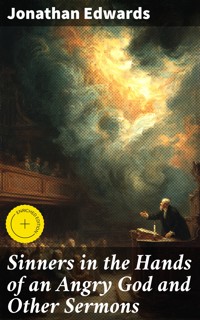
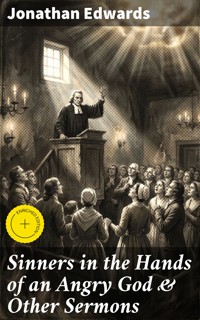
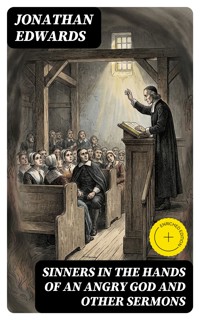
“Sinners in the Hands of an Angry God” was preached at Enfield, Connecticut, in July 1741, amid the Awakening’s peak in New England. Taking Deuteronomy 32:35 as its text, it deploys vivid biblical imagery to warn hearers of imminent judgment and to urge immediate repentance. Contemporary accounts describe marked emotional responses, typical of the moment’s charged religious meetings. The sermon was printed and widely circulated, becoming emblematic—sometimes reductively—of revival-era rhetoric. Its notoriety reflects how a local occasion, shaped by parish conditions and itinerant schedules, entered a transatlantic discourse on the uses and limits of fear in evangelical proclamation.
Public debate over revival excess and true piety deepened through the 1740s. Edwards argued that neither raptures nor tears proved anything by themselves, directing hearers instead to lasting transformations of love, humility, and obedience—an outlook consistent with “The Reality of Spiritual Light.” He contributed prefaces and treatises that sought to stabilize revival gains while correcting abuses, culminating in Religious Affections (1746). The sermons in this collection intersect that debate by modeling careful scriptural reasoning, pastoral caution, and rhetorical power. Their publication history illustrates how New England pulpits interacted with London printers and dissenting networks to shape Protestant public opinion.
“The Many Mansions” turns to consolation, expounding John 14:2 against the background of high mortality, recurrent epidemics, and the disruptions of imperial warfare. Eighteenth-century New Englanders frequently heard funeral sermons that located grief within eschatological hope and a moral economy of reward. Edwards developed the theme of degrees of glory without undermining the gratuity of grace, offering hearers a cosmic frame for sorrow and perseverance. Such preaching comforted families facing child mortality and frontier dangers, while reinforcing the pastoral role at life’s thresholds. The sermon’s popularity in print testifies to the demand for edifying reflections on heaven and perseverance.
The late 1740s brought geopolitical strain to western Massachusetts during King George’s War (1744–1748), with militia mobilization and anxiety along the frontier. “A Strong Rod Broken and Withered” was preached in 1748 on the death of Colonel John Stoddard, a prominent local magistrate and military leader, and Edwards’s kinsman. Using Ezekiel’s image, Edwards interpreted the loss of a community’s protector as a moment for civic and spiritual self-examination. The sermon reflects New England’s intertwining of ecclesiastical authority and provincial governance, revealing how bereavement, public order, and piety were read together in a time of imperial conflict and regional vulnerability.
Edwards’s pastoral project collided with entrenched local custom in the communion controversy of 1748–1750. Rejecting the “open” admission policy associated with Solomon Stoddard, he argued in An Humble Inquiry (1749) that communicants should give credible evidence of conversion. Northampton’s majority resisted, seeing his reform as disruptive to established practice and communal harmony. After protracted proceedings, Edwards was dismissed in 1750. The “Farewell Sermon,” preached to the congregation shortly thereafter, addresses mutual duties of ministers and people, seeking civility amid rupture. It documents how theological convictions about the sacraments carried acute social and political consequences in a covenant-bound town.
The “Farewell Sermon” also marks Edwards’s transition from a prominent river-valley pastor to a missionary-intellectual at Stockbridge (1751–1757), working among Mohican and Mohawk communities under the oversight of colonial authorities. There he wrote major treatises, including Freedom of the Will (1754), engaging Enlightenment moral philosophy while defending Reformed doctrines of grace. Although beyond this collection’s scope, those years show how the concerns voiced in earlier sermons—true piety, communal responsibility, and divine sovereignty—were recast within cross-cultural mission, imperial negotiations, and provincial land politics on the mid-eighteenth-century frontier.
Technological and cultural shifts undergird these sermons’ circulation and impact. Expanding colonial presses in Boston and elsewhere, improved roads and postal routes, and a literate laity accustomed to almanacs, newspapers, and lecture-sermon pamphlets created a receptive public sphere. Revival-era correspondence networks transmitted conversion narratives and pastoral reflections across the Atlantic. At the same time, a maturing market economy, land fragmentation, and periodic war generated anxieties addressed by jeremiad-style preaching. Edwards navigated these currents by combining scholastic precision with affective appeal, producing texts suited both to oral delivery in meetinghouses and to broader readerships in the Atlantic Protestant world.
Read together, the sermons form a commentary on evolving colonial experience. Early calls to resolution and dependence establish a theological baseline; revival pieces dramatize the urgency of grace amid social flux; funeral and civic sermons interpret public loss; and the farewell articulates church polity under strain. The Introduction situates these strands, while the Notes typically clarify scriptural citations, historical allusions, and eighteenth-century idioms that might mislead modern readers. Edwards consistently employs Scripture to interpret current events, training hearers to locate personal crises and communal turning points within a providential narrative shared by congregations across New England.
The collection also reflects major intellectual debates. Edwards appropriated insights from John Locke while insisting that spiritual knowledge involved a transformed disposition. He rejected purely rational religion without denigrating reason, arguing for a God-given “sense of the heart” that validates doctrinal truth. His polemics against self-reliance in salvation confront rising moralism and the social prestige of civility as a substitute for conversion. By insisting on evidences of new birth, he challenged complacency fostered by inherited church membership. The resulting tensions—over assurance, sacraments, and authority—reverberate through the sermons as they engage both parish realities and transatlantic controversies around the Awakening’s legacy and limits, including critiques by figures like Chauncy and appreciations by evangelical allies in Britain. Over time, “Sinners in the Hands of an Angry God” became a fixture in American literary anthologies, sometimes overshadowing Edwards’s broader pastoral aims. Nineteenth-century revivalists admired its urgency, while Unitarians and skeptics questioned its representation of divine wrath. Twentieth- and twenty-first-century scholars have recovered the aesthetic and philosophical range of the corpus, reading these sermons alongside Edwards’s later treatises and mission writings. Digital editions and historical scholarship now allow readers to situate the texts within their precise occasions, re-hearing them as products of print culture, parish politics, and a formative chapter in Atlantic Protestantism.
Synopsis (Selection)
Introduction
The Introduction frames Edwards’s central concerns—God’s sovereignty, human dependence, authentic conversion, and the stakes of eternity—while orienting readers to his blend of rigorous biblical exposition and searching pastoral address. It prepares the way for sermons that move between bracing warnings and tender consolations, highlighting how doctrine is meant to stir the affections and shape life.
Exhortations to Conversion
Sinners in the Hands of an Angry God presses the urgency of repentance by portraying the precarious state of those estranged from God and the immediacy of divine judgment. Ruth’s Resolution complements this crisis-moment emphasis with a portrait of deliberate, lifelong commitment to the Lord, urging hearers to count the cost and cleave with steadfast resolve. Together they combine vivid imagery and direct appeal with practical guidance, yielding a tone that is urgent, searching, and pastorally directive.
Doctrinal and Experiential Theology
God Glorified in Man’s Dependence argues that salvation is entirely of God, magnifying divine grace and undercutting human boasting, while clarifying how faith receives what God supplies. The Reality of Spiritual Light explores the Spirit’s gracious illumination that grants a real, experiential knowledge of divine things beyond bare notions, yet anchored in Scripture. The pair showcases Edwards’s measured, analytical style joined to devotional aims, stressing that sound doctrine and transformed affections belong together.
Consolation and Providence
The Many Mansions consoles believers with the promise of a prepared, varied glory and the Father’s welcome, encouraging perseverance amid loss. A Strong Rod Broken and Withered reads public reversals and the collapse of human strength through a prophetic lens, calling for humility, repentance, and renewed reliance on God’s providence. The tone is elegiac yet steadying, shifting from lament to hope under the sovereignty of God.
Pastoral Leave-Taking
Farewell Sermon gathers Edwards’s pastoral counsels into parting exhortations—urging charity, self-examination, and faithful attention to worship and daily obedience—while entrusting the future to divine care. It tempers admonition with reconciliation, treating a local transition as an occasion to rehearse enduring duties and hopes. The mood is sober and conciliatory, binding personal relations to eternal concerns.
Notes
Notes provides clarifications of scriptural references, theological terms, and argumentative steps that support the sermons’ flow and claims. By guiding readers through key allusions and definitions, it reinforces the collection’s recurring themes of divine sovereignty, human dependence, and the necessity of heartfelt religion.
Sinners in the Hands of an Angry God
Introduction
Jonathan Edwards was born October 5, 1703, in what is now South Windsor, Conn., a part of the parish then known as “Windsor Farmes.” His father, the Rev. Timothy Edwards, the minister of the parish, a Harvard graduate, was reputed a man of superior ability and polished manners, a lover of learning as well as of religion; in addition to his pastoral duties, he fitted young men for college, and his liberal views of education appear in the fact that he made his daughters pursue the same studies these youths did. His mother, a daughter of the Rev. Solomon Stoddard, the minister of Northampton, is said to have resembled her distinguished father in strength of character and to have surpassed her husband in the native vigor of her mind. As regards remoter ancestry and their intellectual and moral qualities, Edwards seems also to have been well born; an exception, however, must be made of the eccentric and possibly insane grandmother on his father’s side, whose outrageous conduct led to her divorce.1
Brought up the only son in a family of ten daughters, apart from all distracting influences, in an atmosphere of religion and serious study in the home, amid natural surroundings of meadows, woods, and low-lying distant hills singularly conducive to a life of contemplation, the boy early developed that absorbing interest in the things of the spirit, and that astonishing acuteness of intellect which are the most prominent characteristics of his genius. While a mere child he spent much of his time in religious exercises and in conversation on religious matters with other boys, with some of whom he joined to build a booth in a retired spot in a swamp for secret prayer; he had besides several other such places for prayer in the woods to which he was wont to retire. His mind also dwelt much on the doctrines he was taught, especially on the doctrine of God’s sovereignty in election, against which he at that time violently rebelled. When only ten years of age he wrote a short, quaint, somewhat humorous little tract on the immortality of the soul; at about twelve he composed a remarkably accurate and ingenious paper on the habits of the “flying spider.”
He entered the Collegiate School of Connecticut at Saybrook—afterwards Yale College—at thirteen, and in 1720, shortly before his seventeenth birthday, graduated at New Haven with the valedictory. In his Sophomore year he made the acquaintance of Locke’s Essay on the Human Understanding—a work which left a permanent impress on his thinking. He read it, he says, with a far higher pleasure “than the most greedy miser finds when gathering up handfuls of silver and gold from some newly-discovered treasure.” Under its influence he began a series of Notes on the Mind, with a view to a comprehensive treatise on mental philosophy. He also began, possibly somewhat later, a series of Notes on Natural Science, with reference to a similar work on natural philosophy. It is in these early writings that we find the outlines of an idealistic theory which resembles, but was probably not at all derived from, that of Berkeley, and which seems to have remained a determining factor in his speculations to the last.2
After graduating he continued to reside for two years in New Haven, studying for the ministry. From August, 1722, till the following April he supplied the pulpit of a small Presbyterian congregation in New York, but declined the invitation to remain as their minister. After returning to his father’s home in Windsor, he received at least two other calls, one of which he seems to have accepted.3 In September, 1723, he went to New Haven to receive his Master’s degree, was appointed a tutor at the college, entered upon the active duties of that office in June, 1724, and continued in the same till September, 1726, when he resigned his tutorship to become colleague-pastor with his grandfather Stoddard in the church at Northampton.
The spiritual history of Edwards in these years of growth from youth to early manhood is recorded by his own hand in a narrative of personal experiences written at a later date for his own use, in fragments of a diary, and in a series of resolutions which he drew up for the conduct of his own life. These documents, which were first published by his biographer and descendant, Sereno E. Dwight, in 1829, throw a flood of light on Edwards’s character and temperament, and serve to explain much in his life which would otherwise be obscure. He tells us in his narrative how the childish delight in the exercises of religion before referred to gradually declined; how at length “he turned like a dog to his vomit, and went on in the ways of sin;” then how, after much conflict of soul, he experienced toward the end of his college course a genuine conversion, issuing in a new life and, in the course of time, a deep and delightful sense of God’s sovereignty, the excellency of Christ, and the beauty of holiness. There is possibly some exaggeration in Edwards’s description of this lapse and this recovery, but it was at least a very real experience to him, and it doubtless contributed to the emphasis which he afterwards put on conversion in his preaching. His own state after this decisive change was at times one of mystic rapture—“a calm, sweet abstraction of soul from all the concerns of this world; and sometimes a kind of vision, or fixed ideas and imaginations, of being alone in the mountains or some solitary wilderness, far from all mankind, sweetly conversing with Christ and wrapped and swallowed up in God.” His diary is the record of a soul straining in its flight. He watches the fluctuations of his moods with almost morbid intensity, and yet in a way by no means merely conventional, and with a singular absence of sentimentality, so evidently sincere and, in a sense, objective are his observations. Of his seventy Resolutions, all written before he was twenty, the following may be taken as a specimen: it is the language of a mind as truly original as religious, and is eminently characteristic. “On the supposition that there never was to be but one individual in the world, at any one time, who was properly a complete Christian, in all respects of a right stamp, having Christianity always shining in its true lustre, and appearing excellent and lovely, from whatever part and under whatever character viewed, Resolved: To act just as I would do, if I strove with all my might to be that one, who should live in my time.” And he did so act; these resolutions were not empty, they really determined his life.
Edwards was ordained at Northampton, February 15, 1727, being then in his twenty-fourth year. Five months later, July 28, he married the beautiful Sarah Pierrepont, then seventeen, the daughter of the Rev. James Pierrepont, of New Haven, one of the founders, and a prominent trustee, of Yale College, and on her mother’s side, the great-granddaughter of Thomas Hooker, “the father of the Connecticut churches.” Edwards’s description of her, written four years before their marriage, is famous.4 The union proved a singularly happy one, the intelligence, cheerfulness, piety, and practical sagacity of Mrs. Edwards combining to make her at once a congenial companion and a most useful helpmeet to her zealously devout, highly intellectual, but often low-spirited husband, immersed in his writings and his books. They had twelve children, all born in Northampton. Mr. Stoddard died February 11, 1729, leaving the young minister in full pastoral charge. It was a responsible undertaking for so young a man to guide the affairs of a church reputed the largest and wealthiest in the colony outside of Boston, one too on which the venerable and venerated Stoddard had stamped the impress of his strong personality during a ministry of nearly sixty years. Edwards, as he later confesses, made mistakes. Nevertheless, he succeeded in winning and holding the confidence, admiration, and affection of the people during the greater part of the twenty-three years of his ministry in Northampton. He carried the church through two great periods of revival (1734-35, 1740-42), and added over five hundred and fifty names to its membership.5 This, however, represents but a small part of his influence in these years. Both by his preaching in Northampton and elsewhere and by his published writings, notably his printed sermons and his works dealing with the revivals, in which must be included his treatise on the Religious Affections, he powerfully affected the currents of religious thought and life throughout New England and the neighboring colonies and, to some extent also, in England and Scotland. His mission had been to recall the Puritan churches, which for some seventy years had languished in a period of decline, to the old high Puritan standards both of creed and of conduct, and to infuse into them a new spirit of vital piety. In this he was largely successful; and still to-day, in spite of wide departures from his theological system, he remains an effectual spiritual force in the churches inheriting the Puritan tradition.
The estrangement between Edwards and his people began in 1744, in connection with a case of discipline in which a large number of the youth belonging to the leading families of the town were brought under suspicion of reading and circulating immoral books.6 During the excitement of the revival the people had willingly accepted his high demands. But now, in the reaction, flesh and blood rebelled. Edwards, however, was not the man to accommodate the claims of religion, as he conceived those claims, to the weaknesses of human nature. It would not be strange if, under the circumstances, the people looked on their minister as something of a spiritual dictator, exercising a kind of spiritual tyranny. Still, this feeling, so far as it then existed, was not likely to have led to an open rupture, had it not been that four years later, on occasion of an application—the first in those years—for membership in the church, Edwards sought to impose a new test of qualification. He required, namely, that the candidate for full communion should give evidence of being converted, and as such converted person, should make a public profession of godliness. This restriction ran counter to the principles and usage established by Mr. Stoddard, accepted by most of the neighboring churches, and hitherto followed by Edwards himself, according to which, not only might persons be admitted to church membership on the terms of the “Halfway Covenant,” but they might come to the Lord’s Supper, if they desired to do so, even without the assurance of conversion, the hope being that the rite might itself prove a converting ordinance. Edwards was now openly charged with seeking to lord it over the brethren, and the indignation was intense. He, on his part, was convinced of the correctness of his position, and was prepared to maintain it at all costs. The unhappy controversy lasted for two years: Edwards dignified, courteous, disposed to be conciliatory, yet insisting on the recognition of his rights, and showing throughout his great moral and intellectual superiority; the people prejudiced, obstinate, refusing even to consider his views or to allow him to set them forth in the pulpit, bent only on getting rid of him. Finally, on June 22, 1750, the Council, convened to advise on the matter, recommended, by a vote of 10 to 9, the minority protesting, that the pastoral relations should be dissolved. The concurrent sentiment of the church was expressed by the overwhelming vote of about 200 to 20 of the male members. The next Sunday but one Edwards preached his Farewell Sermon.7
Edwards was now forty-six years of age, unfitted, as he says, for any other business but study, and with a “numerous and chargeable family” to face the world with. The long controversy and the circumstances attending the dismissal had had a depressing effect on his spirits, and the outlook seemed to him gloomy in the extreme. But his trust was in God, and friends did not fail. From Scotland came the offer of assistance in procuring him a charge there; his Northampton adherents desired him to remain and form a separate church in the town. Early in December he received a call from the little church in Stockbridge, on the frontier, and about the same time an invitation from the Commissioners in Boston of the “Society in London for Propagating the Gospel in New England and the parts adjacent” to become their missionary to the Indians, who then formed a large part of the Stockbridge settlement. After acquainting himself by a residence of several months in Stockbridge with the conditions of the work, and after receiving satisfactory assurances, in a personal interview with the Governor, with regard to the conduct of the Indian mission, he accepted both of these proposals. He had scarcely done so when he received a call, with the promise of generous support, from a church in Virginia.
The opposition which had driven him from Northampton followed him to Stockbridge. For several years a persistent effort was made to obstruct his work, particularly his work among the Indians, and even to secure his removal. But he successfully met this opposition, won the confidence of the Indians, and greatly endeared himself to the “English.” Here, too, in the wilderness he found time and opportunity for the writing of those great treatises on the Freedom of the Will, on the End for which God created the World, on the Nature of True Virtue, and on the Christian Doctrine of Original Sin, which are the principal foundation of his theological reputation.
Meanwhile an event had occurred in Edwards’s family destined to have important consequences—the marriage of his daughter Esther to the Rev. Aaron Burr, President of Nassau Hall, in Princeton.8 In September, 1757, Mr. Burr died; two days later, the Corporation appointed Edwards as his successor. Edwards was for various reasons reluctant to accept the appointment; he mistrusted his fitness, he especially feared that the duties of the office would seriously interrupt the literary work in which he was now engrossed. Nevertheless, on the recommendation of a Council called at his desire to advise in the matter, he accepted the call. He left Stockbridge in January, and toward the end of the month reached Princeton. But the only work he did as President of the College was to preach for five or six Sundays and to give out themes in divinity to the Senior Class, with whom he afterwards discussed their papers on them. The small-pox was epidemic in the town when he arrived, and as a precautionary measure he had himself inoculated. The disease, mild at first, developed badly, and on March 22, 1758, he died. From his death-bed he sent this tender and characteristic message to his wife, who was still in Stockbridge: “Give my kindest love to my dear wife, and tell her that the uncommon union, which has so long subsisted between us, has been of such a nature, as, I trust, is spiritual, and therefore will continue forever.” His last words, also characteristic, were, “Trust in God, and ye need not fear.”
A tall, spare man, with high, broad forehead, clear piercing eyes, prominent nose, thin, set lips and a rather weak chin, his whole appearance suggested the perspicacity of intellect and the integrity, refinement, and benevolence of character of one possessing little physical energy, little suited to practical affairs, but intensely alive in the spirit, intensely absorbed in the contemplation of things invisible and eternal. The two qualities, indeed, for which he is most distinguished are spirituality and intellectuality. Spiritual-mindedness was the very core and essence of his being. Religion was his element[2q]. God was to him absolute Reality; His will and His thoughts alone constituted the ultimate truth and meaning of things. Nor was this with Edwards a mere philosophical speculation; it was the high region in which he drew vital breath, the solid ground on which he walked. He walked with God[1q]. He has been called the “Saint of New England.” Like other saints, he too has on occasion his ecstasies.9
To this high spirituality, with its rich emotional coloring, was united a power and subtlety of intellect such as is possessed by only the very greatest masters of the mind. The spiritual world in which Edwards moved was for him no mere shadowy realm of pious sentiment or vague aspiration, but a world whose main outlines, at least, were sharply defined for thought. He conceived it, namely, in accordance with the scheme of things systematized by Calvin, but originally wrought out with the compelling force of transcendent genius by Augustine. The theological thought of Augustine is concerned—to put the matter as simply as possible—with the elaboration of four fundamental ideas: the absolute sovereignty of God; the absolute dependence of man; the supernatural revelation of a divinely originated plan of salvation administered by the Church; and a philosophy of history according to which the whole created universe and the entire temporal course of events are ordered and governed from all eternity with reference to the establishment and triumph of a Kingdom of saints in the Church, the holy “City of God.” Augustine’s conception of the Church is modified, but not in principle rejected, by the Protestant theologians; the other features of the scheme remain substantially unchanged. The idea of God’s absolute sovereignty leads naturally, in connection with the motives supplied by certain teachings of Scripture, Roman jurisprudence, Greek philosophy, and the experiences of a profound religious consciousness, to the doctrines of God’s eternal foreknowledge, His “arbitrary,” i.e., unconditional decrees,—the eternal world-plan,—predestination, election, the historic work of redemption, everlasting punishment for the unrepentant wicked, everlasting felicity for the elect saints. Over against the sovereignty of God stands man’s absolute dependence, historically conditioned, as regards his present spiritual capacities, by the Fall, with original sin, total depravity, and the utter inability of man to recover by himself his lost heritage as its consequence. Hence the great, the essential tragedy of human life—man naturally corrupt, in slavery to sin, at enmity with God, utterly incompetent to change a condition in which, by a sort of natural necessity, he is the subject of God’s vindictive justice, utterly dependent for salvation on the free, unmerited grace of God, who has mercy on whom He will have mercy, while whom He will He hardeneth, revealing alike in mercy and in punishment the majesty of His divine and sovereign attributes.
This, in general, is the scheme which Edwards stands for, he most conspicuously of all men of modern times. His speculative genius gave to this scheme a metaphysical background, his logical acumen elaboration and defence. He modified it in some respects, e.g., in his doctrine of the will. What is more important, he gave a prominence to the inward state of man—the dispositions and affections of his mind and heart—which appreciably affected the relative values of the scheme, and which has, in fact, changed the entire complexion of the religious thought of New England. But as to the general scheme itself, the philosophy of religion, the philosophy of life it expresses, there is nothing in that which is essentially original with Edwards. In standing for these doctrines he but champions the great orthodox tradition.
But however little original may be the content of his thought, there is nothing that is not in the highest degree original in his manner of thinking. The significant thing about Edwards is the way he enters into the tradition, infuses it with his personality and makes it live. The vitality of his thought gives to its product the value of a unique creation. Two qualities in him especially contribute to this result, large constructive imagination and a marvellously acute power of abstract reasoning. With the vision of the seer he looks steadily upon his world, which is the world of all time and space and existence, and sees it as a whole; God and souls are in it the great realities, and the transactions between them the great business in which all its movement is concerned; and this movement has in it nothing haphazard, it is eternally determined with reference to a supreme and glorious end, the manifestation of the excellency of God, the highest excellency of being. All the dark and tragic aspects of the vision, which for him is intensely real, take their place along with the other aspects, in a system, a system wherein every part derives meaning and worth from its relation to the whole. People have wondered how Edwards, the gentlest of men, could contemplate, as he said he did, with sweetness and delight, the awful doctrine of the divine sovereignty interpreted, as he interpreted it, as implying the everlasting misery of a large part of the human race. The reason is no revolting indifference, callous and inhuman, to suffering; the reason is rather the personal detachment, the disinterested interest, the freedom from the “pathetic fallacy” of the great poet, the great constructive thinker. It is this large quality in Edwards’s imagination which is one source of his power. Another is the thoroughness and ability with which he intellectually elaborates the details of his scheme. He wrote, indeed, no system of divinity; yet he is the very opposite of a fragmentary thinker, and few minds have been less episodic than was his. His intellectual constructions are large and solid. Of the doctrines with which he deals, he leaves nothing undeveloped; with infinite patience he pushes his inquiries into every minute detail and remote consequence, putting his adversaries to confusion by the unremitting attack, the overwhelming massiveness of the argument. Rarely indeed can one escape his conclusions who accepts his premises. Moreover, by the thoroughness, acuteness and sincerity of his reasoning he powerfully stimulates the intellectual faculties. Even in his most terrific sermons he never appeals to mere hope and fear, nor to mere authority; in them, as in his theological treatises, he is bent on demonstrating, within the limits prescribed by the underlying assumptions, the reasonableness of his doctrine, its agreement with the facts of life and the constitution of things, as well as with the inspired teachings of the Word.




