



0,49 €
Niedrigster Preis in 30 Tagen: 0,99 €
Niedrigster Preis in 30 Tagen: 0,99 €
Mehr erfahren.
- Herausgeber: Booksell-Verlag
- Kategorie: Poesie und Drama
- Sprache: Englisch
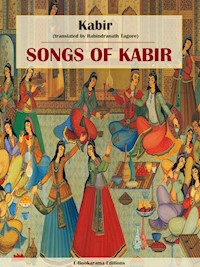
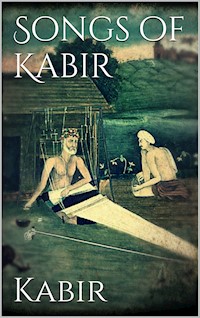
Songs of Kabir is a profound collection of devotional poetry that reflects the spiritual essence of the Indian mystic and poet Kabir, who lived during the 15th century. Written in a simple yet evocative style, the verses employ a rich tapestry of metaphors and colloquial language to convey deep philosophical insights and transcendental experiences. As a cornerstone of the Sant tradition, Kabir's songs blend elements of Hinduism and Sufism, addressing themes of love, unity, and the nature of the divine, while challenging the established religious orthodoxy of his time. This collection serves as both a spiritual guide and a critique of societal norms, engaging readers in a dynamic dialogue with the inner self and the universe. Kabir, a weaver by profession, faced the intricacies of religious pluralism and social inequality in his lifelong quest for truth. His humble beginnings and the experiences of a common man informed his poetry, imbuing it with authenticity and universal appeal. Living in a period marked by intense religious tension, Kabir emerged as a voice of reason and empathy, striving to bridge the gaps between diverse faiths and encourage spiritual inquiry beyond dogma. Readers seeking a transformative exploration of spirituality will find Songs of Kabir an indispensable treasure. The verses invite reflection and introspection, encouraging individuals to question their own beliefs and seek deeper understanding of their existence. This collection not only preserves Kabir's legacy but also serves as an enduring source of wisdom and inspiration for contemporary seekers. In this enriched edition, we have carefully created added value for your reading experience: - A comprehensive Introduction outlines these selected works' unifying features, themes, or stylistic evolutions. - The Author Biography highlights personal milestones and literary influences that shape the entire body of writing. - A Historical Context section situates the works in their broader era—social currents, cultural trends, and key events that underpin their creation. - A concise Synopsis (Selection) offers an accessible overview of the included texts, helping readers navigate plotlines and main ideas without revealing critical twists. - A unified Analysis examines recurring motifs and stylistic hallmarks across the collection, tying the stories together while spotlighting the different work's strengths. - Reflection questions inspire deeper contemplation of the author's overarching message, inviting readers to draw connections among different texts and relate them to modern contexts. - Lastly, our hand‐picked Memorable Quotes distill pivotal lines and turning points, serving as touchstones for the collection's central themes.
Das E-Book können Sie in Legimi-Apps oder einer beliebigen App lesen, die das folgende Format unterstützen:
Veröffentlichungsjahr: 2019
Ähnliche















Songs of Kabir
Table of Contents
Introduction
This volume presents a curated selection of poems attributed to Kabir, rendered into English by Rabindranath Tagore. Its purpose is to introduce readers to a distinctive devotional voice from medieval North India through the medium of a major modern poet’s translation. The collection is not a complete works; rather, it gathers one hundred representative pieces that reveal Kabir’s spiritual intensity, ethical urgency, and imaginative range. By bringing together these compact lyrics in a single, accessible arrangement, the book offers a coherent portrait of Kabir’s thought while allowing each poem to stand as a self-contained act of insight, praise, admonition, or wonder.
The texts gathered here are lyric poems—songs shaped for recitation and meditation. Many originate in oral performance and retain the directness of address and rhythmic cadence of sung verse. They include brief aphoristic couplets as well as more expansive hymns, often moving between personal prayer, visionary description, and moral counsel. Tagore’s English versions favor a flexible, free-verse line that preserves the poems’ clarity and musicality without strict adherence to original meters. Readers will encounter verses that function as praise-songs, paradoxical utterances, epigrams, and laments, unified by a devotional aim rather than by narrative sequence or dramatic plot.
A unifying aim runs throughout this collection: the insistence that the divine is immediate, present, and knowable within ordinary life. Kabir challenges sectarian boundaries and ritual formalism, urging a path of inner realization grounded in love, discernment, and continual remembrance. The themes are ethical as well as mystical—clarity over display, compassion over status, and truth over custom. The poems repeatedly return to the demands of practice: attention, humility, and steadfast devotion. The emphasis falls on transformation of the heart rather than conformity to external marks, inviting readers of any background to test insight against lived experience.
Stylistically, these poems are marked by plain speech, striking images, and paradox. Kabir draws on the everyday—threads, looms, water, birds, food, the body itself—to disclose realities that formal theology can obscure. Familiar objects are turned into instruments of recognition: a boat crossing a river, a lamp within a house, music that arises without a visible player. The idiom is concrete, energetic, and unadorned, yet capable of sudden reversals that unsettle habitual thinking. Direct second-person address engages both the divine interlocutor and the reader, creating an intimacy that makes each poem feel like a conversation overheard and inwardly continued.
The significance of this collection lies in its sustained vision of unity beyond division and its sober critique of hollow observance. Kabir’s voice is fearless yet compassionate, unmasking pride and pointing to a practice centered on remembrance and love. In Tagore’s English, the poems retain their urgency and simplicity, enabling them to speak across time and culture. Their continuing appeal rests on their ability to name the common dilemmas of spiritual life—distraction, vanity, fear—and to direct attention back to what is essential. As a whole, the book offers a coherent ethic of devotion wedded to clarity of mind and heart.
Tagore’s translations, first presented to English readers in the early twentieth century, mediate between distinct linguistic and cultural worlds. He preserves the lyric pressure of Kabir’s utterance while choosing an idiom that is transparent and resonant to modern readers. Without pedantic apparatus, the versions emphasize movement, cadence, and inwardness. They also respect the poems’ rootedness in lived experience, resisting exoticism. The result is neither a scholarly literalism nor a free paraphrase, but a disciplined rendering that lets the poems’ structure, voice, and recurrence of key images emerge. This balance has helped the collection endure as a gateway to Kabir’s thought.
Kabir’s historical presence is associated with fifteenth-century North India and the devotional current often called the Bhakti or Sant tradition. Poems bearing his name circulated in oral communities and in multiple textual recensions, reflecting a living heritage rather than a single fixed book. Verses attributed to Kabir appear in diverse compilations, including the Sikh scripture, whose custodians recognized the power of this voice of devotion. The poems’ transmission across communities accords with their content: they decry sectarian competition and ritual pride while inviting a direct encounter with the formless divine. This background illuminates, but does not confine, the songs presented here.
The structure of the present selection is simple and deliberate: one hundred numbered poems, each complete in itself, arranged to offer variety in tone and theme. The sequence favors alternation—praise beside reproach, contemplation beside exhortation—encouraging readers to dwell on resonances rather than pursue a linear argument. Recurring motifs and phrases bind the poems into a recognizable whole without imposing a rigid scheme. The design thus mirrors the poems’ origin in use and memory: they are meant to be returned to, carried forward, and heard again. The absence of narrative progression invites reading at any pace, singly or in extended sittings.
Certain images recur with special force and serve as signs of the poems’ unity. Weaving evokes the interlacing of body and breath, time and eternity. Rivers and oceans suggest the passage, peril, and surrender required of a seeker. The body appears as a house, a palace, a fragile boat, a field to cultivate. Music—drumbeat, flute, unheard melody—signals an inner attunement that cannot be staged. The teacher or guide is a ferryman or artisan, pointing to a craft rather than a display. These motifs ground the poems in the familiar while opening them onto the measureless depth they affirm.
Readers may approach this collection in a spirit of listening. The poems are brief but not casual; they reward clarity of attention. Their counsel is practical: turn away from vanities, look within, honor the guide, act with compassion, and remember the divine in work and rest. Yet they leave ample room for questioning and struggle. Tagore’s English invites a slow cadence, allowing images to settle and associations to arise. Marginal knowledge of contexts can help, but the poems are designed to be intelligible to anyone who has known longing, doubt, and the flashes of recognition that reorient a life.
Taken together, these poems offer a composite portrait of devotion that is both intimate and public-spirited. The inner path is inseparable from ethical clarity: compassion challenges cruelty, humility counters status, sincerity displaces display. The poems refuse consolation that ignores injustice or complacency that mistakes form for reality. Their originality lies not in novelty for its own sake, but in the uncompromising return to what is plain and essential. The collection thus holds a double charge: it summons the reader to interior transformation and simultaneously calls for a life ordered by truthfulness, responsibility, and the dignity shared across all divisions.
The aim of this edition is to let Kabir’s songs do their work: to reawaken attention, clear the sight, and deepen devotion. By gathering one hundred poems in Tagore’s enduring translations, it offers a compact yet generous entry into a tradition that has shaped hearts across centuries. Readers will find here no system to memorize, only a path to walk—tested by experience, marked by recurrence of insight, and sustained by love. That this voice remains vivid is testimony to its honesty and scope. May these songs serve as both mirror and guide, renewing the courage to live with clarity and compassion.
Author Biography
Kabir and Rabindranath Tagore occupy distinct yet converging places in the subcontinent’s literary and spiritual history. Kabir, a fifteenth- to early sixteenth-century North Indian poet-saint, voiced a radical devotional vision that challenged sectarian boundaries. Tagore, a Bengali writer active from the late nineteenth to the mid-twentieth century, reshaped modern Indian letters and reached global audiences. Both bridged art and ethical inquiry: Kabir through aphoristic songs that questioned ritualism and caste, Tagore through poems, songs, fiction, drama, and essays that explored freedom, conscience, and human unity. Their legacies endure in performance, pedagogy, and public life across South Asia and beyond.
Kabir’s biography is shadowed by legend, and reliable particulars are scarce. He is associated with the region around Varanasi and the wider milieu of the Bhakti movement, which emphasized a direct, personal relationship with the divine. Composing in accessible north Indian vernaculars, he addressed listeners across communities. His language, dense with metaphor and paradox, drew on the idioms of everyday labor and urban life. While later hagiographies elaborated origin stories, the most secure portrait is that of a sant poet whose voice arose from and spoke to a shared, multilingual devotional culture marked by conversations among Hindu and Sufi currents.
Kabir’s verse survives largely through oral transmission and later compilations. The Bijak, preserved by Kabir Panth lineages, is a key collection associated with his corpus. Verses attributed to him also appear in the Sikh scripture, the Guru Granth Sahib, attesting to his cross-sectarian influence. His compact dohas and sakhis often unfold as arguments, riddles, and reversals, pressing hearers toward self-scrutiny. In the early twentieth century, Tagore’s English rendering, Songs of Kabir, carried this voice to new audiences and reinforced Kabir’s modern reception as a critic of dogma and a champion of interior devotion expressed in the rhythms of common speech.
Kabir’s teaching insists on the formless divine and mistrusts outward markers of piety when divorced from inward realization. He ridicules empty ritual, sectarian pride, and caste hierarchy, urging a truth verified in experience rather than ceremony. His poetry blends tenderness and scorn, domestic images and metaphysical daring, fashioning a vernacular metaphysics that remains intelligible in song. Over centuries, performers, mendicant orders, and householders have kept these verses alive in bhajan and kirtan traditions. Although the details of his later life are unknown, Kabir’s influence persists in devotional practice, social critique, and literary modernity, where his stark aphorisms continue to be reimagined.
Rabindranath Tagore grew up in colonial Calcutta within a milieu central to the Bengal Renaissance, receiving a broad home education in literature, music, and the arts. As a young man he spent time in England, studying informally and encountering European thought, while deepening his engagement with Sanskrit texts and Bengali folk traditions. Encounters with Baul minstrels and the Upanishads shaped his belief in an open, experiential spirituality. Managing family estates in rural Bengal brought him into close contact with village life, sharpening his interest in education and agrarian welfare. These strands—cosmopolitan inquiry, classical learning, and local rootedness—fed a lifelong literary and educational experiment.
Tagore’s career spanned poetry, song, fiction, drama, essays, and later painting. Gitanjali, which he translated into English as Song Offerings, consolidated his international standing and brought him the Nobel Prize in Literature in 1913. He helped redefine the short story in Bengali and wrote notable novels such as Gora, Ghare-Baire (The Home and the World), and Chokher Bali. His plays, including Dak Ghar (The Post Office), staged ethical dilemmas with lyrical intensity, while his songs—Rabindra Sangeet—became integral to Bengali cultural life. He founded an experimental school at Santiniketan that evolved into Visva-Bharati University, advancing a synthesis of the arts, nature, and global humanism.
In public life, Tagore criticized aggressive nationalism while advocating for freedom, dignity, and cross-cultural dialogue. He renounced a British knighthood in 1919 to protest colonial violence, and he traveled widely, delivering lectures that engaged with modernity and its discontents. In later years he painted prolifically and continued to write across genres until his death in 1941. His songs later became the national anthems of India and Bangladesh. Today, Kabir’s verses circulate in performance and translation as incisive guides to ethical and spiritual inquiry, while Tagore’s literature, music, and educational vision continue to be read and practiced as models of humane, cosmopolitan creativity.
Historical Context
Songs of Kabir (1915) presents a medieval North Indian poet-saint to an early twentieth-century Anglophone audience through Rabindranath Tagore’s translations and Evelyn Underhill’s introduction. Kabir (c. 1440–1518), long associated with the city of Kashi/Varanasi, stands at the confluence of vernacular Bhakti and Indo-Islamic Sufi currents. Tagore (1861–1941), fresh from his 1913 Nobel Prize, collaborated with the Santiniketan scholar Kshitimohan Sen to render Kabir’s Hindi–Hindavi verses into English, published by Macmillan in London and New York. The book’s hundred poems, framed by Underhill’s comparative-mystical essay, reflect colonial-era scholarship, nationalist reformist interests, and a modernist literary sensibility shaped by the Bengal Renaissance.
Kabir’s lifetime spanned the late Delhi Sultanate and the early Mughal transition. The Lodi dynasty (1451–1526), including Sultan Sikandar Lodi (r. 1489–1517), governed northern India as urban crafts and trade flourished along the Ganga plain. Nearby Jaunpur (a sultanate from 1394 to 1479) rivaled Delhi as a center of learning and arts, influencing Varanasi. Textile production, especially weaving, connected artisan neighborhoods to wider markets through caravan routes linking Agra, Jaunpur, Patna, and Bengal. These networks transmitted not only commodities but also songs, stories, and devotional ideas, enabling Kabir’s aphoristic, portable verses to circulate across courts, monastic centers, and bazaar congregations.




