



Erhalten Sie Zugang zu diesem und mehr als 300000 Büchern ab EUR 5,99 monatlich.
- Herausgeber: Titan Books
- Kategorie: Fantasy und Science-Fiction
- Serie: Family Spies
- Sprache: Englisch
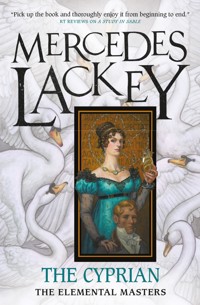
In this third novel of the Family Spies series, set in the bestselling world of Valdemar, Heralds Mags and Amily's youngest child must follow in his parents' footsteps to protect both his family and the realm. Thirteen year old Prince Kyril and Mags and Amily's fourteen-year-old son Tory "share" the Gift of Farsight--although neither of them are Chosen. They are self-trained, though currently, their shared Gift only allows them to see what is happening with their immediate family members. After much debate, the Herald's Collegium has decided to test and train them anyway. That's when the surprises start. They do not share a single Gift; they have two complementary Gifts working together in a way that the Heralds have never seen before. Tory is the Farseer--Kee's Gift is to extend his range beyond a few dozen feet. Their Gifts become crucial when Mags gets a desperate message from his cousin Bey, the head of the enigmatic assassin-tribe, the Sleepgivers. Bey's eldest daughter has been kidnapped, but he doesn't know why or by whom. He's calling in the debt Mags owes him to find his daughter before it's too late. Tory is certain that if anyone can find her, he can. But that will mean traveling out of Valdemar into an unknown, dangerous country. And it will mean taking a Royal Prince with him.
Sie lesen das E-Book in den Legimi-Apps auf:
Seitenzahl: 552
Veröffentlichungsjahr: 2020
Das E-Book (TTS) können Sie hören im Abo „Legimi Premium” in Legimi-Apps auf:
Ähnliche



















CONTENTS
Cover
Also by Mercedes Lackey and available from Titan Books
Title Page
Leave Us a Review
Copyright
Dedication
1
2
3
4
5
6
7
8
9
10
11
12
13
14
15
16
17
18
19
20
About the Author
Also by Mercedes Lackey and available from Titan Books
FAMILY SPIES
The Hills Have Spies
Eye Spy
Spy, Spy Again
THE HERALD SPY
Closer to Home
Closer to the Heart
Closer to the Chest
THE COLLEGIUM CHRONICLES
Foundation
Intrigues
Changes
Redoubt
Bastion
VALDEMAR OMNIBUSES
The Heralds of Valdemar
The Mage Winds
The Mage Storms
The Mage Wars
The Last Herald Mage
Vows & Honor
Exiles of Valdemar
THE ELEMENTAL MASTERS
The Serpent’s Shadow
The Gates of Sleep
Phoenix and Ashes
The Wizard of London
Reserved for the Cat
Unnatural Issue
Home from the Sea
Steadfast
Blood Red
From a High Tower
A Study in Sable
A Scandal in Battersea
The Bartered Brides
The Case of the Spellbound Child
Leave Us a Review
We hope you enjoy this book – if you did we would really appreciate it if you can write a short review. Your ratings really make a difference for the authors, helping the books you love reach more people.
You can rate this book, or leave a short review here:
Amazon.co.uk,
Waterstones,
or your preferred retailer.
Spy, Spy AgainPrint edition ISBN: 9781785653483E-book edition ISBN: 9781785653490
Published by Titan BooksA division of Titan Publishing Group Ltd144 Southwark Street, London SE1 0UPwww.titanbooks.com
First Titan edition: August 202010 9 8 7 6 5 4 3 2 1
This is a work of fiction. All of the characters, organizations, and events portrayed in this novel are either products of the author’s imagination or are used fictitiously. Any resemblance to actual persons, living or dead (except for satirical purposes), is entirely coincidental.
© Mercedes Lackey 2020. All Rights Reserved.
Mercedes Lackey asserts the moral right to be identified as the author of this work.
No part of this publication may be reproduced, stored in a retrieval system, or transmitted, in any form or by any means without the prior written permission of the publisher, nor be otherwise circulated in any form of binding or cover other than that in which it is published and without a similar condition being imposed on the subsequent purchaser.
A CIP catalogue record for this title is available from the British Library.
Dedication:
Jemima Parry-Jones MBE
Director - International Centre for Birds of Prey
Newent, Gloucestershire, GL18 1JJ.
www.icbp.org
++44(0)1531820286 (option 5 for a human if you are lucky!)
Charity Number 1159749
Tory and his best friend, Prince Kyril—Kee, to him—finished their long trudge across Companion’s Field and paused at the high stone wall surrounding the entire Palace complex just as the last of the sun disappeared in the west. The last rays gilded the very top of the wall and turned the Guard just above them into an odd silhouette, half in light, half in darkness. He took a breath of the balmy summer air with deep appreciation; some of the Companions began drifting their way across the lush, green field with anticipation, even though he and Kee wouldn’t be doing anything until twilight had settled in. The Companions all took great interest in their nightly race. So much so that he suspected them of secretly placing bets.
I wouldn’t put it past them. Though what would a Companion use as a wager? Extra apples? Pocket pies? They get everything they could ever want or need. Maybe bragging rights are enough.
Not on who would win . . . it was a very off day for Tory when he didn’t win. But whether or not he or Kee would finish without any penalty marks against them.
“Right, or left?” asked Kee, looking up, not at the formidable barrier of the wall but at the supple birch trees they’d be using to reach the top of it. The birches weren’t nearly as old as many of the trees in the field; sadly, for all their grace and beauty, birches didn’t live nearly as long as goldenoaks or beeches. But birches had one virtue that none of the other trees here had: flexibility.
The Guard glanced down at them. From where Tory stood, his amused expression was easy to read. The Guards enjoyed this nightly contest too, and even their commander encouraged their participation in it. Tory began warming up exercises, and Kee followed suit. Though . . . sometimes he only pretended to warm up; there were tricks you could use when you had to move desperately fast without getting a chance to warm up first, and from time to time he needed to practice those tricks as well.
“I’ll take left, I took right last time,” Tory said, and he snickered as he stretched his legs. “It won’t matter, you know. I’m going to beat you anyway.”
“You think,” Kee retorted, making a face at him. Kee was the one of the six royal siblings who looked the least like either his father or his mother; he was shorter, slender, black-haired and had eyes of a peculiar shade that looked silver. His mother often teased him, saying she was sure a Hawkbrother had slipped in and left one of their own in the cradle, taking away her “real” baby. Kee found this hilariously funny, in no small part because his minor Gift of Empathy (just enough to be useful, not so much as to be a bother) always let him know she was just joking.
“Care to make a bet of it?” Tory challenged.
Kee shook his head. “You’d cheat.”
Tory just snorted. Of all of his siblings, he was by far and away the most agile, and that was saying something. He’d been climbing and swinging on things since he was old enough to walk. Fortunately, by that time his mother had become used to seeing her children swarm over high places like tree-hares and took it all in stride. He’d been taking lessons from professional acrobats since he was nine. There was not one single structure on the Hill that he hadn’t been to the top of multiple times—ideally without the owners even having a clue that he’d been there. Kee knew about some of that, but not all of it. Tory knew that there were things you just didn’t talk about in his family, and whose manor house you’d been atop of—or inside—without the owner’s knowledge or permission was one of those things you didn’t talk about, even to your best friend. “Plausible deniability” was a way to keep those friends from getting into trouble. If there was one thing that Herald Mags’ children could do, it was keep secrets.
Especially harmless ones. It didn’t do Kee any harm to be blissfully ignorant of at least half of what Tory had done in his life. It also didn’t do Kee any harm to think he could beat Tory on their nightly run around the walls, and the illusion that he had a chance would keep him trying.
It’s about close to time. The sun should be well down by now. Up on the wall, the Guard bent over for a few moments, then straightened with a now-lit torch in one hand.
Tory was very much in favor of keeping his friend on his toes by encouraging this rivalry every night. He, at least, had some notion of what he was going to do with the rest of his life. He’d be his father Mags’ agent, just as his older brother and sister were—though his sister Abi had an entirely separate career as a Master Artificer and Architect. Mags was in charge of the King’s intelligence network, as his father-in-law had been before him, and being a Herald was no hindrance to that. In fact, it was an advantage, since people saw the white uniform and assumed, without ever bothering to think about it, that absolutely everything a Herald did was going to be above board and out in the open. That assumption made Mags a very good spy indeed, even when he wasn’t in disguise. Mags was assumed to be the forgettable Herald-husband to the King’s Own, “good old reliable Mags,” former Kirball champion, plodding to and from his duties at the courts down in Haven. He was considered a minor Herald, useful mostly because he had the most powerful Gift of Mindspeech in Haven as well as the ability to impose coercive Truth Spell on command. And, of course, because he was the husband of the King’s Own Herald. Very few people had any idea he was a lot more intelligent than he looked. Even fewer had a notion of a tenth of what he did for King and country. Tory had been brought up from the beginning—as had Abi and Perry— knowing that at the very least, he was expected to be able to defend himself, help his parents, and, above all, never, ever become a victim or a hostage. As Mags himself had once grumbled, “Me’n Amily did quite ’nuff uv thet on our own.”
But Kee was not-quite-middlemost in the family of six Royal children. His oldest brother was first in line for the Crown, and a Herald. His second brother was second in line for the Crown, and a Herald. His older sister was third in line for the Crown, and a Herald. So the succession for the Crown was secure, barring an utter catastrophe wiping out the entire Royal Family, and if that happened, there would be a lot more to worry about than who was going to wear the Royal chunk of gold on his or her head. But Kee had not been Chosen . . . and so far nobody had found anything for him to do. So Tory had taken it upon himself to give his friend all the challenges he could handle.
Like egging him into taking every single course at all the Collegia that wasn’t directly associated with being a Herald. And mastering every weapon the Weaponsmaster could shove into their hands. And, of course, his own little inventions, like this one.
Now the only light in Companion’s Field came from that torch the Guard had in his hand. “You ready?” the man called down to them.
“Count us down!” Kee called back.
The Guard moved close to the big iron torch-basket that would illuminate the ground around this section of the wall. “Ready,” he said, moving his torch close to the oil-soaked wood. “Steady. Go!”
And as he touched the fire to the basket, sending a column of flame up that all the Guards on the wall would be able to see, Kee and Tory raced up the two birch trees they had chosen for themselves. Reaching the tops within a breath of each other, they let go with their legs and bent the supple trunks down until their feet almost touched the top of the wall, let go of the branches, and hit the walkway running, going in opposite directions.
This wasn’t just a race. That signal light had told the other Guards that the boys were coming. It was the Guards’ job to try to stop them or, at least, tag them. And Tory’s first opponent loomed right up ahead of him, a black silhouette against the light from his own ward-basket.
Ha. He’s new to this. The Guard had made the fundamental mistake of thinking that because he was big, he’d be able to stop Tory just by blocking him. Tory allowed him to go right on thinking that— until the very last moment, as he leaped up onto the battlement on the outer face of the wall and, leaping from merlon to merlon on the crenellated battlement, raced past him.
He jumped down, not losing much speed in the process, faked to the right, then the left, and then, when the next Guard made a lunge for where the man thought Tory would be, he made a diving roll past, jumped to his feet, and was gone before the man could lay a fingertip on him.
As he ran, dodged, evaded, and, at one point, leaped over one of the Guards, he kept an eye on the other wall. And as he had more or less expected, twice one of the great basket-torches flared green. The Guards at those stations had tossed in a handful of copper salts to indicate that Kee had been “tagged.”
One more Guard. The man lunged at the same time that Tory jumped —he planted one foot on the top of the man’s helm and shoved him facedown into the walkway as he himself kept right on going.
Fortunately the Guard’s helm kept him from injury, but—that had to sting.
He grinned and hurled himself from the top of the wall to the ground beneath. His feet barely touched the grounds of Healers’ Collegium as he tucked and rolled, somersaulting twice, propelling himself back up onto his feet and into a run, heading for the wall of the building of the Collegium itself. This was a tricky part—not because he didn’t know every handhold on the wall by heart, but because he had to make sure no one inside heard him scrambling up. He had to make no more sound than an errant branch tapping on the stone, or perhaps a small, nocturnal animal scrambling across it. A roof rat, maybe.
He reached the roof not even winded. This part was easy; the slates were dry and clean, and the rough rawhide soles of his climbing boots gave him plenty of grip. His goal was in sight— the top of the tallest tower of the Palace—which, providentially, was a square tower with another battlement around the flat top and access via a panel in the floor to the inside of the tower itself. That easy access to the inside was going to be very handy when he got there, because at this point, despite being in excellent shape, his sides had started to ache, and his breath burned a little in his throat and lungs. As it always did on this part of the run. Being in good shape could buy you only so much, and it wasn’t the ability to sprint at your top speed indefinitely.
Which is so unfair. Companions can. Why can’t humans?
He reached the Palace and the battlements on the roof. The Palace itself was four stories tall; it had four towers that reached an additional three stories high, one on each corner and a fifth, square one in the middle of the front that reached five. That middle one was his goal, but he had to elude the Guards on the battlements first.
It’d be a lot easier if I could kill them, he thought, wryly.
But the battlements here had the slanting slate roof of the Palace itself behind them, and he was able to slither his way past the Guard on the roof side without the Guard spotting him until it was too late, and he was past. Now was the most harrowing part of the run: the lizard-climb up to the top of the tower. Well, harrowing for someone who didn’t do this every night it wasn’t raining or snowing—and some nights when it was. Whoever had built this thing certainly hadn’t done so with people like him in mind.
Then again, if the Guards had been allowed to shoot him, he’d be a pincushion by now.
It would be fairer to them to give them chalk-bags they could shoot at me with a sling. Do I want to be fairer and mention that?
Nope.
With his breath rasping in his lungs and his fingers and toes on fire with the strain, he hauled himself over the battlements at the top of the tower and tumbled to the feet of the amused Guard there. And no more than two breaths later, Kee did the same. “Gods damn it!” Kee rasped, pushing himself up into a sitting position, while Tory just sprawled over the wooden floor. “You beat me again!”
“Even—if I hadn’t—” Tory gasped, trying not to laugh, “You got—tagged twice.”
Kee swore. “So I did. Damnit.”
The Guard gave both of them a sketchy salute and went back to his proper business of being on watch.
When they had gotten their breath back, Tory pulled the handle on the trap door at the rear of the tower, and they both clambered down a wooden ladder to the next floor down, which was actually a big iron grate strong enough to take the weight of several armed men. Tory went first, and Kee followed, closing the trap behind himself.
Now they were in a very familiar little room with several narrow windows on each of the four sides. The windows had been arrow slits, originally, though now the entire structure acted as a windcatcher, cooling the rooms of the Palace below it during the worst of the summer months. That was why the floor of this room was an iron grate instead of a solid floor, and their hair blew almost straight up to a comical effect. But that effect was exactly what they both needed right now, given that they were both sweating like a couple of racehorses. Heavily shielded lanterns going all the way down to the ground floor gave more than adequate light to see by— safety was paramount, given that Guards used the ladders in here three times a day to get to their post on the top of the tower. Can’t have our Guards breaking their necks on a regular basis. They’re hard to replace.
They plopped down on the grate at almost the same time and just enjoyed feeling cool—and then, actually cold—for the first time that day, although earlier in the day the uprush of air had felt merely pleasantly cooling. He and Kee had been up here after weapons practice to take advantage of the artificially created wind.
That had been just a bit naughty. Technically you weren’t supposed to be up here to cool off; in fact, most people in the Palace didn’t even know about this room, assuming it was some sort of Guardroom, so they didn’t know the potential for cooling you off on a hot day. Tory was always of the opinion that it was better to apologize than to ask permission, so on blistering days like today, he and his sibs and the Royals could often be found up here when they were done with weapons practice or the heat was unbearable.
In winter, of course, the last thing you wanted was anything stealing the heat out of the building, so in winter the slits were sealed with tight-fitting wooden plugs and wax seals, not to be opened again until late in the spring. Even then, given the howling winds outside and the fact that the tower was cold stone, the inside of the tower was anything but pleasant in the winter, and the guards that used the ladder to get to their post had to beware of ice on the rungs. Not a place to linger.
When Tory finally felt up to anything besides breathing, he nudged Kee’s knee with a toe. “Shall we do our nightly nursemaiding now?” he asked.
“I’m up to it,” Kee agreed. And as one, the two of them closed their eyes and fell into a unique rapport with each other.
Unique, because although neither of them was Chosen, they had a rather major Gift. Unique, because that Gift was shared and didn’t operate unless the two of them were together. Together, they could “look in” on any member of the extended families of either of them, as if they were Farseeing, no matter how distant that member was. And since those members were indeed scattered across the landscape of Valdemar, it was a very useful and comforting Gift indeed.
Well, “Gifts.” So far as the Heralds had been able to tell, Tory was the actual Farseer, or at least the stronger and most reliable of the two. Kee was able to boost his range to . . . well, certainly anything within the borders of Valdemar. And together they could both See what Tory could reach. That was useful, because that meant there were two sets of eyes on whatever Tory was looking at and two minds analyzing the scene.
They located and dismissed King’s Own Herald Amily, Tory’s mother, and Herald Mags, his father. Both were in attendance at a social gathering of the Court out in the Pleasure Gardens that neither of the two boys had any interest in at all. The Crown Prince, Trey, was with them, and he didn’t look bored only because he and his wife seemed to be having some private game going; they kept whispering to each other and occasionally smiling with a conspiratorial air.
They also located and dismissed Rafi and Sofi, Kee’s younger siblings, both of them in the Royal Suite, sharing a table with a tutor, their heads bent over lessons. Perry was next—in a tavern, somewhere down in Haven, outwardly gaming, actually intent on overhearing the conversation of a couple of men two tables over. They paused there for a moment, but it didn’t look to Tory as though Perry was in any danger at all of being found out. And anyway, his kyree was “sleeping” in the shadows just outside the tavern, pretending to be a wolfhound. Anything that monster couldn’t battle his way past to get to Perry’s side was—well, it wasn’t something that would be found in a tavern in Haven. And the ruckus would bring the local constables or the Guard long before an expert dirty fighter like Perry got into any difficulties.
Next, they checked on Niko, who was on a mission from the King to Duke Farleigh’s Court. Also nothing to be concerned about; the Duke was a fervent loyalist, and Niko appeared to be having a fine time at a late dinner with the Duke and Duchess. Niko would, without a doubt, return not only triumphant but with some pretty thing for the young lady he was slowly courting. Neither Niko nor his lady seemed to be in any hurry to wed, even though it was clear to everyone Niko had met his match in her. She wasn’t a Herald, but that scarcely mattered; she obviously understood the bond between Herald and Companion and wasn’t in the least jealous of it. That was a rarity in anyone who wasn’t themselves a Herald.
Kat, as Tory would have predicted, was eyes deep in some wrangling. Kat was the King’s “problem solver.” Whenever there was something going on that distant negotiation couldn’t resolve, Herald-Princess Kat went there in person and applied whatever was most effective—reason, persuasion, negotiation, or browbeating. She usually didn’t have to resort to the last, and from everything Tory saw, she wasn’t doing any browbeating tonight. No, this was more like some spirited bargaining with what looked like a Lord Mayor and several Guild Heads.
And last of all, they searched for and found Abi, Tory’s sister, the Master Artificer. Of all the members of their joint families, she was the only one who looked worried. She bent over a table scattered with sketches of walls and towers and tables of figures, weighted down with many samples of small slabs of stone that were broken in half. By that, Tory surmised that the construction of the walls and guard towers to replace the wooden palisades around the distant northern town of Westmark was not going well. Abi would probably be there a while. They could probably expect a message from her in the next fortnight, complaining about the lamentable weakness of local materials.
Tory heard Kee chuckling and looked up to see his friend grinning. At that point, of course, their concentration was broken, but they’d completed the nightly familial survey, and all appeared to be well.
“Poor Abi!” Kee said. “What’s she going to do?”
“Think of something,” Tory replied. “Like she always does. Oh, and probably yell at stonecutters for passing off inferior merchandise as adequate to the job.” He thought for a while. “If it’s the worst case, she’ll just build a double wall with rammed earth between the walls. It’s a lot more labor, but she’s not going to build anything inferior. She’ll build them a proper defensive wall even if she has to drag everyone in town up onto the walls to ram the earth herself.”
“If she has to do that, won’t she be there until maybe next spring?” Kee asked.
Tory just shrugged. “I don’t know. She’ll probably tell us in the letter she will, without a doubt, be sending us to vent her ire.”
Kee laughed, his eyes sparkling with mirth. “Let’s get downstairs. We’ve done our duty for the night. I’d like some wine.”
“So would I after that run,” Tory agreed.
With their hair still flying around their faces, they took the metal ladder down the inside of the tower until they reached the door at the base, standing open, with a Guard to make sure no one went up there who shouldn’t, although that had never stopped Tory and the Royals. Adventurous pages and squires were the ones to be deterred mostly. Tory was pretty sure most of the highborn, even if they had known what purpose the tower served, wouldn’t be caught dead climbing a ladder up so many stories and chance ruining their expensive clothing. I have to wonder, though, how many fellows have tricked girls down this corridor to open the door and watch their skirts fly up?
They made their way to the suite of rooms still used by Mags and Amily, though two thirds of their children were living elsewhere. They both knew that if they went to the Royal Suite, the two youngest children would see their presence as an excuse to stop studying and would try to tease them into a game of cards or double-draughts, and trying to wrangle those two back into studying would be futile. Then they’d get a tongue lashing later when the tutor complained about their effect on discipline.
Besides, this was better. The two of them would have the King’s Own’s suite all to themselves.
When they entered, it was dim, with only two candles illuminating it. That suited Tory just fine. It had been a long day of physical training, capped by his run against Kee. This is a good life, he thought to himself with great content. Mind, I don’t mind change, as long as it’s for the better, but this is a damn good life. Half of the room was taken up by the big table that served not only for meals taken away from Court and Collegium, but also for games, planning sessions, and even the occasional architectural planning session when Abi was here. The other half was a jumble of rugs, cushions, padded chairs, and settles.
As Tory had hoped, there was a bottle of wine chilling in the porous pottery cooler on the mantelpiece at the “jumble” end; he appropriated it and put in another. By the time his parents got away from all their Court nonsense, the new one would be cool. Kee got a couple of cups from beside it, and Tory popped the cork and poured for both of them.
They sprawled out on the floor in the main room, with cushions behind their backs and rugs under them. They left the door open for more breeze. “What are we going to do with the rest of the summer?” Kee asked, sipping his wine in the dim light.
“Same thing that we do every summer, Kee. Train. Run the usual watch for agents and troublemakers at Midsummer Fair. Train some more. Do anything that my father or yours asks us to. Hope for something exciting to happen.” He waggled his eyebrows roguishly, although the effect was probably lost in the dark. “Flirt with the ladies.”
“The ladies think you and I are shaych,” Kee said sourly.
Tory snickered. He knew that, of course. It had probably been inevitable, given how close the two of them were. He chose to find it funny. “That rumor has whiskers a league long. Besides, that makes it all the better. They think we are safe to flirt with. We can get away with anything.”
“Only when there ain’t Companions ’round t’tell on ye,” said his father Mags, just coming in the door. Amily was right behind him. “What’re you two sittin’ around i’ the dark like conspirators for?”
“Conspiring,” Kee replied promptly. “Where Companions can’t hear us. Good evening Heralds. You will be pleased to hear that all is quiet on all fronts.”
“Except Abi’s tearing her hair out about something involving her walls,” Tory added.
“I’m sure we’ll be hearing about it in a fifteen-page letter soon, then,” Amily replied, as she and Mags divested themselves of all their hidden weapons. Which was . . . quite a lot. Almost as many as Tory carried. The various knives and instruments of mayhem made soft thuds as they laid them out on the table. “Did you drink all the cooled wine?”
“We put a new bottle in the cooler,” Tory replied. “I knew you’d skin us both if we didn’t.”
Amily went around the room lighting a few more candles as Mags opened the second bottle of wine and sniffed it. “Rosehip summerwine. Good choice. I f ’rgive ye for drinkin’ the first one.”
Amily ended her rounds by slipping into the bedroom and emerging in loose white trews and a shirt, barefoot. “What were you two doing, lurking up here anyway?”
“Escaping being made the babies’ excuse for not studying.” Tory took an appreciative gulp of his own wine as his mother settled on her favorite chair by the cold fireplace. The fireplace served very nicely as a windcatcher itself during hot weather, and the good breeze stirring everyone’s clothing proved that. “Other than that, taking our well-earned rest after our nightly wall-run.”
Mags returned from the bedroom wearing roughly the same as Amily. “Ye know the hazard they never warn ye ’bout as a Herald playin’ Royal bodyguard?” he asked, settling down next to Amily with a cup of his own. “Half-drunk nobles stumblin’ ’bout sloshin’ overfilled wine cups.”
Amily giggled. “I really thought Lord Bannin was going to tip a whole cup over you at least three times, the sot.”
“Well, ’e don’ care. Niver seen ’im less’n half soused. An’ wi’ ’im wearin’ half th’ clothes in ’is wardrobe, if ’e spills on hisself, ’e just needs t’ peel off the top layer an’ toss it t’ a page t’be set t’ rights agin,” Mags replied, with a smirk.
“Maybe that’s why he dresses that way,” Kee offered.
“Maybe it’s because he’s always afraid the King will get tired of his nonsense and toss him out, and wearing half his clothing will save time in packing,” Tory snickered. Lord Bannin was not a favorite among the Heralds; his utter selfishness combined with an appalling attitude toward anyone who didn’t look, think, and act exactly like him and his inner circle made the most xenophobic Holderkin look like a welcoming innkeeper. He fancied himself an intellectual, but his ideas, so Tory had been told by several acerbic scholars, were like summer thunderstorms—all flash and noise and nothing productive.
And he treated Heralds as if they were something he’d just scraped off his boot, probably because even the densest of them could see through him to what he really was.
“It’s not fair to make fun of Lord Bannin,” Kee deadpanned. “He can’t help it. He’s suffering from a terrible condition. His face looks so much like his ass that his bowels don’t know which way to push.”
Amily nearly spilled her wine all over herself, she started laughing so hard. And Mags almost choked.
“All right,” she said finally, “On that note, I am off to bed. If I drink any more, I’ll be tipsy, and that never ends well in the morning.” Suiting her actions to her words, she did just that, after making sure all the windows on the outer wall of the suite were flung wide open, regardless of the moths that came flitting in, attracted by the candles. At least the fireplaces at both ends of the suite gave the bats that followed a good, safe way to exit.
After a long interval of silence, enlivened only by the antics of the bats chasing the moths, Mags cleared his throat gently.
“So, did we innerupt anythin’?” he asked.
“Nothing of any importance,” Kee admitted, pouring the last of their wine into his cup, collecting Mags’ bottle, and placing both in the basket by the door for empties. “We were just wondering what we’d do this summer.”
Mags nodded, with an expression of sympathy on his face. But he didn’t say anything, which was actually a lot better than if he’d made some remark. Instead, he let things sit for a moment, then his expression changed to one of deep thought.
“I got a notion,” he said, finally. “But if you two don’ like it, we won’t pursue it no futher.”
Well, Tory had to admit that sounded promising.
“What’s the notion?” asked Kee, perking up with interest and combing his hair back over his forehead with one hand.
“Likely yer father wouldn’ much care fer it,” Mags said to the Prince. But the sly look Mags got only made both of them want to hear it even more.
“What the King doesn’t know isn’t going to hurt him in this case,” Kee pointed out. “If we can’t trust you, we can’t trust anyone.”
“I got me a head full’o assassin-stuff put there by th’ Sleepgivers,” Mags said. Tory nodded; he certainly knew the story, and so did Kee—how Mags was the lost son of the heir to the leadership of a very large clan or very small nation of professional assassins known as the Sleepgivers. How in the course of doing work in Valdemar on behalf of the Karsites, they had discovered their missing heir. How subsequently they had attempted to kidnap him and convert him to their ways by magically overlaying his mind with the minds and personalities of dozens of Sleepgivers past. . . .
How thanks to his Companion, Dallen, that hadn’t worked. At all.
But this was the first time that Tory had heard that some of those memories and skills had stuck. If that was what his father was implying—
“Lots’o assassinn-tricks. Not partic’ly useful on account of I don’t act’lly need to kill anyone that often, but . . . inneresting. Some I passed on t’ Perry, but not most uv it. Seems a shame to waste it though. Reckon you two’d like to learn some uv it?”
Kee licked his lips with anticipation. “You’re right. Father’d be appalled. I love it.”
Tory nodded. “Me too. Thing is, I bet we can make a lot of that stuff less than lethal if we want. Even things like poisons, because surely you’ve got the antidotes in your memory?”
“Fer th’ most part, aye,” Mags agreed. “But a lot uv it’s gonna mean some real serious new trainin’ on yer parts. I got the direct mem’ry of how t’do the tricks straight from th’ source, muscle-memory an’ all. I kin do most uv it jest by thinkin’ ’bout it. Ye’re gonna haveta learn ’em the hard way.”
“Like what kind of tricks?” Kee wanted to know.
Instead of answering directly, Mags put down his cup, got up, and went over to a corner of the room, studying the crown molding around the intersection of wall and ceiling. And before Tory could ask what he was doing, suddenly his father was no longer standing in the corner, he was right up in the corner, back to the ceiling, somehow braced up there. Looking down at them with just a bit of a smirk.
Then he dropped straight down with a muffled thud—much quieter than Tory would have thought possible—landing in a crouch with knees flexed.
He stood up again, facing them. “Little tricks like thet,” he said, casually. “ ’Twill take a deal of trainin’. Lots uv hard work an’ practice when ye could be lazin’ about an’ flirtin’ wi’ ladies. Still want to?”
Kee and Tory exchanged a look; Tory saw Kee’s face change expression from incredulous to avaricious, and he expected his had done the same. Did he want to learn that sort of thing?
Was a pine tree green?
“Yes, please!” they chorused together.
A cool night breeze stirred in the grass and rattled in the branches of the scrub. Siratai crouched in what should have been cover too scant to hide a housecat--just a low bush and a scattering of weeds, really, a bit of scrub next to a desert shepherd’s hut. There was a full moon, and she should have been completely visible to anyone looking at all closely.
She wasn’t even remotely visible, of course. She was a Sleepgiver, and between her training and clothing designed specifically to hide someone in the moonlight, only another Sleepgiver could have spotted her.
And perhaps she would not be seen even by them. There was no point in false modesty; she was the best of the best. She had to be. Not only was she the daughter of Beshat, the acknowledged leader of all Sleepgivers, she was the Sleepgiver tasked with ridding the Nation of the cursed Karsites. The plaguey Karsites had been a thorn in the Nation’s side since the Sleepgivers had canceled the contract with them to interfere with the Kingdom of Valdemar. And that had happened before Sira had been born.
The Karsites, it seemed, did not believe that such contracts could be canceled except by themselves. They had responded to the cancellation in the most strenuous and bloody terms they could manage. The Sleepgivers had, of course, taught them an even bloodier lesson.
One, it seems, the fanatics refused to learn. If there was one thing that a Karsite could hold, it was a grudge. Not exactly shocking for a lot of fanatics, I suppose. They had been sending their priests across Ruvan to exact revenge on the Sleepgivers ever since the Sleepgivers had bloodied their noses for them and sent them packing with their own demons in hot pursuit. She’d heard about that story, the one that involved Cousin Mags, from the ones directly involved. Oh, that had been a tale!
Mind, the Sleepgivers had not done all that well out of that situation themselves; they’d lost the heir to the Banner Bearer of the Nation, that same Cousin Mags. But she knew the rest of that story too, and the result of all of the adventures in the strange land of Valdemar and the dogged pursuit of the one known as Mags had been that her father Beshat became the leader of all the People, so for her, it was an untarnished tale of triumph.
And now, well, it was time to add to that tale, with another mark in the tally of dead Karsite priests.
Sira lay flat to the ground, so still even an owl would not have been able to see her breathing, within easy reach of the hut door and just inside an invisible perimeter she had watched the wretched priest mark out this afternoon.
The idiots truly never learned.
They always trusted the first guide to approach them—and the only guides in Ruvan who knew exactly where the Sleepgiver Nation lay were, of course, Sleepgivers themselves.
They never questioned why a guide would even be willing to take them within shouting distance of the Nation’s rough border, here in the heart of Ruvan.
They never wondered why Ruvan tolerated a Nation of paid assassins in their midst in the first place.
And the first thing they did when they saw this “deserted shepherd hut” that was supposedly a day’s ride from the border of the Nation was to dismiss the guide and take up residence in the hut. They just could not resist the prospect of getting to camp within four walls and a roof, and they never once suspected the hut was a honeytrap.
And they always, always, assumed that because they were a day’s ride away, they were somehow safe and “invisible.”
They never suspected that when they began their preparations to send their demons into the Nation, they were anything but unobserved, for Sira was already here and watching them.
And this scenario proceeded exactly in this manner. Every. Single. Time.
This time was no exception. The Sleepgiver playing guide had quickly sent word to her father of another idiot at the Ruvan Border. Bey sent Sira out. She’d waited in the hills above the hut until the “guide” and his idiot appeared on the flat desert plain, trudging along it without the least attempt to disguise their presence. The idiot didn’t even insist on traveling at night so he’d have had a littlechance of getting to his destination without being spotted.
I suppose I should be grateful they make my job so easy . . . but really, I’d like a challenge once in a while!
Maybe she ought to suggest to her father that from now on the Sleepgiver “guide” just kill them quickly as soon as they were out of view of any witnesses. And if that didn’t work . . .
Maybe we should start chucking the heads over the Border into Karse.
But her father would probably object to that. He preferred that the priests just cross the Border and vanish.
She’d gotten into place once twilight had deepened enough that, in her mottled gray-and-darker-gray clothing, with soot smeared across her face under the masking cloth, only another Sleepgiver would have seen her patient, slow creep across the landscape. And now, as predictable that scattered grain would bring pigeons, with the rising of the moon, the idiot came out of the well-lit hut into the darkness carrying a lantern in one hand. Thus ensuring he wouldn’t see her unless he actually stepped on her.
Does demon-summoning destroy one’s mind, or do only the mindless go into demon-summoning? It was a valid question, she thought.
He began his own labors, trickling some powder or other from his hand into the little trench he’d marked in the dirt. This probably marked the perimeter of the circle with some protective magic that would keep his demons from attacking him once he’d summoned them. And she was greatly tempted to change her plans, use the narcotic powder she also carried, render him unconscious once he’d conjured them, and go break the circle.
That would be stupid, Sira, she chided herself. There’d be nothing stopping them from attacking you. His hubris may be contagious.
She set the idea aside with regret. But it certainly would be highly amusing to watch the priest’s own minions ripping him to bloody shreds.
She waited patiently until his movements put the hut between himself and her. And then she moved, swiftly and surely, gliding noiselessly in through the open door. It was dark in there, of course, because he had the lamp. But she didn’t need to see to get into the rafters as silently as a spider. She knew every inch of this hut as well as she knew her own bedroom.
Once wedged in place, her little vadar tube loaded with a dart and in her mouth, she quieted. All Sleepgivers had to learn how to do this to one extent or another, because so much of what Sleepgivers did was waiting. But she was especially good at quieting. Again, her breath slowed, her mind stilled, and if there had been a Mindspeaker about, he’d have been hard put to tell that there was more than one person in this immediate area. Waiting was easy in this mental state, and nothing bothered her. Insects, even mice and rats, could run over her and not even make her twitch. She was neither cold nor hot, no matter the conditions. She simply was, a trap waiting to be sprung.
Light preceded the priest in through the door. He entered muttering what were probably incantations but what might also have been grumbled complaints about having to march on foot all this distance and live in a primitive hut for days at a time. He didn’t look like the kind of fattened, lazy magician who would find such a thing a hardship, but you never knew. The demon-summoning priests of Vkandis were a minority of the priests of the Karsites, and they enjoyed a great deal of prestige within the religion. With that prestige might well come a privileged and luxurious life.
He was not, of course, wearing the uniform of his calling; the robes of any priest of Vkandis, red or black, would mark him as a great plague to be eliminated at all cost once he crossed the border with Ruvan. The Karsites were not good neighbors to anyone, and Ruvan made absolutely no objections to people slaughtering Karsites wholesale, much less assassinating their priests, if they were found inside the Ruvan borders.
No, he was wearing the wrapped headgear and loose robes sported by just about any commoner of Ruvan. Nothing threadbare or patched but not of silk or fine linen either. Modest ornamentation in the form of a touch of embroidery at the neck. Hard to tell the exact color in this light but probably beige or sand. At least he’d had the sense to dress as someone who would neither be shunned or abused for his poverty nor attract attention for his wealth.
The first bit of good sense he had displayed. And the last.
Information was always valuable, and this might apply to the inevitable next Karsite idiot who came ahunting. Sira took all this in without effort, and instantly, as she waited.
Waited for him to put down the lantern. The scent of hot oil rose to reach her nostrils. Old oil. He hadn’t even changed what had still been in the lantern.
Waited for him to pick up whatever it was he was going to need for the summoning. A book—hadn’t he at least memorized his spell? Cretin. And a stick. Might be an object of power. Might not. Treat it with caution.
Waited for him to get . . . right . . . directly . . . under . . . her . . . and . . . bend . . . slightly.
She inhaled swiftly and completely through her nose and blew all the air out in a fast, strong puff through the vadar tube. The tiny dart that had been in the tube shot out and embedded to the feather right in his spine, between the shoulder-blades, in the hollow where it would slip between the vertebrae and deliver its load of toxin straight into the great spinal nerve.
He yelped and swatted, probably assuming he’d been stung by an insect or a spider. He swatted again as the prick began to burn, and then he collapsed in a boneless heap as the sechel toxin went to work.
And again, she waited.
Only when she smelled his bowels voiding did she drop down to the ground beside the twitching body. His eyes were open, he convulsed a little, and he struggled to breathe. He was dead; he just didn’t know it yet.
He could have been saved at this point if she had given him the antidote, but he would have been paralyzed for the rest of his short life.
Not that she had any intention of saving him. The antidote she carried was in case of an accident to herself.
His minor convulsions jerked his head around so that he suddenly looked up into her eyes. His eyes were fully dilated and his expression slack; he had lost control of his facial muscles. But he could still think, and she saw the horror in his eyes.
Was there something else in there? Did some distant priest of greater talent watch through his eyes?
Well, if so, her father had a message for her to deliver.
She bent over him, and said, slowly and in excellent Karsite, “If there is anyone in there listening, I beg you, for the sake of your dwindling number of priests, stop plaguing the Sleepgivers. You cannot breed priests faster than we can kill them.”
Then she slit his throat and embedded his own dagger in his heart. Yes, he had been nine-tenths dead, and rapidly dying. Still, a Sleepgiver took no chances.
She plucked the dart from between the dead man’s shoulderblades with great care for the point and put it back in a protective sheath. The sheath went into an envelope of similar sheathes, the vadar tube beside them. The envelope went into the breast of her tunic, under the camouflaging wrappings. Then she blew out the lantern, waited in the darkness for her eyes to adjust, and slipped out.
Good. Nothing out there waiting.
She went back in and dragged the body as far as a little hollow that still held ashes and bone fragments from the other Karsite priests she’d killed here. She went back for the book and the stick, using silk from her body wrappings to pick up each one, then took them out and dropped them on the body. Last of all she uncorked a very special flask of very special oil, decanted it on the body and book, and bent to light his clothing with her firestriker. The oil-soaked clothing caught immediately, and soon the body burned with an unnaturally bright, white, hot flame.
There were no manifestations of any sort as book, stick, body, and whatever other magic items he was carrying went up in the conflagration. And never mind how curious the Mages of the Mountain were about Karsite magic. Not that she would have given in to their pleas that she bring back items of magic—she was under orders to bring absolutely nothing back from any of these kills. There was no telling what might be coming along to the Mountain if she were to do so. And at the very least, she knew that Sleepgiver magicians could find the location of anything they had enchanted, so it was reasonable the Karsites could find the actual site of the Mountain that way as well. She sat beside the body, faced away from it to conserve as much of her night-vision as she could, and waited for the flames to die down. When she was sure they would burn out safely, she stood up.
Time to be gone.
She arranged her possessions for travel and set her face to the west, taking a pace best suited to moonlight.
* * *
Five leagues and some small part of the night later, she was secure in her own camp. Which was not in an exposed hut surrounded by scrub but halfway up an escarpment, in a little sandstone cave exactly like the many other sandstone caves all around it. She liked this one; it was one of several that had a little hollow at the back of it that exactly fitted her body. For the moment, she was not in that hollow; she lay belly-down on the floor of the cave, surveying the valley below and the cliffs above.
The desert was cold at night, and a chill wind passed by the face of the escarpment. It carried with it few scents besides that of cresete bush and sage. Off in the far, far distance, a tiny speck of yellow flickered. The corpse still burned.
Anything that moved at all out there got her immediate scrutiny, but the only things moving in the moonlight tonight were a small herd of desert deer, a few rodents that she identified by their characteristic scuttling, and one lone hare. And bats. There were a lot of bats here—bats by night, swallows and a desert falcon or two by day. It was peaceful here and much to her liking. She sometimes came out here for peace and pleasure when she wasn’t hunting those idiot priests.
Satisfied that she would sleep undisturbed, she inched her way to the back of the cave and unfolded a silk-lined woolen blanket. It smelled a little of horse and sage. This would keep her comfortable even in the coldest of desert nights. She wound it around herself, made sure all her weapons were immediately to hand, and dropped off into instant sleep.
She woke just as instantly as the swallows nesting in the cave above her head began to twitter sleepily. Once again she inched her way to the front of the cave, moving so slowly she didn’t even alarm the birds, and surveyed the landscape below her. It was clear of anything, and there was not even a thin skein of smoke on the horizon to mark where the dead priest had burned last night.
A turn of the glass or so later, she was on the move. Her face was scrubbed of soot with her face-wrap, and all the silk camouflage was stripped away and stowed in her bedroll secured to her back; her short hair was neatly tucked into her headscarf, her dart case was inside the breast of her tunic, water bottle at her side, provisions in a pouch on her hip beside her fighting-knife, quiver on the opposite hip, short-bow in her hand. She had other weapons on her person, of course, but those were hidden.
The sun wasn’t even up yet, but she wanted to get to her horse before the heat became intolerable. To that end, she ate one of her meat biscuits on the move, eyes everywhere, on the alert for anyone who might be able to spot her. This close to the border of the Nation, this deeply into the kingdom of Ruvan, she didn’t really think that there would be anyone stupid enough to try to ambush someone dressed as she was . . . but a Sleepgiver who assumed anything generally was not a Sleepgiver who prospered.
By noon she was on her horse, a scrubby, pony-sized, rough-coated specimen of a breed the Sleepgivers had been cultivating for centuries, if not millennia. You didn’t train this breed of horse, you taught it. Aku had been an “old” horse when she got him, but his kind were long-lived.
The old horse teaches the young rider. The old rider teaches the young horse. They were as clever, as smart, and as bloody-minded as their riders. If she needed to, Sira knew she could have tied herself to Aku’s back, passed out, and he would bring her home safely. She also knew that if she ever offended him, he’d plant all four feet and refuse to move, even to the point of needing as many as six more horses to drag him away. But he could go at a trot for three days straight from predawn to twilight and still fight a skirmish at the end of it. He could smell out water all on his own, and he had the good sense not to drink himself sick when he found it. He could even—unheard of in any breed of horse other than the Shin’a’in war steeds—be left with a full bag of grain and eat only as much as he needed for as long as the grain lasted. And then he would untie himself and go back to his stable.
Not in search of her. Aku was a horse, after all, not a dog, and not some fabled creature like the White Beasts of Valdemar. Given the nonappearance of his rider when the food ran out, he would simply go home, not in search of a mere human. He could only be reasonably expected to look out for himself and any mares and foals he happened to be with. The people of the Nation did not expect miracles of their horses.
His gait was terrible, like all of his kind; the one for distance was a very rough, hard trot. Sleepgivers who rode his kind quickly learned not to sit in the saddle unless the horse was walking. Not even at a gallop. You put all your weight in the stirrups, and by the time you’d been riding for six months, you had calves as hard as stone and thighs that could crack a walnut.
Or, conveniently enough, a neck.
And you, yourself, could run for leagues.
It was excellent conditioning for the sorts of things a Sleepgiver had to do. And not so bad for the sorts of things the more ordinary members of the Nation might find themselves faced with.
Aku was pleased to be heading homeward, so his trot was as smooth as he could make it right now. Which was not very.
But Sira was used to it, and she allowed part of her mind to wander while the rest of her mind was on the lookout for the least hint of trouble, be it weather, wild beasts, or humans who should not be in the lands of the Nation.
It was said that in the days before the Sleepgivers became a Nation and made the Mountain their home, they had been the silent, deadly guards for a great Wizard in the west and north. It was said that there was a great war of Wizards and that when it was clear that their master had lost this war, he had sent those of his guards on duty to protect his lesser kin as they fled. It was said that this had been no natural way of travel but that he had sent his people fleeing through gates in the air, to seek shelter wherever they landed, before he destroyed his stronghold and his enemy with it.
This Sira believed, because she had seen the lesser versions of these gates in the air, linking the southern and northern Mage Schools of Amber Moon.
But the gates of those far-off times had been much, much bigger and could send people to where there were no other such gates, needing no anchor. This she also believed, though it was hard. She was enough of a Mage herself to understand just how much power such things represented. And there had been dozens of them.
It was said— said, because in those long-ago days the not-yet-Sleepgivers could neither read nor write—that those guards not on duty had gathered their herds and their families and the few Mages that were with them at the time and fled through the gate apportioned to them, as the lesser wizards had fled through their own. And that no one knew where they would end up, because that way the enemy could not anticipate where they would go and ambush them.
And that was how they came to be in the least hospitable land in all of Ruvan. Which was not yet Ruvan in those days. It was an empty land of high plains and mountains, dry but not inhospitable. And it was very lightly inhabited. Except, fortunately, where the guards and their families and herds had landed, which was empty.
She wondered what they had felt, those people, when they found themselves in that valley long ago. At least there had been water and grass, and the mountains themselves had given protection and shelter from storms.
They were hard people, and she suspected that finding themselves in desert mountains dismayed them not at all. They found more water and more grassy valleys, they carved the mountains to suit themselves, they learned to grow crops that would sustain them and their horses, and if they did not precisely prosper, then neither did they fade. They kept their ways and their training, and they learned to be even more deadly than they had been in the past, so that, should they seek to serve another, they would never lose a master to an enemy again.




