


Erhalten Sie Zugang zu diesem und mehr als 300000 Büchern ab EUR 5,99 monatlich.
- Herausgeber: epubli
- Kategorie: Geisteswissenschaft
- Sprache: Englisch
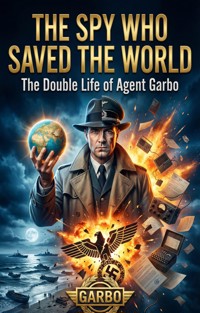
D-Day, 1944. The fate of the world hangs in the balance. The Nazis are waiting for the Allied invasion. But they are waiting in the wrong place. Why? Because of one man. "The Spy Who Saved the World" tells the incredible true story of Juan Pujol García, code name "Garbo." He was a chicken farmer from Spain who hated fascism so much he decided to become a spy. Rejected by the British, he created a fake network of sub-agents and fed the Germans lies so convincing they awarded him the Iron Cross. Eventually recruited by MI5, he orchestrated the greatest deception in military history: convincing Hitler that the Normandy landings were just a diversion. This book reads like a spy novel, but every word is true. It explores the psychology of the double agent—the nerve required to lie to the face of evil every single day. Without Garbo, the liberation of Europe might have failed. This is the story of the man who won the war with nothing but his imagination.
Sie lesen das E-Book in den Legimi-Apps auf:
Seitenzahl: 187
Veröffentlichungsjahr: 2026
Das E-Book (TTS) können Sie hören im Abo „Legimi Premium” in Legimi-Apps auf:
Ähnliche


















Table of Contents
Chapter 1: The Seeds of Rebellion
Early Life in Spain
The Rise of Fascism
Motivations for Espionage
Initial Attempts at Espionage
Creation of the Garbo Persona
The Impact of Personal Choices
Chapter 2: A Spy's Rejection
The Initial Approach
Rejection and Reflection
Crafting the Identity of Garbo
The First Steps in Deception
Chapter 3: The Art of Deception
The Psychology of Deception
Crafting the Narrative
The Role of Technology in Deception
The Consequences of Misinformation
Chapter 4: The Creation of a Network
The Initial Idea
Crafting the Sub-Agents
The Art of Fabrication
Managing the Feedback Loop
The Final Goal
Chapter 5: MI5 Comes Calling
The Initial Contact
Recruitment by MI5
Becoming Garbo: The Transformation
The Impact of MI5's Involvement
Chapter 6: The Iron Cross Dilemma
The Moment of Recognition
The Iron Cross and its Consequences
Strategies of Deception
The Psychological Toll
Chapter 7: Operation Fortitude
The Concept of Deception Warfare
The Birth of Operation Fortitude
Garbo's Role in Operation Fortitude
The Execution of Deception Tactics
The Results of Operation Fortitude
The Legacy of Operation Fortitude
Chapter 8: The Hour of Deceit
The Build-Up to D-Day
Garbo's Bold Deceptions
The Iron Cross and Recognition
The Day of Reckoning
Chapter 9: The Day of Reckoning
The Prelude to D-Day
The Dawn of D-Day
The German Command's Response
The Ground Assault: Allies vs. Axis
The Aftermath of D-Day
Chapter 10: Legacy of the Double Agent
Understanding the Role of a Double Agent
Garbo's Lasting Impact on Espionage
The Ethics of Deception in Intelligence Work
Garbo's Recognition and Reputation
Lessons Learned from Garbo's Life
Chapter 11: The Human Element
The Motivation Behind Espionage
Living a Lie: Emotional Toll
Bonds Formed in Shadows
The Human Cost of Deception
Chapter 12: The Man Behind the Legend
Early Years: The Man Before Garbo
Transforming Into Garbo
The Post-War Struggle for Identity
Recognition and Legacy
Chapter 13: Reflections on War and Peace
The Complex Nature of War
The Role of Deception in Warfare
Espionage and Its Moral Dilemmas
The Pursuit of Peace
Chapter 1: The Seeds of Rebellion
Every great story starts somewhere. In this chapter, we explore the early life of Juan Pujol García, the man who would become the legendary double agent known as Garbo. Growing up in Spain during a tumultuous period, Juan's disdain for fascism began to take root. We will examine the influences that shaped his ideology and the experiences that propelled him towards the world of espionage.
Early Life in Spain
Juan Pujol García was born in 1912 in a small village in Catalonia, Spain. His formative years were shaped by the political climate of the time, which was marked by rising tensions and the eventual outbreak of the Spanish Civil War. This period introduced Juan to the harsh realities of fascism and fueled his rebellion against oppressive regimes.
Origin and upbringing
Juan Pujol García was born in 1912 in a small Catalan village, where his early life reflected the pastoral simplicity of rural Spain. His family, though not affluent, instilled in him a sense of duty and a moral compass that would later guide his actions. Growing up in such a close-knit community allowed Juan to absorb the values of hard work, resilience, and social justice. The political climate of Spain during his formative years, however, began to intrude upon this idyllic setting.
The rise of fascism in Europe cast a shadow over his childhood. As tensions escalated in the late 1930s, Juan's innocence was shattered. The ideological struggle between republicanism and fascism became more pronounced, forcing him to reflect on the nature of power and oppression. This early awareness of political extremism would shape his future, pushing him towards a life defined by rebellion and resistance.
Influence of family values against fascism
Juan's family played a pivotal role in developing his values against authoritarianism. His parents were vocal opponents of fascism, engaging in discussions that often revolved around human rights and the importance of freedom. They imbued in him a deep-seated belief in justice, shaping Juan's perspective on the political turmoil surrounding him.
This familial foundation was critical during his youth. They encouraged him to think critically and respect the dignity of all individuals, ideals that stood in stark contrast to the oppressive doctrines propagated by fascist regimes. As Juan observed the world around him, the unwavering support from his family reinforced his resolve to fight against tyranny, shaping his identity as a future double agent.
The impact of the Spanish Civil War on his worldview
The outbreak of the Spanish Civil War in 1936 was a turning point for Juan Pujol García, profoundly influencing his worldview. The conflict laid bare the brutal realities of fascism as Francisco Franco's forces sought to quash republican ideals. Witnessing firsthand the horrors of war and the impact of dictatorship solidified his disdain for fascist ideologies.
Throughout the war, Juan became increasingly aware of the dangers posed by authoritarian regimes. He witnessed the suffering of innocents and the destruction of democratic values, which ignited a fervent desire to resist oppression. This conflict not only served as a catalyst for his ideological beliefs but also prepared him psychologically for a life marked by subterfuge and espionage.
Experiences that fostered his disdain for authoritarianism
Several key experiences in Juan's life significantly contributed to his burgeoning disdain for authoritarianism. His early encounters with repression, such as witnessing the suffering of political dissidents and the curtailment of free expression, hardened his resolve. These instances were compounded by the pervasive atmosphere of fear created by Franco's regime, which targeted anyone opposing its rule.
Moreover, Juan's travels to different regions of Spain exposed him to contrasting political environments. Each visit deepened his understanding of the consequences of fascism, leading to a growing conviction that he must take action. These formative experiences cultivated a sense of urgency within him, ultimately pushing him towards espionage as a means to combat tyranny and advocate for freedom—transforming him from a disillusioned citizen into a determined double agent.
The Rise of Fascism
The 1920s and 1930s saw a troubling rise in fascism across Europe, with Spain being no exception. Understanding the rise of leaders like Franco was essential for Juan as he contemplated his path to causing change. This section examines how his understanding of these movements influenced his ambitions.
Key events in Europe leading up to WWII
The interwar years were marked by significant upheaval across Europe, setting the stage for World War II. The Treaty of Versailles (1919) fostered resentment in Germany, contributing to the rise of Adolf Hitler and the Nazi Party. This period also witnessed the establishment of fascist regimes, notably in Italy under Mussolini and in Spain with Franco. The global economic depression of the 1930s exacerbated social and political tensions, leading many to turn to radical ideologies. In response to growing militarism, the Spanish Civil War (1936-1939) became a critical battleground for ideological conflict, pitting fascists against republicans. This conflict attracted international attention and support, revealing the stark divisions within European society. These events not only shaped nationalist sentiments but also cultivated a sense of urgency among those like Juan Pujol García, propelling them towards resistance against tyranny and igniting his fervent desire to combat fascism.
The Spanish response to fascism and its impact on society
In Spain, the rise of fascism led to profound societal changes that had far-reaching implications. The victory of Franco's nationalists in the Spanish Civil War established a dictatorship characterized by oppression and censorship. This environment fostered a culture of fear, stifling dissent and eradicating any significant opposition. Despite these challenges, many Spaniards organized into groups resisting fascism, showcasing resilience through underground networks and publications. The response was varied, with both violent and non-violent strategies employed; intellectuals, workers, and artists found ways to resist the regime while advocating for justice and democracy. Juan Pujol García was profoundly influenced by these movements, recognizing the courage required to stand against overwhelming odds. This societal climate not only informed his worldviews but also steered him toward a life of espionage, with a commitment to undermining the very regime that sought to squash freedom.
How Juan's education and influences fueled his resistance
Juan Pujol García's upbringing played a crucial role in shaping his ideological framework and resistance to fascism. His education, enriched by literature and history, nurtured a critical perspective towards authoritarianism. Inspired by tales of heroism against tyranny, Juan became acutely aware of the injustices proliferating in Europe. Key figures in his life, including teachers and family members, instilled a sense of moral responsibility and the belief that one could affect change through action. As the threat of fascism loomed larger, these influences galvanized his determination to fight back. Juan's diverse experiences and intellectual commitments ultimately equipped him with the resolve to engage in subterfuge and deception, laying the groundwork for his future as a double agent. His journey from a disillusioned citizen to a pivotal player in the intelligence war exemplifies how education can transform despair into a liberating force against oppression.
The personal consequences of living under a fascist regime
Living under a fascist regime exacted a heavy toll on individuals and society as a whole. For Juan Pujol García, this meant navigating a world suffocated by oppression and surveillance. Personal freedoms were severely curtailed, and dissent was met with harsh reprisals. The atmosphere of mistrust permeated everyday life, leaving citizens to tread carefully amid fear of denunciation or imprisonment. Juan's intolerance for such tyranny motivated him to take extraordinary risks, engaging in activities that would ultimately make him a target. Relationships were strained as individuals grappled with loyalty to friends versus allegiance to the oppressive government. For Juan, the emotional burden was substantial; the contradictions of collaborating with enemies of the regime while towards achieving freedom created deep inner conflict. However, these personal challenges only fueled his resolve and sense of purpose, pushing him towards the clandestine world he would soon master, embodying the struggle for liberty amidst darkness.
Motivations for Espionage
Espionage often arises from a complex mix of motivations. For Juan, it was not just a desire to undermine fascism; it was deeply personal. This section explores his drive, fears, and the broader consequences of his actions as he set his sights on playing a role in the fight against tyranny.
The desire for justice against fascism
For Juan Pujol García, the fight against fascism was not merely a political stance; it was an ethical imperative. Growing up in a Spain ravaged by civil war, he witnessed firsthand the devastation wrought by Franco's regime, which was heavily allied with the Nazis. This early exposure to tyranny ignited a profound sense of moral outrage within him. Juan believed that justice must prevail over oppression, which fueled his passionate desire to overturn fascist ideologies.
His motivations were further galvanized by the atrocities committed during World War II. The brutality of the Nazis and their totalitarian grip across Europe sparked a desire to act, to make a tangible difference in the world. This quest for justice was not just about defeating an enemy; it was about liberating those who suffered under fascist rule. Juan's determination to be a part of this fight made him an unlikely hero, and served as the foundation for his future in espionage.
Juan's personal experiences that pushed him towards espionage
Juan's journey to becoming a double agent was deeply influenced by his own life experiences. His formative years were marked by political turmoil, which cultivated a strong aversion to authoritarian control. The Spanish Civil War, in particular, played a pivotal role in shaping his worldview. Witnessing family and friends oppressed or persecuted for their beliefs instilled in him a personal responsibility to resist tyranny.
Furthermore, Juan faced rejections and setbacks in his initial attempts to join the Allied forces, spurring him to take matters into his own hands. This sense of personal betrayal and frustration pushed him into a world where he could exert his influence. Rather than simply accepting the status quo, he resolved to create a false identity as a spy, which became a vehicle for his fight against fascism, allowing him to channel his experiences into a powerful narrative of resistance.
How personal motivations can align with broader historical events
The period of World War II was characterized by a confluence of personal and collective struggles. Juan's motivations exemplified how individual desires for justice and resolution can dovetail with monumental historical events. As he became embroiled in espionage, his actions took on larger significance; they resonated beyond his personal fight against fascism.
Juan's intelligence work, rooted in his personal crusade, directly impacted the Nazi war machine, distracting it at critical moments. His efforts to mislead the Germans regarding the Normandy landings ultimately served a dual purpose: they satisfied his own quest for justice while contributing to a broader cause. This alignment of personal motivations with historical imperatives illustrates the unique role that individual actions can play in shaping the course of history, making Juan's contributions all the more remarkable.
The lure of adventure in the face of danger
Espionage is often seen as a thrilling endeavor, and for Juan, the allure of adventure was undeniable. The prospect of infiltrating enemy lines and crafting elaborate deceptions presented itself as an exhilarating challenge. Despite the inherent dangers, the excitement of living a double life became a powerful motivator for him. Venturing into treacherous territory, Juan embraced the adrenaline rush that accompanied his espionage activities.
This sense of adventure was amplified by the stakes of the situation; the fate of Europe hung in the balance, and his actions could have widespread repercussions. Each mission brought with it the thrill of innovation and creativity, as he invented fictional agents and meticulously crafted lies that would confuse and mislead the Nazis. This irresistible combination of peril and opportunity spurred Juan onward, driving him to embrace his role as a double agent, even when danger loomed ever larger.
Initial Attempts at Espionage
Before achieving notoriety as a double agent, Juan faced numerous challenges. His early attempts at espionage highlighted both his ingenuity and the obstacles he encountered. This section reflects on his initial forays into the world of intelligence and deception.
Juan’s early efforts to gather intelligence
Juan Pujol García began his espionage journey with a fervent desire to undermine fascism. In the early years of World War II, he recognized the dire consequences of the Nazi regime and felt compelled to contribute to the Allied cause. He took his first steps by attempting to gather intelligence on activities in Spain and beyond, meticulously observing military movements and cataloging data he deemed significant.
Despite lacking formal training, Juan employed resourcefulness and creativity. He engaged with locals who had connections to military personnel, hoping to glean useful information. His background as a chicken farmer allowed him to navigate rural spaces unnoticed, a critical advantage in gathering insights. These initial efforts were not without challenges, often hindered by his inexperience and the chaotic wartime environment. Yet, they laid the groundwork for the intricate deception work that was to come.
Failure and rejection by potential allies
In his pursuit of espionage, Juan encountered significant setbacks. After approaching various intelligence services for support, he faced rejection from British officials who deemed him unreliable and untrained. This discouragement could have deterred many, but for Juan, it fueled a determination to prove his worth. His proposals, which included plans to report on Nazi movements directly, were met with skepticism, highlighting the barriers he faced at every turn.
In addition to institutional rejections, the precarious nature of his intelligence efforts became apparent when he tried to integrate himself with local resistance groups. He found it challenging to gain the trust of these groups, who were wary of outsiders and less inclined to work with someone lacking a proven track record. These experiences underscored the harsh realities of espionage, as even those with the best intentions often found themselves without allies.
Learning from initial setbacks in espionage
Each setback provided Juan with invaluable lessons in the art of intelligence gathering. Rejections and failures taught him the importance of discretion, operational security, and patience. Rather than giving up, he began to refine his approach, learning to mask his true intentions and develop a believable persona.
These experiences also highlighted the necessity of creating a network of contacts rather than relying solely on direct engagement with the enemy. Juan understood that deception could be as powerful as direct intelligence. By forging connections with various individuals who could assist in his goals, he transformed failure into opportunities for growth. This evolution marked a crucial turning point in his burgeoning career as a spy.
The importance of perseverance in shaping his path
Juan’s journey into espionage is a testament to the power of perseverance. Despite numerous obstacles, his unwavering commitment to the cause of freedom kept him moving forward. Each rejection served as a stepping stone rather than a roadblock, motivating him to innovate more strategic ways to deceive the Nazis.
His resilience not only shaped his character but also influenced his future success as a double agent. Juan’s ability to persist in the face of adversity gave him the strength needed to navigate the treacherous waters of espionage. It instilled in him an unwavering belief that he could make a significant impact, ultimately leading him to orchestrate one of the most successful deceptions of the war—something that would not have been possible without the lessons learned from his early efforts.
Creation of the Garbo Persona
After facing rejection from official intelligence services, Juan took matters into his own hands. The creation of the 'Garbo' persona marked a turning point in his life, enabling him to become a source of misinformation for the Nazis. This section explores the transformation of Juan into a master of deception.
How he crafted the Garbo identity
The inception of the Garbo identity was a masterful blend of creativity and cunning. Juan Pujol García realized that to effectively deceive the Nazis, he needed an alter ego that was both credible and intriguing. Drawing inspiration from his own life experiences, he crafted a character that combined the charm of a respectable agent with the resourcefulness of a seasoned spy.
He adopted the name "Garbo," a nod to the legendary actress Greta Garbo, which evoked glamour and intrigue. Juan developed intricate backstories, including convincing personal details that added depth to his persona. This attention to detail was pivotal; it allowed him to connect with German intelligence agents who would receive the information he fabricated. The Garbo identity became not just a façade but a complex character that enabled Juan to seamlessly integrate into the world of espionage.
The creation of an entire network of fake agents
Juan's ingenuity reached new heights with the creation of an elaborate network of fictitious sub-agents. He understood that for his deception to be taken seriously, it couldn't simply rely on a single source of information. Therefore, he invented a whole cast of characters, each with distinct names, backgrounds, and roles within this fabricated intelligence organization.
These 'agents' communicated through reports and fake correspondences that Juan meticulously crafted. This not only enhanced his credibility but also created a web of misinformation that confounded German intelligence. By cultivating a narrative that suggested multiple sources contributing to the Allied efforts, Juan ensured that the Nazis took the bait. The vastness of this imaginary network made it incredibly difficult for the Germans to discern the truth, effectively allowing Garbo to manipulate their military strategies during the war.
Using imagination as a tool for espionage
Imagination became Juan's most formidable weapon in the realm of espionage. Faced with rejection, he transformed his creative abilities into a strategic asset, envisioning entire scenarios and operations that never existed. His capacity to think outside the box allowed him to construct a plausible narrative that both entertained and deceived.
Through letters, reports, and fabricated communications, Juan’s imagination painted vivid pictures of fictional troop movements and military strategies. He carefully crafted every detail, ensuring that each piece of information was believable and aligned with what the Germans already understood. This creative process was not merely an exercise in fabrication; it was a meticulous orchestration of deception that would prove pivotal in influencing enemy decisions and diverting their focus from the true D-Day preparations.
The significance of the Garbo persona in WW2 intelligence
The Garbo persona was not just another spy; it embodied the quintessence of strategic deception during World War II. By successfully embedding himself into the Nazi intelligence apparatus, Juan Pujol García fundamentally altered the landscape of military operations. His elaborate ruse misled the Germans into believing that the Allied invasion would occur at a different location, thus protecting the real landing sites in Normandy.
The significance of Garbo's actions reverberates beyond his individual contributions. His success demonstrated the potential of misinformation and deception as crucial elements of military strategy. Juan's ability to manipulate perceptions exemplified how intelligence could be wielded not just for defense but also as an offensive weapon in psychological warfare. Ultimately, his achievements were instrumental in the success of D-Day, showcasing the impact one determined individual can have on the course of history.
The Impact of Personal Choices
Every decision shapes the course of history, and Juan's choices brought him into the heart of WWII espionage. This section delves into the personal risks he took and how his individual resolve affected the larger context of the war.
Risk of personal safety and its implications
Juan Pujol García, known as Garbo, faced staggering risks for the nascent cause of Allied victory. His decision to engage in espionage placed him in direct danger from the very forces he sought to undermine. Operating as a double agent meant that the slightest slip could lead to his demise; a captured spy was often executed without hesitation.
Garbo understood these stakes keenly. His choice to deceive German intelligence involved not just physical peril but psychological strain. The constant need to maintain his cover and fabricate a web of false narratives weighed heavily on him. He risked not only his life but also the lives of those around him, as his activities could implicate friends and family should he be discovered.
Ultimately, Garbo’s willingness to confront these dangers illustrates the high personal costs that come with such dangerous commitments. His choices rippled through the fabric of the war, providing the Allies with a crucial advantage while sacrificing his own safety.
The moral dilemmas faced by double agents
The life of a double agent is entrenched in moral complexity, and Garbo’s story epitomizes this tension. Operating on both sides of the conflict, he grappled with the ethical implications of his actions daily. Espionage often requires a betrayal of trust, not just of enemies but also of one’s own nation and its ideals.




