


5,99 €
Mehr erfahren.
- Herausgeber: Shuttle Systems Ltd
- Kategorie: Ratgeber
- Sprache: Englisch
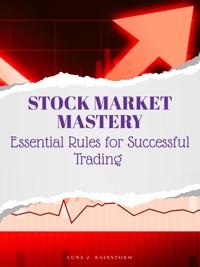
Unleash your trading prowess with "Stock Market Mastery: Essential Rules for Successful Trading" - a comprehensive guide that takes you from market novice to seasoned trader in a systematic manner.
This resourceful book equips you with the fundamental and technical skills required to navigate the unpredictable world of the stock market successfully. By focusing on key principles, such as keeping emotions in check and setting realistic goals, you'll be ready to make sound financial decisions.
Our expert authors guide you through crucial steps of creating a robust strategy, with a keen focus on risk management. We explain technical analysis and the significance of staying updated with news and events, setting a strong foundation for your trading journey.
We instill the importance of keeping a trading journal to track your performance and growth. You'll learn why trading on tips can be a dangerous game and how diversifying your portfolio can minimize your risk.
This book empowers you to invest wisely by understanding your chosen stocks thoroughly and avoiding the perils of leverage. Patience is indeed a virtue in stock trading, and our guide reinforces the significance of following market trends and using fundamental analysis.
You'll also discover the art of options spreads and the impact of interest rates on your investments. Avoiding herd mentality, mastering the use of limit orders, keeping a keen eye on trading volumes, and other such skills are meticulously covered.
Understand market cycles, stay wary of scams, and become adept at managing your investments. You'll learn about the importance of dividends, the relevance of P/E ratios, and the caution needed while short-selling.
Furthermore, the guide addresses the essentiality of having an exit strategy, understanding stock correlations, avoiding chasing hot stocks, and more. It even covers the understanding of option Greeks and implied volatility, to give you an edge in options trading.
With the "Stock Market Mastery: Essential Rules for Successful Trading," you'll learn to respect market sentiment, be mindful of currency fluctuations, and keep evolving as a trader. Become a part of the trading elite today - your journey to stock market mastery starts here.
Das E-Book können Sie in Legimi-Apps oder einer beliebigen App lesen, die das folgende Format unterstützen:
Veröffentlichungsjahr: 2023
Ähnliche

















Created by Xspurts.com
All rights reserved.
Copyright © 2005 onwards .
By reading this book, you agree to the below Terms and Conditions.
Xspurts.com retains all rights to these products.
No part of this book may be reproduced in any form, by photostat, microfilm, xerography, or any other means, or incorporated into any information retrieval system, electronic or mechanical, without the written permission of Xspurts.com; exceptions are made for brief excerpts used in published reviews.
This publication is designed to provide accurate and authoritative information with regard to the subject matter covered, however is for entertainment purposes only. It is sold with the understanding that the publisher is not engaged in rendering legal, accounting, health, relationship or other professional / personal advice. If legal advice or other expert assistance is required, the services of a competent professional should be sought.
First Printed 2023.
ISBN:
DIGITAL VERSION: 978-1-991093-13-4
PHYSICAL VERSION: 978-1-991093-12-7
A New Zealand Designed Product
Get A Free Book At: go.xspurts.com/free-book-offer
Table of Contents
Keep Emotions In Check
Set Realistic Goals
Stick To Your Strategy
Never Risk More Than You Can Afford To Lose
Focus On Risk Management
Use Technical Analysis
Keep Up With News And Events
Keep A Trading Journal
Avoid Trading On Tips
Diversify Your Portfolio
Invest In What You Know
Avoid Leverage
Stay Patient
Follow Market Trends
Use Fundamental Analysis
Keep An Eye On Interest Rates
Avoid Herd Mentality
Keep It Simple
Use Limit Orders
Keep An Eye On Trading Volume
Learn Options Spreads
Stay Informed About Taxes
Use Dollar-Cost Averaging
Keep An Eye On Insider Trading
Monitor Your Investments Regularly
Consider Dividends
Beware Of Scams
Keep An Emergency Fund
Be Prepared For Market Downturns
Understand The Risks Of Short-selling
Know Options Expiration Dates
Have An Exit Strategy
Be Mindful Of Stock Correlations
Understand Market Cycles
Beware Of Fees
Learn Liquidity
Use A Stop-Loss Order
Don't Try To Time The Market
Understand Your Risk Tolerance
Understand Implied Volatility
Understand Option Greeks
Avoid Chasing After Hot Stocks
Consider Market Sentiment
Avoid Overtrading
Gotta Know P/E Ratio
Focus On Long-Term Goals
Be Mindful Of Currency Fluctuations
Keep Learning
Have Questions / Comments?
Get Another Book Free
Keep Emotions In Check
The world of stock trading is a dynamic and fast-paced environment where fortunes can be made or lost in the blink of an eye. In such a volatile realm, it is essential to keep emotions in check. Emotions can cloud judgment, lead to impulsive decisions, and ultimately result in significant financial losses. Therefore, mastering the art of emotional control is crucial for successful stock trading.
When it comes to stock trading, emotions can be both a trader's best friend and worst enemy. On one hand, emotions such as excitement and euphoria can fuel ambition and motivate traders to seize opportunities. On the other hand, fear, greed, and panic can lead to irrational behavior and poor decision-making. It is essential to strike a balance and maintain a level-headed approach.
One of the most common emotions that traders experience is fear. Fear of missing out (FOMO) can drive individuals to make impulsive decisions without proper analysis or consideration of the risks involved. This fear often arises from seeing others profit from a particular stock and feeling the pressure to join in. However, succumbing to FOMO can result in buying at inflated prices and suffering losses when the market corrects itself.
Another emotion that can wreak havoc on stock trading is greed. The desire for quick profits can lead traders to take unnecessary risks or become overconfident in their abilities. Greed can make individuals ignore warning signs and dive headfirst into speculative investments. It is important to remember that stock trading is a long-term game that requires patience and discipline. Succumbing to greed can lead to substantial losses and financial ruin.
Panic is yet another emotion that can lead to disastrous outcomes in stock trading. When the market experiences a downturn or volatility increases, panic can set in, causing traders to sell their stocks hastily or make impulsive decisions. Panic selling often results in selling low and missing out on potential gains when the market recovers. Having a rational and composed mindset during turbulent times is vital to avoid knee-jerk reactions that can be detrimental to one's portfolio.
Emotional control in stock trading is not just about avoiding negative emotions; it also involves managing positive emotions effectively. Excessive optimism can blind traders to potential risks and lead to an overvaluation of certain stocks. While it is essential to have confidence in one's decisions, it is equally important to maintain a realistic perspective and assess the market objectively.
To keep emotions in check, traders can employ various strategies. Firstly, having a well-defined trading plan can provide a roadmap and a sense of structure. A trading plan outlines entry and exit points, risk management strategies, and specific criteria for selecting stocks. By sticking to a predetermined plan, traders can reduce the impact of emotional impulses on their decision-making process.
Secondly, maintaining a healthy mindset is crucial. Engaging in activities such as regular exercise, meditation, or spending time with loved ones can help reduce stress levels and promote emotional well-being. Developing a routine that includes breaks and time away from the screens can prevent burnout and emotional exhaustion.
Furthermore, it is essential to stay informed and educated about the market. A solid understanding of fundamental and technical analysis can provide a rational basis for decision-making and reduce emotional biases. Traders should continuously update their knowledge, stay abreast of market trends, and learn from past successes and failures.
Lastly, seeking support and learning from experienced traders can be invaluable. Joining trading communities or finding a mentor can provide guidance, accountability, and a sounding board for ideas. Interacting with others who share similar goals and experiences can help put emotions into perspective and provide valuable insights.
Set Realistic Goals
Stock trading is a thrilling and potentially lucrative endeavor, attracting individuals from all walks of life who aspire to grow their wealth. However, to navigate the complex world of stock trading successfully, it is crucial to set realistic goals. Setting achievable objectives not only helps traders stay focused and motivated but also minimizes the risk of making impulsive decisions driven by unrealistic expectations.
When it comes to stock trading, setting realistic goals is paramount. While it is natural to desire substantial profits and financial independence, it is essential to approach the market with a pragmatic mindset. Setting goals that are too ambitious or unrealistic can lead to disappointment, frustration, and even financial ruin.
One common pitfall is the allure of "get-rich-quick" schemes. Many novice traders are enticed by stories of individuals who seemingly made overnight fortunes through stock trading. While such success stories do exist, they are often exceptions rather than the norm. It is crucial to recognize that stock trading is a long-term endeavor that requires patience, discipline, and a sound understanding of the market.
Setting realistic goals starts with assessing one's financial situation, risk tolerance, and available resources. It is essential to have a clear understanding of how much capital can be allocated to trading without jeopardizing one's financial stability or lifestyle. Trying to generate extraordinary returns with limited resources can lead to taking unnecessary risks, increasing the chances of substantial losses.
Additionally, it is important to establish achievable benchmarks based on historical market performance and realistic expectations. While it is tempting to aim for astronomical returns, it is more prudent to set goals based on the average market performance and one's own capabilities. This approach allows for a more measured and sustainable approach to trading.
Setting specific and measurable goals is another critical aspect of successful stock trading. Vague goals such as "make a lot of money" or "become a millionaire" lack clarity and do not provide a clear roadmap for success. Instead, traders should set precise objectives, such as achieving a certain percentage of return on investment within a specified time frame or consistently outperforming a particular market index.
Moreover, it is important to differentiate between short-term and long-term goals. Short-term goals focus on immediate objectives, such as executing a successful trade or meeting a monthly profit target. Long-term goals, on the other hand, encompass broader aspirations, such as building a sustainable portfolio or achieving financial independence over several years. By defining both short-term and long-term goals, traders can maintain focus and evaluate their progress over time.
Another crucial aspect of setting realistic goals in stock trading is conducting thorough research and analysis. Traders must develop a deep understanding of the companies and sectors they wish to invest in, analyzing their financials, competitive position, and growth prospects. This knowledge serves as the foundation for setting realistic expectations regarding potential returns and market performance.
Risk management is also closely tied to setting realistic goals. Traders must assess the risks associated with each investment and set goals that align with their risk tolerance. Setting goals that are too aggressive without considering the associated risks can lead to excessive exposure and potential losses. A balanced approach that takes into account both potential rewards and risks is essential for long-term success.
Additionally, it is crucial to regularly review and adjust goals as market conditions and personal circumstances evolve. The stock market is dynamic and subject to various external factors that can impact performance. Traders should periodically reassess their goals to ensure they remain relevant and achievable, making necessary adjustments as needed.
Stick To Your Strategy
In the fast-paced world of stock trading, it is crucial to stick to your strategy. The stock market is filled with uncertainties, volatility, and a constant stream of information that can easily sway even the most seasoned traders. However, by developing a well-defined strategy and adhering to it, traders can enhance their chances of success and avoid the pitfalls of emotional decision-making.
Stock trading without a clear strategy is akin to sailing without a compass. Without a predetermined plan, traders are susceptible to impulsive actions, emotional biases, and haphazard decision-making. Having a strategy provides a framework for making informed choices and managing risk effectively.
Developing a trading strategy begins with a comprehensive understanding of one's goals, risk tolerance, and investment timeframe. Traders should identify their preferred trading style, whether it's day trading, swing trading, or long-term investing, and align their strategy accordingly. Each style requires a different approach and set of tactics.
One popular strategy is trend following, which involves identifying and capitalizing on market trends. This strategy relies on the belief that the market has a tendency to move in trends, and traders aim to enter trades in the direction of those trends. By sticking to the strategy of trend following, traders can potentially ride profitable waves and avoid counterproductive trades against the prevailing trend.
Another commonly employed strategy is value investing, which involves identifying undervalued stocks and holding them for the long term. Value investors focus on fundamentals such as earnings, dividends, and financial ratios to assess the intrinsic value of a stock. By sticking to the strategy of value investing, traders aim to buy stocks that are trading below their intrinsic value, with the expectation that they will eventually rise in price.
Momentum trading is a strategy that capitalizes on short-term price movements. Traders using this strategy look for stocks with significant price momentum and aim to profit from rapid price changes. Sticking to the strategy of momentum trading requires discipline and the ability to identify stocks that exhibit strong momentum signals.
Regardless of the specific strategy adopted, risk management should be a cornerstone of any trading approach. Traders must define their risk tolerance, set appropriate stop-loss levels, and establish position sizing rules. By adhering to these risk management principles, traders can protect themselves from significant losses and ensure the longevity of their trading career.
Sticking to a trading strategy requires discipline and the ability to resist the temptation of deviating from the plan. The stock market can be highly emotional, and traders often face situations where fear, greed, or the fear of missing out can cloud their judgment. However, it is crucial to remember that successful trading is a marathon, not a sprint. By staying committed to the strategy and avoiding impulsive decisions driven by emotions, traders can increase their chances of consistent profitability.
To reinforce adherence to the strategy, traders can leverage various tools and techniques. Keeping a trading journal is one such method. By documenting trades, including the rationale behind them, traders can objectively evaluate their decision-making process and learn from both successes and failures. A trading journal also serves as a visual reminder of the importance of sticking to the strategy.
Another technique is backtesting. By utilizing historical market data, traders can simulate their strategy on past market conditions and evaluate its performance. Backtesting provides valuable insights into the strengths and weaknesses of the strategy, allowing traders to make necessary adjustments before implementing it in real-time trading.
Continuous education and learning are also vital to stick to a trading strategy. The stock market is dynamic, and new information and trends emerge regularly. Traders should stay updated on market news, economic indicators, and industry developments. This knowledge equips them with the necessary tools to adapt their strategy when required, without deviating from its core principles.
Never Risk More Than You Can Afford To Lose
Stock trading is an exhilarating endeavor that offers the potential for significant financial gains. However, it is important to never risk more than you can afford to lose. While the allure of high returns can be tempting, it is crucial to approach stock trading with a rational mindset and a clear understanding of the risks involved. By managing risk effectively and setting sensible limits, traders can protect their financial well-being and participate in the market with confidence.
Stock trading inherently involves risk. The market can be unpredictable, influenced by various factors such as economic conditions, geopolitical events, and investor sentiment. Prices can fluctuate rapidly, and even the most meticulously analyzed investments can result in losses. Recognizing and acknowledging this reality is the first step in ensuring that you never risk more than you can afford to lose.
One key principle of risk management in stock trading is setting a clear risk tolerance level. Traders must evaluate their financial situation, including their available capital, income, and expenses, to determine the amount of money they are comfortable risking in the stock market. It is essential to consider one's overall financial health and not allocate funds that are necessary for living expenses, debt payments, or emergencies.
Once the risk tolerance level is established, traders can then determine appropriate position sizes for each trade. Position sizing refers to the amount of capital allocated to a particular investment. By diversifying their portfolio and limiting the exposure to any single trade, traders can minimize the impact of potential losses. It is generally advised to limit each position to a small percentage of the total portfolio, typically ranging from 1% to 5%.
Stop-loss orders are also a crucial tool for managing risk. A stop-loss order is an instruction to sell a security when it reaches a predetermined price. By setting a stop-loss order, traders can limit their potential losses and protect their capital. This practice ensures that losses are controlled and prevents emotions from driving impulsive decisions during market fluctuations.
Moreover, it is important to maintain a long-term perspective and avoid speculative trading strategies that involve excessive risk. While the potential for high returns can be enticing, it is essential to evaluate investments based on their fundamental value and growth potential rather than relying solely on short-term market trends. By focusing on solid investments and maintaining a diversified portfolio, traders can reduce their exposure to unnecessary risk.
Another aspect of never risking more than you can afford to lose is considering the impact of leverage. Leverage allows traders to control a larger position with a smaller amount of capital. While leverage can amplify profits, it also amplifies losses. Therefore, it is crucial to exercise caution when using leverage and ensure that the potential losses are within the acceptable risk tolerance level.
Emotional control is vital in risk management. Stock trading can be emotionally charged, and fear and greed can cloud judgment. Traders must develop discipline and the ability to make rational decisions based on analysis rather than succumbing to impulsive actions driven by emotions. Sticking to a well-defined strategy and avoiding impulsive trades can help prevent excessive risk-taking.
Additionally, traders should regularly reassess their risk tolerance and adjust their strategies accordingly. As personal circumstances change, such as financial obligations or changes in income, it is important to reevaluate the amount of capital that can be comfortably risked. This ongoing assessment ensures that traders stay within their means and avoid taking on excessive risk.
Education and continuous learning also play a crucial role in managing risk effectively. Traders should stay informed about market trends, economic indicators, and industry developments. This knowledge enables them to make informed decisions and identify potential risks before making investment choices. Learning from experienced traders, attending seminars or workshops, and staying updated with financial news can enhance risk management skills.




