



11,99 €
Mehr erfahren.
- Herausgeber: Pushkin Vertigo
- Kategorie: Gesellschafts- und Liebesromane
- Sprache: Englisch
The addictive mystery taking the world by storm, from the author of The Times Bestseller Strange Pictures Eleven strange buildings. One terrible secret. A lonely hut in the woods. A hidden chamber. A mysterious shrine. A home in flames. A nightmarish prison... Each of the buildings in this book tells a chilling story. Each one is part of a puzzle. Look closely... and you'll see that everything is connected. All leading to a revelation so horrifying you won't want to believe it. Millions of readers have become addicted to solving Uketsu's dark mysteries. Strange Buildings is the strangest, and darkest, so far.
Das E-Book können Sie in Legimi-Apps oder einer beliebigen App lesen, die das folgende Format unterstützen:
Seitenzahl: 318
Veröffentlichungsjahr: 2026
Ähnliche


















123
67
On a cold, windy day, I walked through the streets of Umegaoka towards my friend the draughtsman’s flat. I was carrying eleven files.
9
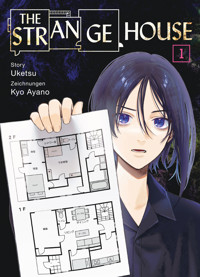
My book Strange Houses came out a while back.
It exposed the stories behind some strange floor plans that my friend, an architectural draughtsman, and I investigated. Together, we uncovered the chilling reason that the houses had been built and the terrifying things that happened there.
I am happy to say that Strange Houses was well received and read by a great number of people, with the result that many of those same readers began sending me their own ‘house’ stories:
‘I read your book. The fact is, my house has a strange floor plan, too…’
‘Once, when I went to play at my grandmother’s house, I heard odd noises coming from an empty room…’
‘There was this weird pillar at a bed and breakfast I once stayed at…’
It turns out there are far more ‘strange houses’ around Japan than I could have ever imagined.
This second book consists of my research into eleven of those many, many strange buildings.
At first glance, their stories seem totally unrelated. But on careful reading, they begin to intertwine, telling one incredible tale.
I encourage you try to spot the connections yourself as you read. 10
CONTENTS
FILE1
The Hallway to Nowhere
17TH OCTOBER 2022
Record of research and interview with Yayoi Negishi
14
15
I was sitting in a café in Toyama Prefecture, with a woman across the table from me.
Her name was Yayoi Negishi. She was a part-time worker in her thirties, living in Toyama City. She and I were meeting because she said she had some long-standing worries about her childhood home.
Her son, Kazuki, would soon be turning seven. She told me that one day, he had brought home a copy of Strange Houses from his elementary school library. Apparently, the floor-plan on the cover had caught his eye.
However, he’d struggled with the decidedly adult book and couldn’t read many of the words, so he asked his mum to read it to him. Negishi promised to do just that, but for only ten minutes a day, just before bed.
She told me that as they progressed through the book, though, it started to stir up old memories. Slightly unsettling memories that had been buried deep in her subconscious.
NEGISHI: There was something odd about the house I grew up in. But the place was torn down ages ago, and things are so busy now that I just stopped thinking about it. I suppose I had actually buried those memories. But as I read that book, 16little by little, they came back to me. Memories of that house and my mum.
Negishi’s expression darkened at the mention of her mother.
NEGISHI: Ever since, it’s all I can think about. While I’m doing the washing up, while I’m at work, all the time. I thought talking to whoever wrote that book might help me feel better, so I contacted your publisher. It’s not like I’m expecting you to uncover some hidden truth. I think I’m just hoping that telling someone will help free me from the burden of my own past. But really, I’m just putting you out. I’m sorry.
AUTHOR: No, not at all. I’ve been talking to lots of people about all kinds of houses and floor plans ever since my book came out. It seems that collecting stories about strange floor plans is becoming my life’s work. And it sounds like your story certainly falls within that field, so it’s no trouble at all. In fact, I like the idea that your taking part in my little hobby like this might also help bring you some peace. Two birds with one stone, and all that.
NEGISHI: I’m glad to hear you say so.
Negishi took out a notebook and opened it on the table between us, revealing a house floor plan drawn in pencil. There were obvious traces of lines rubbed out and sections scribbled over. It seemed clear that she had been slowly dredging up faint memories as she drew, rubbing out and redrawing over and over as she recalled details. 17
NEGISHI: My childhood home was in a residential neighbourhood in Takaoka, Toyama Prefecture. It was a single-storey house. It never felt uncomfortable or poorly laid out, but this section right here always struck me as odd. Even as a child, I wondered about it. 18
She pointed at one part of the drawing.
NEGISHI: What is this hallway for?
AUTHOR: How exactly do you mean?
NEGISHI: It doesn’t lead anywhere. It’s a dead end. And if it weren’t there, my parents’ room could have been that much larger. It always bothered me. Why on earth did they waste that space when they built the house?
When she put it that way, it did seem odd. The spot was too narrow to serve as storage, and there were no doors or windows there. You could only call it a ‘hallway to nowhere’. 19
NEGISHI: I did ask my dad about it when I was a child. Just once. I asked what it was there for. For some reason, he changed the subject. It was like he didn’t even hear me. Him ignoring my question irritated me, and I threw a bit of a tantrum. I kept at him, whining and asking over and over, ‘What is it there for?’ Dad doted on me, and normally he’d have given in immediately, but that time he simply refused. He wouldn’t say a word about it.
AUTHOR: It sounds like he must have had a very strong reason to avoid speaking about it.
NEGISHI: I can only assume so. My parents both helped the construction company to set out the floor plan, so he must have known why they included that hallway. So, when he was so reluctant to tell me… I started to feel like he was hiding something.
AUTHOR: And what about your mother?
Negishi’s expression darkened again.
NEGISHI: I never asked her. Or, rather, I suppose I couldn’t. We didn’t have that kind of relationship.
In my experience, you couldn’t truly understand the secrets of a house without understanding the people living there first. I had a feeling that Negishi’s problem with her mother would be key to unlocking the mystery in this case.
AUTHOR: Would you be willing to tell me about your mother? Only as much as you’re comfortable with, of course.
NEGISHI: All right. When she was speaking with the neighbours or my dad, Mum was a normal, cheerful person. But with 20me—and only me—she was always terribly strict. I can barely remember her offering a word of praise, and she would blow up at me over the smallest thing. I suppose that probably sounds like your usual strict mother, but there were times when I caught her looking at me with something like fear in her eyes… I came to wonder if she was actually afraid of me… Or maybe she just didn’t like being around me. All I know was that her attitude towards me wasn’t normal.
AUTHOR: Do you have any idea why?
NEGISHI: No. I honestly don’t. It was always like that. As far back as I can remember, I simply felt that my mum didn’t like me. It was just the way it was. Now, though, I don’t think it was that simple. Mum had a harsh side, but she could also be overprotective. I was born prematurely. I was small and frail, apparently, and I think that’s why she was always asking me if I was all right, or if I was hurt or something. Oh, and she was forever asking, ‘You didn’t go near the big road, did you?’
AUTHOR: The big road?
NEGISHI: Right. I should probably explain that, too. Our house faced a main street to the south. There were other houses to the north, east and west, with narrow lanes between us. Mum always said, ‘No matter what, you’re never to go on the big road. If you have to go anywhere in the neighbourhood, use the lanes.’ The pavement along that main street was really narrow. I could see the danger, of course, but we didn’t live in a big city or anything, so the traffic wasn’t very heavy. I always thought she worried too much. Anyway. If I didn’t do as she said, she’d scream at me, so I listened. 21
So, on the one hand, her mother smothered her with criticism, and on the other with overprotective rules. I suddenly had a thought. Could it be that Yayoi’s mother simply didn’t understand how to show love?
I know that there are parents who struggle to find ways to appropriately express love for their children, even though they want to. Instead, they are so fixated on being ‘responsible parents’ that they become overprotective.
But children can often sense the tension of that struggle, which can cause communication to break down. Which then leads to impatience, irritation and distance on both sides. Some parents respond to this with overprotectiveness as well, which only adds to the child’s stress. And, if that was the case here, I had another thought. 22
AUTHOR: Ms Negishi, what you said has given me an idea. Could it have been your mother who proposed this hallway?
The hallway in question was between the parents’ bedroom and hers. Maybe its true purpose was to create some distance between the two rooms?
While overprotective parents seem to want to keep their children close, they may secretly want the opposite. This hallway might have been a kind of barrier born of that unconscious emotional contradiction.
I tried to explain, as gently as I could, so as not to hurt her feelings. But when I finished, she slowly shook her head.
NEGISHI: No, I don’t think so. Honestly, the same idea occurred to me. That maybe Mum wanted to get away from me. But it doesn’t fit. This house was finished in September 1990. That’s only six months after I was born.
23NEGISHI: I don’t care how much they rushed it, there’s no way they could have gone from house planning to completion in six months. So, this layout had to have been decided well before I was born. I just can’t believe she wanted to put space between us that early.
I had to agree. It was hard to imagine a parent craving distance from their child before they were even born.
NEGISHI: I’m sorry, I should have told you that earlier.
AUTHOR: Not at all. But that fact does offer an important clue.
NEGISHI: It does?
AUTHOR: From the timing, I’d say that your parents decided to have this house built when they found out they were having a baby. So, in a sense you could almost say this house was built for you. In which case, this hallway may very well have been there because of you, specifically. I can’t say for sure, though.
NEGISHI: If that’s true, I really should have got my parents to tell me.
AUTHOR: Forgive me, but… About your parents. Are they…?
NEGISHI: They both passed away years ago.
She went on to describe their final days.
NEGISHI: It was in the winter of my third year at elementary school. The three of us went out to dinner. My mum suddenly said she had a headache, then she collapsed on the spot. We called the emergency services, but it was during the big year’s-end holiday, so all the ambulances were already on dispatch. It took for ever for one to arrive. 24
When Yayoi’s mother got to hospital, the tests revealed she’d had a stroke.
The delay in response meant she was bedridden from that day on. Yayoi’s father quit his job to care for her, working part time and piecemeal when he could, barely sleeping. Yayoi herself had to help with housework while keeping up with school.
Things went on like that for two years. When Yayoi was eleven, her mother contracted pneumonia and died. Her father also fell ill and died soon after, as if he simply couldn’t bear losing his wife after those two painful years of caregiving.
NEGISHI: After that, I went to live with some distant relatives. Our house went up for sale, but there were no buyers. I heard that it was torn down to make way for a block of flats.
She took a sip of coffee, then put her cup down with a loud clink.
NEGISHI: After they died, I found a couple of odd things while going through their belongings. First there was the money—an envelope in my mother’s drawer stuffed with 10,000-yen bills. Sixty-eight of them. I guess it was her secret stash or something.
AUTHOR: 680,000 yen. That’s quite a stash.
NEGISHI: When Mum was still healthy, she worked part time at a bento shop. It wasn’t an impossible amount for her to have saved up, but I was surprised, because she never struck me as that fixated on money. Still, if that had been all, I wouldn’t have thought much of it, but…
AUTHOR: What else did you find? 25
NEGISHI: A doll. A wooden doll all wrapped up in newspaper and hidden in the closet in the tatami room. I don’t know who it belonged to—Mum or Dad. The odd thing is, the doll… It was missing one leg and one arm. Like it was made that way, not broken.
AUTHOR: Really?
NEGISHI: I thought it was creepy, so I threw it out. But to this day, I don’t know what it was for, or why it was missing those limbs.
The mysterious hallway, the mother’s behaviour, the hidden money, the misshapen doll. This seemingly unrelated, fragmentary information spun around in my mind.
A sudden clattering sound brought me out of my reverie. I looked down and saw that Negishi’s hands were shaking, making her cup rattle against its saucer.
AUTHOR: Are you all right?
NEGISHI: Yes, sorry. I just feel so anxious all of a sudden.
AUTHOR: You do? Why now?
NEGISHI: The truth is… We still haven’t got to the real reason I wanted to talk to you today.
· · ·
Negishi stared down at her still-trembling fingers and went on, her voice nearly a whisper.
NEGISHI: I couldn’t stop thinking about the secret of that house, even after my parents died. It stayed with me, on and on. I started reading books on architecture, taking notes of 26everything that seemed important. For years. Then, I finally found what I think is the answer.
AUTHOR: You’re saying you already solved the mystery?
NEGISHI: Yes, maybe. But there’s no proof. And more than that… If my answer is right, then the whole thing was so dark, so miserable, I just… I’ve tried to put it out of my mind. To forget it. But I couldn’t. All through the years, even after I’d grown up, got married and had my own children. Whenever something happened that reminded me of it, I would find myself afraid. Like right now. Just trying to talk about it, I get… Like this. So nervous. I just want to run away from it all.
At the very start of our interview, she’d expressed the hope that telling me her story might free her of the burden of her past. This answer she was tiptoeing around must have been the ‘burden’ she meant.
And she was hoping that telling me about it would ease her anxiety.
AUTHOR: This must have been hard for you. To be honest, I’m not sure if I can judge whether the answer you’ve found is correct or not. Still, talking about it might help you feel better. So, please, let me hear your story. At your own pace.
NEGISHI: Thank you.
She gently cleared her throat and began.
NEGISHI: So, why did they build this ‘hallway to nowhere’? At first, 27that was all I kept asking myself. But then, one day, I realized that I might have been looking at it all wrong. Maybe it wasn’t a ‘hallway to nowhere’. Maybe it was a ‘hallway to somewhere that had disappeared’.
Negishi took a biro from her bag and drew something on the layout.
AUTHOR: A door to the garden?
NEGISHI: That’s what I thought at first. That they’d originally planned to put a doorway at the end of the hallway. But there’s already a door to the garden from the living room. Why would they need 28another? Also, if they eventually decided against the door to the garden, why keep the hallway? Then, I thought of another possibility.
She picked up the biro again.
AUTHOR: Ah, a room…
NEGISHI: The original plans for the house included another room, which this hallway led to. But just before construction started, they made a last-minute change and removed the room, leaving just the hallway behind. 29
AUTHOR: But suddenly removing a whole room is a huge change.
NEGISHI: Right. Which means there must have been an important reason, something that made it necessary. For example… the loss of a family member.
AUTHOR: What?!
Negishi explained that this room must have been intended for a relative: a grandfather, a grandmother, an uncle, an aunt, a cousin… Whoever it was, just before construction started, that person must have died.
AUTHOR: But even then, why remove the whole room?
NEGISHI: Normally, you probably wouldn’t. So, whoever it was wasn’t a ‘normal’ person to my parents. They must have been special. While I sat pondering who it could possibly have been, I noticed something else.
NEGISHI: This room kind of looks like mine. It’s about the same size, and it faces the garden, the same as mine. Like… a twin. 30
My heart skipped a beat.
NEGISHI: Like I said before, I was born prematurely. Two months before the due date, and by caesarean. From what they told me, it was a risky birth for both mother and child. My parents never liked to talk much about my birth, but I started to think that maybe I’d had a sibling. A twin. But something happened while my mum was pregnant, and she had to have emergency surgery. And one of us… I mean, I was born safely, but my twin couldn’t be saved.
AUTHOR: So, you think this room was supposed to be for another child, one who died…
NEGISHI: That’s what I’m convinced happened. And my parents decided to hide the fact that I’d ever had a brother or sister from me. Now that I’m a parent, I think I can understand that. It could be traumatic for a child to learn they’d had a sibling who died before they were even born.
AUTHOR: And your parents decided to remove the room to prevent you from noticing and starting to suspect something.
NEGISHI: Right, in part. But I imagine the main reason was that they wanted to forget it themselves. Every time they saw that room, they would have been reminded of their devastating loss.
I could certainly see how that would justify removing that room at such a late stage.
NEGISHI: And if this is all true, I also think it explains my mum’s treatment of me. She was overprotective because she didn’t want to risk 31losing another child. But at the same time, she might have been afraid of me. I was like a living fragment of that other child, after all. My simply being there must have reminded her of what she’d lost. Thinking of it that way also helps me understand the doll. The missing arm and leg are like a metaphor for the pain of losing one half of the twins she was expecting.
Negishi reached into her handbag and took out a picture.
NEGISHI: I found a bundle of old photographs in my dad’s drawer when I was putting their house in order after they passed away. They all showed the house under construction. I guess he wanted to keep a record of the progress. Here’s one of them.
The photograph showed the frame of an unfinished house. There was a sign out front reading: ‘Under Construction: Housemaker Misaki’. That must have been the company handling the project.
But what truly drew the eye was a small red object in the foreground.
32It was placed on the kerb at the edge of the main street, which would put it at the bottom of Negishi’s drawing.
By squinting, I could just make out that it was a glass cup with a single flower sticking up out of it.
NEGISHI: I think my parents must have put it there in memory of that other child.
But something about that felt off.
Of course, I could understand parents putting out flowers in memory of a deceased child, but would they do it there, in front of a construction zone? No matter how you looked at it, the placement was odd. It felt less like a memorial to their own lost child, and more like…
· · ·
NEGISHI: Well, what do you think? From your objective perspective, am I onto something?
AUTHOR: Well… Your deductions are logical and persuasive. But there are a few points that bother me.
AUTHOR: For example, 33if there were a room here, your parents’ room couldn’t have a window in that spot. This wall wouldn’t have been an outside wall then. Your parents worked with a construction company to plan the house, right? With professionals involved, I can’t see them planning a room without an external wall and window to let in light.
NEGISHI: Hmm. I see what you mean…
AUTHOR: And another thing. I have my doubts about the possibility of making such a major change just before construction. It would have meant redesigning the roof, for example, and they’d have already ordered all the materials. It would have taken a lot of time and money. I’m not at all sure the construction company would have agreed to it.
NEGISHI: That… That’s a good point.
AUTHOR: All in all, then, I don’t think your answer is the right one.
I was not as sure of my reasoning as I sounded. But if I left any room for doubt, I knew Negishi would only continue struggling with the anxiety of it all, haunted by the ghost of a departed sibling who might never have even existed.
And in that case, it would be kinder to quash her theory here and now and free her from the curse. It was what she wanted… Or so I thought.
No sooner had I spoken, though, than I was surprised to see her face fall.
NEGISHI: Thank you. I suppose I’m relieved to know my theory is wrong, but at the same time, it’s kind of sad. Disappointing, 34even. I think I’ve just realized that this theory of mine was born out of hope.
AUTHOR: What do you mean?
NEGISHI: I still don’t like my mum. Even after all these years since she passed, I still haven’t changed my mind. I don’t think she was a good mother. And I hate that. I just want to be able to tell myself that the way she treated me wasn’t her fault. That there was a good reason for how harsh she was with me.
· · ·
We stepped out of the café into the bright light of the setting sun. We parted, and I walked towards the station.
So, Yayoi Negishi’s search for answers was motivated by a desire to let go of her resentment of her mother. That made sense.
In which case, I thought it would be best for her just to try to forget. There was no reason to go on suffering for the sake of a mother who had long since passed away. I grew ever more certain that I had been right to refute the explanation she had come up with.
But there was still one thing that I couldn’t stop thinking about.
That red flower in the picture. What was that? Who had put it there, and why?
Negishi thought her parents had left it for their lost child. But that surely wasn’t true. The placement was all wrong. It was on the street.
Memorial flowers left on the street… That usually meant… 35
Fireworks went off in my brain. An explanation seemed to just appear out of nowhere.
Could it be? If I was right, it would also explain the hallway to nowhere.
I opened a map app on my phone and looked up the nearest library.
It was a thirty-minute walk from the café. They had an archive of the local newspaper there. I started searching the papers from 1990, the year the Negishi house had been completed.
I soon found the article I was looking for.
30TH JANUARY 1990 | MORNING EDITION
A fatal accident occurred yesterday, 29th January, around 4 p.m. in Takaoka, Toyama Prefecture. The victim was local elementary-school student Yunosuke Kasuga (8). The boy was walking along the main street when he was hit by a truck backing out of a work site. The truck was loaded with construction materials. The driver reportedly said, ‘It was hard to see, and I just didn’t notice the boy.’ The man is an employee of Housemaker Misaki and…
The article included a picture of the street where the accident happened. I recognized it from the photo Negishi had shown me earlier.
It was just as I thought. That hallway to nowhere had appeared because of this accident. I left the library and immediately rang Negishi. 36
NEGISHI: Yes, hello?
AUTHOR: Ms Negishi, I have a favour to ask you. Could you please contact Housemaker Misaki? It’s the company that built your house. I think we should go and talk to them in person.
NEGISHI: In person? But my parents had that house built over thirty years ago, and we’ve not contacted them once since then. I doubt they’d be willing to meet with me after so long, and there probably isn’t anyone left at the company who would remember a job from so long ago anyway.
AUTHOR: I wondered about that too, but I’ve just looked through some old newspapers and made a huge discovery. I’m sure they won’t have forgotten your family. You’re a very important person to that company.
NEGISHI: What on earth do you mean?
AUTHOR: The truth is…
I explained what I’d found, and she agreed to contact the company. Just as I’d expected, they recognized her name. When she’d said she wanted to talk to someone who remembered those days, they put her in touch with a Mr Ikeda, the head of human resources.
We made plans to meet him at the company’s headquarters on Friday of the following week.
· · ·
And so, that Friday afternoon Negishi and I found ourselves in the visitors’ room at the head offices of Housemaker Misaki.
Mr Ikeda sat across a small table from us. He was a short man in late middle age and had a friendly face. He stared at Negishi for a while before speaking. 37
IKEDA: Well, now… You’re the little miss all grown up, are you?
AUTHOR: Are you saying you know who this is?
IKEDA: Sure. I’ve known her since she was still in her mother’s belly. Back then, I worked the shopfront, handling customers directly. I was the one who handled your parents’ enquiry when they came in hoping to have a house built. We talked quite a bit, and your father used to rub your mother’s belly and beam. ‘We’re having a girl!’ he’d say, just as happy as can be. I remember it so well. But… Then came the accident. As a company, that’s a shame we’ll never forget.
AUTHOR: That’s actually what we came to talk to you about. Can you tell us about the accident?
IKEDA: Of course. Let’s see, it was after the ground survey and just around when we were putting up the frame. One of our employees ran over a boy walking on the street in front of the property.
AUTHOR: Did the boy die on the spot?
IKEDA: Yes. It just never should have happened.
Negishi produced the picture she’d shown me.
NEGISHI: Were you the one who set out this flower?
IKEDA: Not just me. We put out fresh flowers and offered a prayer every day all through construction. We knew, of course, that wouldn’t absolve us of anything. We were, and still are, ready to do whatever we can to support and compensate the boy’s family. But at the same time, we felt guilty for your family’s suffering,38 as well. There was a fatal accident right in front of their new house, and it was our fault.
AUTHOR: That’s why you changed the plans and moved the location of the front door, isn’t it?
IKEDA: You know about that?
39Ikeda went on to explain that the front door was originally intended to be on the south side.
The accident had happened right in front of where that door would have been. Even people who don’t believe in ghosts would be troubled by the idea that their front door opened onto the site of a fatal accident. Ikeda said that Mr Negishi was in a rage over it.
But it was Mrs Negishi who seemed to take it the worst. Then, she proposed an alternative plan.
She suggested that construction of the house could continue only if the location of the front door was changed.
The proposed new location was at the end of an existing hallway, so it would be easy to add the door. The company assumed all the costs for it.
And so, what was originally the entrance hallway lost its role and became a hallway to nowhere.
They had discussed expanding one of the 40rooms to use that space, but earthquake-resistance requirements made it difficult to reduce the number of load-bearing internal walls.
Ikeda kept saying how impressed he had been by Mrs Negishi’s ‘wonderful proposal’. I could see what he meant. The simple change meant that the family wouldn’t have a view of the accident site from inside the house. I had a feeling, though, that Mrs Negishi might also have had another motive.
Perhaps by moving the front door so it didn’t open onto the main street, she was hoping to keep her own child from bolting out of the door and into traffic when she was older. She wanted to avoid the risk of another accident.
Mum always said, ‘No matter what, you’re never to go on the big road. If you have to go anywhere in the neighbourhood, use the lanes.’
That insistence was based on the stark knowledge that this street was dangerous. It had already been the site of one death.
The fact of the accident itself was sad enough. But with this new information, I hoped that that Yayoi Negishi could take some comfort in knowing that her mother had truly been worried about her.
She hadn’t known how to show her love. She had shouted, she had kept her daughter at arm’s length. But in her heart of hearts, she had cared for her child. Or so I thought at first. Soon, though, another puzzling fact came to light.
· · ·
41After going over the incident in detail, Ikeda seemed to remember something all of a sudden.
IKEDA: Ah, yes, there was something I wanted to ask you, Ms Negishi.
NEGISHI: Me? What is it?
IKEDA: Do you know why your mother wanted that odd renovation?
NEGISHI: What renovation?
IKEDA: Ah, so, you weren’t aware… The fact is, about five years after the house was built, your mother came to us one day, without your father. She had the strangest question. ‘Can you tear out the room at the south-east corner?’
NEGISHI: Tear it out?
IKEDA: We do sometimes remove parts of houses. We call it ‘floorspace reduction’, but taking a whole room off a building is quite rare. I asked why she wanted it done, but she wouldn’t tell me. From her manner, I got the impression that she wanted the job done quite urgently, so I drafted an estimate for the work. It was expensive, though, and I think that convinced her to give it up. Still, I wonder what it was all about…
I couldn’t help thinking about the 680,000 yen she’d had in cash in her drawer.
That might well have been money she’d been stashing away to cover the construction costs.
AUTHOR: The south-east corner is…Which room was that?
IKEDA: It was right next to the front door… 42
NEGISHI: It was my room.
AUTHOR: What?!
The room at the south-east corner was indeed her bedroom. But then…
NEGISHI: I knew it. Mum hated me.
AUTHOR: No, wait, that can’t be right! After all, she was so worried about you getting hurt on the street like that.
NEGISHI: Then, why?
Why did she want to remove her daughter’s bedroom?
Try as I might, I could not come up with a satisfactory answer.
END OF FILE 1: THE HALLWAY TO NOWHERE
FILE2
Nurturing Darkness
6TH NOVEMBER 2020
Interview with Tatsuyuki Iimura
44
45
You may have heard of the term ‘forensic clean-up’.
It refers to the cleaning and disinfecting of rooms that have been scenes of crimes or accidents, or where somebody has died alone and their body has lain undiscovered for a long time.
Normally, when someone dies, their families or friends arrange a funeral and have the body cremated within a few days. However, in the case of somebody who lives on their own and has no relatives or close friends, it can be weeks or months before somebody finds their body. In the meantime, it begins to decompose and leaves behind stains.
It is the job of ‘forensic cleaners’ to erase those final traces of lives that once were.
My interview subject for this file is Tatsuyuki Iimura, a man who has worked as such a cleaner for nearly ten years.
He originally worked in construction before switching jobs in his mid-forties.
IIMURA: Fact is, I just got too old for it. In my thirties, didn’t matter how hard the day was, I’d get home and have a few drinks, get a good night’s sleep and wake up good as new. But past forty, it sticks with you, the exhaustion does. It built up, 46little by little, and I guess one day, it just got too much. I woke up in the morning and just couldn’t move. I was admitted to hospital, but that was it for me. My body got weak, and I just couldn’t handle the labour anymore. But I’m not cut out for desk work, either. So, an older co-worker pulled some strings and got me this forensic clean-up gig.
Iimura popped some edamame into his mouth and took a swig of beer.
IIMURA: So, forensic clean-up. Basically, it’s setting people free from a house. Most folks think it’s the opposite. ‘A person leaves the house dirty, and you have to clean the house up.’ That’s like saying houses come before people, which is bollocks. Houses are there for people, not the other way around. People always come first. That’s something I learnt as a builder, and I keep it in mind in this work, too. When it’s time for the departed to move on, whether it’s to heaven or hell, if any bit of them is left in the house, it’ll hold them back, see? So, we go in and scrub it all from the house, so they’re free. That’s the job, as I see it. Interesting, right? Sorry, mind if I order another beer?
I had been put in touch with Iimura through a friend, who thought he might be able to provide me with some information I was looking for. And so, here I was in this bar in Shizuoka Prefecture to interview him.
I found these details of his job as a cleaner fascinating, but I could sense the conversation drifting away from what I had come 47to discuss. So, after he’d ordered his second beer, I steered Iimura back towards the topic at hand.
AUTHOR: So, Mr Iimura, I understand that you helped with the clean-up at the Tsuhara house. I was hoping to talk to you about that.
IIMURA: Oh, that’s right. Sorry for rambling on like that.
· · ·
In 2020, a boy of sixteen allegedly killed three members of his family at their home in northern Shizuoka City.
The victims were the boy’s mother, grandmother and younger brother. His father was out at work at the time. A neighbour heard the mother’s screams and called the police, but the three were already dead by the time officers arrived on the scene. The boy did not resist when the police took him away.
The murders had been committed using a single kitchen knife. There was a half-chopped pile of vegetables in the kitchen, so police believe the boy must have taken the knife from his mother while she was cooking and used it to attack his family.
The three bodies were found as follows:
mother




