


Erhalten Sie Zugang zu diesem und mehr als 300000 Büchern ab EUR 5,99 monatlich.
- Herausgeber: Crossway
- Kategorie: Religion und Spiritualität
- Serie: New Testament Theology
- Sprache: Englisch
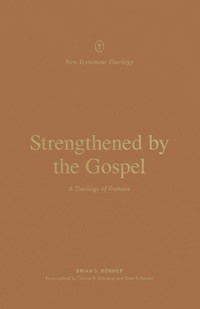
An Introduction to the Theology and Themes of Romans The book of Romans, often regarded as one of the greatest letters ever written, provides a thorough explanation of Christian doctrine. Yet, in explaining Paul's gospel, Romans is not just for preachers and people who have not yet come to faith. Paul's purpose in Romans is to strengthen believers with the gospel of God thereby equipping them for every good work, to live holy lives, be protected from evil, and to live as those who belong to the day of Christ's glorious return. In this volume of the New Testament Theology series, Brian S. Rosner explores the key theology and themes of Romans, including sin, righteousness, justification, judgment, union with Christ, Christian conduct, hope, and more. By examining the letter's Old Testament connections and the full scope of Paul's gospel, this volume seeks to strengthen and encourage today's disciples of Jesus. - Part of the New Testament Theology Series: Other volumes include Living Faith; The Appearing of God Our Savior; and To Walk and to Please God - Ideal for Anyone Wanting to Study the Bible More Deeply: Perfect for pastors, seminarians, college students, and laypeople - Covers Important Theological Themes: Sin, righteousness, justification, judgment, union with Christ, Christian conduct, hope, and more
Sie lesen das E-Book in den Legimi-Apps auf:
Seitenzahl: 369
Veröffentlichungsjahr: 2025
Das E-Book (TTS) können Sie hören im Abo „Legimi Premium” in Legimi-Apps auf:
Ähnliche















Thank you for downloading this Crossway book.
Sign up for the Crossway Newsletter for updates on special offers, new resources, and exciting global ministry initiatives:
Crossway Newsletter
Or, if you prefer, we would love to connect with you online:
“There is obviously great value in working through a book like Romans from beginning to end, chapter by chapter, and verse by verse (what we might call a ‘longitudinal’ approach). But a complementary ‘latitudinal’ approach that outlines the key theological themes of Romans is also important. Brian Rosner’s book takes this second approach. It is the best available survey of the theology of this important and influential biblical book.”
Douglas J. Moo, Professor of Biblical Studies Emeritus, Wheaton College; author, The Letter to the Romans (New International Commentary on the New Testament)
“This is a wonderful introduction to Romans! It is clear, concise, and peppered with insights that come from a careful study of the letter itself and the best secondary literature on it. Preachers, teachers, students, and anyone interested in Romans will benefit from reading the letter in tandem with this helpful guide to its riches.”
Frank Thielman, Presbyterian Chair of Divinity, Beeson Divinity School; author, Romans (Zondervan Exegetical Commentary on the New Testament)
“The church today struggles with massive questions concerning how to live and think Christianly in a world such as ours. Brian Rosner’s crystal-clear, careful overview of the theology of the book of Romans can help. Rosner’s little book is both thorough, covering key topics of the letter, and admirably efficient. Unpacking the apostle’s message in an orderly fashion, Rosner shows how Christ followers might be strengthened in the face of world forces that would deform and weaken us. We need gospel strength, so we desperately need to hear Romans afresh, and this book helps us do just that.”
George H. Guthrie, Professor of New Testament, Regent College, Vancouver
“Everyone likes to receive a present! Paul wrote his famous letter to explain and apply the gospel to his Roman readers. That clearer understanding of the gospel is described by Paul as his ‘spiritual gift’ to the church (Rom. 1:11). What better gift can be imagined than to be helped to properly understand the message of the gospel. Rosner’s book is like wrapping paper around this precious gift that is the message of Romans, helping us to recognize Romans as a good gift. He shows that Romans is best read through the double lens of the key motifs of the gospel and righteousness.”
Gregory Goswell, Honorary Research Fellow, Christ College, Sydney, Australia
“Strengthened by the Gospel is undoubtedly a volume that many seminary students, pastors, and lay leaders will want on their bookshelves. It is clearly the fruit of many years of study in Romans, written with clarity and depth. The big theological themes of the letter are supported by well-crafted arguments based on familiarity with the granular details of Romans. All will benefit richly from Rosner’s devotion to the text and theology of Romans.”
M. Sydney Park, Associate Professor of Divinity, Beeson Divinity School
“Brian Rosner has been studying, teaching, and meditating on Paul’s incredibly rich and powerful letter to the Romans for many years. He is both an extraordinarily gifted exegete and an incredibly insightful theologian with a special expertise in biblical theology. All of that is on full display in this masterful exposition of the theology of Paul’s letter to the Romans. All who read it will not only grow to a deeper understanding of Romans and its theology but will also be spiritually edified and enriched in the process. Rosner sets the table so that we can all more fully enjoy the theological feast of Paul’s letter to the Romans.”
Roy E. Ciampa, Professor Emeritus of Biblical and Religious Studies, Samford University
“Strengthened by the Gospel blends biblical theology and pastoral insight into a rich reading of Romans from a master teacher. Brian Rosner compellingly holds forth the gospel as the center of Paul’s argument and, in so doing, illuminates the theological message of Romans while remaining ever attentive to its practical implications. This book is an invaluable resource for preachers and students alike, providing both clarity and depth as it integrates the various elements of Romans. Readers will come away strengthened in their grasp of how the gospel shapes the Christian’s mind, heart, and conduct.”
Philip H. Kern, Head of New Testament, Moore Theological College
Strengthened by the Gospel
New Testament Theology
Edited by Thomas R. Schreiner and Brian S. Rosner
The Beginning of the Gospel: A Theology of Mark, Peter Orr
From the Manger to the Throne: A Theology of Luke, Benjamin L. Gladd
The Mission of the Triune God: A Theology of Acts, Patrick Schreiner
Strengthened by the Gospel: A Theology of Romans, Brian S. Rosner
Ministry in the New Realm: A Theology of 2 Corinthians, Dane C. Ortlund
Christ Crucified: A Theology of Galatians, Thomas R. Schreiner
United to Christ, Walking in the Spirit: A Theology of Ephesians, Benjamin L. Merkle
Sharing Christ in Joy and Sorrow: A Theology of Philippians, Chris Bruno
Hidden with Christ in God: A Theology of Colossians and Philemon, Kevin W. McFadden
To Walk and to Please God: A Theology of 1 and 2 Thessalonians, Andrew S. Malone
The Appearing of God Our Savior: A Theology of 1 and 2 Timothy and Titus, Claire S. Smith
Perfect Priest for Weary Pilgrims: A Theology of Hebrews, Dennis E. Johnson
Living Faith: A Theology of James, Robert L. Plummer
The God Who Judges and Saves: A Theology of 2 Peter and Jude, Matthew S. Harmon
The Joy of Hearing: A Theology of the Book of Revelation, Thomas R. Schreiner
Strengthened by the Gospel
A Theology of Romans
Brian S. Rosner
Strengthened by the Gospel: A Theology of Romans
© 2025 by Brian S. Rosner
Published by Crossway1300 Crescent StreetWheaton, Illinois 60187
All rights reserved. No part of this publication may be reproduced, stored in a retrieval system, or transmitted in any form by any means, electronic, mechanical, photocopy, recording, or otherwise, without the prior permission of the publisher, except as provided for by USA copyright law. Crossway® is a registered trademark in the United States of America.
Cover design: Kevin Lipp
First printing 2025
Printed in the United States of America
Unless otherwise indicated, Scripture quotations are from the ESV® Bible (The Holy Bible, English Standard Version®), © 2001 by Crossway, a publishing ministry of Good News Publishers. Used by permission. All rights reserved. The ESV text may not be quoted in any publication made available to the public by a Creative Commons license. The ESV may not be translated in whole or in part into any other language.
Scripture quotations marked CSB have been taken from the Christian Standard Bible®, copyright © 2017 by Holman Bible Publishers. Used by permission. Christian Standard Bible® and CSB® are federally registered trademarks of Holman Bible Publishers.
Scripture quotations marked HCSB are taken from the Holman Christian Standard Bible®, copyright © 1999, 2000, 2002, 2003, 2009 by Holman Bible Publishers. Used by permission. Holman Christian Standard Bible®, Holman CSB®, and HCSB® are federally registered trademarks of Holman Bible Publishers.
Scripture quotations marked ISV are taken from the Holy Bible: International Standard Version®. Copyright © 1996–forever by The ISV Foundation. All rights reserved internationally. Used by permission.
Scripture quotations marked NASB 1995 are taken from the New American Standard Bible®, copyright © 1960, 1971, 1977, 1995 by The Lockman Foundation. Used by permission. All rights reserved. www.lockman.org.
Scripture quotations designated NET are from the NET Bible® copyright © 1996–2016 by Biblical Studies Press, L.L.C. http://netbible.com. Used by permission. All rights reserved.
Scripture quotations marked NIV are taken from the Holy Bible, New International Version®, NIV®. Copyright © 1973, 1978, 1984, 2011 by Biblica, Inc.™ Used by permission of Zondervan. All rights reserved worldwide. www.zondervan.com. The “NIV” and “New International Version” are trademarks registered in the United States Patent and Trademark Office by Biblica, Inc.™
Scripture quotations marked NLT are taken from the Holy Bible, New Living Translation, copyright © 1996, 2004, 2015 by Tyndale House Foundation. Used by permission of Tyndale House Publishers, a Division of Tyndale House Ministries, Carol Stream, Illinois 60188. All rights reserved.
Scripture quotations marked NRSV are from the New Revised Standard Version Bible, copyright © 1989, Division of Christian Education of the National Council of the Churches of Christ in the United States of America. Used by permission. All rights reserved.
Scripture quotations marked REB are taken from the Revised English Bible, copyright © Cambridge University Press and Oxford University Press, 1989. All rights reserved.
Scripture quotations marked RSV are from the Revised Standard Version of the Bible, copyright © 1946, 1952, and 1971 by the Division of Christian Education of the National Council of the Churches of Christ in the United States of America. Used by permission. All rights reserved.
All emphases in Scripture quotations have been added by the author.
Trade paperback ISBN: 978-1-4335-7255-5 ePub ISBN: 978-1-4335-7257-9 PDF ISBN: 978-1-4335-7256-2
Library of Congress Cataloging-in-Publication Data
Names: Rosner, Brian S., author.
Title: Strengthened by the gospel : a theology of Romans / Brian S. Rosner.
Description: Wheaton, Illinois : Crossway, [2025] | Series: New Testament theology | Includes bibliographical references and index.
Identifiers: LCCN 2024038808 (print) | LCCN 2024038809 (ebook) | ISBN 9781433572555 (trade paperback) | ISBN 9781433572562 (pdf) | ISBN 9781433572579 (epub)
Subjects: LCSH: Bible. Romans—Theology.
Classification: LCC BS2665.52 .R66 2025 (print) | LCC BS2665.52 (ebook) | DDC 227/.106—dc23/eng/20250416
LC record available at https://lccn.loc.gov/2024038808
LC ebook record available at https://lccn.loc.gov/2024038809
Crossway is a publishing ministry of Good News Publishers.
2025-07-29 04:28:25 PM
To
Jitto and Shyamala Arulampalam
Conrad and Theresa Chui
Greg and Beth Hammond
David and Carol Knox
Andrew and Kathryn Thorburn
Contents
List of Tables
Series Preface
Preface
Abbreviations
Introduction: The Purpose of Romans
1 A Theology of Romans
2 Universal Human Guilt
3 Universal Human Bondage
4 The Gospel of God’s Saving Righteousness
5 Responding to the Gospel
6 The Gospel and the Old Testament
7 The Person and Work of Christ
8 The Benefits of the Grace of God in the Gospel
9 The Person and Work of the Holy Spirit
10 Israel’s Rejection of the Gospel
11 The Gospel and the Christian Life
12 The Gospel and Life Together
13 Gospel Living in the World
14 The Gospel and the End of All Things
Epilogue: Strengthened by the Gospel
Recommended Resources
General Index
Scripture Index
Tables
1.1 Prospective Questions in Romans 3
4.1 Ideas of Salvation in Romans
7.1 Comparison of 1 Corinthians 15:1–9 and Romans 6:3–13
8.1 Common Terms in Romans 5 and 8
12.1 Comparison of Romans 1:18–32 and Romans 12:1–2; 13:8–14
13.1 Christian Workers/Service in Romans 16
14.1 Metaphors in Romans
Series Preface
There are remarkably few treatments of the big ideas of single books of the New Testament. Readers can find brief coverage in Bible dictionaries, in some commentaries, and in New Testament theologies, but such books are filled with other information and are not devoted to unpacking the theology of each New Testament book in its own right. Technical works concentrating on various themes of New Testament theology often have a narrow focus, treating some aspect of the teaching of, say, Matthew or Hebrews in isolation from the rest of the book’s theology.
The New Testament Theology series seeks to fill this gap by providing students of Scripture with readable book-length treatments of the distinctive teaching of each New Testament book or collection of books. The volumes approach the text from the perspective of biblical theology. They pay due attention to the historical and literary dimensions of the text, but their main focus is on presenting the teaching of particular New Testament books about God and his relations to the world on their own terms, maintaining sight of the Bible’s overarching narrative and Christocentric focus. Such biblical theology is of fundamental importance to biblical and expository preaching and informs exegesis, systematic theology, and Christian ethics.
The twenty volumes in the series supply comprehensive, scholarly, and accessible treatments of theological themes from an evangelical perspective. We envision them being of value to students, preachers, and interested laypeople. When preparing an expository sermon series, for example, pastors can find a healthy supply of informative commentaries, but there are few options for coming to terms with the overall teaching of each book of the New Testament. As well as being useful in sermon and Bible study preparation, the volumes will also be of value as textbooks in college and seminary exegesis classes. Our prayer is that they contribute to a deeper understanding of and commitment to the kingdom and glory of God in Christ.
Virtually all agree that Romans represents the fullest expression of the Pauline gospel, and thus we must attend to Romans if we desire to understand Pauline theology. Brian Rosner takes us on a remarkably comprehensive yet compact tour of the theology of this beautiful and amazing letter. The gospel Paul proclaimed includes the plight and fallenness of human beings and the love of God in Jesus Christ’s death and resurrection that justifies, redeems, and reconciles those who put their faith in Christ. Those who are saved by the grace of God are empowered by the Spirit to live new lives where love marks out the church as God’s people. At the same time, the transformed lives of believers bear witness to the world. Believers are strengthened and encouraged by the gospel, and thus we have an unshakeable hope that encourages and fortifies us.
Thomas R. Schreiner and Brian S. Rosner
Preface
When the opportunity arose to join Tom Schreiner as coeditor of a series of books on New Testament theology, I took a deep breath and volunteered to write the volume on Romans. I have been teaching and writing about Romans for thirty-five years, and as a follower of Jesus Christ I have been repeatedly edified and nourished by its message. But writing about Romans is not only a great blessing but also an enormous challenge. Paul’s longest letter is also his most studied and complex. Romans ranks among the most influential letters ever written, having exercised a profound effect on countless lives and many societies for two thousand years.
Despite my familiarity with its contents, I learned much about Paul’s most magisterial letter in writing this book. Romans not only trumpets the grace of God in the gospel but also contains life-giving teaching about the benefits of the gospel, the nature of evil, the good life, the praise and worship of God, the human mind, healthy Christian living, how to disagree agreeably, the life and work of Jesus, the power of the Holy Spirit, and much more. To read Romans for all its worth, I found the letter opening and closing to be critical. Of equal importance is the discipline of reading the letter cumulatively, not missing the theological wood for the exegetical trees. Most of all, I learned that the gospel of God is not just for non-Christians but is God’s primary means of strengthening believers in Christ.
I am deeply grateful to many people for their support and encouragement along the way. Most of the work was completed on a generous study leave provided by Ridley College. A number of friends read and commented helpfully on drafts of the book: Bryan Blazosky, Tricia Blazosky, Roy Ciampa, Frank Szanto, and my wonderful wife, Natalie. Mark Simon cowrote an article with me on the purpose of Romans that was a turning point in my understanding of the letter. Peter Williams, my excellent and longsuffering PA, provided able assistance at many stages. Chris Cowan’s work as editor was exemplary and made many improvements. It is a privilege to work with Tom Schreiner, Justin Taylor, and the team at Crossway. Strengthened by the Gospel is dedicated to a choice group of friends who support my work of research and writing.
Writing the book has left me more convinced than ever that the gospel of God has the power to bring joy, peace, and hope to all who welcome its message.
Abbreviations
AB
Anchor Bible
BDAG
Danker, Frederick W., Walter Bauer, William F. Arndt, and F. Wilbur Gingrich, eds., Greek-English Lexicon of the New Testament and Other Early Christian Literature. 3rd ed. Chicago: University of Chicago Press, 2000.
BECNT
Baker Exegetical Commentary on the New Testament
BNTC
Black’s New Testament Commentary
BTCP
Biblical Theology for Christian Proclamation
BTFL
Biblical Theology for Life
BTNT
Biblical Theology of the New Testament
BZNW
Beihefte zur Zeitschrift für die neutestamentliche Wissenschaft
CNTUOT
Commentary on the New Testament Use of the Old Testament. Edited by G. K. Beale and D. A. Carson. Grand Rapids, MI: Baker Academic, 2007.
DNTUOT
Dictionary of the New Testament Use of the Old Testament. Edited by G. K. Beale, D. A. Carson, Benjamin L. Gladd, and Andrew David Naselli. Grand Rapids, MI: Baker Academic, 2023.
DPL
Dictionary of Paul and His Letters. Edited by G. F. Hawthorne, R. P. Martin, and D. G. Reid. Downers Grove, IL: InterVarsity Press, 1993.
DPL2
Dictionary of Paul and His Letters, 2nd ed. Edited by Scot McKnight. Downers Grove, IL: IVP Academic, 2023.
EGGNT
Exegetical Guide to the Greek New Testament
ESVEC
ESV Expository Commentary
ExpTim
Expository Times
FET
Foundations of Evangelical Theology
ICC
International Critical Commentary
Int
Interpretation
JETS
Journal of the Evangelical Theological Society
JSNT
Journal for the Study of the New Testament
JSNTSup
Journal for the Study of the New Testament Supplement Series
JTS
Journal of Theological Studies
L&N
Louw, Johannes P., and Eugene A. Nida, eds. Greek–English Lexicon of the New Testament: Based on Semantic Domains. New York: United Bible Societies, 1996.
LNTS
The Library of New Testament Studies
LXX
Septuagint
NDBT
New Dictionary of Biblical Theology. Edited by T. D. Alexander and B. S. Rosner. Downers Grove, IL: InterVarsity Press, 2000.
NIB
The New Interpreter’s Bible. Edited by Leander E. Keck. 12 vols. Nashville: Abingdon, 1994–2004.
NICNT
New International Commentary on the New Testament
NIGTC
New International Greek Testament Commentary
NSBT
New Studies in Biblical Theology
NTS
New Testament Studies
OTP
Old Testament Pseudepigrapha. Edited by James H. Charlesworth. 2 vols. New York: Doubleday, 1983, 1985.
PNTC
Pillar New Testament Commentary
RevExp
Review and Expositor
SGBC
The Story of God Bible Commentary
SNTSMS
Society for New Testament Studies Monograph Series
TDNT
Theological Dictionary of the New Testament. Edited by Gerhard Kittel and Gerhard Friedrich. Translated by Geoffrey W. Bromiley. 10 vols. Grand Rapids, MI: Eerdmas, 1964–76.
UBS4
The Greek New Testament. Edited by B. Aland, K. Aland, J. Karavidopoulos, C. M. Martini, and B. M. Metzger. 4th rev. ed. Stuttgart: Deutsche Bibelgesellschaft: United Bible Societies, 1993.
WBC
Word Biblical Commentary
WUNT
Wissenschaftliche Untersuchungen zum Neuen Testament
ZECNT
Zondervan Exegetical Commentary on the New Testament
Introduction
The Purpose of Romans
Eager to preach the gospel.
Romans 1:15
The book of Romans plumbs the depths of human sin and evil and then tells the ultimate good-news story about how God transforms all of human life and history. No book in the Bible explains more fully the amazing love of God in the gospel of the Lord Jesus Christ and its impact on our lives and world. For those who believe its message, Romans promises that the God of hope will fill them with joy and peace, causing them to overflow with hope by the power of the Holy Spirit (Rom. 15:13). Romans richly repays repeated reading and careful study.
The first step in reading Romans for all its worth is to understand Paul’s purpose in writing. Why did Paul write this letter? And how does his purpose in writing it affect the way that we read it today?
The purpose of Romans has long been debated, ramping up since the mid-twentieth century. The many proposals that have been offered prioritize various sections of the letter. For example, in broad terms, the Reformation approach sees the teaching on justification by faith as critical and views Romans 1–8 as the most significant section of the letter. In contrast the new perspective on Paul yields a strong focus on Romans 9–11. Recently, a pastoral hypothesis suggesting that Romans was occasioned by Paul’s desire to settle a dispute between Christians from Jewish and Gentile backgrounds gives Romans 12–15 pride of place.
However, Pauline letters typically reveal their themes and major concerns in the epistolary frame—in the opening greetings and thanksgiving and in the letter closing. These sections of Romans provide explicit indicators of Paul’s reasons for writing. Jeffrey Weima highlights how Romans 1:1–7 stresses “the legitimacy of Paul’s apostleship and trustworthiness of his gospel”1 and his desire to incorporate the Roman Gentile Christians into his apostolic sphere.2 The thanksgiving in 1:8–15 emphasizes Paul’s apostolic obligation to foster the Roman Christians’ growth in faith and to impart a spiritual gift to them. The final chapters of Romans include a description of Paul’s mission and future plans (15:14–32) and a closing (15:33–16:27), both of which function to cultivate the Roman Christians’ acceptance of Paul’s apostolic authority over them and the gospel he has presented to them in the body of the letter.3
Indeed, a good case can be made for the gospel as the main theme of the letter. The word “gospel” (euangelion) appears twice in the letter opening (1:1, 9) and twice in its closing (15:16, 19), and the verb “to preach the gospel” (euangelizō) occurs once in each (1:15; 15:20). The gospel is also the subject of what is widely regarded as the thesis statement of Romans (1:16–17). Paul writes as one who is “set apart for the gospel of God” (1:1), is in the “priestly service of the gospel of God” (15:16), and is “eager to preach the gospel . . . in Rome” (1:15). He opens the body of the letter with the declaration “I am not ashamed of the gospel” (1:16).
If “Romans is an exposition of the gospel and its many implications,”4 what did Paul hope to achieve by presenting his gospel to people who had already responded positively to it—namely, to the Christians in Rome (1:7)? After all, Paul himself states, “I make it my ambition to preach the gospel, not where Christ has already been named” (15:20).
A common answer to this question is that Paul wrote the letter with missionary and apologetic purposes. The missionary purpose is clear in Romans 15. Paul informs the Roman Christians of his desire to visit them on his way to preach the gospel and plant churches in Spain (15:23–24). Paul wanted to enlist their interest, prayers, and support: “I hope to see you in passing as I go to Spain, and to be helped on my journey [propempō] there by you” (15:24).5 Just as Syrian Antioch was Paul’s home base for his first three missionary journeys in the east of the Roman Empire, so also Paul apparently hoped that Rome would become a base for his missions farther west. In this sense Romans is a letter of introduction in which Paul explains both his message and agenda fairly comprehensively (see 15:14–24).
Romans also functions as an apology for Paul, the sort of defense he would soon be giving in Judea when he brought the money he had been collecting from the Gentile churches to Jerusalem for the poor Jewish believers (see 15:25–33). In presenting the gospel in Romans, Paul, who was familiar with opposition, wrote to defend both himself and his message.
Paul’s Desire to Strengthen the Believers in Rome
Paul’s purpose in presenting the gospel in Romans was not only to enlist the support of the Roman Christians for his gospel mission in Rome and beyond and to defend that same gospel and mission from potential misunderstandings and opponents but also to benefit his readers themselves. Two texts in the letter frame make this clear.
Romans 1:11–15
In 1:11–15 Paul tells the Roman Christians what he would like to do for them when he visits them in person. “I long to see you . . . [and] have often intended to come to you” (1:11, 13). To recognize the importance of this passage for understanding the purpose of Romans, we must remember that in the ancient world, letters regularly functioned as a substitute for the author’s personal presence. In terms reminiscent of 1:11–15, Libanius, a teacher of rhetoric in the ancient world, wrote in one of his letters, “Now, it would be sweeter to be able to see one another, but neither is the second-best choice trivial, namely, to send and to receive a letter.”6 That Paul shares this perspective can be seen in 2 Corinthians 10:11 where, with reference to his apostolic authority, he writes, “Let such a person understand that what we say by letter when absent, we do when present.” Similarly, in 1 Corinthians 5:3 Paul writes, “For though absent in body, I am present in spirit.” It is safe to assume that Paul aims to accomplish in his letter at least part of what he hopes to achieve when visiting the Roman Christians in person.
For I long to see you, that I may impart to you some spiritual gift to strengthen you—that is, that we may be mutually encouraged by each other’s faith, both yours and mine. I do not want you to be unaware, brothers, that I have often intended to come to you (but thus far have been prevented), in order that I may reap some harvest among you as well as among the rest of the Gentiles. I am under obligation both to Greeks and to barbarians, both to the wise and to the foolish. So I am eager to preach the gospel to you also who are in Rome. (Rom. 1:11–15)
Three times in this passage Paul mentions his desire to come to Rome to see the Christians there in person (1:11, 13, 15). He gives four reasons for wanting to do so (1:11, 12, 13, 15; see the italicized words above): to impart a spiritual gift to them, to experience mutual encouragement, to reap a harvest among them, and to preach the gospel to them.
The first and last reasons in Romans 1:11 and 1:15 are subject to different interpretations. Some take the “spiritual gift” that Paul wants to impart to the Christians in Rome to be the sort of spiritual gifts he lists in Romans 12:6–8 and 1 Corinthians 12:1–4, 7–11, 28.7 However, the combination of words that Paul uses for “spiritual gift” in Romans 1:11—“spiritual” (pneumatikos) and “gift” (charisma)—is not his usual way of referring to “the spiritual gifts.” In Romans 12:6; 1 Corinthians 1:7; and 12:4, he refers just to “gifts” (charismata). In 1 Corinthians 12:1 he uses “spiritual things” (tōn pneumatikōn), which is usually translated “spiritual gifts” in light of the context of 1 Corinthians 12–14. In addition, Paul makes clear in 1 Corinthians 12:6–7 that God imparts the gifts of the Spirit; nowhere in his letters does Paul envisage a human being bestowing a spiritual gift.
It is more likely that the spiritual gift Paul wants to impart is his understanding of the gospel. The beginning and end of the paragraph—Romans 1:11 and 15—essentially say the same thing: Paul wants to strengthen the Roman Christians by imparting to them the spiritual gift of his preaching the gospel to them. This will result in reaping a “[spiritual] harvest” among them (Rom. 1:13), an image reminiscent of 1 Corinthians 9:11 where Paul refers to preaching the gospel as having “sown spiritual seed” (NIV). Thomas Schreiner writes, “The gift mentioned here [in Rom. 1:11] relates directly to the purpose of the Roman Letter. The Roman Christians need to understand the Pauline gospel . . . an apostolic gift, which is communicated in this letter.”8
While it is true that Paul normally uses the verb “to preach the gospel” to refer to his proclamation of the good news to unbelievers, it would be a mistake to conclude that he believes that gospel preaching brings no benefits to those who have already believed. We should take Paul’s desire to preach the gospel in 1:15 in the broad sense of both evangelizing the lost and building up the saints in Rome. Immediately following 1:15, Paul launches into an exposition of the gospel (“For I am not ashamed of the gospel,” 1:16), and “he is not done until the epistle is at an end.”9
As Douglas Moo states, the gospel has “a broad range of significance in Paul. It is, of course, the instrument that God uses to bring people into the new realm. But it is also the instrument that God uses to produce growth in those who already know Christ.”10 Colin Kruse is right that Paul “believed his explanation of the gospel, when understood by his audience, would make them strong in their faith.”11
Romans 16:25–26
“Now to him who is able to strengthen you according to my gospel and the preaching of Jesus Christ, according to the revelation of the mystery that was kept secret for long ages but has now been disclosed and through the prophetic writings has been made known to all nations” (Rom. 16:25–26).
This text, the first lines of the letter’s closing doxology, is an inclusio with the opening of the letter.12 Specifically, “my gospel, that is to say, the preaching about Jesus Christ” (16:25 my translation)13 recalls Paul’s assertion in 1:2 that the gospel he preaches concerns God’s Son, Jesus Christ. And Paul’s gospel being rooted in the “prophetic writings [graphōn prophētikōn]” (16:26) of the Old Testament echoes Paul’s words in 1:2 that the gospel was “promised beforehand through his [God’s] prophets [tōn prophētōn] in the holy Scriptures [graphais].”
Paul’s hope that God would “strengthen” the Christians in Rome (16:25) takes us back to 1:11, the only other use of the verb stērizō in the letter. Here Paul hopes to strengthen the Roman Christians with the spiritual gift of his preaching the gospel of Jesus Christ to them (1:11, 15). God strengthens believers “according to [kata] my gospel” (16:25)—that is, the strength is based on the gospel and comes through the gospel.14 Paul is effectively saying, May God strengthen you through the gospel that I have just presented in this letter, which is a substitute for what I had hoped to do if I could have come and visited.
As it turns out, the goal of strengthening (stērizō) believers with the gospel is a good description of what Paul seeks to do for those who have already come to faith in Christ. Apart from the two occurrences in Romans, Paul uses the verb “to strengthen” four times in his letters:
We sent Timothy, our brother and co-worker for God in proclaiming the gospel of Christ, to strengthen and encourage you. (1 Thess. 3:2 NRSV)
Now may our God and Father himself . . . so strengthen your hearts in holiness that you may be blameless before our God and Father at the coming of our Lord Jesus with all his saints. (1 Thess. 3:11, 13 NRSV)
Now may our Lord Jesus Christ himself and God our Father, who loved us and through grace gave us eternal comfort and good hope, comfort your hearts and strengthen them in every good work and word. (2 Thess. 2:16–17 NRSV)
But the Lord is faithful; he will strengthen you and guard you from the evil one. (2 Thess. 3:3 NRSV)
In these texts, God is the one who strengthens, encourages, and comforts believers with the gospel of Christ, thereby equipping them for every good work and word so that they may live holy lives, protected from the evil one. It is no coincidence that Paul’s presentation of the gospel in Romans strengthens believers in many of the same ways.
Remarkably, Acts records a similar agenda for Paul’s visits to churches that were already established. The four occurrences of the verb “to strengthen”—epistērizō, a compound form of stērizō—are used in contexts where Paul and his coworkers strengthen believers:
When they [Paul and Barnabas] had preached the gospel to that city [Derbe] and had made many disciples, they returned to Lystra and to Iconium and to Antioch, strengthening the souls of the disciples, encouraging them to continue in the faith. (Acts 14:21–22)
And Judas and Silas, who were themselves prophets, encouraged and strengthened the brothers with many words. (Acts 15:32)
And he [Paul] went through Syria and Cilicia, strengthening the churches. (Acts 15:41)
After spending some time there [in Antioch], he [Paul] departed and went from one place to the next through the region of Galatia and Phrygia, strengthening all the disciples. (Acts 18:23)
When Paul and his coworkers ministered to people who had already heard and believed the gospel, they sought to strengthen and encourage them with many words to continue in the faith.
The Purpose of Romans
The thesis of this book, based on the letter frame and the usage of key terms elsewhere in the New Testament, is that Paul wrote Romans not only to defend his apostolic authority and to enlist the support of the Roman Christians for his mission but also to strengthen his readers with a full presentation of his gospel.
Ann Jervis’s structural analysis of Romans also focuses on the opening and closing chapters of the letter and comes to a similar conclusion. She seeks to incorporate Paul’s explicitly stated goal in 15:24 of making Rome a base from which to launch his mission to Spain (the missiological purpose of Romans) with the theological purpose of gospel proclamation and apostolic incorporation.15In particular, she highlights 15:16, which portrays Paul’s ministry to the Gentiles as “priestly service of the gospel of God, so that the offering of the Gentiles may be acceptable, sanctified by the Holy Spirit.” Jervis concludes,
The function of Romans is to encourage the Roman believers to enter Paul’s apostolic orbit so that they may be included within his “offering” through having heard his preaching. . . . Romans is written to fulfil Paul’s mandate to establish and nurture his Roman readers in a life of faith marked by obedience and holiness—to preach the gospel to them.16
Paul writes to the Christians in Rome not only as apostle and missionary but also as pastor.
The idea that Paul wrote Romans with a pastoral purpose has grown in popularity in recent years. Many scholars read between the lines of Romans 14:1–15:13 and infer that the Roman Christian community was split between Jewish and Gentile factions. In this light, Romans is not a general treatise on Paul’s theology but, rather, occasional in nature (like his other letters), addressing specific concerns in the church. The first part of Romans, then, is seen as presenting a theology that bolsters Paul’s plea that the two groups “accept one another” (15:7 NIV); and Jew-Gentile relationships are seen as prominent throughout the letter, reaching center stage in Romans 9–11.
This reading of Romans is, however, open to critique. John Barclay and Nijay Gupta have provided some objective criteria by which to test such mirror readings of Paul’s letters.17 Applying those tests to Romans demonstrates that it has in fact a greater concern, for example, about holiness and sexual immorality (see Rom. 2, 6–8, 12) than about Jew-Gentile disunity. Furthermore, the omission of any mention of healing intra-church divisions in the epistolary frame is a strong indicator that the pastoral concerns of 14:1–15:13 do not constitute the major reason for Romans. Romans is an occasional letter, but the occasion has more to do with Paul than the Roman Christians. Whereas we would be left to speculation and conjecture if problems in the church occasioned the letter, Paul’s situation and reasons for writing Romans are clear in the epistolary frame of the letter.
Paul does have a pastoral concern for the Roman Christians, but it is much broader than simply shoring up the unity of the church in Rome. Paul intends to strengthen the believers in Rome by fully proclaiming the gospel of Christ to them. My task in this book is to study the theology of Romans, setting forth the shape and scope of Paul’s gospel and its many implications with the same goal of strengthening and encouraging disciples of Jesus in our day.
The Place of Romans in the New Testament Canon
In English Bibles, following the order of the Vulgate, Romans appears after Acts and as the first of Paul’s letters.a The venerable status of this arrangement is borne out by the early manuscript evidence, much of which adheres to this order.b While the text of Romans itself is primary for its interpretation, reading Romans in the light of its place in the canon is a legitimate and valuable complementary way of reading the letter.c
A close connection between Acts and Romans is suggested by the fact that Acts ends with Paul in Rome (28:11–31) and in Romans Paul writes to the saints in Rome (1:7) and reports his desire to visit Rome (1:8–15; 15:22–29). Indeed, reading Romans after Acts highlights themes that are central to both, most clearly the universal reach of the gospel of God’s grace that is attested by the Old Testament. This can be seen in connection with several textual links:
1. Paul’s pattern in Acts 13–28 is to take the gospel to Jews first and then turn to the Gentiles after the Jews had rejected the message. The same priorities are evident throughout Romans, beginning with the assertion that the “the gospel . . . is the power of God for salvation to everyone who believes, to the Jew first and also to the Greek” (1:16) and culminating in Romans 9–11 where Paul treats at length the problem and consequences of Jewish unbelief.
2. In the closing scene of Acts, Paul testifies (diamarturomai) “about Jesus both from the Law of Moses and from the Prophets” (Acts 28:23). In Romans Paul demonstrates that “the Law and the Prophets bear witness [martureō]” (Rom. 3:21) to the gospel he preaches (see chapter 6 below).
3. In both Acts 28:26–27 and Romans 11:11, Paul quotes Isaiah 6:9–10 to support his contention that the Old Testament prophesies Jewish rejection of Jesus.
4. In Acts 21:28 Jews accuse Paul of “teaching everyone everywhere against the people and the law and this place [i.e., the temple].” “Romans can be read as a canonical answer to these false charges,”d with its extensive treatments of the themes of the people of God, the law, and the temple—often in a polemical context.
Reading Romans prior to 1 Corinthians is a fitting way to introduce 1 Corinthians. Romans 15:14–21 represents Paul’s most extensive account of how he conceives of his ministry as apostle to the Gentiles. He describes himself as “a minister of Christ Jesus to the Gentiles in the priestly service of the gospel of God, so that the offering of the Gentiles may be acceptable, sanctified by the Holy Spirit” (Rom. 15:16). This framing of Paul’s gospel work in priestly and purity terms, themes that reverberate throughout Romans, corresponds to how Paul describes the Corinthian Christians in his letter opening: “To the church of God that is in Corinth, to those sanctified in Christ Jesus, called to be saints together with all those who in every place call upon the name of our Lord Jesus Christ, both their Lord and ours” (1 Cor. 1:2). Three times Paul stresses their holy status: They belong to God (“of God,” a possessive genitive), are sanctified, and are called to be saints. The purity theme is then carried further in the letter, with Paul on two occasions describing the Corinthian Christians as God’s temple (1 Cor. 3:16–17; 6:19–20).e
The letter to the Romans functions well as the head of the entire Pauline corpus, given its general nature in comparison with the other Pauline letters and its comprehensive presentation of Paul’s gospel. The textual history of Romans supports this observation: Some early manuscripts of the letter omit “in Rome” in 1:7 and 15, a deletion that Metzger suggests was “made in order to show that the letter is of general, not local application.”f Perhaps for similar reasons, the lengthy greetings to the Christians in Rome in Romans 16 are also omitted in some manuscripts. J. B. Lightfoot even suggests that Paul himself made the changes “to give his letter a wider circulation.”g
Brevard Childs contends that “the placing of Romans as an introduction [to the Pauline corpus] was not a tour de force, but was encouraged by the very nature of the letter itself.”hAs Gregory Goswell puts it, Romans is “the most treatise-like of Paul’s letters, and so it appropriately functions as a theological introduction to the Pauline corpus.”i As such, Paul’s letters that follow Romans may be read as the contextual application of Paul’s gospel, as presented in Romans, to the task of building up and strengthening churches.j This way of reading Romans in its canonical setting fits well with the purpose and function of Romans defended in this introduction.
a Paul’s letters are roughly in the order of longest to shortest, with (1) letters to the same churches kept together and (2) letters to churches before letters to individuals. Nonetheless, the reasons for the arrangement would have soon become irrelevant since readers would experience the effects of that order regardless of the reasons behind it. Either way, the presentation gives Romans a certain priority.
b Gregory Goswell, “Reading Romans after the Book of Acts,” JETS 62, no. 2 (2019): 354. The canonical context of Romans varies with the manuscript tradition. Sometimes the Pauline Epistles are found by themselves, and Romans typically stands as the start of the corpus. It is also common in Greek manuscripts to find that Romans comes after the Catholic Epistles, which come after Acts.
c See Gregory Goswell, Text and Paratext: Book Order, Title, and Division as Keys to Biblical Interpretation (Bellingham, WA: Lexham Academic, 2023), for an introduction to the significance of paratextual features for biblical interpretation, including the order of the books in the canon.
d Goswell, “Reading Romans,” 369.
e See further Roy Ciampa and Brian Rosner, “The Structure and Argument of 1 Corinthians: A Biblical/Jewish Approach,” NTS 52, no. 2 (2006): 205–18; Brian Rosner, “The Church as Temple and Moral Exhortation in 1 Corinthians,” in Ecclesia and Ethics: Moral Formation and the Church, ed. E. Allan Jones III, John Frederick, John Anthony Dunne, Eric Lewellen, and Janghoon Park (London: Bloomsbury T&T Clark, 2016), 41–54.
f Bruce Manning Metzger, A Textual Commentary on the Greek New Testament, 2nd ed. (New York: United Bible Societies, 1994), 446.
g J. B. Lightfoot, Biblical Essays (London: MacMillan, 1904), 319.
h Brevard Childs, The Church’s Guide for Reading Paul: The Canonical Shaping of the Pauline Corpus (Grand Rapids, MI: Eerdmans, 2008), 175.
i Gregory Goswell, “The Bookends of the Pauline Corpus,” JETS 65, no. 1 (2022): 115.
j Unsurprisingly, many treatments of Paul’s theology in his letters give pride of place to Romans. E.g., James D. G. Dunn uses Romans as the foundation for his exposition of Paul’s entire theology: Romans “is the most sustained and reflective statement of Paul’s own theology by Paul himself.” James D. G. Dunn, The Theology of Paul the Apostle (Grand Rapids, MI: Eerdmans, 1998), 25.
1 Jeffrey A. D. Weima, “The Reason for Romans: The Evidence of Its Epistolary Framework (1:1–15; 15:14–16:27),” RevExp 100, no. 1 (2003): 20.
2 Jeffrey A. D. Weima, Paul the Ancient Letter Writer: An Introduction to Epistolary Analysis (Grand Rapids, MI: Baker Academic, 2016), 18–19.
3 Weima, “The Reason for Romans,” 25, 30.
4 David G. Peterson, Commentary on Romans, BTCP (Nashville: Holman Reference, 2017), 50.
5 The verb “to be helped on a journey” is a technical term for material assistance—meaning, food and money. Cf. 1 Cor. 16:6, 11.
6 Scott Bradbury, Selected Letters of Libanius: From the Age of Constantius and Julian, Translated Texts for Historians 41 (Liverpool: Liverpool University Press, 2004), 66 (37.4). Cf. Libanius, Autobiography and Selected Letters, Volume I: Autobiography. Letters 1–50, ed. and trans. A. F. Norman, LCL 478 (Cambridge, MA: Harvard University Press, 1992), 22: “When you look at my letter, think that you are looking at me” (letter 245.9 quoted in the introduction).
7 E.g., C. K. Barrett, The Epistle to the Romans, rev. ed., BNTC (London: Continuum, 1991), 25–26.
8 Thomas R. Schreiner, Romans, 2nd ed., BECNT (Grand Rapids, MI: Baker Academic, 2018), 59–60.
9 Barrett, The Epistle to the Romans, 27.
10 Douglas J. Moo,




