


2,99 €
Mehr erfahren.
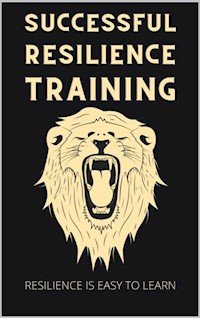
★ Successful Resilience Training. ★ Easy to Learn with the 7 pillars principle. Your Resilience Project to master any crisis with self-confidence. Incl. tips for more serenity. Many people have to deal with crises in their everyday lives. Whether it is our own health, a stroke of fate or another crisis that rules our lives. A crisis is not easy to put away and follows us throughout our lives. But how can we go through life better despite crises? How to build a healthy self-esteem and how to become resilient and build your self-confidence? In the following guide, we'll show you how you can become resilient and boost your self-confidence with simple tricks.
Das E-Book können Sie in Legimi-Apps oder einer beliebigen App lesen, die das folgende Format unterstützen:
Seitenzahl: 31
Veröffentlichungsjahr: 2022
Ähnliche

















Successful Resilience Training
By Thorsten Hawk
contents
Guide to train resilience
2. The stress of today and what it does to us
3. What is resilience?
4. What influences resilience?
5. The 7 pillars of resilience:
6.1. Optimism:
7.2. Acceptance:
8.3. Solution orientation:
9.4. Leave victim role:
10.5. To take responsibility:
11.6. Accepting help and social skills:
12.7. Goals and Visions:
13. The power of thought:
15. The 6 Pillars of Self-Esteem:
16.1. Live Consciously:
17.2. Accept yourself:
18.3. Live independently:
19.4. Assert yourself confidently:
20.5. Live Purposefully:
21.6. Personal Integrity:
22. Train resilience in the long term:
23. More interaction with positive people:
24. Get active (sports):
25. Healthy Eating:
26. Relaxation Techniques:
28. Be aware of possible failure:
29. Gratitude Log
30. Sleep and Breaks:
31. Laugh:
Guide to train resilience
Many people struggle with crises in their everyday lives. It doesn't matter whether our own health, a stroke of fate or another crisis rule our lives. You can't just put a crisis away so easily and it haunts us for the rest of our lives. But how can you go through life better despite crises? How can you build a healthy self-esteem and how do you manage to become resilient and build up your self-confidence? In the following guide, we will show you how you can use simple tricks to become resilient and boost your self-confidence.1. Foreword: Overcoming crises with resilienceWith a healthy level of resilience, any crisis can be mastered well, you try to find your own way with which you can best deal with the crisis. Resilience can be imagined as a soap bubble that surrounds us, which helps us to protect ourselves from further crises and to process them as well as possible.
However, it often happens that we are no longer very resilient due to crises and our self-esteem suffers as a result. But what constitutes healthy resilience, how can you achieve it and what does resilience have to do with the stress of today?
2. The stress of today and what it does to usIt doesn't matter whether it's at school, at work or at university! A lot is demanded everywhere nowadays, there is enormous pressure to perform and the pressure that everything has to be done perfectly. Since the pressure to perform and thus the stress has been increasing in recent years, there are more and more people with mental health problems.
Dealing with stress and being able to switch off the stress first has to be learned and is not that easy. Stress is inevitable, especially these days. Stress is a part of our life and of certain everyday situations. That is why we have to adapt to the stress and find and learn how to deal with stress in a healthy way for us.
There are even 3 types of stress that we experience from time to time throughout our lives. For example, there is the negative stress that occurs when we feel overwhelmed in a situation and can no longer deal with stress properly. The neutral stress are all reactions that the body makes up.
And the positive stress gives us energy and is like a motivational boost that shows us how well we have done something. But what can stress do to us? What does stress do to our body? Negative stress is very threatening for our body and, in the worst case, can trigger mental and psychological problems. At the beginning of each stress phase, headaches and earaches are usually the result, but cardiovascular symptoms can also occur. In addition, abdominal pain, vomiting or back pain can result from stress that occurs too often.




