



Erhalten Sie Zugang zu diesem und mehr als 300000 Büchern ab EUR 5,99 monatlich.
- Herausgeber: No Exit Press
- Kategorie: Krimi
- Serie: A Spenser Novel
- Sprache: Englisch
When Susan's ex-husband, Brad, appears after a decades-long absence, nearly broke and the object of a sexual-harassment suit, Spenser reluctantly agrees to help. As he investigates the circumstances surrounding the suit, he discovers that fund-raiser Brad is swimming in very deep water: mobsters, who were using his fund-raising campaigns to launder money, have discovered he was cooking the already cooked books and aren't at all pleased. The deeper Spenser digs, the more bodies he uncovers and the more culpable Brad appears to be.
Sie lesen das E-Book in den Legimi-Apps auf:
Seitenzahl: 288
Veröffentlichungsjahr: 2014
Das E-Book (TTS) können Sie hören im Abo „Legimi Premium” in Legimi-Apps auf:
Ähnliche












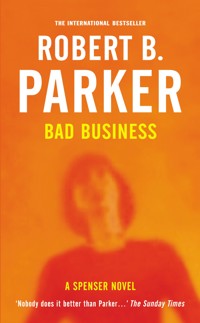




When Susan’s ex-husband, Brad, appears after a decades-long absence, nearly broke and the object of a sexual-harassment suit, Spenser reluctantly agrees to help. As he investigates the circumstances surrounding the suit, he discovers that fund-raiser Brad is swimming in very deep water: mobsters, who were using his fund-raising campaigns to launder money, have discovered he was cooking the already cooked books and aren’t at all pleased. The deeper Spenser digs, the more bodies he uncovers and the more culpable Brad appears to be.
Robert B. Parker (1932-2010) has long been acknowledged as the dean of American crime fiction. His novels featuring the wise-cracking, street-smart Boston private-eye Spenser earned him a devoted following and reams of critical acclaim, typified by R.W.B. Lewis’ comment, ‘We are witnessing one of the great series in the history of the American detective story’(The New York Times Book Review).
Born and raised in Massachusetts, Parker attended Colby College in Maine, served with the Army in Korea, and then completed a Ph.D. in English at Boston University. He married his wife Joan in 1956; they raised two sons, David and Daniel. Together the Parkers founded Pearl Productions, a Boston-based independent film company named after their short-haired pointer, Pearl, who has also been featured in many of Parker’s novels.
Robert B. Parker died in 2010 at the age of 77.
CRITICAL ACCLAIM FOR ROBERT B. PARKER
‘Parker writes old-time, stripped-to-the-bone, hard-boiled school of Chandler… His novels are funny, smart and highly entertaining… There’s no writer I’d rather take on an aeroplane’– Sunday Telegraph
‘Parker packs more meaning into a whispered “yeah” than most writers can pack into a page’– Sunday Times
‘Why Robert Parker’s not better known in Britain is a mystery. His best series featuring Boston-based PI Spenser is a triumph of style and substance’– Daily Mirror
‘Robert B. Parker is one of the greats of the American hard-boiled genre’– Guardian
‘Nobody does it better than Parker…’– Sunday Times
‘Parker’s sentences flow with as much wit, grace and assurance as ever, and Stone is a complex and consistently interesting new protagonist’– Newsday
‘If Robert B. Parker doesn’t blow it, in the new series he set up in Night Passage and continues with Trouble in Paradise, he could go places and take the kind of risks that wouldn’t be seemly in his popular Spenser stories’– Marilyn Stasio, New York Times
THE SPENSER NOVELS
The Godwulf Manuscript
Chance
God Save the Child
Small Vices*
Mortal Stakes
Sudden Mischief*
Promised Land
Hush Money*
The Judas Goat
Hugger Mugger*
Looking for Rachel Wallace
Potshot*
Early Autumn
Widow’s Walk*
A Savage Place
Back Story*
Ceremony
Bad Business*
The Widening Gyre
Cold Service*
Valediction
School Days*
A Catskill Eagle
Dream Girl (aka Hundred-Dollar Baby)*
Taming a Sea-Horse
Pale Kings and Princes
Now & Then*
Crimson Joy
Rough Weather
Playmates
The Professional
Stardust
Painted Ladies
Pastime
Sixkill
Double Deuce
Lullaby (by Ace Atkins)
Paper Doll
Wonderland (by Ace Atkins)*
Walking Shadow
Silent Night (by Helen Brann)*
Thin Air
THE JESSE STONE MYSTERIES
Night Passage*
Night and Day
Trouble in Paradise*
Split Image
Death in Paradise*
Fool Me Twice (by Michael Brandman)
Stone Cold*
Killing the Blues (by Michael Brandman)
Sea Change*
High Profile*
Damned If You Do (by Michael Brandman)*
Stranger in Paradise
THE SUNNY RANDALL MYSTERIES
Family Honor*
Melancholy Baby*
Perish Twice*
Blue Screen*
Shrink Rap*
Spare Change*
ALSO BY ROBERT B PARKER
Training with Weights
A Year at the Races (with Joan Parker)
(with John R. Marsh)
All Our Yesterdays
Three Weeks in Spring
Gunman’s Rhapsody
(with Joan Parker)
Double Play*
Wilderness
Appaloosa
Love and Glory
Resolution
Poodle Springs
Brimstone
(and Raymond Chandler)
Blue Eyed Devil
Perchance to Dream
Ironhorse (by Robert Knott)
*Available from No Exit Press
For Joan: Gloriana
‘Be well aware,’ quoth then that Ladie milde,
‘ast suddaine mischiefe ye too rash provoke’
THE FAERIE QUEENE
1
We were at the Four Seasons Hotel, in the Bristol Lounge. Bob Winter was playing ‘Green Dolphin Street’ on the piano. I was drinking beer and Susan was doing very little with a glass of red wine. There were windows along the Boylston Street side of the room that looked out on the Public Garden, where winter was over, the swan boats were being cleaned, and had there been a turtledove awake at this hour we’d have almost certainly heard his voice.
‘I need a favor,’ Susan said to me.
Her black hair was shiny and smelled slightly of lavender. Her eyes were impossibly big, and full of intelligence and readiness, and something else. The something else had to do with throwing caution to the winds, though I’d never been able to give it a name. People looked at her when she came in. She had the quality that made people wonder if she were someone important. Which she was.
‘You know I’m the only guy in the room knows the lyrics to “Green Dolphin Street,”’ I said, ‘and you want me to sing them softly to you.’
‘Don’t make me call the bouncer,’ she said.
‘At the Four Seasons? You’d have to tip him before he threw you out.’
‘It’s about my ex-husband,’ Susan said.
‘The geek?’
‘He’s not a geek,’ Susan said. ‘If you knew him, you’d kind of like him.’
‘Don’t confuse me,’ I said.
Winter played ‘Lost in Loveliness.’ The waitress looked at my empty beer glass. I nodded. Susan’s glass was still full.
‘He came to see me last week,’ Susan said. ‘Out of the blue. I haven’t seen him in years. He’s in trouble. He needs help.’
‘I’m sure he does,’ I said.
‘He needs help from you.’
My second beer came. I thought about ordering a double shot of Old Thompsons to go with it but decided it was more manly to face this moment sober. I drank some of my beer.
‘Okay,’ I said.
‘I …’ She stopped and looked out the windows for a moment. ‘I guess I’m kind of embarrassed to ask you,’ she said.
‘Yeah,’ I said. ‘It is kind of embarrassing.’
‘But I am going to ask you anyway.’
‘Who else?’ I said.
She nodded and picked up her glass and looked at it for a moment and put it down without drinking.
‘Brad is being sued by a group of women who are charging him with sexual harassment.’
I waited. Susan didn’t say anything else.
‘That’s it?’ I said.
‘Yes.’
‘And what was it you thought I could do about it?’
‘Prove them wrong,’ she said.
‘Maybe they’re right,’ I said.
‘Brad is on the very edge of dissolution. If he gets dragged into court on this kind of thing… he hasn’t got enough money to defend himself.’
‘Or pay me,’ I said.
Susan nodded. ‘Or pay, yes,’ she said.
‘That’s encouraging,’ I said.
‘I don’t love him,’ Susan said. ‘Maybe I never did. And he hasn’t been in my life for years, but …’
‘But you used to know him and you don’t want to see him destroyed.’
‘Yes.’
‘And you don’t know what else to do, or who else to ask.’
‘Yes.’
‘So,’ I said. ‘I’ll take the case.’
‘And the fee?’
‘If I get him off, you have to ball my socks off,’ I said.
‘And if you don’t get him off?’
‘I have to ball your socks off.’
The something I had no name for flickered in Susan’s eyes.
‘Sounds fair to me,’ she said.
‘Okay, I’m on the case,’ I said. ‘Tell me about him.’
‘His name is Brad Sterling.’
‘Sterling?’
Susan looked down at the table.
‘He changed it,’ she said.
‘From Silverman. As in sterling silver, how precious.’
‘How un-Jewish,’ Susan said.
‘How come you kept his name?’
‘When we were first divorced I guess it was just easier. It was on my license, my social security card, my checking account.’
‘Uh huh.’
‘And I guess it was a way of saying that even if I weren’t married, I had been.’
‘Like a guy wearing his field jacket after he’s been discharged.’
‘Except that the jacket will still keep him warm.’
‘You wish you’d gone back to your… what’s the correct phrase these days?’
‘Birth name,’ Susan said.
‘Thank you. Do you wish you’d kept your birth name?’
‘I suppose so, but by the time I was healthy enough to do that, I was healthy enough not to need to.’
‘Susan Hirsch,’ I said.
‘Sounds odd, doesn’t it?’
‘Makes me think of sex,’ I said.
‘More than Silverman?’
‘No, that makes me think of sex too.’
‘How about Stoopnagel?’
‘Yeah,’ I said. ‘That makes me think of sex.’
‘I think I’m seeing a pattern here,’ Susan said.
‘That’s because you’re a trained psychologist,’ I said. ‘Tell me about Sterling.’
‘I was a freshman at Tufts,’ Susan said. ‘He was at Harvard, my roommate and his roommate were cousins and we got fixed up.’
Susan was many things, and almost all of them wondrous, but she was not succinct. I minded this less than I might have, because I loved to listen to her talk.
‘He was a tackle on the Harvard football team. The only Jew ever to play tackle in the Ivy League, he used to say. I think he was kind of uneasy being Jewish at Harvard.’
I made eye contact with the waitress and she nodded.
‘He was very popular, had a lot of friends. Got by in class without studying much. I really liked him. We were married the week after graduation.’
‘Big wedding?’
‘Yes,’ Susan said. ‘Have I never talked about this with you?’
‘No.’
‘Didn’t you ever want to know?’
‘I want to know what you want to tell me.’
‘Well, I saw no point to talking to you about other men in my life.’
‘Up to you,’ I said. ‘I don’t need to know. And I don’t need to pretend there weren’t any.’
She didn’t speak for a time. She slowly turned her wine glass by the stem and looked at me as if thinking about things.
‘I always assumed it would bother you,’ she said.
‘I’m entirely fascinated with you,’ I said. ‘And what you are is a result of what you were, including the other men.’
She was quiet again, looking at me, turning her glass. Then she smiled.
‘It was a very big wedding at Memorial Chapel at Harvard. Reception at the Ritz.’
‘Brad’s family had money,’ I said.
‘Not after the reception,’ Susan said. ‘Actually, Brad’s father ran a salvage business in Chelsea. But by the time I came along he’d moved the family to Wellesley. Brad went to Harvard. His sister went to Bryn Mawr.’
The waitress brought me another beer. Susan took a sip of her wine. Racing to catch up.
‘Then what?’ I said.
‘Then not much,’ Susan said. ‘His father bought us a little house in South Natick.’
‘Just across the line from Wellesley.’
‘Yes. Brad’s mother was ten minutes away on Route 16.’
‘Perfect.’
‘And Brad got a job with an advertising agency in town.’
‘You?’
‘I stayed home and wore cute aprons and redid my makeup every afternoon before he came home for supper.’
‘Supper?’
Susan smiled.
‘I know,’ she said. ‘It was pathetic. I couldn’t cook. I didn’t want to learn. I hate to cook.’
‘Is that so?’ I said.
‘The house was a four-room Cape with an unfinished attic. I could stand in the hall and see all four rooms.’
‘You can do that now,’ I said. ‘In your apartment.’
‘Yes, but I live there alone.’
‘Except for Pearl,’ I said.
‘Pearl is not a person,’ Susan said.
‘Try telling her that.’
‘I hated the house. I hated being alone in it all day, and then when he came home I got claustrophobic being with him all night, sharing the same bedroom, the same bath.’
‘Space is nice,’ I said.
‘The feeling is still with me. It’s why we don’t live together.’
‘The way we live seems about right to me,’ I said.
‘I know, but… when I married Brad, if people moved to twin beds you figured divorce was imminent.’
‘You didn’t work?’
‘No. It would have embarrassed Brad to have his wife working. It would have implied he couldn’t support her.’
‘Children?’
‘Oh, God, yes. He wanted me to have children.’
‘And you didn’t want to.’
‘Not then.’
‘Because?’
‘I never knew. I just knew I couldn’t.’
‘You know now?’
‘It’s something I’ve had a hard time thinking about,’ she said. ‘I must have sensed that this wasn’t the right marriage to bring children into.’
‘Not so long ago you wanted us to have a kid.’
‘This isn’t about me,’ Susan said.
‘You think I’d try to rescue Brad from the feminists if you didn’t ask me?’
‘I know,’ Susan said. ‘But it’s a part of my life I don’t like to talk about.’
‘Like the part where you and I were separated?’
She was silent looking into her nearly full wine glass.
‘If you had a patient,’ I said, ‘who couldn’t talk about certain parts of her life, what would you tell her?’
Susan continued to look into her wine glass. Her shoulders looked stiff and angular. She didn’t speak.
‘I withdraw the question,’ I said.
She didn’t look up from her wine glass.
‘Thank you,’ she said. Her voice was tight.
‘Got an address for Brad?’ I said.
Silently she found a business card in her purse and took it out and handed it to me. The card read Brad Sterling, Promotions. Nice card. Good stock. Raised lettering. Not the kind of card you passed out if you were on the verge of dissolution. Unless you didn’t want people to know you were on the verge of dissolution. Susan sat quietly while I looked at the card. Her shoulders hadn’t eased much. She didn’t look at me.
‘You sure you want me to look into this?’ I said.
‘Absolutely,’ she said.
I nodded. This thing showed every sign of not working out well for me.
‘I’ll get right on it in the morning.’ I said.
2
Two insurance buildings tower over the Back Bay. The Hancock building is pretty good-looking if the windows don’t fall out. The Prudential is ugly. Brad was in the Prudential. On the thirty-third floor. His receptionist looked like a J. Crew model, blonde Dutch boy haircut and slightly hollow cheeks.
‘Do you have an appointment?’ she asked.
She thought it unlikely but was being professional about it. The waiting room was empty.
‘No,’ I said. ‘I don’t.’
She looked doubtful. Doubtful was a cute look for her.
‘Well,’ she said, ‘I’m not sure…’
I gave her my card. The one that had my name and address but no reference to me being a sleuth.
‘Tell him his ex-wife sent me.’
Now she looked slightly embarrassed. Also a cute look. I suspected that she had practiced all of them in a mirror and discarded any that weren’t cute.
‘I, ah, there have been several …’ she said.
‘Susan,’ I said. ‘Susan Hirsch.’
It was simple perversity that made me use her maiden name. The receptionist smiled appreciatively, as if I had told her an important thing. Her hand twitched as if she were going to pick up the phone but she didn’t. Instead she said, ‘Excuse me,’ and stood and went into the inner office. She was there maybe five minutes and came out.
‘Mr. Sterling has made room for you,’ she said.
‘How nice,’ I said.
She gestured me into Sterling’s office. It was a corner office with windows facing north and west so you could see the Charles River and Fenway Park and all the way to the horizon. Sterling stood as I came in and walked around his desk to meet me. He was a tall guy, leaner than I would have thought for a tackle, with a good tan. A good tan, in Boston, in March, means you’ve been south recently or want people to think so. His hair was longish and steel gray and went nicely with the tan. His gray pinstripe suit fit him well. He was wearing good cologne.
‘Spenser, Brad Sterling,’ he said. ‘Nice to meet you.’
His handshake was firm and genuine. He looked right at me as we shook. Then he motioned me toward one of the black captain’s chairs in front of his desk. It had the Harvard seal on the back. On top of a file cabinet was a Harvard football helmet and framed on the wall was his varsity letter certificate.
‘Pull up,’ Sterling said, ‘and sit.’
I did. He went back around his desk and sat in his high-backed executive swivel and leaned back.
‘Patti said something about Susan Hirsch,’ he said.
‘Actually she still uses her married name,’ I said.
‘Really? I’ll be damned. I haven’t seen Susan in years.’
‘Actually, you have,’ I said. ‘You saw her last week.’
Sterling smiled.
‘Except then,’ he said.
‘And you told her you were in trouble, and you asked her for help.’
‘She told you that?’
‘Uh huh.’
He shook his head.
‘Susan was always a little dramatic,’ he said.
‘Yeah,’ I said. ‘Hysterical. Just because her ex-husband whom she hasn’t seen in twenty years shows up asking for help …’
‘Well, really, I didn’t ask for help.’
‘Oh,’ I said. ‘Susan misunderstood. She thought you needed help and sent me over to provide it.’
‘What’s your relation to Susan?’
‘Lover,’ I said.
Sterling widened his eyes and made a humorous snorting sound.
‘Well, you are, by God, direct, aren’t you?’
‘Saves time,’ I said.
Sterling had his hands tented in front of him, the fingertips brushing his chin. He tapped his fingertips together a few times while he looked at me.
‘Lesson there for me,’ he said. ‘That would make you the private eye.’
‘It would.’
‘I’ve heard about you. Always sort of amused me Susan would end up with… a private detective.’
‘Hard to figure,’ I said. ‘Want to tell me about your troubles?’
‘So you can help me?’
‘Yeah.’
‘Because Susan asked you to?’
‘Yeah.’
‘How do you feel about helping out your girlfriend’s ex?’
‘She says I’ll like you,’ I said.
He grinned. His teeth were very white and even.
‘Of course you will,’ he said. ‘Everybody likes me.’
‘Susan says that you’re being sued for sexual harassment.’
‘So, you’re saying that somebody doesn’t like me?’
‘Tell me about it,’ I said.
He smiled and shrugged and leaned back farther in his chair and put his feet on the desk.
‘I was running a thing at the Convention Center. Big charity do. Brought in Sister Sass from New York, had a ton of celebarooties. Message from the President. Lot of press.’
‘Which charity?’
‘Sort of a fund-raiser gang-bang for all the deservings, you know? Care and placement of orphans, shelter for battered women, AIDS research, other intractable diseases, help for the homeless, safe streets programs, everybody in one swell foop.’
‘And?’
‘And it was a blockbuster. I slept about two hours a night pulling it together, but it was a whizbang when we got it airborne.’
‘I sort of meant “and the harassment”?’
‘Oh, sure, of course.’
Out the west window I could see the shadow of a cloud drift over Kenmore Square toward Fenway Park. A little less than a month and baseball would be back. It seemed too early. It always did in March. Too cold to play ball, the ground too soggy. The wind too bold. But April always came and they played. I looked back at Sterling. He was sitting at his desk looking friendly.
‘And the harassment?’ I said.
‘Nothing much, really,’ he said. ‘All these charities have a ton of volunteer do-gooders around. Mostly women, the kind who think they’re important because their husbands are rich. And a lot of them are good-looking in that rich wife way, you know. Perfect hairdos, expensive perfume, very silky. So I may have flirted with a couple of them, and they took it wrong.’
‘How would you define flirting?’ I said.
I was almost sure that I opposed sexual harassment. I was less sure that I knew exactly what it was.
‘You know, kidding around, telling them how good-looking they were. Hell I thought they’d be flattered. Most women are. Cripes, if they weren’t married I’d figure them for a bunch of lesbos.’
‘Which is it, a “couple,” or a “bunch?”’
‘There are four women participating in the lawsuit,’ Sterling said. ‘One of them is married to Francis Ronan.’
‘The law professor?’ I said.
‘Him,’ Sterling said. ‘Talk about your luck running bad.’
‘You didn’t touch these women?’
‘Absolutely not,’ Sterling said.
‘Were you obscene?’
‘No, of course not.’
‘Did they work for you?’
‘Not really. They were volunteers. I mean I was at the top of the pyramid, I suppose, and they were down the slope a bit. But they didn’t work for me.’
‘If you lose, can you pay the judgment?’
‘That’s not the point. I’m …’ He grinned. ‘I’m an innocent man.’
‘But you could pay it?’
‘Certainly.’
‘You’re not at the brink of, ah, dissolution?’
‘Dissolute, yes, whenever possible,’ Sterling said.
‘Dissolution? Not hardly.’
Sterling made a gesture that encompassed the office and the view. ‘This look like dissolution?’
‘All it proves is they haven’t evicted you,’ I said.
Sterling laughed out loud.
‘A hard man is good to find,’ he said when he had stopped laughing.
‘You want me to look into this a little?’ I said. ‘See if I can fix it?’
‘I wish someone would fix Francis Ronan,’ he said.
‘Yes or no?’
‘What do you charge?’
‘Pro bono,’ I said.
‘Well, the damn price is right, I guess. Sure, why not? You may as well take a whack at it.’
‘Okay. Who’s your lawyer?’
He shook his head.
‘You don’t have a lawyer?’
‘Haven’t got to it yet,’ he said. ‘Thought I’d wait until there was an actual court date. No point in paying some guy to shuffle papers for a month.’
‘Sometimes if a good lawyer shuffles them right, you don’t have to go to court.’
‘Oh,’ he said, ‘a good lawyer.’
And he leaned back in his chair and put his head back and laughed again. It was a big laugh and sounded completely genuine.
‘I’ll need the names of the plaintiffs,’ I said.
‘Sure. I had Patti start a file on this. Ask her for a copy.’
I stood. He stood. We shook hands.
‘Give Susan a kiss for me,’ he said.
‘No,’ I said.
3
Hawk was sipping champagne at the corner of the bar in the Casablanca in Harvard Square and saving the bar stool next to him for me. As far as I could tell, no one had contested the seat.
‘I ordered us a mess of pan-fried oysters,’ Hawk said. ‘Figured you could use the protein.’
Jimmy the bartender looked at me and pointed to the Foster’s tap. I nodded.
‘Been here before?’ Hawk said.
‘Susan and I come here.’
Jimmy brought the beer.
‘Irish?’ Hawk said.
‘His name is James Santo Costagnozzi,’ I said.
‘Bad luck,’ Hawk said. ‘To look Irish when you not.’
‘Unless you’re trying to pass,’ I said.
‘Nobody trying to pass for Irish,’ Hawk said.
‘Is that an ethnic slur?’ I said.
‘Believe so,’ Hawk said.
The pan-fried oysters arrived and we ate some.
‘Feelin’ stronger?’ Hawk said.
‘Potent is my middle name,’ I said.
‘Always wondered,’ Hawk said. ‘How you doing with Susan’s ex?’
‘I met him today,’ I said.
‘Umm,’ Hawk said.
‘Umm?’
‘Umm.’
‘What the hell does “umm” mean?’
‘Means how’d you feel talking with Susan’s ex-husband?’
‘He seemed like kind of a goofball to me.’
‘Umm.’
‘His name was Silverman,’ I said. ‘He changed it to Sterling.’
‘Cute.’
We ate some more oysters.
‘He’s got that sort of Ivy League old money WASP goofiness that they have,’ I said.
‘Silverman?’
‘Sterling,’ I said.
‘So he trying to pass.’
‘I’d say so.’
‘And succeeding,’ Hawk said.
‘Yes. He’s got it down cold. Bow ties, everything.’
‘Maybe he just like bow ties.’
‘Who just likes bow ties?’ I said.
‘Got a point,’ Hawk said. ‘How he measure up?’
‘To what?’
‘To you.’
‘No better than anybody else.’
Hawk grinned.
‘’Cept me,’ he said. ‘How you feel about him?’
‘Something’s wrong,’ I said. ‘Susan tells me he’s at the verge of dissolution. He says he’s doing grand and has the office to prove it.’
‘So somebody lying,’ Hawk said.
‘Right.’
‘And it ain’t Susan.’
‘Also right.’
‘How she know he is in a state of near dissolution?’ Hawk said.
‘Wow,’ I said. ‘You talk like an Ivy Leaguer yourself.’
‘Ah’s been practicin’,’ Hawk said. ‘How she know?’
‘I assume he told her.’
‘So he either lying to her, or lying to you.’
‘And he hasn’t got much reason to tell her he’s going under if he’s not,’ I said.
‘ ’Less he looking for sympathy.’
‘He’s got no reason to,’ I said. ‘He’s two, three wives past her.’
‘So why he go tell her his troubles?’
‘Well, she’s a good one if you need some help.’
‘How long since he seen her?’
I shrugged. ‘Maybe twenty years. She was already divorced when I met her.’
‘And now he decides she’s a good listener?’
‘Umm,’ I said.
‘Tha’s right,’ Hawk said.
We were quiet. Someone was playing The Platters on the jukebox. In the corner of the bar up high a hockey game played silently on television. The perfect compromise.
‘Maybe knew about you,’ Hawk said.
‘He wanted me he could walk into my office and tell me his problem,’ I said.
‘And you’d do it free?’
I drank a little beer.
‘You sound almost cynical,’ I said.
‘Be the ghet-to experience,’ Hawk said, rolling the word ghetto into two long syllables. ‘Ah’m fighting to overcome it.’
‘So he knows about me and he needs help and he figures he can get it for nothing if he goes to Susan and cries dissolution.’
‘And it worked,’ Hawk said.
‘If you’re right,’ I said.
‘Sure,’ Hawk said. ‘How you feel ’bout working for Susan’s former husband?’
I shrugged. ‘Water over the dam,’ I said.
‘Sure it is, and it really was the tooth fairy left all those quarters under your pillow.’
‘Got nothing to do with me,’ I said.
‘That’s true. But I know you, some of you, maybe not even Susan know. The hard part. Part makes you almost as good as me.’
‘Better,’ I said automatically.
‘It ain’t no water over no dam for that part,’ Hawk said.
I finished my beer. Jimmy brought me another pint.
‘ ’Course it’s not,’ I said.
Hawk smiled. ‘Umm,’ he said.
‘You got that right,’ I said.
‘So you going to help him?’
‘I told Susan I would.’
‘You think this sexual harassment suit be the problem?’
‘Be surprised,’ I said. ‘But it’s a place to start.’
‘Should we have some more oysters?’ Hawk said.
‘We’d be fools not to,’ I said.
4
March was still chilly enough for a fire and I had one going in Susan’s apartment when she came upstairs from her last appointment of the day. Pearl the Wonder Dog was lying on the rug in front of it, and I was on the couch with a bottle of my new favorite, Blue Moon Belgian White Ale, that Susan kept for me. It was not hard to locate. The only other thing in the refrigerator was a head of broccoli and two cans of Diet Coke.
Susan came in wearing her subdued professional wardrobe – dark suit, tailored blouse, understated makeup, little jewelry. When she was off duty she dressed far more flamboyantly. But she generated such intensity that dressing up or down made little difference.
Pearl got up at once, took a silk cushion from the wing chair, and carried it around wagging her tail. When Susan got that attended to, she got a bottle of Merlot out of the kitchen cabinet, poured half a glass, and brought it over to the couch. She plopped down beside me, put her feet up on the coffee table, leaned her head over, and kissed me lightly on the mouth.
‘Some days are longer than others,’ she said.
Pearl eyed us speculatively, the pillow still in her mouth, and lay down by the fire and put her head on the pillow.
‘Do you understand why she prances around with that pillow?’ Susan said.
‘No.’
‘Me either.’
‘Why was today so long?’ I said.
Susan sighed and sipped her wine. It must have been a hell of a day, she took in nearly an ounce at one sip.
‘One of the things a therapist runs into is the person who thinks now that they understand why they behave as they do, they are cured.’
‘And you think there may be another step?’ I said.
‘Changing the behavior would seem appropriate,’ Susan said.
‘Appropriate?’ I said.
The logs settled a little in the fireplace. The front logs slid back in toward the back ones, making the fire more intense. I built a hell of a fire.
‘The ability to understand doesn’t automatically confer the ability to change.’
‘So people have another whole thing to go through,’ I said.
‘Yep.’
‘And they don’t like it.’
‘Nope,’ Susan said.
‘And today you had several such people.’
‘Several.’
We were quiet. She drank another swallow of wine and put her head against my shoulder.
‘Been here long?’ she said.
‘No,’ I said. ‘I just got here. I had a couple beers with Hawk before I came.’
‘Pearl been fed?’
‘Yep. Back yarded and fed.’
‘And a fire built,’ Susan said.
‘I’d have started supper,’ I said, ‘but I didn’t know whether you wanted your broccoli raw or simmered in Diet Coke.’
‘Umm,’ she said.
‘Gee,’ I said, ‘Hawk often feels that way too.’
We sat and looked into the fire and were quiet together. I liked it. It wasn’t an absence of conversation; it was the presence of quiet.
‘Saw your ex-husband this morning,’ I said.
Susan lifted her head from my shoulder and shifted slightly on the couch.
‘Don’t call him that,’ she said.
‘Okay. I went to see the artist formerly known as Silverman today.’
‘And you don’t have to be a smartass about it either,’ she said.
I nodded. This thing showed even more signs of not working out well for me.
‘Shall I call him Brad?’ I said.
‘I really would rather not talk about him at all,’ Susan said.
‘Even though you have employed me to save him.’
‘I didn’t employ you,’ she said. ‘I asked for a favor.’
It was something she did when she was angry, or frightened, which made her angry; she focused vigorously on the wrong part of the question.
‘That’s right,’ I said, ‘you did.’
In front of the fire Pearl got up quite suddenly and turned around three times and lay back down, this time with her back to the fire and her feet stretched out toward us. I wasn’t aware that Susan had moved, exactly, but she was no longer in contact with me, and her shoulders were angular again.
‘Want some more wine?’ I said.
‘No thank you.’
We sat silently again. The silence crackled. It wasn’t quiet now; it was anger. I got up and walked to the kitchen and looked out of Susan’s window at the darkness.
‘Suze,’ I said, ‘what the hell is going on?’
‘Am I required to tell you everything about everybody I’ve ever known?’
‘I don’t recall asking you to do that,’ I said.
‘Well, don’t keep bringing up my marriage.’
‘Suze, for crissake, you came to me.’
‘I asked for your help, I didn’t ask for your approval,’ she said.
She was a little nuts right now. She hadn’t been until a moment ago. And she wouldn’t be in a while. But right now there was no point talking.
‘Okay,’ I said. ‘Here’s the deal. I’ll help Brad Sterling and I won’t tell you about it unless you ask.’
‘Good.’
‘And now, I think I’ll go home.’
‘Fine.’
Pearl followed me with her eyes as I walked from the kitchen, and her tail wagged slowly, but she didn’t lift her head. I reached down and patted her and went to the front door.
‘Good night,’ I said.
‘Good night.’
I stopped on my way home to pick up some Chinese food and when I got to my place the message light on my machine was flashing. I put the food, still in cartons, in the oven on low and went and played the message.
Susan’s voice said, ‘I’m sorry. Please call me tomorrow.’
I poured a little Irish whiskey in a glass with a couple of ice cubes. Scotch and beer were recreational, and now and then a martini. Irish whiskey was therapeutic. I stood at my front window and drank the whiskey. The apartment was very silent. Outside there was a wind, which was unusual – normally the wind died down at night – and it blew a couple of Styrofoam cups around on Marlborough Street. The argument made me feel lousy, but I’d get over it and so would she – the connection between us was too strong to break. What bothered me more was that I couldn’t figure out what caused us to argue. Below me, a woman in a long coat was walking a yellow Lab toward Arlington Street. The dog, eager on his leash, had his head down into the wind. But his tail was moving happily and he sniffed at everything. I took a little whiskey. In Susan’s anger there was something else besides anger. Under the brisk annoyance was a soundless harmonic that I hadn’t heard in a long time. She wasn’t afraid of much. And when she was afraid it made her furious. The dog paused at Arlington Street and then crossed when the light changed without any sign that I could see from the woman holding the leash. Something about Brad Sterling scared her. It wouldn’t be Brad as Brad. The only thing Susan was ever really scared of was herself. It would have to be something that Brad stood for. If it were someone else, I could ask her about it. But it was her. The dog was out of sight now, in the dark of the Public Garden, probably off leash at this time of night, rushing about tracking rats along the edges of the swan boat pond, having a hell of a time. I drank some more whiskey. This thing showed every sign of not working out well for me.




